

Journalist

Kim Yeon-jae김연재
duswogmlwo77@ajupress.com
ReporterBank of Korea & Market, Macroeconomics
Kim Yeon-jae is a journalist at AJU Press (AJP's English platform),
covering macroeconomics, international finance, and geopolitics.
He closely tracks central bank monetary policies, global energy supply chains,
and the Korean defense industry. "Peering into the risks behind the euphoria."
covering macroeconomics, international finance, and geopolitics.
He closely tracks central bank monetary policies, global energy supply chains,
and the Korean defense industry. "Peering into the risks behind the euphoria."
Latest by Kim Yeon-jae
-
 Offshore NDF trading behind a third of won's March decline: BOK SEOUL, August 04 (AJP) - Offshore non-deliverable forward trading accounted for an estimated one-third of the won’s depreciation in March, highlighting the influence overseas positions over Korea’s domestic FX market. The impact was about four times greater overnight than during Seoul trading hours, when deeper liquidity and a broader range of transactions diluted the effect of NDF flows. The Bank of Korea on Tuesday released estimates of the impact of NDF trading on the dollar-won exchange rate, based on a vector autoregression model that accounted for factors including interest-rate differentials and broad movements in the US dollar. Since the beginning of 2024, foreign investors’ net NDF purchases were estimated to have lifted the dollar-won rate by an average of about 2 won a month, with every $100 million in net purchases adding roughly 0.1 won. In March, the transactions added an estimated 26 won to the dollar-won rate, equivalent to 33 per cent of the currency pair’s 79-won monthly increase. In May, they contributed about 7 won, or 26 per cent of that month’s 27-won rise. Foreign investors’ net NDF purchases reached $53.9 billion in the first half of the year, the largest amount recorded for any six-month period. NDFs allow investors to agree on a future exchange rate without exchanging the underlying currencies, with only the difference between the contracted and settlement rates paid in dollars at maturity. Although the contracts are settled offshore, they can affect the domestic spot market when financial institutions hedge their exposure, with large NDF purchases by investors betting on a weaker won generating additional dollar demand and placing upward pressure on the exchange rate. Governor Shin Hyun-song had previously identified the same transmission mechanism as a factor behind the won’s weakness, describing it at his April confirmation hearing as a case in which “the tail wags the dog” and explaining at a May press conference that offshore positions could spill into the domestic market through financial institutions’ hedging. Across the 10 months with the largest NDF net purchases since 2024, the trades added an average of about 12 won to the exchange rate overnight, compared with roughly 3 won during daytime trading. Global developments were typically priced first through offshore NDFs while the Seoul market was closed, with thinner volumes and lower liquidity magnifying their impact, while deeper daytime liquidity and simultaneous activity in spot and other foreign-exchange markets reduced their influence. The BOK said Korea’s shift to round-the-clock foreign-exchange trading on July 6 could draw won transactions away from the offshore NDF market by allowing global developments to be reflected in onshore dollar-won trading in real time. The central bank cautioned that NDFs were only one of several forces driving the exchange rate, alongside the global dollar, interest-rate differentials, cross-border capital flows and market sentiment. A gradual shift towards onshore spot and deliverable forward transactions could deepen the market, improve transparency and reduce the extent to which concentrated offshore positions amplify short-term movements in the won, the BOK said. 2026-08-04 16:12:37
 -
 Odds of Korea's back-to-back rate hike fall on softer headline inflation SEOUL, Aug. 4 (AJP) — The surprising stall in South Korea's inflationary run in July has lowered expectations for a back-to-back interest-rate increase by the Bank of Korea this month, although policymakers remain wary of persistent underlying price pressures. Consumer prices rose 2.8 percent from a year earlier in July, slowing from 3.2 percent in June and falling below the 3 percent mark for the first time in three months. Core inflation, which Bank of Korea Gov. Shin Hyun-song has repeatedly highlighted as a better gauge of underlying price pressures because it excludes volatile food and energy prices, crept up to 2.6 percent from 2.5 percent - highest level since December 2023 -, albeit at a measured pace. The Bank of Korea estimated that lower petroleum prices and agricultural, livestock and fisheries goods reduced annual headline inflation by 0.33 percentage point and 0.17 percentage point, respectively. By contrast, core goods and services together added 0.11 percentage point, underscoring that domestic price pressures have yet to fully dissipate. Lee Ji-ho, a BOK deputy governor, said the central bank would "monitor inflation with vigilance," warning that the pass-through of earlier cost increases and strengthening demand-side pressures could keep core inflation elevated. The mixed inflation signals give the Bank of Korea greater flexibility over the timing of its next move rather than making another rate increase inevitable. Financial markets modestly pared expectations for a second consecutive rate increase at the Aug. 27 policy meeting, although market pricing continued to suggest investors still see a meaningful chance of another hike. At around 1:50 p.m., the won traded near 1,431.9 per dollar, about 2.9 won weaker than the previous close. The three-year Korean government bond yield fell 1.1 basis points to 3.731 percent by midday, while the benchmark 10-year yield edged down just 0.1 basis point to 4.252 percent. The sharper decline in the policy-sensitive three-year yield suggested investors had scaled back expectations for an August increase, while the muted moves in the currency and longer-term bonds indicated markets had yet to fully price in a pause. The Bank of Korea raised its benchmark interest rate by 25 basis points to 2.75 percent on July 16, citing stronger export- and investment-led growth, inflation expected to remain above target and persistent financial stability risks. While signaling that further policy tightening would likely be needed, the central bank stressed that the timing and pace of additional increases would depend on incoming data on inflation, economic growth and financial stability, leaving an Aug. 27 move far from certain. The central bank also expects headline inflation to reaccelerate to around 3 percent in August because of a base effect stemming from steep mobile-service discounts offered by telecom operators a year earlier. The government estimates that the statistical effect alone could add about 0.8 percentage point to the annual inflation rate. Ahn Jae-kyun, an economist at Korea Investment & Securities, said markets had lowered the probability of an August rate increase following the inflation data but were still assigning odds of more than 50 percent, while maintaining a rate hike as his base-case scenario. The equity-market correction entering the second half has strengthened the argument for a cautious policy approach, as falling stock prices could curb household spending through a negative wealth effect and ease demand-driven inflationary pressure. NH Investment & Securities projected private consumption growth could slow by about 0.15 percentage point if the stock market turns bearish in the latter half. Barclays estimated that households have suffered roughly 600 trillion won in valuation losses from the recent market sell-off. Pressure on household budgets remains intact. The living necessities index rose 2.5 percent from a year earlier in July, while its non-food component climbed 3.2 percent, indicating that consumers continue to face elevated costs for everyday purchases even as headline inflation moderates. Housing remains the clearest obstacle to an extended pause. Seoul apartment prices rose 0.25 percent in the fourth week of July, extending their gains to a 77th consecutive week despite easing slightly from the previous week's 0.27 percent increase, keeping financial stability concerns firmly on the Bank of Korea's radar. The latest data strengthen the case for a hawkish hold rather than an outright pause in August. The BOK will likely to decide to resume tightening on economic and stock performance in the second half amid mixed views on the strength and duration of the chip-led growth. 2026-08-04 15:14:05
 -
 UPDATE: Korea's July inflation under 3% for the first time in 3 months *Updated with additional data and market response SEOUL, August 04 (AJP) - South Korea's consumer inflation slowed below 3 percent for the first time in three months in July as softer imported energy prices and subdued consumer demand offset persistent underlying price pressures, government data showed Tuesday. The consumer price index stood at 119.77, up 2.8 percent from a year earlier, slowing from 3.2 percent in June, according to the Ministry of Data and Statistics. The KOSPI opened Tuesday 1.3 percent higher and the KOSDAQ 3.7 percent, while the Korean won weakened to 1,432.50 won. Bond data are yet to be posted. The moderation was driven largely by electricity and petroleum product prices, which fell 11.0 percent and 5.5 percent, respectively, from the previous month. Government-imposed fuel price caps helped reduce headline inflation by about 0.3 percentage point, according to a separate finance Ministry statement. The living necessities index, which tracks frequently purchased goods and services, slowed sharply to 2.5 percent from 3.4 percent in June, reflecting weaker household spending as consumers continued to grapple with elevated prices. Underlying inflation, however, remained firm. Core inflation, which excludes food and energy, rose 0.4 percent from the previous month and 2.6 percent from a year earlier, accelerating from 2.5 percent in June to its highest level since December 2023. Service prices increased 2.6 percent from a year earlier, while personal service prices rose 3.5 percent. Personal services excluding dining out climbed 4.1 percent, suggesting higher import costs continued to filter through to consumers. Personal services contributed 1.19 percentage points to headline inflation, the largest contribution among the major expenditure categories Despite their monthly decline, petroleum product prices remained 15.5 percent higher than a year earlier, while transport costs climbed 7.7 percent, the sharpest increase among the major spending categories. The finance Ministry warned that a statistical base effect from temporary mobile-phone fee discounts a year earlier could add about 0.8 percentage point to August inflation. It also cited renewed uncertainty in the Middle East as an upside risk to prices. 2026-08-04 08:31:59
 -
 Won pares early losses after U.S. yen buying; Korean bond yields little changed SEOUL, August 03 (AJP) - The South Korean won recovered most of its early losses on Monday as the impact of U.S. yen buying carried into Asian currency markets, while Korean government bond yields were little changed ahead of inflation data. The won stood at 1,431.1 per dollar at 3:30 p.m., remaining 7.1 won weaker than Friday’s corresponding level. The exchange rate climbed into the 1,440 range after trading resumed on Monday morning as weekend developments and renewed weakness in Korean equities were priced into the market, but it later retreated to the low 1,430s. The yen remained firm after the United States joined Japan’s currency-market intervention last week and purchased the Japanese currency, easing broader dollar-buying pressure against Asian currencies. A sharp decline in Korean equities and dollar demand linked to foreign stock sales, however, limited the won’s recovery and kept it weaker than Friday’s 3:30 p.m. level. In the bond market, the three-year Korean government bond yield fell 1.6 basis points to 3.742 percent, while the 10-year yield edged up 0.3 basis point to 4.264 percent. Investors largely refrained from making strong directional bets ahead of July inflation data due Tuesday, awaiting further clues on price pressures and the Bank of Korea’s future policy path. 2026-08-03 17:38:31
 -
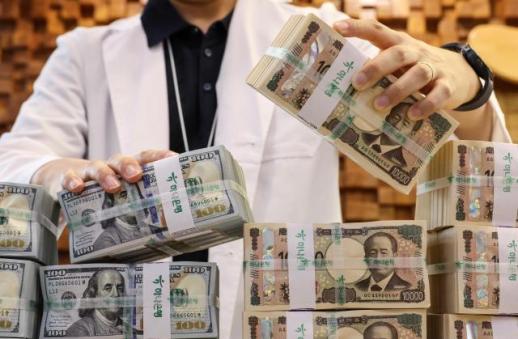 US-Japan yen rescue puts 1,400 won back in play, bonds shrug SEOUL, August 03 (AJP) - The blunt yen-defense campaign jointly mounted by Washington and Tokyo has fundamentally shifted the outlook for the Korean won, putting the psychologically important 1,400-per-dollar level back within reach after the currency spent much of the first half trading around 1,500. The same intervention, however, has offered little relief to Korea's sovereign bond market, where heavy government issuance and a hawkish Bank of Korea continue to outweigh improving global conditions. The won closed at 1,429.8 per dollar at 3:30 p.m. Monday, strengthening 3.5 won from its opening level of 1,433.3 after the coordinated intervention helped reverse its early losses. The currency has appreciated more than 8 percent over the past month, far outpacing the dollar index's 1.3 percent decline and the Japanese yen's 1.4 percent gain during the same period. By contrast, the benchmark 10-year Korean government bond yield was quoted at 4.268 percent in late-afternoon trading, 0.6 basis point above Friday's close after briefly falling to 4.247 percent earlier in the session. The divergent moves underscored that the intervention has become a far more powerful driver for foreign exchange than for Korea's longer-dated government bonds. The United States and Japan confirmed they jointly purchased yen on July 31 after the Japanese currency weakened to its lowest level in roughly four decades. U.S. Treasury Secretary Scott Bessent said Washington was prepared to participate in additional intervention if necessary, helping the yen rebound after it neared 164 per dollar. Although Korea was not directly involved, the operation significantly raised the risk of maintaining bearish positions against Asian currencies that had traded largely as proxies for the yen. The won had already strengthened sharply in July as dollar inflows increased following SK hynix's ADR offering, exporters stepped up dollar conversions and the Bank of Korea raised interest rates, narrowing the policy gap with the Federal Reserve. The currency appreciated 8.81 percent during July alone, its strongest monthly gain since March 2009, ending the month at 1,424 after beginning at 1,549.4. Most economists now see the won testing 1,400 in coming months, although views diverge over whether the rally can be sustained into year-end. Kim Seo-jae, an economist at Shinhan Bank, expects the won to strengthen beyond 1,400 during the third quarter before weakening again in the fourth quarter as large U.S. IPO-related dollar demand returns and expectations for additional Federal Reserve tightening potentially re-emerge. Taken together, the forecasts suggest the intervention has materially improved the won's near-term outlook without guaranteeing that overseas investment flows and U.S. monetary policy will not eventually reassert themselves. Bonds tell a different story The bond market responded far less enthusiastically because domestic supply and monetary policy remain the dominant drivers of longer-term yields. A stronger won reduces imported inflation and eases pressure on the Bank of Korea to tighten policy simply to defend the currency, providing greater support to short-dated bonds. Longer maturities, however, remain hostage to domestic issuance. The government auctioned 3.3 trillion won of two-year bonds Monday and is scheduled to sell another 2.8 trillion won of 30-year bonds Tuesday as part of August's 17 trillion won borrowing program. The approaching long-bond auction, combined with profit-taking after Friday's rally, kept investors cautious despite lower U.S. Treasury yields. Korea's benchmark 10-year government bond yield climbed 16.6 basis points during July after the Bank of Korea's first rate increase of the cycle and policymakers signaled additional tightening to curb inflation and speculative leverage. Meanwhile, U.S. Treasuries rallied, with the benchmark 10-year yield falling 5.7 basis points to 4.688 percent and the 30-year yield declining 4.2 basis points to 5.233 percent. The contrast illustrates that declining U.S. yields alone were insufficient to overcome Korea's immediate supply overhang. The Treasury angle The intervention also carries broader implications for global bond markets because Japan remains the largest foreign holder of U.S. government debt, with $1.143 trillion of Treasuries at the end of May. Large-scale yen intervention has historically raised concerns that Tokyo could finance dollar sales by liquidating Treasuries, putting upward pressure on global yields. Bessent sought to address those concerns by supporting wider use of the Federal Reserve's Foreign and International Monetary Authorities Repo Facility, which allows foreign central banks to obtain temporary dollar liquidity by pledging Treasuries as collateral rather than selling them outright. Greater use of the FIMA facility would enable Japan to fund future intervention while minimizing disruption to the U.S. Treasury market. That, in turn, could help contain upward pressure on long-term global yields and eventually benefit Korean government bonds through international rate linkages, although domestic issuance and Bank of Korea policy would likely remain the primary determinants of local yields. 2026-08-03 16:00:17
 -
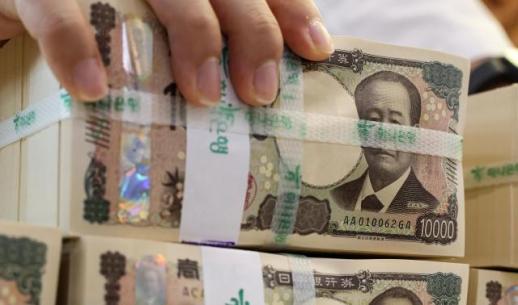 US, Japan vow to continue joint yen-supporting intervention SEOUL, August 03 (AJP) -The United States and Japan vowed Monday to continue supporting the yen after admitting to a rare joint intervention last week to stabilize the currency of the world's largest foreign holder of U.S. Treasuries, which also resulted in lifting both the South Korean won and U.S. government bonds. The admission explained last week's abrupt reversal in the yen, which in turn helped lift the South Korean won as investors unwound long-dollar positions across Asia. Since the July 31 intervention, the yen has strengthened from nearly ¥164 per dollar at its weakest point to around ¥160.2 on Monday, while the Korean won appreciated to 1,424 per dollar from 1,549.4 at the end of June. Japan’s Ministry of Finance said the two governments conducted coordinated yen-buying intervention on July 31 and remained prepared to act again if excessive volatility returned. The operation was carried out in accordance with a joint statement issued by the US and Japanese finance ministers in September last year, Japanese Finance Minister Satsuki Katayama said. Katayama said the intervention was aimed at countering recent excessive volatility and disorderly movements in the yen and that Tokyo would maintain close communication with Washington. US Treasury Secretary Scott Bessent confirmed the action in a statement Sunday, saying Washington supported Japan’s efforts to correct what he described as a substantial undervaluation of the yen. Bessent said the July 31 intervention had addressed disorderly movements in the Japanese currency and that the Treasury was closely coordinating with Japan’s Finance Ministry and the Bank of Japan. “We will not hesitate to participate in further joint intervention,” he said. US President Donald Trump also acknowledged Washington’s participation, telling reporters that Japan had needed assistance because of the yen’s decline. Trump said US participation reflected the close relationship between the two countries and would also benefit the global economy. The operation marked the first jointly acknowledged foreign-exchange intervention by the United States and Japan since March 2011. The 2011 intervention was conducted with other major economies to weaken the yen after the earthquake and tsunami in eastern Japan, while the latest operation sought to support the currency through yen purchases. It was also the first coordinated US action to strengthen the yen since 1998. The yen had weakened to almost 164 per dollar late last month, its lowest level in about four decades, before the two governments entered the market. The confirmation of the joint action pushed the dollar lower against the yen during Asian trading Monday. The South Korean currency also gained as the announcement reinforced expectations that US and Japanese authorities would resist renewed, disorderly yen depreciation. The won and yen are often sensitive to similar movements in the dollar and regional currency trading, although the US transaction did not involve a direct sale of dollars. The bond-market implications of the intervention have also drawn attention because Japan may need to raise dollars to finance repeated yen purchases. Japan is the largest foreign holder of US government debt, meaning outright sales of its Treasury holdings could add pressure to US long-term borrowing costs. As of May, it held $1.143 trillion worth U.S. treasuries. Bessent highlighted the Federal Reserve’s Foreign and International Monetary Authorities Repo Facility, or FIMA Repo Facility, as an important mechanism and called for its capacity to be expanded in the coming months. The facility allows approved foreign central banks and monetary authorities to obtain dollars temporarily by placing US Treasury securities with the Federal Reserve rather than selling them in the open market. The Fed has said the programme can help prevent disruptions in the Treasury market by reducing the need for foreign monetary authorities to sell their holdings outright when they require dollar liquidity. Japan said it planned to use the facility to secure sufficient dollar funding without selling its Treasury holdings. US Treasury yields declined during Asian trading after the joint intervention was formally confirmed. The benchmark 10-year Treasury yield stood at 4.696 percent as of 10:10 a.m. in Seoul, down 4.9 basis points from the previous close. The 30-year yield fell 3.5 basis points to 5.240 percent over the same period. 2026-08-03 11:33:31
 -
 South Korea to set up 20 trillion won strategic fund at KIC SEOUL, July 31 (AJP) - South Korea will establish a strategic investment account worth more than 20 trillion won ($14 billion) at the Korea Investment Corp. to supply long-term equity capital to artificial intelligence, semiconductors and other industries deemed critical to national competitiveness. The fund’s initial capacity to make new investments, however, is expected to be limited to about 600 billion won because most of its capital will consist of government-held shares rather than readily deployable cash. The Ministry of Economy and Finance unveiled the plan Friday at an emergency economic meeting chaired by Finance Minister Koo Yoon-cheol, detailing the funding, governance and investment structure of what it calls a Korean-style strategic sovereign wealth fund. Rather than creating a separate institution, the government will establish an independently managed account within KIC, which currently invests foreign-exchange reserves and other public assets primarily in overseas markets. The government plans to submit revisions to the Korea Investment Corp. Act in August and seek parliamentary approval by the end of the year, with investment operations scheduled to begin in 2027. The account will initially be capitalized with more than 16 trillion won in government-held shares in state-run financial institutions, including the Korea Development Bank, the Export-Import Bank of Korea and the Industrial Bank of Korea, as well as about 4 trillion won in shares received in lieu of inheritance and gift taxes. The government will transfer the public-sector shares without weakening its control of the institutions or breaching statutory ownership requirements, making immediate sales of most of the holdings unlikely. Dividends from those shares and proceeds from selective sales of tax-in-kind holdings are expected to provide an initial investment pool of about 600 billion won, with additional government contributions, retained returns and other fiscal resources potentially expanding its capacity later. The structure builds on a proposal announced in January, when the government first outlined plans for a 20 trillion won sovereign investment vehicle financed with state-owned and tax-in-kind shares. Officials initially considered creating a separate management body but decided earlier this month to use KIC, citing the institution’s two decades of investment experience and its network of foreign sovereign wealth funds and global asset managers. The account will target AI, semiconductors, robotics, biotechnology, defense, energy, nuclear power, aerospace and other strategic sectors, while also investing in infrastructure such as data centers and energy clusters. It may invest in overseas companies considered important to South Korea’s supply chains and industrial ecosystem and serve as an anchor investor to draw private and foreign capital into major domestic projects. Unlike conventional policy funds that mainly offer loans, guarantees or investments with predetermined exit periods, the strategic account will focus on direct equity investments without a fixed maturity or liquidation deadline. The account may also acquire stakes from the Korea Fund of Funds, the National Growth Fund and other state-backed vehicles as they approach their usual four- to eight-year investment horizons, allowing public capital to remain invested in promising companies for longer. KIC will exercise voting rights in proportion to its holdings and may engage with portfolio companies under stewardship principles, although detailed rules governing such involvement and a target rate of return have yet to be set. Officials have cited Singapore’s Temasek as a reference for the long-term equity investment model, although the Korean vehicle will operate as a separate account within KIC rather than as an independent state holding company. A firewall will separate the strategic account from KIC’s existing foreign-exchange reserve mandates across assets, accounting, personnel and investment decisions, preventing losses or policy-related risks from spilling over into reserve management. The government will determine eligible sectors and broad investment priorities, while KIC’s board and a dedicated strategic investment committee will decide on individual transactions, supported by newly recruited specialists in direct investment, industrial analysis and risk management. Returns generated by the account will be used for reinvestment, dividends to the government or transfers to the Treasury, with the government set to establish detailed investment and risk-management rules before the fund begins operations next year. 2026-07-31 16:16:18
 -
 Chip stock swings push Korea's FX turnover to record on hedging demand SEOUL, July 31 (AJP) - The same forces driving wild swings in South Korea's semiconductor stocks are now reshaping the country's foreign-exchange market. As AI-fueled volatility draws record foreign participation in Seoul's equity market, demand for currency hedging has pushed daily foreign-exchange turnover to an all-time high, a trend highlighted Friday when unprecedented overseas buying of Korean shares generated heavy FX trading but only a muted immediate rally in the won. The average daily value of spot and foreign-exchange derivatives transactions reached a record $121.44 billion in the April-June quarter, up 18.3 percent from $102.65 billion in the previous quarter, according to the Bank of Korea. The figure surpassed the previous record set only three months earlier and marked the highest level since the central bank began compiling the quarterly data in 2008. "The increase reflected a rise in foreign investors' purchases and sales of Korean-listed stocks and bonds, along with increased demand to hedge against fluctuations in the won," a BOK official said. Friday's trading provided a vivid example of that relationship. Foreign investors poured more than 7 trillion won into KOSPI shares — the largest single-day net purchase on record — while buying another 1.7 trillion won on the KOSDAQ as Samsung Electronics and SK hynix staged historic rallies after stronger-than-expected earnings from Microsoft and Amazon revived confidence in global AI infrastructure spending. Despite the record equity inflows, the won's gains were comparatively restrained. As of 3:30 p.m., the dollar traded at 1,425.9 won, strengthening from around 1,434 won earlier in the session but failing to mirror the magnitude of the stock-market surge. Foreign purchases of equities do not immediately translate into demand for won because stock trades settle several days after execution, delaying the accompanying currency conversion, a BOK official said. Dealers also cited importer demand for dollars as the won strengthened earlier in the day, while a modest weakening of the Japanese yen after the Bank of Japan kept interest rates unchanged and a rebound in the U.S. dollar index toward the 100 level also weighed on the Korean currency. The BOK's data suggest that heightened stock-market volatility is increasingly spilling over into currency markets through greater hedging activity. Spot transactions led the increase, climbing 27.7 percent from the previous quarter to a daily average of $54.11 billion. Won-dollar spot trading rose 31.4 percent to $43.74 billion, accounting for most of the increase. Trading involving non-residents jumped 41.1 percent to $17.76 billion, significantly outpacing a 23.6 percent increase in interbank transactions and an 18.3 percent rise in trades with domestic customers. Foreign-exchange derivatives also remained active, with daily turnover rising 11.7 percent to $67.32 billion. Forward transactions climbed 21.6 percent to $23.03 billion, led by non-deliverable forwards (NDFs), whose turnover increased 21.2 percent to $18.84 billion. The rise in NDF trading indicates stronger demand among offshore investors and financial institutions to hedge or adjust exposure to the Korean won without exchanging the underlying currencies at settlement. Foreign-exchange swaps, the largest segment of Korea's derivatives market, increased 7.5 percent to $42.03 billion, while currency swaps edged down 2.1 percent to $1.89 billion. By institution, turnover at domestic banks rose 20.1 percent to $55.51 billion a day, while Korean branches of foreign banks handled $65.93 billion, up 16.8 percent from the previous quarter. The central bank noted that the figures measure the combined value of purchases and sales rather than net capital flows, meaning the record reflects heightened trading activity and hedging demand rather than the direction of cross-border capital movement. 2026-07-31 15:41:53
 -
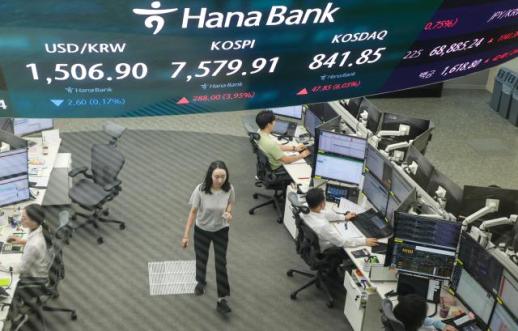 Foreign ownership in Korean shares rises despite record selloff SEOUL, July 31 (AJP) -Foreign investors sold nearly 50 trillion won ($31.2 billion) worth of South Korean equities in June, yet their ownership of the market climbed to 36.4 percent — the highest in months — suggesting the six-month selling streak has been more a portfolio reshuffle than a broad retreat as soaring share prices boosted the value of remaining holdings. Foreign investors recorded a net withdrawal of 44.86 trillion won from South Korea's listed securities in June, as heavy stock sales outweighed continued buying of government bonds, according to data released Friday by the Financial Supervisory Service (FSS). They sold a net 49.34 trillion won of listed equities, extending their selling streak to a sixth consecutive month. Net sales reached 50.98 trillion won on the benchmark Kospi, partly offset by net purchases of 1.64 trillion won on the Kosdaq market. Combined equity sales reached 163.56 trillion won during the first six months of the year, while total net outflows from stocks and bonds amounted to 149.78 trillion won, widening from 38.23 trillion won in May to 44.86 trillion won in June. Despite the persistent selling, the market value of foreign investors' Korean equity holdings rose by 56.33 trillion won from a month earlier to 2,908.64 trillion won, lifting their ownership share to 36.4 percent of the market from 35.3 percent in May and sharply from 30.8 percent at the end of December. European investors led the June selling, unloading a net 30.76 trillion won of shares, followed by investors from the Americas with net sales of 26.96 trillion won. By country, British investors sold a net 32.20 trillion won, while U.S. investors disposed of 23.18 trillion won and Luxembourg-based investors sold 4.27 trillion won. Buying was concentrated among Cayman Islands-based investors, who purchased a net 7.27 trillion won of shares, followed by investors from France with 6.11 trillion won and Hong Kong with 5.27 trillion won. U.S. investors remained the largest foreign shareholders, holding Korean stocks worth 1,222.34 trillion won, equivalent to 42 percent of all foreign-owned equities. The bond market told a different story. Overseas investors remained net buyers for a third straight month, recording net investment of 4.48 trillion won after purchasing 13.90 trillion won of listed bonds and receiving 9.42 trillion won through maturities and repayments. Government bonds attracted net inflows of 4.73 trillion won, while special-purpose and monetary stabilization bonds posted modest outflows. Foreign investors favored longer-dated debt, buying a net 7.86 trillion won of bonds with one to five years remaining to maturity and 6.52 trillion won of bonds maturing in more than five years, while reducing holdings of debt maturing within one year by 9.90 trillion won. Foreign holdings of listed bonds edged up by 1.21 trillion won from May to 334.79 trillion won, equivalent to 11.8 percent of the outstanding listed bond market. Combined foreign holdings of Korean listed stocks and bonds stood at 3,243.43 trillion won at the end of June. The FSS added its figures are compiled on a settlement basis, unlike Korea Exchange data, which are based on trade execution dates. 2026-07-31 14:38:49
 -
 Won visits 9-month high on suspected Seoul-Tokyo intervention SEOUL, July 31 (AJP) -The South Korean won briefly climbed to its strongest level against the dollar in nine months on Friday as traders speculated that Seoul and Tokyo had stepped into currency markets to head off yen carry-driven capital flight ahead of the Bank of Japan's policy decision. The won strengthened to 1,418 per dollar around 6 a.m., its strongest level since Oct. 20, 2025, before easing to around 1,435 by midday. The Korean currency since mid-July has staged a sharp recovery from crisis-era levels near 1,500 per dollar, gaining more than 7 percent since late June. The catalyst came from SK hynix's $26.5 billion American depositary receipt listing on Nasdaq on July 10, which drew substantial foreign inflows. Friday's overnight surge coincided with an equally abrupt rally in the Japanese yen, prompting traders to suspect coordinated dollar-selling intervention by South Korean and Japanese authorities. The dollar tumbled from above 163 yen to the 157-yen range overnight before recovering to around 160 yen in Asian trading. Reuters, citing market sources, reported that Japanese authorities bought yen and sold dollars in New York trading, while a separate Reuters report said South Korean authorities had also conducted a rare dollar-selling intervention. Neither government confirmed the reports. Seoul's Finance Ministry declined to comment on whether it had entered the market. Deputy Finance Minister Moon Ji-sung said South Korea remained in close communication with the United States and Japan on foreign-exchange developments. The Bank of Korea did not immediately respond to AJP's request for comment on the won's sharp appreciation or whether authorities had intervened. Lee Min-hyuk, an economist at KB Kookmin Bank, said the synchronized appreciation of the won and yen provided grounds for markets to suspect coordinated action. "Korean authorities may have viewed the yen's rally as an opportunity to support the won while broader dollar weakness was already taking hold," he said. The won later pared part of its gains as the yen also retreated. The dollar recovered to around 160 yen, reducing one of the key forces supporting the Korean currency. Importers buying dollars for settlement and bargain hunting after the exchange rate briefly entered the 1,410 range also likely contributed to the rebound. The U.S. dollar index, which tracks the greenback against six major currencies, remained below the psychologically important 100 level at 99.985, suggesting the won's pullback was not driven by broad-based dollar strength. The currency move came ahead of the Bank of Japan's policy decision. As widely expected, the BOJ kept its policy rate unchanged at 1.0 percent in an 8-1 vote after raising rates in June. Board member Hajime Takata dissented, arguing for a quarter-point increase to 1.25 percent to address upside inflation risks stemming from commodity prices and overseas financial conditions. While the dissent reinforced the BOJ's hawkish bias, markets viewed it as largely anticipated. Attention has now shifted to Governor Kazuo Ueda's press conference for clues on the timing of the central bank's next rate increase. Reuters separately reported that South Korea had conducted a rare dollar-selling intervention, citing a market source familiar with the transaction. Seoul’s finance ministry did not confirm whether it had entered the market. Deputy Finance Minister Moon Ji-sung said South Korea remained in close communication with the United States and Japan on foreign-exchange issues. The Bank of Korea did not immediately answer AJP’s questions about the cause of the won’s surge and whether authorities had intervened. Min-hyuk Lee, an economist at KB Kookmin Bank, said the simultaneous appreciation of the won and yen provided grounds to suspect that authorities in both countries had acted together. He said Korean authorities may have viewed the yen’s rally as an opportunity to support the won while broader dollar weakness was already taking hold. Friday morning’s pullback in the won appeared to reflect a partial reversal of intervention-driven positions rather than a renewed broad-based surge in the dollar. The yen surrendered part of its overnight advance as the dollar returned to around 160 yen, weakening one of the main forces that had pushed the won higher. Importers seeking dollars for settlements and bargain buying after the exchange rate briefly fell into the 1,410s may also have contributed to the rebound. The dollar index, which measures the greenback against six major currencies, remained below the 100 mark at 99.985, suggesting that the rise in dollar-won was not driven by a broad recovery in the U.S. currency. The won is rebounding before the Bank of Japan announces its policy decision, making it difficult to link the move directly to the central bank’s pending rate decision. The Bank of Japan decided to keep its policy rate unchanged at 1 percent in an 8-1 vote, as widely expected after raising borrowing costs in June. Board member Hajime Takata dissents and proposes a quarter-point increase to 1.25 percent, citing upside risks from commodity prices and changes in overseas financial conditions. The dissent provides a modestly hawkish signal but is unlikely to carry a large immediate market impact, as Takata’s opposition had been anticipated and the remaining eight members support a pause. Attention now shifts to Governor Kazuo Ueda’s press conference for signals on whether the bank could bring forward its next increase. 2026-07-31 13:04:38