

Journalist

Kim Yeon-jae김연재
duswogmlwo77@ajupress.com
ReporterBank of Korea & Market, Macroeconomics
Kim Yeon-jae is a journalist at AJU Press (AJP's English platform),
covering macroeconomics, international finance, and geopolitics.
He closely tracks central bank monetary policies, global energy supply chains,
and the Korean defense industry. "Peering into the risks behind the euphoria."
covering macroeconomics, international finance, and geopolitics.
He closely tracks central bank monetary policies, global energy supply chains,
and the Korean defense industry. "Peering into the risks behind the euphoria."
Latest by Kim Yeon-jae
-
 Dormant debt market exposes non-chip Korean Inc. slump SEOUL, August 06 (AJP) - Summer arrived early for South Korea's corporate debt market as only a handful of investment-grade issuers broke the drought amid rising borrowing costs and subdued investor demand, exposing the slump across much of non-chip Korean Inc. Public corporate bond issuance totaled 2.96 trillion won ($2.1 billion) in July, down 16.1 percent from June and 37.5 percent from a year earlier, according to the Korea Financial Investment Association. Only 11 issuers conducted bookbuilding across 23 tranches. Nearly all proceeds — 96.1 percent — were used to refinance existing debt rather than raise fresh capital, while more than 90 percent of issuance carried maturities of two or three years. Financial companies accounted for 61.9 percent of issuance, underscoring that public bond markets remain largely open only to banks and top-rated borrowers refinancing existing obligations. The divide was most evident in credit quality. Hanjin was the only BBB-rated company to tap the public bond market in July. The BBB+ logistics company attracted 44 billion won in orders for a 40 billion won offering overall, but its one-year tranche fell 1 billion won short of its target. By contrast, AA-rated issuers including KCC and Shinhan Securities comfortably exceeded their fundraising goals, highlighting investors' growing preference for top-tier credits rather than a broad shortage of liquidity. The weakness has persisted throughout the year. Net corporate bond issuance totaled 4.84 trillion won during the first seven months, down 76 percent from 20.17 trillion won a year earlier. The deterioration was sharper among non-financial companies, whose first-half issuance fell 31.5 percent to 25.91 trillion won, resulting in net redemptions of 9.60 trillion won. The market has also become increasingly concentrated. Bonds rated AA+ or higher accounted for 76.9 percent of non-financial issuance, while those rated BBB or below represented only 2.2 percent, suggesting credit differentiation, rather than the seasonal summer lull alone, is keeping lower-rated borrowers out of the market. "The July-August period is typically slow for issuance, but elevated interest rates have made it increasingly difficult for companies to raise funds through public bonds," said a credit analyst at a domestic securities firm, who declined to be identified. Shut out of long-term bond markets, many companies have turned to shorter-term financing. Combined issuance of commercial paper and short-term notes surged 68 percent from a year earlier to 1,272.85 trillion won in the first half as companies opted for funding that is cheaper, faster and easier to arrange than public bond offerings. The shift, however, comes at a cost. Short-term borrowing must be rolled over more frequently, exposing companies to refinancing risk if liquidity tightens or interest rates remain elevated. "The gap between long-term bond yields and short-term funding costs remains wide," another credit analyst said. "That is likely to keep corporate bond issuance subdued through September and October." The financing squeeze is affecting companies unevenly. Large investment-grade corporations continue to enjoy access to public bond markets, while lower-rated midsized firms increasingly rely on private placements, commercial paper, guaranteed securities and bank loans. Most SMEs remain dependent on bank lending and policy-backed guarantees, while startups rely largely on venture capital and government support rather than debt markets. Bank financing has also become more expensive. The average lending rate for SMEs rose 23 basis points in June to 4.38 percent, compared with a seven-basis-point increase to 4.17 percent for large companies, according to the Bank of Korea, underscoring the faster rise in borrowing costs facing smaller businesses. Policy support has helped cushion some of the strain. Korea Technology Finance Corp. (KOTEC) issued 238.9 billion won of primary collateralized bond obligations in the first half to support 129 technology SMEs, including 166 billion won in new funding and 72.9 billion won for refinancing. The increasingly fragmented funding landscape illustrates a broader divide across corporate Korea. While the country's semiconductor champions continue to enjoy abundant access to capital, much of the broader corporate sector is relying on shorter-term borrowing, bank credit and government-backed financing instead of long-term bonds. If that divide persists, pressure on investment, hiring and business expansion is likely to emerge first among midsized companies, SMEs and startups, underscoring how South Korea's AI-driven chip boom continues to mask a much weaker financing environment across much of non-chip Korean Inc. 2026-08-06 17:35:54
 -
 Police raid KFA as World Cup fiasco revives coach probe SEOUL, August 06 (AJP) - South Korea's football association was raided by police Thursday after its former president and former national team coach were grilled by lawmakers over the country's embarrassing exit from the latest FIFA World Cup. The Seoul Metropolitan Police Agency searched the Korea Football Association's headquarters in Cheonan and the KFA House in central Seoul under a warrant on suspicion of obstruction of business through deceptive means. Investigators seized records from the association's National Team Committee, national team division and World Cup support unit, along with forensic data from mobile phones and computers used by officials involved in the coaching selection. Police are investigating whether then-KFA President Chung Mong-gyu and then-technical director Lee Lim-saeng bypassed the association's rules and improperly influenced decisions reserved for the National Team Committee and the board. Former national team coach Hong Myung-bo was questioned as a suspect on Aug. 4 over how he became a candidate and whether he held prior discussions with senior KFA officials before the formal selection process. Police have consolidated nine complaints alleging offences including obstruction of business, coercion and breach of trust. The institution came under scrutiny and public outcry after South Korea failed to advance beyond the group stage of the 2026 World Cup, losing 1-0 to both Mexico and South Africa after opening with a 2-1 victory over the Czech Republic. Hong resigned on June 29 as criticism intensified over both the team's performance and the process that brought him to the job. The probe tracks down the five-month search launched after Jurgen Klinsmann was dismissed in February 2024. National Team Committee Chairman Chung Hae-sung resigned shortly before a final decision was made, leaving Lee to oversee the remainder of the search. A subsequent Sports Ministry audit found that Lee was neither a member nor the formally appointed chairman of the committee and had not been delegated authority to recommend a candidate. Nevertheless, he interviewed and ranked the three finalists before selecting Hong. According to the ministry, Lee conducted formal interviews in Europe with two foreign finalists, widely reported to have been Gus Poyet and David Wagner, but met Hong privately at about 11 p.m. on July 5, 2024, at a bakery near Hong's home without an observer, prepared questions or a separate tactical presentation. The ministry also found that Hong had been tied with a foreign candidate in committee recommendations, contrary to the KFA's public portrayal of him as the clear first choice. It further concluded that announcing Hong's appointment before obtaining written board approval effectively reduced the board's role to a formality. In November 2024, the Sports Ministry concluded that the appointment process contained serious procedural defects and sought disciplinary action against Chung, Lee and another senior KFA official, while stopping short of declaring Hong's contract invalid. The Seoul Administrative Court reinforced that finding in April, rejecting the KFA's attempt to overturn the ministry's disciplinary measures and ruling that the association had acted improperly in handling the coaching appointment and other governance matters. The KFA has appealed. Hong has denied receiving preferential treatment, telling a parliamentary hearing on July 30 that he believed the appointment process complied with the rules when he accepted the position. The KFA has likewise argued that its regulations did not prescribe a single interview format and that Lee was authorized to complete the search after the committee chairman resigned. The ministry's audit and the court ruling, however, do not by themselves establish criminal liability. Investigators must still prove that KFA officials intentionally used deception or improper influence to interfere with the National Team Committee's or the board's legitimate decision-making authority. The KFA said it would cooperate fully with the investigation, which remains at the evidence-gathering stage. 2026-08-06 15:23:59
 -
 Won rides U.S.-Japan intervention as Seoul stays muted, Beijing cries foul SEOUL, August 06 (AJP) - South Korea has kept a studied silence over the first openly acknowledged U.S.-Japan currency intervention in decades, even as the won emerged as one of its biggest beneficiaries, while China condemned the operation as a self-serving bargain that is unlikely to alter the yen's long-term decline. The contrasting reactions underscore how Washington and Tokyo's joint defense of the yen has rippled differently across Asia. Seoul has avoided publicly commenting on the operation despite the stronger won, whereas Beijing has openly questioned both Washington's motives and the intervention's ability to change the currency's underlying trajectory. A rare assessment circulated by the Bank of Korea's Beijing office summarized Chinese views after U.S. and Japanese authorities confirmed on Aug. 3 that they had jointly intervened in the foreign-exchange market on July 31 to support the yen. The Bank of Korea itself has issued no official assessment, underscoring its cautious stance toward an operation that nevertheless carries important implications for the Korean currency. Ironically, the intervention's strongest follow-through has appeared outside its original target. According to an AJP analysis of closing exchange rates, the yen appreciated 3.67 percent against the dollar between July 29 and Aug. 5, ahead of the won's 1.43 percent gain. But after Washington joined Tokyo on July 31, the picture shifted. The won strengthened 1.45 percent through Aug. 5, while the yen was little changed, suggesting the intervention's immediate impact faded as broader regional positions adjusted. The sequence points to a two-stage market response: the yen received the initial lift, while the unwinding of yen-funded carry trades and broader repositioning across Asian currencies produced a stronger tailwind for the won. The yuan also strengthened, but only marginally, indicating that the operation generated far less spillover into Chinese markets. That divergence also mirrors Beijing's assessment. Chinese state media and market analysts argued the operation was driven less by alliance solidarity than by Washington's own economic interests. The Global Times described it as a "blatant quid-pro-quo deal," saying the United States sought to protect its manufacturers and Treasury market while shifting much of the economic cost onto Japan. From China's perspective, the intervention may discourage speculative selling of the yen in the near term, but it cannot reverse the structural forces keeping the currency weak, including the wide U.S.-Japan interest-rate gap, fiscal concerns in Japan and the continuing appeal of yen-funded carry trades. Beijing also argued that a stronger yen would ultimately hurt Japan more than the United States by squeezing exporters and slowing the country's economic recovery, while any benefit to the yuan would remain limited because China's exchange rate continues to be driven primarily by domestic fundamentals and official management. For South Korea, however, the implications are more immediate. The won trades closely alongside the yen and is widely used by global investors as a liquid proxy for broader Asian currency exposure, making it especially responsive to shifts in regional dollar positions. South Korea's record current-account surplus has provided an additional domestic tailwind, reinforcing the currency's post-intervention gains. Whether those gains endure will depend less on official intervention than on the Bank of Japan's policy path, future U.S. support and the persistence of Korea's external surplus. ___________________________________________________________________________________ AJP Takeaways The U.S.-Japan currency intervention lifted the yen 3.67 percent over the full July 29–Aug. 5 window, but the Korean won outperformed after the July 31 joint move with a 1.45 percent gain. A Bank of Korea Beijing office assessment highlighted Chinese criticism that the intervention served U.S. economic interests and was unlikely to reverse the yen's long-term weakness. The Korean won benefited from yen-related regional repositioning and South Korea's record current-account surplus, while the Chinese yuan received only limited spillover. 2026-08-06 14:42:15
 -
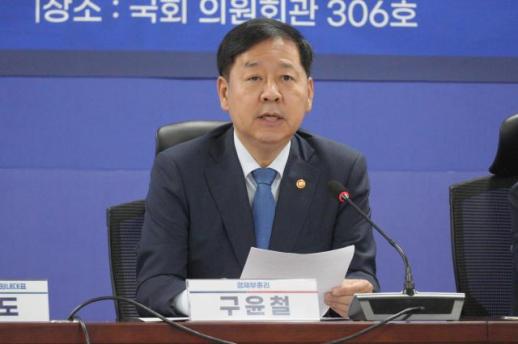 Seoul to rewrite public wealth rulebook to include cypto and AI assets SEOUL, August 06 (AJP) - South Korea will rewrite the rules governing nearly 1,403 trillion won ($985 billion) of public assets by bringing cryptocurrencies, intellectual property and financial holdings under a unified national wealth framework, marking the country's biggest overhaul of state asset management since the State Property Act was enacted more than seven decades ago. The Ministry of Economy and Finance unveiled the blueprint Thursday at an emergency economic ministers' meeting chaired by Finance Minister Koo Yun-cheol, setting out legal, governance and digital infrastructure for what it calls the K-Asset Innovation Project. At the center of the overhaul is a proposed Framework Act on National Assets, which would replace the current State Property Act, enacted in 1950, with legislation built around the broader concept of managing national wealth rather than simply owning and disposing of government property. State-owned assets have expanded more than sevenfold to 1,402.7 trillion won from 188.3 trillion won in 2001, but management remains fragmented across ministries, special accounts and public funds and is still largely geared toward land and buildings. The government argues that the existing property-based framework no longer reflects the changing composition of public wealth. While securities and intellectual property are already covered under existing law, officials say they lack management systems tailored to valuation, shareholder rights, licensing and disposal. Cryptocurrencies, meanwhile, have no explicit statutory framework. The government stressed that the 1,402.7 trillion won figure does not represent a sovereign investment portfolio or assets readily available for sale, as much of it consists of administrative property and infrastructure needed to provide public services. Instead, the new framework would distinguish assets requiring direct operational management from those held primarily for accounting or statistical purposes. One of the earliest legal changes would cover about 78 billion won worth of cryptocurrencies held by the central government as of April, most of them acquired through confiscation, forfeiture or donations. The government is considering auctioning digital assets soon after acquisition as the default disposal method while allowing sales to be split into smaller tranches when immediate liquidation could disrupt relatively thin markets or unnecessarily depress prices. The proposed legislation would also authorize the government to use private cryptocurrency exchanges for custody and disposal and establish legal grounds for recovering assets held in overseas exchanges and digital wallets. Government-owned intellectual property, valued at 2.3 trillion won at the end of last year, would shift toward a "use-first" model that emphasizes commercialization over disposal. Licensing periods could be extended beyond the current five-year limit, while contracts, royalties and revenue-sharing arrangements would be managed through a proposed national intellectual property bank. The overhaul also seeks to establish common standards for acquiring, valuing and disposing of the government's 328.7 trillion won portfolio of securities and equity holdings, including unified rules governing voting rights and shareholder engagement, which are currently exercised differently across ministries, public funds and special accounts. Management of the government's 711.1 trillion won in land and buildings would also be integrated under common development guidelines, supported by an annual matching process designed to reallocate underused properties among ministries, local governments and public institutions. A new National Asset Management Committee, comprising government officials and private-sector experts, would oversee broad policy, while each ministry would appoint a senior national asset officer responsible for compliance and stewardship of its holdings. The Korea Asset Management Corp., or Kamco, would receive an expanded mandate to manage and dispose of government assets on behalf of ministries, although officials have yet to determine how much authority should ultimately be centralized. By the end of this year, the government plans to integrate asset information from central and local governments and public institutions into its dBrain digital budget and accounting system before beginning work in 2027 on an artificial intelligence-powered database tentatively named K-Asset Cloud. Officials say the platform will identify idle assets and match them with public-sector demand, replacing today's fragmented coordination with a standardized annual process covering asset classification, demand surveys, site selection and development planning. A public-private task force led by the finance ministry and supported by the Korea Development Institute will prepare a draft of the framework act by year-end. Key details—including valuation methodologies, disposal rules, exemptions and the division of authority among government agencies—remain under negotiation. AJP Takeaways South Korea is redefining state property as national wealth through its biggest public asset overhaul in more than 70 years. The reform brings crypto, intellectual property and financial assets into the same management framework as land and buildings. The government aims to extract greater value from 1,402.7 trillion won in public assets through AI-driven management and unified governance. 2026-08-06 10:24:25
 -
 Korea's chip windfall swells C/A to record black while foreign equity exit deepens SEOUL, August 6 (AJP) - South Korea's semiconductor-driven export boom lifted its current account surplus to a record US$191 billion in the first half, nearly four times a year earlier, even as foreign investors pulled almost $89 billion from Korean stocks over the same period in the largest sustained equity outflow on record, central bank data showed Thursday. The current account surplus widened to $49.73 billion in June from the previous record of $38.61 billion in May and more than tripled from $13.97 billion a year earlier, according to preliminary data from the Bank of Korea. The black streak has extended to 38 consecutive month, the country's second-longest run since 2000. For the January-June period, the current account surplus reached a record $191.01 billion, compared with $47.87 billion in the same period last year, underscoring this year's exceptional chip power. The external surplus, however, contrasted sharply with foreign exit from Korean stocks. Foreign investors sold a record $31.61 billion worth of Korean stocks in June, surpassing May's previous record $31.05 billion outflow. Combined with earlier months, foreigners were net sellers of $106.28 billion worth of Korean equities in the first half, underscoring continued profit-taking despite the country's export-led earnings boom. Offsetting part of the outflow, foreign investors purchased $17.53 billion of Korean bonds during the first six months, supported by inflows tied to South Korea's inclusion in the FTSE World Government Bond Index, leaving a net first-half portfolio outflow of $88.76 billion. Korean residents joined the capital flight. They bought $48.56 billion worth of foreign equities during the first half, little changed from a year-ago, while reducing holdings of overseas bonds by $4.43 billion as expectations of further U.S. Federal Reserve tightening weighed on global fixed-income markets. Reflecting those cross-border investment flows, the financial account posted a record net asset increase of $46.71 billion in June, up from $31.08 billion in May. The first-half financial account recorded a cumulative $168.66 billion net asset increase. The goods account remained the principal driver of the current account, posting a record $47.89 billion surplus after exports jumped 84.5 percent from a year earlier to an unprecedented $112.37 billion. Imports rose 38.6 percent to $64.48 billion as purchases of raw materials, capital goods and consumer products all increased. Information technology exports surged 160.4 percent, led by a 196.9 percent jump in semiconductors and a 282.7 percent increase in computer peripherals, including solid-state drives. Non-IT exports also rose 18.6 percent, supported by petroleum products, chemicals, steel and passenger cars. The services account recorded a $1.29 billion deficit, slightly wider than the $1.09 billion shortfall in May. The travel account posted a $440 million surplus, up from $50 million a month earlier, as inbound tourism strengthened while higher fuel surcharges curbed overseas travel by Koreans. The balance on the use of intellectual property swung to a $440 million deficit from a $70 million surplus in May after unusually large royalty settlements in the previous month boosted receipts. The primary income account surplus widened to $3.27 billion from $2.17 billion, supported by higher dividend income from overseas investments and seasonally lower dividend payments to foreign investors. 2026-08-06 08:09:16
 -
 Korean won emerges as winner in U.S. "prosper-thy-neighbor" yen defense SEOUL, August 05 (AJP) - Currency intervention has long been viewed as a classic beggar-thy-neighbor policy, with governments weakening their currencies at the expense of trading partners. The latest U.S.-Japan operation appears to be doing the opposite, giving the South Korean won an unexpected tailwind alongside the yen. That raises an obvious question: Has Washington suddenly become more generous? Why would an administration that has championed "America First" intervene in a way that also supports South Korea, China and the rest of Asia? U.S. Treasury Secretary Scott Bessent's explanation suggests the answer is no. Supporting the yen is not an act of generosity but one of self-interest. Washington believes a sharply weaker yen would trigger competitive devaluations across Asia, undermine U.S. exporters and ultimately threaten global financial stability. In that sense, helping Japan also helps America. "If the yen were to weaken substantially, then the other currencies would follow it," Bessent told CNBC. "That could trigger competitive devaluations, which is unhealthy." Until June, the yen and won have been trading at multi-decades lows. Washington sees the yen as a regional anchor and believes a sharp depreciation in the Japanese currency could drag down the Korean won, Chinese yuan and other Asian currencies, undermining U.S. exporters while raising the risk of broader financial instability. Bessent went further, arguing that an excessively weak yen had contributed to the 1997-98 Asian financial crisis. "The Asian financial crisis, in my opinion, part of it was triggered by an overly weak yen," he said. "A stable yen is not only important for the U.S., but it's very important for the entire region." In effect, Washington is arguing that supporting one ally's currency is the best way to stabilize Asia's broader foreign-exchange complex. He said intervention buys Japan time to implement policies that can support the currency over the longer term. "We can give market signals, but at the end of the day, it's going to be policy and fundamentals," Bessent said. "The U.S. decided to join because we are very optimistic on their policy path." Asked whether Washington was prepared to intervene again, Bessent replied that the United States would do "whatever it takes" to support Japan "in a way that helps the American economy, the American taxpayer, and stabilizes the global economy." The remarks sit somewhat uneasily with the Trump administration's broader "America First" agenda, which has generally emphasized U.S. interests over regional coordination. Yet in the currency market, Washington appears to have concluded that stabilizing the yen ultimately serves American interests as well. For Seoul, the outcome has been welcome, regardless of Washington's motivation. The dollar-won exchange rate fell 141 won last month, from 1,559 won to 1,418 won, according to KB Kookmin Bank, before trading around 1,423 won on Wednesday afternoon in Seoul. The won, which ended June at 1,549.4 per dollar—nearly 8 percent weaker than six months earlier—had recovered to trade about 0.5 percent stronger for the year as of Aug. 4. The yen, which had fallen 3.47 percent from the end of 2025 to 162.15 per dollar by June 30, recovered following the intervention but remained 0.65 percent weaker than its year-end level at 157.73 as of Aug. 4. South Korean authorities have not confirmed intervention. But Reuters, citing market participants and analysts, reported that South Korea and Japan each bought their own currencies on July 30, when the won strengthened about 2 percent to its strongest level in nine months. Japan returned to the market the following day in a coordinated operation with the United States, with the U.S. Treasury selling euros to purchase yen, although Washington has not disclosed the size of its transaction. KB Kookmin Bank found that a 1 percent decline in the dollar-yen exchange rate has historically been accompanied by an average 0.6 percent decline in dollar-won, based on monthly data between August 2021 and July 2026. The bank said further intervention could trigger additional short-covering in the yen, forcing investors to unwind long dollar-won positions as well. The mechanism reflects the won's role as one of Asia's most liquid proxy currencies. Global investors frequently use the Korean won to express broader views on Asia and China because it trades more freely than many regional currencies. When investors are forced to cover bearish bets against the yen, those position adjustments often spill over into the won as well. Still, analysts caution against attributing the Korean currency's entire appreciation to intervention alone. The latest rally has also been supported by corporate dollar repatriation, broader weakness in the U.S. dollar and lower oil prices, all of which have improved South Korea's external balance. Another factor drawing market attention is Washington's proposal to expand the Federal Reserve's Foreign and International Monetary Authorities Repo Facility, or FIMA. The facility allows foreign central banks to obtain short-term dollar funding against U.S. Treasury holdings instead of selling those securities outright, potentially enabling Japan to finance yen purchases while preserving its roughly $1.14 trillion Treasury portfolio. Bessent has urged the Federal Reserve to consider raising FIMA's $60 billion limit, arguing that the Treasury market has expanded substantially since the program was introduced in 2020. Daleep Singh, chief global economist at PGIM, described a larger facility as positive for Treasury-market stability but "a shock absorber, not a cure," while Evercore ISI warned that any cap could eventually encourage markets to test Washington's commitment. For South Korea, however, FIMA matters less because Seoul is expected to use the facility than because it could spare the won from bearing one-way regional selling pressure without U.S. support for the yen. The Bank of Korea reported Wednesday that foreign exchange reserves rose to $427.95 billion at the end of July, up $590 million from the previous month. The increase reflected foreign-currency stabilization bond issuance, investment income, valuation gains on non-dollar assets and foreign-exchange swaps with the National Pension Service, meaning the figure does not directly measure recent intervention capacity. Market participants nevertheless believe Washington's involvement has materially changed investor psychology. Dominic Bunning, head of G10 foreign-exchange strategy at Nomura, said Japan was no longer confronting markets alone with U.S. backing, while MUFG strategist Lee Hardman said recent rate checks by the New York Fed had heightened expectations of further action. Even so, Bunning cautioned that the current arrangement remained closer to tacit U.S. support than the fully coordinated intervention mounted after Japan's 2011 earthquake. KB Kookmin Bank estimates the dollar-won's fair value at around 1,417 based on the dollar index, the Korea-U.S. interest-rate differential and structural foreign-exchange supply and demand. Position adjustments could temporarily push the exchange rate toward 1,390, the bank said, while stronger-than-expected U.S. economic data and renewed Federal Reserve tightening expectations could instead send it back toward 1,450. Atsushi Takeuchi, a former Bank of Japan official who participated in past interventions, said Washington and Tokyo would probably act again if the yen resumed its slide. But he warned that intervention alone could not deliver lasting appreciation without tighter Japanese monetary policy and reduced expectations for fiscal expansion. Whether this rare "prosper-thy-neighbor" approach marks a lasting shift in regional currency management remains uncertain. A sustained break below 1,400 won per dollar will ultimately depend less on intervention than on stronger Japanese policy fundamentals, continued U.S. backing and healthy dollar inflows into South Korea. AJP Key Takeaways • The U.S.-Japan yen intervention is providing the Korean won with an indirect backstop by reducing depreciation pressure across Asian currencies. • Because the won closely tracks the yen, coordinated support for Japan's currency could keep downward pressure on the dollar-won exchange rate. • A durable move below 1,400 won per dollar, however, will require stronger policy fundamentals rather than intervention alone. 2026-08-05 17:48:56
 -
 Won, Korean bonds rally as Middle East tensions ease SEOUL, August 05 (AJP) - South Korea’s won and government bonds rallied on Wednesday as optimism over a potential U.S.-Iran agreement pushed oil prices lower, easing inflation concerns and drawing investors back into local assets. The won closed the daytime session at 1,424.5 won to the dollar, strengthening by 8.0 won, or 0.56 percent, from Tuesday’s close of 1,432.5. The three-year Korean government bond yield fell 7.1 basis points to 3.669 percent, while the 10-year yield dropped 11.0 basis points to 4.150 percent. Bond prices move inversely to yields. Oil prices declined on signs that Washington and Tehran were moving closer to an agreement that could include reopening the Strait of Hormuz, reducing concerns over energy-driven inflation in oil-dependent South Korea. The retreat in U.S. Treasury yields reinforced the rally in longer-dated Korean debt as traders trimmed expectations for near-term monetary tightening by the Federal Reserve. The gap between the 10- and three-year Korean government bond yields narrowed by 3.9 basis points to 48.1 basis points, producing a bull-flattening move as longer maturities outperformed. The move suggested that expectations of further tightening by the Bank of Korea continued to limit gains at the short end, while longer-dated bonds responded more strongly to falling oil prices and lower global yields. The won also drew support from renewed foreign demand for Korean equities. Offshore investors bought a net 1.45 trillion won ($1.02 billion) of shares on the main KOSPI market, helping the benchmark index close 3.76 percent higher at 6,598.26. Comments from U.S. Treasury Secretary Scott Bessent that the won had displayed excessive volatility also left traders cautious about betting against Asian currencies following an unusual U.S.-Japan intervention to support the yen. The won’s advance was capped by dollar demand from importers and Korean retail investors purchasing overseas equities, preventing the currency from holding gains reached near the low-1,420 range earlier in the session. 2026-08-05 17:47:52
 -
 Bad loans at Korea's top banks hit 7-year high SEOUL, August 05 (AJP) -South Korea's five largest banks saw bad loans climb to a seven-year high in the second quarter, driven overwhelmingly by deteriorating corporate credit quality as stress spread across lenders' balance sheets. Loans classified as "estimated loss" — the weakest asset-quality grade and the portion banks consider effectively unrecoverable after accounting for collateral and expected recoveries — totaled 1.21 trillion won ($849 million) at KB Kookmin, Shinhan, Hana, Woori and NH NongHyup Bank at the end of June. The total increased 26.6 percent from 956.7 billion won a year earlier and 18.1 percent from 1.03 trillion won at the end of March, reaching its highest level since the second quarter of 2019, when the balance stood at 1.25 trillion won. Under South Korea's five-tier asset-quality classification system, loans are graded as normal, precautionary, substandard, doubtful and estimated loss. The estimated-loss category includes loans deemed effectively unrecoverable, typically involving borrowers in default, liquidation, bankruptcy or prolonged delinquency after collateral values and other recoveries have been taken into account. Estimated-loss loans, together with substandard and doubtful loans, are classified as non-performing loans, making them one of the clearest gauges of credit deterioration within banks' loan books. Corporate borrowers accounted for the bulk of the deterioration. Estimated-loss corporate loans rose 26.3 percent from a year earlier and 18.5 percent from the previous quarter to 980.9 billion won, representing about 81 percent of the five banks' total bad-loan balance. The concentration suggests credit quality is deteriorating far more rapidly among businesses than households despite concerns over household debt. Estimated-loss household loans also increased, rising 28.1 percent on year to 229.8 billion won, although they remained a much smaller share of the total. Among individual lenders, Shinhan Bank held the largest estimated-loss balance at 342.1 billion won, up 48 percent from a year earlier. NH NongHyup Bank followed with 265.5 billion won, while KB Kookmin Bank reported 248.9 billion won. Woori Bank recorded the fastest annual increase, with its balance surging 80.9 percent to 171.6 billion won, followed by Hana Bank, where estimated-loss loans climbed 55.1 percent to 182.8 billion won. NH NongHyup was the only lender to report a year-on-year decline, although its balance increased from the previous quarter. Signs of weakening credit quality were also emerging earlier in the lending cycle. Loans classified as precautionary — borrowers showing signs of financial weakness but not yet classified as non-performing — increased to 10.22 trillion won at the end of June, up 5.7 percent from a year earlier and 9.7 percent from three months earlier. Hana Bank reported the largest precautionary-loan balance at 2.48 trillion won. Borrowers in the precautionary category can be downgraded to substandard or worse if repayment conditions continue to deteriorate, including when delinquencies extend beyond 90 days. The simultaneous increase in precautionary and estimated-loss loans suggests that credit stress is spreading through multiple stages of banks' asset-quality classifications rather than being confined to already distressed borrowers. The deterioration comes before the Bank of Korea raised its benchmark interest rate by 25 basis points to 2.75 percent on July 16 to curb persistent inflation and financial stability risks. That means the latest monetary tightening has yet to be reflected in second-quarter bank balance sheets. The buildup in bad loans leaves banks balancing stronger interest income against rising credit costs as higher borrowing rates increasingly strain weaker corporate and household borrowers. AJP Takeaway: Bad loans at South Korea's five largest banks reached a seven-year high in the second quarter. Corporate borrowers accounted for more than 80 percent of the increase, signaling mounting stress in business lending. The deterioration occurred before the Bank of Korea's July rate hike, suggesting asset quality could come under further pressure in coming quarters. 2026-08-05 14:27:16
 -
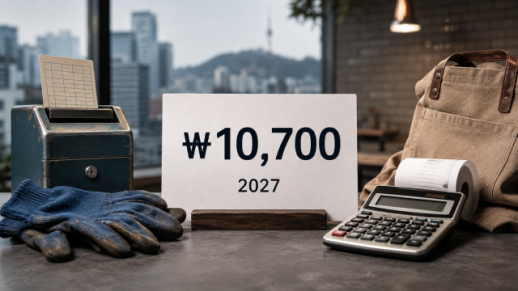 South Korea finalizes next year's minimum wage at 10,700 won per hour SEOUL, August 5 (AJP) - South Korea's minimum wage for next year was finalized at 10,700 won (about US$7) per hour on Wednesday, following an agreement reached last month by a 27-member committee comprising nine representatives each from workers, employers and government-appointed independent members. The Ministry of Employment and Labor said the new minimum wage will take effect on Jan. 1 and apply uniformly across all industries and workplaces. For full-time employees, it amounts to a monthly salary of 2.24 million won based on a 40-hour workweek, up 79,420 won from this year. After several rounds of negotiations, the committee agreed on July 14 to raise the minimum hourly wage by 3.7 percent from the current 10,320 won to 10,700 won next year. Even after the deal was reached, both labor and small-business groups had raised objections, calling for broader labor protection. The Federation of Korean Trade Unions (FKTU) called the agreement "deeply disappointing," saying it failed to reflect the struggles of low-wage workers and rising living costs and calling for minimum wage coverage to be extended to contract workers and platform workers including delivery workers and riders. On the other hand, the Korea Federation of Micro Enterprises (KFME) opposed the decision, warning that the increase could hurt small-business owners and result in more job losses. The ministry rejected both objections after deliberation. No minimum wage decision has been returned for reconsideration since South Korea began setting a minimum wage in 1988. Meanwhile, the 3.7 percent increase is the largest since 2023, following increases of 2.5 percent in 2024, 1.7 percent in 2025 and 2.9 percent this year. It also stands 0.9 percentage points above July's annual consumer inflation rate of 2.8 percent, although the actual benefit for low-paid workers will depend on price movements before and after the new rate takes effect. The committee estimates that the increase will directly affect 660,000 workers or 3.8 percent of employees, based on a workplace survey, while a separate economically active population survey puts the figure at nearly 3 million or 13.3 percent of employees. The ministry said it would step up public guidance and workplace inspections to ensure businesses follow the new minimum wage rules. 2026-08-05 10:34:13
 -
 Korea's FX reserves up marginally July on bond issuance and softer USD SEOUL, August 05 (AJP)- South Korea's foreign exchange reserves rose only marginally in July despite a record euro-denominated sovereign bond sale and favorable currency valuation effects, as foreign exchange operations and swaps with the National Pension Service offset much of the inflow, central bank data showed Wednesday. The country's reserves stood at $427.95 billion at the end of July, up $590 million from $427.36 billion a month earlier, according to the Bank of Korea. The modest increase came as gains from a weaker U.S. dollar, investment returns on reserve assets and proceeds from the government's foreign exchange stabilization bond issuance were largely offset by foreign exchange swaps with the National Pension Service and other market operations. The BOK did not disclose how much each factor contributed to the monthly change, consistent with its practice of withholding detailed breakdowns of reserve movements related to currency market intervention and swap transactions. The U.S. dollar lost more than 8 percent against the Korean won in July from a prior month, steeper than 1.31 percent fall in the dollar index. South Korea's finance ministry raised 1.7 billion euros ($1.94 billion) through dual-tranche foreign exchange stabilization bonds on July 8, marking the country's largest-ever euro-denominated issuance. The sale consisted of 700 million euros of three-year notes and 1 billion euros of seven-year notes. The bonds were priced at 10 basis points and 28 basis points above the euro mid-swap rate, respectively, representing the lowest spreads ever achieved for Korean euro-denominated stabilization bonds. The ministry confirmed strong investor demand, secured despite heightened geopolitical uncertainty in the Middle East, reflected confidence in South Korea's economic fundamentals and was expected to lower overseas funding costs for Korean borrowers by establishing a tighter benchmark spread. The issuance completed the government's planned $5 billion equivalent foreign-currency bond program for this year. South Korea's reserves nevertheless remained $100 million below the $428.05 billion recorded at the end of 2025, leaving the country's external liquidity buffer broadly unchanged over the first seven months of the year. Securities, which account for the largest share of the reserves, fell $340 million from June to $380.01 billion, representing 88.8 percent of the total. Deposits increased $860 million to $23.13 billion, accounting for 5.4 percent of the reserves. Special Drawing Rights allocated by the International Monetary Fund rose $60 million to $15.70 billion, while South Korea's reserve position at the IMF increased $10 million to $4.32 billion. Gold holdings were unchanged at $4.79 billion, accounting for 1.1 percent of total reserves. South Korea was the world's 10th-largest holder of foreign exchange reserves at the end of June, the latest month available for international comparison. China remained the largest holder with $3.416 trillion, followed by Japan ($1.288 trillion) and Switzerland ($1.088 trillion). Russia, India, Taiwan, Germany, Saudi Arabia and Hong Kong ranked fourth through ninth, while Singapore placed 11th with $426.2 billion, slightly below South Korea's end-June total. 2026-08-05 07:37:33