

Journalist
Kim Yeon-jae김연재
duswogmlwo77@ajupress.com
ReporterBank of Korea & Market, Macroeconomics
Kim Yeon-jae is a journalist at AJU Press (AJP's English platform),
covering macroeconomics, international finance, and geopolitics.
He closely tracks central bank monetary policies, global energy supply chains,
and the Korean defense industry. "Peering into the risks behind the euphoria."
covering macroeconomics, international finance, and geopolitics.
He closely tracks central bank monetary policies, global energy supply chains,
and the Korean defense industry. "Peering into the risks behind the euphoria."
Latest by Kim Yeon-jae
-
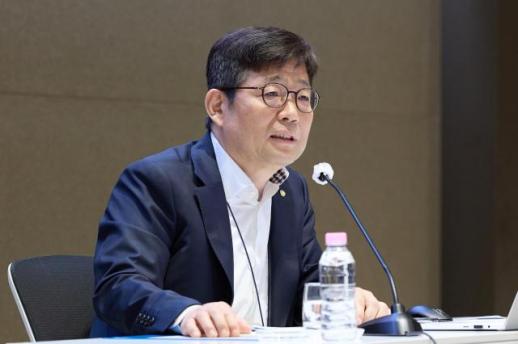 Outgoing BOK deputy argues for tightening bias SEOUL, August 11 (AJP) - The Bank of Korea should retain tightening bias as a surge in export income feeds into domestic demand and intensifies inflation and housing pressures, its outgoing deputy said Tuesday. Senior Deputy Governor Ryoo Sang-dai said further rate lifting remained necessary, although the timing and pace of additional moves should be determined by incoming data. “We need to maintain the rate-hike stance, while deciding the timing and pace of further increases based on the data,” Ryoo told reporters. The presentation stated that the assessment represented Ryoo’s personal views rather than the BOK’s official position, limiting the extent to which it can be treated as formal guidance for the central bank’s next policy decision. The remarks nevertheless amount to a parting assessment from a sitting member of the seven-member Monetary Policy Board, with Ryoo’s three-year term set to expire on Aug. 20. The BOK raised its benchmark rate by 25 basis points to 2.75 percent in July, its first increase since November 2022, after holding it steady in April and May amid uncertainty generated by the Middle East conflict. Ryoo said the calculus shifted as higher oil prices lifted inflation while the semiconductor boom strengthened economic growth faster than expected. Recent second-quarter gross domestic product and July inflation data confirmed that the combination of solid growth and above-target price pressures remained intact, he said. The current tightening cycle differs from Korea’s previous four rate-hike periods since 2000 because an improvement in the terms of trade has produced an unusually large expansion in nominal income and the current account, according to Ryoo. Korea posted a current-account surplus of $191 billion in the first half, already 1.6 times the $123.1 billion recorded for all of last year. The BOK’s May forecast placed the full-year surplus at about $250 billion, while nominal GDP expanded 17.1 percent from a year earlier in the first quarter. Ryoo said the resulting income windfall was likely to spread gradually from exporters into consumption and investment, strengthening domestic demand even as higher interest rates weighed on borrowers. That transmission makes the inflation outlook more complicated. Oil prices are raising costs both directly and through supply chains, while the semiconductor boom is lifting wages and feeding demand for domestic services, Ryoo said. The increase in headline inflation may be smaller than the surge that followed Russia’s invasion of Ukraine, but it could prove more persistent as supply-side pressure is reinforced by stronger demand. Financial stability provides another reason to retain a tightening stance. Expectations of further housing gains and instability in rental markets have kept home prices rising rapidly in Seoul and parts of the surrounding capital region, while higher asset prices have encouraged renewed household borrowing. Seoul’s price-to-income ratio stood at 17 in the first quarter, compared with a nationwide ratio of seven, highlighting the affordability gap between the capital and the rest of the country. BOK model estimates showed that a 25-basis-point rate increase could lower household debt growth by 0.16 percentage point and housing-price growth by 0.27 percentage point. Ryoo acknowledged that further increases could raise debt-servicing burdens, particularly for vulnerable borrowers, although strong income growth should cushion the effect at the aggregate level. Monetary policy alone, however, would not be sufficient to contain housing risks, he said. Interest-rate decisions need to be aligned with macroprudential measures, housing supply and tax policies and efforts to ease Korea’s concentration of population and economic activity in the Seoul metropolitan area. Selective fiscal and financial support should meanwhile address the widening burden across industries and income groups, while the BOK’s lending programs could strengthen the transmission of monetary policy to targeted sectors. Ryoo also called for continued reform of Korea’s foreign-exchange market, saying its depth had failed to keep pace with the rapid growth in residents’ overseas investment and the expansion of domestic capital markets. The BOK should continue efforts including round-the-clock foreign-exchange trading and offshore won settlement, he said, while policymakers should use Korea’s AI-driven income gains to finance productivity-enhancing investment and prepare for longer-term structural change. ________________________________________________________________________________ AJP Takeaways Deputy Governor Ryoo Sang-dai, whose tenure ends next week, said the BOK should retain its rate-hike stance, with the timing and pace of further moves determined by incoming data. Korea’s semiconductor boom has generated record external surpluses and income growth, but the gains are increasingly feeding domestic demand and inflation. A 25-basis-point increase is estimated to reduce household debt growth by 0.16 percentage point and housing-price growth by 0.27 percentage point. 2026-08-11 15:17:44
 -
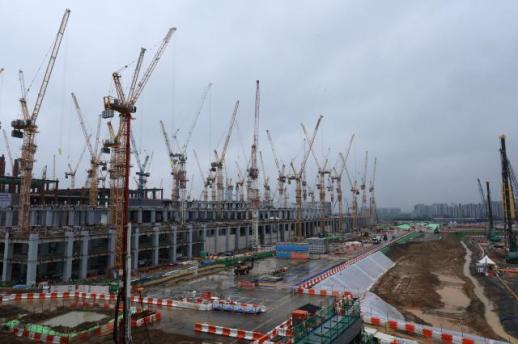 Chip surge drives Korea's record early-August exports SEOUL, August 11 (AJP) - South Korea's exports jumped 45.3 percent from a year earlier to $21.29 billion in the first 10 days of August, the highest for any Aug. 1-10 period, customs data showed Tuesday. The figure surpassed the previous early-August record of $15.6 billion set in 2022. Both periods contained seven working days, with average daily exports also rising 45.3 percent to $3.04 billion. Semiconductor exports soared 155.4 percent to $9.95 billion, marking a record for the early-August period. Chips accounted for 46.8 percent of total exports, up 20.1 percentage points from a year earlier, according to the Korea Customs Service. Exports excluding semiconductors rose about 5.4 percent to $11.33 billion, according to an AJP calculation based on preliminary customs data. The latest figures extend a broader export rally fueled by global investment in artificial-intelligence infrastructure, which has lifted demand for memory chips and data-center equipment. Petroleum-product exports rose 65.3 percent to $2.00 billion, while computer peripherals surged 139.5 percent to $587 million. The gains were partly offset by an 80.9 percent plunge in passenger-car exports and declines of 58.2 percent in ships and 36.3 percent in automobile parts. Shipments to China more than doubled to $6.75 billion, rising 134.8 percent from a year earlier. Exports to Vietnam increased 45.4 percent to $2.39 billion, while those to the European Union climbed 57.2 percent to $1.50 billion. Exports to the United States edged down 0.2 percent to $2.05 billion, contrasting with the sharp gains recorded in most other major markets. China, Vietnam and the United States together accounted for 52.5 percent of South Korea's outbound shipments. Imports rose 23.1 percent to $19.49 billion. Semiconductor imports climbed 90.8 percent and chipmaking-equipment imports gained 77.3 percent, while lower crude-oil and gas purchases pulled total energy imports down 13.8 percent. South Korea posted a trade surplus of $1.80 billion, reversing a $1.18 billion deficit in the same period last year. The customs agency cautioned that the preliminary figures cover a short period and may be affected by shipment schedules. AJP Takeaways South Korea's exports jumped 45.3 percent to a record $21.29 billion in the first 10 days of August. Semiconductor exports surged 155.4 percent to $9.95 billion and accounted for 46.8 percent of total exports. Exports excluding semiconductors rose by about 5.4 percent to $11.33 billion. Exports to China rose 134.8 percent to $6.75 billion, while shipments to the United States slipped 0.2 percent to $2.05 billion. 2026-08-11 15:09:31
 -
 SK hynix emerges as a whale in Korea's thin debt waters SEOUL, August 10 (AJP) - SK hynix, a dominant force in South Korea’s stock market, is now looming large over its debt market as its AI-fueled cash bonanza gives the chipmaker the deep pockets to gobble up entire bond offerings. Market participants estimate its purchases of bonds and commercial paper this year at as much as 40 trillion won ($28.2 billion), with individual orders reportedly ranging from 100 billion won to 300 billion won. In some cases, SK hynix has taken entire offerings. The company has not disclosed its fixed-income portfolio, while issuers and underwriters involved have declined to comment. Without a disclosed portfolio or calculation method, it remains unclear whether the widely cited 40 trillion won figure represents outstanding holdings or cumulative transactions. Market reports indicate the buying began in February and accelerated around April, months before SK hynix raised about $26.5 billion through an American depositary receipt offering in July, ruling out the new share proceeds as the source of its earlier investments. Most of the money has flowed into debt rated AA or higher with maturities of three years or less, including bonds issued by public corporations, banks, financial holding companies, brokerages and credit-finance firms, along with commercial paper. Market estimates include about 2.7 trillion won of Korea Electric Power Corp. bonds, 1.4 trillion won of NH NongHyup Bank debt and 1.05 trillion won of Shinhan Bank bonds. SK hynix is also reported to have absorbed the entire 1.26 trillion won long-term commercial-paper offering by Mirae Asset Securities. A short-term funding-market source cited in local reports said deals often begin with SK hynix asking issuers whether they have debt matching its preferred maturity and credit quality, sometimes ending with the chipmaker taking the entire offering. Much of the investment is believed to have been made through trust accounts at five large brokerages in a reverse-inquiry process, under which issuers structure debt around the buyer’s requirements. That buying power is beginning to change the way Korea’s primary credit market operates. An asset manager who requested anonymity said issuers increasingly check SK hynix’s appetite before approaching broader investors, effectively reducing the amount of new debt available to others. There is no comprehensive data, however, showing how far its purchases have moved yields or credit spreads. A bond broker said SK hynix has eased placement pressure for issuers in the primary market but done little to revive secondary-market trading, while there is limited evidence that the liquidity has filtered down to lower-rated borrowers. Its deep pockets are therefore reinforcing rather than breaking Korea’s existing credit divide. Public corporate bond issuance totaled 2.96 trillion won in July, down 16.1 percent from June and 37.5 percent from a year earlier, according to the Korea Financial Investment Association. Refinancing accounted for 96.1 percent of proceeds, while more than 90 percent of issuance carried maturities of two or three years. Financial companies accounted for 61.9 percent of July issuance. BBB+ rated Hanjin was the only BBB-rated borrower to conduct public bookbuilding during the month, and its one-year tranche fell short of its target, in sharp contrast with oversubscribed offerings from AA-rated companies. SK hynix’s demand fits neatly into that market: short-term, highly rated debt carrying relatively little credit risk. Behind its growing clout is a cash pile swollen by the unprecedented profitability of AI memory. SK hynix reported 88 trillion won in cash and cash equivalents at the end of June, up 33.6 trillion won in just three months. Total debt fell to 18.6 trillion won, leaving net cash of 69.4 trillion won. First-half operating profit approached 100 trillion won as booming demand for high-bandwidth memory used in artificial-intelligence accelerators transformed the chipmaker’s balance sheet. The company is also said to be considering a roughly $3 billion stake sale in its chip facility in Chongqing, China, while the value of its holding in Japanese NAND flash maker Kioxia has risen sharply with the broader AI memory boom. Its July ADR offering added another enormous pool of capital, although SK hynix has said those proceeds will primarily fund the Yongin semiconductor cluster, its Cheongju P&T7 advanced-packaging plant and extreme-ultraviolet equipment. Only part of the proceeds will be converted into won, and the company has not disclosed the amount or timing. Nor has SK hynix stopped spending heavily on its core business. Its board on Friday approved 54.3 trillion won in investment for two new fabs — 35.2 trillion won for its Y2 plant at the Yongin semiconductor cluster and 19.1 trillion won for the M17 fab in Cheongju. The projects underline the unusual scale of the company’s current financial firepower: SK hynix is simultaneously pouring tens of trillions of won into new semiconductor capacity while emerging as one of the most aggressive cash investors in Korea’s credit market. Its reach could expand further. SK hynix has advertised treasury positions covering Korean government bonds, corporate debt and short-term instruments, prompting market participants to view sovereign debt as another possible destination for its cash. No government-bond purchases have been confirmed. For now, perhaps the clearest sign of SK hynix’s growing influence is what happens when it briefly steps away. Reports that some credit-finance companies scrambled for alternative buyers when the chipmaker slowed its investment toward the end of June suggest its treasury schedule is already becoming a market variable in its own right. After becoming one of the names that can swing Seoul’s stock market, SK hynix is increasingly becoming a name Korea’s debt market cannot ignore. __________________________________________________________________________________ AJP Takeaways • SK hynix has emerged as a major buyer of short-dated, high-grade Korean bonds and commercial paper, with 2026 purchases estimated at up to 40 trillion won. • Its buying is helping top-rated issuers place new debt but doing little to ease financing pressure on lower-rated borrowers. • With 88 trillion won in cash and massive AI earnings, SK hynix’s treasury decisions are becoming an increasingly important variable across Korea’s credit market. 2026-08-10 17:40:39
 -
 Korean investors return to U.S. stocks without deserting KOSPI SEOUL, August 10 (AJP) -South Korea’s campaign to draw investor money back home has failed to break the country’s appetite for U.S. stocks, with overseas buying resuming in June and accelerating through early August, even without easing up on buying at home. Nonfinancial corporations and other investors — a Bank of Korea category that includes households and companies outside the financial sector — sold a net $525.7 million of overseas equities in the second quarter, their first quarterly net sale in 10 quarters. That marked a sharp reversal from the first quarter, when the group bought a net $9.91 billion of overseas equities after purchasing $14.69 billion in the final quarter of 2025. But the retreat proved short-lived. The group sold $424.9 million in April and $605.5 million in May before returning to a net purchase of $504.7 million in June, showing that the quarterly pullback was concentrated in the first two months. Institutional investors kept up buying overseas. General government entities purchased a net $7.20 billion of foreign equities during the quarter, deposit-taking institutions $786 million and other financial institutions $13.57 billion. The April-May retreat came as Korean stocks rallied, expectations grew for tax incentives under the Reshoring Investment Account and the won hovered near 1,500 per dollar, making domestic equities relatively more attractive while raising the cost of buying assets abroad. Korea Securities Depository data compiled by AJP showed Korean investors settled $33.84 billion of foreign equity purchases against $28.61 billion of sales between July 1 and Aug. 7, leaving net buying of $5.23 billion. Virtually all of it went into U.S. equities. U.S. stocks drew a net $5.25 billion during the period — $4.64 billion in July and another $609.1 million through Aug. 7 — while all other overseas markets combined recorded a net $26.1 million sale. Still, the renewed U.S. buying did not come at the expense of Korean stocks. An AJP aggregation of daily Korea Exchange data showed retail investors bought a net 13.52 trillion won ($9.56 billion) of individual KOSPI and KOSDAQ shares between July 1 and Aug. 7. That included 5.04 trillion won in July and 8.48 trillion won in just the first seven days of August. The parallel buying suggests Korean investors are not simply shifting money back and forth across the Pacific. They are adding exposure on both sides. Demand also extended beyond equities. Korean investors settled $9.44 billion of overseas bond purchases and $5.74 billion of sales during the July 1-Aug. 7 period, producing net buying of $3.71 billion. The domestic and overseas figures are not directly comparable. Korea Exchange data cover retail transactions in individual KOSPI and KOSDAQ shares and exclude exchange-traded funds and Nextrade transactions, while the overseas figures cover settlements by Korean investors more broadly. The BOK is due to publish its July balance-of-payments report on Sept. 4, offering the first official indication of whether the renewed overseas buying is also visible in data compiled on a consistent investor and accounting basis. 2026-08-10 14:25:04
 -
 BOK revamps monetary bonds as market liquidity thins SEOUL, August 10 (AJP) - The Bank of Korea is out to sharpen the appeal of its policy bonds by concentrating issuance into fewer, larger benchmark securities, as outstanding central-bank debt falls below 100 trillion won ($70.6 billion) while government bonds increasingly dominate Korea’s public fixed-income market. The overhaul will also divide early redemptions into a predictable schedule and a more discretionary operation, giving the central bank greater flexibility to manage bank reserves as Korea’s liquidity conditions become less one-sided. Monetary stabilization bonds, or MSBs, are debt securities issued by the BOK to drain reserves from the financial system. Issuance withdraws liquidity, while maturity payments and early redemptions return funds to the market. The bonds have historically played an unusually prominent role in Korea because the central bank used them to sterilize liquidity generated by current-account surpluses, capital inflows and the accumulation of foreign-exchange reserves. That environment has shifted as rising demand for banknotes, larger statutory reserve requirements and the BOK’s foreign-exchange swaps with the National Pension Service have reduced the amount of excess reserves that must be absorbed. Outstanding MSBs fell from 107.29 trillion won at the end of last year to 95.16 trillion won in March, dropping below the 100 trillion-won mark for the first time since 2003. The declining stock has added urgency to a longstanding liquidity problem. Research by the Korea Capital Market Institute found that MSBs trade less actively than Korean government bonds and that turnover drops sharply after the first month following issuance. The BOK will extend the fungible issuance period for one-year MSBs to three months from two, reducing the number of new one-year securities created each year to four from six. The new securities will be dated March 1, June 1, Sept. 1 and Dec. 1, replacing the current cycle of six issue dates. Concentrating issuance over a longer period should increase the amount outstanding in each security and make it easier to trade without moving prices sharply. The most recently auctioned coupon bond in each of the one-, two- and three-year maturities will also be designated as the benchmark issue and identified in the BOK’s monthly issuance plan. The designation is intended to give investors a clearer reference price for each maturity, although it does not by itself guarantee deeper trading. Unlike primary dealers in the Korean government bond market, MSB participants are not required to provide continuous exchange quotes, and most transactions take place over the counter. The BOK said it would work with relevant institutions on further measures to promote trading in the benchmark issues. Early redemptions will be separated into two operations. A first-Tuesday operation will cover three securities selected according to a predetermined remaining-maturity schedule, while a third-Tuesday operation will cover about three securities chosen each month according to reserve and market conditions. The BOK has already conducted two buybacks in some recent months, but the overhaul formalizes the arrangement and separates predictability from discretion. Uneven demand was evident in an Aug. 7 operation, when one one-year security attracted no bids even though total offers exceeded the planned purchase amount. The approach brings the MSB market closer to the logic underpinning Korea's much larger Treasury market, where liquidity tends to concentrate in benchmark securities. The contrast between the two markets is becoming more pronounced. While MSBs are shrinking, Korean government bonds are becoming more deeply integrated into global fixed-income portfolios following Korea's entry into the FTSE World Government Bond Index. South Korean government bonds began entering the WGBI in April this year, with inclusion being carried out in eight monthly stages through November. That process is increasing the importance of deep liquidity and reliable benchmark pricing in the Treasury market as index-tracking global investors allocate money to Korean sovereign debt. Rather than competing with government bonds for scale, the BOK is trying to ensure that its smaller pool of central-bank securities does not become fragmented into increasingly illiquid individual issues. Unlike primary dealers in the Korean government bond market, MSB participants are not required to provide continuous exchange quotes, and most trading takes place over the counter. The BOK said it would therefore work with relevant institutions on additional measures to promote transactions in designated benchmark issues. The overhaul also changes the other side of the MSB market — how the BOK takes its securities back before maturity.Early redemptions will be divided into two operations. A first-Tuesday operation will cover three securities selected according to a predetermined remaining-maturity schedule, giving investors greater certainty over which bonds are likely to be bought back. A third-Tuesday operation will cover around three securities selected each month according to reserve conditions and market circumstances, preserving the BOK's ability to inject liquidity where it considers necessary. The central bank has already conducted two buybacks during some recent months, but the new system formalizes the arrangement and draws a clearer distinction between predictable market operations and discretionary liquidity management. In an Aug. 7 early-redemption operation, one one-year security received no bids even though aggregate offers across the operation exceeded the BOK's planned purchase amount, illustrating how liquidity and investor demand can vary sharply between individual MSB issues. The reform also reflects a broader transformation in the way the BOK manages reserves. A falling MSB balance does not necessarily imply easier monetary policy. The BOK raised its base rate by 25 basis points to 2.75 percent on July 16, even as the amount of structural excess liquidity requiring absorption has declined. The two developments highlight the distinction between setting the price of money through the policy rate and managing the quantity of reserves through MSBs, repurchase agreements and other open-market operations. As reserve conditions become more balanced, the BOK increasingly needs the ability to both absorb and supply liquidity rather than operating primarily in one direction. The BOK will move its one-year auction from the second Wednesday of each month to the first and shift the two-year auction in the opposite direction. The changes take effect Aug. 31 and will be reflected in the September issuance plan scheduled for Aug. 27. ___________________________________________________________________________________ AJP Takeaways The BOK will reduce the number of new one-year MSB issues to concentrate liquidity in larger benchmark securities. Early redemptions will combine a fixed schedule with a flexible monthly operation to improve reserve management. The reform addresses market liquidity but stops short of replacing MSBs with repurchase agreements. 2026-08-10 12:41:53
 -
 Won rallies to 10-month high, bonds flat before U.S. jobs SEOUL, August 07 (AJP) - The South Korean won strengthened to its highest level in about 10 months on Friday, buoyed by heavy local dollar supply, while Korean government bond yields barely moved as investors waited for U.S. employment data later in the day. The won closed daytime trading at 1,416.1 per dollar, strengthening 7.7 won from the previous session despite higher oil prices and a firmer dollar overseas. Exporter dollar selling, custody-related flows and expectations of continued supply linked to SK hynix's U.S. American Depositary Receipt proceeds outweighed the unfavorable external backdrop, with local reports citing broad dollar offers through the session. No specific SK hynix conversion was confirmed on Friday. The won's resilience stood out as Brent crude climbed about 1.5 percent to $83.78 a barrel on renewed Middle East tensions and U.S. Treasury yields rose, while the KOSPI slipped about 0.5 percent. Korean government bond yields were little changed, with the three-year yield edging up 0.4 basis point to 3.746 percent and the 10-year yield rising 1.3 basis points to 4.208 percent, according to final quoted yield data from the Korea Financial Investment Association. The limited moves reflected caution ahead of the U.S. jobs report, as higher U.S. Treasury yields and oil prices exerted modest upward pressure on Korean yields while expectations that the Bank of Korea could pause after July's rate increase helped keep the market anchored. Markets are now focused on U.S. nonfarm payrolls due at 9:30 p.m. Korea time, with economists expecting employment to increase by about 80,000 in July after a 57,000 gain in June. The report is expected to play a key role in shaping expectations for the Federal Reserve's September policy decision. A weaker reading could reinforce the won's rally and pull Korean yields lower by reducing expectations for another Fed rate increase, while stronger employment and wage growth could lift the dollar and U.S. yields and renew pressure on Korean financial markets. 2026-08-07 17:12:43
 -
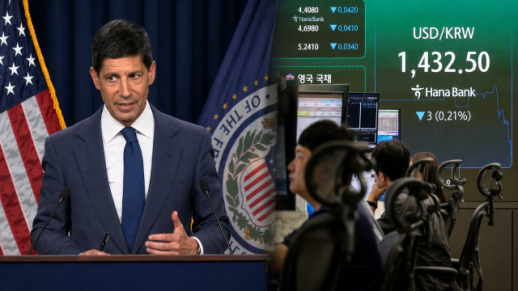 US jobs test puts BOK August pause in focus SEOUL, August 07 (AJP) - Seoul's capital markets have slipped into a summer lull, leaving Friday's U.S. employment report as the most immediate test of whether the Bank of Korea can pause this month after restarting its tightening cycle in July. A sharp slowdown in U.S. hiring would weaken the case for another Federal Reserve rate increase, take pressure off the dollar and give the BOK more room to stay put. Resilient employment and wages could do the opposite, reviving expectations for back-to-back rate increases in Korea. The U.S. Labor Department is due to release its July employment report at 9:30 p.m. Korea time, with economists polled by Reuters expecting nonfarm payrolls to rise by 80,000 after a 57,000 increase in June. Unemployment is forecast to remain at 4.2 percent and annual wage growth at 3.5 percent. Estimates for payroll gains range widely from 10,000 to 140,000, while revisions to May and June could prove nearly as important as the July headline. Recent indicators have pointed to softer hiring without offering the Federal Reserve much relief on inflation. ADP reported a weaker-than-expected 44,000 increase in private payrolls in July, while the Institute for Supply Management's services employment index slipped into contraction. Its prices gauge, however, climbed sharply, confronting policymakers with slower hiring but little corresponding easing in price pressures. The Fed held its benchmark rate at 3.50 percent to 3.75 percent on July 29, but three of its 12 voting members favored a quarter-point increase. Markets on Friday were pricing roughly a 54 percent chance of a September hike. Higher oil prices and U.S. Treasury yields have further complicated the outlook. That means a modest payroll slowdown alone may not kill expectations for further tightening if unemployment stays low and wages remain firm. For Korea, the U.S. jobs report matters chiefly through what it does to interest rates and the won. A stronger-than-expected U.S. employment report in June quickly lifted expectations for Fed tightening, pressured the Korean currency and pushed up domestic long-term yields, illustrating how rapidly an American labor-market surprise can spill into Seoul. The BOK now faces a finer balance after raising its base rate by 25 basis points to 2.75 percent on July 16, its first increase in more than three years. Korean government bond yields nevertheless fell on the day of the decision, with the three-year yield dropping to 3.848 percent and the 10-year to 4.297 percent, suggesting investors did not expect rate increases to follow automatically at every meeting. The argument for an August pause gained ground this week after headline consumer inflation slowed to 2.8 percent in July from 3.2 percent in June. But core inflation accelerated to 2.6 percent, keeping the central bank wary of declaring its renewed tightening campaign finished. Growth gives the BOK room to move again if necessary. Second-quarter gross domestic product expanded 0.6 percent from the previous quarter and 3.7 percent from a year earlier, supported by the semiconductor boom and improving domestic demand. That leaves Friday's U.S. jobs report as an important external swing factor. A weak reading would likely pull down expectations for a September Fed hike, U.S. short-term yields and the dollar. A stronger won would in turn ease imported inflation pressure and give the BOK greater latitude to leave its rate at 2.75 percent on Aug. 27. A strong payroll figure accompanied by resilient wages or lower unemployment could reverse that chain, pushing up the dollar and U.S. yields and renewing pressure on the won just as Korea's core inflation and economic growth remain firm. For Korean markets, the crucial number is therefore not simply whether payrolls beat or miss the 80,000 consensus. It is whether the combination of hiring, unemployment, wages and revisions materially changes the Fed's September path — and how quickly that repricing reaches the won and Korean government bonds. The won closed daytime trading at 1,416.1 per dollar on Friday, strengthening 7.7 won from the previous session to its strongest level in about 10 months as dollar-selling pressure prevailed ahead of the U.S. report. The three-year Korean government bond yield was trading around 3.76 percent and the 10-year yield near 4.22 percent at around 3:30 p.m., with expectations for an August BOK pause anchoring the short end while higher oil prices and U.S. Treasury yields kept greater pressure on longer maturities. ___________________________________________________________________________________ AJP takeaways U.S. July jobs data could shape the Bank of Korea's August rate decision by changing expectations for the Federal Reserve's September policy move. A weaker U.S. employment report would strengthen the case for a BOK pause at 2.75 percent by easing U.S. yields, weakening the dollar and reducing pressure on the Korean won. A strong U.S. payroll and wage reading could revive expectations for another Korean rate hike as higher U.S. rates and a stronger dollar increase inflation and currency pressure in Seoul. South Korea's inflation picture remains mixed: headline CPI slowed to 2.8 percent in July, but core inflation accelerated to 2.6 percent. The won and Korean government bond yields are the key transmission channels linking U.S. employment data and Fed expectations to the BOK's Aug. 27 policy decision. 2026-08-07 16:25:11
 -
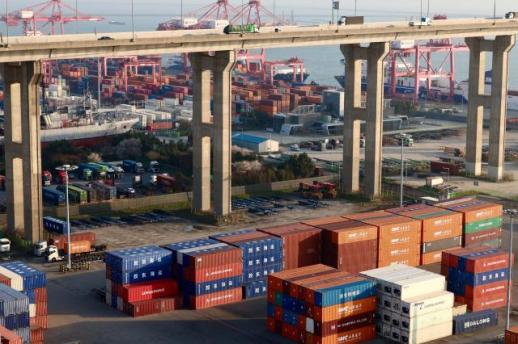 AI chip boom puts Korea ahead of Japan, lifts China trade SEOUL, August 07 (AJP) -South Korea's dominance in artificial intelligence memory chips is reshaping Asia's trade landscape, helping the country overtake Japan in merchandise exports while driving a surge in shipments to China despite Beijing's aggressive push for semiconductor self-sufficiency. China's imports from South Korea nearly doubled in July, extending an AI-fueled trade boom that has transformed Korea into one of the biggest beneficiaries of the global race to build data centers and AI infrastructure. China imported $31.05 billion worth of Korean goods in July, up 97.8 percent from a year earlier, according to data released Friday by the General Administration of Customs. Chinese exports to South Korea rose a slower 46.6 percent to $18.12 billion, while imports from Korea increased 67 percent over the first seven months of the year. The latest figures came as China's overall imports climbed 27.5 percent in July and exports rose 23.9 percent, both exceeding market expectations. Although July's country-by-product breakdown has yet to be released, recent trade data point overwhelmingly to semiconductors as the principal driver. South Korea's exports to China also jumped 96 percent in July, while total semiconductor shipments surged 179 percent as soaring memory prices and continued investment in artificial intelligence infrastructure fueled demand. Overall exports rose 62.8 percent to $98.89 billion. The surge has become large enough to alter Asia's export rankings. South Korea exported $496.3 billion worth of goods during the first half of the year, surpassing Japan's $384.4 billion for the first time on record, according to trade data compiled by Nikkei from official statistics in South Korea, Japan, Taiwan, JETRO and the United Nations. Taiwan also overtook Japan, underscoring how AI has shifted export growth toward semiconductor-producing economies. Unlike Japan, whose exports remain anchored by automobiles, machinery and industrial equipment, South Korea has emerged as one of the world's biggest beneficiaries of the AI investment cycle through Samsung Electronics and SK hynix, the two dominant suppliers of high-bandwidth memory used in AI servers. China has become one of the largest destinations for that demand. Korean semiconductor exports to China and Hong Kong climbed steadily from $9.63 billion in January to a record $20.03 billion in June. Annual growth accelerated from 122.5 percent in January to 227.4 percent in June, with semiconductors accounting for the majority of Korea's ICT exports to the two markets. The Ministry of Trade, Industry and Energy has attributed the gains to expanding demand for AI servers and sharply higher DRAM and NAND flash prices. Korea's semiconductor exports reached a record $44.82 billion in June, nearly triple the level a year earlier. The trend is particularly striking because China has simultaneously accelerated efforts to reduce reliance on imported memory. ChangXin Memory Technologies (CXMT) has expanded into the world's fourth-largest DRAM producer, while Yangtze Memory Technologies continues to increase NAND production. Yet the pace of AI-driven demand appears to have outstripped domestic supply, leaving Chinese manufacturers heavily dependent on imported Korean memory chips. CXMT completed a record 57.9 billion yuan ($8.6 billion) initial public offering on Shanghai's STAR Market in July, the largest semiconductor listing on mainland China and Asia's biggest IPO this year and dealing a brief upset to Korean chipmakers. The company has said it will use the proceeds primarily to expand DRAM production capacity and upgrade manufacturing technology as Beijing accelerates its drive for semiconductor self-sufficiency. CXMT currently operates three 12-inch DRAM fabrication plants in Hefei and Beijing, with industry estimates putting combined capacity at roughly 300,000 wafers per month. The company is planning an additional 12-inch fabrication plant in Beijing while pursuing further expansion in Shanghai and Hefei, projects that could more than double its production capacity over the coming years. Much of that memory is incorporated into servers, smartphones, personal computers and other electronics assembled in China before being sold domestically or exported worldwide. China's own export data tell a similar story. Semiconductor exports nearly doubled in value in July, while shipments of high-tech products rose 40.7 percent, underscoring how the AI investment cycle is boosting trade across the region even as parts of China's domestic economy remain under pressure. While detailed July customs data have yet to confirm how much of Korea's export surge came specifically from semiconductors, the first-half trend strongly suggests AI memory remains the engine behind the rapidly expanding Korea-China trade relationship. A clearer breakdown will depend on the release of Korea's July ICT trade figures or Chinese customs data showing July imports of Korean integrated circuits, including HS 8542. __________________________________________________________________________________ AJP Takeaways China imported $31.05 billion of South Korean goods in July, up 97.8 percent from a year earlier, while Korean exports to China rose 96 percent. Korean semiconductor exports to China and Hong Kong climbed from $9.63 billion in January to $20.03 billion in June, suggesting chips likely remained an important driver of bilateral trade in July even though detailed country-by-product data are not yet available. China's CXMT and YMTC are rapidly expanding domestic memory production, but Korean chip shipments have continued to rise as AI-server demand and higher memory prices outpace the growth in Chinese supply. 2026-08-07 15:42:12
 -
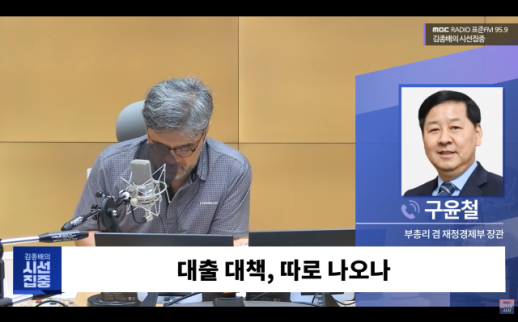 Seoul plans homebuyer relief after mortgage squeeze draws criticism SEOUL, August 07 (AJP) - South Korea is preparing targeted relief from mortgage restrictions for young and first-time homebuyers, responding to criticism that its efforts to curb property speculation have made it even harder for households without substantial savings to buy homes. The move would mark a limited adjustment rather than a reversal of Seoul's household-debt crackdown, seeking to preserve curbs on leveraged property purchases while easing financing constraints on owner-occupier buyers. Deputy Prime Minister and Minister of Finance and Economy Koo Yun Cheol said Friday that the government was considering "targeted support" for low-income and genuine homebuyers facing difficulties under existing lending rules. His remarks came after an interviewer raised criticism that restrictions had tilted the housing market toward cash-rich buyers, particularly in expensive areas such as Seoul's Gangnam district. Koo cited young people, newlyweds and households without homes as potential beneficiaries and said the government would soon announce additional housing-supply and financial measures. Seoul has tightened housing finance as part of a broader effort to slow household debt and reduce the flow of credit into property. Mortgage loans for home purchases in Seoul and other regulated areas are capped at 600 million won ($422,000) for properties worth up to 1.5 billion won, 400 million won for homes valued between 1.5 billion won and 2.5 billion won, and 200 million won above that level. Loan-to-value ratios for buyers without homes in regulated areas are capped at 40 percent. The government has also set a 1.5 percent ceiling on growth in regulated household lending this year, down from 1.7 percent in 2025, as it seeks to push the household debt-to-GDP ratio toward 80 percent by 2030. Those measures have drawn opposition criticism that rules designed to deter speculative borrowing can also penalize households that rely on mortgages to enter the housing market. People Power Party floor leader Song Eon-seok said last month that a 600 million won mortgage ceiling was insufficient for first-time buyers when Seoul apartment prices had risen far beyond the amount that could be financed under the rule, arguing that the policy was shutting genuine buyers out of homeownership. The squeeze has been reinforced by banks' own efforts to stay within annual lending targets. Data obtained by PPP lawmaker Lee Yang-soo from the Financial Supervisory Service showed that non-mortgage household loans at Korea's five largest banks increased by 3.47 trillion won in the first half, more than three times their combined target of 1.09 trillion won. With credit and other loans exceeding planned levels, banks have increasingly tightened mortgages, which are larger and easier to control, to keep overall household lending within regulatory targets — raising concerns that homebuyers could bear the cost of borrowing growth elsewhere. Financial authorities have consequently been considering whether lending to young people, newlyweds and first-time buyers, as well as some final-payment loans for newly built homes, should be excluded from banks' aggregate household-loan limits or placed under separate quotas. Any adjustment is expected to remain narrowly targeted. Existing discussions have focused on changing how qualifying loans are treated under banks' annual lending caps rather than broadly easing loan-to-value or debt-service-ratio requirements. That leaves Seoul trying to resolve a tension at the heart of its housing policy: restraining credit strongly enough to contain household debt and property prices without making access to homeownership increasingly dependent on how much cash a buyer already has. Koo said the government would also seek to accelerate housing supply, including non-apartment homes that can reach the market faster than new apartment projects, with further housing and financial measures to be announced soon. __________________________________________________________________________________ AJP Takeaways South Korea is preparing targeted mortgage relief for young, newlywed and first-time homebuyers after tighter lending rules drew criticism for restricting genuine buyers as well as speculative demand. Seoul currently caps home-purchase mortgages by property value and is limiting regulated household-loan growth to 1.5 percent in 2026, while banks have tightened mortgages further to stay within their own lending quotas. The government is considering exemptions or separate quotas for eligible homebuyer loans rather than a broad rollback of LTV or DSR rules, aiming to improve access to housing without reigniting household debt or property prices. 2026-08-07 12:50:57
 -
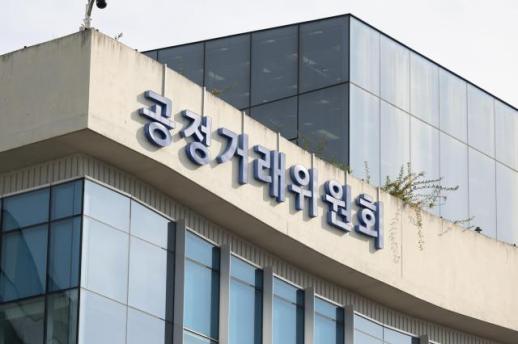 FTC weighs penalties over government bond bid collusion SEOUL, August 07 (AJP) -South Korea's antitrust regulator is preparing to rule on allegations that 15 banks and securities firms colluded in government bond auctions involving 76.2 trillion won ($53.6 billion), a case that could produce the largest cartel penalty ever imposed in the country. Examiners at the Fair Trade Commission (FTC) allege that the primary dealers, or PDs, coordinated bidding yields and exchanged detailed information ahead of Korean Treasury bond auctions between January 2020 and June 2023. The financial firms deny any rigging, arguing that discussions among dealers were part of routine efforts to gauge yields, supply and demand in a market where participants submit multiple bids at different prices and volumes. The FTC is expected to hold full-commission hearings on Aug. 19 and 20 to determine whether the conduct violated competition law and, if so, what sanctions should follow. The case involves 10 securities firms — Kyobo Securities, Daishin Securities, Meritz Securities, Mirae Asset Securities, Samsung Securities, Shinhan Securities, NH Investment & Securities, KB Securities, Korea Investment & Securities and Kiwoom Securities — as well as KB Kookmin Bank, NongHyup Bank, Industrial Bank of Korea, Hana Bank and Korea Development Bank. The FTC secretariat sent its examiner's report to the firms in March last year after an investigation that began in 2023, concluding that communications among dealers went beyond ordinary exchanges of market views and amounted to coordination over bidding yields and other auction information. That assessment remains subject to review by the full commission and does not constitute a final finding of wrongdoing. The financial firms argue that the structure of Korea's government bond auctions makes coordinated pricing difficult. Dealers can submit multiple bids at different yields and amounts, while each institution enters an auction with different inventories, client orders and trading strategies. The firms say exchanging views about market conditions therefore cannot by itself demonstrate an agreement to fix auction outcomes. The potentially bigger battle awaits. FTC examiners have calculated the relevant sales tied to the alleged conduct at about 76.23 trillion won, essentially using the value of bonds awarded through the auctions as the base for calculating possible penalties. The firms argue that treating the face value of government bonds as sales greatly exaggerates the economic benefit generated by the transactions. Unlike the sale of ordinary goods, they say, buying a 10 billion won government bond does not mean a dealer earned 10 billion won in revenue. They contend that the calculation should instead reflect actual income from interest, trading spreads, commissions or other revenue generated by the bond business. The firms are also pressing the FTC to exclude bonds purchased purely on behalf of clients. A substantial portion of PD auction participation involves dealers submitting orders requested by customers rather than buying securities for their own books. Financial firms argue that where a dealer simply executes a client's order and earns a commission, the entire value of the bond should not be counted as the dealer's own sales. Excluding such agency transactions could substantially reduce the amount on which penalties are calculated. The FTC, however, has publicly denied that it is considering abandoning bond award values in favor of operating revenue as the penalty base. In a July 29 clarification responding to a Korean media report, the regulator said it had not considered calculating penalties on the basis of operating revenue instead of the amount of government bonds awarded. That leaves the definition of "relevant sales" as one of the most consequential questions before the full commission. Applying the statutory maximum cartel penalty of 20 percent to 76.2 trillion won would produce a purely theoretical ceiling of about 15.2 trillion won. The actual figure would be far lower than that ceiling and will depend on how the commission defines relevant sales, judges the seriousness of any violation and applies increases or reductions to individual firms. Korean media reports have put preliminary penalty calculations anywhere from around 5 trillion won to more than 11 trillion won depending on the assumed base rate, underscoring how much remains unsettled before the commission's ruling. Even the lower end would dwarf previous FTC cartel penalties. Another variable is leniency. Daishin Securities, Samsung Securities and Shinhan Securities have been reported to have applied under the FTC's cartel leniency program, although the commission has not publicly confirmed their status. Under the system, a qualifying first self-reporter can receive full exemption from an administrative fine, while the second can receive a 50 percent reduction, subject to requirements including cooperation with the investigation. Beyond the size of any penalty, the case carries broader implications for the functioning of Korea's sovereign debt market. Primary dealers form the backbone of the government bond distribution system. In return for preferential access to auctions and other benefits, they are required to participate regularly in government debt sales, underwrite issuance and provide liquidity in the secondary market. The Ministry of Economy and Finance provided auction-related data to the FTC during the investigation while stressing both the need to prevent collusion and the importance of considering the potential impact of sanctions on the PD system and the broader government bond market. Heavy penalties could strain the capital positions of affected financial institutions, while restrictions on major dealers could disrupt liquidity at a time when foreign participation in Korean government bonds is growing. The commission must ultimately decide not only whether dealers crossed the line from exchanging market views into illegal coordination, but also how the economics of a government bond auction should translate into a competition-law penalty. After reviewing the firms' responses and evidence, the FTC may issue corrective orders and financial penalties and decide whether any of the firms or individuals involved should be referred for criminal prosecution. _________________________________________________________________________________ AJP Takeaways South Korea's Fair Trade Commission is preparing to rule on alleged bid collusion involving 15 primary dealers in Korean government bond auctions between January 2020 and June 2023. FTC examiners say the affected bond purchases totaled 76.2 trillion won ($53.6 billion), while the banks and securities firms deny collusion and describe their communications as routine market information-sharing. A key dispute is whether the full value of the government bonds can be used to calculate antitrust fines, with the eventual ruling potentially carrying implications for Korea's primary-dealer system and government bond market. 2026-08-07 11:35:42