

Journalist
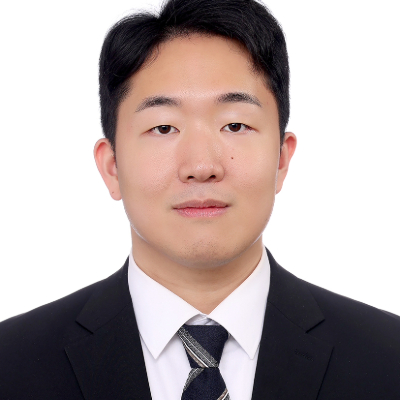
Kim Yeon-jae김연재
duswogmlwo77@ajupress.com
ReporterBank of Korea & Market, Macroeconomics
Kim Yeon-jae is a journalist at AJU Press (AJP's English platform),
covering macroeconomics, international finance, and geopolitics.
He closely tracks central bank monetary policies, global energy supply chains,
and the Korean defense industry. "Peering into the risks behind the euphoria."
covering macroeconomics, international finance, and geopolitics.
He closely tracks central bank monetary policies, global energy supply chains,
and the Korean defense industry. "Peering into the risks behind the euphoria."
Latest by Kim Yeon-jae
-
 Won closes below 1,400 against greenback for 1st time in 11 months SEOUL, August 19 (AJP) - The South Korean won closed daytime trading below 1,400 per dollar for the first time in nearly 11 months on Wednesday, while government bond yields fell as a sharp stock selloff boosted demand for safer assets. The won strengthened 14.1 won from the previous session to close at 1,397.7 per dollar, compared with Tuesday's close of 1,411.8. It marked the first daytime close below 1,400 since Sept. 29, 2025, when the currency ended at 1,398.7. Exporter dollar selling and broader weakness in the U.S. currency supported the won despite heavy foreign selling in Korean equities. The KOSPI plunged 5.8 percent to 6,471.17 as technology shares came under heavy selling pressure, with the decline triggering a program-trading sidecar during the session. The South Korean government bonds also strengthened, with the three-year yield falling 4.9 basis points to 3.798 percent and the 10-year yield declining 4.5 basis points to 4.337 percent. The bond rally began after U.S. Treasury yields eased overnight, while the steep decline in Korean stocks added to demand for government debt. Gains extended in the afternoon after the Korea Development Institute raised its 2026 growth forecast to 3.2 percent from 2.5 percent, as the revision came in below levels some bond investors had braced for. Foreign investors also supported the short end of the market, buying more than 7,000 three-year government bond futures by early afternoon even as they remained net sellers of 10-year futures. Wednesday's decline partly reversed the previous session's bond selloff, when the three-year yield rose 5.1 basis points to 3.847 percent and the 10-year yield climbed 6.9 basis points to 4.382 percent. 2026-08-19 17:50:39
 -
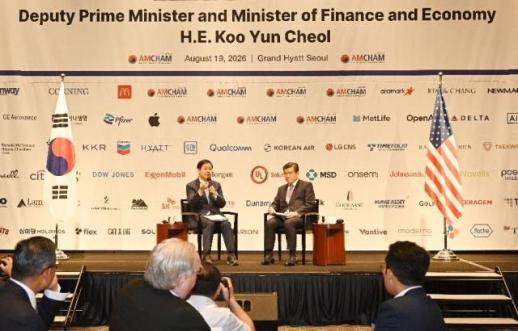 South Korea to raise FX reporting threshold for foreign banks SEOUL, August 19 (AJP) - South Korea will raise the reporting threshold for foreign-currency borrowing by local branches of foreign banks to US$100 million from $50 million, as part of efforts to ease foreign-exchange rules and improve market access, the Ministry of Economy and Finance said on Wednesday. The limit on cash-pooling arrangements will also be raised to at least $100 million from $50 million, Finance Minister and Deputy Prime Minister Koo Yun-cheol said at a meeting with the American Chamber of Commerce in Korea or AMCHAM in central Seoul earlier in the day. Raising the borrowing threshold would allow foreign bank branches to borrow larger amounts of foreign currency before triggering the existing reporting requirement, rather than increasing a ceiling on the amount they are permitted to borrow. The measures follow recommendations from AMCHAM as South Korea works to make its financial and foreign-exchange systems more in line with global standards. The move follows the government's won internationalization roadmap unveiled in July and the shift to round-the-clock foreign-exchange trading, while an offshore won settlement system is scheduled to formally begin operating in January 2027. Koo also pointed to recent capital-market reforms, including an expansion of directors' fiduciary duties to shareholders and South Korea's phased inclusion in the World Government Bond Index, which began in April. Wednesday's meeting at the Grand Hyatt Seoul brought together about 150 participants, including AMCHAM Chairman James Kim, U.S. government officials and executives from Korean and foreign companies. Koo called on U.S. companies to expand investment in South Korea and provide policy feedback based on their experience in the country, saying the government would review proposals raised at the meeting with relevant ministries. 2026-08-19 16:48:27
 -
 Won rises to strongest level in nearly 11 months SEOUL, August 19 (AJP) - The South Korean won strengthened to below 1,400 per dollar on Wednesday for the first time in nearly 11 months, amid fading expectations of a September Fed rate cut and steady exporter dollar selling. The dollar-won exchange rate stood at 1,399 around noon, breaking below the 1,400 mark for the first time since Oct. 2, 2025, when it was at 1,399.5. As of 2:50 p.m., it stood at 1,398.3, compared with the previous day's daytime close of 1,411.8. The strengthening won came after a sharp reversal for the Korean currency, which weakened to 1,549.4 per dollar at the end of June before recovering rapidly in July and August. The move has largely been driven by changing expectations for U.S. interest rates, with weaker economic data reducing the likelihood of further Fed rate hikes in the near term. U.S. consumer prices rose just 0.1 percent in July, producer prices were unchanged and retail sales unexpectedly fell 0.6 percent, their first decline in nine months. Fed funds futures priced in about a 65-percent chance of no rate change in September, while the dollar index hovered around 99.65, near multi-month lows. The Fed is due to release minutes from its July policy meeting later in the day, offering investors another look at policymakers' appetite for further tightening. Local dollar supply has added to the pressure, with Korean exporters continuing to convert overseas earnings into won rather than concentrating dollar sales around month-end as they traditionally have. The stronger currency also comes as South Korea's domestic growth outlook improves, with the state-run Korea Development Institute raising its growth forecast for this year to 3.2 percent from 2.5 percent on stronger global demand for semiconductors and artifical intelligence (AI(-related investment. The KDI's revised forecast would provide further support for the won, while a weaker dollar and continued exporter selling remained key factors behind its recent gains. 2026-08-19 15:57:06
 -
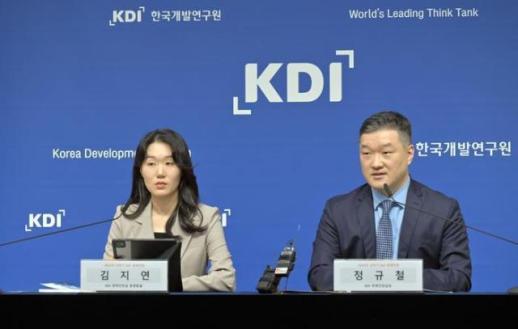 KDI raises South Korea's growth forecast to 3.2% SEOUL, August 19 (AJP) - South Korea is expected to grow 3.2 percent this year, the Korea Development Institute said on Wednesday. The revised outlook is higher than its previous forecast of 2.5 percent in May, as well as the government's 3 percent estimate and the Bank of Korea (BOK)'s current forecast of 2.6 percent. The state-run think tank attributed the stronger outlook to the global artificial intelligence (AI)-led boom, which has boosted semiconductor exports and facility investment, while giving the BOK more room to tighten monetary policy despite an uneven domestic recovery. KDI also raised its growth forecast for next year to 2.2 percent from 1.7 percent, expecting some of the semiconductor windfall to eventually boost household consumption and employment. It said semiconductors accounted for about 0.6 percentage point of the 0.7-point increase in this year's growth forecast, driven by higher exports, related equipment investment and income effects. More than half of projected growth was linked to the chip sector. KDI also raised its forecast for export volumes to 8.7 percent from 4.6 percent and its equipment investment forecast to 7.9 percent from 3.3 percent. Its current-account surplus forecast surged to $359.7 billion from $239.0 billion as higher semiconductor export prices delivered a sharp improvement in South Korea's terms of trade. The strong growth figures, however, mask an economy where gains remain concentrated among major chipmakers and have yet to reach household incomes, small businesses and domestic services more broadly. Private consumption is projected to expand 2.3 percent, only 0.1 percentage point above KDI's May estimate, while construction investment is expected to edge up just 0.1 percent amid a prolonged regional housing slump and elevated building costs. KDI cut its forecast for employment growth to 110,000 from 170,000, reflecting the semiconductor sector's limited capacity to generate jobs and continued weakness in construction and non-chip manufacturing. Kim Meeroo, head of KDI's macroeconomic and financial policy division, said the 3.2 percent expansion was strong relative to South Korea's potential growth rate but would feel considerably weaker to households because its benefits were concentrated in a narrow part of the economy. KDI kept its overall and core inflation forecasts at 2.7 percent and 2.5 percent and said the policy rate should stay slightly above the nominal neutral rate, which is estimated to be in the mid-2 percent range, though it did not call for a rate hike at any specific BOK meeting. KDI identified a sudden reversal in global AI investment as the principal downside risk because South Korea's rising dependence on semiconductors has made its broader outlook increasingly sensitive to the global chip cycle. Separately, BOK data released earlier in the day showed household debt rose by 25.9 trillion won ($17.4 billion) to a record 2,019.8 trillion won ($1.36 trillion) in the second quarter, surpassing 2,000 trillion won for the first time and marking the largest quarterly increase since the third quarter of 2021. The combination of above-potential growth, persistent underlying inflation and renewed household borrowing has prompted several economists to retain additional rate-hike forecasts even as consumption, construction and employment remain subdued. Park Jeong-woo, an economist at Nomura Securities, said that average retail sales contracted in the second quarter and that labor conditions remained weak, but put the probability of an Aug. 27 rate hike at 60 percent. Others remain more cautious, with Woori Financial Research Institute and KB Securities expecting the BOK to hold at 2.75 percent this month while delivering a hawkish signal, potentially accompanied by one or two dissenting votes for an increase. The latest data therefore reinforce expectations that the BOK's tightening cycle has further to run, but the weakness beneath South Korea's chip-led growth continues to divide economists over whether the next increase comes on Aug. 27 or later in the year. AJP Takeaways • KDI raised South Korea’s 2026 growth forecast to 3.2 percent from 2.5 percent, attributing 0.6 percentage point of the upgrade to semiconductors and their spillover effects. • Export volume is forecast to rise 8.7 percent and equipment investment 7.9 percent, while private consumption grows 2.3 percent, construction investment 0.1 percent and employment by just 110,000. • KDI's outlook and record household credit have kept Bank of Korea rate-hike calls alive ahead of Aug. 27, although economists remain divided between a back-to-back increase and a hawkish hold. 2026-08-19 15:32:37
 -
 Household debt surpasses over 2,000 trillion for 1st time SEOUL, August 19 (AJP) - South Korea's total household debt surpassed 2,000 trillion won for the first time in the second quarter, driven by increased borrowing for home purchases and a stock-market rally, adding to the Bank of Korea (BOK)'s policy dilemma after it raised its benchmark interest rate last month. Outstanding household credit reached a record 2,019.8 trillion won (US$1.35 trillion) at the end of June, up 25.9 trillion won from three months earlier, according to preliminary BOK data released on Wednesday. The increase was larger than the revised 14.8 trillion won gain in the first quarter and marked the biggest quarterly rise since the 34.8 trillion won increase recorded in the third quarter of 2021. Household credit rose 3.6 percent from a year earlier and 1.3 percent from the previous quarter. The BOK's household credit figure covers household loans and unpaid credit card purchases. Household loans climbed 24.9 trillion won to 1,891.3 trillion won, while sales credit increased 900 billion won to 128.5 trillion won. Growth in housing-related loans accelerated to 12.2 trillion won from 8.1 trillion won, while other loans, including unsecured bank borrowing and credit extended by securities firms, more than doubled to 12.8 trillion won from 5.4 trillion won. Other loans exceeded the increase in housing-related borrowing for the first time since the second quarter of 2021, when they rose 23.5 trillion won and 17.6 trillion won, respectively. Kim Sung-jun, head of the BOK's financial statistics team, said housing-related and other loans each accounted for roughly half of the second-quarter increase. Housing borrowing was boosted by transactions brought forward ahead of the scheduled end of a temporary suspension of heavier capital-gains taxes on owners of multiple homes, Kim said. The surge in other loans reflected stronger unsecured lending by banks and an unusually large increase in credit supplied by securities firms as buoyant equity prices encouraged leveraged investment. Kim said the stock-market correction that began in the third quarter should help slow securities-related borrowing, suggesting part of the second-quarter jump may prove temporary. The shift was also visible across lenders, with deposit banks adding 13.3 trillion won of household loans after a 200 billion-won decline in the first quarter, while lending by other financial institutions increased 8.6 trillion won from 5.5 trillion won. Non-bank depository institutions added 3.1 trillion won, down sharply from 8.2 trillion won in the previous quarter, as tighter government loan-management measures restrained lending, Kim said. The 2,000 trillion-won milestone is striking, but it does not by itself mean household leverage is rising faster than the economy. Kim said the household-debt-to-nominal-GDP ratio had declined from 88.9 percent in the third quarter of 2025 to 88.1 percent at year-end and 85.3 percent in the first quarter of 2026, although second-quarter nominal GDP data are not yet available. The government has meanwhile relaxed its aggregate household-loan growth guideline to 3 percent from 1.5 percent, potentially adding to credit supply after the second-quarter acceleration. Kim said the effect of loans tied to relocation for redevelopment and reconstruction projects would take time to assess because those projects add housing supply only with a lag. The BOK raised its base rate by 25 basis points to 2.75 percent in July, leaving policymakers to balance renewed asset-backed borrowing against the heavier debt-service burden that further tightening would impose on households. For the central bank, the composition of credit may now matter as much as the headline total: even with the debt-to-GDP ratio drifting lower, a renewed flow of borrowed money into property and stocks can amplify asset prices and financial vulnerabilities. AJP Takeaways · South Korea's household credit reached a record 2,019.8 trillion won at the end of June 2026, rising 25.9 trillion won from the first quarter and exceeding 2,000 trillion won for the first time. · Housing-related loans rose 12.2 trillion won, while other loans increased 12.8 trillion won and outpaced housing borrowing for the first time since the second quarter of 2021 amid strong property transactions and stock-market credit. · The BOK said South Korea's household-debt-to-GDP ratio fell to 85.3 percent in the first quarter, but the renewed borrowing surge and the government's easing of its loan-growth guideline to 3 percent add to the policy trade-off after July's rate increase. 2026-08-19 13:44:44
 -
 Won stays firm as Korean bond yields jump SEOUL, August 18 (AJP) - The South Korean won edged higher against the dollar on Tuesday as foreign equity purchases and exporter dollar sales outweighed renewed Middle East concerns, while government bond yields rose sharply after a surge in U.S. long-term rates and a domestic 10-year debt auction. The won closed daytime trading at 1,411.8 per dollar, strengthening by 1.2 won from the previous session's close of 1,413. The currency opened at 1,417.0 and briefly strengthened toward the 1,409 level as foreign investors bought Korean shares and exporters sold dollars, before giving back part of the gain. The expiry of a U.S.-Iran ceasefire memorandum and Brent crude above US$90 a barrel supported the dollar, while the KOSPI's reversal from an early rally to a 1.55 percent loss limited further gains in the won. The three-year Korean government bond yield rose 5.1 basis points to 3.847 percent, while the 10-year yield climbed 6.9 basis points to 4.382 percent, according to final afternoon quotations from the Korea Financial Investment Association. The 20-year yield jumped 10.3 basis points to 4.661 percent, the 30-year rose 8.2 basis points to 4.751 percent and the 50-year advanced 8.1 basis points to 4.661 percent, with all three reaching new year-to-date highs. The gap between the 10-year and three-year yields widened by 1.8 basis points to 53.5 basis points, although both yields retreated from their morning reference levels as the initial selloff eased. The U.S. 30-year Treasury yield reached 5.321 percent in Asian trading, its highest since 2007, while a 3 trillion won ($2.1 billion) Korean 10-year bond auction added to the amount of long-term debt the market had to absorb. With the Bank of Korea due to decide next week whether to raise its base rate again on Aug. 27, the increase in the policy-sensitive three-year yield suggests markets continue to price a meaningful chance of another hike. The won's strength near the low 1,410s reduces imported-inflation pressure, however, while sharply higher market borrowing costs give policymakers a counterargument for holding rates steady and assessing the tightening already under way. 2026-08-18 17:43:13
 -
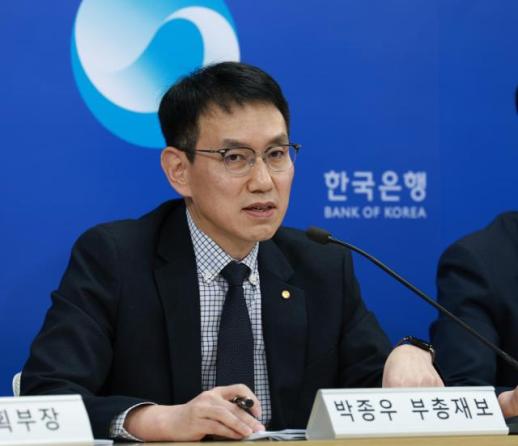 Race heats up for BOK deputy governor as incumbent steps down this week SEOUL, August 18 (AJP) - Park Jong-woo, a high-ranking official at the Bank of Korea who currently serves as an assistant governor, is emerging as a leading contender for the deputy governor post, which combines responsibility for day-to-day operations with a vote on interest rates. Incumbent Ryoo Sang-dai's term expires Aug. 20. Other senior BOK officials including Kwon Min-soo, and former BOK executives Lee Hwan-seok, Chung Kyu-il, Lim Hyung-jun and Cho Hong-kyun are also among the potential candidates. The deputy governor, the BOK's No. 2 official, is appointed by the president upon the governor's recommendation for a three-year term and serves as one of the seven members of its monetary policy board. Park is considered a strong candidate because he currently oversees monetary policy and financial markets, giving him direct experience in the two areas at the center of the BOK's response to inflation, household debt and global market volatility. He joined the BOK in 1996 and served in several of the central bank's key departments. Park’s often restrained public remarks suggest a cautious, data-dependent approach that places considerable weight on inflation, household debt and financial-market stability, rather than positioning him firmly as either hawkish or dovish. In September 2024, he said market expectations for two or more rate cuts had moved too far ahead of the central bank and argued that policymakers should first assess whether government measures were slowing housing prices and household borrowing. Park later rejected interpretations that the BOK had abruptly shifted toward rate increases, saying in November 2025 that the direction of monetary policy could not change so quickly, suggesting a moderately hawkish but pragmatic bias that resists both premature easing and sudden policy reversals. He has no public interest-rate voting record, making it difficult to predict his policy preferences. Meanwhile, Kwon offers a different set of strengths centered on foreign-exchange and international financial policy, having worked in key areas of the BOK and been seconded to both the foreign and finance ministries since joining the central bank in 1995. Lee, currently executive vice president of the Korea Housing Finance Corp., previously served as a BOK deputy governor and held senior positions in monetary policy, economic research, financial markets and the secretariat supporting the monetary policy board. Other candidates reportedly include Chung, a former BOK deputy governor and economic-statistics specialist; Lim, whose experience spans monetary policy and organizational management; and Cho, who has worked in policy planning, regulation and institutional affairs. The BOK raised its base rate by 25 basis points to 2.75 percent on July 16 and has kept the possibility of further tightening open as core inflation, housing prices and household-credit risks persist. The appointment will be closely watched ahead of the Aug. 27 rate-setting meeting because a new deputy governor taking office before then could immediately participate as a voting board member. Once appointed, Park would signal continuity in the BOK's cautious, financial-stability-focused approach, but his appointment alone would not determine whether the board delivers a second consecutive hike or leaves rates unchanged while retaining a hawkish signal. AJP Takeaways • Park Jong-woo has emerged as a leading candidate to succeed Ryoo Sang-dai as the central bank's senior deputy governor. • Park's remarks suggest a data-dependent but moderately hawkish stance focused on inflation, household debt and preventing market expectations from moving ahead of policy. • Kwon Min-soo, Lee Hwan-seok and several former BOK executives are also in the reported field for a post that carries one of seven monetary policy board votes. 2026-08-18 17:06:11
 -
 Moody's raises growth forecast for South Korea, putting BOK in dilemma over rate hike SEOUL, August 18 (AJP) - Global ratings agency Moody's raised its growth forecast for South Korea to 3.5 percent in a report published last week. The stronger outlook could support another interest rate hike, although strong exports and already high borrowing costs may reduce the need for the Bank of Korea to raise rates again soon. The forecast also put South Korea's growth at 2.7 percent for next year. The 2026 forecast was 1 percentage point higher than Moody's 2.5 percent estimate in May and 1.7 percentage points higher than its 1.8 percent forecast in February. The latest estimate exceeds the South Korean government's 3 percent projection and the 3.2 percent average among eight major investment banks compiled by the Korea Center for International Finance as of the end of July. Moody's said the revision was largely driven by stronger demand for advanced memory chips as global investment in artificial intelligence (AI) grows. It expects the chip upcycle to remain strong until at least mid-2027, as South Korean suppliers face limited competition from alternative sources. However, the report did not change South Korea’s credit rating or signal an imminent rating change. The higher forecast does not mean the recovery is spreading evenly throughout the economy, as retail sales fell 1.7 percent in the second quarter before rebounding 2.7 percent in June and growth remains heavily concentrated in semiconductor exports and related investment. Headline consumer inflation slowed to 2.8 percent in July from 3.2 percent in June, but core inflation — which excludes volatile food and energy prices to show the underlying trend — edged up to 2.6 percent from 2.5 percent, while household credit and housing prices remain financial-stability arguments for further tightening. The Bank of Korea raised its base rate by 25 basis points to 2.75 percent on July 16, its first increase in three and a half years, and will decide on Aug. 27 whether to raise it for a second consecutive meeting. At around 2 p.m. Tuesday, the three-year Korean government bond yield was up 6.6 basis points at 3.862 percent and the 10-year yield was 10.3 basis points higher at 4.416 percent, with one basis point equal to 0.01 percentage point. Traders call the larger increase in the 10-year yield a bear-steepening of the curve, with the three-year yield responding more closely to expectations for the BOK's policy rate and the 10-year also reflecting longer-term growth, inflation, government bond supply and investor demand. The larger move in the 10-year yield reflected both higher U.S. long-term rates and supply pressure from Tuesday's 3 trillion won auction of 10-year Korean government debt, but the rise in the policy-sensitive three-year yield indicates that markets have not dismissed the possibility of an August increase. Official U.S. Treasury data put the 10-year yield 4 basis points higher at 4.72 percent and the 30-year up 6 basis points at 5.31 percent on Monday, before the 30-year cash-market yield reached 5.321 percent in Asian trading, its highest since June 2007, while the inflation-adjusted 30-year rate rose to 3.06 percent. Heavy borrowing by the U.S. government and AI companies has added to the pressure because issuers generally have to offer higher returns when bond supply grows faster than investor demand, pushing down the prices of existing bonds and raising their yields. The expiry of a 60-day U.S.-Iran ceasefire and uncertainty over the Strait of Hormuz also pushed Brent crude above $91 a barrel, preserving the risk that more expensive energy could feed into Korean inflation. South Korean government bond yields serve as reference rates for corporate debt and bank funding, meaning that persistently high yields can increase the cost of issuing corporate bonds and eventually lift rates on business loans, mortgages and other household borrowing. More expensive credit can discourage companies from investing and households from spending, producing an effect similar to a BOK rate increase even if the central bank leaves its policy rate unchanged. A weaker won can make imported oil, raw materials and food more expensive in local-currency terms, but the currency strengthened by 2.09 won to 1,413.39 per dollar on Tuesday, showing that higher U.S. yields had not yet generated additional imported-inflation pressure through the exchange rate. "Bond markets have already strongly reflected the shift in monetary policy, reducing the need for additional hawkish guidance," said Ahn Jae-kyun, an economist at Korea Investment & Securities. Ahn nevertheless maintained an August rate increase as his base case on Aug. 4, while estimating that markets were still assigning a probability of more than 50 percent to another move. Moody's growth revision, firmer core inflation and financial-stability risks support another increase, while the export-heavy recovery, higher market borrowing costs and a stronger won give the BOK reasons to assess the effects of its previous move before raising rates again. The Aug. 27 decision therefore remains open between another increase and a "hawkish hold," meaning that the BOK could leave rates unchanged while signaling that further tightening remains possible if oil, core inflation, the won or household credit deteriorates. AJP Takeaways • Moody's raised South Korea’s 2026 growth forecast to 3.5 percent in an Aug. 13 periodic review, up from 2.5 percent on May 11 and 1.8 percent on Feb. 12. • Higher government bond yields can raise corporate and household borrowing costs, partly tightening the economy even without another immediate BOK rate increase. • The BOK's Aug. 27 decision remains open because a stronger won reduces imported-inflation pressure, while core inflation, oil, housing and household credit continue to support a hawkish stance. 2026-08-18 16:10:11
 -
 Young workers hit hardest by job losses in AI-exposed industries SEOUL, August 18 (AJP) - Industries heavily exposed to artificial intelligence (AI) accounted for 94 percent of the decline in jobs covered by the National Pension Service (NPS) among younger workers over the past four years, the Bank of Korea said Tuesday. However, it cautioned that the findings do not prove AI caused the job losses. The number of jobs held by people aged 15 to 29 fell by 285,000 between June 2022 and June 2026. About 268,000 of those lost jobs were in industries with high exposure to AI. Over the same period, the number of jobs held by people in their 50s increased by 230,000 with 173,000 or 75.2 percent, of the new jobs in industries with high exposure to AI. BOK researchers said the trend shows that technology may be making it harder for younger workers to find jobs, while experienced workers are more likely to remain in demand because they can manage or work with AI. The pattern points to a possible hollowing-out of the first rung of Korea's career ladder even though AI has yet to produce a clear economy-wide deterioration in employment. The findings were based on data from about 16 million workers covered by the NPS, along with employment and unemployment data from the country's economically active population. AI exposure was calculated by assessing the technical potential for generative AI to perform or accelerate occupational tasks and then weighting those estimates according to the occupational composition of each industry. The measure therefore captures jobs' potential exposure to AI rather than companies' actual use of the technology, while the findings represent the researchers' analysis rather than the central bank’s official policy position. Youth employment declined particularly sharply between June 2022 and June 2026 in information services, down 31.4 percent, publishing, down 27.4 percent, computer programming and systems integration, down 16.6 percent, and professional services, down 11.6 percent. The losses were larger in industries where generative AI was used primarily to automate tasks, while no comparable pattern emerged in industries where the technology was used mainly to augment human work. Youth employment declines were relatively mild in the highest quartile of augmentation-oriented industries, suggesting that how companies deploy AI may matter more for employment than adoption alone. The deterioration was also visible among educated job seekers, with unemployment among college-educated young people averaging 7.0 percent since November 2022, compared with 5.4 percent among those with junior-college education or less. A broader measure of labor underutilization averaged 9.6 percent among young college graduates, against 8.5 percent for the less-educated group, although BOK researchers cautioned that education is only an indirect proxy for exposure to AI. Average monthly entries by young workers into regular jobs in highly exposed industries fell to 29,100 from July 2022 through June 2026, compared with 32,600 between January 2016 and December 2019. Average monthly exits from those industries into non-employment, meanwhile, rose by about 32 percent to 4,900 from 3,700. The share of young people among newly hired workers also dropped to 29.3 percent from 2024 to 2026 - from 36.9 percent during the six years through 2019, reinforcing evidence that entry into stable employment is narrowing. Despite the concentrated pressure, aggregate employment and unemployment have not yet departed decisively from their longer-term trends, suggesting that the impact of AI is being distributed unevenly across industries, age groups and career stages. An estimated 51.8 percent of Korean workers used generative AI at work in 2025, nearly double the 26.5 percent recorded in the United States. AI is unlikely to be the sole explanation for the decline in youth employment, as companies have also unwound pandemic-era overhiring, shifted toward experienced recruits and reduced their reliance on long-term internal training, BOK researchers said. The spread of remote and hybrid work may have further weakened the informal mentoring through which junior employees traditionally acquired skills from senior colleagues. The findings suggest that AI may be accelerating an erosion of the conventional career ladder that had already begun rather than independently creating the problem. BOK researchers called for AI-era apprenticeship programs combining real workplace assignments, the use of AI tools and structured guidance from experienced employees. They also proposed support for companies' mentoring and training costs, potentially through a "career formation subsidy," rather than relying solely on wage subsidies for young recruits. Tax and financial incentives should remain neutral between investment in technology and investment in human capital so that companies are not encouraged to adopt low-quality automation merely because it is cheaper than training workers, the researchers said. The longer-term outcome remains uncertain, however, as young workers' high rates of AI adoption and adaptability could eventually make them some of the biggest beneficiaries once new tasks and occupations emerge. AJP Takeaways: - AI-exposed industries accounted for 268,000, or 94 percent, of the 285,000 decline in pension-covered youth jobs between June 2022 and June 2026. - Jobs held by people in their 50s rose by 230,000, pointing to what BOK researchers describe as seniority-biased technological change. -Youth job losses were deeper where AI automated tasks but milder where the technology augmented human work. 2026-08-18 13:43:54
 -
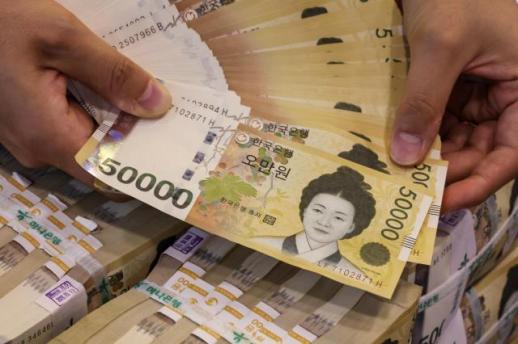 Korea's legacy M2 growth hits 53-mo high, reviving liquidity concerns SEOUL, August 14 (AJP) - South Korea’s legacy broad-money measure rose 12.3 percent in June from a year earlier, its fastest pace in four years and five months, reviving concerns that liquidity is building too quickly even as the current M2 gauge remained below its long-term average. The Bank of Korea said Friday that growth in legacy M2 accelerated from 8.0 percent in December to 9.1 percent in February, 10.4 percent in April, 11.6 percent in May and 12.3 percent in June. It was the first time the measure had exceeded 12 percent since January 2022, when it increased 12.7 percent. Growth in current M2 also climbed to 6.0 percent from 5.8 percent in May, marking its strongest reading since February 2023 and the fifth consecutive increase in the annual growth rate. The current pace remained below the 7.5 percent average recorded between 2005 and 2025, making it difficult to conclude that the economy as a whole is awash with excess cash. The gap between the two measures largely reflects non-money-market fund shares, which are included in legacy M2 but excluded from current M2 following the BOK’s statistical overhaul in December 2025. Fund shares surged 64.5 percent from a year earlier and contributed 6.5 percentage points to legacy M2 growth, accounting for more than half of the 12.3 percent increase. Subtracting that contribution leaves 5.8 percentage points, broadly in line with current M2 growth and underscoring why the legacy headline cannot be treated as a like-for-like measure of cash available for immediate spending. The increase was not entirely a statistical effect, however, as narrow money M1 grew 10.0 percent from a year earlier, while financial-institution liquidity, or Lf, rose 8.5 percent and overall liquidity, or L, increased 9.4 percent. All three rates accelerated from May, suggesting that the buildup in liquidity extended beyond the investment-fund component of legacy M2. On a seasonally adjusted basis, average current M2 stood at 4,213.0 trillion won ($3.0 trillion), up 29.4 trillion won, or 0.7 percent, from the previous month after a 0.8 percent increase in May. Money-market funds rose by 7.3 trillion won, deposits with maturities of less than two years increased by 7.1 trillion won and money trusts with maturities of less than two years gained 6.3 trillion won. The central bank attributed the increases to greater use of short-term surplus funds by nonfinancial companies, higher corporate deposit holdings and inflows of funds from semiconductor companies into money trusts. By holder, money balances at nonfinancial companies jumped 45.7 trillion won and those at other financial institutions increased 5.4 trillion won. Holdings by households and nonprofit organizations fell 19.8 trillion won, while those held by other sectors, including social security funds and local governments, declined 1.1 trillion won. The composition indicates that the latest liquidity buildup was concentrated in corporate cash and financial products rather than reflecting a household-wide surge likely to flow directly into consumption. Average M1 stood at 1,402.9 trillion won, up 0.4 percent from May, while Lf increased 1.0 percent to 6,368.7 trillion won and the month-end L measure gained 0.8 percent to 8,115.3 trillion won. Current M2 remaining below its long-term average argues against declaring an economy-wide liquidity glut, but the four-year high in legacy M2 and the synchronized acceleration across other monetary aggregates strengthen the case for monitoring corporate cash and potential spillovers into financial markets. ___________________________________________________________________________________ AJP Takeaways South Korea’s legacy M2 money supply grew 12.3 percent year on year in June 2026, its fastest pace since January 2022 and its first reading above 12 percent in four years and five months. Current M2 growth reached a 40-month high of 6.0 percent but remained below its 7.5 percent long-term average, while surging fund shares accounted for 6.5 percentage points of the legacy measure’s increase. Nonfinancial companies added 45.7 trillion won to their money holdings while household balances fell 19.8 trillion won, indicating that Korea’s liquidity growth was concentrated in corporate and financial channels rather than household consumption. 2026-08-14 12:43:42