

Journalist
Kim Yeon-jae김연재
duswogmlwo77@ajupress.com
ReporterBank of Korea & Market, Macroeconomics
Kim Yeon-jae is a journalist at AJU Press (AJP's English platform),
covering macroeconomics, international finance, and geopolitics.
He closely tracks central bank monetary policies, global energy supply chains,
and the Korean defense industry. "Peering into the risks behind the euphoria."
covering macroeconomics, international finance, and geopolitics.
He closely tracks central bank monetary policies, global energy supply chains,
and the Korean defense industry. "Peering into the risks behind the euphoria."
Latest by Kim Yeon-jae
-
 Won strengthens further as US Treasury selloff lifts domestic bond yields SEOUL, August 21 (AJP) - The South Korean won extended its rally against the dollar on Friday, while government bond yields rose as a renewed selloff in U.S. Treasuries outweighed softer domestic price pressures. The won strengthened 6.8 won from the previous session to close daytime trading at 1,385.8 per dollar, compared with Thursday's 1,392.6. Exporter dollar selling and broader weakness in the U.S. currency continued to support the won after it broke below 1,400 earlier this week. The currency has strengthened even as U.S. long-term yields rise, reflecting growing concern that higher Treasury yields are being driven by fiscal and debt-supply risks rather than stronger U.S. growth. South Korean government bonds weakened, with the three-year yield rising 4.3 basis points to 3.854 percent and the 10-year yield climbing 5.3 basis points to 4.376 percent. The selloff followed a rebound in U.S. Treasury yields after an initial rally triggered by the Treasury Department's expanded long-bond buyback program faded within a day. The larger increase in the country's 10-year yield reflected greater sensitivity at the long end to the global bond selloff. Domestic conditions offered some support to shorter maturities, with producer prices falling 0.4 percent month on month in July for the first decline in 11 months, while the stronger won eased imported inflation pressure. Those factors have also reduced pressure on the Bank of Korea to move quickly after raising its benchmark rate to 2.75 percent last month, with its next rate decision due Aug. 27. Friday's trading left Korean markets reflecting two sides of the same U.S. fiscal concern — a weaker dollar supporting the won while higher Treasury term premiums pushed Korean bond yields upward. 2026-08-21 17:19:49
 -
 Early-August exports hit record high as chip shipments stay strong SEOUL, August 21 (AJP) - South Korea's exports surged 56 percent from a year earlier to a record high for August in the first 20 days of this month, as semiconductor shipments nearly tripled and again drove the country's export growth, according to preliminary data released by the Korea Customs Service (KCS) on Friday. Exports totaled $55.21 billion from Aug. 1 to 20, the highest ever for the period, while imports rose 19.0 percent to $41.23 billion, resulting in a trade surplus of $13.98 billion. The increase came despite fewer working days, with 14 days during the period compared with 14.5 days a year earlier. Average daily exports climbed 61.5 percent to $3.94 billion from $2.44 billion. Semiconductor exports jumped 198.8 percent to $26.03 billion, accounting for 47.2 percent of the country's total outbound shipments, up 22.5 percentage points from a year earlier. The chip tally was the highest ever for the first 20 days of this month and surpassed the previous record of about $25.5 billion set during the same period in June. The latest figures show how heavily South Korea's record export performance continues to rely on semiconductor shipments. AJP analyzed customs data and found that, excluding semiconductors, exports rose about 9.3 percent from a year earlier, far below the 56.0 percent increase in overall shipments. Other technology-related products also posted strong gains, with exports of computer peripherals surging 242.1 percent and petroleum products rising 56.4 percent. But not all major industries saw growth, as passenger-car exports fell 45.1 percent, ship exports dropped 60.5 percent and auto-parts shipments declined 19.9 percent. By destination, exports to China more than doubled, rising 118.6 percent to $15.26 billion, while shipments to the U.S. increased 59.4 percent to $7.98 billion. Exports to Viet Nam climbed 67.4 percent to $5.83 billion and shipments to Hong Kong surged 245.5 percent to $3.63 billion. Exports to the European Union, by contrast, fell 3.2 percent. China, the U.S. and Viet Nam together accounted for 52.6 percent of South Korea's exports during the period. Imports of semiconductors rose 59.4 percent, while purchases of semiconductor manufacturing equipment jumped 89.3 percent. Crude-oil imports rose 17 percent, while gas imports fell 17.1 percent, leaving combined imports of crude oil, gas and coal 11.1 percent higher than a year earlier. Cumulative exports so far this year totaled $650.27 billion, up 51 percent from a year earlier, while imports rose 18.3 percent to $468.54 billion, resulting in a trade surplus of $181.74 billion. Meanwhile, the KCS cautioned that the figures are preliminary and cover only the first 20 days of the month, so comparisons may be affected by differences in the number of working days. 2026-08-21 15:15:09
 -
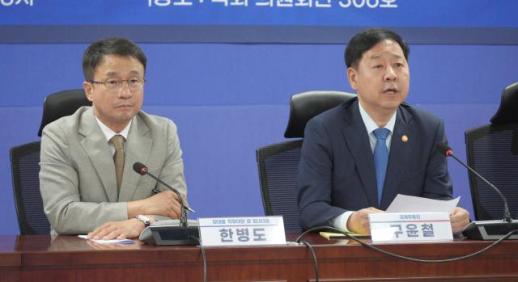 Financial authorities to offer more support for borrowers amid rising global yields SEOUL, August 21 (AJP) - South Korea will prepare additional support for vulnerable groups as rising long-term global bond yields threaten to raise borrowing costs for households and businesses, the Ministry of Economy and Finance (MOEF) said on Friday. Finance Minister and Deputy Prime Minister Koo Yun-cheol convened a joint meeting in Seoul with Financial Services Commission Chairman Lee Eog-weon, Financial Supervisory Service Governor Lee Chan-jin and Bank of Korea Deputy Governor Park Jong-woo. Officials said long-term yields in major economies had risen amid Middle East uncertainty, increased sovereign issuance and heavier corporate bond sales by global artificial intelligence companies, with the pressure concentrated at the ultra-long end of the curve. The government will monitor the impact on South Korea's bond market, corporate and household borrowing costs and the broader economy while preparing measures to ease financial burdens on small businesses and other vulnerable borrowers. The planned package will include expanded debt restructuring for distressed small businesses and individuals as well as additional financing for small and medium-sized companies and vulnerable borrowers. "Long-term government bond yields in the U.S., Japan and Europe have risen to their highest levels in decades," Koo said, adding that Korea had also seen yields climb at ultra-long maturities. Officials also reviewed the won's sharp recent appreciation. The currency returned to the 1,300-per-dollar range on Aug. 19 for the first time in 11 months, after weakening beyond 1,550 in early July, helped by a record current-account surplus and easing foreign investor equity rebalancing, the ministry said. The won traded at 1,390 per dollar on Aug. 19 and 1,393 on Thursday, compared with 1,529 in the first week of July. Authorities said they would remain alert as geopolitical tensions in the Middle East and monetary policy in major economies continued to pose risks in both directions for the currency. The government meanwhile said South Korea's external financial position remained sound despite a sharp decline in net international investment assets in the second quarter. Officials attributed the drop largely to higher valuations of South Korean equities held by overseas investors, while net external claims increased by $2.3 billion to $367.8 billion and the current-account surplus reached a record $191 billion in the first half. Household credit has exceeded 2,000 trillion won, but the household debt-to-GDP ratio fell to 85.3 percent in the first quarter from 89.1 percent a year earlier, according to the ministry. Officials said they would continue managing household debt risks while ensuring that genuine borrowers do not face unnecessary financing constraints. Koo said authorities would maintain an integrated monitoring framework covering financial, foreign-exchange, government bond and property markets and respond promptly if risks intensified. 2026-08-21 10:43:42
 -
 Newly appointed BOK deputy governor signals focus on stability SEOUL, August 21 (AJP) - Seasoned foreign-exchange expert Kwon Min-soo was appointed senior deputy governor of the Bank of Korea. In his inaugural address on Friday, he highlighted inflation, household leverage, property prices and currency volatility, offering an early glimpse of a policy approach closely aligned with BOK governor Shin Hyun-song but shaped by his three decades of experience in foreign-exchange markets. Kwon said semiconductor strength had lifted growth beyond earlier expectations, while inflation remained above the central bank's target and financial imbalances centered on household debt and housing prices persisted. Exchange-rate volatility and geopolitical and trade risks meant policy decisions would need to remain "cautious and flexible," he said. His remarks stop short of establishing Kwon as a monetary-policy hawk. But the risks he chose to emphasize are largely those that could constrain how quickly the BOK changes course after restarting rate increases last month. The central bank raised its benchmark rate by 25 basis points to 2.75 percent on July 16, its first increase in three-and-a-half years, citing stronger export- and investment-led growth, above-target inflation and persistent financial-stability risks. All seven board members backed the move. Kwon will have a say in what comes next almost immediately. He began a three-year term Friday after being appointed to succeed Ryoo Sangdai, and the senior deputy governor serves ex officio on the BOK's seven-member Monetary Policy Board. His term runs through Aug. 20, 2029. His elevation was not a surprise appointment. Kwon and fellow deputy governor Park Jong-woo had both been cited as leading internal contenders for the post before the decision, while several former BOK executives were also discussed as possible candidates. More revealing than the internal promotion itself may be the expertise the BOK has added to its top leadership. Park built much of his career in monetary policy and financial markets, while Kwon's record is concentrated in foreign exchange, reserve management and international finance. Kwon joined the BOK in 1995 and later worked in foreign-currency operations, the New York office and the Reserve Management Group before heading the International Department's foreign-exchange market team. He subsequently oversaw investment strategy and government-bond portfolios and became head of the Reserve Management Group in 2023. Since becoming a deputy governor in May 2024, he has overseen international finance and cooperation, including responses to heightened FX-market volatility and work with the BIS, World Bank, G20 and EMEAP. That background was visible throughout Friday's address. Kwon pledged to strengthen market analysis and open-market operations, help settle Korea's 24-hour FX trading system and advance won internationalization while ensuring greater market openness does not undermine financial stability. The agenda puts him broadly in step with Shin rather than positioning him as a counterweight to the governor. Kwon explicitly endorsed four priorities set out by Shin when he took office in April: cautious and flexible monetary policy, a stronger financial-stability role, won internationalization and payment-system innovation, and a greater contribution to structural reform. Shin himself made financial stability a central theme of his inaugural agenda, arguing that uncertainty over inflation and growth required flexibility in monetary policy while the central bank broadened its approach to financial risks. He also put won internationalization and payment-system reform among his priorities. The overlap suggests the two officials may differ less over which risks matter than over how they assess them. Shin, an academic economist who spent years at Oxford, Princeton and the Bank for International Settlements, approaches policy through the lens of macro-finance, global liquidity and the links between financial institutions and markets. Kwon brings the experience of a market practitioner who has managed reserves and dealt directly with foreign-currency liquidity and market volatility. That combination could broaden the BOK leadership's perspective when exchange-rate movements complicate interest-rate decisions — with Shin assessing the wider macro-financial transmission and Kwon potentially adding a closer reading of currency supply and demand, liquidity and market functioning. That remains an inference from Kwon's career rather than an established voting record. His appointment also does not necessarily make the board more hawkish. Ryoo, his predecessor, had himself favored a rate increase in May before the board unanimously tightened policy in July. What Kwon did make clear Friday was that stronger growth alone does not remove the constraints facing policymakers: inflation remains above target, household and property risks persist and the exchange rate remains part of the calculation. His first test comes on Aug. 27, less than a week into the job, when he casts his first vote on interest rates. The decision should provide the first concrete indication of how Kwon translates a career spent managing Korea's exposure to global markets into monetary policy. AJP Takeaways: - Kwon's promotion was within expectations: He and Park Jongwoo had already been cited among leading internal candidates, making the appointment less a surprise than a choice between different areas of expertise. - His first message leaned toward risk management: Kwon highlighted above-target inflation, household debt, housing prices and FX volatility while calling for "cautious and flexible" policy. - Kwon looks more complement than counterweight to Shin: The two share a focus on financial stability and won internationalization, but Kwon adds deeper hands-on experience in FX and reserve markets. - Aug. 27 will offer the first real policy signal: Kwon's first rate vote will show whether that market background translates into a distinct weighting of currency and financial-stability risks. 2026-08-21 10:27:34
 -
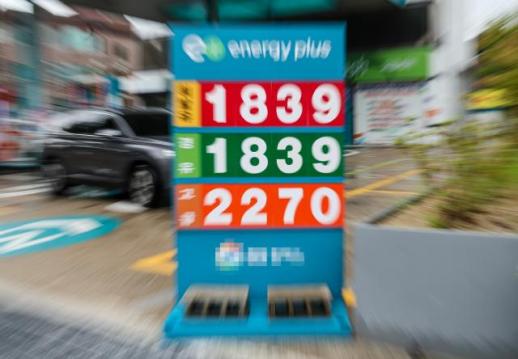 Producer prices fall for 1st time in 11 months SEOUL, August 21 (AJP) - South Korea's producer prices fell for the first time in 11 months in July as lower oil and import costs eased inflationary pressures that had built up earlier this year, while semiconductor prices continued to surge, according to data released by the Bank of Korea on Friday. An index gauging producer prices stood at 129.39, down 0.4 percent from June but up 7.7 percent from a year earlier, marking the first month-on-month decline since August last year. The annual increase also slowed for a second straight month from 8.6 percent in May and a revised 8.5 percent in June. The easing was even more pronounced in prices of goods entering the domestic supply chain, as the relevant index, which includes imported and domestically produced goods and services, fell 1.8 percent from June. Raw-material prices fell 7.7 percent, while intermediate and final goods declined 1.7 percent and 0.2 percent, respectively. Imported raw materials plunged 9.6 percent and imported intermediate goods dropped 6.1 percent. The BOK said customs-cleared import prices reflected a 23.0 percent month-on-month fall in dollar-denominated Dubai crude in June, along with the stronger won and lags between contracts and customs clearance. The decline in global oil prices also fed directly into domestic producer costs. Manufactured-goods prices fell 0.5 percent from June, led by a 5.1 percent decline in coal and petroleum products and a 1.3 percent fall in chemical products. Gasoline prices dropped 11.3 percent on month and diesel fell 9.8 percent, while polyethylene resin declined 10.2 percent and xylene lost 4.9 percent. The broader energy index fell 3.6 percent. Producer prices excluding food and energy, however, slipped just 0.2 percent from June and remained 8.0 percent above their level a year earlier, suggesting that the easing was concentrated in several of the components hit hardest by the earlier energy shock. Services provided another drag on the overall index. Services prices fell 0.4 percent from June as financial and insurance services dropped 7.1 percent following a decline in share prices. Brokerage commission prices plunged 16.8 percent on month. The BOK said prices for brokerage services can move with the value of underlying assets because the fees are calculated from transaction values and commission rates. Brokerage commission prices nevertheless remained 90.8 percent higher than a year earlier. The export side of the economy showed a markedly different picture. The total output price index, which includes exports alongside goods and services shipped domestically, fell 0.2 percent from June but remained 16.6 percent higher than a year earlier. The annual increase eased from 17.5 percent in June after rising 16.8 percent in May. Prices for exports included in the total-output measure were 49.0 percent higher than a year earlier, compared with a 7.7 percent increase for domestic shipments. Manufactured export prices rose 49.1 percent on year, far outpacing the 12.2 percent gain for manufactured goods sold domestically. Semiconductors remained at the center of that divergence. Semiconductor producer prices rose 3.7 percent from June and 144.9 percent from a year earlier. DRAM prices gained 8.4 percent on month and surged 474.4 percent on year, while computer memory device prices were 290.7 percent higher than a year earlier. The split leaves South Korea with an increasingly uneven producer-price picture: lower oil prices and a stronger currency are reducing imported and upstream costs, while the AI-driven semiconductor cycle continues to generate extraordinary price gains in export industries. Weather added another source of volatility. Agricultural, forestry and fishery prices rose 1.5 percent from June, with agricultural products gaining 2.4 percent. Spinach prices more than doubled, rising 115.8 percent on month after extreme heat and poor growing conditions, although they remained 29.3 percent lower than a year earlier. Electricity, gas, water and waste prices moved in the opposite direction, falling 0.6 percent as seasonal easing of South Korea's progressive summer electricity tariff pushed residential electricity prices down 11.8 percent. AJP Takeaways: • South Korea's producer prices fell 0.4 percent in July, their first monthly decline in 11 months. • Falling oil prices and a stronger won pushed domestic supply prices down 1.8 percent as imported raw-material costs plunged. • Chip prices remained an outlier, with semiconductor prices up 144.9 percent and DRAM prices surging 474.4 percent from a year earlier. 2026-08-21 08:26:49
 -
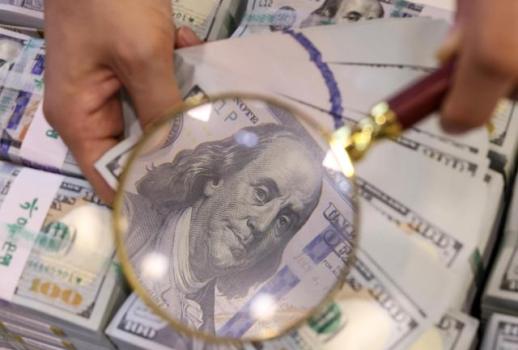 South Korea's short-term external debt ratio hits 15-year high SEOUL, August 20 (AJP) - South Korea's short-term external debt relative to its foreign-exchange reserves rose to the highest level in about 15 years in the second quarter, even as the government said the country's overall external payment capacity remained sound. The ratio climbed to 46.5 percent at the end of June from 43.3 percent three months earlier, the Ministry of Economy and Finance said Thursday. It was the highest reading since the second quarter of 2011, when the ratio stood at 50.8 percent, according to quarterly data compiled by the Bank of Korea. Short-term external debt, defined as obligations with maturities of one year or less, increased by $15 billion from the previous quarter to $198.5 billion, while its share of total external debt rose to 24.4 percent from 23.7 percent. Total external debt increased by $38.4 billion to $812.8 billion, with long-term debt rising by $23.5 billion to $614.3 billion. The ministry said the increase in short-term debt largely reflected settlement-related liabilities generated as foreign investors sold Korean equities rather than an increase in overseas borrowing. External debt held by nonbank financial institutions, public corporations and private companies rose by $36.3 billion, while government external debt increased by $8.4 billion, partly as foreign inflows into South Korean government bonds accelerated with the country's phased inclusion in the World Government Bond Index. Bank external debt fell by $4.8 billion and central bank liabilities declined by $1.5 billion over the quarter. South Korea's external claims rose by a larger $40.7 billion to $1.181 trillion, lifting net external claims — external claims minus external debt — by $2.3 billion to $367.8 billion, the first increase in three quarters. The ministry said the increase in net external claims and foreign-exchange reserves indicated that the country's external payment capacity remained adequate despite the rise in short-term debt indicators. Foreign-currency liquidity at domestic banks also remained well above regulatory requirements, with their foreign-currency liquidity coverage ratio at 167 percent at the end of the second quarter, compared with the regulatory minimum of 80 percent. 2026-08-20 17:55:16
 -
 Won extends gains, bonds end mixed SEOUL, August 20 (AJP) - The South Korean won extended its gains against the U.S. dollar on Thursday, while government bond yields ended mixed as longer maturities drew support from a decline in U.S. Treasury yields. The won strengthened 5.1 won from the previous session to close daytime trading at 1,392.6 per dollar, compared with Wednesday's close of 1,397.7. It marked the second straight daytime close below 1,400 and the lowest closing level since Sept. 23, 2025, with the currency briefly strengthening to 1,384.1 during the session. Exporter dollar selling and broader weakness in the U.S. currency supported the won early in the session, before importer demand and a weaker Japanese yen pared some of the gains. The KOSPI rebounded 5.89 percent to 6,852.58 following Wednesday's sharp selloff, with foreign investors returning to net purchases. South Korean government bonds ended mixed, with the three-year yield rising 1.3 basis points to 3.81 percent and the 10-year yield falling 1.4 basis points to 4.32 percent, according to final afternoon quotations from the Korea Financial Investment Association. Longer maturities outperformed, with the 30-year yield dropping 4.6 basis points to 4.68 percent, following an overnight decline in long-term U.S. Treasury yields. U.S. long-term yields fell after the Treasury announced an expansion of its bond buyback program, although the impact on shorter-dated Korean bonds remained limited. Shorter maturities remained relatively weak as investors continued to assess the domestic monetary policy outlook ahead of the Bank of Korea's Aug. 27 rate-setting meeting. Thursday's mixed close followed a broad bond rally the previous day, when the three-year yield fell 4.9 basis points to 3.80 percent and the 10-year yield dropped 4.5 basis points to 4.34 percent. 2026-08-20 17:06:16
 -
 South Korea extends curbs on hoarding urea, syringes for two more months SEOUL, August 20 (AJP) - South Korea will extend anti-hoarding measures on automotive urea solution and medical syringes for two months through the end of October, the Ministry of Economy and Finance said Thursday. The ministry made the decision at an emergency meeting chaired by Finance Minister and Deputy Prime Minister Koo Yun-cheol. But it will ease inventory rules for urea as supply conditions improve. The measures, which were due to expire at the end of this month, will remain in place from Sept. 1 through Oct. 31 as the government prepares for possible supply disruptions amid lingering uncertainty in the Middle East caused by the conflict between the U.S. and Iran. Under the government's eased inventory rules for urea solution and urea, importers, manufacturers and sellers will be allowed to keep up to 200 percent of their average monthly sales from a year earlier, up from the current 150 percent. The current rule prohibits companies from holding inventories above 150 percent of their average monthly sales for seven days or longer. The relaxation comes as China's allocation of about 2 million metric tons of urea export quotas has improved import prospects, with South Korean companies arranging contracts for about 7,000 tons of Chinese urea, equivalent to roughly one month of domestic demand. Combined public and private urea inventories have also recovered to the equivalent of three to four months of normal demand, according to the ministry. South Korea relies on urea solution in diesel vehicles to reduce nitrogen oxide emissions, making disruptions in urea imports a potential risk to road freight and other diesel-dependent transport. Anti-hoarding restrictions on medical syringes and needles will likewise be extended through Oct. 31 amid lingering concerns over supplies of raw materials such as naphtha, although domestic syringe inventories have been recovering since June. Manufacturers held about 69.54 million syringes in inventory in the second week of August, up from 49.77 million in the first week of May, government data showed. The government had already relaxed the syringe inventory threshold to 200 percent of average monthly sales and removed sales restrictions on July 24 as supplies stabilized. The government will separately announce its ninth round of maximum petroleum prices on Friday, with the new ceilings taking effect at midnight Saturday, after considering recent increases in global oil prices and their impact on household costs. Koo also said the government was preparing a package of measures ahead of the Chuseok holiday including large-scale discounts to help ease food-price pressures following heatwaves and heavy rainfall. 2026-08-20 15:58:41
 -
 US Treasury boosts bond buybacks as long-term yields surge SEOUL, August 20 (AJP) - The U.S. Treasury has calmed a surge in long-term borrowing costs by doubling buybacks of longer-dated bonds, but the move does little to address the forces behind the selloff as Washington continues to run large deficits and federal debt pushes past US$40 trillion. The Treasury said it would raise individual buybacks in the 10-to-20-year and 20-to-30-year sectors to at least $4 billion from $2 billion, with the higher limits applying from Sept. 9 through Nov. 4. The response was immediate, with the 30-year Treasury yield retreating to around 5.18 percent after touching 5.34 percent, its highest level since 2007. But the program remains small relative to the market it is attempting to stabilize, with maximum repurchases between early August and early November totaling about $83 billion against more than $32 trillion of publicly held U.S. debt. The gap becomes wider when measured against Washington's financing needs, as the Treasury expects to borrow $739 billion in privately held net marketable debt in the July-September quarter and another $628 billion in the final three months of the year. Buybacks can improve liquidity in older securities and redistribute duration across the yield curve, but they do not reduce the deficit that keeps generating new Treasury supply. That makes the expanded program a tool for easing market stress rather than a fundamental solution to the long-bond selloff. Citi's Dan Gottlander said the expanded operations could have a significant effect on longer maturities but noted that the program "does not change deficits," leaving the government to finance its borrowing elsewhere along the curve. Washington has also taken the unusual step of joining Japan in yen-buying intervention, another measure that can relieve immediate market pressure without changing the monetary, fiscal and supply forces driving currencies and long-term bond yields. The broader challenge is that the selloff is not confined to the United States, with Japanese long-term yields approaching multi-decade highs while borrowing costs in Germany and France have also risen sharply, increasing competition for global fixed-income capital. The New York Fed's estimate of the U.S. 10-year term premium has climbed to around 80 basis points, close to a 12-year high, suggesting that investors are demanding greater compensation for holding long-term debt beyond expectations for the Federal Reserve's policy rate. Foreign demand has also become less certain, with Treasury holdings by Japan, Britain and China declining in June as higher yields elsewhere and changing portfolio incentives make it less certain that overseas buyers will absorb new U.S. issuance at existing prices. The pressure comes as total federal debt has crossed $40 trillion, including more than $32 trillion held by the public, while the Congressional Budget Office projects that publicly held debt will rise from around 101 percent of gross domestic product this year to 120 percent by 2036. The $40 trillion threshold is not itself a black swan because the U.S. debt trajectory is widely known, but the growing debt stock could amplify another shock if renewed inflation, higher oil prices, weak Treasury auctions or softer foreign demand force investors to demand materially higher long-term yields. For South Korea, the clearest transmission channel is the bond market because higher global term premiums can push up domestic long-term borrowing costs even without a change in the Bank of Korea's policy rate. That sensitivity was evident on Aug. 18, when the three-year Korean government bond yield rose 6.6 basis points to 3.862 percent while the 10-year jumped 10.2 basis points to 4.415 percent, the 20-year gained 11.7 basis points to 4.675 percent and the 30-year rose 10.8 basis points to 4.777 percent. The larger moves at the long end showed how a U.S. duration and fiscal shock can be transmitted into Korean borrowing costs independently of expectations for the BOK, potentially tightening financing conditions even if policymakers in Seoul do not raise the base rate further. The currency channel is less straightforward because higher U.S. yields driven by stronger growth or Fed tightening typically support the dollar, while yields rising because investors demand a larger fiscal-risk premium can coincide with dollar weakness. A more severe Treasury-market disruption could produce the opposite response, however, if global risk aversion triggers demand for dollar liquidity and puts renewed downward pressure on the won. Equities face a similar transmission channel through discount rates, as persistently higher long-term yields reduce the present value of future earnings and put particular pressure on technology and other growth stocks. South Korea's chip-heavy equity market is therefore exposed to renewed increases in global long-term rates even when domestic earnings remain strong, adding another channel through which U.S. fiscal conditions can influence Korean asset prices. Washington can buy time with larger Treasury buybacks and currency intervention, but it cannot buy back the deficit, and if the center of gravity in long-term yields continues shifting from Fed policy toward fiscal supply and term premiums, Korea may increasingly find itself importing U.S. fiscal risk as well as U.S. monetary policy. AJP Takeaways • The U.S. Treasury doubled longer-dated bond buybacks to at least $4 billion per operation, but the program remains small compared with Washington's borrowing needs and more than $32 trillion of publicly held debt. • U.S. buybacks can ease liquidity stress and temporarily lower yields, but they do not reduce the fiscal deficit that keeps generating new Treasury supply. • South Korea's bond market showed direct spillovers on Aug. 18 as 10- to 30-year government yields rose more sharply than the three-year yield during the global long-bond selloff. • South Korean markets remain exposed to U.S. fiscal risk through long-term borrowing costs, the won and equity valuations even without another change in the BOK's policy rate. 2026-08-20 15:12:33
 -
 South Korea's net foreign assets shrink as stock rally boosts foreign-held shares SEOUL, August 20 (AJP) - South Korea's net foreign assets fell sharply to US$64 billion in the second quarter, as a stock market rally boosted the value of South Korean shares held by foreign investors, even as the country's net debt balance improved. The country's net international investment position or net IIP fell by $689.5 billion from $753.6 billion at the end of March, according to preliminary data released by the Bank of Korea on Thursday. "What matters, ultimately, is why it fell," the BOK said in a separate explanatory memo, saying that an increase in equity liabilities caused by higher stock valuations is different from an increase in debt, which must be repaid. South Korea's external financial assets rose $201.7 billion to $3.08 trillion, while external financial liabilities jumped by $891.2 billion to $3.02 trillion. The KOSPI surged 67.8 percent in the second quarter to 8,476.5 from 5,052.5, sharply lifting the market value of Korean shares already held by overseas investors. Actual transactions moved in the opposite direction from the headline net IIP, adding $98.4 billion to South Korea's net position while price, exchange-rate and other non-transaction effects reduced it by $787.9 billion. Foreign portfolio-investment liabilities increased $859.3 billion during the quarter, with equity securities accounting for $848.1 billion of the increase. Foreign investors, however, were net sellers of $63.9 billion of Korean equities, while valuation and other non-transaction effects added $912.0 billion to the value of their remaining holdings. The increase in South Korea's external financial liabilities therefore reflected higher valuations of foreign-held shares rather than a comparable influx of new foreign investment. Korean investors were also accumulating assets abroad, with overseas portfolio holdings rising $142.7 billion and equity holdings gaining $146.2 billion as net purchases continued and global stock markets advanced. The BOK linked the unusual pattern partly to semiconductor-led export strength, which supported current-account surpluses and overseas asset accumulation while boosting earnings expectations and domestic share prices. Transaction effects associated with current-account surpluses added $191.0 billion to South Korea's net foreign assets in the first half, but the central bank said gains in foreign-held Korean equities outweighed that contribution. External financial liabilities in the IIP include foreign ownership of domestic equities and direct-investment stakes as well as bonds, loans and other debt instruments. A rise in the price of foreign-held Korean shares can therefore reduce the net IIP without creating an equivalent increase in principal or interest that South Korean borrowers are required to repay. That distinction was visible in South Korea's net external assets in debt instruments, which rose $2.3 billion to $367.8 billion in the second quarter, marking the first increase in three quarters. External assets in debt instruments increased $40.7 billion to $1.1806 trillion, while external debt rose $38.4 billion to $812.8 billion. Short-term external debt nevertheless increased $15.0 billion to $198.5 billion, pushing its ratio to reserve assets to 46.5 percent from 43.3 percent and its share of total external debt to 24.4 percent from 23.7 percent. The BOK said part of the increase reflected won deposits and unsettled balances generated by foreign equity sales, with the rise in short-term external debt exceeding the increase in reserve assets during the quarter. The central bank cited Nokia-era Finland, ASML in the Netherlands and TSMC in Taiwan as previous cases in which soaring valuations of dominant exporters with high foreign ownership drove down national net foreign-asset positions. South Korea's equity market is also highly concentrated, with Samsung Electronics common shares accounting for an average 28.24 percent of main-board capitalization in June and SK hynix for 24.96 percent, or a combined 53.2 percent, according to the Korea Financial Investment Association. The BOK said such valuation-driven drops were associated with unusually sharp stock gains and that Korea's net IIP could increase again if domestic share-price gains moderate while current-account surpluses continue. AJP Takeaways: • Bank of Korea preliminary data show South Korea's net IIP fell by $689.5 billion to $64.0 billion in the second quarter, with valuation changes driving the bulk of the decline. • Foreign investors sold a net $63.9 billion of South Korean equities even as valuation and other non-transaction effects added $912.0 billion to the value of their remaining holdings. • South Korea's net external assets in debt instruments increased $2.3 billion to $367.8 billion, distinguishing the collapse in headline net IIP from the country's contractual external debt position. • Samsung Electronics and SK hynix accounted for a combined 53.2 percent of main-board capitalization on a June-average basis, increasing the effect of chip-share valuations on South Korea's international balance sheet. 2026-08-20 14:07:58