

Journalist
Kim Yeon-jae김연재
duswogmlwo77@ajupress.com
ReporterBank of Korea & Market, Macroeconomics
Kim Yeon-jae is a journalist at AJU Press (AJP's English platform),
covering macroeconomics, international finance, and geopolitics.
He closely tracks central bank monetary policies, global energy supply chains,
and the Korean defense industry. "Peering into the risks behind the euphoria."
covering macroeconomics, international finance, and geopolitics.
He closely tracks central bank monetary policies, global energy supply chains,
and the Korean defense industry. "Peering into the risks behind the euphoria."
Latest by Kim Yeon-jae
-
 Seoul rolls out borrower relief to cushion rate-hike fallout SEOUL, August 28 (AJP) - South Korea rolled out a targeted financial-relief package for heavily indebted households and small businesses Friday, seeking to contain the fallout from the Bank of Korea's back-to-back rate hikes without reversing the central bank's broader monetary tightening. The government said it will buy and restructure billions of won in long-delinquent debt, expand cheap refinancing for small merchants and increase subsidized lending to low- and middle-credit borrowers after the BOK lifted its base rate to a 19-month high of 3.00 percent on Thursday. The 25-basis-point increase followed an identical hike in July, marking the first back-to-back tightening since January 2023. Deputy Prime Minister and Finance Minister Koo Yun-cheol announced the measures at an emergency economic meeting in Seoul, saying the government would provide heavier protection for young people, lower-income households, small merchants and small and midsize companies. The government explicitly cited the BOK's latest rate increase and rising market rates as reasons for the package, warning that higher benchmark and bank funding costs are likely to feed progressively into loan rates as borrowers reach their repricing dates. The concern is amplified by Korea's exceptional debt load. Household credit reached a record 2,019.8 trillion won ($1.5 trillion) at the end of June after increasing 25.9 trillion won in the second quarter. The buildup gives the BOK another reason to tighten but also leaves the economy unusually exposed to higher borrowing costs. The pressure is more severe among the self-employed. Outstanding loans to self-employed borrowers reached a record 1,095.5 trillion won at the end of March, while delinquent debt climbed to 22.3 trillion won. Among vulnerable self-employed borrowers — people with multiple loans who are also low-income or low-credit — the delinquency rate reached 12.7 percent in the first quarter, compared with an average 5.3 percent in 2021, according to the government's policy document. The delinquency rate among vulnerable household borrowers stood at 10.9 percent. The BOK has estimated that a 25-basis-point rise in lending rates would add about 1.8 trillion won to the self-employed sector's annual interest bill. The government's first line of defense is to remove or restructure debt that has little realistic prospect of being repaid. A nationwide review in June identified 1.1 trillion won of loans held by securitization companies that have been delinquent for at least seven years and carry balances of 50 million won or less. Money lenders hold as much as another 4.5 trillion won of such debt. The government plans to purchase as much of the combined 5.6 trillion won pool as possible through the New Leap Fund in the second half of this year, then write off debts of borrowers with no repayment capacity or restructure them for those capable of partial repayment. A separate debt workout will target loans extended to sole proprietors during the pandemic. Banks and policy lenders supplied 358.7 trillion won of personal-business loans between 2020 and 2023, of which 154.7 trillion won, or 43.1 percent, remains outstanding. About 4.1 percent has been delinquent for at least three months. Government officials estimate that could leave roughly 6 trillion to 7 trillion won potentially subject to restructuring, although final eligibility and the scale of write-offs have not been determined. A detailed program is expected in the fourth quarter ahead of implementation next year. Public financial institutions will separately clean up loans delinquent for more than 20 years where recovery is deemed virtually impossible. The Export-Import Bank of Korea will write off 16.2 billion won of long-unpaid special claims against smaller companies this year, together with related debts of joint guarantors. The government said write-offs will not be automatic solely because of the age of the debt. Repayment capacity and prospects for recovery will be reviewed in an effort to limit moral hazard and resentment among borrowers who have continued servicing their loans. For borrowers still capable of repayment, Seoul is trying to prevent the BOK's higher policy rate from flowing fully into their financing costs. The BOK will keep the interest rate on its Bank Intermediated Lending Support Facility at 1.25 percent despite Thursday's base-rate increase and plans to redesign the program next year to provide greater support to regional SMEs and sole proprietors. The government is also widening a refinancing program run by the Korea SMEs and Startups Agency that allows small merchants to replace loans carrying interest rates of at least 7 percent with borrowing at 4.5 percent. Eligibility will be expanded from loans approved before June 30, 2025, to those approved by the end of that year. Industrial Bank of Korea will double its "Hope Dream" lending for small merchants facing business difficulties to 3 trillion won this year from 1.5 trillion won. Eligible borrowers who have maintained repayments can receive interest-rate discounts of as much as 1.8 percentage points. Korea Development Bank will increase its rate-conversion facility to 1.5 trillion won next year from 1 trillion won this year, while policy interest subsidies for SMEs will also be expanded. The approach effectively seeks to separate borrowers according to their ability to survive higher rates: bad debt is restructured, viable but vulnerable borrowers receive cheaper refinancing, while borrowers with sufficient capacity continue to face the tighter rates intended by the BOK. The government will also expand its subsidized lending programs for lower-credit households. Annual supply through the Sunshine Loan program will increase by 300 billion won to 6.2 trillion won in 2027 from 5.9 trillion won this year. A new loan for lower- and middle-credit borrowers will offer up to 1 million won at an annual rate of 4.5 percent with a maturity of 10 years, while the ceiling on youth microfinance loans will double to 10 million won from 5 million won. Eligibility will also be expanded to some borrowers in the bottom half of the credit-score distribution with annual income of 35 million won or less. Banks will be encouraged to introduce mortgages carrying fully fixed interest rates for at least 10 years in the second half of this year. The government is considering a separate policy mortgage next year for young first-time buyers purchasing non-apartment homes worth 400 million won or less, with loan-to-value ratios of up to 80 percent. AJP Takeaways Seoul is responding to the BOK's back-to-back hikes with targeted debt relief and cheap refinancing rather than broad stimulus, allowing monetary tightening to continue while cushioning its weakest borrowers. Up to 5.6 trillion won of seven-year-plus delinquent debt held by securitization companies and money lenders could be purchased for write-off or restructuring, with a separate program planned for pandemic-era small-business loans. Small merchants with loans costing at least 7 percent can refinance at 4.5 percent, while subsidized SME lending and Sunshine Loan supply will be expanded. The package exposes the central policy tension of a 3 percent rate environment: the BOK wants tighter credit to restrain inflation and debt, while Seoul is trying to prevent that tightening from turning existing financial weakness into a wave of defaults. 2026-08-28 10:48:04
 -
 Bond yields shoot up after back-to-back hike SEOUL, August 27 (AJP) - South Korean government bonds staged a sharp reversal Thursday after the Bank of Korea's second straight rate hike, while the won strengthened only modestly despite closing at an 11-month high. The dollar-won rate fell 3.9 to close daytime trading at 1,380.9, its lowest level since September last year. The rate dropped as low as 1,377.3 shortly after the decision before recovering much of the decline later in the session. The BOK raised its base rate by 25 basis points to 3.00 percent, following an identical increase in July. Government bonds initially sold off sharply as investors reacted to the consecutive hike and the central bank's large upward revision to its growth outlook. The three-year Korean government bond yield climbed as much as 6.9 basis points to 3.886 percent. The 10-year yield rose 3.9 basis points to 4.321 percent. The moves reversed after investors digested the BOK's six-month rate projections and Gov. Shin Hyun-song's press conference. The three-year yield ended 6.1 basis points lower at 3.755 percent, according to final quotations from the Korea Financial Investment Association. That represented a 13.1-basis-point reversal from its intraday high. The 10-year yield closed 5.0 basis points lower at 4.238 percent, an 8.3-basis-point reversal from its earlier high. The BOK's six-month conditional rate outlook showed a median of 3.25 percent, suggesting one additional quarter-point increase from the current level. Five of the 21 probability-weighted projections remained at 3.00 percent. Board member Hwang Kun-il also dissented in favor of keeping the rate at 2.75 percent. Shin said policymakers would assess the effects of the two consecutive increases and stopped short of committing to another immediate move. Investors took the guidance as reducing the risk of another rapid succession of hikes, helping bonds recover from their initial losses. The won's reaction was more subdued. The currency strengthened after the decision but gave back much of its intraday gain as expectations for another immediate increase eased. Month-end dollar selling by exporters also supported the won, while dollar-buying demand emerged below 1,380. 2026-08-27 17:35:22
 -
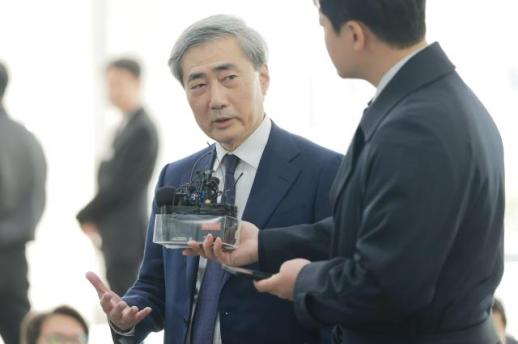 BOK chief Shin to attend Jackson Hole, G20, BIS meetings SEOUL, August 27 (AJP) - Bank of Korea Governor Shin Hyun-song is heading for the United States on Thursday to attend the Jackson Hole Economic Policy Symposium, followed by G20 and BIS meetings. Shin will attend the Jackson Hole symposium from Friday and exchange views with central bank governors and academics. This year's symposium will be held under the theme "Financial Innovation: Implications for Payments and Policy." Shin will then attend the G20 Finance Ministers and Central Bank Governors Meeting in Asheville, the United States, from Aug. 31. He will discuss major global economic issues with finance ministers, central bank governors and officials from international financial institutions. The BOK governor will travel to Basel, Switzerland, for the Bank for International Settlements Governors' Meeting beginning Sept. 5. He will attend the Global Economy Meeting and the Meeting of Governors to discuss recent global economic and financial-market conditions with other central bank governors. Shin will also attend the BIS Board of Directors and the Economic Consultative Council as a BIS board member. Before taking over as BOK governor in April, Shin served as BIS economic adviser from 2014 and headed its Monetary and Economic Department from 2025. He is scheduled to return to South Korea on Sept. 9. 2026-08-27 17:33:06
 -
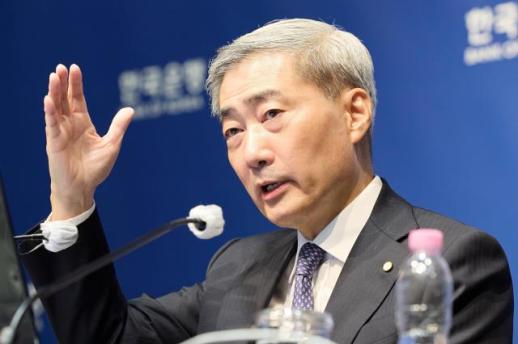 BOK front-loads tightening, but disinflation tests early hikes SEOUL, August 27 (AJP) - The Bank of Korea (BOK) has front-loaded monetary tightening with its first back-to-back rate hikes since January 2023, betting that South Korea's chip-powered economic resilience and increasingly persistent inflation warrant acting before price pressures become harder to contain. The BOK raised its base rate by 25 basis points to 3.00 percent on Thursday, following an identical increase in July. Governor Shin Hyun-song, proving to be a hawk by delivering two rate hikes since taking office in late April, made clear that his preference is to pay the smaller cost of tightening early rather than risk a much more painful response later. He said preemptive monetary-policy action was necessary to preserve macroeconomic stability, including price stability. To explain the consecutive increases, Shin invoked a familiar Korean proverb: "What can be stopped with a hoe should not be left until it requires a spade." "We used the hoe, not the spade," he said. The message was straightforward. Strong growth is likely to continue into next year, and inflation could broaden and remain elevated for longer if the BOK waits until demand pressures become firmly entrenched. The central bank's new economic outlook strengthens that argument. The BOK raised its 2026 growth forecast sharply to 3.3 percent from 2.6 percent in May and its 2027 projection to 2.9 percent from 2.1 percent, citing the semiconductor boom and its widening spillover across the economy. Headline inflation forecasts were unchanged at 2.7 percent this year and 2.3 percent next year. Core inflation, however, was revised up to 2.5 percent for both years. The BOK expects demand-side price pressures to gradually strengthen as domestic demand remains solid, supported by improving household income and an expansionary fiscal stance. The central bank's working assumption is that semiconductor profits and investment will increasingly find their way into incomes and consumption, keeping underlying inflation sticky even as headline price increases moderate. Shin said the consecutive hikes departed from the BOK's usual pattern and were intended partly to send a forceful signal to markets. Having sent it, the question becomes whether the central bank needs to fire again soon. The composition of the growth upgrade offers reasons for caution. Half of the 0.7-percentage-point increase in this year's growth forecast came from stronger-than-expected semiconductor conditions. Goods-export growth was raised to 9.7 percent from 4.9 percent, while facilities investment was revised to 6.8 percent from 4.4 percent. Private consumption barely moved, rising to 2.1 percent from 2.0 percent. Construction investment was cut to 0.2 percent from 0.6 percent. The BOK also lowered its employment-growth forecast to 140,000 from 180,000, citing weakness in sectors including construction. The policy debate therefore turns increasingly on transmission: not whether Korea is growing, but how quickly the export and semiconductor boom reaches household spending, wages and service prices. That distinction matters because higher interest rates impose costs across the economy, including on households and companies receiving little of the semiconductor windfall. Inflation itself is sending mixed signals. Consumer prices slowed to 2.8 percent in July, while core inflation edged up to 2.6 percent from 2.5 percent. The BOK expects headline inflation to ease further to 2.3 percent next year. Core inflation is forecast to stay at 2.5 percent as stronger domestic demand offsets some of the relief from goods and energy prices. The won has meanwhile strengthened sharply. The dollar-won rate fell from 1,424.0 at the end of July to 1,380.9 on Thursday, potentially reducing imported inflation. The BOK itself identifies larger declines in oil prices and the exchange rate as downside risks to its inflation forecasts. Timing creates another complication. The July increase has had only about six weeks to work through borrowing costs, household demand and asset prices. Shin acknowledged that the impact of the two consecutive moves now needs to be assessed. The Monetary Policy Board was also not unanimous. Hwang Kun-il voted to keep the base rate at 2.75 percent, while the other six members backed the increase. Shin described Hwang's dissent as a "tactical difference," saying the disagreement concerned timing rather than the broader direction of policy. The board's six-month rate projections nevertheless moved decisively upward. Of 21 probability-weighted dots submitted by the seven board members, 10 were placed at 3.25 percent and six at 3.50 percent. Five remained at the current 3.00 percent. In May, only two dots had been above 3.00 percent. The median projection rose to 3.25 percent, putting the center of the board's outlook one additional quarter-point increase above the current rate. Shin stopped well short of promising another immediate move. "All upcoming meetings are live," he said. The combination leaves the BOK in an unusual position: signaling that rates will probably have to go higher while simultaneously arguing that it now has room to watch what the first two increases actually do. Kang In-soo, an economics professor at Sookmyung Women's University, said the move was better understood as a preemptive response to inflation and financial-stability risks than as the beginning of an extended tightening cycle. The back-to-back hikes have already sent a powerful signal, he said, and the BOK should now give greater weight to assessing their impact before raising rates again. Yoon Yeo-sam, a bond strategist at Meritz Securities, said the August meeting strengthened the case that Korean market yields may have reached their peak. He estimated fair value for the three-year Korean government bond yield at 3.8 percent and the 10-year yield at 4.2 percent. Financial markets showed a mixed but relatively contained reaction. The KOSPI's gain narrowed to as little as 0.49 percent around the rate decision before recovering later in the session. The benchmark closed at 6,908.74, up 1.48 percent from Wednesday. The won strengthened into the 1,379 range shortly after the decision and closed at 1,380.9 per dollar, 3.9 won stronger than Wednesday. Korean government bond yields were little changed after an earlier selloff faded. The three-year yield ended 0.6 basis point lower at 3.810 percent. The 10-year yield edged up 1.4 basis points to 4.302 percent, while the 20-year yield rose 1.5 basis points to 4.557 percent. The muted repricing suggested investors were already looking beyond Thursday's increase toward two questions: whether another hike follows, and how long the BOK intends to keep policy restrictive. Financial stability supplies another argument for keeping rates high. Seoul home prices rose 1.1 percent in July from the previous month, while prices across the broader capital region gained 0.7 percent. Bank household lending increased by 5.4 trillion won ($3.9 billion), including a 3.4 trillion won rise in mortgage lending. Shin said interest rates were no cure-all for housing but could help restrain leverage alongside macroprudential measures. Fiscal policy adds another twist. The BOK's own outlook identifies expansionary government spending as one reason domestic demand should remain resilient. Stronger fiscal support can help the economy absorb higher borrowing costs. It can also keep demand and underlying inflation firmer, forcing monetary policy to remain restrictive for longer. Shin argued that the two policies do not necessarily conflict. Fiscal spending that raises the economy's potential growth, he said, could allow faster expansion without generating the same degree of inflation. Ultimately, the BOK's strategy rests on two judgments. The first is that semiconductor-driven income gains will spread widely enough to generate persistent demand-side inflation. The second is that the rest of the economy can withstand higher borrowing costs before that inflation becomes unmistakable. If consumption and wages strengthen as the BOK expects and core inflation remains sticky, the back-to-back hikes may come to look like cheap insurance against a much more disruptive tightening cycle later. If growth remains heavily concentrated in exports and investment while headline inflation continues to subside, the argument for moving twice in rapid succession will become harder to sustain. A stronger won would reinforce that disinflationary pressure by lowering import costs. Thursday's decision shows that Shin has chosen not to wait for the evidence to become conclusive. He has reached for the hoe. Whether Korea's broader economy produces the inflation the BOK is trying to prevent will determine whether those early swings prove prudent — or whether the central bank started digging before it needed to. AJP Takeaways • The Bank of Korea raised its base rate to 3.00 percent with a second consecutive 25-basis-point increase, as Governor Shin Hyun-song argued that early tightening could prevent a more painful inflation fight later. • The BOK raised its 2026 growth forecast to 3.3 percent, but much of the upgrade came from semiconductors, exports and investment, leaving the transmission of chip wealth into household consumption and wages central to the case for further tightening. • The BOK's six-month rate outlook shifted sharply higher, with 16 of 21 probability-weighted projections above the current 3.00 percent rate, although Shin said all future meetings remain "live." • Falling headline inflation, a stronger Korean won and the still-limited transmission of July's rate hike could challenge the case for another rapid increase, even as housing leverage, sticky core inflation and expansionary fiscal policy argue for keeping monetary policy restrictive. 2026-08-27 16:49:59
 -
 UPDATE: BOK stays hawkish after summer back-to-back hike *Updated with additional information, economic outlook and market response SEOUL, August 27 (AJP) -The Bank of Korea (BOK) on Thursday opted for a back-to-back increase to lift the key rate to 3.00 percent - the highest since January 2025 - in preemptive action to rein in inflationary pressure renewed from an economy expected to grow at its fastest pace in five years on the chip boom. The move was almost unanimous, with one dissent, and narrowed the interest-rate gap with the United States to 50 basis points at the lower end of the Federal Reserve's target range. The BOK worried that the economy's strong run could add demand-side price pressure and feed into wages, on top of higher input costs stemming from Middle East tensions, trade frictions and strong AI-related demand. The BOK said stronger-than-expected growth, supported by robust exports and a recovery in domestic demand, was expected to keep inflation above its 2 percent target for a considerable period. "The most important factor was our assessment of inflation," Gov. Shin Hyun-song told reporters in post-rate meeting briefing. Shin said the higher core inflation outlook reflected stronger underlying price pressures as improving income conditions supported demand and that acting earlier could reduce the eventual cost to the economy and limit the intensity and duration of tightening needed later. Six of the seven Monetary Policy Board members supported the 25-basis-point increase. Hwang Kun-il dissented, arguing that the base rate should remain at 2.75 percent. It was the first dissent in favor of a hold during a rate-hike decision since January 2023, when two board members opposed an increase. The BOK's six-month conditional rate projections shifted markedly higher, signaling that Thursday's move may not be the end of the tightening cycle. Of 21 probability-weighted dots submitted by the seven board members, 10 were placed at 3.25 percent and six at 3.50 percent. Five remained at the current 3.00 percent. In May, only two dots had been above 3.00 percent. Ten were at 3.00 percent, seven at 2.75 percent and two at 2.50 percent. The BOK in post-rate statement said it would determine the timing and pace of further rate increases after assessing inflation, economic growth and financial-stability conditions. The central bank at the same time sharply upgraded its economic outlook alongside the rate decision. It raised growth forecast to 3.3 percent from 2.6 percent in May estimate for this year and to 2.9 percent from 2.1 percent for 2027. The BOK expects strong semiconductor conditions to sustain rapid growth in exports and investment, while improving income conditions gradually broaden the recovery in consumption. Risks include the extent of the semiconductor upcycle, how strongly export gains spill over into domestic demand, developments in the Middle East and changes in the global trade environment. The bullish economic outlook should have supported capital markets, but retail1 investors focused instead on higher borrowing costs, which add to the burden of leveraged bets on stocks and housing. By midday, the KOSPI was up about 0.8 percent at 6,863, paring an earlier gain of more than 2 percent after the rate decision. The Korean won strengthened 5.8 won from the previous session to around 1,379 per dollar. Longer-dated government bond yields rose on the BOK's hawkish tone. The 10-year yield added 1.4 basis points to 4.302 percent, while the 20-year yield climbed 1.5 basis points to 4.557 percent. Headline consumer inflation forecasts were unchanged at 2.7 percent for this year and 2.3 percent for next year. Underlying price pressure, however, was revised higher. The BOK raised its core inflation forecast to 2.5 percent for both years, from 2.4 percent for 2026 and 2.3 percent for 2027. Consumer inflation slowed to 2.8 percent in July as increases in petroleum and agricultural prices moderated, but core inflation excluding food and energy accelerated to 2.6 percent as personal-service and durable-goods prices rose faster. Short-term inflation expectations among consumers remained in the upper 2 percent range. The central bank expects accumulated cost pressures to continue feeding through to prices, while improving income conditions gradually strengthen demand-side pressure. It identified oil prices, exchange-rate movements, the pace of domestic-demand recovery and the extent of wage increases as major uncertainties surrounding the inflation outlook. Financial-stability concerns also strengthened the case for another hike. The BOK said housing prices in Seoul and surrounding areas continued to rise rapidly and household lending increased substantially. Seoul home prices rose 1.1 percent in July from the previous month, while prices across the broader capital region gained 0.7 percent. Bank household lending increased by 5.4 trillion won during the month, including a 3.4 trillion won rise in mortgage lending. Meanwhile, the won strengthened sharply as foreign equity outflows eased, foreign-exchange supply-demand conditions improved and the U.S. dollar weakened. The dollar-won rate stood at 1,384.8 on Aug. 26, compared with 1,424.0 at the end of July. The decision came against widespread expectations for a pause in the domestic bond market. A Korea Financial Investment Association survey released ahead of the meeting showed 79 percent of respondents expected the BOK to hold the rate. South Korea's benchmark rate had remained at 2.50 percent from May last year until the BOK raised it by 25 basis points to 2.75 percent in July, its first increase since January 2023. The two consecutive hikes have reversed half of the 100 basis points of easing delivered between October 2024 and May 2025, when the BOK lowered the base rate from 3.50 percent to 2.50 percent. The global backdrop remains complicated. The BOK said the world economy continues to grow moderately despite persistent Middle East tensions, supported in part by robust AI investment, while inflation is likely to remain elevated for some time because of higher energy prices. It also cited uncertainty over U.S. monetary policy and the Middle East, rising concerns over fiscal soundness in major economies and higher long-term bond yields. The U.S. dollar has weakened even as global equities broadly advanced on solid corporate earnings. The BOK said its policy focus will remain on bringing inflation back toward target over the medium term while guarding against financial instability. Further moves will depend on the path of inflation and growth as well as housing prices, household debt and other financial-stability risks. AJP Takeaways The BOK raised the benchmark rate to 3.00 percent in a 6-1 decision, delivering a second straight increase as it moved preemptively against persistent inflation pressure. The six-month rate outlook turned sharply more hawkish, with 16 of 21 probability-weighted dots pointing above the current 3.00 percent rate. Growth forecasts were raised sharply to 3.3 percent for 2026 and 2.9 percent for 2027, reflecting stronger semiconductor exports, investment and recovering consumption. Headline inflation forecasts were unchanged, but core inflation was revised higher, while rising Seoul home prices and household debt reinforced the case for continued tightening. 2026-08-27 11:51:08
 -
 UPDATE: BOK lifts 2026 growth forecast to 3.3% *Updated with detailed economic outlook and Gov. Shin's comments SEOUL, August 27 (AJP) -The Bank of Korea (BOK) sharply raised its 2026 growth forecast to 3.3 percent on Thursday, citing a stronger-than-expected semiconductor boom, hours after delivering a second consecutive interest-rate increase to contain persistent inflation pressure. The central bank lifted this year's growth outlook by 0.7 percentage point from its May estimate of 2.6 percent. It also raised its 2027 projection to 2.9 percent from 2.1 percent. The 2026 projection would mark South Korea's strongest annual growth since 2021. The upgrades reinforced the BOK's case for keeping monetary policy restrictive after the Monetary Policy Board raised the benchmark rate by 25 basis points to 3.00 percent in a 6-1 decision earlier Thursday. Headline consumer inflation forecasts were unchanged at 2.7 percent for this year and 2.3 percent for next year. Underlying inflation, however, was revised higher. Core inflation is now expected at 2.5 percent in both 2026 and 2027, compared with the previous projections of 2.4 percent and 2.3 percent. The BOK said accumulated cost shocks were continuing to feed through into prices. Improving income conditions and stronger domestic demand were also gradually increasing demand-side pressure. The semiconductor boom accounted for about half of the upgrade to this year's growth outlook. The BOK estimated that stronger-than-expected semiconductor activity added 0.35 percentage point to the revision. Chip export volumes and prices exceeded earlier expectations, while exports of AI-related products expanded. Revisions to previously released economic data contributed another 0.20 percentage point. Faster investment linked to three major projects added 0.10 percentage point, while a smaller-than-expected impact from Middle East disruptions added another 0.10 point. Other factors partly offset those gains. The improvement is concentrated largely in exports and investment. Goods exports are now forecast to expand 9.7 percent this year, nearly double the 4.9 percent projected in May. Facilities investment is expected to grow 6.8 percent, up from the previous estimate of 4.4 percent. Private consumption is projected to increase 2.1 percent, only slightly above the May forecast of 2.0 percent. The construction investment outlook was lowered to 0.2 percent from 0.6 percent. The export boom is also expected to produce a record external surplus. The BOK raised its 2026 current-account surplus forecast to $450.0 billion from $250.0 billion in May. That would far exceed the previous record of $123.1 billion posted last year. The central bank said strong global AI investment was supporting semiconductor demand. Supply constraints were also lifting chip prices and widening the goods surplus. The BOK expects the semiconductor cycle to remain strong into next year but said the outlook carries considerable uncertainty from the pace of AI investment and developments in the Middle East. Its baseline scenario assumes global AI infrastructure investment will continue to expand and semiconductor exports will maintain strong growth. Production capacity is also expected to increase gradually. Middle East supply disruptions are expected to ease as traffic through the Strait of Hormuz partially recovers and crude supplies increase through alternative routes. The BOK assumes Brent crude will average $86 a barrel this year and fall to $74 a barrel next year, substantially below its May assumptions. The central bank said stronger semiconductor exports and investment could provide additional upside to growth. A broader spillover of the IT boom into other sectors would also support the economy. A pullback in AI investment, renewed Middle East tensions and heavier U.S. trade and tariff pressure were cited as major downside risks. The revised outlook came after the BOK earlier Thursday lifted its policy rate to 3.00 percent, its second consecutive 25-basis-point increase. Six of the seven board members supported the move. Hwang Kun-il favored keeping the rate at 2.75 percent. The board's six-month conditional rate projections also shifted higher. Of 21 probability-weighted dots, 10 were placed at 3.25 percent and six at 3.50 percent, while five remained at 3.00 percent. Gov. Shin Hyun-song nevertheless signaled that further tightening is likely to proceed more gradually after the back-to-back moves. He said the median projection of 3.25 percent was broadly consistent with about one additional increase over the four policy meetings during the coming six months. Shin stressed that the projections were conditional rather than a commitment. The BOK will first assess the impact of the July and August increases before deciding the timing of its next move. The policy statement also shifted away from July's explicit language calling for a continued rate-hike stance. The BOK instead said the timing and pace of further increases would depend on inflation, growth and financial-stability conditions. Shin said policymakers would closely monitor August and September inflation figures, preliminary second-quarter nominal GDP and business sentiment ahead of the next rate decision. The BOK also continues to see financial-stability risks from rising housing prices and household debt as a reason to maintain a restrictive policy stance. Shin said the two preemptive increases should help contain inflation through their effects on domestic demand, the exchange rate and import prices. The central bank said it would continue to monitor inflation and growth alongside housing prices, household debt and broader financial conditions when deciding the timing and pace of further tightening. AJP Takeaways: The BOK raised its 2026 growth forecast by 0.7 percentage point to 3.3 percent after lifting the benchmark rate to 3.00 percent. A stronger semiconductor boom accounted for 0.35 percentage point of the growth upgrade, while the goods export growth forecast was nearly doubled to 9.7 percent. Headline inflation forecasts were unchanged, but core inflation was raised to 2.5 percent for both 2026 and 2027 as demand-side pressure strengthens. The BOK expects a record $450 billion current-account surplus, while Shin signaled that further rate increases are likely to proceed more gradually. 2026-08-27 09:55:10
 -
 BOK delivers back-to-back hike to 3% Aug SEOUL, August 27 (AJP) -The Bank of Korea (BOK) delivered a back-to-back rate hike to bring the benchmark rate to 3.00 percent on Thursday after holding it at 2.50 percent for 14 months through June. The move narrowed the interest-rate gap with the United States to 50 to 75 basis points, with the Federal Reserve's target range at 3.50 percent to 3.75 percent, reducing one source of pressure on the won and capital flows. The BOK said stronger-than-expected growth, persistent inflation pressure and financial-stability risks warranted further tightening despite the stronger won. The decision defied bond-market expectations for a pause in August and quickly rippled through Korean financial markets. South Korea's benchmark rate had remained at 2.50 percent from May last year until the BOK raised it by 25 basis points to 2.75 percent in July, its first increase since January 2023. The July move ended a 14-month pause and marked the start of a new tightening cycle. The central bank also raised its 2026 growth forecast to 3.3 percent from 2.6 percent in May while keeping its inflation forecast unchanged at 2.7 percent. It raised its 2027 growth projection to 2.9 percent from 2.1 percent while maintaining its inflation forecast at 2.3 percent. The KOSPI was up 0.56 percent at 6,840 as of 10 a.m., sharply paring an advance of more than 2 percent earlier in the session after the rate hike was announced. The Korean won strengthened 5.8 won from the previous session to 1,377.6 per dollar at the same time. Gov. Shin Hyun-song is due to explain the policy decision and updated economic outlook at a post-meeting press conference later Thursday. AJP Takeaways BOK raises the rate to 3.00 percent, delivering consecutive hikes in July and August. The Korea-U.S. rate gap narrows to 50 basis points at the lower end of the Fed's target range. The hike defies bond-market expectations for a pause, putting Korean financial markets on alert for further repricing. 2026-08-27 09:50:51
 -
 Chip payouts may give Korean won more room to run SEOUL, August 26 (AJP) - South Korea's won, already near its strongest level in almost a year, has more upside room as Samsung Electronics and SK hynix are expected to dole out massive shareholder returns. The dollar influx, however, won't likely match the recent boost from SK hynix's $26.5 billion American depositary receipt issuance, traders say. The won has strengthened sharply in recent weeks as exporters increased dollar selling and SK hynix converted part of its ADR proceeds. Whether it gains further grounds can depend on shareholder payouts by the two chipmakers. Samsung Electronics last week announced plans to return an estimated 90 trillion won to 110 trillion won ($65 billion to $79 billion) to shareholders this year, including around 30 trillion won in third-quarter dividends. SK hynix separately unveiled a 40 trillion won ($29 billion) share repurchase and cancellation program and raised its shareholder-return target to more than 50 percent of cumulative free cash flow generated from 2025 through 2027. Both companies earn a large share of their revenue in dollars and would need local money to pay domestic dividends and buy Seoul-listed shares. Converting part of their foreign-currency holdings to finance the programs could therefore add to dollar supply in the Seoul market. Kwon Ah-min, an FX analyst at NH Investment & Securities, estimated that SK hynix's ADR conversion would have represented around 2 percent of average daily dollar-won spot trading volume in the second quarter. The estimate assumes the proceeds were exchanged over 30 trading days. Daily spot transactions averaged $43.7 billion during the quarter. Under a full-conversion scenario, shareholder-return flows from Samsung and SK hynix could equal around 2.3 percent of average daily spot volume if spread over 60 trading days. That would be broadly comparable with the estimated impact of SK hynix's ADR conversion. Expectations of further corporate dollar selling could also encourage exporters and offshore investors to sell dollars earlier. SangSangIn Investment & Securities analyst Choi Ye-chan estimated that the transactions could generate net dollar supply of 15 trillion won to 45 trillion won. The estimate assumes the two companies convert 50 percent to 60 percent of the won needed for shareholder returns over six to 12 months. His scenarios imply a decline of roughly 18 won to 77 won in the dollar-won rate after accounting for foreign-investor remittances. Still, analysts caution against equating the announced payout amounts with the amount of dollars likely to be sold. Samsung and SK hynix already hold substantial won liquidity and generate domestic-currency cash flow, reducing the need to convert foreign earnings into won. Kwon estimates that only around 40 percent to 50 percent of the required funding will need foreign-currency conversion. That would make the actual flow substantially smaller than under a full-conversion scenario. Foreign investors may provide another offset by converting won-denominated dividends or buyback proceeds back into dollars before remitting the funds overseas. Those transactions would create dollar demand and partly reverse the companies' initial dollar supply. The structure differs from SK hynix's ADR offering, which raised fresh dollars abroad that were expected to be used partly for investment in South Korea. That created a relatively direct need for dollar-to-won conversion. Shareholder returns can instead be financed through existing won balances, operating cash flow and foreign-currency holdings. Part of the payout to foreign investors could later return to the FX market as dollar demand. The balance of risks nevertheless remains tilted toward additional won strength as long as semiconductor exporters continue generating large dollar revenues. Kwon sees the dollar-won rate testing the 1,340 to 1,350 range if corporate dollar selling continues, implying another 40 won to 50 won of downside from recent levels. Recent trading shows that corporate flows alone are unlikely to determine the currency's direction. The dollar-won rate fell as low as 1,378.9 on Tuesday before rebounding to close daytime trading at 1,386.1 as dollar demand and bargain buying offset continued exporter selling. U.S. Treasury yields and global dollar moves will also remain important. Foreign equity flows and expectations for Bank of Korea policy could further shape the currency's direction. The scale of Samsung and SK hynix's shareholder returns nevertheless gives the market another reason to watch corporate FX flows closely. The announced programs are large enough to create meaningful dollar supply even if only part of the funding is converted from foreign currency. How much further the won can strengthen will ultimately depend on the actual conversion ratio, the pace of execution and how much of the money paid to foreign shareholders is eventually converted back into dollars. AJP Takeaways Samsung Electronics and SK hynix's massive shareholder-return programs could add fresh dollar supply to Seoul's foreign-exchange market and extend the Korean won's recent rally. A full-conversion scenario would generate flows equal to around 2.3 percent of average daily dollar-won spot trading volume, broadly comparable with the estimated impact of SK hynix's $26.5 billion ADR issuance. NH Investment & Securities expects only around 40 percent to 50 percent of required funding to need FX conversion, while dollar demand from foreign shareholders could offset part of the supply. Analysts see corporate dollar selling as a steady tailwind for the won rather than another concentrated ADR-sized shock, with global dollar moves, execution speed and foreign-investor remittances determining how far the rally can extend. 2026-08-26 14:03:53
 -
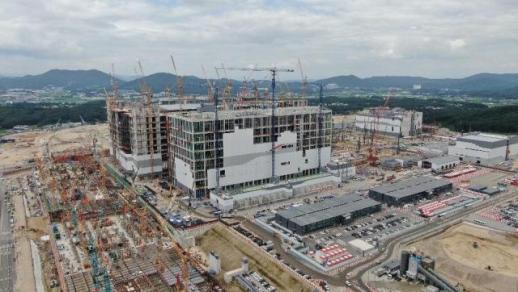 Korea business sentiment hits four-year high on chip boom SEOUL, Aug. 26 (AJP) — South Korean business sentiment rose to its highest level in nearly four years in August, buoyed by strong semiconductor exports and tourism demand even as domestic consumption and factory activity remained weak. The Composite Business Sentiment Index (CBSI) for all industries rose 1.1 points from July to 99.6, the highest reading since September 2022, according to the Bank of Korea (BOK) Wednesday. The outlook for September gained 3.1 points to 99.6. A reading above 100 means business sentiment is stronger than its long-term average, while a figure below 100 indicates weaker sentiment. Manufacturing CBSI gained 0.6 point to 103.8, while nonmanufacturing sentiment rose 1.5 points to 96.7. The September outlook increased to 102.5 for manufacturers and 97.6 for nonmanufacturers. Sentiment also improved among smaller manufacturers. CBSI for small and medium-sized manufacturers rose 2.2 points to 99.8. The index for large companies fell 1.6 points to 103.7. The gap between exporters and domestically focused businesses, however, remained wide as growth increasingly leaned on semiconductor shipments. Sentiment among export-oriented manufacturers climbed to 108.5 from 107.5. The index for domestically focused firms slipped to 99.4 from 100.0. Outside factories, the improvement was led by transportation and storage businesses, supported by higher maritime freight rates and stronger summer passenger and cargo demand. Information and communications firms also reported better conditions. Professional, scientific and technical services benefited from stronger orders for architecture, design and semiconductor-related engineering. Manufacturing sentiment remained firm, but stronger confidence was not matched by stronger factory activity. The manufacturing business-conditions BSI slipped one point to 81. Production fell to 92 from 93 and sales dropped to 93 from 96, while new orders were unchanged at 92. The gain in manufacturing CBSI was driven mainly by inventories and funding conditions, which contributed 0.6 point and 0.4 point, respectively. Business conditions and production each subtracted 0.2 point. Price-related indicators also eased in August. The BSI for manufacturers' raw-material purchase prices fell to 123 from 129, while the selling-price index declined to 102 from 105. Profitability improved to 81 from 79, and funding conditions rose to 82 from 81. Domestic demand remained a weak spot despite the broader improvement in sentiment. Among manufacturers, the share citing sluggish domestic demand as a major business difficulty rose 2.6 percentage points to 19.0 percent in August. For nonmanufacturers, weak domestic demand was the most frequently cited difficulty at 19.4 percent, up from 18.4 percent in July. The broader Economic Sentiment Index, which combines business and consumer confidence, rose 1.5 points to 99.4. Its cyclical component gained 0.4 point to 96.9. The mixed readings come a day before the BOK's Monetary Policy Board decides whether to follow July's 25-basis-point increase with another hike or keep the benchmark rate unchanged at 2.75 percent. Five of nine economists surveyed jointly by AJP and Aju Business Daily expect the central bank to hold. A Korea Financial Investment Association survey showed 79 percent of bond-market professionals also forecast no change. AJP Takeaways • South Korea's all-industry CBSI rose 1.1 points to 99.6 in August, its highest level since September 2022, while the September outlook climbed 3.1 points to 99.6. • Semiconductor exports, tourism and transportation helped lift South Korean business sentiment, with manufacturing CBSI reaching 103.8 and nonmanufacturing CBSI rising to 96.7. • Factory production and sales weakened despite improved corporate confidence, while sluggish domestic demand remained the biggest concern ahead of the Bank of Korea's Aug. 27 rate decision. 2026-08-26 07:25:37
 -
 Extreme-heat days nearly double the average this summer in Korea SEOUL, August 25 (AJP) -South Korea has endured nearly twice the usual number of heat-wave days so far this year, with record-breaking temperatures and unusually persistent tropical nights pointing to a summer stretching well into September. The nationwide average number of heat-wave days reached 20.1 from the start of the year through Monday, almost double the seasonal average of 10.4 days, according to the Korea Meteorological Administration (KMA) Tuesday. A heat-wave day is defined as one when the daily high reaches 33 degrees Celsius or above. The heat has been particularly intense in the southeastern part of the country. Busan, Ulsan and South Gyeongsang Province averaged 25.6 heat-wave days, followed by Daegu and North Gyeongsang Province with 24.7 days and North Jeolla Province with 22.6 days. The nationwide average daily high in August has reached 32.1 C, 1.9 degrees above the seasonal norm of 30.2 C. Yangsan in South Gyeongsang Province recorded 42.5 C on Aug. 2, the highest temperature measured in South Korea since modern weather observations began in 1904. Other southeastern cities also broke local records. Temperatures reached 41 C in Bukchangwon on Aug. 2 and in Miryang the following day, while Uiryeong climbed to 40.8 C on Aug. 3. Relief has been scarce even after sunset. South Korea recorded an average 16.4 tropical nights through Monday, the second-highest level on record after 16.8 days in 1994. It marks the country's highest tally in 32 years. The KMA defines a tropical night as one when the nighttime low remains at or above 25 C. The prolonged heat is unlikely to disappear with the end of August. The North Pacific high-pressure system covering the Korean Peninsula is strengthening, while the Tibetan high is developing again above it, creating what forecasters describe as a "double heat dome" that traps hot air over the region. Maximum apparent temperatures are expected to hover around 33 C through early September, extending the spell of late-summer heat and likely pushing this year's heat-wave and tropical-night counts still higher. South Korea has already experienced two consecutive years of unusually prolonged heat. The annual number of heat-wave days reached 30.1 in 2024 and 29.7 last year. Tropical nights totaled 24.5 days in 2024 and 16.4 days in 2025. AJP Takeaways South Korea recorded 20.1 heat-wave days through Aug. 24, 2026, nearly twice the seasonal average of 10.4 days. Yangsan reached a record 42.5 C on Aug. 2, while tropical nights climbed to 16.4 days, the second-highest tally on record. A strengthening North Pacific high and returning Tibetan high are forming a "double heat dome," threatening to extend extreme heat into September. 2026-08-25 17:56:51