

Journalist

Kim Yeon-jae김연재
duswogmlwo77@ajupress.com
ReporterBank of Korea & Market, Macroeconomics
Kim Yeon-jae is a journalist at AJU Press (AJP's English platform),
covering macroeconomics, international finance, and geopolitics.
He closely tracks central bank monetary policies, global energy supply chains,
and the Korean defense industry. "Peering into the risks behind the euphoria."
covering macroeconomics, international finance, and geopolitics.
He closely tracks central bank monetary policies, global energy supply chains,
and the Korean defense industry. "Peering into the risks behind the euphoria."
Latest by Kim Yeon-jae
-
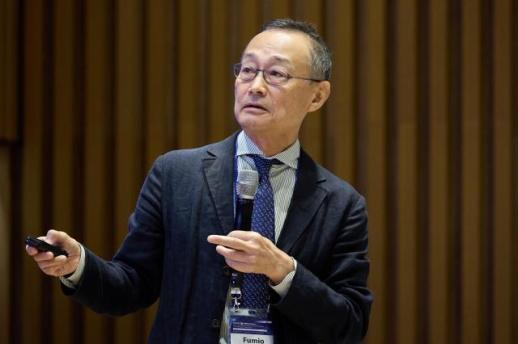 Experts warn of aging, low birthrates at BOK conference SEOUL, September 2 (AJP) - South Korea's rapidly aging population will put pressure on economic growth and pension systems even if birthrates recover, economists said Wednesday. They also said rigid workplace practices and intense competition in education continue to make it costly to raise children. The assessments came on the first day of a conference at the Bank of Korea in Seoul, held under the theme of "The Economics of Population Ageing and Longevity: From Challenges to Opportunities." Several speakers warned that South Korea is going through demographic changes unusually quickly. They said the country has less time than other countries that aged earlier to deal with slower growth, lower interest rates and growing pressure on the pension system. Fumio Hayashi, a professor emeritus at Japan's National Graduate Institute for Policy Studies, argued that Japan's three decades of stagnation can be explained in significant part by its unusually early population aging. His analysis showed Japan was not an outlier among mature economies, with faster aging generally associated with weaker growth. Similar pressure could increasingly shift toward East Asia. Between 2020 and 2050, South Korea's aging pace is projected at 0.96 under Hayashi's measure, more than three times the U.S. figure of 0.31. Hwang In-do, head of the Financial and Monetary Economic Studies Team at the BOK's Economic Research Institute, said ageing could also reshape the environment for monetary policy. A BOK study estimated that South Korea's equilibrium real interest rate in 2024 would have been about 1.4 percentage points higher if fertility and life expectancy had remained at their 1991 levels. Selahattin Imrohoroglu, a professor of finance and business economics at the University of Southern California, said economies such as South Korea and China face an additional challenge because aging began later but is now progressing much faster. Using the United Nations' low-fertility population scenario, Imrohoroglu estimated South Korea's old-age dependency ratio could approach 200 percent by 2100. That would imply roughly two elderly people for every working-age person. As a measure of the scale of adjustment, he calculated that South Korea's full retirement age would have to rise by about 24 years by 2100 to keep its old-age dependency ratio at the 2024 level. Imrohoroglu stressed that the figure was not a policy recommendation. He presented it as a simplified measure to illustrate the scale of demographic adjustment across countries. "South Korea sits literally at the sharp end of all these three points," Imrohoroglu said, referring to the size of the fiscal adjustment, limited time available and weaker growth capacity. Even a near-term recovery in fertility would provide little immediate relief to pension finances, he said during a panel discussion. Additional births would not begin expanding the tax-paying workforce until around 2060, meaning pension reform cannot rely on higher fertility to ease pressures over the next several decades. Imrohoroglu said South Korea would instead need to use several policy levers at once. He cited gradually extending working lives, increasing labor-force participation and reducing disincentives to remain employed longer. He also cited Japan's 2004 introduction of a "macroeconomic slide," which adjusts pension benefits according to demographic conditions, as an example South Korea could study. Hwang Jisoo, an associate professor of economics at Seoul National University, said there is no consensus on a single cause of falling fertility. She cited housing costs, intensive parenting and changing social values, as well as tensions between women's economic roles and traditional expectations of motherhood Using nationwide National Health Insurance data, Hwang found that mothers' earnings five years after their first childbirth were 43 percent below the estimated level had they remained childless. Fathers showed little comparable change. The penalty approached 50 percent among some more recent cohorts even as South Korea's overall gender earnings gap narrowed. "Parenthood is becoming a more economically stratified experience," Hwang said. She said women with higher earnings, more secure employment and jobs at large companies or in the public sector have become increasingly more likely to have children. Economic stability is therefore becoming an important factor in who enters parenthood, according to her findings. Hwang also cautioned against interpreting South Korea's recent fertility rebound as evidence of a structural turnaround. Some of the increase may reflect marriages delayed during the coronavirus pandemic that took place in 2023 and 2024 and are now resulting in births, she said. Several more years may be needed to determine whether fertility behavior has fundamentally changed, Hwang added. She said policy should move beyond parental leave toward broader work-family compatibility. That could include flexible schedules and workplace practices that allow both men and women to participate in everyday care. South Korea's parental leave system is generous on paper, Hwang said, but actual access differs sharply across workplaces, particularly at smaller firms. She also cautioned that policies targeted specifically at women or mothers could unintentionally reinforce gender differences in hiring and employment. Family and population policies should instead be designed around workers' broader care needs, she said. Smaller employers may also need financial or technological support to make flexible arrangements feasible. Yum Minchul, associate professor of economics at Virginia Commonwealth University, identified competition over children's education as another factor weighing on fertility. Yum said spending by higher-income families can create pressure on other households to keep up. His research suggests that this can push private education spending above a socially efficient level and reduce fertility. A 10-percent decline in private education spending among the top 15 percent of households was associated with about a 0.5 percentage point decline in the education spending share of the bottom half, based on the midpoint estimate presented Wednesday. A model calibrated to South Korean households found that removing the status-comparison effect entirely would increase completed fertility by 28 percent. Yum said reducing competition may require changes beyond the private tutoring market. Greater labor mobility over a worker's career could weaken the tight link between admission to an elite university and lifetime earnings, reducing families' incentive to engage in costly educational competition, he said. Volker Ziemann, an economist at the Organisation for Economic Co-operation and Development, highlighted another feedback loop involving low fertility and South Korea's concentration of population and economic activity in the Seoul metropolitan area. Ziemann said higher wages draw young people toward the capital region, while expensive housing and congestion make family formation more difficult. Population decline outside the capital can then weaken regional economies further and reinforce concentration, according to his analysis. The OECD estimates South Korea's overall population could fall by around 10 percent by 2050 and its working-age population by more than 35 percent. The panel ultimately converged on the view that demographic policy should not simply target a predetermined fertility rate. Hwang said South Koreans want more children than the country's current fertility rate suggests. This shows that some people may be unable to have the families they want because of various barriers. Hwang and Yum said policymakers should focus on reducing those constraints rather than treating a specific fertility rate as the objective itself. The discussions highlighted a two-track challenge for Korea. Policymakers can still reduce barriers to family formation, but pensions, labor markets and productivity policies also need to adjust to ageing already embedded in the population structure. AJP Takeaways • South Korea faces one of the world's fastest aging transitions, with economists warning that a shrinking workforce could weigh on growth, lower equilibrium interest rates and increase pressure on public pensions. • Even if South Korea's fertility rate rebounds soon, the pension impact would take decades to materialize, while one estimate showed the retirement age would need to rise by about 24 years by 2100 to keep the current old-age dependency ratio unchanged. • Seoul National University economist Hwang Jisoo said South Korea's recent fertility rebound may partly reflect marriages delayed during the COVID-19 pandemic, making it too early to call a structural turnaround in birth trends. • Economists at the BOK-CEPR-OECD conference said Korea should tackle barriers to parenthood — including workplace rigidity, unequal care burdens and intense education competition — while simultaneously reforming pensions and labor markets for ageing already embedded in the population structure. 2026-09-02 17:33:29
 -
 BOK sees September inflation easing, core pressures persist SEOUL, September 02 (AJP) - South Korea's consumer inflation is expected to ease in September as a telecom-related base effect fades, but underlying price pressures are likely to remain elevated, the Bank of Korea said Wednesday. The central bank made the assessment after an inflation review meeting chaired by Deputy Governor Lee Ji-ho earlier in the day. Consumer prices rose 3.1 percent in August from a year earlier, accelerating from 2.8 percent in July. "Consumer price inflation is expected to be lower in September than in August as the base effect disappears, but the underlying upward trend is expected to continue, particularly in core items," Lee said. The BOK said the acceleration in August was largely driven by a base effect stemming from large discounts on mobile service charges a year earlier. Core inflation, which excludes food and energy, climbed to 3.4 percent in August from 2.6 percent in July as the telecom effect pushed up public-service prices. Public-service prices rose 6.5 percent from a year earlier, sharply higher than the 1.4 percent increase recorded in July. Mobile-phone charges jumped 26.8 percent. Price pressures also remained firm in other core categories. Personal-service prices rose 3.5 percent, unchanged from July, while durable-goods inflation accelerated to 4.1 percent from 3.9 percent. The increase in headline inflation was partly offset by slower petroleum-price growth and falling agricultural, livestock and fisheries prices. Petroleum-product prices rose 14.2 percent from a year earlier in August, slowing from a 15.5 percent increase in July as the effect of lower government-imposed price ceilings continued. Agricultural, livestock and fisheries prices fell 2.6 percent after rising 0.9 percent in July, reflecting lower vegetable prices and slower increases in livestock prices. Agricultural prices dropped 6.7 percent, with vegetable prices falling 9.7 percent. Livestock prices rose 1.5 percent, slowing from a 4.4 percent increase in July. The BOK said government discount programs for agricultural and fisheries products also helped contain overall price pressures. The cost-of-living index, which tracks 144 frequently purchased items that account for a relatively large share of household spending, rose 3.2 percent in August. That compared with a 2.5 percent increase in July. Consumer inflation expectations for the next 12 months remained at 2.7 percent for a second consecutive month. The BOK said the temporary telecom effect should fade in September, pulling headline inflation lower from the August level. Still, the central bank warned that inflation could remain elevated, particularly in core categories, amid continued uncertainty surrounding the conflict in the Middle East. It also cited the pass-through of earlier cost shocks and the possibility of stronger demand-side pressure as factors that could sustain underlying inflation. The BOK said it would continue to closely monitor price developments with heightened vigilance. AJP Takeaways August consumer inflation accelerated to 3.1 percent, largely reflecting a base effect from mobile service discounts a year earlier. The BOK expects headline inflation to ease in September, while underlying price pressures remain firm, particularly in core categories. Lower agricultural prices and slower petroleum-price growth offset some of the increase, while services and durable-goods prices continued to rise. 2026-09-02 14:00:22
 -
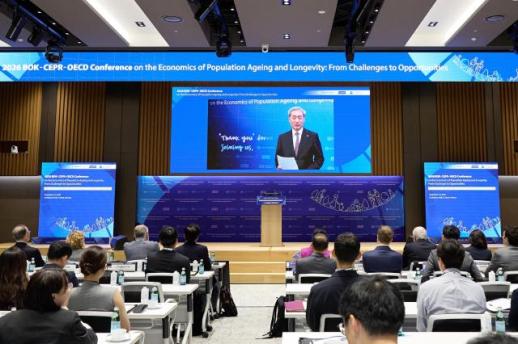 BOK highlights demographic challenges in international forum SEOUL, September 02 (AJP) - The Bank of Korea opened a two-day conference Wednesday on ageing and longevity, where Governor Hyun Song Shin urged early preparation for demographic pressures on growth, productivity and interest rates. The conference, titled “The Economics of Population Ageing and Longevity: From Challenges to Opportunities,” runs through Thursday in Seoul. It is jointly hosted by the BOK, the Centre for Economic Policy Research and the Organisation for Economic Co-operation and Development. The event brings together economists and policymakers to examine how declining fertility and ageing populations could affect economic growth, interest rates, labor markets and technological adaptation. In a video address opening the conference, Shin described demographic change as one of the most important long-term issues confronting central banks. Shin is currently attending the G20 finance ministers and central bank governors meeting in Asheville, North Carolina. He said it would help determine future productivity, potential growth and the long-run equilibrium interest rate. Shin said developments now unfolding in South Korea could offer an early indication of demographic challenges that many other countries will eventually face. “Demography is not destiny,” Shin said, stressing that productivity and long-term growth have historically depended heavily on the creation and diffusion of knowledge. Unlike short-term economic shocks, demographic changes can be foreseen decades in advance. That gives policymakers an opportunity to prepare before their effects fully materialize, he said. Shin pointed to Korea's position in the artificial intelligence ecosystem as a potential advantage in responding to a shrinking and ageing workforce. He also cited the country's strength in semiconductor production and AI-driven investment. Shin said the favorable technological environment means Korea should use the current window to prepare for the economic consequences of demographic change rather than postpone adjustment. 2026-09-02 11:08:03
 -
 Korea's education race costs babies - study SEOUL, September 02 (AJP) - South Korea's nascent fertility rebound could get a further boost if parents were freed from the country's relentless competition over children's education, according to an international study that puts a surprisingly large number on the demographic cost of the education arms race. A model calibrated to South Korean households found that women would have had 28 percent more children in the absence of what researchers call a "status externality" in education — the pressure on parents to invest in their children's schooling not simply for its absolute benefits, but to keep them from falling behind other children. For women born between 1970 and 1975, the study estimates average completed fertility would have risen from 1.92 children to 2.45 without that competitive pressure. "The status externality plays an important role in fertility decisions," the researchers wrote, because it pushes up education investment, "which makes children costly and induces parents to have fewer offspring." The researchers' model also points to a potentially provocative policy response, suggesting taxing private education spending and using the proceeds to support families with children. The welfare-maximizing policy for the current generation combined a 22 percent tax on private education investment with moderate pro-natal transfers. Under the simulation, average fertility rose about 11 percent while education spending fell 39 percent. The BOK summary of the research said taxing spending by higher-income households could be particularly effective because their education spending often sets the benchmark that other families feel compelled to follow. The researchers, however, also identified a trade-off. Lower spending on each child's education reduces human-capital investment, meaning a policy that raises the welfare of today's parents could leave future generations with lower human capital and output. The findings were presented Wednesday by Kim Seong-eun of Sejong University at a two-day conference jointly hosted by the Bank of Korea (BOK), the Centre for Economic Policy Research and the Organisation for Economic Co-operation and Development in BOK headquarters in Seoul Wednesday. The research wa co-authored by Yum Minchul, an associate professor of economics at Virginia Commonwealth University and Michèle Tertilt of the University of Mannheim on the causes and implications of ultra-low fertility. BOK Governor Shin Hyun-song in opening the forum under the theme of "Economics of Population Aging and Longevity: From Challenges to Opportunities" stressed that "what is happening in Korea today foreshadows what many other countries will face tomorrow," adding that "demography is not destiny." South Korea's notoriously-low birth rate has seen signs of improvement lately. The country's total fertility rate rose to 0.80 child per woman in 2025 from 0.75 in 2024, marking a second consecutive annual increase after hitting a record low of 0.72 in 2023. The rebound has accelerated this year. The total fertility rate reached 0.88 in the second quarter of 2026, up 0.11 from a year earlier and the highest for a second quarter since 2019. June births surged 15.6 percent from a year earlier to 23,111, while births in the first half climbed 15.4 percent. Whether the trend will last remains uncertain, leaving policymakers searching not only for ways to subsidize childrearing but for structural forces that make Koreans reluctant to have more children. At the center of the researchers' argument is a familiar feature of Korean family life - that parents do not make education decisions in isolation. If one family spends more on private tutoring, cram schools and other education to improve its child's relative position, other families have an incentive to follow. Their additional spending then raises the benchmark for everyone else. The result can resemble an arms race in which individual families behave rationally but collectively spend more than they otherwise would, raising the perceived cost of having each additional child. The underlying paper estimates that a 10 percent reduction in education spending among the richest 15 percent produces roughly a 0.5 percentage-point reduction among the lower half of the income distribution. In other words, poorer parents appeared to spend less when richer parents around them spent less. That is important because the relative burden of Korea's education race is heavier at the bottom of the income distribution. The study found that households in the poorest quintile spent about 8.4 percent of income per child on private education, compared with 5.1 percent among the richest quintile. In the researchers' model, removing the education status externality reduced the childlessness rate among the lowest-income quintile from about 5 percent to less than 1 percent. The effect was large enough to reverse Korea's unusual relationship between income and fertility: poorer households currently have fewer children, whereas in many other countries fertility tends to decline as income rises. The pressure remains visible in more recent data even as Korea's overall private education bill has begun to decline. South Korean households spent 27.5 trillion won ($20 billion) on private education for elementary, middle and high school students in 2025, down 5.7 percent from a year earlier as the student population and participation rate fell. Yet among students who still received private education, average monthly spending rose 2 percent to 604,000 won. For high school students participating in private education, the average reached 793,000 won a month. Some 75.7 percent of all students remained involved in private education. The study also found the Korean pattern was not purely domestic. Using World Values Survey measures, the researchers found countries where parents expressed greater concern over educational competition tended to have lower fertility rates and faster fertility declines, with Korea, Singapore and Chile among the notable cases. The findings point toward a different policy approach from the cash subsidies that have dominated Korea's efforts to raise births. The researchers modeled a combination of taxes on private education investment and child allowances. Their welfare-maximizing scenario for the current generation imposed a 22 percent education investment tax alongside moderate pro-natal transfers. Under that simulation, fertility increased about 11 percent while education spending fell 39 percent. Less spending on each child's education means lower human-capital investment. Although the policy combination improves the welfare of the parents' generation in the model, future generations could end up with lower human capital, output and consumption. That makes the research less a prescription for taxing hagwons than evidence that Korea's fertility problem cannot be understood solely through housing prices, childcare subsidies or cash payments. AJP Takeaways Education competition carries a fertility cost: Removing the "status externality" in the model raised completed fertility by 28 percent, from 1.92 to 2.45 children per woman. Rich households help set the spending benchmark: A 10 percent drop in private education spending among the top 15 percent of earners also reduced spending among lower-income households. The burden falls harder on poorer families: The lowest-income quintile spent 8.4 percent of income per child on private education, versus 5.1 percent for the richest quintile. 2026-09-02 10:47:19
 -
 UPDATE: Korea's inflation returns above 3% Aug on one-off base effect *Updated with additional information, comments, and market response SEOUL, September 2 (AJP) - South Korea's consumer inflation accelerated above 3 percent in August, but would have eased to around 2.5 percent excluding a one-off base effect, as policymakers turn their attention to rising wage costs and strengthening demand as more persistent sources of price pressure. The consumer price index stood at 120.05 in August, up 3.1 percent from a year earlier and 0.2 percent from the previous month, the Ministry of Data and Statistics said Wednesday. Inflation accelerated from 2.8 percent in July after a one-month dip. Lee Doo-won, deputy commissioner for short-term economic statistics at the ministry, said last year's temporary mobile fee discount added about 0.58 percentage point to August inflation. Excluding the effect, inflation would have been around 2.5 percent. The unusually low comparison base stemmed from a cybersecurity incident at SK Telecom in April 2025. The carrier later introduced a 500 billion won ($365 million) customer appreciation package covering about 24 million customers. The package included an automatic 50 percent discount on August 2025 mobile bills for SKT customers and users of budget carriers operating on its network. As that discount dropped out of the annual comparison, mobile phone charges surged 26.7 percent from a year earlier and overall communication prices climbed 16.6 percent. The impact was concentrated in public services rather than broader personal services. Public service inflation jumped to 6.5 percent from 1.4 percent in July, while personal service inflation held at 3.5 percent. Core inflation excluding food and energy rose to 3.4 percent from 2.6 percent a month earlier. A separate measure excluding agricultural and petroleum products increased to 3.1 percent from 2.5 percent. Lee said the telecom base effect had a larger impact on the food-and-energy-excluded measure because its narrower basket gives mobile phone charges a greater relative weight. Financial markets were more focused on the risks ahead, with oil prices and bond yields rising sharply on renewed Middle East tensions and growing concerns over heavy government spending and mounting debt worldwide. The KOSPI lost 3 percent, while the Korean won strengthened 1,371.4 won. Bond prices edged toward multi-year lows. The three-year government yield added 3.6 basis points to 3.914 percent and the 10-year note 3.7 basis points to 4.408 percent by midday. Bank of Korea Deputy Gov. Lee Ji-ho said easing petroleum price gains and falling farm product prices helped limit the overall increase. The central bank said core inflation also reflected continued increases in personal services and durable goods, alongside the telecom base effect. More importantly for the inflation outlook, the BOK expects underlying price pressures to remain elevated as earlier cost shocks continue to pass through and demand strengthens. Petroleum products added further upward pressure, although their pace of increase slowed. Industrial goods prices rose 3.7 percent from a year earlier, while petroleum product prices increased 14.2 percent. Diesel prices climbed 19.6 percent and gasoline prices rose 11.5 percent. Petroleum inflation eased from 15.5 percent in July. The government estimated that its fuel price ceiling lowered August inflation by about 0.5 percentage point. Without the measure, headline inflation could have reached around 3.6 percent. Food prices offered some relief on a year-on-year basis. Agricultural, livestock and fisheries prices fell 2.6 percent after rising 0.9 percent in July, while the fresh food index dropped 6.7 percent. The month-on-month picture, however, showed renewed pressure in vegetables ahead of Chuseok. Fresh vegetable prices jumped 12.5 percent from July. Spinach surged 68.2 percent, chives 64.7 percent, cucumbers 40.4 percent and cabbage 37.0 percent. Lee said summer vegetable prices tend to rise as weather conditions disrupt shipments and increase farming costs, including expenses related to pest control and rainfall. Despite the overall decline in farm prices, several staples remained more expensive than a year earlier. Rice prices rose 6.2 percent and domestic beef gained 3.3 percent. Imported beef climbed 7.4 percent and eggs 5.2 percent, while mackerel and hairtail prices increased 6.5 percent and 7.5 percent, respectively. Headline inflation is expected to ease in September as the telecom base effect drops out. The BOK, however, expects underlying inflation to retain upward momentum, led by core items, as accumulated cost pressures filter through and domestic demand strengthens. The central bank also pointed to renewed uncertainty surrounding the conflict in the Middle East as an additional inflation risk. Ahead of Chuseok, the government plans to release a record 183,000 tons of 19 key holiday food items, about 1.6 times normal supply, and provide discounts of up to 50 percent on major agricultural and fisheries products. Supplies of cabbage and radish will be raised to 1.9 times normal levels, while supplies of apples and pears will be more than tripled. AJP Takeaways - South Korea's consumer inflation accelerated to 3.1 percent in August from 2.8 percent in July, but the Ministry of Data and Statistics estimated it would have been around 2.5 percent without a one-off telecom base effect. - Mobile phone charges surged 26.7 percent from a year earlier as SK Telecom's 50 percent bill discount from August 2025 dropped out of the comparison, adding about 0.58 percentage point to headline inflation. - Core inflation excluding food and energy rose to 3.4 percent, while the Bank of Korea warned that stronger domestic demand and accumulated cost pressures could keep underlying inflation elevated even after the telecom effect fades in September. - Food prices eased year on year, but fresh vegetable prices jumped 12.5 percent from July ahead of Chuseok, prompting the government to release a record 183,000 tons of key holiday food items and offer discounts of up to 50 percent. 2026-09-02 08:37:53
 -
 Korea's tax income up 18% on chip, stock and housing boom SEOUL, Aug. 31 (AJP) — Active stock and housing trading bolstered South Korea's tax revenue on top of a chip-led corporate earnings windfall, pushing cumulative tax income to 274 trillion won ($199.4 billion) through July, up 41.4 trillion won, or 17.8 percent, from a year earlier. Stock transaction tax collections more than quadrupled to 8.2 trillion won from 1.8 trillion won over the same period last year, reflecting the extraordinary surge in equity trading as well as the restoration of higher transaction tax rates. The Ministry of Finance and Economy said Monday that national tax revenue totaled 51 trillion won in July alone, up 8.4 trillion won, or 19.7 percent, from a year earlier. Value-added tax, securities transaction tax and income tax led the increase. VAT revenue rose 3.2 trillion won to 24.6 trillion won in July as domestic consumption strengthened and imports increased. South Korea's imports reached $68.57 billion in July, up 26.5 percent from $54.21 billion a year earlier. The stock-market boom delivered an even more dramatic lift. Securities transaction tax revenue jumped 401 percent on year to 1.4 trillion won in July. Trading value in listed shares surged 232.4 percent to 2,087.2 trillion won in June from 627.9 trillion won a year earlier. The government also restored the securities transaction tax rate this year to 0.05 percent for KOSPI shares and 0.20 percent for KOSDAQ shares, after lowering the rates in stages through 2025. Income tax revenue rose 1.8 trillion won to 13.6 trillion won in July, helped by higher wage payments and stronger housing transactions. Home sales increased 6 percent on year to 66,500 in May, lifting capital gains tax collections. Customs revenue rose 200 billion won to 800 billion won as imports expanded, while corporate tax, inheritance and gift tax and individual consumption tax each increased by about 100 billion won. Transport, energy and environment tax revenue fell 300 billion won from a year earlier after the government expanded fuel-tax cuts. For the first seven months, income tax provided the largest increase in absolute terms, rising 12.2 trillion won to 89.3 trillion won as performance bonuses and property transactions increased. Corporate tax revenue climbed 4.4 trillion won to 51.8 trillion won on improved company earnings, while VAT collections rose 8.1 trillion won to 69.4 trillion won on stronger private consumption and imports. The stock market produced some of the fastest gains. Securities transaction tax revenue surged 348.5 percent to 8.2 trillion won from 1.8 trillion won a year earlier. Rural special tax revenue, which is also levied on KOSPI transactions, jumped 182.5 percent to 13.1 trillion won as trading activity soared. The government had collected 66 percent of its revised full-year tax revenue target of 415.4 trillion won by the end of July. That compared with a collection rate of 60.8 percent a year earlier and 56.9 percent in July 2024. The ministry said it will revise its tax revenue estimate in September after incorporating corporate tax interim payments due at the end of August. AJP Takeaways ○ South Korea's tax revenue rose 17.8 percent to 274 trillion won through July, helped by stronger stock and housing trading, imports and corporate earnings. ○ Securities transaction tax collections surged 348.5 percent to 8.2 trillion won as listed-share trading value more than tripled from a year earlier. ○ The government had collected 66 percent of its revised 2026 tax target by July, well ahead of the pace in the previous two years. 2026-08-31 13:04:59
 -
 Korea's factory output loses steam July, retail sales sag SEOUL, August 31 (AJP) -South Korea's factory output growth sharply eased on a pullback from chip shipments while a key gauge of household consumption fell back in July, suggesting the economy's heavy reliance on chip activity and restricted trickle-down effect of the chip boom on the the broader economy, government data showed Monday. Mining and manufacturing output edged up 0.2 percent in July from the previous month, sharply losing steam from a 6.7 percent surge in June. Growth from a year earlier also slowed to 3.6 percent from 6 percent, according to the Ministry of Data and Statistics. The domestic front was dimmer, with retail sales falling 2.4 percent on month after a 2.7 percent rebound in June. Construction activity also declined 1.1 percent from the previous month and 3.2 percent from a year earlier. Services output dropped 1.3 percent on month, leaving overall industrial production flat after a 2.4 percent increase in June. From a year earlier, total industrial output was still up 3.1 percent. Capital investment remained the sole bright spot, supported by aggressive spending on machinery including semiconductor manufacturing equipment. Facility investment jumped 7.5 percent from June and 24.9 percent from a year earlier, accelerating from respective gains of 6.9 percent and 22.5 percent in June. Investment in machinery rose 4.2 percent on month, while transport equipment investment climbed 15.4 percent on increased spending on ships and aircraft. From a year earlier, machinery investment surged 21.3 percent and transport equipment 32.7 percent. Domestic machinery orders, another gauge of future corporate investment, increased 25.4 percent from a year earlier. Private-sector orders jumped 27 percent, including a 47.9 percent surge among manufacturers, although the pace slowed from June's exceptionally strong 52.4 percent overall increase. The production data were more mixed inside manufacturing. Manufacturing output rose just 0.2 percent from June. Electronic components surged 20.7 percent and primary metals gained 4.2 percent, offsetting declines of 4.5 percent in automobiles and 5 percent in other transport equipment. Semiconductor production itself edged up only 0.5 percent on month and 0.8 percent from a year earlier. Semiconductor shipments fell 7.3 percent from June and 3.4 percent from a year earlier, while inventories rose 10 percent on year. The broader manufacturing picture was somewhat stronger outside the monthly volatility. Factory output excluding electronics and communications products was up 4.5 percent from a year earlier, while machinery production climbed 9.6 percent and automobile production 10.6 percent. Average factory utilization edged up 0.2 percentage point to 74.9 percent. Consumption weakened across all three major goods categories. Sales of durable goods dropped 7.7 percent from June as purchases of passenger cars, home appliances, communications devices and furniture declined. Semi-durable goods including clothing fell 1.4 percent, while nondurable goods slipped 0.1 percent. Overall retail sales were down 0.8 percent from a year earlier. Department-store sales remained 9 percent higher than a year earlier and duty-free sales jumped 13.4 percent, but sales at large discount stores dropped 7.4 percent and specialty retailers fell 3.5 percent. Services also lost momentum after three straight monthly gains. Financial and insurance services fell 4.8 percent from June in line with the sharp cooling in the stock market, professional, scientific and technical services declined 2.7 percent and wholesale and retail services slipped 1.1 percent. Accommodation and food services fell 1.1 percent on month and 1 percent from a year earlier, pointing to continued weakness in spending closely tied to household demand. Construction remained another soft spot. Building activity tumbled 7.4 percent from June, outweighing an 18.5 percent rise in civil engineering work. New construction orders plunged 34 percent from a year earlier, including a 33.7 percent fall in housing orders. Still, broader business-cycle indicators continued to point upward. The coincident composite index's cyclical component, which measures current economic conditions, rose 0.8 point in July, while the leading index's cyclical component gained 0.4 point. AJP Takeaways ○ South Korea's industrial recovery lost momentum in July: mining and manufacturing output rose just 0.2 percent on month after June's 6.7 percent surge, while overall industrial production was flat. ○ Domestic demand stayed weak: retail sales fell 2.4 percent, services output dropped 1.3 percent and construction activity declined 1.1 percent from June. ○ Corporate investment remained the standout: facility investment jumped 7.5 percent on month and 24.9 percent on year, supported by semiconductor manufacturing machinery and transport equipment. 2026-08-31 09:50:20
 -
 Korea growth bets race near 4%, beyond 2026 in doubt SEOUL, August 31 (AJP) -Forecasts for South Korea's economic growth are racing higher as the artificial intelligence-driven semiconductor boom spills into investment and consumption, with nearly half of economists tracked by Bloomberg now expecting the economy to outperform the Bank of Korea's sharply upgraded 3.3 percent projection this year. But the optimism drops off sharply beyond 2026. Of 42 domestic and overseas institutions surveyed by Bloomberg as of Aug. 28, 20 forecast growth above the BOK's 3.3 percent estimate for this year, while one matched it. For 2027, however, 39 of the 42 expect growth to fall short of the central bank's unusually bullish 2.9 percent projection. The divide suggests international banks are increasingly convinced that Korea's chip-led expansion has enough momentum to deliver an exceptionally strong 2026, but remain far less certain that the boom and its spillover into the broader economy can be sustained next year. The upward shift in this year's expectations has been rapid. Twenty-nine of the 42 institutions now expect Korea's real gross domestic product to expand by at least 3 percent in 2026, up from just 11 in June. Fourteen forecast growth of 3.5 percent or more, more than double the six that did so two months ago. The median forecast has climbed to 3.3 percent from 2.6 percent in June, matching the BOK's latest projection. At the top end, Capital Economics and ING Financial Markets expect growth of 4 percent. JPMorgan and NAB/BNZ forecast 3.8 percent, while Citi and Bloomberg Economics see 3.7 percent. iM Securities projects 3.6 percent, with ANZ, Crédit Agricole, DBS, DekaBank and Deutsche Bank at 3.5 percent. Several have made unusually large revisions. ING raised its forecast by a full percentage point from 3 percent in June to 4 percent, arguing that semiconductor strength is increasingly feeding into private consumption and investment as well as exports. Crédit Agricole and DBS lifted their projections by 0.9 percentage point to 3.5 percent, while Deutsche Bank raised its estimate by 0.8 point. Citi moved to 3.7 percent from 3.1 percent. The revisions reflect how quickly expectations have had to catch up with Korea's semiconductor cycle as demand for advanced memory used in AI infrastructure repeatedly exceeded forecasts. The BOK made much the same reassessment on Aug. 27, lifting its own 2026 growth estimate to 3.3 percent from 2.6 percent in May. The central bank said exports and investment should maintain strong growth as the semiconductor sector performs better than expected, while improving incomes should strengthen the recovery in consumption. That upgrade came on the same day the BOK raised its benchmark interest rate for a second consecutive meeting to 3 percent, making the strength of the growth reassessment particularly notable. Higher interest rates would ordinarily be expected to restrain consumption and investment. Instead, the scale of the semiconductor boom has so far been strong enough for economists to keep lifting their growth estimates even as monetary policy tightens. The BOK's 2026 forecast has risen particularly dramatically over the past nine months. As recently as November, the central bank expected the economy to expand just 1.8 percent this year. Its latest 3.3 percent estimate is 1.5 percentage points higher, reflecting one of its largest upward reassessments in years. Inflation expectations have not moved in tandem. The median Bloomberg forecast for consumer price inflation has remained at 2.7 percent since June. The BOK likewise kept its headline inflation forecast at 2.7 percent for this year, although it raised its underlying core inflation outlook as stronger demand adds to existing cost pressures. The outlook beyond this year however differs. The median private-sector forecast for 2027 is only 2.3 percent, up modestly from 2.1 percent in June but a full 0.6 percentage point below the BOK's 2.9 percent projection. Only three of the 42 institutions surveyed expect growth above the central bank's forecast, with Korean Re projecting 3.5 percent, JPMorgan 3.3 percent and Citi 3 percent. AJP Takeaways ○ South Korea's 2026 growth outlook is rising rapidly: 29 of 42 institutions tracked by Bloomberg now forecast growth of at least 3 percent, compared with 11 in June. ○ Nearly half are more bullish than the Bank of Korea: 20 forecasters expect growth above the BOK's upgraded 3.3 percent projection, with Capital Economics and ING Financial Markets at 4 percent. ○ The consensus breaks down in 2027: The Bloomberg median stands at 2.3 percent and 39 of 42 forecasters are below the BOK's 2.9 percent projection, highlighting doubts over how long the chip-led boom can last. 2026-08-31 08:55:26
 -
 Korea FX deposits hit record amid SK hynix dollar wave SEOUL, August 28 (AJP) -South Korea's foreign currency deposits surged to a record in July as proceeds from SK hynix's blockbuster U.S. share sale washed through the Korean financial system while both corporations and individuals stocked up on dollars amid the won's sharp rebound. Resident foreign currency deposits at domestic foreign exchange banks stretched $15.01 billion from June to an all-time high of $128.34 billion at the end of July, according to the Bank of Korea (BOK) on Friday. The increase was the largest in seven months and the second biggest on record. Dollar deposits accounted for most of the increase, soaring $11.12 billion to a record $108.92 billion and well above $95.93 billion at the end of 2025. The bulk of the increase came from deposits held by corporate names, adding $13.57 billion to $112.56 billion. The BOK attributed the dollar increase to large companies receiving foreign-currency payments, inflows of foreign bond issuance proceeds and customer deposits at securities firms, as well as investors buying dollars in advance after the won strengthened sharply. The won appreciated to 1,424.0 per dollar at the end of July from 1,549.4 at the end of June, according to the release. The spike in July also coincided with one of the largest corporate dollar inflows Korea has ever seen. SK hynix raised $26.51 billion through its Nasdaq American depositary receipt offering, equivalent to nearly 40 trillion won at the time. The transaction closed July 14, with the chipmaker saying the proceeds would fund domestic investment including its Yongin semiconductor cluster, a new advanced-packaging plant in Cheongju and chipmaking equipment. The ADR proceeds were closely watched in Seoul's foreign exchange market because much of the dollar funding was ultimately expected to be brought into Korea and converted into won. The dollar has gone down to 1,420 won by the end of July from 1,549.4 won a month earlier and traded at 1,376.20 Friday. AJP Takeaways Korea's resident foreign currency deposits hit a record $128.34 billion in July, jumping $15.01 billion in one month. Dollar deposits surged by a record $11.12 billion as the won strengthened sharply and corporate foreign-currency inflows increased. The surge coincided with SK hynix's $26.5 billion Nasdaq ADR offering, highlighting how Korea's AI chip boom is increasingly influencing domestic foreign exchange flows, although the BOK did not directly link the two. 2026-08-28 14:43:45
 -
 NPS posts 27% H1 return as KOSPI doubles SEOUL, August 28 (AJP) - South Korea's National Pension Service posted a 27.22 percent return in the first half, roughly seven times the average for the same six-month period over the previous six years, as an extraordinary rally in Korean stocks propelled the fund to its strongest start in recent years. The performance came as the KOSPI more than doubled from the end of December through June before a correction began in July, leaving the latest pension report as a snapshot of returns near the height of the market rally. The National Pension Service (NPS), one of the world's third-largest pension funds, said Friday that its assets under management reached 1,866 trillion won ($1.35 trillion) at the end of June, with a preliminary money-weighted investment return of 27.22 percent. The KOSPI soared 101.14 percent against an 8.99 percent gain in global equities. Bonds were the opposite. The three-year government yield climbed 74.6 basis points, more than three times the 20.7-basis-point increase in the U.S. 10-year Treasury yield. The headline return stands out even against the NPS's strong recent performance as this year's return is over seven times 3.81-percent first-half return average over the last six years. Domestic equities explain much of the extraordinary performance. The NPS held 543.2 trillion won of Korean stocks at the end of June, representing 29.1 percent of its portfolio. Overseas stocks accounted for another 661.1 trillion won, or 35.4 percent, leaving almost two-thirds of financial assets exposed to equities. Korean equities returned 107.37 percent for the pension fund, compared with 82.44 percent for all of 2025 and a long-term annualized return of 11.26 percent since inception. Chipmakers were at the center of the surge as the artificial intelligence investment boom drove extraordinary earnings and expectations for Samsung Electronics and SK hynix. The result gives the NPS an unusually large exposure to the same AI-driven wealth effect now running through Korea's corporate profits, exports and equity market. The performance elsewhere in the portfolio was far more restrained. Overseas equities returned 17.81 percent, slightly below their 19.74 percent return for all of 2025. Alternative assets earned 9.60 percent, broadly around their 10.08 percent annualized return since inception. Domestic bonds were the conspicuous loser, falling 3.00 percent as interest rates rose and bond prices declined. Overseas bonds returned 9.22 percent, helped partly by the weaker Korean currency. The won stood at 1,541.5 per dollar at the end of June, 7.43 percent weaker than at the end of 2025, increasing the won value of foreign assets. The first-half performance will likely be hard to march. Korean equities began correcting in July after the extraordinary first-half run. By 10:30 a.m. Friday, the KOSPI was trading at 6,818.87, almost 20 percent below its June-end level of 8,476.48. The currency tailwind has also partially reversed. The won was trading around 1,379 per dollar Friday morning, substantially stronger than its 1,541.5 level at the end of June. NPS Chairman Kim Sung-joo acknowledged that the second half has brought greater volatility, saying some of the first-half gains have fluctuated while overall performance remains favorable. AJP Takeaways The NPS returned 27.22 percent in the first half, more than seven times the 3.81 percent average of the previous six first-half periods. Domestic stocks returned 107.37 percent as the KOSPI surged 101.14 percent from end-December through June, making Korean equities the dominant driver of the pension fund's performance. The six-month return already exceeds the NPS's record 18.82 percent full-year gain in 2025, although the periods are not directly comparable. The KOSPI has since fallen almost 20 percent from its June-end level, underscoring that the first-half report captures performance before the market correction that began in July. 2026-08-28 11:26:25