

Journalist
Kim Yeon-jae김연재
duswogmlwo77@ajupress.com
ReporterBank of Korea & Market, Macroeconomics
Kim Yeon-jae is a journalist at AJU Press (AJP's English platform),
covering macroeconomics, international finance, and geopolitics.
He closely tracks central bank monetary policies, global energy supply chains,
and the Korean defense industry. "Peering into the risks behind the euphoria."
covering macroeconomics, international finance, and geopolitics.
He closely tracks central bank monetary policies, global energy supply chains,
and the Korean defense industry. "Peering into the risks behind the euphoria."
Latest by Kim Yeon-jae
-
 Won retreats as long-end Korean bonds rally ahead of BOK SEOUL, August 25 (AJP) - The Korean won weakened Tuesday after seven straight gains, and long-dated government bonds rallied ahead of a policy decision by the Bank of Korea (BOK). The won closed daytime trading at 1,386.1 per dollar, weakening 3.7 won from Monday's 1,382.4. It was the currency's first decline in eight sessions. The won briefly strengthened below 1,380 early in the session before reversing. The dollar firmed, and foreign investors continued to sell Korean shares. The dollar index stood around 99.07 shortly before the Seoul close, compared with 99.00 a day earlier. Month-end dollar selling by exporters helped limit the won's decline. Korean government bonds strengthened, but the gains were concentrated at the long end of the yield curve. The three-year government bond yield fell 0.6 basis point to 3.830 percent, and the 10-year yield declined 1.5 basis points to 4.320 percent. The move was considerably larger in longer maturities. The 20-year yield dropped 4.5 basis points to 4.576 percent, while the 30-year yield fell by the same amount to 4.632 percent. The divergence flattened the yield curve, with policy-sensitive maturities showing little movement ahead of the BOK's Monetary Policy Board meeting on Thursday. A Korea Financial Investment Association (KOFIA) survey released Tuesday showed 79 percent of bond-market professionals expect the BOK to hold its Base Rate at 2.75 percent this week. Twenty percent forecast an increase. That marked a sharp reversal from KOFIA's survey ahead of the July meeting, when 66 percent expected an increase and 34 percent forecast a hold. The shift toward a hold produced little additional movement in shorter maturities Tuesday as investors awaited the actual policy decision and the BOK's updated economic forecasts. Longer-dated bonds also drew support from lower U.S. Treasury yields overnight. The 10- and 30-year U.S. yields declined in the previous session. The government also held a 20-year bond auction Tuesday, which cleared at a yield of 4.555 percent. The BOK will announce its policy decision Thursday, after raising the Base Rate by 25 basis points to 2.75 percent in July. 2026-08-25 17:36:01
 -
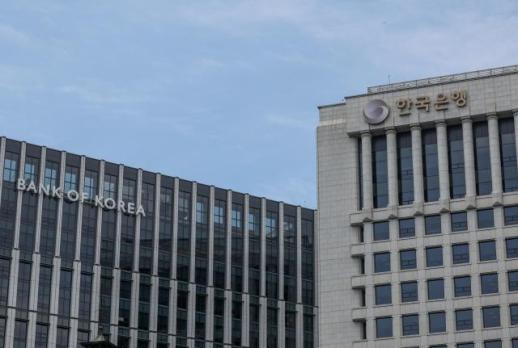 KOFIA survey shows bond market shifts toward BOK hold SEOUL, August 25 (AJP) - Nearly eight in 10 bond-market professionals expect the Bank of Korea (BOK) to hold its policy rate Thursday, marking a sharp shift from the last poll ahead of the July rate-setting meeting, a survey showed Tuesday. The Korea Financial Investment Association (KOFIA) said 79 percent of 100 bond-market professionals it surveyed expected the BOK to keep its base Rate at 2.75 percent. Twenty percent forecast another increase. KOFIA said stronger economic growth, persistent inflation pressure and rising household debt continued to support the case for another rate hike. A firmer won and higher market interest rates, however, strengthened expectations for a pause. The latest results mark a reversal from the run-up to the BOK's July meeting, when 66 percent of respondents expected a rate increase and 34 percent forecast a hold. The BOK last month bumped up the benchmark rate 25 basis points to 2.75 percent in its first increase since January 2023. A separate survey by AJP and Aju Business Daily showed economists were considerably more divided over Thursday's decision. Five of nine economists forecast a hold, while four expected another 25-basis-point increase. The shift in bond-market expectations comes as the BOK weighs stronger economic growth and financial-stability risks against easing inflation pressure and a firmer won. South Korea's economy expanded 0.6 percent from the previous quarter in the second quarter. Consumer inflation slowed to 2.8 percent in July from 3.2 percent in June, reducing some of the urgency for another immediate rate increase. KOFIA's Base Rate Bond Market Survey Index (BMSI) jumped 47 points from the previous month to 81.0, reflecting the sharp increase in expectations for unchanged policy. The broader composite BMSI for September rose to 89.5 from 86.2, though it remained below the neutral level of 100. The interest-rate outlook BMSI climbed 15 points to 99.0. Sixty-nine percent of respondents expected market interest rates to remain broadly unchanged, up 13 percentage points from the previous month. The share expecting rates to rise fell 14 percentage points to 16 percent. The BOK will announce its rate decision Thursday alongside updated forecasts for economic growth and inflation. AJP Takeaways • Nearly 80 percent of bond-market professionals expect the BOK to hold its Base Rate at 2.75 percent Thursday, according to a KOFIA survey. • Bond-market expectations have reversed sharply since July, when two-thirds of respondents anticipated the rate increase that the BOK ultimately delivered. • The BOK must balance stronger growth and household-debt risks against easing inflation, a firmer won and higher market interest rates. 2026-08-25 15:58:17
 -
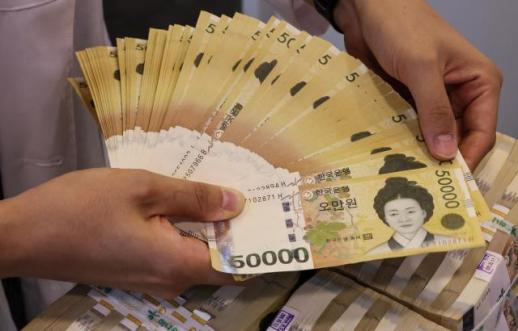 Korea's new household loans hit three-year low in Q2 SEOUL, August 25 (AJP) - South Korean consumer borrowing fell to its lowest in more than three years in the second quarter amid tighter caps on mortgage lending. The average amount of new household loans dropped 3.6 percent in April-June period from the previous quarter to 34.14 million won ($24,687) per borrower, preliminary data from the Bank of Korea (BOK) showed Tuesday. The BOK attributed the decline in part to tighter loan management across the financial sector. The drop was concentrated among borrowers in their 30s and 40s, residents of the Seoul metropolitan area and mortgage borrowers. New mortgage borrowing fell 9.2 percent to 208.29 million won per borrower from 229.39 million won in the first quarter, the lowest since the fourth quarter of 2024, according to a separate BOK time-series comparison. The curb in new lending did not translate into lower outstanding debt. Average household loan balances per borrower rose 0.5 percent to 97.90 million won at the end of June. Average mortgage balances increased by 1.87 million won to 161.93 million won. The two measures capture different parts of household borrowing. New lending tracks loans issued during a quarter, while outstanding balances reflect accumulated loans that borrowers still owe. The BOK's borrower-level statistics are based on a sample from NICE Information Service's personal credit database covering 4.8 percent of borrowers. The data are designed to show differences in borrowing by age, region, lender and loan type. The second-quarter decline was particularly pronounced among borrowers in their 30s and 40s. Average new household borrowing among people in their 40s fell by 5.83 million won to 35.88 million won, while the figure for those in their 30s declined by 2.74 million won to 49.08 million won. The two age groups also led the decline in mortgages. Average new mortgage borrowing fell by 35.37 million won among borrowers in their 40s and by 26.32 million won among those in their 30s. Borrowers in their 20s bucked the trend. Their average new mortgage borrowing rose by 3.92 million won to 232.17 million won, and they accounted for 6.0 percent of new mortgage lending by value. The pullback was also concentrated in the Seoul metropolitan area. Average new household borrowing in Seoul, Incheon and Gyeonggi Province fell by 1.93 million won to 37.80 million won per borrower. Average new mortgage borrowing in the region declined by 43.97 million won to 230.59 million won. Lending trends diverged sharply between banks and nonbank institutions. Average new household borrowing through nonbanks fell by 14.39 million won to 27.91 million won, while borrowing through banks rose by 3.42 million won to 50.13 million won. Banks nevertheless remained the largest source of new borrowing by value, accounting for 58.3 percent of the total. Borrowers in their 30s accounted for 32.7 percent, while the Seoul metropolitan area represented 59.4 percent. The slowdown in new borrowing comes even as South Korea's overall household debt continues to rise. Separate BOK data released last week showed household credit increased by 25.9 trillion won to a record 2,019.8 trillion won at the end of June, exceeding 2,000 trillion won for the first time. The two statistics are not directly comparable. Household credit measures economy-wide loans and sales credit using reports from financial institutions, while the borrower-level statistics use a sample of individual credit records to track borrowing patterns. Second-quarter borrower-level figures are preliminary and will be finalized when the next quarterly data are released. AJP Takeaways: • South Korea's average new household borrowing per borrower fell 3.6 percent to 34.14 million won in the second quarter, the lowest since the first quarter of 2023. • New mortgage borrowing dropped 9.2 percent to 208.29 million won per borrower, led by declines among people in their 30s and 40s and in the Seoul metropolitan area. • New lending slowed even as South Korea's total household credit climbed to a record 2,019.8 trillion won at the end of June, according to the Bank of Korea. 2026-08-25 12:13:03
 -
 BOK allocates 20 billion won for flood-hit Gyeongnam SMEs SEOUL, August 25 (AJP) - The Bank of Korea on Tuesday allocated 20 billion won ($14.5 million) in emergency funding to support small and medium-sized businesses hit by torrential rain in South Gyeongsang Province. The funds will be drawn from reserves under the central bank's Bank Intermediated Lending Support Facility and assigned to its Gyeongnam branch, the BOK said. Eligible businesses must have received official certification of flood damage from a local government or administrative office. The program covers small business owners and self-employed workers as well as companies already receiving support under the BOK lending facility. The central bank will provide funding to financial institutions equivalent to 100 percent of eligible loans they extend to affected businesses. Eligible lending includes new loans with maturities of up to one year, as well as loan extensions and refinancing. The Bank Intermediated Lending Support Facility provides low-interest funds to banks based on their lending to SMEs and other eligible businesses. The BOK raised the facility's interest rate to 1.25 percent from 1.00 percent in July alongside its latest Base Rate increase. The central bank said it will review the extent of flood damage and borrowing demand among affected businesses and provide additional support if needed. 2026-08-25 10:18:01
 -
 Korea's food costs climb across home meals and dining out SEOUL, August 25 (AJP) - Korean households are facing renewed food-cost pressure across home cooking and dining out as extreme summer weather damages crops and fresh produce, adding to already elevated import costs. Korea Consumer Agency data released Tuesday showed ingredients for one home-cooked samgyeopsal (pork barbecue) meal cost 10,191 won ($7.38) in the first half, up 11.8 percent from a year earlier. “The first-half trend was moderate, but continuously rising without a single pause,” said Lim Sang-min, head of the consumer price team at the Korea Price Research Center, referring to restaurant prices. The average restaurant price of pork belly rose 2.7 percent to 17,745 won over the same period, narrowing the price gap between eating at home and dining out to 7,554 won from 8,173 won a year earlier. Pork belly itself, which accounts for most of the home meal cost, rose 13.6 percent to 7,866 won. Garlic climbed 10.2 percent and lettuce 6.3 percent. Ssamjang, a fermented dipping sauce, rose 19.8 percent. Restaurant staples have also continued to become more expensive. The average Seoul price of samgyetang, or ginseng chicken soup, rose to 18,192 won in July from 18,154 won a month earlier, Korea Consumer Agency data showed. Cold noodles increased to 12,692 won from 12,615 won, while a roll of gimbap rose for a second straight month to 3,869 won from 3,838 won. Gimbap had cost 3,723 won at the end of last year. The increases contrast with an easing in broader headline inflation. South Korea's consumer inflation slowed to 2.8 percent in July from 3.2 percent in June, according to the Ministry of Data and Statistics. Agricultural, livestock and fisheries prices rose just 0.9 percent from a year earlier as agricultural prices fell 2.2 percent. Livestock and fisheries prices, however, remained 4.4 percent and 3.9 percent higher, respectively. Restaurants are contending with higher food costs alongside wages, rent and utility bills, with some ingredients recording particularly steep increases. Fresh ginseng used in samgyetang averaged 38,750 won for 12 to 14 roots as of Aug. 21, up 56 percent from a year earlier. Restaurants selling cold noodles have also faced higher beef costs for broth. Summer heat has added pressure to fresh produce markets, although the increases have so far been most pronounced in wholesale prices. Earlier this month, wholesale cucumber prices were up 87.1 percent from a month earlier and spinach prices had jumped 86.5 percent as prolonged heat disrupted crop growth and harvesting. The government has said overall agricultural supplies remain manageable and has expanded discounts and supply measures aimed at limiting weather-related food price increases. Processed-food makers are also passing on accumulated costs. Nongshim raised shipment prices for major cup noodles by an average 6.0 percent and snacks by 5.5 percent from Aug. 1. Ottogi plans to lift prices of selected cup noodles by an average 6.7 percent and dumplings by 7.7 percent from Sept. 7, citing higher raw-material and packaging costs. The government earlier this month rolled out 30 billion won in seafood discounts of up to 50 percent through Aug. 23, alongside emergency fish releases and additional farm support ahead of Chuseok. AJP Takeaways: - Korea Consumer Agency data showed food costs rose both at home and at restaurants, with ingredients for a home-cooked samgyeopsal meal up 11.8 percent in the first half. - Korea Consumer Agency data showed Seoul prices for samgyetang, cold noodles and gimbap all increased in July despite headline inflation slowing to 2.8 percent. - Nongshim raised shipment prices for cup noodles and snacks in August, and Ottogi plans increases for cup noodles and dumplings from Sept. 7. 2026-08-25 10:16:29
 -
 Korea's Aug consumer confidence falls on volatile stocks and prices SEOUL, Aug. 25 (AJP) — South Korea's consumer confidence fell for the first time in four months in August as a stock-market correction and accumulated price pressures weighed on sentiment despite solid economic conditions, central bank data showed Tuesday. The Bank of Korea's Composite Consumer Sentiment Index (CCSI) fell 2.3 points from a month earlier to 104.5, snapping three straight months of gains since May. The index nevertheless remained above the benchmark of 100. A reading above 100 means consumer sentiment is more optimistic than the long-term average, while a reading below 100 indicates greater pessimism. All six components used to calculate the headline index fell from July, with consumers becoming less upbeat about both economic conditions ongoing and ahead. The index measuring perceptions of current economic conditions dropped 5 points to 79, while the outlook for the economy six months ahead fell 3 points to 89. The BOK attributed the decline to a sharp correction in the domestic stock market and the accumulated burden of higher prices, even as exports and investment continued to support the broader economy. The central bank said recent stock-market volatility had weighed on households' perceptions of economic conditions and savings, which include holdings of stocks and investment funds. Job prospects also weakened, with the employment outlook index falling 3 points to 86. The BOK pointed to continued declines in manufacturing and construction employment and persistent weakness among younger workers, particularly in industries with high exposure to artificial intelligence. The central bank said employment expectations fell across age groups but more sharply among people under 40. A recent BOK study found that much of the decline in youth employment over the past four years was concentrated in industries with high AI exposure. Households also grew less upbeat about their own finances. The index for current living conditions fell one point to 92, while expectations for living standards six months ahead declined one point to 97. Household income expectations slipped one point to 100, while the spending outlook edged down to 109. Housing expectations also cooled after rising sharply in recent months. The housing price outlook index fell 2 points to 125 from 127 in July as consumers took into account recent tax changes and government measures aimed at increasing housing supply. It was the first decline after four consecutive monthly gains through July. The index nevertheless remained well above 100, indicating that consumers expecting home prices to rise over the coming year still outnumbered those expecting a decline. The interest-rate outlook index slipped one point to 125, while the prospective price-level index was unchanged at 149. Consumers estimated inflation over the past year at 3.0 percent, while their median expectation for consumer-price inflation over the coming year remained at 2.7 percent for a second straight month. Inflation expectations three and five years ahead were also unchanged at 2.6 percent. The BOK said upward pressure from the prolonged stalemate in the Middle East conflict was offset by expectations for further interest-rate increases and the recent strengthening of the won against the U.S. dollar. Petroleum products remained the most frequently cited factor expected to push up consumer prices over the next year, selected by 50.2 percent of respondents. Agricultural, livestock and fishery products followed at 42.0 percent, amid extreme summer heat, while 33.3 percent cited public utility charges. The share citing agricultural, livestock and fishery products jumped 7.9 percentage points from July and the share pointing to rents rose 3.4 points, while the proportion citing petroleum products fell 7.3 points. The survey was conducted from Aug. 7 to 14 among 2,500 households in cities nationwide, with 2,244 responding. AJP Takeaways South Korea's consumer confidence fell 2.3 points to 104.5 in August, its first decline in four months, as a stock-market correction and accumulated inflation weighed on sentiment. Employment expectations weakened amid job losses in manufacturing and construction and persistent weakness among younger workers in industries highly exposed to AI. Housing price expectations eased after four months of gains, while one-year inflation expectations held steady at 2.7 percent. 2026-08-25 07:35:27
 -
 Won hits 11-month high, Korean bonds rally as stocks tumble SEOUL, August 24 (AJP) - The South Korean won strengthened to an 11-month high against the dollar on Monday. Government bonds also rallied as stocks tumbled and foreign investors bought bond futures. The won strengthened 4.1 won from the previous session to close daytime trading at 1,382.4 per dollar, compared with Friday's 1,386.5. The currency briefly strengthened to 1,376.5 during the session and extended its advance for a seventh straight trading day, the longest such streak since December 2013. Month-end dollar selling by exporters and offshore bets on further won appreciation coincided with the currency's gains. A steep equity selloff and heavy foreign stock outflows accompanied a partial pullback late in the session. The KOSPI tumbled 3.12 percent to 6,696.96 as Samsung Electronics plunged after its shareholder-return plan fell short of elevated market expectations. Foreign investors sold about 3.68 trillion won ($2.66 billion) of shares. Korean government bonds also strengthened. The three-year yield fell 1.3 basis points to 3.836 percent, the five-year declined 4.3 basis points to 4.068 percent and the 10-year dropped 4.1 basis points to 4.335 percent. U.S. Treasury yields and oil prices were higher early in the session, while foreign investors bought three- and 10-year bond futures as domestic bonds turned higher. An auction of a new five-year government bond produced accepted yields ranging from 4.095 percent to 4.135 percent, a split that coincided with a temporary pause in the rally. Bonds regained momentum as the equity selloff deepened in the afternoon, with longer maturities outperforming and the 10-year yield falling 2.8 basis points more than the policy-sensitive three-year yield. The move produced a bull-flattening of the yield curve ahead of the Bank of Korea's rate-setting meeting on Thursday. Markets are divided over whether the BOK will follow its July 25-basis-point increase with another hike. 2026-08-24 16:47:34
 -
 Korea's 5-year bond auction split raises demand concerns SEOUL, August 24 (AJP) - South Korea's new five-year government bond auction produced a wide range of accepted yields on Monday, signaling uneven investor pricing and trimming an earlier rally in the local bond market despite a strong headline bid ratio. The Ministry of Economy and Finance said it completed competitive auctions for both a new five-year Korea Treasury Bond and an existing five-year issue on Monday. The 1.5 trillion won ($1.09 billion) pre-issuance tranche of the new five-year bond drew 3.581 trillion won in bids, equivalent to a bid-to-cover ratio of 238.7 percent. Accepted yields ranged from 4.095 percent to 4.135 percent, with a weighted-average yield of 4.131 percent. The 4-basis-point gap between the lowest and highest accepted yields resulted in what local bond traders call a "split," reflecting a relatively wide divergence in the prices investors were willing to accept for the same security. A high bid-to-cover ratio by itself does not necessarily indicate strong underlying demand. The ratio measures the amount of bids submitted relative to the securities offered, but does not show how aggressively investors were willing to price those bids. Because bond prices move inversely to yields, investors bidding at lower yields are effectively willing to pay more for the debt, while those demanding higher yields are seeking a cheaper entry price. A split therefore suggests that while the auction attracted enough orders to cover the full issuance, investors were less aligned over what constituted an appropriate price. The result weighed on an earlier rally in Korean government bonds. Foreign buying of three- and 10-year bond futures had supported the market earlier in the morning, but gains lost some momentum after the five-year auction produced the split. At the morning session close, the five-year Korean government bond yield was down 1.4 basis points at 4.097 percent, while the 10-year yield fell 2.9 basis points to 4.347 percent. The three-year yield, by contrast, edged up 0.2 basis point to 3.856 percent, leaving moves across the curve mixed. The auction should not be read as a failed sale. The full amount was placed and bids exceeded the offered volume by more than two times. Still, the spread in accepted yields and the partial reversal in the market's earlier gains pointed to caution over end-investor demand and the appropriate valuation of medium-term government debt. The auction came three days before the Bank of Korea's monetary policy meeting on Thursday, with market expectations divided over whether policymakers will follow July's 25-basis-point rate increase with another hike. 2026-08-24 16:46:38
 -
 Korea's Q1 payroll gains skew older while youth jobs slump SEOUL, August 24 (AJP) - South Korea's payroll job growth accelerated in the first quarter, but positions held by younger workers continued to shrink to highlight an uneven labor-market recovery concentrated among older workers and service industries. The number of wage-worker jobs stood at 20.828 million in the first quarter, measured as of February, up 292,000 or 1.4 percent from a year earlier, the Ministry of Data and Statistics said Monday. The increase widened from just 15,000 a year earlier and 221,000 in the fourth quarter, extending a steady recovery from last year's near-stagnation. Jobs held by people in their 20s or younger, however, fell by 76,000 from a year earlier, while positions held by workers in their 40s declined by 19,000. By contrast, jobs held by people aged 60 and above increased by 233,000, equivalent to nearly four-fifths of the overall net gain, while those held by workers in their 30s rose by 115,000 and those in their 50s by 40,000. The decline among younger workers has moderated from 168,000 a year earlier and 111,000 in the fourth quarter, suggesting the downturn is easing without yet turning into a recovery. Weakness among younger workers was particularly evident in sectors that typically provide entry points into more stable employment. Jobs held by people in their 20s or younger fell by 26,000 in manufacturing and by 14,000 each in information and communications and public administration. The figures add to signs that improvements in Korea's headline labor-market indicators have yet to translate into a broad recovery in employment opportunities for younger workers. Service industries, meanwhile, accounted for most of the overall increase. Service-sector jobs increased by 342,000 from a year earlier, exceeding the economy-wide net gain, as health and social welfare added 127,000 positions, accommodation and food services 59,000 and professional, scientific and technical services 37,000. Within health and social welfare, social welfare services added 88,000 jobs and healthcare gained another 40,000, showing that care-related industries remained a major source of employment growth. Manufacturing offered a more mixed picture despite the export-led semiconductor boom. Semiconductor jobs rose by 5,000 from a year earlier to 174,000 and jobs in new automobile parts increased by 4,000, but manufacturing employment as a whole edged down by 1,000 to 4.294 million. The decline was much smaller than losses of 12,000 in the first quarter of last year and 14,000 in the fourth quarter, pointing to some improvement in factory employment even as gains in semiconductors have yet to spread broadly across the sector. Construction remained the largest drag, shedding 52,000 jobs from a year earlier to 1.638 million, although the decline narrowed sharply from 154,000 a year earlier and 88,000 in the previous quarter. Specialized construction activities lost 35,000 positions and general construction shed 17,000. The administrative series counts individual jobs rather than employed people, meaning one worker holding more than one position can be counted more than once. The figures point to a labor market recovering from last year's near-stagnation, while persistent declines among younger workers show that the improvement has yet to broaden fully across generations and industries. AJP Takeaways: Jobs held by people in their 20s or younger fell by 76,000 year on year despite a 292,000 increase in overall wage-worker jobs. Workers aged 60 and above added 233,000 jobs, equivalent to nearly 80 percent of the economy-wide net gain. Semiconductor jobs rose by 5,000, but overall manufacturing employment remained broadly flat and youth manufacturing jobs fell by 26,000. 2026-08-24 13:50:03
 -
 BOK August rate call splits 5-4 over back-to-back hike SEOUL, August 24 (AJP) - The Bank of Korea has made clear that monetary policy is biased toward further tightening after its July rate increase, but economists are narrowly divided over whether it will deliver a back-to-back hike this week or wait until the fourth quarter to assess inflation and a sharp repricing in global bond markets. Five of nine economists in a combined AJP and Aju Business Daily survey expect the Monetary Policy Board to hold the benchmark rate at 2.75 percent on Thursday, while four forecast another 25-basis-point increase. The split reflects competing views over whether stronger growth and financial-stability risks warrant another immediate hike, or whether softer headline inflation, a firmer won and the need to assess the impact of July's increase give the BOK room to wait. The case for another hike has been strengthened by an economy that continues to outperform earlier expectations. South Korea's gross domestic product expanded 0.6 percent from the previous quarter and 3.7 percent from a year earlier in the second quarter. The BOK is expected to raise its 2026 growth forecast to above 3 percent from the 2.6 percent projected in May, largely reflecting prolonged strength in semiconductor exports. The revised economic outlook will be released Thursday after the rate decision. At the same time, inflation has softened despite entrenched conflict in the Middle East. Consumer price growth slowed to 2.8 percent in July from 3.2 percent in June, while the won strengthened into the 1,300-per-dollar range. Core inflation excluding food and energy, however, remained elevated at 2.6 percent. The stronger won has also eased pressure from import prices. "Semiconductor-led export strength is translating into double-digit nominal growth," said Yoon Yeo-sam, an economist at Meritz Securities. Yoon also pointed to household debt and volatility in property and equity markets as financial-stability risks that could warrant further tightening. He expects the policy rate to reach as high as 3.25 percent by year-end. Strong second-quarter GDP and gross domestic income, firmer core inflation and resilient semiconductor exports and current-account conditions also support front-loading further tightening, according to Cho Yong-gu of Shinyoung Securities, who forecasts a 25-basis-point increase this week. Cho said the widening increase in non-mortgage borrowing, including overdraft credit, also supported an earlier move. Recent declines in stock prices and the won-dollar exchange rate were more likely to influence the eventual peak in rates than Thursday's decision, he said. Cho expects the policy rate to reach 3.25 percent by year-end and the BOK to raise its 2026 growth forecast to around 3.3 percent while keeping its consumer inflation projection at 2.7 percent. After two rapid increases, however, he expects the central bank to pause for at least one meeting to assess their impact on growth, inflation and financial stability. Kim Jung-sik, an economist at Yonsei University, expects annual growth to exceed 3 percent on strong semiconductor exports and a large current-account surplus. But he sees that external strength as also supporting the won and easing imported inflation pressure. Kim expects the policy rate to stand at 3.00 percent at year-end. "An August hold would be closer to a pause to check the data before another hike than the end of the hiking cycle," said Kang In-soo, an economist at Sookmyung Women's University. He expects the policy rate to finish 2026 at 3.00 percent and sees the BOK raising its growth forecast to around 3.0 percent while keeping its consumer inflation projection at 2.7 percent. Core inflation and the won-dollar exchange rate will be key variables for the next move, he said. The bond-market turmoil triggered by a sharp selloff in U.S. Treasuries is also likely to weigh on the BOK's policy path. The 10-year U.S. Treasury yield stood at 4.704 percent last Friday, up 53.71 basis points so far this year. South Korea's corresponding 10-year yield closed Friday at 4.376 percent, up 99.1 basis points over the same period. Japan's 10-year yield has risen 81.9 basis points. The increase in Korean yields has therefore been substantially steeper than in either the United States or Japan, even though the BOK began its latest tightening later. Thursday's meeting will also mark the first policy vote for newly appointed Senior Deputy Governor Kwon Min-soo, who sits on the seven-member board ex officio. Kwon said in his inaugural remarks that stronger semiconductor activity had lifted growth beyond earlier expectations, while inflation, household debt, housing prices, currency volatility and geopolitical and trade risks still called for "cautious and flexible" policy decisions. For markets, the vote split, the size of the BOK's growth upgrade and its guidance on the timing of the next move could prove as important as Thursday's rate decision itself. AJP Takeaways: - Five of nine economists in a combined AJP and Aju Business Daily survey expect the BOK to hold its benchmark rate at 2.75 percent on Aug. 27, while four forecast a 25-basis-point hike. - Yoon Yeo-sam and Cho Yong-gu see the policy rate reaching 3.25 percent by year-end, bringing forward tightening they had expected in the first quarter of 2027 in AJP's July poll. - Hike advocates point to stronger economic growth, persistent core inflation and credit risks, while the hold camp sees softer headline inflation and a firmer won as giving the BOK room to wait. - Respondents in AJP's follow-up survey expect the BOK to raise its 2026 growth forecast to at least around 3 percent, with Yoon at 3.4 percent and Cho at 3.3 percent. 2026-08-24 12:50:00