

Journalist

Kim Yeon-jae김연재
duswogmlwo77@ajupress.com
ReporterBank of Korea & Market, Macroeconomics
Kim Yeon-jae is a journalist at AJU Press (AJP's English platform),
covering macroeconomics, international finance, and geopolitics.
He closely tracks central bank monetary policies, global energy supply chains,
and the Korean defense industry. "Peering into the risks behind the euphoria."
covering macroeconomics, international finance, and geopolitics.
He closely tracks central bank monetary policies, global energy supply chains,
and the Korean defense industry. "Peering into the risks behind the euphoria."
Latest by Kim Yeon-jae
-
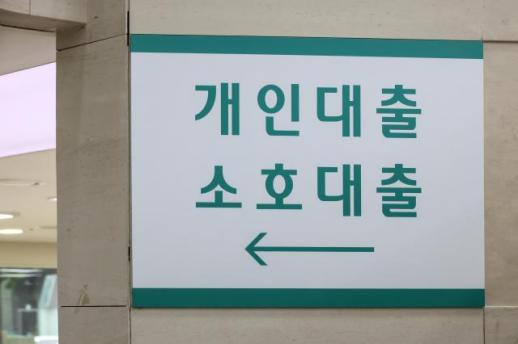 Corporate borrowing picks up amid slowing household loans SEOUL, September 09 (AJP) - Bank loans showed mixed trends last month, with corporate borrowing accelerating while household loan growth slowed despite an increase in mortgage-related lending. Household loans increased by 3.4 trillion won (US$2.5 billion) in August, easing from a 5.5 trillion won rise in July, according to data released by the Bank of Korea (BOK) on Wednesday. Corporate loans expanded by 9.7 trillion won, up from 7.7 trillion won a month earlier. The slowdown in household borrowing masked a different trend in housing-related lending. Mortgage loans increased by 4 trillion won, up from 3.5 trillion won in July, as housing transactions in the Seoul metropolitan area and increased housing supply supported demand. Loans for jeonse, South Korea's lump-sum deposit lease, continued to fall, declining by 700 billion won after an 800 billion won drop in July. Other household loans including unsecured credit and overdraft loans fell by 600 billion won after rising by 2.0 trillion won a month earlier. The BOK attributed the decline to weaker individual stock investment and tighter management of credit loans by banks. The figures showed that overall household loan growth was easing, even as mortgage demand remained high. Household loans through banks increased by 24.5 trillion won during the first eight months of this year, below the 27.3 trillion won increase recorded over the same period last year. Mortgage borrowing rose by 17.3 trillion won during the period, compared with 27.7 trillion won a year earlier. Other household loans increased by 7.2 trillion won after declining by 300 billion won during the first eight months of 2025. Corporate borrowing moved in the opposite direction. Bank loans to companies increased by 9.7 trillion won in August, exceeding both July's 7.7 trillion won increase and the 8.4 trillion won gain recorded a year earlier. Loans to large companies rose by 4.9 trillion won, up from 3.8 trillion won, as banks stepped up lending and companies sought funds partly to repay corporate bonds. Loans to small and midsized enterprises increased by 4.8 trillion won from 3.9 trillion won, supported in part by expanded financing programs at some banks. The shift extended a trend seen in July, with companies relying more heavily on bank credit while the corporate bond market remained in net repayment. Corporate bank loans increased by 66.9 trillion won during the first eight months of this year, compared with 39.7 trillion won during the same period in 2025. Corporate bonds, meanwhile, recorded 17.2 trillion won in net repayments over the period, reversing from net issuance of 3.9 trillion won a year earlier. Bonds remained in net repayment by 900 billion won in August after 1.9 trillion won in July, as higher interest rates raised issuance costs and the market entered a seasonal lull. Commercial paper and short-term notes recorded net issuance of 4.1 trillion won, little changed from 4 trillion won in July, supported by working-capital demand from some public enterprises. Higher market rates continued to add pressure to corporate funding conditions. The three-year government bond yield rose to 3.84 percent at the end of August from 3.76 percent at the end of July, while the 10-year yield climbed to 4.31 percent from 4.26 percent. The BOK attributed the increase to higher oil prices following renewed tensions in the Middle East, changing monetary policy expectations at home and abroad and higher long-term government bond yields in major economies. Short-term market rates also rose sharply following the BOK's August policy rate increase. The yield on three-month bank bonds rose to 3.21 percent from 2.99 percent, while the 91-day certificate of deposit rate increased to 3.12 percent from 2.95 percent. Financial flows also reversed some of July's sharp movements. Asset managers received 23.5 trillion won in August after recording a 42.8 trillion won decline in July, led by a 15.5 trillion won increase in equity funds. Bond funds, by contrast, declined by 300 billion won after increasing by 700 billion won in July as market interest rates rose. Bank deposits edged up by 100 billion won after falling by 30.0 trillion won in July. Time deposits increased by 20.3 trillion won as household funds returned and local governments temporarily deposited cash. The KOSPI ended August at 6,820, up from 6,595 at the end of July, while the KOSDAQ climbed to 834 from 720. The BOK said investor sentiment improved further in early September amid strength in U.S. technology shares, pushing the KOSPI close to 7,000. AJP Takeaways - South Korea's bank household loans increased by 3.4 trillion won in August, slowing from July even as mortgage lending accelerated to 4.0 trillion won. - South Korea's corporate bank loans increased by 9.7 trillion won, with companies continuing to rely on banks and corporate bonds remaining in net repayment. - South Korea's market rates rose further in August, and asset-manager inflows rebounded amid an equity-market recovery from July's decline. 2026-09-09 13:58:36
 -
 UPDATE: Korea's youth employment falls for 46th month in Aug *Updated with comments from a Ministry of Data and Statistics briefing and additional data SEOUL, September 9 (AJP) - Youth employment in South Korea fell for a 46th straight month in August and manufacturing jobs declined for a 26th month despite stronger overall hiring. The number of employed people aged 15 to 29 fell by 143,000 from a year earlier to 3.428 million. Their employment rate dropped 1.0 percentage point to 44.1 percent. "Youth employment remained weak as jobs declined in information and communications and manufacturing, industries where younger workers are heavily represented," said Bin Hyun-jun, director general of social statistics at the Ministry of Data and Statistics. People in their 20s accounted for most of the decline, with employment falling by 164,000 from a year earlier. The youth employment rate has now fallen for 28 consecutive months. The youth labor force participation rate also dropped 0.8 percentage point to 46.6 percent, the lowest August level since 2020. The youth unemployment rate rose 0.5 percentage point to 5.4 percent, the highest August level in four years, while the overall unemployment rate remained unchanged at 2.0 percent. Bin said the increase in youth unemployment partly reflected stronger job-seeking activity during the survey period, including civil service applications, expanded public-sector hiring and an increase in new job openings. The number of young people classified as “resting,” a category within the economically inactive population, fell by 51,000 from a year earlier. The ministry said some young people appeared to be moving from inactivity into active job searches and therefore being counted as unemployed. Factory employment also remained under pressure. Employment in mining and manufacturing fell by 37,000 from a year earlier, including a decline of 38,000 in manufacturing. Manufacturing employment fell for a 26th consecutive month, though the decrease narrowed from 68,000 in July. Construction employment fell by 32,000 and remained in decline for a 28th straight month. Agriculture, forestry and fisheries lost 109,000 jobs. Accommodation and food services shed 61,000 jobs, marking their first decline in four months and the largest decrease since July last year. Bin attributed part of the decline to a high comparison base created by consumption vouchers issued from August last year, saying the losses were concentrated in restaurants and drinking establishments. The weaker youth and factory figures contrasted with an improvement in overall employment. South Korea added 184,000 jobs from a year earlier in August, bringing the number of employed people aged 15 and older to 29.151 million. The increase widened from 108,000 in July and was the largest in five months. The employment rate for people aged 15 to 64, the OECD comparison standard, rose 0.5 percentage point to 70.4 percent, the highest level recorded for August since comparable data began in 1989. The employment rate for people aged 15 and older remained unchanged at 63.3 percent. Job gains were concentrated among older workers and service industries. Employment among people aged 60 and older increased by 191,000 from a year earlier. Employment also rose by 91,000 among people in their 30s and by 62,000 among those in their 50s. Jobs among people in their 40s fell by 17,000. By industry, health and social welfare services added 186,000 jobs. Arts, sports and recreation services gained 73,000 jobs. Business facilities management and support services added 45,000. Regular employees increased by 180,000 from a year earlier. Temporary employees declined by 50,000, while daily workers fell by 17,000. The number of unemployed people fell by 4,000 to 588,000. The seasonally adjusted unemployment rate eased to 2.7 percent from 2.8 percent in July. The economically inactive population increased by 77,000 to 16.297 million, even as the number of people classified as resting fell by 89,000 to 2.551 million. AJP Takeaways - South Korea's youth employment fell by 143,000 in August for a 46th straight month, while the youth employment rate extended its decline to 28 months. - South Korea's manufacturing employment fell by 38,000 for a 26th consecutive month, while construction jobs declined for a 28th month. - South Korea's overall employment increased by 184,000, with gains concentrated among older workers and health and social welfare services. - South Korea's employment rate for people aged 15 to 64 rose to 70.4 percent, the highest August level since comparable data began in 1989. 2026-09-09 08:52:47
 -
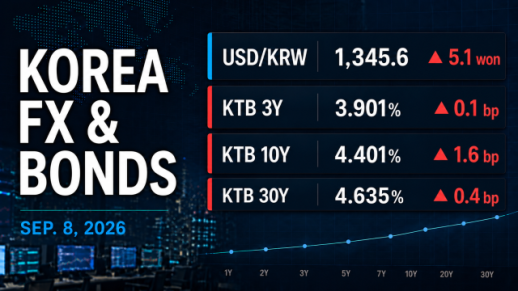 Won weakens for 1st time in five sessions SEOUL, September 8 (AJP) - The South Korean won fell for the first time in five sessions on Tuesday as higher oil prices and strong demand for dollars from importers put pressure on the currency. Korean government bonds ended little changed after an early rise faded. The won closed at 1,345.6 per dollar at 3:30 p.m., weakening 5.1 won from 1,340.5 in the previous session. The currency opened at 1,344.4 and strengthened as far as 1,336.3 in morning trading before reversing course and reaching 1,349.0 during the session. The won weakened despite a softer global dollar and stronger yen, as rising oil prices raised concerns over South Korea's import bill and importers stepped up dollar demand around 1,340 won per dollar. West Texas Intermediate crude rose above US$94 a barrel during Asian trading amid renewed concerns over Middle East supply disruptions. The National Pension Service's halt to currency hedging also limited further won appreciation, while dollar selling by exporters and gains in the yen capped the rise in the dollar-won rate. Government bonds finished broadly steady after an early rally faded, with most benchmark yields moving by less than 1 basis point. The three-year government bond yield edged up 0.1 basis point to 3.901 percent, while the 10-year yield showed the clearest move, rising 1.6 basis points to 4.401 percent. The five-year yield gained 0.7 basis point to 4.127 percent, while the 20-year yield fell 0.7 basis point to 4.560 percent. The 30-year and 50-year yields rose 0.4 and 0.3 basis point to 4.635 percent and 4.543 percent, respectively. The spread between the three-year and 10-year yields widened to 50.0 basis points from 48.5 basis points a day earlier, reflecting a modest steepening of the curve rather than a broad selloff. Bonds had rallied in morning trading, with the three-year yield falling as low as 3.876 percent and the 10-year yield to 4.362 percent. Foreign investors bought three- and 10-year bond futures, while investors sought value around the 3.9 percent level in the three-year sector. The gains faded later in the session as higher oil prices kept inflation risks in focus and overseas bond yields moved higher during Asian trading, leaving the domestic market close to flat by the end of the day. U.S. markets had been closed Monday for the Labor Day holiday, leaving Seoul investors with limited overnight direction. Attention is now shifting to U.S. inflation data after stronger-than-expected employment figures revived expectations of further Federal Reserve tightening. Markets are also watching the Bank of Japan's policy meeting next week, with expectations of another rate increase contributing to the yen's recent strength. AJP Takeaways - South Korea's won weakened 5.1 won to 1,345.6 per dollar Tuesday as higher oil prices and importer dollar demand outweighed support from a softer dollar and stronger yen. - Government bonds surrendered an early rally, with the three-year yield ending nearly flat at 3.901 percent and the 10-year yield rising 1.6 basis points to 4.401 percent. - U.S. markets are turning to U.S. inflation data and upcoming Federal Reserve and Bank of Japan policy meetings for direction after stronger U.S. employment data revived tightening expectations. 2026-09-08 17:18:57
 -
 AI makes Korea richer, but leaves its youth behind SEOUL, September 08 (AJP) - On paper, South Korea has rarely looked richer. For its young people, it has rarely been harder to get a foothold. Real gross national income jumped 15.6 percent in the second quarter from a year earlier, the strongest increase since the fourth quarter of 1988, while per-capita GNI now has a strong chance of topping $40,000 for the first time. Much of the lift has come from the AI chip boom, which is showering export income and corporate profits on an economy dominated by Samsung Electronics and SK hynix. Yet the same AI transition is proving far less generous to young Koreans trying to enter the labor market. Youth employment fell for a 45th consecutive month in July. Another decline in August, when the government releases its latest employment report Wednesday, would stretch the contraction to nearly four years. The contrast is becoming one of the starkest fault lines in South Korea's AI-led expansion: the industries generating extraordinary export earnings are highly capital-intensive, while technological change and a shift toward experienced hiring are narrowing the traditional entry routes into corporate Korea. Total employment increased by 108,000 from a year earlier to 29.14 million in July. The number of employed people aged 15 to 29, however, fell by 191,000 to 3.44 million. The youth employment rate dropped 1.6 percentage points to 44.2 percent, while the unemployment rate rose 1.3 percentage points to 6.8 percent. A shrinking youth population explains only part of the fall. At the other end of the economy, exports jumped 68.7 percent from a year earlier to $98.25 billion in August, the third-highest monthly total on record, according to the Ministry of Trade, Industry and Resources. Semiconductor exports surged 209 percent to a record $46.65 billion as higher capital expenditure by global technology companies sustained demand for artificial intelligence infrastructure. The boom, however, does not translate easily into headcount. Bin Hyun-jun, director general of the Social Statistics Bureau at the Ministry of Data and Statistics, said at the July employment briefing that semiconductors have a relatively low employment multiplier and require large-scale capital equipment. He said the industry's structure limits the amount of hiring generated by increases in production and exports. A manufacturing recovery that skips the young More recent administrative data suggest the divergence persisted into August even as insured employment in manufacturing began to recover. Employment insurance subscribers increased by 278,000 from a year earlier to 15.91 million in August, according to the Ministry of Employment and Labor. Manufacturing subscribers rose by 2,000, their first annual increase in 15 months. Younger workers again moved in the opposite direction. Enrollment among workers aged 29 or younger fell by 55,700, or 2.4 percent, extending its decline to 48 consecutive months since September 2022. Young subscribers fell by 23,000 in manufacturing and 13,000 in information and communications, leaving them behind even as overall manufacturing enrollment returned to growth. The mismatch suggests that stronger factories and exports alone may no longer be enough to restore the traditional employment pipeline for young Koreans. Changes in recruitment practices provide another part of the explanation. Bin said the shift from large-scale annual recruitment toward rolling and experienced-hire recruitment has made employment conditions more difficult for young people than under the previous hiring system. South Korea's major commercial banks offer one example. KB Kookmin Bank, Shinhan Bank, Hana Bank and Woori Bank recruited 485 entry-level employees in the first half, down 18.5 percent from 595 a year earlier. Bank officials have cited the expansion of mobile and internet banking and lower demand for branch-based work as factors reducing traditional staffing needs. Recruitment has increasingly shifted toward specialized positions. KB Kookmin separates recruitment for IT and AI-platform development roles, while Hana created a regular experienced-hire track last year for specialists in areas including AI, data analysis and digital technologies. The pattern leaves new graduates facing a familiar contradiction: companies say they need more AI talent, but increasingly want workers who already have the experience to apply it. AI and a broken first rung The Bank of Korea has found signs that technological change itself may be adding to the pressure on entry-level employment. Youth employment fell by 285,000 between June 2022 and June 2026, according to a recent BOK Issue Note. Industries highly exposed to AI accounted for 268,000, or 94 percent, of the decline. Employment fell particularly sharply among young workers in information services, publishing, computer programming and professional services. Workers in their 50s, by contrast, continued to gain jobs in the same industries. The BOK described the pattern as consistent with "seniority-biased technological change," in which technological change affects junior and experienced workers differently. Industries with a higher share of AI use for automation recorded larger declines in youth employment, while no comparable pattern emerged where AI was primarily used to augment human work. The finding runs against the assumption that younger, more digitally fluent workers should be the natural winners from rapid technological change. AI may instead be eating into the first rung of the career ladder. Junior workers have traditionally performed research, basic analysis, documentation, coding and other tasks through which they gain experience. Generative AI can perform or accelerate many of those functions, potentially allowing companies to get more output from smaller teams of experienced employees. Education has offered little insulation. Since November 2022, the unemployment rate has averaged 7.0 percent among young people with a bachelor's degree or higher, compared with 5.4 percent among those with an associate degree or lower. The BOK cautioned that its findings do not establish that AI caused the decline in youth employment. The unwinding of pandemic-era overhiring, companies' growing preference for experienced recruits, weaker in-house training and changes in working practices may also have contributed, with AI potentially accelerating trends already underway. Waiting longer for the first job The difficulty of entering the labor market is also visible in a supplementary youth survey by the Ministry of Data and Statistics. Among people aged 15 to 29 who had graduated from, withdrawn from or otherwise completed their final level of education, 84.8 percent had ever been employed as of May, down 1.6 percentage points from a year earlier. Those whose first job was paid employment took an average of 11.2 months to find work. Longer-term exclusion is becoming more visible as well. Among young people who had completed their education but remained without work, 605,000 had been out of employment for at least one year. They accounted for 48.6 percent of the group, the highest share since 2009. Another 241,000 had been without work for at least three years, accounting for a record 19.4 percent since the series began in 2007. Kim Rak-hyun, director of the ministry's Employment Statistics Division, said ratios were more informative than absolute numbers when assessing long-term youth joblessness because the population aged 15 to 29 itself is shrinking. There are tentative signs that some young people may be moving back toward the labor market. The number classified as "resting," meaning they were outside employment and were neither actively studying nor seeking work, fell by 69,000 from a year earlier to 367,000 in July. The decline extended to six months. Newly registered job seekers aged 29 or younger on the government's Work24 platform increased by 1,800 from a year earlier in August, even as new registrations across all age groups fell by 1,000. Neither measure shows whether renewed labor-market participation is translating into actual employment. Government tries to rebuild the entry route The government has acknowledged that the weakness is spreading beyond the youngest workers. Its youth employment recovery plan released Aug. 28 showed that the employment rate for people aged 20 to 24 fell from 46.0 percent in 2022 to 43.6 percent in 2025. The rate for those aged 25 to 29, previously more resilient, also began declining in 2025. The government cited a lack of experience, labor-market duality and career disruption around the pandemic among the barriers to entry. It pledged to train more than 300,000 people for advanced and youth-preferred industries and create more than 300,000 jobs and startup opportunities by 2030. Training more workers for advanced industries, however, will not by itself resolve the mismatch if those industries continue expanding output faster than employment or increasingly reserve new positions for experienced recruits. The Ministry of Data and Statistics is scheduled to release its August employment report at 8 a.m. Wednesday. Another decline in the number of employed people aged 15 to 29 would extend the current contraction to 46 months. The youth employment rate, unemployment rate and number of young people classified as resting will offer clues as to whether tentative signs of renewed job-seeking are finally translating into work. The larger question is harder. South Korea is becoming richer on the back of AI, semiconductors and an export machine operating at unprecedented scale. The test now is whether the boom can rebuild the bottom rung of the career ladder — or leave a generation of young Koreans watching the country's newfound prosperity from outside. AJP Takeaways - South Korea's AI and semiconductor boom is lifting national income and exports, but youth employment fell for a 45th consecutive month in July and another decline in August would extend the slump to 46 months. - South Korea's manufacturing employment insurance enrollment returned to growth in August for the first time in 15 months, while enrollment among workers aged 29 or younger fell by 55,700 and declined sharply in manufacturing and information and communications. - The Bank of Korea found that AI-high-exposure industries accounted for 268,000, or 94 percent, of the decline in youth employment between June 2022 and June 2026, while cautioning that the evidence does not establish that AI caused the decline. - South Korea's young labor-market entrants are taking an average 11.2 months to secure a first paid job, while 19.4 percent of young people who completed their education but remained unemployed had been without work for at least three years, the highest share since the series began in 2007. 2026-09-08 16:43:47
 -
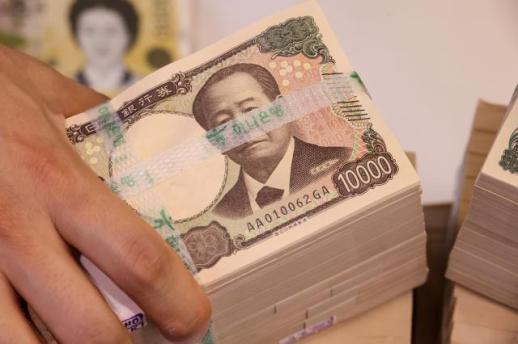 Japanese yen and bonds rally as BOJ tightening bets build SEOUL, September 08 (AJP) - The Japanese yen and long-dated government bonds rallied together Tuesday as investors priced faster tightening by the Bank of Japan (BOJ) alongside lower longer-term inflation risks. The yen strengthened as far as 152.89 per dollar, its strongest level since Feb. 17, before returning to around 153.3. Japan's 10-year government bond yield fell 4 basis points to 2.890 percent in morning trading. Ataru Okumura, senior rate strategist at SMBC Nikko Securities Inc., said underlying inflation was already around 2 percent and the BOJ was increasingly expected to accelerate the pace of rate hikes. The simultaneous gains in the currency and bonds reflected different expectations at the short and long ends of Japan's rate market. The 20-year Japanese government bond (JGB) yield fell 5 basis points to 3.695 percent, while the 30-year yield dropped 5.5 basis points to 3.965 percent. The policy-sensitive two-year yield declined a smaller 1.5 basis points to 1.835 percent, flattening the yield curve. Expectations of another BOJ rate increase strengthened after economic data suggested Japan could withstand tighter monetary policy. Japan's economy expanded at an annualized 1.4 percent rate in the second quarter, revised up from 1.1 percent. Real wages rose 2.4 percent from a year earlier in July, their strongest increase since May 2021. Markets were pricing about a 97 percent probability that the BOJ would raise its policy rate by 25 basis points next week. Expectations of further tightening were also building. A stronger yen meanwhile reduced longer-term inflation pressure by lowering the local-currency cost of imported energy, raw materials and other goods. JGB futures rose in early Tokyo trading as investors focused on the stronger currency's potential to ease inflationary pressure even as expectations for BOJ tightening remained intact. Japan's current yield levels have also changed the incentives that helped sustain years of yen weakness. The 10-year yield briefly exceeded 3 percent earlier this month, reaching its highest level in about three decades before retreating toward 2.9 percent this week. Higher Japanese yields reduced the appeal of yen-funded carry trades, giving investors less incentive to borrow cheaply in Japan and shift funds into higher-yielding overseas assets. Cross-border yen borrowing reached 360 trillion yen in March, leaving a large pool of positions potentially exposed to a rapid appreciation of the currency. Previous BOJ rate increases and foreign-exchange intervention had failed to provide lasting support for the yen. The latest move instead combined tightening expectations with potential capital repatriation and an unwind of carry trades. Japan and the United States have also maintained a more explicit focus on the currency since their joint intervention in July. Japanese Finance Minister Satsuki Katayama said Tuesday that Tokyo and Washington remained aligned on maintaining stable foreign-exchange markets and continued to communicate closely on currency policy. Positioning accelerated Tuesday's move as traders closed bearish yen bets after USD/JPY broke key support levels, helping push the exchange rate briefly into the 152 range. The shift also reached South Korean markets, although domestic factors remained important. The won traded at 1,338.95 per dollar in late-morning Seoul trading after touching 1,336.3. Exporter dollar selling, foreign equity purchases and yen strength added downward pressure on USD/KRW. Korean government bonds strengthened across the curve at the morning session close. The three-year yield fell 2.4 basis points to 3.876 percent, while the 10-year yield declined 2.3 basis points to 4.362 percent. The 20-year yield fell 2.1 basis points to 4.546 percent, while the 30-year yield dropped 2.4 basis points to 4.607 percent. Won strength was also supported by semiconductor exports and exporter dollar selling, while Korean bonds continued to reflect domestic monetary-policy and government-bond supply expectations. Tuesday's moves reflected more than a simple rise in expectations for higher Japanese policy rates. Investors increasingly distinguished between tighter BOJ policy at the short end and lower longer-term inflation risk, allowing the yen and long-dated JGBs to strengthen together while adding support to neighboring Korean markets. AJP Takeaways - Japanese yen strengthened to 152.89 per dollar Tuesday, its strongest level since Feb. 17, as BOJ tightening expectations and short-position unwinding accelerated. - Japanese government bonds rallied at the long end as yen appreciation reduced imported-inflation pressure despite expectations for another BOJ rate increase. - South Korean markets moved in the same broad direction, with the won strengthening into the 1,330 range and Korean government bond yields falling through the 30-year maturity. 2026-09-08 15:03:30
 -
 UPDATE: South Korea sees per-capita GNI top $40,000 this year *Updated with additional information from a Bank of Korea briefing SEOUL, September 8 (AJP) - South Korea's national income increased sharply in the second quarter amid surge in chip and other exports, pushing the gross savings rate to a historic high and placing the per-capita gross national income on track to top $40,000 this year. The Bank of Korea (BOK) said real gross national income (GNI) rose 15.6 percent from a year earlier and 3.1 percent from the previous quarter. Real personal gross disposable income increased 5.5 percent from a year earlier and 2.1 percent from the previous quarter. The annual increase in real GNI was the strongest since the fourth quarter of 1988, when it rose 15.7 percent. Real trading gains increased to 58.5 trillion won, up from 38.7 trillion won in the first quarter. Real net factor income from the rest of the world fell to 7.9 trillion won from 11.6 trillion won. Real GNI growth was still much higher than real GDP growth, which increased by 0.6 percent from the previous quarter. Real personal gross disposable income, a measure more closely tied to household purchasing power, rose 5.5 percent from a year earlier. Its 2.1 percent quarterly increase was also smaller than the 3.1 percent rise in real GNI. The income breakdown also showed sharply different rates of increase. Gross operating surplus jumped 18.5 percent from the previous quarter, the strongest increase since the series was first published in the second quarter of 2010. Compensation of employees rose 1.9 percent. The stretch in income bolstered the gross saving ratio 3.9 percentage points to 45.6 percent, the highest since the series began in 1970. Gross national disposable income increased 8.9 percent from the previous quarter while final consumption expenditure rose 1.6 percent, widening the gap between income and spending. The household net saving ratio increased to 9.7 percent from 8.8 percent, suggesting Koreans choosing to set aside extra income rather than spending it. Kim Hwa-yong, head of the BOK's National Accounts Department, said the higher saving rate could represent greater capacity for future consumption because income was rising faster than spending. The surge in national income has also sharply increased the likelihood that South Korea's per-capita GNI will exceed $40,000 for the first time this year. Kim said nominal GNI grew 21.8 percent in the first half and that the likelihood of reaching the milestone had increased significantly. The 21.8 percent increase was the strongest first-half growth in nominal GNI since 1991, when it rose about 21.9 percent. Nominal GNI increased 8.8 percent from the previous quarter and 26.4 percent from a year earlier to 846.9 trillion won ($629.2 billion). Nominal GDP rose 9.2 percent from the previous quarter to 834.9 trillion won and was 26.4 percent higher than a year earlier. The annual increase in nominal GDP was the strongest since the third quarter of 1979, when it rose 27.7 percent. The unusually large gap between nominal and real growth reflected a sharp rise in prices captured by the GDP deflator. The GDP deflator climbed 21.9 percent from a year earlier, while the domestic-demand deflator excluding inventories rose 3.6 percent. The export deflator surged 56.6 percent and the import deflator rose 21.0 percent. The average won-dollar exchange rate was 7.0 percent higher than a year earlier during the quarter. “The improvement in the terms of trade widened in the second quarter from the first quarter, and we expect the effect to continue,” Kim said. A stronger won could reduce gains generated through export prices, although lower import prices would offset part of the impact, he said. Semiconductor prices are also expected to improve in the third and fourth quarters on sustained demand, limiting the overall effect of exchange-rate movements. Real GDP expanded 0.6 percent from the previous quarter and 3.7 percent from a year earlier, unchanged from the advance estimate released in July. Manufacturing grew 1.4 percent, led by computer, electronic and optical products. Services expanded 1.0 percent on gains in wholesale and retail trade and accommodation and food services. Finance and insurance as well as information and communication also increased. Construction contracted 1.9 percent as civil engineering activity declined. On the expenditure side, private consumption rose 0.4 percent and government consumption increased 0.1 percent. Construction investment slipped 0.1 percent. Facilities investment edged up 0.2 percent, while intellectual property products investment increased 3.4 percent. Exports rose 1.3 percent, led by semiconductors and machinery and equipment, while imports gained 0.7 percent. Kim said improving corporate profitability could support further facilities investment. Non-residential building activity was increasing and the contraction in residential construction was narrowing, leaving room for construction activity to improve. The improvement was also spreading beyond semiconductors to other manufacturing industries, he said. Stronger consumption could eventually extend the gains to a broader range of industries, although the process would take time. The gross domestic investment ratio fell to 24.2 percent from 25.3 percent. Nominal gross capital formation, however, increased 4.3 percent during the quarter, meaning the decline in the ratio did not reflect an outright fall in investment. Kim said domestic investment continued to increase in absolute terms because gross national disposable income grew even faster. Higher corporate income also contributed to increased investment abroad. The BOK is scheduled to release full-year 2026 per-capita GNI with fourth-quarter national accounts data next March. AJP Takeaways - South Korea's real GNI rose 15.6 percent from a year earlier, the fastest increase since the fourth quarter of 1988, as improved terms of trade boosted real purchasing power. - South Korea's real personal gross disposable income increased 5.5 percent from a year earlier, below the 15.6 percent increase in real GNI. - South Korea's gross saving ratio reached 45.6 percent, the highest since the series began in 1970. The BOK said higher savings could provide room for future consumption. - South Korea's chances of reaching $40,000 in per-capita GNI this year increased significantly if the second half avoids a major shock and the won-dollar exchange rate remains stable. 2026-09-08 08:08:09
 -
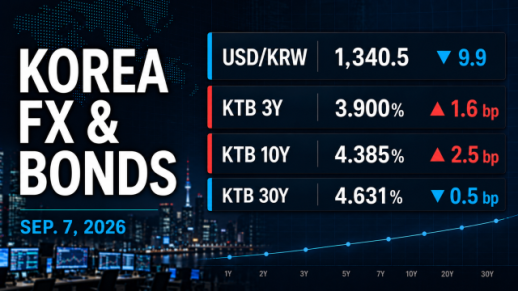 Won gains sharply, Korean bonds end broadly steady SEOUL, September 07 (AJP) - The South Korean won strengthened sharply Monday but gave back part of an early rally, while Korean government bond yields ended broadly steady despite higher global rate expectations. The won strengthened 9.9 won from the previous session to close daytime trading at 1,340.5 per dollar, compared with Friday's 1,350.4. The currency strengthened as far as 1,334.7 earlier in the session. It was its strongest level since Oct. 4, 2024, and the dollar-won rate later rebounded to around 1,346 following a report on National Pension Service (NPS) hedging. Reuters reported, citing a market source, that the NPS had suspended foreign-exchange hedging operations as the won approached a two-year high. NPS officials told AJP that, as a matter of policy, the fund does not disclose whether it executes foreign-exchange operations and therefore could not confirm the report. The pension fund's strategic hedging effectively adds dollar supply to the domestic foreign-exchange market, meaning a suspension could remove one source of downward pressure on the dollar-won rate. The won nevertheless held most of its advance through the close. U.S. nonfarm payrolls increased by 162,000 in August, well above market expectations, while the unemployment rate held at 4.1 percent. The data revived expectations for another Federal Reserve rate increase, with markets assigning about a 57 percent probability to a September hike in Asian trading Monday. Korean government bond yields ended with limited moves after investors absorbed the U.S. jobs report and higher overseas yields. The three-year Korean government bond yield rose 1.6 basis points to 3.900 percent, while the 10-year yield climbed 2.5 basis points to 4.385 percent, according to final quotations. The 30-year yield moved in the opposite direction, edging down 0.5 basis point to 4.631 percent. Friday's stronger-than-expected U.S. employment report had pushed Treasury yields higher and raised expectations for further Federal Reserve tightening. U.S. financial markets were closed Monday for the Labor Day holiday, leaving the Seoul market to reflect Friday's repricing without fresh Treasury trading. A 3.2 trillion won ($2.4 billion) auction of three-year Korean government bonds also provided a test of domestic demand at the start of the week. Pressure from Japan remained in focus. The benchmark 10-year Japanese government bond yield reached 3 percent last week for the first time since 1996, with markets nearly fully pricing a 25-basis-point Bank of Japan rate increase at its Sept. 17-18 meeting. Investors will next look to U.S. inflation data later this week for further clues on whether stronger employment and persistent price pressures will lead the Federal Reserve to raise rates this month. AJP Takeaways - The South Korean won strengthened 9.9 won to 1,340.5 per dollar after briefly reaching its strongest level in nearly two years. - National Pension Service officials told AJP that the fund could not confirm a report that it had suspended foreign-exchange hedging operations. - Korean government bond yields ended broadly steady, with three- and 10-year yields rising modestly while the 30-year yield edged lower. 2026-09-07 17:28:47
 -
 Korea's rate hikes lift delinquency risks for indebted homebuyers: BOK SEOUL, September 07 (AJP) -South Korea’s base rate has yanked up to 3.00 percent from 2.50 percent through two consecutive hikes after staying unchanged for more than a year and may rise further given the central bank’s inflation-focused bias, raising delinquency risks for highly leveraged mortgage households, a Bank of Korea (BOK) study showed Monday. A 1 percentage point increase in rates would raise the probability of delinquency among heavily indebted homebuying households by 0.81 percentage point within 12 months, according to an empirical study published in the latest BOK Issue Note. The study focused on households that bought homes between 2023 and 2025 and ranked in the top 10 percent for increases in principal and interest payments relative to income after the purchase, making them most vulnerable to higher interest rates. The BOK said delinquency risks among borrowing households overall would remain broadly stable under current rates, but some heavily indebted groups could be vulnerable to larger rate shocks. Financial stress could also spread between members of the same household. Among heavily indebted homebuying households, the probability that another member would become delinquent within 12 months after one member fell behind on payments was 8.8 percent. That was 1.9 times the 4.6 percent rate among households that already owned homes. The findings came from a new database covering about 2.06 million households and tracking their debt, assets, income and spending each month. The BOK built the database because traditional household debt analysis largely focuses on individual borrowers, even though families often make borrowing and saving decisions together. Looking at spouses and other family members together could therefore provide a clearer picture of a household's ability to repay its debts, the central bank said. Heavy repayment burdens were also found to squeeze consumption. The BOK estimated that household spending began to decline when the debt service ratio (DSR), which measures annual principal and interest payments relative to income, exceeded 46 percent. About 11.1 percent of indebted households were above that threshold in 2025. Among households in the lowest income quintile, the share rose to 14.5 percent in 2025 from 11.4 percent in 2021, pointing to increasing pressure on lower-income borrowers, according to the BOK. The study was released less than two weeks after the BOK raised its Base Rate by 25 basis points to 3.00 percent from 2.75 percent. The central bank said it was seeking to contain persistent inflation while remaining alert to financial stability risks. At its Aug. 27 policy meeting, the central bank said home prices in the Seoul metropolitan area continued to rise rapidly while household lending increased substantially. Bank household loans rose by 5.4 trillion won (about $4.0 billion) in July to 1,194.8 trillion won, according to BOK data released last month. Mortgage loans accounted for 3.4 trillion won of the increase as the effects of earlier growth in housing transactions around the capital region continued to feed into lending. The monthly increase in overall bank household lending had slowed from June but was still twice as large as a year earlier. The study also suggested that the headline size of household debt alone may not capture where financial vulnerabilities are concentrated. The BOK said monitoring should pay particular attention to heavily indebted homebuyers, the transmission of credit risk between household members and high repayment burdens among lower-income families. AJP Takeaways - Bank of Korea analysis found that families taking on large debts to buy homes were especially vulnerable to large interest rate increases. - South Korean households with heavy home loans showed a much higher risk of financial trouble spreading from one family member to another. - Bank of Korea findings were released after a Base Rate increase and during a period of rising household and mortgage lending. 2026-09-07 15:52:14
 -
 USD/KRW spikes as NPS reportedly halts FX hedging SEOUL, September 07 (AJP) - The South Korean won abruptly reversed direction Monday after testing a near two-year high against the U.S. dollar, following a report that the National Pension Service (NPS) had suspended foreign-exchange hedging activity that helped support the currency during its sharp slide earlier this year. The dollar-won rate jumped to around 1,346 won by 12:30 p.m. after falling into the 1,336 range earlier in the session, reversing by roughly 10 won from its intraday low. Reuters reported shortly before noon, citing a market source, that the NPS had suspended foreign-exchange hedging operations. NPS officials, however, told AJP that the fund does not disclose details of its foreign-exchange operations as a matter of policy and therefore declined to confirm the Reuters report. The report abruptly shifted sentiment in a market where expectations of continued dollar selling by the pension fund had contributed to the won's rapid appreciation. The won had strengthened sharply earlier Monday despite stronger-than-expected U.S. employment data that increased expectations of another Federal Reserve interest rate hike. The dollar-won rate opened at 1,347.8 won and fell to 1,338.5 won around 9:30 a.m. before extending its decline into the 1,330 range for the first time in nearly 23 months. Exporter dollar selling and large foreign-currency inflows linked to the semiconductor sector had driven the won's recent rally even as external conditions turned less favorable. Currency hedging by the NPS typically involves selling dollars forward to reduce foreign-exchange exposure on its overseas assets. Related transactions by counterparties can increase dollar supply in the domestic foreign-exchange market. Suspending the activity could therefore remove an important source of expected dollar selling and put the brakes on further won appreciation. The NPS stepped up foreign-exchange hedging in June when the won weakened beyond 1,560 per dollar to its lowest level in 17 years. Dollar selling linked to the pension fund helped support the currency's subsequent recovery, with the dollar-won rate falling 22.9 won to close at 1,512.1 on June 9. The National Pension Fund Management Committee in April set the strategic hedging ratio for overseas investments at a baseline of 15 percent while allowing the fund to adjust its implementation flexibly depending on market conditions. The framework gives the NPS room to reduce hedging when the won strengthens rapidly as well as increase it during periods of excessive currency weakness. The size of the NPS' outstanding hedging positions, the timing of the suspension and whether expiring positions would be rolled over were not immediately disclosed. AJP Takeaways Reuters reported that the NPS had suspended foreign exchange hedging, prompting the won to reverse much of its earlier gain. National Pension Service hedging can add dollar supply to the domestic foreign exchange market through forward transactions and related counterparty flows. National Pension Fund Management Committee policy still allowed a 15 percent baseline hedging ratio to be implemented flexibly depending on market conditions. 2026-09-07 13:24:52
 -
 Korean Inc. loans for working capital rise while for investment slows SEOUL, September 07 (AJP) - South Korean corporate loans rose by more than 30 trillion won in the second quarter as Korea Inc. leaned more heavily on bank credit to fund day-to-day operations while borrowing for investment lost momentum. Outstanding loans to industries at deposit-taking institutions reached 2,065.3 trillion won ($1.55 trillion) at the end of June, up 30.6 trillion won from three months earlier, the Bank of Korea said Monday. The increase was slightly smaller than the 30.8 trillion won gain in the first quarter. Working-capital loans, which finance day-to-day business operations, increased by 23.8 trillion won during the quarter, accelerating from a 21.4 trillion won rise in the previous three months. Facility loans to fund investment in plants and equipment rose 6.9 trillion won, slowing from a gain of 9.4 trillion won in the first quarter. Working-capital lending grew 6.1 percent from a year earlier, compared with 3.1 percent for facility financing. The BOK said demand for working capital included financing used to repay corporate bonds. The divergence was particularly visible in manufacturing, where working-capital loans increased by 7.0 trillion won, up from 6.6 trillion won in the first quarter. Manufacturing facility loans rose just 1.4 trillion won, sharply slowing from a 4.4 trillion won increase, as chemical and medical products as well as electronics-related industries recorded smaller increases. Overall manufacturing loans increased by 8.4 trillion won, down from 11.0 trillion won in the first quarter. Loans to manufacturers of electronics and related computer, video, audio and communications equipment increased by 1.0 trillion won. That compared with 1.8 trillion won three months earlier. Automobile and trailer manufacturers, however, saw borrowing rise by 1.3 trillion won from 800 billion won. Service-sector borrowing moved in the opposite direction, increasing by 19.9 trillion won after a 19.1 trillion won rise in the first quarter. Real estate and financial companies accounted for much of the increase, with lending to each sector rising by 6.2 trillion won. Real estate borrowing accelerated from a 2.5 trillion won increase in the first quarter as guarantees for real estate project-financing loans expanded, according to the BOK. Loans to financial and insurance businesses also increased by 6.2 trillion won, up from 4.8 trillion won, as higher derivatives-market margin requirements boosted funding demand among securities firms. The composition of lending also differed sharply by institution and company size. Loans extended by commercial banks increased by 29.3 trillion won, accelerating from 25.0 trillion won, while lending by non-bank deposit-taking institutions rose only 1.3 trillion won after a 5.8 trillion won increase. Large-company bank loans increased by 16.5 trillion won, compared with 12.7 trillion won in the first quarter. Loans to small and medium-sized companies rose by 11.4 trillion won, while lending to individual business owners increased by 1.1 trillion won. The figures showed that corporate borrowing remained strong in the second quarter, but the additional credit was concentrated more heavily in short-term operating needs and service industries than in new manufacturing facilities. AJP Takeaways Bank of Korea data showed industry loans at deposit-taking institutions rose by 30.6 trillion won in the second quarter to 2,065.3 trillion won. South Korea's manufacturers increased working-capital borrowing while facility-loan growth slowed sharply, particularly in chemicals and electronics-related industries. Korean service industries led the increase in borrowing, with real estate and financial businesses each adding 6.2 trillion won in loans. 2026-09-07 13:03:02