

Journalist

Kim Yeon-jae김연재
duswogmlwo77@ajupress.com
ReporterBank of Korea & Market, Macroeconomics
Kim Yeon-jae is a journalist at AJU Press (AJP's English platform),
covering macroeconomics, international finance, and geopolitics.
He closely tracks central bank monetary policies, global energy supply chains,
and the Korean defense industry. "Peering into the risks behind the euphoria."
covering macroeconomics, international finance, and geopolitics.
He closely tracks central bank monetary policies, global energy supply chains,
and the Korean defense industry. "Peering into the risks behind the euphoria."
Latest by Kim Yeon-jae
-
 Fund inflows defy KOSPI rout, firms turn to banks SEOUL, August 14 (AJP) - South Korean equity funds attracted 11.4 trillion won ($8.0 billion) in fresh money in July despite the steepest stock-market rout since 2008, while corporate bank loans increased by 7.7 trillion won as the bond market remained in net repayment. The benchmark KOSPI plunged 22.2 percent to 6,595 at the end of July from 8,476 a month earlier, marking its worst monthly performance since October 2008, the Bank of Korea said Friday in its monthly financial-market report. The secondary KOSDAQ tumbled 21.4 percent to 720 from 916 as concerns about the artificial-intelligence industry, uncertainty in the Middle East and sustained foreign selling drove a broad market correction. The rout wiped 56.2 trillion won from the net asset value of equity funds, helping push total fund balances at asset managers down by 42.8 trillion won. The decline did not reflect a comparable wave of investor withdrawals, as equity funds received 11.4 trillion won in fresh inflows after valuation changes were excluded, while derivative funds attracted another 8.4 trillion won. Direct stock investment cooled more sharply, with net purchases by individual investors collapsing to 3.4 trillion won from 52.0 trillion won in June and securities investor deposits falling by 17.5 trillion won. The corporate funding market moved in a different direction as bank loans to companies increased by 7.7 trillion won in July, up from 5.1 trillion won in June and more than double the 3.4 trillion won increase recorded a year earlier. Corporate bonds remained in net repayment by 1.9 trillion won after a 2.9 trillion won repayment in June, as higher market rates and the seasonal issuance lull continued to weigh on public bond financing. The cumulative increase in corporate bank loans reached 57.2 trillion won during the first seven months of 2026, up 82.7 percent from 31.3 trillion won a year earlier. Corporate bonds recorded 16.3 trillion won in net repayments over the same period, reversing from net issuance of 5.5 trillion won during the first seven months of 2025. The BOK said loans to large companies increased by 3.8 trillion won as firms continued to borrow working capital to repay bonds and redrew loans temporarily repaid at the end of the second quarter. Loans to small and midsized enterprises rose by 3.9 trillion won on value-added tax payments and expanded lending campaigns by some banks. Market borrowing costs also climbed, with the yield on three-year AA-minus corporate bonds rising to 4.46 percent at the end of July from 4.38 percent a month earlier, while yields on A-minus and BBB-plus debt increased to 5.56 percent and 7.83 percent, respectively. Commercial paper and short-term notes nevertheless swung to net issuance of 4.0 trillion won as quarter-end repayments were reissued, while equity issuance increased to 1.5 trillion won on a large rights offering by a major company. Bank household loans rose by 5.4 trillion won in July, slowing from a 7.6 trillion won increase in June but doubling the 2.7 trillion won gain recorded a year earlier. The cumulative increase in household loans stood at 21.0 trillion won during the first seven months, below 23.2 trillion won a year earlier, but the composition shifted as mortgage growth slowed to 13.3 trillion won from 23.9 trillion won while other household loans swung to a 7.8 trillion won increase from a 600 billion won decline. Bank deposits fell by 30.0 trillion won as quarter-end corporate funds were withdrawn and companies made value-added tax payments, while time deposits increased by 42.3 trillion won and money-market funds gained 27.2 trillion won. July’s data point to a rerouting rather than a uniform withdrawal of money, with fresh cash continuing to enter equity funds while companies leaned more heavily on banks as bond financing contracted. ___________________________________________________________________________________ AJP Takeaways • South Korean equity funds attracted 11.4 trillion won in fresh money in July 2026 even as the KOSPI plunged 22.2 percent and falling valuations erased 56.2 trillion won from equity-fund assets. • Corporate bank loans increased by 7.7 trillion won, more than double the rise a year earlier, while corporate bonds remained in net repayment amid elevated market borrowing costs. • Household-loan growth slowed from June and remained lower on a cumulative annual basis, but borrowing shifted away from mortgages toward other household loans. 2026-08-14 12:42:33
 -
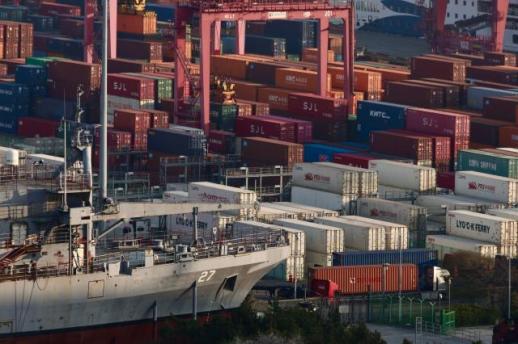 Korea's July import prices fall as stronger won masks cost rebound SEOUL, August 14 (AJP) - South Korea’s import prices eased for the second straight month in July, backed by a stronger won and lower oil prices and further flagging a disinflation path, Bank of Korea data showed Friday. The won-denominated import price index stood at 160.09, down 1.0 percent from June after a revised 4.2 percent decline the previous month. The year-on-year rate nevertheless remained in double digits at 18.7 percent. Measured in contract currencies, however, import prices rose 0.9 percent from June and 10.4 percent from a year earlier. The divergence suggests overseas procurement costs were rising again, but the stronger won prevented the increase from appearing in the headline index most relevant to domestic prices. The average won-dollar exchange rate fell to 1,497.43 in July from 1,527.30 in June, meaning the won strengthened 2.0 percent on a monthly-average basis, though it remained 8.9 percent weaker than a year earlier. The exchange rate fell as low as 1,418.0 won during daytime trading on the morning of July 31, marking the won’s strongest level since October 2025. The won’s advance also coincided with market expectations that part of the $26.5 billion raised through SK hynix’s Nasdaq American depositary receipt offering, completed on July 14, would eventually be converted into won for domestic investment, adding to anticipated dollar supply. The won stood at 1,419.4 per dollar at the 3:30 p.m. close in Seoul on Aug. 13, down nearly 80 won from its July average despite weakening 3.7 won from the previous session. Lower oil prices reinforced the currency effect, with Dubai crude averaging $76.75 a barrel in July, down 3.4 percent from June but still 8.3 percent higher than a year earlier. Raw-material import prices rose 0.8 percent as a 24.8 percent jump in liquefied natural gas outweighed a 4.8 percent decline in crude oil. Intermediate-goods prices fell 2.2 percent, led by coal and petroleum products, primary metals and chemicals, while capital-goods prices declined 1.8 percent. Consumer goods edged down 0.1 percent, but the details were mixed. Durable and semi-durable goods rose 1.3 percent while nondurables fell 1.4 percent, with mobile phones up 10.2 percent and beef down 6.0 percent. Food-related pressures were also uneven, with agricultural and marine products rising 2.2 percent and 3.8 percent, respectively, while livestock products fell 6.3 percent and processed food dropped 3.2 percent. The softer won-based import reading could reduce pipeline pressure on consumer prices, which fell 0.2 percent from June and rose 2.8 percent from a year earlier in July, easing from 3.2 percent annual inflation in June. The signal is not uniformly disinflationary, however, because import prices remained far above year-earlier levels and core consumer inflation excluding food and energy edged up to 2.6 percent from 2.5 percent. Export prices moved in the opposite direction, rising 1.0 percent from June and 49.1 percent from a year earlier, the fastest annual increase since March 1998. Contract-currency export prices rose 3.0 percent on the month and 37.8 percent on the year, showing that the advance was not merely an exchange-rate effect. Prices for computer, electronic and optical products climbed 4.8 percent from June and 122.3 percent from a year earlier, with DRAM prices up 6.6 percent on the month and 270.3 percent on the year. Export volumes increased 20.0 percent from a year earlier and export value jumped 64.2 percent, while import volume and value rose 14.7 percent and 25.8 percent, respectively. The net barter terms of trade improved 24.7 percent from a year earlier and the income terms of trade rose 49.7 percent as semiconductor prices and shipment volumes continued to outpace import costs. July’s decline therefore looks less like broad imported disinflation than a currency cushion over still-firm external costs. For households, the durability of that relief will depend on whether the won remains firm and energy prices stay contained after the influence of temporary corporate dollar flows fades. __________________________________________________________________________________ AJP Takeaways • South Korea’s won-based import prices fell 1.0 percent in July for a second consecutive monthly decline, even as contract-currency prices rose 0.9 percent, showing that the stronger won masked an underlying rebound in overseas costs. • The won strengthened 2.0 percent on a monthly-average basis, touched 1,418.0 per dollar on July 31 and stood at 1,419.4 at the Aug. 13 daytime close, with anticipated conversion of part of SK hynix’s ADR proceeds adding to dollar supply. • Lower import costs could ease future consumer inflation, but import prices remained 18.7 percent higher than a year earlier as semiconductor-driven export prices surged 49.1 percent, their fastest increase since March 1998. 2026-08-14 09:39:49
 -
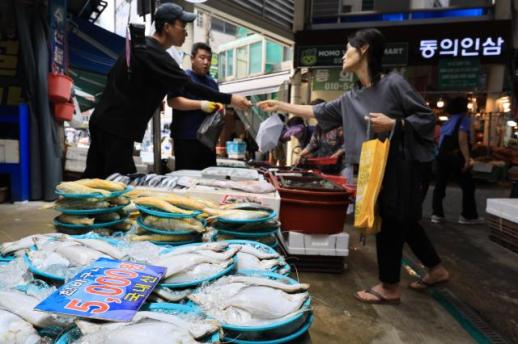 Chip boom masks Korea's demand-led disinflation risk SEOUL, August 13 (AJP) - Before U.S. inflation eased in July, South Korea's data were already flashing signs of a disinflationary turn, as sluggish consumption weakened the transmission of strong chip-led growth into broader price pressure and defied expectations that inflation would accelerate further in the second half. The consumer price index stood at 119.77 in July, up 2.8 percent from a year earlier but easing from 3.2 percent in June, bringing inflation below 3 percent for the first time in three months. The living-cost index slowed to 2.5 percent from 3.4 percent, fresh-food prices fell 2.3 percent and petroleum-product inflation eased to 15.5 percent from 24.7 percent. The government estimated that its petroleum-price ceiling lowered July inflation by about 0.3 percentage point, suggesting that part of the headline moderation reflected easing energy pressure and administrative intervention. The divide between production and consumption was also visible in the second quarter, when all-industry output rose 0.9 percent from the previous quarter while retail sales fell 1.7 percent. Core inflation excluding food and energy, however, edged up to 2.6 percent from 2.5 percent, its highest reading since December 2023. That makes it too early to declare a broad disinflationary shift. Disinflation means prices are rising more slowly rather than falling outright. For Korea, the concern is that weaker household demand could increasingly become the force driving that slowdown. The structural disconnect was already flagged in a Bank of Korea report on the inflationary effects of sectoral growth disparities released on Feb. 27. In comments accompanying the report, Jeong Won-seok, a deputy director in the BOK's Research Department, said income gains among higher-income households were being absorbed more by savings and asset accumulation, weakening the channel from income to consumption and ultimately inflation. The BOK estimated that the marginal propensity to consume among households in the top two income quintiles fell to 0.07 in 2022 and 2023 from 0.11 in 2020 and 2021. That compared with 0.17 for middle-income households and 0.19 for lower-income households. The same study estimated that even if overall economic growth reaches around 2 percent this year, growth excluding information-technology manufacturing could remain in the low-to-mid 1 percent range. That gets to the heart of Korea's inflation puzzle. When income and growth are concentrated among richer households and a handful of chipmakers, strong headline growth generates less consumption — and therefore less inflation pressure — across the broader economy. "Employment is not increasing, while bonuses are often put into retirement accounts rather than spent immediately, leaving little wage-driven inflationary pressure," Park Jeong-woo, an economist at Nomura Securities, said at a media briefing in Seoul on June 12. Park forecast that supply-driven inflation would peak around August or September before easing and that the investment spillover from the chip boom would weaken after the third quarter. That would leave domestic demand more exposed if semiconductors make a smaller contribution to growth, potentially stripping away the buffer that has so far masked weakness across much of the rest of the economy. A similar moderation emerged in the United States, where annual consumer inflation eased to 3.4 percent in July from 3.5 percent and core inflation slowed to 2.5 percent from 2.6 percent. U.S. consumer prices rose just 0.1 percent from June and core prices gained 0.2 percent, as falling gasoline prices offset part of the remaining energy pressure. Yelena Shulyatyeva, senior U.S. economist at The Conference Board, said in an Aug. 7 labor-market assessment that average hourly earnings had moved closer to their pre-pandemic pace, underscoring the absence of meaningful wage-inflation pressure. The U.S. and Korean economies are not identical, but both show signs that supply shocks are producing fewer second-round effects through wages and household spending. There are reasons, however, to be cautious about reading too much into Korea's July numbers. Kim Sung-soo, a fixed-income analyst at Hanwha Investment & Securities, said in July that inflation was likely to remain elevated for another six months to a year. The BOK also expects headline inflation to rise in August because of a base effect from last year's mobile-service discounts and sees a risk that earlier cost shocks will continue to pass through into core consumer prices. The decisive test will therefore be whether core and service inflation weaken alongside consumption and employment once temporary energy and base effects fade. If they do, July's moderation could look less like a one-off reprieve and more like an early warning of demand-led disinflation. ___________________________________________________________________________________ AJP Takeaways • Korea's headline inflation slowed to 2.8 percent in July and its living-cost index eased to 2.5 percent, but core inflation rose to 2.6 percent. • BOK research and Nomura's analysis suggest Korea's chip-led growth is generating limited spillovers into household consumption, wages and broader consumer-price pressure. • U.S. inflation also moderated in July, but energy risks and sticky Korean core inflation mean demand-led disinflation has not yet been firmly established. 2026-08-13 18:00:53
 -
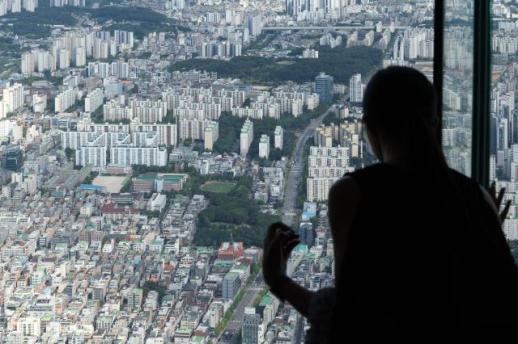 Korea's fiscal deficit hits 3-year midyear low SEOUL, August 13 (AJP) - South Korea’s managed fiscal deficit narrowed to 84.4 trillion won ($59.6 billion) in the first half, its smallest midyear shortfall in three years, as the semiconductor upcycle and buoyant asset markets helped revive tax receipts and lift government revenue faster than spending. The Ministry of Planning and Budget said Thursday that total revenue rose 19.1 percent from a year earlier to 381.9 trillion won in the January-June period, while expenditure increased 9.4 percent to 425.8 trillion won. The improvement, however, did not reverse Korea’s broader debt buildup. Central government debt remained 70.3 trillion won higher than at the end of 2025 despite declining in June. Revenue and expenditure reached 54.5 percent and 56.5 percent, respectively, of the government’s revised annual plans. Revenue increased 61.3 trillion won from a year earlier, outpacing the 36.6 trillion-won rise in spending by 24.7 trillion won. That narrowed the consolidated fiscal deficit by the same amount to 43.9 trillion won from 68.6 trillion won a year earlier. The managed fiscal balance — which strips out surpluses generated by social security funds such as the National Pension — improved by 9.9 trillion won to a deficit of 84.4 trillion won. The smaller improvement in the managed balance reflected a sharp increase in social security fund surpluses. Those funds posted a combined surplus of 40.5 trillion won, up 14.8 trillion won from a year earlier, widening the difference between the consolidated and managed measures. The first-half consolidated deficit was the smallest since 2019, while the managed deficit was the smallest since 2023. The tax rebound provided the biggest boost to government coffers. National tax revenue climbed 17.4 percent from a year earlier to 223.0 trillion won, adding 33.0 trillion won to revenue in the first half. Tax collections reached 53.7 percent of the government’s revised full-year target. Income tax receipts rose by 10.4 trillion won as higher performance bonuses and payroll income boosted wage taxes, while increased property transactions lifted capital-gains tax revenue. A booming stock market provided another major windfall. Securities transaction tax revenue jumped by 5.2 trillion won to 6.8 trillion won, helped by heavier stock-market turnover and the restoration of transaction tax rates. Value-added tax revenue increased by 4.9 trillion won on higher imports and lower refunds, while corporate tax receipts rose by 4.3 trillion won as company earnings improved. Non-tax revenue increased by 9.0 trillion won to 28.4 trillion won, while income collected through government funds rose by 19.3 trillion won to 130.6 trillion won. Spending also accelerated, though more slowly than revenue. Transfer payments accounted for 33.5 trillion won of the 36.6 trillion-won increase in total expenditure. The ministry attributed part of the rise to an additional 5.1 trillion won in local education grants and earlier payments of government support for the National Health Insurance program. Higher tax revenue automatically raises some education transfers under Korea’s statutory funding formula. The government also spent 4.7 trillion won on relief measures related to elevated oil prices. Spending on programs covered by the government’s accelerated-execution drive increased by 10.1 trillion won to 177.6 trillion won, although the execution rate slipped to 66.5 percent from 69.5 percent a year earlier. Despite the improving fiscal balance, debt remained well above year-end levels. Central government debt stood at 1,338.5 trillion won at the end of June, down 6.8 trillion won from May but up 70.3 trillion won from 1,268.1 trillion won at the end of last year. The ministry said debt typically declines around quarter-end when government bond redemptions exceed new issuance. The outstanding balance of Korean government bonds fell by 4.3 trillion won during June to 1,229.7 trillion won, while housing bonds and foreign-exchange stabilization bonds also declined. Government bond issuance totaled 17.0 trillion won in July, bringing cumulative issuance for the first seven months to 141.1 trillion won, or 63.1 percent of the annual ceiling excluding retail government bonds. The average funding cost rose to 4.07 percent in July from 4.02 percent in June, while foreign holdings of Korean government bonds declined by 500 billion won. AJP Takeaways South Korea’s managed fiscal deficit narrowed to 84.4 trillion won in the first half, its smallest midyear shortfall in three years, as revenue growth outpaced spending. National tax revenue jumped by 33.0 trillion won, helped by stronger income, corporate earnings and booming stock-market turnover. Central government debt eased in June but remained 70.3 trillion won above its end-2025 level, showing that stronger tax receipts have yet to reverse the broader debt buildup. 2026-08-13 11:41:44
 -
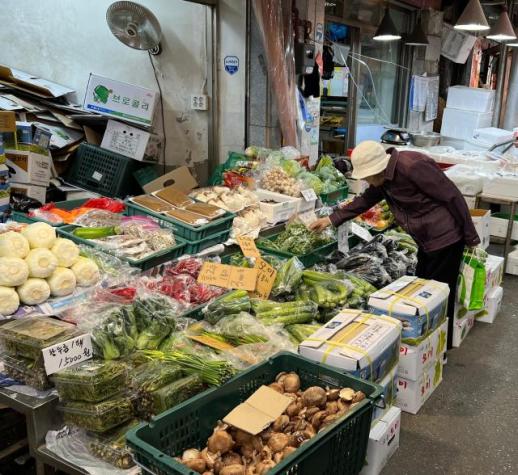 Seoul moves to curb fresh food prices as heat bites SEOUL, August 13 (AJP) - South Korea will spend 30 billion won ($21.2 million) on seafood discounts and expand emergency fish releases and farm aid as prolonged heat, drought and unusually warm seas threaten to push up food prices. The measures were announced Thursday at a joint economic and cost-of-living meeting chaired by Deputy Prime Minister and Minister of Finance and Economy Koo Yun Cheol. The government issued a package aimed at stabilizing agricultural, livestock and fisheries prices and supplies as weather-related damage spreads. Agricultural, livestock and fisheries prices rose 0.9 percent in July from a year earlier, slowing sharply from 3.2 percent in June. But the headline figure masked a divide: agricultural prices fell 2.2 percent while livestock and fisheries prices remained 4.4 percent and 3.9 percent higher, respectively, according to the Ministry of Data and Statistics. Early heat stress was already showing up in short-cycle vegetables. Lettuce prices jumped 17.3 percent from June and spinach surged 42.8 percent, even as vegetable prices overall fell 0.9 percent month on month. The ministry said leafy vegetables with short growing cycles were particularly vulnerable to extreme heat. The pressure is more acute at sea. As of Aug. 10, high-temperature alerts covering waters of at least 28 degrees Celsius were in effect in 31 of the country's 35 monitored sea areas, while 1.83 million farmed fish had died. July rainfall across Busan, Ulsan, South Gyeongsang, Gwangju and South Jeolla fell 64.7 percent from a year earlier, helping drive a rapid rise in temperatures along the eastern and southern coasts. The Ministry of Oceans and Fisheries said the immediate impact on seafood supply and prices remained limited because market-sized fish accounted for only about 10 percent of the losses. Olive flounder retailed at 37,950 won per kilogram in August, down 0.02 percent from July, while rockfish fell 0.3 percent to 37,430 won. The government warned, however, that price volatility could increase if high-temperature damage spreads. The government will use 30 billion won to support discounts of up to 50 percent on olive flounder, rockfish and abalone through Aug. 23 and encourage farmers to bring vulnerable fish to market earlier. Early shipments reached 23,149 metric tons by the fifth week of July, up 12.3 percent from a year earlier. Authorities also plan to release 23.8 million fish from farms in affected waters to reduce stocking density, roughly double last year's 11.55 million, and could expand the program if damage worsens. Support for affected fish farmers will also increase. Farmers will be eligible to receive half of estimated insurance payouts within 30 days after the cause of losses is confirmed, while this year's fisheries disaster-relief budget has been raised 153 percent to 33.2 billion won. Initial recovery payments are due before Chuseok, while compensation rates will be increased for 18 items including olive flounder and rockfish and seven additional aquaculture items will become eligible for assistance. Heat damage has also spread to crops in South Gyeongsang and South Jeolla provinces. Sweet persimmons have sustained damage across 1,125.7 hectares and rice across 572.5 hectares, mostly from sunscald and impaired growth. Major summer vegetables have held up better after rainfall and cooler temperatures in Gangwon Province's main highland growing areas. Fruit production is also projected to remain above last year's levels. The Korea Rural Economic Institute forecasts apple production at 487,000 tons, pears at 200,000 tons and sweet persimmons at 96,000 tons. To protect crop supply, the government will provide 2.2 billion won of discounted pesticides and nutrients, along with heat-reflective coatings, water trucks and portable water tanks where needed. Livestock farms have suffered heavier losses in absolute numbers. Heat had killed 54,299 pigs and 944,234 poultry as of Aug. 7, although the combined toll was 61 percent lower than a year earlier and represented only a small share of national stocks. The government said the immediate impact on meat and egg supplies remained limited but could increase if extreme heat persists. Authorities have mobilized 550 disinfection vehicles to spray and cool barns and expanded intensive monitoring from 576 farms to 18,978 vulnerable livestock operations. Cooling equipment and other heat-stress support are also being distributed. The government has also stockpiled 15,000 tons of cabbage and 6,000 tons of radish for release if weather disrupts shipments. Discounts of up to 40 percent on vegetables will continue at major supermarkets and traditional markets through the Chuseok peak-demand period. The domestic supply squeeze adds another layer to grocery inflation already being driven by imported costs. Food manufacturers are raising prices as higher oil prices, a weak won and rising costs for imported ingredients, packaging and freight squeeze production costs. Pulmuone raised consumer prices on 30 products across seven categories by an average 6.7 percent from Thursday, including a two-serving package of Pyongyang naengmyeon, which increased to 7,480 won from 6,980 won. Samlip plans to raise prices on about 50 bread products by around 9 percent on average, with the convenience-store price of its Jeongtong Boreumdal cake rising 11.1 percent to 2,000 won from Sept. 1. The agriculture ministry is seeking to offset some of that pressure through an August promotion with 10 major food companies covering 3,838 processed-food products at supermarkets, convenience stores and online retailers, with discounts of up to 57 percent. AJP Takeaways Korea is spending 30 billion won on seafood discounts as high sea temperatures have killed 1.83 million farmed fish, although officials say the immediate supply impact remains limited. Weather damage is spreading across food production, with nearly 1 million pigs and poultry dead and heat damage reported in rice and sweet-persimmon fields. Authorities are expanding emergency intervention, including releases of 23.8 million farmed fish, higher disaster assistance, crop aid and cooling support for almost 19,000 vulnerable livestock farms. 2026-08-13 10:45:43
 -
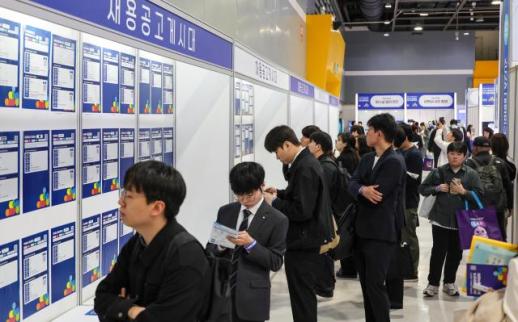 Korea's job market shuts out 20s as first rung of hiring narrows SEOUL, August 12 (AJP) - For many South Korean parents, the cost of supporting children no longer ends at university graduation, as college-educated young adults spend longer trying to secure steady jobs. "People my age rarely ask what their children do these days. Some of my friends have kids living with them without regular jobs five years after graduation," said Yun Mi-hyeong, a 56-year-old mother of two living in Seoul's Gangnam district. Employment among South Koreans in their 20s fell by 204,000 in July, while a 65,000 gain among people in their 30s trailed population growth of 83,000. The split does not prove that entry-level hiring is shrinking. But 45 months of falling youth employment, coupled with companies' growing preference for experienced recruits, makes the question increasingly difficult to ignore. The total number of employed people rose by 108,000 from a year earlier to 29.136 million, accelerating from a gain of 63,000 in June, the Ministry of Data and Statistics said Wednesday. Employment among people aged 15 to 29 fell by 191,000 to 3.441 million for a 45th consecutive monthly decline. Their employment-to-population ratio dropped 1.6 percentage points to 44.2 percent. Employment fell by 124,000 among 20- to 24-year-olds and by 80,000 among those aged 25 to 29. The youth population declined by 144,000, less than the drop in employment. Employment among people in their 30s rose to 5.631 million, but their employment-to-population ratio remained unchanged at 81.0 percent as population growth outpaced job gains. Their labor force grew by 108,000, while the number of unemployed rose by 42,000. The jobless rate climbed to 3.2 percent from 2.5 percent. The divide extends beyond July. Between July 2024 and July 2026, employment fell by 339,000 among people in their 20s and rose by 158,000 among those in their 30s. The monthly survey counts people who are working, not companies that are hiring. It does not track entry-level vacancies, actual hires or whether recruits entered with previous work experience. Bin Hyun-jun, the ministry's director general for social statistics, said public recruitment, a civil-service examination and new listings on Work24 drew more young people into job searches. That may explain part of the rise in youth unemployment, but not the longer decline in employment. A 2026 Korea Enterprises Federation survey found that 54.8 percent of companies planned to recruit only on a rolling basis, while 67.6 percent ranked relevant experience as their top hiring criterion. A February 2025 Bank of Korea study estimated the monthly probability of securing a permanent position at 1.4 percent for inexperienced workers and 2.7 percent for experienced workers. Its model attributed seven percentage points of the 17-point employment-rate gap between workers in their 20s and 30s to increased hiring of experienced workers. A January 2026 BOK study again cited preferences for experienced hires and rolling recruitment as factors delaying young people's entry into the labor market. For job seekers, that shift is visible before they even send an application. "In game development, large-scale recruitment has definitely fallen sharply from before," said Kim Sung-yoon, 29, who works in the gaming industry. "Most hiring is now project-based and rolling, and companies often look for people with at least one to three years of experience rather than fresh graduates." That has changed how young applicants try to enter the industry, he said. "People who used to aim straight for permanent jobs at large companies are now trying to get a foot in the industry through midsized companies, contract jobs, internships or even by moving into QA or operations just to build experience," Kim said. He said the problem is not necessarily companies advertising jobs for fresh graduates and then demanding experience. "They simply ask for experienced workers from the beginning." The corporate surveys, central bank research and experiences of applicants point to a plausible explanation for Korea's widening age divide: companies may still be adding workers while narrowing the openings accessible to people without experience. Proving that requires recruitment data broken down by age, experience, contract type and job level — information the monthly employment survey does not provide. Weakness was also concentrated in industries traditionally associated with stable employment. Manufacturing shed 68,000 jobs for a 25th consecutive month and construction lost 57,000 for a 27th. Employment among people aged 60 and above rose by 231,000, while employment among those in their 40s fell by 31,000. Health and social welfare services added 173,000 jobs. The overall employment-to-population ratio slipped to 63.3 percent, while the unemployment rate rose to 2.6 percent. Slower entry-level hiring cannot yet be identified as the cause of Korea's age divide. But with employment among people in their 20s falling for nearly four years, the lack of data on who is getting through the first rung of recruitment is becoming harder to overlook. ___________________________________________________________________________________ AJP Takeaways • Employment among South Koreans in their 20s fell by 204,000 in July 2026, while job gains among people in their 30s failed to keep pace with population growth. • Corporate surveys and Bank of Korea research show that rolling recruitment and preferences for experienced workers can put first-time job seekers at a disadvantage. • Korea's monthly employment survey does not track entry-level vacancies or actual hires by experience, leaving the impact of changing recruitment practices difficult to measure. 2026-08-12 17:05:11
 -
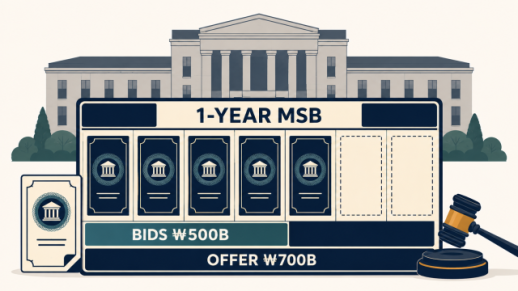 Demand for Korea's 1-yr central bank bond hits 29-mo low SEOUL, August 12 (AJP) - Demand for South Korea's one-year central bank bond fell to a 29-month-month low Wednesday as bids missed the planned issuance, signaling that the enlarged supply could not clear at the yield the Bank of Korea was prepared to pay. The weakness lay not in participation but in the size of the bids, as 15 institutions took part, one more than in July, even as their combined orders fell 41.2 percent. The BOK received 500 billion won in bids for 700 billion won ($494 million) of one-year Monetary Stabilization Bonds, producing a bid-to-cover ratio of 71.4 percent, according to the auction results. It awarded 410 billion won to 12 institutions at a yield of 3.350 percent, leaving the final issuance at 58.6 percent of the planned amount. Bids ranged from 3.150 percent to 3.450 percent, with no partial award. At the July auction, 14 institutions submitted 850 billion won of bids for the same 700 billion won offering, allowing the BOK to issue the full amount at 3.370 percent. The average bid per participating institution therefore fell 45.1 percent in one month to 33.3 billion won from 60.7 billion won. An AJP review of 339 one-year MSB auctions since 2010 found Wednesday's bid ratio was the eighth lowest over the period and the weakest since March 2024. It was also the third undersubscribed auction in the past 12 months, following bid ratios of 97.1 percent in September 2025 and 77.1 percent in October. A 2021 Capital Market Research Institute study found that one-year MSB auctions recorded an average bid ratio of 222.6 percent over the preceding decade and fell short of planned issuance in only 5.3 percent of cases. Part of the latest decline may reflect the larger offering, as the BOK raised planned one-year issuance from 500 billion won in June to 700 billion won in July and August. That explanation is limited, however, by the July comparison, when the same amount attracted 350 billion won more in bids. The result points most directly to a pricing gap between the return investors required and the yield the central bank was prepared to accept. The 3.350 percent accepted yield was the cutoff for the 410 billion won awarded, rather than the market-clearing yield for the entire 700 billion won offering. Even if the BOK had accepted every submitted bid, the auction would still have fallen 200 billion won short, suggesting that full issuance may have required a higher yield capable of drawing additional demand or a smaller offering. The auction alone, however, cannot determine whether the gap reflected expectations of higher market rates, more attractive returns on competing short-term debt or constraints on institutions' investment capacity - according to the central bank. The result came two days after the BOK announced changes intended to improve MSB liquidity, including extending the fungible issuance period for one-year bonds to three months from two and introducing benchmark issues from Aug. 31. Because Wednesday's auction was conducted under the existing framework, sales after the changes take effect will provide the next test of whether greater tradability can revive demand or investors continue to require higher yields. __________________________________________________________________________________ AJP Takeaways The bid ratio for the BOK's one-year Monetary Stabilization Bond fell to 71.4 percent, the lowest in 29 months and the eighth lowest among 339 auctions since 2010. Participation rose to 15 institutions from 14 in July, but total bids dropped 41.2 percent and the average amount per participant fell 45.1 percent. The auction points to a pricing gap rather than a broad market shock, with post-Aug. 31 sales set to test whether improved liquidity can restore demand without higher yields. 2026-08-12 16:46:52
 -
 Samsung Securities liable for phantom-share losses, top court rules SEOUL, August 12 (AJP) - South Korea's Supreme Court ruled Wednesday that Samsung Securities was vicariously liable for employee negligence behind its 2018 "phantom-share" debacle, broadening the legal basis for compensation while leaving a 1.87 billion won ($1.3 million) award to the National Pension Service unchanged. A four-justice panel of the Supreme Court, with Justice Oh Kyeong-mi as the justice in charge, rejected appeals from both sides and upheld a lower court ruling that partially favored the National Pension Service, or NPS. The court said employees responsible for processing the dividend could have foreseen that shares mistakenly credited to staff accounts might be offered and sold through the market. It therefore found a sufficient causal link between the employees' negligence and the NPS's losses, holding Samsung Securities vicariously liable under the Civil Act. That marked a departure from the lower courts, which held the brokerage directly liable for deficiencies in its systems and internal controls but rejected the NPS's separate claim of employer liability. The Supreme Court said that part of the lower court's reasoning was incorrect but concluded that recognizing the additional basis for liability would not alter the damages or the company's share of responsibility. The accident occurred on April 6, 2018, when a Samsung Securities employee mistakenly processed a cash dividend of 1,000 won per share as a distribution of 1,000 shares per share to 2,018 members of the company's employee stock ownership association. The error credited 2.81 billion nonexistent shares, worth about 112 trillion won at the previous day's closing price and more than 30 times the brokerage's outstanding shares, to employee accounts. Twenty-two employees submitted orders to sell 12.08 million shares over a 31-minute period, with trades for 5.01 million shares offered by 16 employees ultimately executed. The wave of selling pushed Samsung Securities shares down as much as 11.68 percent to 35,150 won from the previous close of 39,800 won. The NPS, which held about 11.23 million Samsung Securities shares before the accident, sold roughly 940,000 shares that day and 3.57 million shares through Sept. 28. The pension agency sued Samsung Securities in 2019, seeking about 29.9 billion won for losses it said resulted from the price collapse. The Seoul Central District Court ruled in August 2024 that Samsung Securities had failed to establish adequate procedures and risk controls for dividend processing and had been too slow to notify employees and block sell orders after discovering the error. Relying on an expert assessment, the court limited recoverable losses to about 1.66 million shares sold between the accident and April 10, finding that the incident's direct effect on the share price had dissipated by the following trading day. It calculated losses of about 3.86 billion won by comparing the estimated price that would have prevailed without the accident with the prices at which the NPS sold its shares. The court then limited Samsung Securities' responsibility to 50 percent, citing the combination of an unintended processing error and individual wrongdoing by employees who sold the shares. After deducting gains the NPS made by purchasing shares at depressed prices on the day of the accident, the compensation was set at 1.87 billion won plus interest. The Seoul High Court upheld the award in January, prompting both sides to take the case to the Supreme Court. The Financial Services Commission separately suspended Samsung Securities from taking on new equity-trading clients for six months and imposed a 144 million won fine in 2018 over failures in internal controls, emergency planning and the safe processing of electronic transactions. ___________________________________________________________________________________ AJP Takeaways The Supreme Court upheld a 1.87 billion won compensation award to the NPS over Samsung Securities' 2018 phantom-share accident. Unlike the lower courts, the top court recognized the brokerage's vicarious liability for its dividend-processing employees' negligence. Compensation covered losses from the first three trading days after the accident, with Samsung Securities' responsibility limited to 50 percent. 2026-08-12 13:25:44
 -
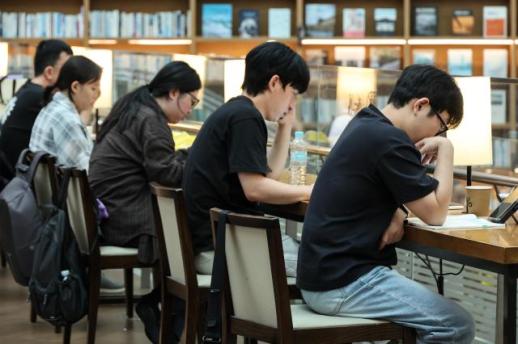 Youth job drought deepens, fall largest in 5 years SEOUL, August 12 (AJP) -South Korea's youth employment fell for a 45th straight month in July and the youth jobless rate posted its sharpest rise in more than five years, as hiring droughts in manufacturing and professional services deepened despite booming exports, government data showed Wednesday. The number of employed people aged 15 to 29 fell by 191,000 from a year earlier to 3.44 million, while their employment rate dropped 1.6 percentage points to 44.2 percent, according to the Ministry of Data and Statistics. The youth unemployment rate rose 1.3 percentage points to 6.8 percent, the steepest increase since January 2021. Employment among people in their 20s alone fell by 204,000. The headline labor-market numbers were better. The total number of employed people aged 15 and older increased by 108,000 from a year earlier to 29.136 million, accelerating from a gain of 63,000 in June. The improvement, however, continued to bypass sectors that traditionally provide a large share of regular jobs. Manufacturing shed 68,000 jobs, extending its decline to a 25th consecutive month, while construction lost 57,000 jobs for a 27th straight month. Professional, scientific and technical services cut another 44,000 jobs, marking an eighth consecutive monthly decline. The weakness in manufacturing employment has persisted even as South Korea's export engine has accelerated. Semiconductor exports surged 179 percent in July from a year earlier and total outbound shipments jumped 62.8 percent to $98.89 billion. The age breakdown exposed an equally stark divide. Employment among people aged 60 and older increased by 231,000, more than twice the economy's overall net job gain, while employment among those in their 40s fell by 31,000 in addition to the 204,000 decline among people in their 20s. Health and social welfare services led job creation with an increase of 173,000, while agriculture, forestry and fisheries lost 80,000 jobs. Non-wage employment, including the self-employed and unpaid family workers, increased by 119,000. The overall employment rate edged down 0.1 percentage point from a year earlier to 63.3 percent. The unemployment rate rose 0.2 percentage point to 2.6 percent, with the number of unemployed increasing by 50,000 to 776,000. The economically inactive population increased by 99,000 to 16.103 million. Among them, the number of people classified as simply "resting" fell by 62,000 to 2.518 million, while discouraged job seekers declined by 18,000 to 378,000. The ministry said it will begin publishing additional employment indicators for people aged 15 to 34 from its September employment report due in October, reflecting a revision to the Special Act on the Promotion of Youth Employment that expands the statutory definition of youth. 2026-08-12 08:32:09
 -
 Korea's won, bonds buck global trend after stocks dominate H1 SEOUL, August 11 (AJP) - The KOSPI and chip stocks sucked up capital and attention in the first half, but as the second half gets under way, it is the Korean won and bonds that are bucking the global trend and gaining ground. Whether that strength can last is less certain. Their divergence from U.S. markets rests partly on short-covering in bonds and expectations of corporate dollar conversions supporting the won — forces that could prove temporary. The U.S. 10-year Treasury yield rose from 4.562 percent on July 10 to 4.713 percent on Aug. 10, an increase of 15.1 basis points. Over the same period, the equivalent yield rose 4.7 basis points in Japan and just 2.0 basis points in Korea. The currency move was even more striking. USD/KRW fell 5.8 percent over the period, while USD/JPY declined 2.0 percent, meaning the won appreciated nearly three times as much against the dollar as the yen did. That marks a sharp reversal from the first half, when the greenback gained 7.7 percent against the won, more than double its 3.5 percent advance against the yen. The rise in U.S. Treasury yields reflected mounting concerns over inflation, oil prices, the fiscal deficit and debt supply. The 30-year Treasury yield climbed to around 5.25 percent on Aug. 10, near its highest level in 19 years. Korea did not escape those pressures. But a sharp reversal in domestic positioning prevented them from feeding fully into Korean government bond yields. After the Bank of Korea raised its base rate from 2.50 percent to 2.75 percent on July 16, foreign investors initially positioned for further tightening. They subsequently reversed course, making net purchases of 137,410 three-year bond futures contracts over 12 consecutive sessions from July 23 through Aug. 7. The three-year Korean government bond yield fell from 3.959 percent to 3.669 percent during that period even as U.S. Treasury yields headed higher. The move points largely to short-covering rather than a fresh wave of long-term bond buying, leaving the market vulnerable once investors finish unwinding positions built around expectations of additional BOK tightening. Korea’s phased inclusion in the FTSE World Government Bond Index, which began in April, has provided a more durable source of demand and helped cushion the bond market. But foreign net investment in Korean bonds slowed to 0.8 trillion won in July from 4.5 trillion won in June, suggesting WGBI-related demand alone cannot explain the recent resilience. BOK research also indicates that much of the overseas passive money tracking bond indexes is currency-hedged, weakening the direct link between WGBI inflows and won appreciation. The currency has instead drawn support from Korea’s swelling export income. The country posted a record $49.73 billion current-account surplus in June, lifting the first-half surplus to $191 billion. Exporter dollar sales have been reinforced by expectations that part of the $26.5 billion raised through SK hynix’s U.S. American depositary receipt offering will eventually be converted into won to finance investment at home. No specific SK hynix conversion has been confirmed. But expectations of additional dollar supply were strong enough to help offset $4.6 billion of Korean retail purchases of U.S. stocks in July and 8.8 trillion won of foreign selling in Korean equities. The mystery is that money has been flowing out through overseas stock purchases and foreign equity selling, yet the won has strengthened sharply. The next complication comes from the BOK. Senior Deputy Governor Ryoo Sang-dai said Tuesday that another rate increase was likely unless an extraordinary shock intervened, arguing that stronger domestic demand would generate gradual but persistent inflation pressure. The remarks were explicitly his personal view. Ryoo is also due to retire on Aug. 20, before the BOK’s Aug. 27 policy meeting, meaning he will not vote on the next decision and limiting the remarks' direct policy weight. Markets nevertheless took notice without treating them as a new shock. The three-year Korean government bond yield closed 3.6 basis points higher at 3.812 percent but remained below its intraday high of 3.831 percent, suggesting Ryoo largely confirmed expectations already embedded in the market. Pressure was greater at the long end. The 10-year yield gained 6.2 basis points to close near its session high at 4.303 percent as higher U.S. yields and oil prices exerted greater pressure, steepening the Korean yield curve. The won strengthened as far as 1,412.24 per dollar before giving back some gains to trade around 1,417 late Tuesday. For Korea’s bond and currency markets, the question is now whether a move born partly from positioning and expectations can turn into something more durable. U.S. inflation and oil prices will test the global side of that divergence, while the BOK’s Aug. 27 meeting will test the domestic side. ___________________________________________________________________________________ AJP Takeaways • South Korea’s market momentum shifted from KOSPI and semiconductor stocks in the first half to the Korean won and government bonds in early second-half trading. • From July 10 through Aug. 10, Korea’s 10-year government bond yield rose just 2.0 basis points, compared with increases of 15.1 basis points in U.S. Treasuries and 4.7 basis points in Japan, while the won appreciated nearly three times as much as the yen. • Korean government bonds were supported by foreign short-covering in three-year futures and phased FTSE World Government Bond Index inclusion, although weaker July bond inflows suggest that support may fade as positions normalize. • The won drew strength from Korea’s record $49.73 billion June current-account surplus, exporter dollar sales and expected conversions of SK hynix’s $26.5 billion ADR proceeds, rather than mainly from currency-hedged WGBI inflows. • Ryoo Sang-dai reinforced expectations of another BOK rate increase, but his Aug. 20 retirement and the limited three-year yield reaction reduced the remarks’ direct market impact, leaving U.S. inflation, oil prices and the Aug. 27 BOK meeting as the next tests. 2026-08-11 17:29:33