

Mexico scored the only goal early in the second half, when Luis Romo reacted first after goalkeeper Kim Seung-gyu failed to hold the ball inside the box.
South Korea must beat South Africa in their final group match to guarantee a top-two finish in Group A, while a draw would leave them depending on tiebreakers or the third-placed team ranking.
Kim Yeon-jae
Kim Yeon-jae is a journalist at AJU Press (AJP's English platform),
covering macroeconomics, international finance, and geopolitics.
He closely tracks central bank monetary policies, global energy supply chains,
and the Korean defense industry.
Copyright ⓒ Aju Press All rights reserved.
Related News
-
 Korea Electric Power Corporation Reports Data Breach Affecting 1.52 Million Customers
Korea Electric Power Corporation (KEPCO) has confirmed that some personal information has been leaked from its customer service and electronic procurement systems. KEPCO has blocked external access to the relevant systems and is taking preventive measures while investigating the exact cause of the incident and the extent of the leak in conjunction with relevant authorities.According to KEPCO, it was confirmed on the 20th that some customer information stored in its computer systems had been leaked externally. The systems involved in the data breach are the integrated customer service platform 'KEPCO ON' and the electronic procurement system (SRM) that handles procurement tasks such as purchasing, construction, and services.It has been identified that personal information of 650,487 electricity customers has been leaked from KEPCO ON, which represents about 7.1% of the approximately 9.2 million registered users on the platform. The leaked information includes 12 items such as customer numbers, customer names, resident and foreign registration numbers, phone numbers, addresses, bank names, account numbers, account holder names, card companies, card numbers, cardholders, and billing information.However, it has been confirmed that unique identification information such as resident and foreign registration numbers and card numbers were stored in an encrypted state.In the electronic procurement system, a total of 869,761 individuals, including 426,827 corporate representatives and 442,934 KEPCO and corporate employees, are included in the notification of the data breach. The relevant information items include the names and unique identification information of corporate representatives, email addresses, company addresses, as well as the names, affiliations, employee numbers, and contact information of employees.When combining the relevant personnel from the two systems announced by KEPCO, the total amounts to 1,520,248 individuals. However, the specific scope of the information leaked from the electronic procurement system has not yet been confirmed, so notifications have been made to all users. A KEPCO official stated, 'We are currently verifying the exact details of the leak in the electronic procurement system,' and added, 'We have notified all users of the leak.'KEPCO suspects that external attackers illegally accessed the two systems and stole information. The exact access route and method of attack are under investigation with relevant authorities.Immediately after recognizing the incident, KEPCO implemented emergency measures such as blocking external IP access and suspending related services. An emergency response comprehensive situation room has been activated, and the incident has been reported to relevant authorities, while a police investigation has also been requested.Additionally, KEPCO has individually notified affected customers about the leak and provided guidelines on how to prevent damage. A dedicated channel has been established for customers to check whether their personal information has been leaked and to report any damage.As of now, no secondary damage cases have been confirmed. To prepare for the possibility of financial information misuse, KEPCO plans to share relevant information with the government and financial authorities and request enhanced monitoring for abnormal transactions.Furthermore, KEPCO is collaborating with the National Intelligence Service, the Cyber Safety Center of the Ministry of Climate, Energy, and Environment, and external security experts to check for any additional leaks. A security inspection of the entire internet service system will be conducted, and the information security system will be comprehensively restructured.KEPCO President Kim Dong-cheol stated, 'We take this incident very seriously and sincerely apologize for causing concern to the public,' adding, 'We will thoroughly investigate the cause of the leak and fundamentally improve our information security system to ensure that the public can use electricity services with peace of mind by establishing measures to protect personal information.'* This article has been translated by AI.
-
 Op-Ed: Korea and its presidential curse
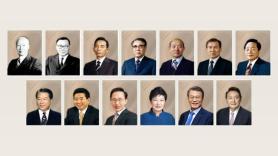
Presidents of South Korea (Presidential Archives) The author, Abe Kwak, is the Chairperson of the Asia-Pacific Media Association based in Seoul. South Korea has an unusually troubled history when it comes to its presidents. More than a few have risen to power on waves of popular enthusiasm, only to leave office in disgrace or meet tragic ends. Why does this keep happening? Is it a failure of individual leaders, a flaw in the structure of political power, or does the answer lie somewhere deeper in the political consciousness and cultural traditions shaped over Korea's 5,000-year history? Founding President Syngman Rhee was forced from office by the April 19 Revolution in 1960. Park Chung Hee was assassinated by his own intelligence chief. Chun Doo Hwan and Roh Tae-woo were arrested and imprisoned for crimes committed during their rule. Kim Young-sam and Kim Dae-jung suffered political damage from corruption scandals involving their sons. Roh Moo-hyun died by suicide in his hometown of Bongha in 2009 amid a prosecution investigation following his presidency. Lee Myung-bak and Park Geun-hye were both convicted and imprisoned. Moon Jae-in faced criminal investigation and political controversy after leaving office and was subsequently indicted on bribery charges. Yoon Suk Yeol left a profound constitutional crisis in his wake with his declaration of martial law, impeachment and arrest. He was sentenced to life imprisonment for insurrection in February 2026, a ruling he has appealed. President Lee Jae Myung was elected while facing multiple criminal trials, which have since been suspended during his presidency. These presidents' personal tragedies and legal responsibilities cannot be judged by the same standard. The tragedies of democratization, corruption in office, violations of the Constitution, misconduct by family members and allegations that have yet to be resolved in court must be carefully distinguished. Legitimate punishment for criminal wrongdoing is not political persecution. It is the rule of law at work. Even so, the recurring spectacle of extreme political conflict and personal misfortune surrounding South Korea's presidents remains a troubling feature of its modern history. Perhaps no figure embodies this tragedy more poignantly than Roh Moo-hyun. The late President Roh Moo-hyun with farmers in this photo of Sept. 2, 2008 (Courtesy of Roh Moo Hyun Foundation) Born in 1946 to a poor farming family in Gimhae, South Gyeongsang Province, Roh could not afford a university education. After graduating from Busan Commercial High School, he studied law on his own and passed the national bar examination in 1975. He became a judge and then a lawyer, eventually taking up the cause of human rights after defending defendants in the 1981 Burim case, a notorious political prosecution under military rule. He challenged entrenched regional loyalties and eventually rose to the presidency. Yet after leaving office, he came under investigation over allegations of illicit payments involving members of his family. On May 23, 2009, he took his own life. The allegations against Roh himself never reached a judicial determination of guilt or innocence. That a poor farmer's son could become president represented the extraordinary possibilities opened by Korean democracy. That his life should end in such tragedy raises profound questions about the nation's political culture. To search for answers, we must return to the deeper currents of Korean history. Koreans have long embraced Hongik Ingan (弘益人間), the ideal of broadly benefiting humanity, as a foundational national principle. The Joseon Dynasty placed Neo-Confucianism at the center of state governance, emphasizing the moral character of rulers, the legitimacy of political authority and the integrity and responsibility of scholars. Power, in this tradition, was not supposed to serve private ambition. It existed for the good of the community. Yet when the moral principles of Neo-Confucianism degenerated into factional rivalries, Joseon descended into bitter political divisions. Political factions invoked righteousness to condemn their opponents while overlooking their own failings. It is a historical lesson that today's progressives and conservatives would do well to remember. This brings to mind the late Korean scholar Kim Yong-woon. Born in Tokyo in 1927, Kim was a mathematician who devoted much of his intellectual life to examining the mathematical, cultural and historical differences among Korea, China and Japan. His inquiries eventually led him to explore what he saw as the underlying civilizational archetypes of the three nations. The result was Pung Su Hwa (風水火, or Wind, Water and Fire), an original work of civilizational criticism that portrayed Korea as the land of wind, China as the land of water and Japan as the land of fire. In Kim's interpretation, China's civilization was shaped by the immense task of controlling the Yellow and Yangtze rivers. Emperors and bureaucracies exercised power through vast hydraulic projects. Japan developed its distinctive political culture amid natural disasters, regional power structures and a strong emphasis on collective order. Korea, by contrast, was characterized in his analysis by the autonomy of ordinary people and the vitality of communal life. Korea, in other words, was a nation of wind. Wind moves freely. It cannot be confined to one place. At times it becomes sinbaram, the exhilarating spirit of collective enthusiasm. At others, it gathers into a mighty storm. For Kim, wind symbolized the dynamism, independence and popular energy of the Korean people. Consider Korea's history of civilian volunteer armies, the Donghak Peasant Revolution, the March 1 Independence Movement of 1919, the April 19 Revolution of 1960 and the June Democratic Uprising of 1987. Again and again, ordinary people rose when the nation faced a crisis. There have been many moments when it was not those who wielded power, but the people themselves, who defended the country and shaped its destiny. Kim's civilizational framework also invites reflection on the political differences among South Korea's democratic republic, China's socialist system and Japan's constitutional monarchy. These systems are products of modern historical choices and institutional evolution, not inevitable expressions of ancient cultural identities. Still, his argument that the three nations developed distinct political cultures from different civilizational foundations offers a perspective worth examining. It is here that the exceptional responsibility of the South Korean president comes into focus. A Korean president is not an emperor who rules above the people. The president is a public servant temporarily entrusted with power by the citizens. In a nation where popular sovereignty has repeatedly asserted itself, presidential authority cannot endure once public trust has been lost. The presidency therefore demands exceptional integrity and transparency. Presidents must exercise strict oversight not only over their own conduct but also over that of family members and close associates. They must take responsibility for every word and action. Obeying the law is merely the minimum requirement. What the public expects extends beyond legal innocence to the higher ethical standards of public office. Yet moral integrity alone does not make a successful president. President Lee Jae Myung visits to market in Ulsan on Nov. 21, 2026. (Courtesy of Cheong Wa Dae) A president must also possess the competence to strengthen the economy, safeguard national security, advance science and technology, and improve the lives of citizens. Above all, a president must be capable of embracing even those who did not vote for them. One of the most essential qualities of leadership is the capacity for inclusion. Confucius taught in the Analects, Jeongja Jeongya (政者正也), that governing means setting things right. The Doctrine of the Mean warns against excess and deficiency, emphasizing balance and harmony in action. Laozi's Tao Te Ching offers lessons in humility, restraint and the wisdom of moderation. The virtues emphasized by the great philosophical and spiritual traditions of East and West are not fundamentally different: righteousness, restraint, love, compassion, responsibility and humility. To these, I would add spirituality. By spirituality, I do not mean adherence to any particular religious faith. I mean an awareness of human dignity, the ability to restrain one's desires and a spirit of love and respect for humanity, culture and nature. We are entering an age in which artificial intelligence is rapidly taking over tasks once regarded as uniquely human intellectual work. A president therefore needs more than technical knowledge. What matters is a philosophy capable of guiding technology toward human happiness and well-being. A nation's success should not be measured solely by its economic growth rate or export figures. It must ultimately be judged by the quality of its people's lives and the dignity accorded to every human being. But an even more fundamental question remains. Are citizens who demand an exemplary president themselves mature enough to choose one? A society in which people overlook the misconduct of presidents they support while expressing outrage at the failings of presidents they oppose will struggle to produce successful leadership. When citizens excuse corruption within their own political camp but presume guilt whenever allegations emerge against the other, the rule of law loses its foundation. All political parties, including the Democratic Party of Korea and the People Power Party, must engage in serious self-examination. The same responsibility extends to lawmakers, local politicians and aspiring presidential candidates. Politics that divides the people for the sake of winning power, treating opponents not as democratic competitors but as enemies to be eliminated, leads a nation toward ruin. Progressivism and conservatism are two essential pillars of democratic politics. Progressives generally emphasize change and reform, while conservatives place greater value on stability and tradition. A nation benefits when the two challenge and complement each other. But when progressives claim a monopoly on justice and conservatives claim exclusive ownership of patriotism, both betray the principles they profess to defend. Citizens are no less responsible. Democracy is not completed with a single vote. It requires citizens who can distinguish fact from falsehood, place principle above partisan loyalty and respect opinions different from their own. Freedom carries responsibility, just as rights entail obligations. A view of Seoul drenched in the fall color from Namsan Tower. AJP Yoo Na-hyun The author, Abe Kwak, is the Chairperson of the Asia-Pacific Media Association based in Seoul. Mature citizens do not follow political leaders blindly. They recognize achievements where credit is due and hold leaders accountable when they do wrong. Just as a president must embrace the entire nation, citizens must learn to embrace one another. It is a contradiction to demand national unity while nurturing hatred toward fellow citizens. South Korea's presidents must now govern with the gravity of someone standing at the edge of a precipice, conscious of the weight of 5,000 years of history. This is a principle that President Lee Jae Myung and every future presidential aspirant must take to heart. The presidency is not a vehicle for personal glory. Nor is it a platform for celebrating the triumph of one political faction over another. It is an office entrusted with the destiny of the nation and the lives of its people. Every word must be weighed and every action considered. Transparency and integrity must guide every aspect of governance. Presidents must be strict with family members and close associates, yet generous toward citizens who oppose them. They must possess the courage to acknowledge mistakes and the restraint to relinquish power when the time comes. But presidential responsibility cannot rest solely on individual character. A functioning democracy also requires a legislature capable of checking abuses of power, an independent judiciary, impartial investigative authorities and a press committed to the pursuit of truth. No president stands above the law. Neither do those entrusted with investigating a president. Justice deserves its name only when the same standards apply to everyone. The media, too, must confront its responsibilities. Scrutinizing those in power and exposing wrongdoing are essential duties of journalism. But journalists must not present allegations as established facts or allow trials by public opinion to destroy a person's dignity. The press must pursue the truth while respecting due process, and criticize power without abandoning basic decency and respect for humanity. Citizens must change as well. Koreans must move beyond a politics of division toward a politics of national unity, seeing themselves not merely as members of rival political camps but as citizens of the Republic of Korea. The stature of an advanced nation is not determined by the size of its economy alone. It is completed by the moral maturity of its citizens and the quality of its democracy. Hongik Ingan is not merely a slogan inherited from a distant past. It is a national philosophy that should be put into practice today. A country that benefits humanity, respects culture and coexists with nature. A country where the people stand above political power, the national interest takes precedence over partisan advantage, and inclusion proves stronger than hatred. South Korea must now break free from its recurring history of presidential tragedy. That does not mean creating a country where presidents are shielded from accountability. Wrongdoing must be judged rigorously under the law, while political retaliation must be resisted. Achievements should be acknowledged and failures recorded with equal candor. The maturity of a democratic republic does not lie in protecting those who wield power at all costs. It lies in upholding fair principles for everyone. Presidents must govern themselves with a profound sense of responsibility. Citizens must practice political maturity beyond partisan loyalties. Institutions must restrain power, and the law must be applied impartially. Without mature citizens, a great president cannot emerge. And even a great president cannot succeed without mature citizens and sound institutions. A president's success is measured not by the extent of power exercised, but by the lives of the people. The greatness of citizens is measured not by how passionately they support a president, but by how wisely they choose their leaders and how responsibly they hold them to account. South Korea is a nation that has inherited five millennia of history and the spirit of Hongik Ingan. It is time for presidents, political parties, the National Assembly and citizens alike to change. Truth must stand above political factions. Justice must be stronger than power. Freedom must go hand in hand with responsibility. That is the path beyond the recurring tragedies of the presidency toward a mature democratic republic. And that is the dignity of a nation we must pass on to the next generation. *The views expressed in this article are solely those of the author and do not necessarily reflect the editorial position of AJP.
-
Trump's Efforts for North Korea Summit Fail Amid Unacceptable Conditions
The Trump administration reportedly pushed for a North Korea-U.S. summit until the last minute during President Trump's recent Asia trip, but the meeting fell through as North Korea presented conditions that the U.S. found difficult to accept.The Wall Street Journal (WSJ) reported on the 21st (local time), citing sources familiar with the negotiations, that both sides explored the possibility of a face-to-face meeting, but North Korea proposed terms that were unacceptable to the U.S. The specific conditions demanded by North Korea have not been confirmed.According to the WSJ, U.S. officials discussed a declaration to officially end the Korean War as a preliminary step to facilitate the meeting. They considered issuing a statement that would not recognize North Korea as an official nuclear state but would not demand the dismantling of its nuclear program. If North Korea accepted this, the U.S. planned to ask for restrictions on nuclear tests and missile launches in return. They also discussed establishing a liaison office as a precursor to formal diplomatic relations between the two countries.The Trump administration's efforts to arrange a North Korea-U.S. summit have been ongoing since last year. The WSJ reported that President Trump attempted to reach out to Kim Jong-un, chairman of the Workers' Party of Korea, through existing phone lines and communication channels, but received no response. He later wrote a letter to Kim, but it was not properly delivered.White House officials sent someone to the North Korean mission to the United Nations in Manhattan to hand a letter directly to a passing North Korean diplomat. However, that diplomat reportedly threw the unopened letter in front of the U.S. representative at the UN meeting.Meanwhile, North Korea has significantly strengthened its nuclear capabilities since 2019. It is estimated that the number of nuclear warheads North Korea possesses has increased from 20-30 to about 60. North Korea has also deployed solid-fuel intercontinental ballistic missiles (ICBMs) capable of reaching the U.S. mainland.Kim Jong-un has demanded that the U.S. recognize North Korea as an official nuclear state. He stated in February that if the U.S. acknowledges North Korea's nuclear program, peaceful coexistence is possible, but if not, they will face 'eternal confrontation.'A Trump administration official denied reports of efforts to arrange a meeting with Kim Jong-un. The White House also stated that there has been no change in its position regarding North Korea's denuclearization.* This article has been translated by AI.