

Journalist
Kim Yeon-jae김연재
duswogmlwo77@ajupress.com
ReporterBank of Korea & Market, Macroeconomics
Kim Yeon-jae is a journalist at AJU Press (AJP's English platform),
covering macroeconomics, international finance, and geopolitics.
He closely tracks central bank monetary policies, global energy supply chains,
and the Korean defense industry. "Peering into the risks behind the euphoria."
covering macroeconomics, international finance, and geopolitics.
He closely tracks central bank monetary policies, global energy supply chains,
and the Korean defense industry. "Peering into the risks behind the euphoria."
Latest by Kim Yeon-jae
-
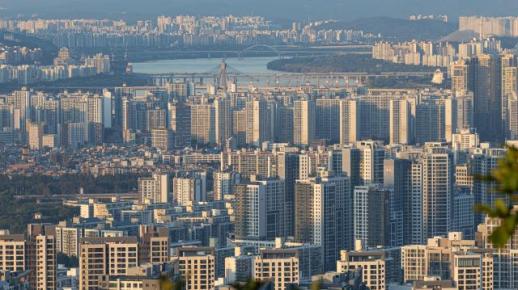 Home ownership becoming a pipe dream for young Korean SEOUL, July 14 (AJP) - Home ownership among young South Koreans has fallen at one of the fastest rates in recent years, underscoring how soaring housing costs are pushing ownership further out of reach even as the government expands housing support that remains largely centered on public rentals rather than ownership. An analysis of anonymized household microdata from the Survey of Household Finances and Living Conditions, reported by Munhwa Ilbo on July 13, showed that the owner-occupancy rate among households headed by people in their 20s and 30s fell to 27.7 percent in 2025 from 38.3 percent in 2021. The decline coincided with a widening wealth gap between generations. Average net assets of younger households dropped to 219.5 million won ($159,000) from 256.6 million won over the same period, while households headed by people in their 50s and 60s saw average net assets rise to 574.2 million won from 473.1 million won. The owner-occupancy and net asset figures are measured at the household level according to the age of the household head. The deterioration comes as the government's latest youth housing policy increasingly relies on expanding rental housing rather than ownership opportunities. Under the 2026 Youth Policy Implementation Plan finalized on April 28, the government plans to provide 67,000 homes for young people this year. Of those, 43,000 units, or 64.2 percent, will be public rental housing, while 24,000 will be publicly supplied homes available for purchase. The rental program consists mainly of 29,000 existing homes purchased or leased by public agencies and rented to young tenants, along with 10,000 newly built public rental homes, 1,000 youth-specialized housing units and 2,400 privately supplied rental homes supported and regulated by the government. While public rental housing offers lower rents and longer tenancy security, it does not allow occupants to build housing wealth in the way homeownership does. Publicly supplied homes transfer ownership to buyers, although the eventual financial gains depend on purchase prices, location and future market conditions. The emphasis on rental housing reflects a broader trend in government policy over the past decade. According to the government's second Basic Plan for Youth Policy, about 460,000 public homes for young people were approved between 2021 and 2025, including 295,000 rental units and 164,000 homes for sale. The government said most of those figures represented project approvals, meaning a considerable time lag remained before construction, completion and actual occupancy. An earlier youth housing initiative announced by the Moon Jae-in administration in 2018 likewise focused heavily on rental support, comprising 140,000 public rental homes and 130,000 government-supported private rental units through 2022. Separate administrative statistics also point to a persistent gap between generations. The Ministry of Data and Statistics' "Administrative Statistics by Life Cycle in 2024," released on Dec. 23, showed that only 11.5 percent of individuals aged 15 to 39 owned a home, unchanged from a year earlier. That compared with 45.5 percent among those aged 40 to 64 and 46.3 percent among people aged 65 and older. The ministry noted that younger homeowners earned nearly twice as much income from wages and business as non-homeowners but also carried significantly heavier debt, with median loan balances 6.5 times larger than those without homes. The administrative homeownership figures are calculated for individuals, while the owner-occupancy and net asset figures from the household finance survey are measured at the household level and therefore are not directly comparable. Economists have increasingly argued that rising housing costs are becoming a structural drag on Korea's economy rather than simply a housing affordability issue. In an issue note published on Jan. 19, the Bank of Korea estimated that every 1 percent increase in housing costs reduced the total assets of young people by 0.04 percent. The central bank said rising housing expenses constrain consumption as well as spending on education, skills and career development, describing youth employment and housing as "structural problems constraining Korea's growth." A separate BOK study released on Feb. 12 found that a 5 percent increase in housing prices reduced the economic well-being of households headed by people younger than 50 by 0.23 percent while increasing that of older households by 0.26 percent. According to the central bank, younger households typically respond to higher home prices by saving more aggressively or taking on larger mortgages to purchase their first home or move into better housing, reducing current consumption. Older households, already holding substantial housing assets, benefit from rising property values without facing the same financial burden. Kang Min-joo, ING's senior economist for South Korea and Japan, said in Asia 2026: 6 Questions for Korea's Recovery, published on Dec. 3, that persistently strong demand and chronically limited housing supply in Seoul continued to push prices higher. Kang noted that Korean households hold roughly 46 percent of their total assets in real estate. However, because property is difficult to convert into cash and mortgage repayments consume a growing share of income, rising home values have provided only limited support for private consumption. The housing market has also complicated monetary policy. When the Bank of Korea kept its benchmark interest rate unchanged at 2.50 percent on May 28, it warned that housing prices in the Seoul metropolitan area and expectations of further gains had strengthened while housing-related lending continued to accelerate. Korea's household debt stood at nearly 89 percent of nominal gross domestic product at the end of last year, among the highest levels in the developed world. Kang said the growing divergence between the overheated Seoul housing market and weaker regional markets could constrain the central bank's policy flexibility in either direction, making it more difficult to balance inflation, financial stability and economic growth. The property market is also intersecting with broader capital flows. According to the BOK, Korean residents' investment in overseas stocks and bonds more than doubled to $140.3 billion last year from $67 billion in 2024, increasing its share of gross domestic product to 7.5 percent from 3.6 percent. The central bank said overseas investment strengthens Korea's external asset position and future investment income but can temporarily weaken the won by increasing demand for foreign currencies. Kang also said whether Korean investors increasingly favor overseas assets over domestic investments could become an important factor influencing the won. No official study, however, has established a direct causal relationship between declining youth homeownership and rising overseas investment. For now, the government's latest housing plan leaves several critical questions unanswered. While it specifies the number of homes to be supplied, it provides few details on regional allocation or when projects will move from approval to construction, completion and actual occupancy. For many younger Koreans, those timelines may prove just as important as the number of homes promised, as each year spent waiting for new supply risks placing homeownership even further beyond reach. 2026-07-14 17:39:12
-
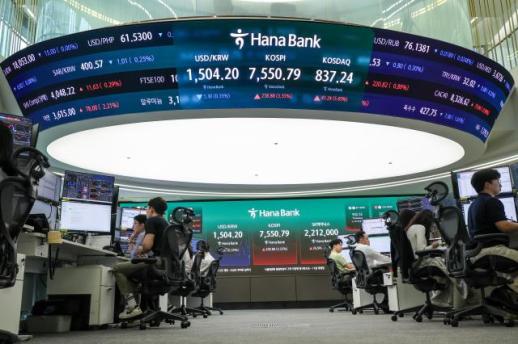 Tycoons' stock wealth falls 6 trln won without Samsung, SK chiefs SEOUL, July 14 (AJP) - The combined stock wealth of South Korea’s major business group chiefs jumped by more than 29 trillion won ($19.6 billion) in the second quarter, but the headline increase masked losses across most of the group as gains were overwhelmingly concentrated in Samsung Electronics Chairman Lee Jae-yong and SK Group Chairman Chey Tae-won. Excluding Lee and Chey, the value of shares held by the remaining 44 group leaders fell by 5.97 trillion won, or 8.6 percent, between the end of March and the end of June, according to corporate tracker Korea CXO Institute. Twenty-eight of the 46 business leaders surveyed, or 60.9 percent, saw their stock wealth decline during the quarter. Including Lee and Chey, the group’s combined stock holdings rose 28 percent to 133.62 trillion won at the end of June from 104.43 trillion won three months earlier. The two chairmen recorded a combined increase of 35.16 trillion won, more than offsetting the losses posted by the other group chiefs. Lee accounted for most of the overall gain, with the value of his stock holdings surging by 28.25 trillion won to 59.19 trillion won from 30.94 trillion won. His stock wealth alone represented more than 44 percent of the combined holdings of all 46 business leaders at the end of June. The value of Lee’s Samsung Electronics shares nearly doubled to 32.54 trillion won from 16.29 trillion won, while his Samsung C&T holdings rose to 16.72 trillion won from 9.05 trillion won. His total stock wealth crossed 60 trillion won for the first time in early June and reached 64.33 trillion won on June 25 before retreating by the end of the month. Chey posted the fastest growth rate, with his holdings soaring 176.9 percent to 10.83 trillion won from 3.91 trillion won. Chey does not directly hold shares in chipmaker SK hynix but owns about 12.98 million common shares in SK Inc., the group’s holding company. SK Inc. shares climbed to 834,000 won at the end of June from 301,000 won at the end of March, driving the sharp increase in Chey’s stock wealth. Other group leaders posted comparatively modest gains. Hyosung Group Chairman Cho Hyun-joon saw his holdings increase by 971.3 billion won, followed by LG Group Chairman Koo Kwang-mo with a gain of 386.2 billion won and Doosan Group Chairman Park Jeong-won with 279.9 billion won. Hyundai Department Store Group Chairman Chung Ji-sun and Hyundai Motor Group Executive Chair Euisun Chung recorded increases of 260.1 billion won and 235 billion won, respectively. By contrast, Celltrion Group Chairman Seo Jung-jin suffered the largest decline in absolute terms, with the value of his holdings falling by 1.64 trillion won. HYBE Chairman Bang Si-hyuk recorded the steepest percentage drop, losing 35.8 percent of his stock wealth as the value of his holdings declined to 2.53 trillion won from 3.93 trillion won. Kakao founder Kim Beom-su’s holdings also fell by 1.19 trillion won to 3.64 trillion won. As of the end of June, 16 group leaders held shares valued at more than 1 trillion won. Lee topped the ranking with 59.19 trillion won, followed by Seo with 11.89 trillion won, Chey with 10.83 trillion won and Euisun Chung with 7.76 trillion won. The survey covered leaders of large business groups designated by the Fair Trade Commission whose stock holdings were worth at least 100 billion won as of the end of June. The valuations were based on closing prices on March 31 and June 30 and included both directly owned listed shares and indirect stakes held through majority-owned unlisted companies. Korea CXO Institute said roughly two-thirds of about 150 stocks held by the business leaders declined during the second quarter, underscoring the narrow concentration behind the increase in their combined wealth. The institute warned that volatility could intensify in the third quarter as investors take profits from stocks that have risen faster than their earnings, while interest rates, exchange rates and geopolitical developments remain key risks. 2026-07-14 16:18:42
-
 Seoul ups 2026 growth outlook to 3%, nominal growth at 30-yr high SEOUL, July 14 (AJP) -South Korea's economy is expected to expand 3 percent this year - its fastest pace in five years despite the fallout from the Middle East conflict - thanks to an unprecedented semiconductor boom, the government said Tuesday, sharply lifting its growth target from 2 percent. Nominal gross domestic product is projected to jump 12.3 percent this year, matching the strongest growth since 1996, as soaring semiconductor prices sharply improve South Korea's terms of trade and lift export prices, according to the Ministry of Finance and Economy's revised growth target and policy outline for the second half and 2027. The ministry said the improvement would push gross national income per capita close to the psychologically important $40,000 threshold while strengthening government finances. The upgraded forecast marks the strongest real GDP growth since the economy expanded 4.6 percent in 2021 during the post-pandemic recovery. Growth is expected to moderate to 2.2 percent in 2027, remaining slightly above the country's estimated potential growth rate. Korea's current-account surplus is now forecast to reach a record $290 billion this year, more than double last year's $123.1 billion and far above the ministry's previous estimate of $135 billion, reflecting booming semiconductor exports. The surplus is expected to remain robust at around $245 billion next year. Merchandise exports are projected to surge 40 percent this year before returning to a more sustainable 1 percent increase in 2027. The ministry attributed the dramatic upgrade primarily to the AI-led semiconductor cycle, noting that global memory prices have risen far faster than expected, lifting Korea's export deflator and improving national income beyond what real output growth alone would suggest. The headline strength nevertheless masks growing structural imbalances. The ministry warned that growth remains heavily concentrated in semiconductors and other information technology sectors, while non-IT industries and regional manufacturing bases continue to lag. Without broader diffusion of the chip boom, economic polarization between exports and domestic demand, IT and traditional industries, and the capital region and provincial economies could deepen further, it added. It also worried stronger nominal growth could fuel financial market volatility by attracting large foreign capital inflows into Korean equities while pushing up the won, interest rates and asset prices. Those developments could increase borrowing costs for vulnerable households and small businesses despite the stronger overall economy. Inflation is expected to average 2.6 percent this year, up from the ministry's previous estimate of 2.1 percent, as elevated oil prices linked to the Middle East conflict continue to feed into consumer prices before easing to 2.2 percent next year. Employment conditions are forecast to soften despite stronger output, with payrolls expected to increase by 150,000 this year, below last year's 190,000, reflecting delayed recovery in construction and lingering effects of the conflict on hiring. To prevent the semiconductor windfall from becoming a source of new economic imbalances, the government said the second-half policy agenda will focus on three pillars: maintaining macroeconomic stability after the Gulf war, raising the country's potential growth rate and addressing widening structural disparities. The strategy includes strengthening supply-chain resilience and energy security, accelerating three flagship investment projects centered on semiconductors, artificial intelligence data centers and physical AI, promoting regional growth outside the Seoul metropolitan area, and pursuing structural reforms in labor markets, finance and regulation. Additional tax revenue generated by the semiconductor boom will be directed toward younger generations, future growth industries, regional development and talent cultivation through a newly established Future Response Fund. The government also pledged to continue measures to stabilize consumer prices by extending tariff cuts on selected imported food products, expanding agricultural and seafood discount programs, keeping public utility charges broadly unchanged in the second half, and maintaining targeted fuel subsidies if necessary as geopolitical risks persist. 2026-07-14 13:30:04
-
 Foreigners pull out record $110 bn from Korean equities H1 SEOUL, July 14 (AJP) - Foreign pulled out $110 billion from Korea's red-hot stock market in the first six months, with nearly $31 billion taken out in June alone, data showed Tuesday. Inflow into the bond market following South Korea’s inclusion in the World Government Bond Index (WGBI) offered a marginal relief to the Korean won, according to the Bank of Korea. Foreign investment in South Korean securities posted a net outflow of $30.72 billion in June. Equity funds recorded a net outflow of $32.37 billion, while bond funds posted a net inflow of $1.65 billion. The equity outflow widened from $31.83 billion in May and marked the largest monthly withdrawal so far this year. The central bank attributed the outflow to weaker investor sentiment amid concerns over global artificial intelligence investment and foreign investors’ rebalancing of their Korean equity holdings following an extended market rally. The benchmark KOSPI fell 11.8 percent to 7,476 on July 10 from 8,476 at the end of May. Foreign funds continued to flow into bonds despite the maturity of government debt, supported by the gradual increase in South Korean bonds’ weighting in the WGBI. The weighting rose to 0.67 percent in June from 0.46 percent in May and 0.22 percent in April, when the country’s phased inclusion began. During the first six months of the year, foreign equity investment posted a cumulative net outflow of $110.21 billion, while bond investment recorded a net inflow of $9.28 billion. Total foreign investment in Korean securities consequently registered a net outflow of $100.93 billion during the period. The heavy equity outflows added downward pressure on the won in June, although the currency rebounded sharply this month. The won closed at 1,549.4 per dollar at the end of June, weakening from 1,507.9 at the end of May, before strengthening to 1,501.4 on July 10. Foreign selling of Korean shares and continued uncertainty in the Middle East drove the exchange rate higher last month, the BOK said. The won began recovering in July as weaker-than-expected U.S. employment indicators reduced the extent of the dollar’s gains. Compared with the end of May, the won had strengthened 0.4 percent against the dollar as of July 10, outperforming most major emerging-market currencies over the same period. Exchange-rate volatility, however, increased in June. The won’s average daily trading range widened to 7.6 won from 6.6 won in May, while its average daily fluctuation rate rose to 0.50 percent from 0.45 percent. In global markets, the dollar and major government bond yields rose as the Federal Reserve’s June policy meeting was interpreted as hawkish, strengthening expectations for further U.S. rate increases this year. The dollar index advanced 2.0 percent to 101.0 on July 10 from 98.9 at the end of May. The yield on the 10-year U.S. Treasury rose 12 basis points to 4.56 percent from 4.44 percent over the same period. South Korea’s 10-year government bond yield climbed 17 basis points to 4.24 percent, while the three-year yield edged up to 3.77 percent from 3.73 percent. The three-year currency swap rate rose 6 basis points to 3.36 percent, tracking the increase in government bond yields. The three-month won-dollar swap rate, meanwhile, fell 7 basis points to minus 0.99 percent as institutional investors’ demand for foreign-currency funding for overseas investment increased. Despite the foreign fund outflows, South Korean banks’ external foreign-currency borrowing conditions remained broadly stable. The premium on medium- and long-term overseas borrowing fell to 37 basis points in June from 44 basis points in May. The five-year credit default swap premium on South Korea’s foreign exchange stabilization bonds also declined to 23 basis points from 25 basis points. 2026-07-14 12:52:01
-
 Gov't unveils over 800 trillion won budget plan with push for AI and chips SEOUL, July 13 (AJP) - South Korea plans to increase next year's government spending to more than 800 trillion won (US$533 billion) and set up a fund to use extra tax revenue for investment in artificial intelligence (AI), semiconductors, regional development and younger generations. The fiscal plans were unveiled at a meeting on Monday chaired by President Lee Jae Myung at Cheong Wa Dae, with key Cabinet members and other officials in attendance. Minister of Planning and Budget Park Hong-keun said national tax revenue is expected to exceed 500 trillion won in 2027, compared with an earlier projection of 412 trillion won, while total expenditure would rise more than 10 percent from this year's original budget. At the center of the plans are a proposed fund that would accumulate tax revenue exceeding its long-term trend and deploy the money over several years in four areas: younger generations, growth engines, regional development and talent. The expansion will be paired with what the government described as its largest-ever expenditure restructuring, including reviews targeting reductions of 15 percent in discretionary spending and 10 percent in mandatory spending to free resources for higher-priority programs. The government said heavier investment in 2027 would raise potential growth and strengthen the revenue base, allowing expenditure growth, the fiscal balance and the government debt ratio to be managed more steadily over the medium term rather than relying solely on future tax gains. Semiconductors, AI data centers and physical AI were designated as three megaprojects that will receive priority in budget allocation, infrastructure construction, regulatory support and coordination with private investment. For AI data centers, the government will form an interministerial task force to support 8.4 gigawatts of private investment planned through 2029, while promoting core technologies, large-scale test beds, industry clusters and an alliance of domestic companies. In physical AI, Seoul aims to build a domestic full-stack platform covering foundation models, devices, AI chips, networks and security by 2030, with public procurement supporting early demand as applications expand from manufacturing into defense, care services, agriculture and policing. The semiconductor plan will support a projected 957 trillion won ($638 billion) in private fab investment by strengthening domestic suppliers of materials, components and equipment, packaging and foundry businesses, along with next-generation chips for on-device AI, power systems and defense. The government will also expand electricity, water, transportation and housing infrastructure, develop a semiconductor-focused advanced city at a military air base in Gwangju, and begin preparations for a first-of-its-kind fab in Yongin, Gyeonggi Province, by 2031. Deputy Prime Minister and Minister of Economy and Finance Koo Yun-cheol said the investment drive would be paired with plans to train more than 200,000 young specialists and create more than 300,000 jobs through private hiring, public employment and entrepreneurship. Koo also proposed additional public rental housing, a youth-oriented individual savings account and temporarily eased income requirements for housing loans for newlyweds, while extending employment insurance, training and retirement support to platform workers and freelancers. The fiscal push reflects a broader assessment by the Ministry of Economy and Finance, the Ministry of Planning and Budget, the Bank of Korea and the Financial Services Commission that stronger semiconductor-led growth and tax revenue should be converted into productive investment. At an expanded macro-fiscal-financial meeting in June, the four authorities cited a 17.1 percent year-on-year rise in first-quarter nominal gross domestic product and a 53.2 percent increase in May exports, while agreeing that additional fiscal room should support potential growth and ease polarization and living-cost pressures. They nevertheless warned that higher interest rates and volatility in foreign-exchange and equity markets could weigh disproportionately on vulnerable borrowers, small-business owners, import-dependent companies and leveraged investors, while the BOK’s June review highlighted housing, household debt and nonbank risks despite broadly stable financial conditions. The FSC's 150 trillion won fund will separately channel public and private financing into advanced industries, leaving the proposed Future Response Fund to manage above-trend revenue as a long-term fiscal resource, although detailed contribution rules and the division of responsibilities remain undecided. 2026-07-13 17:19:07
-
 Gov't tightens household loans while mulling pension-backed borrowing options SEOUL, July 13 (AJP) - South Korea is tightening conventional household lending to contain debt growth while considering measures that could make it easier to borrow and invest against retirement savings, exposing a potential contradiction in its financial policy. One channel of household leverage is being restricted just as another could be opened. Household lending at the country's five largest banks - KB Kookmin, Shinhan, Hana, Woori and NH NongHyup - excluding government-backed loans rose by 3.697 trillion won (US$2.46 billion) to 647.578 trillion won at the end of June from 643.882 trillion won at the end of last year, according to banking industry data. The increase represented 85.3 percent of the lenders' combined annual household loan growth target of 4.336 trillion won, leaving them with limited room to expand credit in the second half. The targets are not statutory lending caps but management plans submitted by financial institutions in line with the government's household debt policy. Household lending across the financial sector increased by 29 trillion won in the first half, including 8.3 trillion won in June alone, according to the Financial Services Commission. Mortgage lending rose by 4.5 trillion won in June, while other borrowing, including unsecured credit, increased by 3.7 trillion won. The FSC has instructed financial institutions to review their second-half lending strategies and monthly and quarterly management plans, warning that home transactions and previously approved group loans could keep mortgage growth elevated. Banks have already begun raising borrowing barriers, with KB Kookmin Bank cutting the maximum amount available for home-purchase mortgages to 300 million won from 600 million won and some lenders restricting unsecured loans or reducing overdraft limits. The pullback is likely to weigh most heavily on households that need new credit, rather than existing assets, to enter the property or financial markets. At the same time, local media have reported that the government is considering measures to make retirement pension-backed loans commercially viable and gradually raise the risk-asset investment ceiling for defined contribution plans and individual retirement pension accounts from the current 70 percent. The Ministry of Employment and Labor has said, however, that neither pension-backed lending nor a phased increase in the risk-asset ceiling has been finalized. Current law generally prohibits the transfer, seizure or pledging of retirement pension benefits, while allowing them to be used as collateral in limited cases prescribed by presidential decree, including home purchases. Financial institutions have rarely offered such products because of strong legal protections for pension benefits and uncertainty over how collateral rights could be enforced in the event of default. Supporters argue that people facing urgent cash needs should be able to borrow against their retirement savings rather than permanently withdraw money from their accounts. The number of people making early withdrawals from retirement pension accounts rose 4.3 percent to 67,000 in 2024, while the amount withdrawn increased 12.1 percent to 2.7 trillion won, according to the National Data Agency. Home purchases accounted for 56.5 percent of withdrawals by number and rental housing deposits another 25.5 percent, putting the share of housing-related withdrawals above 80 percent. Replacing early withdrawals with secured loans could allow account holders to meet temporary funding needs while keeping their retirement assets invested. Outstanding retirement pension assets surpassed 500 trillion won for the first time at the end of last year, rising 16.8 percent to 501.4 trillion won, according to the Labor Ministry and the Financial Supervisory Service. Defined contribution plans and individual retirement pension accounts, in which participants make their own investment decisions, accounted for 54.3 percent of the total, while market-linked products represented 24.6 percent. If the proposed changes are introduced, people with sufficient pension balances could raise cash without withdrawing their savings or increase their exposure to equities and other risk assets. The opportunity, however, would not be equally available to all workers. As of June 2025, 61.7 percent of regular workers were enrolled in retirement pension plans, more than double the 29.8 percent rate among non-regular workers. People with stable employment and long contribution records would be better placed to use pension assets as collateral or investment capital, while workers outside the system or with small balances would have little to leverage. A retirement pension industry official who requested anonymity said the two policies should be viewed separately because "pension-backed loans are intended to preserve retirement assets by reducing early withdrawals," while conventional household lending controls are designed to curb excessive flows into property and equity markets and contain financial stability risks. The difference in their stated objectives, however, does not fully remove the tension between the two approaches. Replacing withdrawals with loans would not eliminate households’ funding shortages or debt-servicing burdens, while borrowers who fail to repay could ultimately damage their future retirement income. If pension-backed loans are used to finance property or financial asset purchases, leverage that the government is attempting to suppress through conventional lending channels could simply re-emerge through retirement accounts. The policy could therefore send a mixed signal by restricting borrowing against income and future earnings while making it easier to borrow against accumulated pension wealth. It could also reinforce disparities between people who need credit to acquire their first meaningful assets and those who already hold assets that can be pledged or invested. Regulators would need to determine whether pension-backed loans should count toward financial institutions’ household loan growth targets and borrowers' debt service ratios. Clear rules would also be required on eligible borrowing purposes, collateral limits and the protection of pension benefits in the event of default, while any increase in the risk-asset ceiling would need to account for differences in pension balances and investment capacity. Without such safeguards, the government could end up curbing one form of household leverage while encouraging another, shifting debt rather than reducing it and allowing existing wealth to determine access to the next round of financial opportunity. 2026-07-13 17:08:40
-
 BOK dismisses peak concerns over chip cycle as AI demand still outpaces supply SEOUL, July 13 (AJP) - The Bank of Korea has dismissed concerns that the global semiconductor cycle has already peaked, saying investment in artificial intelligence (AI) infrastructure is driving demand faster than manufacturers can expand supply. According to a report submitted to People Power Party (PPP) lawmaker Park Seong-hoon and released on Monday, the Bank of Korea (BOK) said the current semiconductor upcycle differs from previous ones because it is being driven by intense investment as companies race to gain an early edge in the artificial intelligence (AI)-led transformation of the technology industry. On the supply side, the technological complexity of advanced chips means that it takes considerable time to increase mass-production capacity, while the growing importance of customized products such as high-bandwidth memory, or HBM, further limits manufacturers' ability to respond quickly. Given the imbalance between rapidly growing demand and constrained supply, the central bank said the global semiconductor industry is likely to remain in an expansionary phase for a considerable period. The current cycle has been supported by strong investment in data centers and other AI infrastructure, producing growth far stronger than during previous semiconductor upturns, according to the BOK. The expansion began in March 2023 and had continued for 40 months as of June, already exceeding the average of 29 months recorded during five upcycles between 2000 and 2020. Although the unusually long cycle has fueled concerns that the industry may be approaching a turning point, the BOK said its duration alone was insufficient to signal a peak, given structural AI demand and limited production capacity. JPMorgan, Goldman Sachs and Morgan Stanley generally expect the global semiconductor industry to remain strong through at least 2027, despite uncertainty over the speed, scope and profitability of AI adoption, the central bank said. The outlook represents an extension of the BOK's previous assessment that the semiconductor upcycle would continue at least through 2026. South Korea's customs-cleared semiconductor exports increased 171.4 percent from a year earlier in April and 167.7 percent in May, underscoring the continued strength of overseas demand. Chip exports surged 199.5 percent in June to a record $44.82 billion, surpassing $40 billion for the first time and helping the country's overall monthly exports exceed $100 billion for the first time. Samsung Electronics also estimated second-quarter revenue at a record 171 trillion won and operating profit at 89.4 trillion won, both the highest quarterly figures in the company's history. The operating profit exceeded the market consensus of roughly 84 trillion to 85 trillion won, although it came slightly below some of the more bullish forecasts of around 90 trillion won issued shortly before the announcement. Samsung shares nevertheless fell about 7 percent on the day of the announcement, as investors took profits following a sharp rally and weighed whether the AI-driven surge in memory earnings could be sustained. The BOK acknowledged that uncertainty remains over how quickly and widely AI technology will spread and whether related services can generate sufficient returns. Still, the central bank's assessment suggests that the recent correction in chip shares does not by itself indicate that the underlying industry cycle has peaked, as manufacturers remain unable to increase advanced-chip supply rapidly while data center investment continues. BOK governor Shin Hyun-song is expected to address the semiconductor outlook and broader economic conditions following the Monetary Policy Board's rate-setting meeting on Thursday. 2026-07-13 10:43:22
-
 Korea's rate hike to 2.75% in July seen unanimous in AJP poll SEOUL, July 10 (AJP) - The Bank of Korea is expected to resume monetary tightening next week with its first interest-rate increase in three and a half years, according to an AJP survey of economists, with an overwhelming majority also expecting another rate hike before the end of the year. All 10 economists surveyed by AJP forecast the Monetary Policy Board will raise the benchmark interest rate by 25 basis points to 2.75 percent from 2.50 percent at its July 16 meeting, marking the central bank's first rate increase since January 2023. Consensus begins to fade only after next week's meeting. Nine respondents expect the policy rate to reach 3.00 percent by the end of 2026, while two also see another increase to 3.25 percent in the first quarter of next year. Kang In-soo, professor of economics at Sookmyung Women's University, is the lone respondent expecting the rate to remain at 2.75 percent through year-end. Although respondents differed on how far rates will ultimately rise, they broadly agreed on the reasons behind next week's expected increase. Persistent inflation above the Bank of Korea's target, a stronger growth outlook driven by the semiconductor boom, continued weakness in the won, accelerating house prices in the Seoul metropolitan area and faster household-credit growth were repeatedly cited as justification for resuming monetary tightening. Several economists also said the central bank had already prepared markets for a rate increase through recent policy communications, including its May meeting, inflation assessment and anniversary remarks. Cho Yong-gu of Shinyoung Securities expects inflation to remain above 3 percent through August despite falling oil prices, arguing that easing supply-side pressures alone would not remove concerns over underlying demand-driven inflation. He also expects the Bank of Korea to pause in August before delivering another 25-basis-point increase in October, bringing the benchmark rate to 3.00 percent. The survey suggests markets are preparing not merely for a single adjustment but for the Bank of Korea's first sustained tightening cycle since 2022. Yoon Yeo-sam of Meritz Securities also expects the benchmark rate to reach 3.00 percent by December before rising to 3.25 percent during the first quarter of 2027. He believes further tightening would help contain inflation while supporting exchange-rate and broader financial stability, although he sees limited justification for rates rising as high as 3.50 percent given weak employment and pressure on small businesses and the self-employed. Kim Jung-sik, professor emeritus at Yonsei University, likewise expects two increases this year, citing stronger inflation, improved economic growth, buoyant asset markets and the need to limit capital outflows and further depreciation of the won. Kang remains the most cautious respondent. While agreeing that renewed housing-price gains and household borrowing warrant a July increase, he expects the move to mark the end of the tightening cycle this year, arguing that weak domestic demand outside the semiconductor sector and continued pressure on retailers, restaurants and other service businesses leave little room for substantially higher borrowing costs. The BOK's previous tightening cycle ran from August 2021 to January 2023, lifting the benchmark rate by a cumulative 3.00 percentage points from 0.50 percent to 3.50 percent over roughly 17 months. The January 2023 increase marked the final move in that cycle. After holding the rate at 3.50 percent for about 21 months, the central bank began easing in October 2024 and lowered the rate by a cumulative 1.00 percentage point to 2.50 percent by May 2025 over roughly eight months. It has since kept the rate unchanged at 2.50 percent, including at its latest meeting on May 28. The divergence widens beyond 3.00 percent. Cho and Yoon both see 3.25 percent as the most likely terminal rate during the first quarter of next year, although Cho also sees a scenario in which rates eventually rise to 3.50 percent should growth accelerate further or financial-stability risks intensify. The survey therefore points to broad agreement on the July decision but much greater uncertainty over how far the tightening cycle ultimately extends. Whether the Bank of Korea continues raising rates beyond this year is likely to depend on whether Korea's semiconductor-led expansion can continue to offset weak domestic demand while preventing inflation, household debt and currency pressures from becoming more entrenched. 2026-07-10 16:59:12
-
 Korea, Mongolia expand cooperation in critical minerals, AI, finance SEOUL, July 10 (AJP) - South Korea and Mongolia agreed to expand cooperation in critical minerals, artificial intelligence, renewable energy and healthcare, while strengthening ties in central banking and trade finance. Deputy Prime Minister and Minister of Economy and Finance Koo Yun-cheol held separate meetings Thursday with Mongolian First Deputy Prime Minister and Economy and Development Minister Jadamba Enkhbayar and Finance Minister Zagdjav Mendsaikhan during President Lee Jae Myung’s state visit to Mongolia. The two sides agreed to advance bilateral economic cooperation following the first state visit by a South Korean president to Mongolia in 15 years. They identified AI applications, data center construction, critical mineral supply chains, renewable energy development and healthcare as areas with strong potential and agreed to establish a hotline between the two deputy prime ministers. Koo said Mongolia’s mineral and renewable energy resources could be combined with South Korea’s technology to develop mutually beneficial projects. Mongolia is estimated to rank seventh globally in copper reserves, ninth in molybdenum production and second in rare earth reserves, while its solar and wind power potential is estimated at 2,600 gigawatts. The two countries also welcomed the preliminary conclusion of negotiations on a bilateral Comprehensive Economic Partnership Agreement. They plan to use the agreement to expand cooperation beyond trade and investment into critical mineral development, AI and digital infrastructure. Mendsaikhan expressed interest in South Korea’s development experience and technology and pledged to improve Mongolia’s investment environment for Korean companies. The two finance ministries also signed a memorandum of understanding on cooperation in building Mongolia’s second national cancer center. The proposed 400-bed hospital, estimated to cost about $230 million, would provide cancer prevention, diagnosis, treatment, education and research services. The governments plan to accelerate a feasibility study and examine how AI-based diagnostic systems and other advanced medical technologies could be introduced under Mongolia’s healthcare conditions. South Korea will decide whether to approve financing through its Economic Development Cooperation Fund after completing the study. The feasibility study will be the first launched since Seoul announced a new EDCF strategy in April. The Export-Import Bank of Korea and the Trade and Development Bank of Mongolia also signed an agreement on a $30 million interbank export credit facility. The Korean policy lender will provide funds to the Mongolian bank, which will lend to local companies importing Korean products, including food, beverages and cosmetics. The Bank of Korea and the Bank of Mongolia also revised a bilateral cooperation agreement first signed in August 2011. The updated memorandum specifies cooperation and technical assistance in monetary policy, financial stability and payment systems. It also adds working-level meetings to exchange programs previously centered on workshops and seminars. The BOK said the revision reflects progress in financial cooperation and provides a more concrete framework for exchanges between the two central banks. The central bank added that closer ties with resource-rich Mongolia could strengthen strategic cooperation with a country linking Central and Northeast Asia. 2026-07-10 14:43:23
-
 The mystery behind the near-flat Korea-U.S. sovereign yield gap SEOUL, July 09 (AJP) - Foreign appetite for South Korean sovereign bonds has stayed firm this year even as investors dumped Korean equities, but that has not stopped bond prices from falling. The spread between Korean and U.S. 10-year government debt has narrowed to less than 30 basis points, even though the policy-rate gap between the Bank of Korea and the Federal Reserve remains wider than 100 basis points. As of midday Thursday, Korea’s 10-year government bond yielded 4.282 percent, while the corresponding U.S. Treasury yield was quoted around 4.56 to 4.58 percent in Asian trading. Such a narrow gap between Korean debt and bonds issued by the world’s largest economy and reserve-currency issuer is rare. On a monthly-average basis, the spread was last this narrow in July 2023, near the final phase of the postpandemic tightening cycle, when U.S. rates were still rising while Korean markets were already pricing in the end of BOK rate increases. The BOK’s base rate stands at 2.50 percent, while the Federal Reserve’s target range for the federal funds rate is 3.50 percent to 3.75 percent. If long-term yields simply tracked current policy rates, U.S. 10-year yields would be much further above Korean yields. The compressed spread shows that long-term yields are pricing far more than current central bank settings. They also reflect expectations for future rate paths, inflation, currency risk, bond supply and the term premium investors demand to hold longer-dated debt. In Korea, those risk factors have pushed the 10-year yield higher even as weak domestic demand limits expectations for how far the BOK can raise rates. The narrowing gap therefore does not simply mean Korean bonds have become more attractive against U.S. Treasuries. It suggests investors are demanding greater compensation to hold Korean long-term debt. The latest rise shows that the recent sideways movement in Korean yields did not mean pressure had faded. The 10-year yield has struggled to move below 4.2 percent and is now approaching the 4.3 percent threshold. Trading Economics data showed Korea’s 10-year yield was 1.10 percentage points higher than a year earlier, while the U.S. 10-year yield was up 0.22 percentage point over the same period. That suggests the narrowing Korea-U.S. 10-year yield gap has been driven mainly by Korean bond weakness, not by any meaningful decline in U.S. Treasury yields. Bond strategists attribute the move to a mix of rate-hike expectations, inflation risk and supply pressure. Some analysts say Korean government bonds are already pricing in multiple rate increases, while geopolitical risks from the Middle East have revived inflation concerns through oil prices. The won is another source of pressure. For foreign investors, Korean bonds are not just a yield trade. They also carry exchange-rate risk. When the won stays near 1,500 per dollar, interest income from Korean bonds can be offset by currency losses. That risk has persisted even after Korea posted a record current account surplus of $38.61 billion in May, led by a record goods surplus of $37.86 billion. For long-term investors, the issue is not only whether Korea generates dollars through trade, but whether portfolio flows and currency expectations can stabilize enough to reduce the risk premium on won-denominated debt. Inflation is another reason investors are demanding more compensation, especially as price growth remains above the BOK’s 2 percent target and renewed oil-price pressure revives global inflation concerns. Still, the rise in Korea’s 10-year yield is not simply a bet on aggressive BOK tightening. Strong semiconductor exports have supported growth, but weak consumption and pressure on small businesses are expected to limit how far the BOK can push rates above 3 percent. Bond supply has added to the pressure, with heavier government issuance reflecting front-loaded budget execution and refinancing needs. Even planned issuance can weigh on the long end when global bond yields are elevated and domestic inflation risks remain priced in. That has left the Korean bond market in an unusual position: foreign investors continue to absorb Korean debt, but the inflows have not been strong enough to pull long-term yields lower. The main source of foreign demand is Korea’s inclusion in the World Government Bond Index this year, creating benchmark-driven buying from global passive funds and index-tracking investors. Analysts say the WGBI effect has so far been uneven, with inflows concentrated more in short- and medium-term maturities than in longer-dated bonds. May balance-of-payments data also pointed to the split in foreign flows. Foreign portfolio investment in Korean securities fell by $24.65 billion, while foreign investment in Korean debt securities increased by $6.4 billion on WGBI-related inflows. Foreign investors, in other words, are cutting Korean equity exposure but remaining committed to Korean debt. Korea’s yield shortfall against U.S. Treasuries has shrunk, but Korean bonds are also trading at higher yields as investors price in currency, inflation and supply risks. For markets, the key question is no longer simply whether the Korea-U.S. yield gap narrows further. It is whether Korea’s 10-year yield breaks above 4.3 percent — and whether WGBI-driven demand can absorb the pressure from government bond supply. 2026-07-09 17:28:40