

Journalist
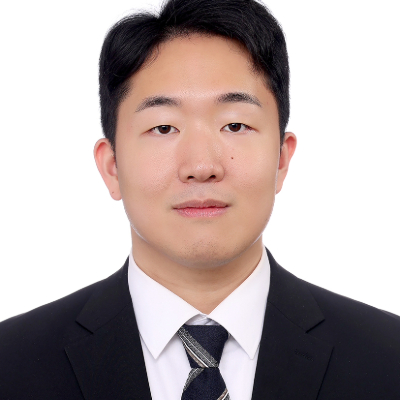
Kim Yeon-jae김연재
duswogmlwo77@ajupress.com
ReporterBank of Korea & Market, Macroeconomics
Kim Yeon-jae is a journalist at AJU Press (AJP's English platform),
covering macroeconomics, international finance, and geopolitics.
He closely tracks central bank monetary policies, global energy supply chains,
and the Korean defense industry. "Peering into the risks behind the euphoria."
covering macroeconomics, international finance, and geopolitics.
He closely tracks central bank monetary policies, global energy supply chains,
and the Korean defense industry. "Peering into the risks behind the euphoria."
Latest by Kim Yeon-jae
-
 Korea to test tokenized government bonds in 2027 SEOUL, October 8 (AJP) — South Korea plans to test tokenized government bonds next year, whiled the the International Monetary Fund (IMF) worried a hasty shift could amplify liquidity shocks. The Bank of Korea (BOK) and IMF on Thursday jointly held a forum on “Scaling Tokenization: New Efficiencies, New Vulnerabilities,” a chapter of the fund’s October Global Financial Stability Report. “The Bank of Korea and the government are collaborating to launch a pilot program for tokenizing government bonds next year,” Kwon Min-soo, the BOK’s senior deputy governor, said in prepared opening remarks. He also said Korea plans to scale up the second phase of Project Hangang, its digital currency trial, in the fourth quarter of this year. The IMF assessed current systemic risks from tokenization as limited but warned that wider adoption could create new channels for liquidity strains, leverage and financial contagion. Tokenization represents financial assets and liabilities on programmable digital ledgers, bringing issuance, transfers, recordkeeping and settlement onto shared infrastructure that can reduce administrative costs, improve transparency and automate processes previously handled by separate intermediaries. The global public market for tokenized real-world assets reached about $65 billion in July, excluding private tokenized markets, repurchase agreements and stablecoins, according to the report. An IMF analysis of five liquid U.S. equity-linked tokens across 11 trading venues found that more than half of trading activity occurred outside regular U.S. market hours and about 80 percent of trades were for less than one share. Those markets were less liquid than their conventional counterparts, with realized volatility roughly 1.5 times as high, although the IMF cautioned that findings from a small, developing market may not reflect conditions under broader adoption. The report attributed part of the volatility gap to thinner liquidity and continuous trading, which captures overnight and weekend price movements excluded from conventional markets’ regular-hours measure. For Asia, Kwon said faster settlement and lower intermediation costs could benefit supply chains and financial markets, while the region’s history of sudden capital outflows underscored the need to prepare safeguards before the infrastructure expands. Limited trading hours, multiple intermediaries and settlement delays can impede efficiency, but “these frictions have served as buffers during times of market turmoil, allowing policy authorities to assess and respond,” he said. The IMF identified a similar trade-off in immediate, simultaneous settlement, which can reduce the risk of one party failing to deliver but may require more funding up front and remove timing gaps that help participants absorb liquidity shocks. The fund also warned that automated margin calls and liquidations could accelerate forced selling during periods of stress, adding to liquidity strains. It recommended a technology-neutral approach that removes unnecessary barriers while maintaining financial safeguards, including clarifying the legal rights attached to tokens, applying regulation according to the underlying financial activity and supporting secure transfers of assets and money between platforms. Tokenized securities should settle in central bank money where practical and available, the report said, while privately issued alternatives such as deposit tokens and stablecoins require controls addressing their issuers’ credit and liquidity risks. The IMF also urged authorities to adapt circuit breakers and liquidity safeguards for continuous trading, strengthen oversight of technology providers and monitor links between tokenized and traditional financial markets. AJP Takeaways - Korea plans a government bond tokenization pilot next year and further development of Project Hangang’s second phase in the fourth quarter. - The IMF’s equity-token sample showed demand for trading outside regular hours and fractional exposure, alongside lower liquidity and higher measured volatility. - Current systemic risks from tokenization remain limited, but the IMF called for stronger settlement, liquidity and operational safeguards as adoption expands. 2026-10-08 14:52:17
 -
 AJP Factbox: Korea's 2026 C/A surplus stretches on South Korea’s current account surplus reached $46.11 billion in August, its second-largest on record, as semiconductor exports surged, according to data released October 8 by the Bank of Korea (BOK). The January–August surplus totaled $279.20 billion, about four times the year-earlier figure. Net portfolio debt flows swung from $950 million inward in July to $10.82 billion outward in August as residents increased foreign debt investment by a record $6.44 billion and foreigners reduced Korean debt holdings by $4.38 billion. 2026-10-08 10:20:38
 -
 Korea's C/A second monthly high, quadrupled on year as of Aug SEOUL, October 8 (AJP) —Unwaveringly robust chip demand fed the second-largest monthly current account surplus for South Korea in August, while Korean appetite for overseas debt was whetted by falling U.S. treasury and global bond prices, central bank data showed Thursday. The current account recorded a $46.11 billion surplus, widening from $42.08 billion in July and staying above $40 billion for a third straight month, according to the Bank of Korea (BOK). August's surplus was second only to the record $49.73 billion set in June. The cumulative surplus for the first eight months stretched to $279.20 billion, about four times the $69.67 billion recorded during the same period last year. Korean residents increased their holdings of foreign debt securities by a record $6.44 billion in August, more than five times July's $1.24 billion increase, while foreign investors reduced their holdings of Korean debt securities by $4.38 billion after adding $2.19 billion a month earlier. Combining the two sides, bond flows shifted to a net outward $10.82 billion in August from a net inward $950 million in July, marking a sharp reversal even as Korea continued to generate one of the largest current account surpluses in its history. The goods surplus widened to $46.81 billion from $40.43 billion in July, also the second-largest on record, as exports rose to $104.80 billion — staying above $100 billion for a third straight month — while imports fell to $57.99 billion. The export boom remained heavily concentrated in technology products. On a customs basis, semiconductor shipments surged 206.1 percent from a year earlier in August and exports of computer peripherals including solid-state drives jumped 366.8 percent, while overall IT exports rose 162.6 percent and non-IT shipments increased 8.1 percent. Imports also reflected continued investment in the semiconductor cycle, with capital-goods purchases rising 42.9 percent from a year earlier, including a 96.5 percent increase in semiconductor manufacturing equipment and a 70.6 percent rise in semiconductor imports. The services deficit narrowed to $1.68 billion from $1.97 billion in July as higher export freight rates lifted the transport surplus to $520 million from $60 million, more than offsetting a widening travel deficit that more than doubled to $770 million during the summer travel season. The primary-income surplus fell to $1.92 billion from $4.35 billion, largely because quarterly dividend payments reduced the dividend-income surplus to $1.18 billion, with such payments typically concentrated in February, May, August and November, according to the BOK. The sharper change came in the financial account, where Korean residents increased overseas portfolio assets by $16.60 billion in August, up from $13.57 billion in July and the second-largest monthly increase on record. Overseas equity investment remained high at $10.15 billion but eased from $12.33 billion, leaving the surge in foreign bond purchases as the main source of the monthly acceleration. The BOK attributed the record August increase in overseas debt-security investment to improved investment appeal in foreign bond markets at the time. Foreign portfolio investment in Korea simultaneously swung into reverse, falling by $4.85 billion after increasing by $8.17 billion in July. The BOK cited weaker arbitrage incentives as foreign investment in Korean debt securities declined, while foreign stock investment also turned negative after the temporary boost from SK hynix's American depositary receipt issuance faded. Despite the August reversal, foreign investment in Korean debt securities remained up $15.34 billion for the first eight months of the year, showing that the monthly outflow had yet to erase earlier inflows. As a result, net portfolio assets increased by $21.44 billion in August, nearly four times the $5.40 billion increase recorded in July. Comparable September balance-of-payments data have yet to be released, making it too early to determine whether August's shift in bond flows will persist. AJP Takeaways - Korea posted a $46.11 billion current account surplus in August, the second-largest on record and the third straight monthly surplus above $40 billion. - Bond flows swung from a net $950 million inward in July to a net $10.82 billion outward in August as residents' foreign bond purchases hit a record. - Residents' overseas portfolio investment rose to $16.60 billion, the second-largest monthly increase on record, while foreign portfolio investment in Korea turned negative. 2026-10-08 08:05:03
 -
 Can the Korean won stay resilient through year-end? SEOUL, October 7 (AJP) — The South Korean won has held steady for more than a month after a volatile year despite heavy foreign stock selling, renewed Korean investment overseas and advance government payments tied to U.S. investment — offering relief to Koreans planning overseas trips or financing education abroad. The won closed Wednesday at 1,340.4 per dollar, up 0.9 percent from September and nearly 7 percent from the end of 2025. The pair has hovered around 1,340 since early September, weathering elevated U.S. Treasury yields, renewed dollar strength, oil prices above $100 a barrel and persistent foreign selling of Korean equities. Dealers broadly attribute that resilience to dollar sales by cash-rich exporters converting earnings accumulated during months of currency volatility as year-end settlements approach. “A sizable amount of exporter dollar selling is coming into the market, and that is capping the dollar-won's upside,” an FX official at a regional bank said. “We would need to check exactly which industries the flows are coming from.” Exporters sell dollars to obtain won for domestic expenses such as wages, taxes and supplier payments, adding foreign-currency supply to the local spot market. The potential pool of those dollars has expanded sharply alongside Korea’s record exports. Exports reached $120.94 billion in September and the trade surplus widened to a record $49.85 billion. Semiconductor shipments alone surged 262.8 percent from a year earlier to $60.30 billion, according to the Ministry of Trade, Industry and Resources. An FX official at a commercial bank said the dominance of chips in the export boom suggested that semiconductor companies accounted for a substantial share of the dollar sales. “Semiconductors are leading exports, so a substantial share of exporter dollar sales is bound to come from the chip sector,” the official said. “Those flows are clearly easing upward pressure on the dollar-won rate.” The official stopped short of linking individual transactions to specific semiconductor companies, reflecting dealers’ limited ability to trace the ultimate source of funds moving through the interbank market. Nor does a record trade surplus translate directly into an equivalent amount of dollars being sold in Seoul. Exporters can retain earnings in foreign-currency accounts, use them for overseas expenses and investments, hedge future payments or wait for a more favorable exchange rate before converting them into won. That distinction matters because Korea’s external surplus is only one side of the currency equation. The Bank of Korea said in an April study that a widening current-account surplus had coexisted with won depreciation for a prolonged period since the second quarter of 2023, as private overseas portfolio investment became increasingly important in the country’s external balance sheet. Overseas investment creates immediate demand for foreign currency, the central bank has also noted, even if the resulting assets generate income and strengthen Korea’s external position over time. Koreans’ exposure to U.S. equities remains substantial. Domestic investors held about $200.2 billion in U.S. stocks as of Oct. 5, according to Korea Securities Depository data, taking the value of their holdings above $200 billion for the first time in four months. The tension between cheaper dollars and continued overseas demand is also apparent among Koreans who regularly spend or invest abroad. Jeon Hyun-a, 52, sends living expenses to her eldest daughter, who is in her final year at a U.S. university. Her two younger children are also preparing for possible study in the United States. The earlier surge in the dollar-won rate into the 1,500s made those payments particularly painful, she said. The additional currency burden ate into gains she had made on U.S. and Korean AI-related stocks. “Since around mid-September, the burden of exchanging and sending money has eased a little,” Jeon said. But the stronger won has not diminished her interest in dollar assets. She has already bought some dollars and is considering increasing her holdings of dollar-denominated assets, including U.S.-listed exchange-traded funds such as QQQ, with potentially years of overseas education expenses ahead. Kim Soo-hwan, 36, who works in motorsports and travels abroad frequently, said the earlier jump in the exchange rate sharply increased the cost of trips to the United States and Europe. The recent stabilization has made exchanging money less burdensome, although he remains wary of another abrupt rise in the dollar. “I don't think I would buy dollars outright right now,” Kim said. “But I would consider U.S. stocks, ETFs or other investments that give me dollar exposure.” Available data do not yet establish whether education remittances, travel-related currency purchases or other household dollar buying have increased since the won strengthened. Still, cheaper dollars give households with future overseas expenses an incentive to buy foreign currency or acquire dollar-denominated assets. For now, exporter dollar sales are helping meet demand arising from foreign equity outflows, overseas investment and other transactions. Record export earnings have enlarged the potential supply. Whether the exchange rate will stay stable for longer cannot be assured, but for families budgeting for tuition or travel, the respite is welcome — and an opportunity to prepare for the next bill. AJP Takeaways - The won closed at 1,340.4 per dollar Wednesday and has remained near the 1,340 level since early September despite persistent external headwinds. - Exporter dollar sales are helping cap the dollar-won's upside, with record semiconductor exports expanding the potential pool of foreign-currency supply. - Overseas investment remains a major source of dollar demand, suggesting the won's recent resilience does not necessarily point to a one-way appreciation through year-end. 2026-10-07 17:46:36
 -
 Korean Inc. net lending hits record high in Q2 SEOUL, October 7 (AJP) — South Korean nonfinancial corporations posted record net lending of 67.1 trillion won ($50.1 billion) in the second quarter as the Korean Inc. rushed to secure lending before interest rates went higher and chip boom fueled capital investment, the Bank of Korea (BOK) showed Wednesday. The figure more than tripled from 20.8 trillion won in the first quarter and marked the highest level since the BOK began compiling the series in 2009. Net lending is calculated by subtracting financial liability transactions from financial asset transactions, with a positive figure indicating that a sector supplied more funds than it raised. The BOK attributed the increase partly to a sharp rise in corporate profits. Net income among listed companies rose to 189.0 trillion won in the second quarter from 111.2 trillion won in the previous quarter, according to Korea Exchange (KRX) figures. Corporate financial asset transactions nearly doubled during the quarter, while funding also increased sharply, leaving companies with a substantially larger net surplus. Across the domestic economy, net lending increased to 147.8 trillion won from 84.3 trillion won in the first quarter. Households and nonprofit institutions moved in the opposite direction, with net lending falling to 60.7 trillion won from 79.2 trillion won as income declined and net home purchases increased, reducing available funds. The household debt-to-gross domestic product ratio, meanwhile, fell to 81.1 percent from 85.3 percent at the end of the first quarter. AJP Takeaways - South Korean nonfinancial corporations posted record net lending of 67.1 trillion won in the second quarter, the highest since the series began in 2009. - Corporate net lending more than tripled from the first quarter as listed companies' profits increased sharply. - Households and nonprofit institutions saw net lending fall to 60.7 trillion won as income declined and net home purchases increased. 2026-10-07 13:46:54
 -
 BOK taps market, FX experts for senior posts SEOUL, October 7 (AJP) — The Bank of Korea named two career officials with extensive financial-market and international finance experience to senior posts Wednesday, appointing Choi Young-joo as deputy governor and selecting Yoon Kyoung-soo as its next chief economist. Choi, currently director general of the Financial Markets Department, will oversee international finance and cooperation for a three-year term beginning October 8. He joined the Bank of Korea (BOK) in 1997 and spent much of his career in the Financial Markets and Monetary Policy departments, working on market analysis, open market operations and policy responses to financial volatility. Choi later headed the Office of Sustainable Growth, where he led work including climate stress testing, before becoming director general of the Financial Markets Department in August. The central bank said that Choi's experience in monetary policy and financial markets would help him respond to rapidly changing external financial conditions and strengthen the economy's external stability. Yoon, currently director general of the International Department, was also selected to head the central bank's Economic Research Institute and serve as chief economist following an open recruitment process. Yoon holds a doctorate in economics from Ohio State University and has conducted research in international economics and financial markets. Since joining the BOK in 1998, he has worked in the International and Financial Stability departments, served on secondment at the Bank of England and later worked as an adviser to the governor. He has led the International Department since May 2024. As chief economist, Yoon will oversee the Economic Research Institute and help set the central bank's medium- to long-term research agenda and priorities. The BOK said Yoon's research background, policy experience and leadership would help strengthen the institute's policy-oriented research. Yoon was selected after document screening and interviews by a committee made up mostly of outside members, followed by an interview with the governor. He will be formally appointed after completing the remaining procedures. The appointments put officials with deep market and international finance experience in charge of two areas closely tied to the BOK's external policy response and longer-term research agenda. AJP Takeaways - The Bank of Korea appointed Choi Young-joo as deputy governor for international finance and cooperation for a three-year term beginning October 8. - Yoon Kyoung-soo was selected as chief economist after a career spanning international finance, financial stability and policy advisory roles. - Both appointments draw on officials with extensive financial-market and international policy experience. 2026-10-07 12:38:22
 -
 AJP Factbox: South Korea's 2026 growth outlook brightens Major global investment banks raised their 2026 growth forecasts for South Korea to an average of 3.5 percent amid a stronger-than-expected chip boom, with J.P. Morgan lifting its estimate to 4.0 percent. The average forecast from eight banks rose from 3.3 percent a month earlier, according to end-September data compiled by the Korea Center for International Finance. 2026-10-07 12:34:20
 -
 Global banks lift Korea growth outlook; J.P. Morgan sees 4% SEOUL, October 7 (AJP) — Major global investment banks ratcheted up 2026 growth forecast for South Korea to an average of 3.5 percent in line with a hotter-than-expected chip boom, with J.P. Morgan raising its estimate to 4.0 percent. The average projection from eight major investment banks rose from 3.3 percent at the end of August, according to data compiled by the Korea Center for International Finance (KCIF) as of the end of September. The consensus has risen for six consecutive months from 2.4 percent at the end of April, while all eight institutions now expect South Korea to grow at least 3 percent this year. J.P. Morgan raised its forecast to 4.0 percent from 3.8 percent, becoming the only institution in the group to project growth in the 4 percent range. UBS made the largest revision among the institutions whose forecasts were raised, lifting its estimate to 3.5 percent from 2.8 percent, while Bank of America raised its projection to 3.6 percent from 3.1 percent and Citi to 3.8 percent from 3.7 percent. Separate public research from several of the banks has pointed to the global artificial intelligence investment boom and South Korea's position in the semiconductor supply chain as key supports for the economy. Citi Research said in a September 25 global outlook that AI spending had become a major engine of global growth, with its effects increasingly visible in South Korea, Taiwan and China through manufacturing, technology exports and investment. J.P. Morgan Private Bank has similarly highlighted South Korea as a major beneficiary of the AI investment cycle, saying in its mid-year Asia outlook that the country's export growth accelerated sharply in the first half on strong demand and tight supply for high-end memory products. The bank said continued investment by cloud providers and hyperscalers in data centers and semiconductors could sustain demand for computing capacity and memory over the next one to two years. Goldman Sachs Research has separately described a semiconductor memory supercycle, fueled by tight supply, hyperscaler demand and AI computing needs, as a major driver of South Korean corporate earnings. UBS Asset Management also said in its September emerging-market assessment that sustained AI infrastructure spending and strong semiconductor earnings had supported North Asian markets, with South Korea and Taiwan leading the AI-linked rebound. The upward revisions have extended into next year. Six of the eight investment banks raised their 2027 growth forecasts, lifting the average projection to 2.8 percent from 2.5 percent at the end of August. That puts the consensus close to the Bank of Korea's (BOK) 2.9 percent forecast for 2027. The BOK in August raised its growth forecasts to 3.3 percent for 2026 and 2.9 percent for 2027, saying the semiconductor boom had exceeded earlier expectations and its spillover effects were broadening. The central bank said strong semiconductor exports and investment were increasingly being accompanied by improving income conditions and a recovery in consumption, while cautioning that the outlook remained subject to uncertainty over the semiconductor cycle and developments in the Middle East. The OECD has taken a slightly stronger view of growth this year, raising its September forecast for South Korea to 3.7 percent on strong industrial production and export growth. It expects growth to ease to 2.6 percent in 2027 as private consumption expands at a more moderate pace. AJP Takeaways - South Korea is seen growing an average 3.5 percent in 2026 by eight major global investment banks, up from 3.3 percent a month earlier. - J.P. Morgan has the highest 2026 growth forecast at 4.0 percent, while UBS, Bank of America and Citi also raised their projections. - Global investment banks have increasingly highlighted AI investment, semiconductor demand and technology exports as key supports for Korea’s growth outlook. - The Bank of Korea expects the economy to grow 3.3 percent this year and 2.9 percent in 2027, while the IB average for next year has risen to 2.8 percent. 2026-10-07 10:32:08
 -
 Korean won holds firm — for now — as US investment pledge turns into payments SEOUL, October 6 (AJP) — South Korea has begun wiring funds to the United States under its $200 billion investment commitment in exchange for tariff relief, testing its ability to finance the pledge without unsettling the won. The currency held firm Tuesday, closing 0.4 won stronger at 1,343.6 per dollar despite signs that preparations for the investment program were beginning to affect foreign-exchange reserves. Deputy Prime Minister and Finance Minister Lee Hyoung Il told a parliamentary audit hearing that the government transferred $2.4 billion on Oct. 1 for a gas-fired power project in Texas. A further advance payment of up to $10 billion for U.S. nuclear projects by year-end would require commercial-viability checks and completion of domestic legal procedures, he said. The bilateral framework caps strategic investment at $20 billion annually and allows Seoul to seek adjustments to payment timing and amounts depending on foreign-exchange conditions. The first transfer comes as the Bank of Korea reported a $1.72 billion decline in September reserves to $440.56 billion. The central bank cited lower foreign-currency deposits, valuation effects and asset entrustment to the Korea-U.S. Strategic Investment Corporation. It was the first time the corporation’s asset entrustment had appeared among the factors affecting monthly reserves. Investment income partly offset the decline, the BOK said, without disclosing the amount. No specific size or timetable has been set for further entrustments. The September figures exclude the Oct. 1 payment. They nevertheless show that preparations for U.S.-bound investment were already affecting Korea’s official foreign assets before the first transfer. For the won, the immediate question is how much of that investment requires fresh dollar buying. Exporter dollar sales, particularly by chipmakers, helped the currency withstand a firmer global dollar, foreign equity outflows and concerns over the investment pledge. Funding the initial transfer with existing foreign assets also limited the need for immediate dollar purchases in Seoul’s spot market. Kim Jung-sik, an economics professor at Yonsei University, told AJP that future currency pressure would depend heavily on how the government raises the money. Issuing won-denominated bonds and converting the proceeds into dollars would put more immediate depreciation pressure on the won, he said. Borrowing dollars overseas could ease that pressure by avoiding equivalent purchases in the domestic market. “The immediate impact would be limited, and the risk would be lower than if won-denominated bonds were used, but it could still be viewed as a potential risk later,” Kim said. Overseas borrowing would shift part of the burden into foreign-currency liabilities that must eventually be serviced in dollars. Expectations could also move the market before any transaction takes place. “Even expectations that the government will buy dollars in the future can put upward pressure on the exchange rate,” he said. Citi has similarly assessed the near-term currency impact as limited, citing plans to use foreign-reserve investment income and government-guaranteed foreign-currency bonds. Kim Jin-wook, Citi’s chief economist, said Korea’s large structural current-account surplus should provide longer-term support for the won even as the U.S. investment program generates capital outflows. That surplus does not automatically become dollar supply in Seoul’s currency market, however. Exporters may retain their earnings abroad or reinvest them overseas. The longer-term test is therefore how repeated funding requests will be met. Reserve income and existing foreign assets can reduce immediate dollar demand, while offshore borrowing creates future repayment obligations. Further payments are also conditional. Beyond the commercial and legal requirements for the proposed nuclear investment, participation in an Alaska liquefied natural gas project remains under review. The won has absorbed the first transfer. Its resilience as payments accumulate will depend on whether dollar inflows and funding arrangements can keep pace without placing sustained pressure on reserves or adding substantially to Korea’s foreign-currency debt. AJP Takeaways - South Korea transferred its first $2.4 billion under the U.S. investment program on Oct. 1, while September reserve data separately showed U.S.-investment-related asset entrustment for the first time. - The won closed 0.4 won stronger at 1,343.6 per dollar as exporter dollar sales and the use of existing foreign assets limited immediate demand for dollars in Seoul’s spot market. - Future FX pressure will depend on how subsequent investments are funded, with offshore borrowing reducing near-term spot-market demand but creating foreign-currency liabilities and future repayment needs. 2026-10-06 17:41:19
 -
 IMF revision lowers Korea's current-account benchmark *The issue note reflects the author’s views and not necessarily the official position of the BOK SEOUL, October 6 (AJP) — An IMF demographic-model revision lowered South Korea’s estimated current-account norm by 1.10 percentage points, the largest decline among 26 economies, according to a Tuesday issue note from The Bank of Korea (BOK). Kim Min, an economist at the BOK’s International Department who authored the note, isolated the effect by comparing the revised model with a counterfactual that retained the previous demographic structure. South Korea’s current-account surplus rose to 6.6 percent of gross domestic product in 2025 from 5.3 percent a year earlier, with semiconductor net exports accounting for much of the increase, according to the International Monetary Fund (IMF). The IMF’s External Balance Assessment, or EBA, model put Korea’s cyclically adjusted current account at 6.4 percent of GDP against a model-estimated current-account norm of 3.3 percent, producing a gap of 3.1 percent. The norm refers to the current-account balance the model estimates would be consistent with a country’s medium-term economic fundamentals and desirable policies. IMF staff then made a separate adjustment for Korea’s unusually rapid population aging, raising the norm to 3.9 percent and bringing the final current-account gap down to 2.5 percent. The IMF assessed Korea’s 2025 external position as “stronger,” meaning it stood above the level considered consistent with the country’s fundamentals and desirable policies, up from “broadly in line,” which indicates broad consistency with that benchmark. The EBA model estimates current-account norms using factors including net foreign assets, productivity, demographics and policy settings, with the demographic component reflecting how population age and longevity affect saving. The latest revision changed how aging enters the calculation, placing greater weight on the current share of elderly people and less on how large that population is expected to become in the future. The IMF itself has identified Korea as an outlier in the speed of population aging, while Kim found that the revised framework may still fit Korea less well because older Koreans do not necessarily follow the conventional life-cycle pattern in which people save less and draw down assets after retirement. Households headed by people aged 65 or older had an average saving propensity of 32.2 percent in 2025, compared with 30.9 percent for all households. Korea’s employment rate for people aged 65 or older stood at 39.5 percent in 2025, the highest among OECD member countries and about 2.8 times the group’s simple average. Kim found that 1.03 percentage points, or 94 percent, of the 1.10 percentage point widening caused by the demographic revision appeared in the model’s residual — the portion not explained by its economic and policy variables — while just 0.07 percentage point came from the policy gap. The result pointed to a weaker fit of the revised model for Korea rather than changes in the country’s policy settings, Kim said. The IMF plans another EBA revision for its 2027 External Sector Report, changing how net foreign assets enter the model, a move Kim estimated could widen Korea’s 2026 current-account gap by another 0.74 percentage point. The final methodology has yet to be fixed, however, and the estimated impact varies depending on the base year and calculation period. AJP Takeaways - The IMF’s demographic-model revision lowered Korea’s estimated current-account norm by 1.10 percentage points, the largest decline among 26 economies examined. - Korea’s 2025 current-account surplus stood at 6.6 percent of GDP, while the IMF EBA model put its current-account norm at 3.3 percent and the model-based gap at 3.1 percent. - Kim found that 94 percent of the revision-driven widening appeared in the model’s unexplained residual, suggesting the revised framework may not fully capture Korea’s unusually rapid aging and elderly saving patterns. 2026-10-06 13:52:35