

Journalist
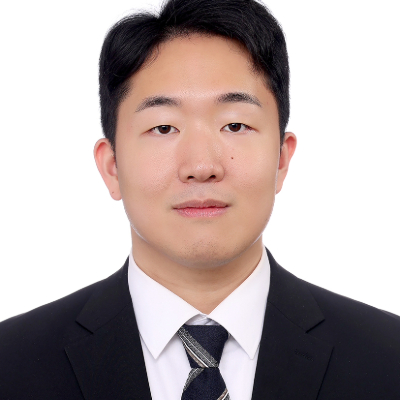
Kim Yeon-jae김연재
duswogmlwo77@ajupress.com
ReporterBank of Korea & Market, Macroeconomics
Kim Yeon-jae is a journalist at AJU Press (AJP's English platform),
covering macroeconomics, international finance, and geopolitics.
He closely tracks central bank monetary policies, global energy supply chains,
and the Korean defense industry. "Peering into the risks behind the euphoria."
covering macroeconomics, international finance, and geopolitics.
He closely tracks central bank monetary policies, global energy supply chains,
and the Korean defense industry. "Peering into the risks behind the euphoria."
Latest by Kim Yeon-jae
-
 Korean bonds join global safe-haven rally on equity rout SEOUL, October 15 (AJP) — An equity rout driven by concerns over AI overspending is steering investors toward government bonds in Seoul and other major markets despite stronger-than-expected U.S. inflation and the prospect of a prolonged monetary tightening cycle. The three-year Korean government bond yield closed Thursday 1.6 basis points lower at 3.867 percent, while the 10-year yield fell 6.8 basis points to 4.193 percent, its lowest since Aug. 5. The 20-year and 30-year yields dropped 5.9 and 4.9 basis points to 4.237 percent and 4.289 percent, respectively. Longer-dated bonds outperformed, narrowing the gap between short- and long-term yields. Bond prices rise as yields fall. The rally came as Korean stocks suffered another steep selloff. The KOSPI finished down 7.57 percent at 5,554.22 and the KOSDAQ lost 7.65 percent to 760.82 after trading curbs were triggered in both markets. Foreign investors sold a net 3.62 trillion won ($2.7 billion) of KOSPI shares, while institutions and retail investors bought a net 1.69 trillion won and 1.29 trillion won, respectively. Similar moves unfolded overseas. The benchmark U.S. 10-year Treasury yield fell to about 5.09 percent in Asian trading and the 30-year yield to around 5.45 percent, both reaching three-week lows. The reversal was notable because stronger-than-expected U.S. inflation had initially pushed Treasury yields sharply higher. Consumer prices rose 3.7 percent from a year earlier in September, reviving expectations of another Federal Reserve rate increase and briefly sending the 10-year yield above 5.3 percent. Yields subsequently retreated as the selloff in AI and technology shares deepened, strengthening demand for government debt as investors reduced exposure to riskier assets. Japanese markets showed the same pattern. The Nikkei 225 closed down 4.81 percent at 64,485.02. Around the Tokyo close, the benchmark 10-year Japanese government bond yield was near 2.93 percent, its lowest since Sept. 10, while the 20-year yield stood around 3.80 percent, also its lowest since Sept. 10, and the 30-year yield near 3.99 percent. The simultaneous gains in Korean, Japanese and U.S. sovereign debt pointed to a broader retreat from risk across global markets. Domestic conditions had also become more supportive for Korean bonds before the latest equity shock. Jo Yong-gu, an analyst at Shin Young Securities, said earlier this week that investors were increasingly questioning whether long-term yields in the U.S. and other developed markets had passed their peaks. “Strong tax revenue was also creating room for reduced Korean government bond issuance, while a more stable won was reinforcing favorable bond-market conditions,” he said. “U.S. yields, which had been surging, are showing signs of pausing,” said Eugene Investment & Securities analyst Kim Ji-na. Kim said most of the bearish factors that had pushed yields higher appeared to be reflected in prices, adding that “at current levels, yields are historically attractive.” She cautioned against interpreting the rally as the start of a sustained decline in yields, however, citing lingering uncertainty and the need to manage short-term volatility. Retail investors had been rebuilding bond exposure well before the gloomy week. Individuals bought a net 27.8 trillion won of over-the-counter bonds from the start of the year through Oct. 12, equivalent to about 88 percent of their purchases for all of last year, according to Korea Financial Investment Association data. Net purchases reached 4.02 trillion won in September, up about 816 billion won from August and the highest monthly total this year. The figures indicate that higher yields were already drawing individuals toward fixed-income assets before this week’s turmoil. Risks to the rally remain. Persistent inflation, elevated energy prices and further monetary tightening could push global yields higher again. Investors are also awaiting the Bank of Korea’s Oct. 22 policy meeting after consecutive rate increases in July and August. For now, government debt is regaining some of its traditional appeal as a hedge against falling stocks, after months in which rising long-term yields were themselves a source of market stress. 2026-10-15 18:07:05
 -
 Korea's lending to household cools, firms rise amid tightening SEOUL, October 15 (AJP) — South Korean bank household lending barely grew in September under tightening cycle while lending to large firms surged as they rushed to secure funds for bond repayments and capital expenditure before borrowing rates went higher. Household loans increased by 0.6 trillion won ($444 million) from a month earlier, sharply down from a revised 3.5 trillion won gain in August and the smallest positive monthly increase since March, according to data released Thursday by the Bank of Korea (BOK). Outstanding household loans stood at 1,198.9 trillion won at the end of September. Mortgage lending rose by 2.9 trillion won, slowing from 4.1 trillion won a month earlier as Jeonse transactions remained subdued and housing move-ins declined. Other household loans fell by 2.3 trillion won, extending a 0.6 trillion won decline in August. The BOK attributed the larger drop to reduced individual stock investment as well as seasonal factors including quarter-end bad-loan disposals and holiday bonuses. Corporate borrowing moved in the opposite direction. Bank loans to companies increased by 10.7 trillion won in September, up from 9.7 trillion won the previous month. Loans to large firms jumped by 7.5 trillion won, the biggest monthly increase this year. The BOK attributed the increase to continued efforts by banks to expand lending and stronger demand from companies seeking funds to repay bonds and finance capital expenditure. The figures also point to a greater reliance on bank borrowing for corporate financing this year. Corporate bank loans increased by 77.6 trillion won in the first nine months, compared with 45.0 trillion won during the same period last year. Corporate bonds, meanwhile, recorded 20.6 trillion won in net redemptions over the January-September period, reversing 5.7 trillion won in net issuance a year earlier. The trend was also evident in September, when net corporate bond redemptions widened to 3.4 trillion won from 0.9 trillion won in August. The BOK said higher market rates continued to weigh on issuance while a larger volume of bonds reached maturity. Loans to small and medium-sized companies rose by 3.2 trillion won, slowing from a 4.8 trillion won increase a month earlier. Working-capital demand, including funding ahead of the Chuseok holiday, remained in place, but quarter-end bad-loan disposals and write-offs limited the increase. 2026-10-15 13:17:03
 -
 Korea's M2 growth slows in rate-hike wake Aug SEOUL, October 15 (AJP) — South Korea's broad money growth slowed for a second month in August, while the monthly pace accelerated amid larger inflows of corporate funds into short-term deposits and trusts after the central bank hinted more tightening following back-to-back rate hikes. M2 rose 5.6 percent from a year earlier, easing from 5.8 percent in July and 6.0 percent in June, according to data released Thursday by the Bank of Korea (BOK). On a seasonally adjusted basis, M2 increased 0.9 percent from the previous month to 4,266.8 trillion won, accelerating from a 0.3 percent gain in July. Short-term deposits were the biggest source of the monthly increase, adding 28.7 trillion won as surplus corporate funds flowed in and household balances turned higher. Money trusts also expanded as semiconductor companies placed more funds into the products, while money market funds rebounded from a decline a month earlier. The shift was also visible by holder. Nonfinancial companies added 33.9 trillion won, extending their run of increases to 10 consecutive months, while household and nonprofit holdings returned to growth for the first time in four months. Under the previous M2 definition, money supply expanded 9.9 percent on year, down from 10.3 percent a month earlier. Investment fund shares remained a major driver of the older measure, climbing 42.6 percent from a year earlier and contributing 4.5 percentage points to its annual increase. The contribution had stood at 5.0 percentage points in July. The August data cover the month when the BOK raised its base rate by another 25 basis points to 3.00 percent, marking its second consecutive increase. Narrow money, or M1, fell 1.1 percent from the previous month, while its annual growth rate eased to 4.1 percent. Broader liquidity measures were steadier. Financial institution liquidity, or Lf, and the broadest liquidity measure, L, both grew 7.2 percent on year. 2026-10-15 13:15:00
 -
 Will Sejong make the FSC a backseat driver in Korean finance? SEOUL, October 14 (AJP) - The Financial Services Commission (FSC) got its orders to move to Sejong on Tuesday. On Wednesday, it was running command in central Seoul against a hacking spree that has hit 16 financial companies, the kind of crisis that relocation will soon test. After second emergency response meeting held Wednesday at Government Complex Seoul, the FSC said intrusions had been confirmed across banks, savings banks, mutual finance, card and capital firms, peer-to-peer lenders and crypto operators. About 100,000 records, including names, phone numbers, resident registration numbers and email addresses, have been leaked. Authorities warned the count could grow as firms check their systems against attacker IP addresses shared by regulators. Around the table were the Financial Supervisory Service (FSS), the Financial Security Institute, the science and interior ministries, the Personal Information Protection Commission, the National Police Agency and the Korea Internet & Security Agency. By late 2027 that table will be spread out. The FSC and its Korea Financial Intelligence Unit, about 420 posts in all, are scheduled to move to Sejong in the second half of next year under the second-phase relocation plan unveiled Tuesday. The privacy commission moves in the first half. The police headquarters is to follow by 2031. The FSS, which runs the on-site investigations, is not part of the package and stays in Seoul’s Yeouido district for now. The division of labor in the hacking case shows what is at stake. FSS inspectors were sent into the affected firms and traced the attacks to 19 IP addresses in 12 countries. The FSC chaired the meetings and set the policy response: a full review of financial firms’ security systems, tighter accountability for chief executives and boards, vulnerability checks at least twice a year for large firms instead of once, and faster easing of network-separation rules. “Despite repeated orders for full inspections after the Lotte Card leak and the Mythos shock, we found cases where financial firms failed to keep even the basics,” Secretary General Shin Jin-chang said at the meeting. Moving to Sejong will not change that legal hierarchy. The FSC still writes the rules, licenses financial companies and oversees the FSS. What it risks losing is proximity to the people who see problems first. Officials worry that could turn the policymaker into something like a backseat driver, setting direction from a distance while the supervisor in Seoul has the clearer view of the road. “The advantage of being in Seoul is ultimately being able to meet people at the center of the capital and financial markets in real time, see how they work and communicate with them,” an FSC official said, speaking on condition of anonymity because officials are not authorized to discuss the move publicly. “If we lose that, what service can we be?” The official said meetings with the FSS, Korea Exchange, Korea Financial Investment Association and securities firms are not held daily. They become frequent during unfair-trading cases, market disruptions and crises like the current one. Regular face-to-face contact, the official said, builds the working relationships that matter when authorities have to coordinate in real time. The FSC is not an enforcement body in the same sense as the FSS, the official stressed. Its job is to watch how markets change and turn that into policy. Leaving on-the-ground response entirely to the FSS would reduce policymakers’ direct exposure to the developments they are ultimately responsible for writing into regulation. Some FSC functions could run from Sejong without much difficulty, the official acknowledged. The concern is greater for units that depend on market contact, private consultations and rapid coordination. That concern reportedly reached the cabinet table. FSC Chairman Lee Eog-weon argued against the move at Tuesday’s closed-door cabinet meeting, citing the clustering of the financial industry and the need to stay connected to markets, the Hankook Ilbo reported. Later that day he told senior staff the relocation serves national goals of balanced development and completing Sejong as the administrative capital. The two institutions are being treated differently largely because of their legal status. The FSC is a central government body staffed by civil servants and could be moved without legislation. The FSS is a special corporation established by law. Its relocation, along with that of the Korea Deposit Insurance Corporation and the state-run policy banks, falls under a separate public-institution relocation plan, with targets due in the fourth quarter. In a survey by the FSS union, 85.6 percent of employees said they would consider leaving if the agency moved. The government argued at Tuesday’s briefing that financial policy needs close ties not only to markets but also to other ministries. It concluded the FSC need not stay in Seoul. In Sejong, the FSC would sit alongside the economy ministry and others it works with on household debt, corporate finance and industrial policy. The timing is awkward. Seoul ranked seventh among 139 cities in the Global Financial Centres Index in September, its fourth straight year in the top 10. MSCI left Korea off its developed-market watch list again in June, and the next review comes in June 2027. The government has promised a regular communication channel with major overseas investors. Under the current timetable, the FSC’s capital-market staff would be packing boxes in the months that follow, as that outreach is still being tested. Experience elsewhere is mixed. After the National Pension Service moved its fund management to Jeonju in 2017, departing fund managers most often cited the location as their reason for leaving. Yet a 2023 analysis found the fund’s attrition rate below the asset-management industry average. Inside the FSC, open dissent is rare. Few officials want to be seen opposing the drive to make Sejong the administrative capital. That has kept the reaction more muted than at the FSS, where management and the union have publicly campaigned against leaving Seoul. “At the end of the day, we are civil servants,” the FSC official said. The FSC’s move has been decided. Still undecided is how its policymakers will keep a clear view of the supervisors, financial firms and markets that remain in Seoul, and of the next crisis when it breaks. AJP Takeaways - The FSC and its Korea Financial Intelligence Unit are scheduled to move to Sejong in the second half of 2027, while the FSS remains in Seoul for now. - An FSC official said market-facing teams rely on direct contact with supervisors and financial firms, particularly during unfair-trading cases, market disruptions and other crises requiring rapid coordination. - The government says relocating the FSC will improve coordination with ministries in Sejong, but how the commission will maintain its day-to-day links with Seoul-based supervisors and markets remains unresolved. 2026-10-14 17:01:38
 -
 Korea finds 16 financial firms breached, 100,000 records leaked SEOUL, October 14 (AJP) — South Korean authorities found cyber breaches at 16 financial companies that exposed about 100,000 personal-data records, prompting a sector-wide security overhaul after weaknesses were identified at nearly one-quarter of firms checked. The Financial Services Commission (FSC) disclosed the findings Wednesday after a second emergency response meeting with the Financial Supervisory Service (FSS), Financial Security Institute and other authorities. The incidents were found across banks, savings banks, credit-finance companies, mutual-finance institutions, electronic-finance businesses, online investment-linked lenders and virtual-asset operators. The affected firms include Shinhan Bank, KB Kookmin Bank, BNK Busan Bank and Hana Bank, along with four savings banks and companies in other financial sectors. Authorities said the number of affected companies could rise as financial firms continue checking their systems against internet protocol addresses linked to the attacks. About 100,000 records containing information including names, contact details, resident registration numbers and email addresses have been confirmed leaked so far. No account numbers or card numbers that could be directly used for unauthorized payments have been found among the leaked data, the FSC said. Authorities are investigating the attack routes and methods, whether the incidents are connected to the same attacker and whether artificial intelligence was used. A separate emergency review of 555 financial companies found security shortcomings at 130, or 23.4 percent, while 425 reported no deficiencies under a 12-item checklist. Most companies that reported shortcomings needed improvements in one or two areas related to security patches or monitoring, with weaknesses relatively more common among electronic-finance companies and online investment-linked lenders. The problems included failure to apply the latest security patches, weak management of systems no longer supported by manufacturers and the absence of round-the-clock security monitoring. Authorities also identified shortcomings in authentication and access controls for externally exposed systems, including cases where multi-factor authentication had not been introduced for critical services. The FSC said financial companies with deficiencies were instructed to apply security patches, replace outdated equipment, strengthen monitoring and tighten authentication and access controls. The government will follow the emergency checks with a broader review of financial companies' security systems, including external access points, authentication, internal controls and the responsibilities of chief executives and senior technology and security officers. It also plans to expand vulnerability assessments for large financial companies to at least twice a year from the current annual cycle and establish grounds for additional inspections when urgent security risks emerge. Authorities will also broaden the financial sector's threat-sharing system so information detected independently by individual firms can be distributed across the industry. The government plans to develop AI-based systems to assess emerging cyber threats and detect vulnerabilities in externally exposed assets, source code and mobile applications, while considering shared AI-based security monitoring for smaller financial companies with limited resources. "It is very painful to see that some financial firms failed to follow even basic security practices despite repeated calls to strengthen their defenses," said Shin Jin-chang, secretary general of the FSC. He said authorities would review the industry's overall security framework, including monitoring systems and accountability at the CEO and board levels. Shin also said the government would accelerate regulatory changes aimed at allowing financial companies to deploy more advanced AI-based cybersecurity tools. "We will move quickly to establish a security system in which AI attacks are defended with AI," Shin said. AJP Takeaways - Cyber breaches have been confirmed at 16 financial companies, with about 100,000 personal-data records leaked, although no account or card-number leaks have been identified. - An emergency review found security shortcomings at 130 of 555 financial companies, including outdated patches, weak access controls and gaps in round-the-clock monitoring. - Authorities plan broader security reviews and AI-based threat sharing, while whether AI was used in the recent attacks remains under investigation. 2026-10-14 16:40:22
 -
 BOK chief welcomes stronger won in containing AI-fueled inflation SEOUL, October 14 (AJP) —Bank of Korea Gov. Shin Hyun-song welcomed further won appreciation to contain inflationary pressure fueled by South Korea’s exceptional chip windfall and defended restrictive monetary policy despite geopolitical headwinds. Speaking at an International Monetary Fund Governor Talk in Bangkok on Tuesday, Shin discussed how the BOK is balancing low inflation, exchange-rate flexibility and financial stability as the global AI upcycle collides with uncertainty from the Middle East conflict. “In Korea, the AI cycle has swamped the negative effect from the Middle East. But for inflation, of course, they combine,” Shin said. His remarks capture the unusual mix confronting Korea. Higher energy costs from the conflict weigh on growth and push up prices, while the AI boom supports exports and investment but adds demand-side inflation. The forces partly offset each other on growth while reinforcing price pressure, giving the central bank less reason to ease policy in response to the geopolitical shock. Shin said headline and core inflation were likely to remain above the BOK’s 2 percent target for some time. Policy would remain restrictive until the central bank was confident inflation was converging toward its target in a timely manner. Consumer inflation eased to 2.9 percent in September from 3.1 percent in August. The BOK’s benchmark rate stands at 3.00 percent after consecutive quarter-percentage-point increases in July and August. The central bank had already flagged stronger demand pressure from the AI-driven expansion when it raised rates in August. It lifted its 2026 growth forecast to 3.3 percent from 2.6 percent, citing stronger-than-expected semiconductor exports and investment and their spillover into consumption. It kept its headline inflation forecast at 2.7 percent but raised its core inflation projection to 2.5 percent from 2.4 percent as improving incomes added to demand pressure. Shin said the BOK’s three immediate considerations — inflation, the exchange rate and financial stability — were pointing in the same direction, easing the trade-offs central banks typically face. The won is central to that alignment. Shin said the currency had strengthened substantially since the BOK shifted toward tighter policy but had room to rise further, adding that some additional appreciation would be desirable. A firmer won can curb imported inflation and boost households’ purchasing power, spreading more of the export windfall to the domestic economy. Shin linked that effect to Korea’s K-shaped recovery, in which the semiconductor-led export sector has far outpaced parts of the domestic economy. His assessment contrasts with the first half of the year, when won weakness amplified imported inflation and complicated monetary policy. He did not suggest a new exchange-rate target or indicate that the BOK would defend a particular level. AI could also influence interest rates beyond the current inflation cycle. Shin said stronger productivity and potential growth associated with AI could eventually lift the neutral interest rate — the level that neither stimulates nor restrains the economy — by increasing investment and financing demand. Heavy borrowing by global technology companies to fund AI infrastructure is already putting upward pressure on long-term market rates, he said. AI is thus shaping the BOK’s outlook on two fronts: strengthening near-term demand enough to add inflation pressure and potentially raising the interest rate consistent with balanced growth over time. For vulnerable households and small businesses struggling with high borrowing costs, Shin advocated targeted fiscal support rather than monetary easing before inflation is under control. The BOK’s next Monetary Policy Board meeting is scheduled for Oct. 22. Shin stopped short of signaling a third consecutive rate increase. Speaking after the IMF session, he said the July and August hikes had produced desirable effects but declined to comment on the coming decision. AJP Takeaways - Shin said the AI upcycle is cushioning Korea's growth from the Middle East conflict while the two forces reinforce each other on inflation. - Shin said further won appreciation would be desirable as a stronger currency eases inflation pressure and improves household purchasing power. - The BOK remains committed to restrictive policy, but Shin gave no specific signal for the Oct. 22 Monetary Policy Board meeting. 2026-10-14 13:23:29
 -
 KOSPI sees modest rebound as foreign investors keep selling SEOUL, October 14 (AJP) - South Korean stocks pared an early rebound Wednesday morning as foreign investors extended their selling and gains in chip heavyweights faded, after the benchmark jumped more than 2 percent shortly after the market opened. The benchmark Korea Composite Stock Price Index (KOSPI) stood at 6,063.71 as of around 10:20 a.m., up 28.36 points or 0.47 percent from the previous session. The index had surged more than 2 percent shortly after the open as bargain hunters stepped in following the previous day's 5.46 percent rout, its steepest decline in nearly two months, but gave back most of those gains by mid-morning. Foreign investors remained net sellers, offloading 134.1 billion won (US$100 million) of KOSPI shares by 10:20 a.m. Institutions bought a net 125.1 billion won, while retail investors sold 152.7 billion won. The flow suggested the rebound was being supported largely by institutional and program buying rather than a meaningful return of foreign demand after overseas investors drove the previous session's selloff. Program trading posted net purchases of 204.0 billion won, with non-arbitrage trading recording 213.8 billion won in net buying and arbitrage trading posting 9.8 billion won in net sales. Semiconductor heavyweights remained in positive territory but surrendered much of their earlier gains. Samsung Electronics rose 1.08 percent to 234,500 won, while SK hynix gained 0.69 percent to 1,453,000 won as of 10:20 a.m. Both had climbed more sharply shortly after the opening bell. The early rebound came despite continued losses in U.S. semiconductor stocks overnight. Micron Technology fell 3.62 percent in New York, while U.S.-traded shares of SK hynix dropped 3.19 percent and the Philadelphia Semiconductor Index slipped 0.23 percent. That suggested Wednesday's initial gains in Seoul reflected bargain hunting after Tuesday's steep losses rather than a broader turnaround in sentiment toward memory and artificial intelligence (AI)-related stocks. Chip shares have come under pressure amid concerns over the durability of AI-related investment and intensifying competition from Chinese memory makers, including ChangXin Memory Technologies. The recovery also failed to spread to the secondary market. The tech-heavy KOSDAQ fell 1.26 percent or 10.51 points to 826.52, moving in the opposite direction from the main board and underscoring the uneven nature of the rebound. The South Korean won rose 2.6 won to 1,340.4 per dollar, recovering some of its losses from the previous session. A firmer won and a positive KOSPI pointed to some stabilization following Tuesday's rout, but the sharp retreat from early highs, continued foreign selling and weakness on the KOSDAQ showed that risk appetite remained fragile. AJP Takeaways - Early rebound fades: The KOSPI was up 0.47 percent at 6,063.71 as of 10:20 a.m. after climbing more than 2 percent shortly after the open. - Foreign selling persists: Foreign investors sold a net 134.1 billion won of KOSPI shares, while institutional and program buying helped cushion the retreat. - Chip bounce loses steam: Samsung Electronics gained 1.08 percent and SK hynix rose 0.69 percent, but both surrendered much of their stronger opening gains as overseas semiconductor weakness lingered. 2026-10-14 10:50:32
 -
 Chip windfall shields Korea's won for now. Is KOSPI a harbinger? SEOUL, October 13 (AJP) — Judging by a gloomy Tuesday in Seoul — with chip stocks and the KOSPI tumbling — the chip binge may be nearing its end despite sterling earnings and bullish analyst forecasts. The KOSPI is barely holding above 6,000 after flirting with 10,000 in June. Foreign investors sold more than 4 trillion won in KOSPI shares Tuesday, following roughly 2.5 trillion won of net selling Monday. Their net sales over the past two months have reached about 36 trillion won. Such relentless foreign selling would have battered the Korean won. Yet the currency remains near a two-year high, supported by a flood of dollar earnings from semiconductor exports. Currency-market participants point to an increasingly important counterweight to foreign stock selling: dollars being converted into won by exporters riding Korea’s semiconductor boom. An FX dealer at a local bank said it was difficult to quantify the flows from chipmakers. “What I can say with confidence is that a significant portion of current conversion demand is coming from Samsung Electronics and SK hynix,” the dealer said. “They are clearly helping support the won. That’s for sure.” The pattern of exporter selling has also changed. Dollar selling once concentrated around month-end has increasingly shifted toward steady conversion throughout the month, led by semiconductor companies, said Woori Bank economist Min Kyung-won. That has turned a seasonal flow into a more persistent source of dollar supply in Seoul’s foreign-exchange market. The underlying export boom has reached unprecedented levels. Semiconductor shipments surged 262.8 percent from a year earlier to a record $60.3 billion in September, accounting for nearly half of Korea’s record $120.94 billion in total exports, according to the Ministry of Trade, Industry and Resources. The flow continued into October. Semiconductor exports reached $12.2 billion in the first 10 days as total exports hit $26.1 billion, the highest ever for the period. Export earnings, however, do not translate directly into dollar supply in the spot market. Companies can retain proceeds in foreign currency, use them for imports or overseas expenses, hedge through derivatives or delay conversion. Other exporters, portfolio flows and overseas investment by Korean residents also affect the balance. Even with those qualifications, the durability of the semiconductor cycle matters increasingly for the won — and for the economy and public finances benefiting from the boom. Former Bank of Korea Gov. Rhee Chang-yong questioned the reliability of long-term semiconductor forecasts during an Oct. 10 appearance on the YouTube channel Syuka World. “None of them said a supercycle like this was coming,” Rhee said, recalling a meeting with about 20 semiconductor specialists while he was governor to discuss the industry’s outlook. He questioned how much confidence should be placed in predictions that the current cycle could last a decade, arguing that an earlier end should also be considered. He pointed to China’s technological progress and potential changes in U.S.-China relations as variables that could affect the competitive positions of Samsung Electronics and SK hynix. Bank of Korea Gov. Shin Hyun-song faced a similar question at a National Assembly audit Monday. Asked by Rep. Park Soo-young how long the semiconductor boom and the tax revenue it generates could continue, Shin said, “The market expects it to continue at least through next year and the year after.” His answer cited prevailing market expectations through 2027 and 2028, rather than offering a new long-term central bank forecast. Shin separately stressed that fiscal policy must remain sustainable. For the won, an earlier-than-expected turn in the cycle could weaken both sides of the current balance. Slower semiconductor exports could reduce the dollar earnings available for conversion into won. Weaker earnings expectations could also prompt further foreign selling of chip shares, creating additional dollar demand if investors convert the proceeds. Tuesday offered a test of that balance. Concerns over technological advances by China’s ChangXin Memory Technologies and broader doubts about the durability of AI-related semiconductor investment triggered another sharp selloff in Korean chip shares. A temporary curb on program selling, known locally as a sidecar, was activated during the session. The won closed at 1,345.1 per dollar, weakening by 10 won and reversing part of its recent gains. The move does not establish how much further the currency might have fallen without exporter conversions. Nor do foreign equity sales translate one-for-one into dollar demand: investors may retain the won proceeds or reinvest them in other Korean assets. One dealer pointed to signals that could show the balance beginning to shift. One would be a decisive move in offshore non-deliverable forward positioning from bets on won appreciation toward depreciation. Another would be sustained foreign selling of semiconductor shares accompanied by conversion of the proceeds into dollars and overseas remittances. For now, the dealer said, those signals remain limited, while semiconductor exporters’ dollar selling continues to show solid momentum. The KOSPI’s retreat is a warning about confidence in future earnings. Whether it becomes a warning for the won depends in part on how long the chip dollars keep flowing. AJP Takeaways - Chip dollars provide a steady currency cushion. Semiconductor exporters are converting proceeds throughout the month, adding persistent dollar supply as foreign investors sell Korean shares. - The cushion is being tested. The won weakened by 10 won to 1,345.1 per dollar Tuesday as foreign investors sold more than 4 trillion won in KOSPI shares. - A chip downturn could exert pressure from both directions. Weaker exports could reduce dollar supply while foreign investors converting stock-sale proceeds could increase dollar demand. Exporter conversions and offshore bets against the won are key signals to watch. 2026-10-13 17:48:12
 -
 IMF lifts South Korea's growth outlook to 3.3% on chip boom SEOUL, October 13 (AJP) - The International Monetary Fund (IMF) raised South Korea's growth forecast for this year to 3.3 percent from 2.6 percent, as artificial intelligence (AI)-driven demand for semiconductors helped offset the drag from the prolonged conflict in the Middle East. The IMF's October World Economic Outlook raised the forecast by 0.7 percentage points for the second consecutive time, bringing the total increase since April to 1.4 percentage points from 1.9 percent. The IMF also raised its growth forecast for the country next year to 2.8 percent from 2.5 percent. The revision came as the IMF raised its global growth forecast for 2026 to 3.1 percent from 3.0 percent in July. It kept its 2027 projection unchanged at 3.4 percent. It said growth paths across countries are increasingly diverging depending on their exposure to the Middle East conflict and their position in the global AI value chain. Continued investment in AI infrastructure has supported economies supplying technology hardware including South Korea, Malaysia, Mexico and Thailand, even as higher energy costs weigh on other economies. For South Korea, strong external demand for semiconductors had already prompted the IMF to raise its 2026 forecast to 2.6 percent in July from 1.9 percent in April, with the fund saying at the time that the boost from chip exports outweighed the negative impact of the conflict. The latest IMF projection matches the Bank of Korea's forecast for this year. The central bank raised its 2026 growth forecast to 3.3 percent in August from 2.6 percent, citing a stronger-than-expected semiconductor upcycle and broader spillovers to exports, investment and consumption. It expects growth of 2.9 percent in 2027. The IMF cautioned, however, that both the Middle East conflict and the AI investment cycle remain major sources of uncertainty. Its baseline assumes oil prices averaging US$96 a barrel in 2026 and $87 in 2027, with the Strait of Hormuz reopening in March next year and shipping conditions broadly returning to prewar levels by October. Under an adverse scenario in which a worsening conflict pushes oil prices to $130 a barrel through the first quarter of 2027, global growth would be 0.2 percentage point lower this year and 0.5 percentage point lower next year, the IMF estimated. Inflation in 2027 would rise by an additional 1.1 percentage points under that scenario. The IMF also warned that a reassessment of expected returns from AI investment could hit economies tied closely to the technology supply chain. If expected productivity gains fail to materialize and AI investment drops sharply, spillovers to Asian technology exporters could have a direct GDP impact of as much as 0.4 percent by 2028, according to the IMF. AJP Takeaways - IMF raises Korea growth forecast to 3.3 percent: The IMF lifted its 2026 outlook by 0.7 percentage point from July, its second consecutive upgrade of that size. - Semiconductor demand drives the revision: Korea is benefiting from sustained AI investment and strong chip exports despite higher energy costs. - Oil and AI remain key risks: A renewed energy shock or a sharp pullback in AI investment could weaken the outlook for Korea and other Asian technology exporters. 2026-10-13 14:09:03
 -
 Korea Inc.'s delinquencies simmer beneath the chip halo SEOUL, October 12 (AJP) — Strip away the chip halo and stress is deepening across corporate Korea, with overdue loans growing far faster than lending as elevated financing costs push vulnerable smaller companies closer to default. Delinquent corporate loans at domestic banks reached 10.1 trillion won ($7.6 billion) in the second quarter, more than triple the 2.9 trillion won recorded at the end of 2021, according to Bank of Korea data submitted to Democratic Party lawmaker Ahn Do-geol. Outstanding corporate loans at banks increased 30.7 percent over the same period to 1,400.5 trillion won. Overdue debt thus grew at roughly eight times the pace of lending. Across banks and nonbank financial institutions, corporate lending reached 2,000.1 trillion won in the second quarter. The corporate loan delinquency rate at nonbank institutions stood at 6.28 percent, compared with 0.68 percent at banks, highlighting sharper deterioration outside the banking sector. Smaller businesses face a particularly heavy burden. Across financial institutions, the delinquency rate on loans to small and medium-sized enterprises stood at 2.94 percent in the second quarter, more than 10 times the 0.28 percent rate for large corporations, according to separate BOK data submitted to the National Assembly. Among vulnerable self-employed borrowers — those with multiple debts and either low income or weak credit — the delinquency rate rose to 12.7 percent from 12.1 percent at the end of 2025. The weakness extends beyond borrowers already behind on payments. The BOK identified 5,632 marginal companies in 2025, equivalent to 19.1 percent of firms covered by its analysis. Among SMEs, the share rose to 20.0 percent from 15.5 percent in 2021. The central bank defines marginal companies as businesses whose operating profits have failed to cover interest expenses for three consecutive years. Stress is especially pronounced among cooperative lenders. The number of mutual-finance cooperatives and community credit cooperatives with delinquency rates of at least 10 percent climbed 66.2 percent in six months to 339 at the end of June, according to data submitted to Democratic Party lawmaker Song Ok-joo. Corporate loan delinquency rates reached 10.24 percent at credit unions and 10.17 percent at community credit cooperatives, far above their household-loan delinquency rates. For syndicated loans jointly extended by cooperatives, delinquency rates ranged from 14.64 percent at credit unions to 17.87 percent at forestry cooperatives. Worse, most new lending has gone toward operating needs rather than fixed investment. Loans to industries by deposit-taking institutions increased 30.6 trillion won in the second quarter. Working capital accounted for 23.7 trillion won, or about 77 percent, of that increase, while facility financing rose by 6.9 trillion won. Working-capital loans finance wages, raw materials and other day-to-day expenses. Their growth does not by itself establish that companies are borrowing to repay existing debt, but it shows that lending is expanding much faster for ongoing operations than for investment in facilities. Those financing needs are rising against a backdrop of elevated borrowing costs. The average rate on new bank loans to SMEs increased 16 basis points to 4.38 percent in August, returning to its June level — the highest since February 2025. The overall corporate lending rate rose to 4.30 percent, the highest since March 2025, while the rate for large companies stood at 4.21 percent. Market funding also remains expensive. The yield on three-year corporate bonds rated AA- stood at 4.627 percent on Monday, just 2.6 basis points below the July 24 level of 4.653 percent, which was the highest since November 2023. The BOK estimated in its September financial stability assessment that a 25-basis-point increase in interest rates would add about 3.6 trillion won to companies’ annual interest burden. Its analysis of previous tightening cycles found that bank corporate loan delinquency rates tended to respond most strongly about 15 months after a rate increase. The impact on SMEs and vulnerable household borrowers peaked around nine months later. The second-quarter deterioration therefore predates the BOK’s back-to-back rate increases in July and August. Those hikes could add pressure to borrowers whose repayment capacity was already weakening, with much of the effect yet to appear in delinquency figures. BOK Gov. Shin Hyun-song acknowledged that uneven burden during a parliamentary audit Monday. “When interest rates rise, vulnerable borrowers are hit particularly hard,” Shin told lawmakers, stressing the importance of targeted fiscal support alongside monetary policy. The central bank has nevertheless kept further tightening on the table as inflation remains above target and financial imbalances, including household debt and housing prices, persist. The policy dilemma lies in the widening gap beneath Korea’s headline growth. Record chip earnings can lift exports and national income while smaller businesses struggle to cover interest payments. Further tightening aimed at containing inflation could deepen that divide before the effects of the summer’s hikes have fully worked through the economy. AJP Takeaways - Corporate delinquencies are rising far faster than lending: Overdue bank loans more than tripled to 10.1 trillion won in Q2 from end-2021, while outstanding corporate loans rose 30.7 percent. - Stress is concentrated among smaller and weaker borrowers: SME delinquency rates were more than 10 times those of large corporations, while the rate for vulnerable self-employed borrowers reached 12.7 percent. - Higher rates could expose more weakness: Much of the deterioration predates the BOK’s July-August tightening, meaning the full impact of higher borrowing costs has yet to show up in delinquency data. 2026-10-12 17:29:07