

Journalist

Kim Yeon-jae김연재
duswogmlwo77@ajupress.com
ReporterBank of Korea & Market, Macroeconomics
Kim Yeon-jae is a journalist at AJU Press (AJP's English platform),
covering macroeconomics, international finance, and geopolitics.
He closely tracks central bank monetary policies, global energy supply chains,
and the Korean defense industry. "Peering into the risks behind the euphoria."
covering macroeconomics, international finance, and geopolitics.
He closely tracks central bank monetary policies, global energy supply chains,
and the Korean defense industry. "Peering into the risks behind the euphoria."
Latest by Kim Yeon-jae
-
 Korea's FX reserves fall $1.72 billion as U.S. investment commitments loom SEOUL, October 06 (AJP) -South Korea’s foreign exchange reserves fell by $1.72 billion in September — the third-largest decline this year — as the country prepares to bankroll its pledged energy investments in the United States, highlighting potential pressure on its reserve holdings and the won. Foreign reserves stood at $440.56 billion at the end of September, down from $442.28 billion a month earlier, according to the Bank of Korea (BOK). The decline was the largest since March, when reserves fell $3.97 billion, and followed a $2.15 billion decrease in January. It was also the first monthly fall since May, ending three consecutive increases. The reversal followed a record $14.33 billion jump in August, the largest monthly increase since the BOK began compiling the data in 1971. The BOK attributed September’s decline mainly to lower foreign-currency deposits held by financial institutions, the entrustment of assets to the Korea-U.S. Strategic Investment Corporation and a fall in the dollar value of assets denominated in other currencies. It was the first time the central bank had cited asset entrustment to the corporation as a factor in its monthly reserve figures. The BOK said investment income partly offset the decline but did not disclose the amount. It also said no specific amount or timetable had been set for additional asset entrustment to the corporation. The won showed little movement, with the dollar quoted at 1,342.5 won as of 7:26 a.m. in Seoul. South Korea last week pledged to remit up to $10 billion by the end of December for U.S. nuclear reactor projects as part of its $200 billion strategic investment commitment. The energy initiatives include a $22.3 billion gas-fired power project and a $120 billion framework to support the construction of eight nuclear reactors. The headline project values do not represent immediate withdrawals from Korea’s foreign reserves, with further funding dependent on project schedules and investment arrangements. Currency movements also weighed on September’s reserve valuation. The dollar index rose 1.7 percent during the month on a Korea-time basis. The euro weakened 2.1 percent against the dollar, the British pound 2.3 percent and the Australian dollar 2.4 percent, reducing the dollar value of reserve assets held in those currencies. The Japanese yen strengthened 1.8 percent. By asset type, securities fell $1.05 billion to $386.03 billion, accounting for 87.6 percent of total reserves. Deposits declined $350 million to $29.95 billion, while Special Drawing Rights — an international reserve asset created by the International Monetary Fund — fell $290 million to $15.48 billion. Korea’s reserve position at the IMF declined $40 million to $4.30 billion. Gold holdings remained unchanged at $4.79 billion. September’s release was the second since the BOK stopped publishing a country-by-country ranking of global foreign exchange reserves in its monthly report, ending a practice of more than 25 years. The central bank again directed readers to its Economic Statistics System, known as ECOS, for reserve data on major economies. AJP Takeaways - South Korea’s foreign exchange reserves fell $1.72 billion to $440.56 billion in September, the largest decline since March and the third-largest monthly drop this year. - The BOK attributed the decline mainly to lower foreign-currency deposits, first-time asset entrustment to the Korea-U.S. Strategic Investment Corporation and currency valuation effects. - The BOK’s September-end data marked the second monthly foreign-reserve disclosure since the central bank removed its country-by-country global reserve ranking from the release. 2026-10-06 07:32:25
 -
 High yields strengthen case for BOK pause, November still open SEOUL, October 2 (AJP) — South Korea’s fiscal authorities moved to contain surging bond yields by cutting planned debt issuance by about 5 trillion won ($3.7 billion), while softer headline inflation added to the case for the Bank of Korea to pause this month after two successive rate increases. Consumer prices rose 2.9 percent year-on-year in September, easing from 3.1 percent in August, although petroleum prices remained elevated, according to data released Friday by the Ministry of Data and Statistics. Government bond yields retreated in Friday trading. The three-year yield fell 8.9 basis points to 3.928 percent, while the 10-year yield dropped 8.7 basis points to 4.352 percent. The pullback followed the government’s decision to reduce bond supply and the lower headline inflation reading. Under a plan announced Thursday, the Ministry of Finance and Economy cut October competitive bond issuance to 12 trillion won from a planned 17 trillion won. Finance Minister Lee Hyoung-il said Friday that further reductions and emergency buybacks remained options if market conditions required additional intervention. The sharp rise in market borrowing costs adds a complication to the BOK’s tightening stance. Higher bond yields transmit financial pressure to businesses and households even without another increase in the policy rate, giving policymakers reason to assess how much restraint is already working through the economy. Governor Shin Hyun-song signaled that need for assessment after the August meeting, when the BOK raised its benchmark rate for a second consecutive time to 3.00 percent. He said the median conditional six-month rate projection stood at 3.25 percent, equivalent to one further quarter-point increase, while emphasizing that policymakers needed to evaluate the effects of the two summer hikes. September’s inflation reading offers some breathing room, but the central bank cautioned against reading too much into the decline. The BOK said Friday that the disappearance of a temporary base effect that had lifted August’s inflation rate helped explain the lower September figure. Underlying price pressures remained strong, and the bank expected inflation to stay around 3 percent in October. Domestic activity also presents a mixed picture. Retail sales fell 1.8 percent in August from the previous month, facility investment dropped 9.5 percent and overall industrial output declined 1.3 percent. Services production rose 0.5 percent, however, while the cyclical component of the coincident composite index gained 0.5 point. That uneven performance strengthens the argument for allowing earlier rate increases more time to work. “The BOK would keep rates unchanged in October before raising them once more in November to a cycle peak of 3.25 percent,” Kang Seung-won, a bond strategist at NH Investment & Securities, said after the August meeting. Kang cited the removal of language calling for a continued rate-hike stance from the August policy statement and the BOK’s indication that front-loaded tightening could reduce the overall intensity and duration of the hiking cycle. The external backdrop leaves considerable room for that outlook to change. The U.S. personal consumption expenditures price index rose 3.4 percent year-on-year in August, while the core measure excluding food and energy increased 3.0 percent. Inflation-adjusted consumer spending rose 0.6 percent from July, underscoring the resilience of U.S. demand. U.S. 10-year Treasury yields reached about 5.34 percent Thursday before retreating, with investors awaiting the September employment report due later Friday. The report could reset expectations for the Federal Reserve’s next move and send another ripple through global bond markets. The BOK next meets on Oct. 22, followed by its final policy meeting of the year on Nov. 26. An October pause would give policymakers more time to judge the combined effects of their summer hikes and the rise in market yields. Inflation, household borrowing, domestic demand and the won will determine whether that breathing space extends through year-end or gives way to another increase in November. AJP Takeaways - Higher market borrowing costs and uneven domestic demand strengthen the case for an October pause after two consecutive BOK rate hikes. - September inflation eased to 2.9 percent, but the BOK still expects a rate near 3 percent in October. - November remains open: Kang Seung-won’s post-August forecast envisaged one final increase to 3.25 percent, while incoming data will shape the decision. 2026-10-02 16:02:27
 -
 Korea to cut October bond offering by around $4B to tame yields SEOUL, October 2 (AJP) —South Korea will cut planned October government bond issuance by 4.9 trillion won ($3.7 billion) to 12.5 trillion won and may conduct emergency buybacks if further action is needed to stabilize the market, the Ministry of Finance and Economy said. Deputy Prime Minister and Finance Minister Lee Hyung-il chaired a joint market review meeting with financial and housing authorities to agree on the measures. The government will consider further reductions in issuance depending on market conditions and may carry out emergency buybacks in coordination with relevant agencies, Lee said. Bond yields fell following the announcement. At around 10:30 a.m., the three-year Korean government bond yield was down 5.1 basis points at 3.966 percent, while the 10-year yield fell 4.9 basis points to 4.390 percent. The measures follow a surge in global borrowing costs that pushed Korea’s three-year government bond yield above 4 percent. The U.S. 10-year Treasury yield rose above 5.2 percent in late September for the first time since June 2007 and reached around 5.34 percent on Thursday, its highest since 2002. The climb came as expectations for the Federal Reserve’s policy path shifted amid continued uncertainty in the Middle East and elevated oil prices. Korean government bonds also came under pressure. The three-year yield rose above 4 percent in September for the first time since Nov. 1, 2023, while the 10-year yield reached 4.600 percent, its highest since Oct. 21, 2022. The government warned that persistently high interest rates could increase refinancing burdens for lower-rated companies and said authorities would continue monitoring bond yields and issuance conditions. The meeting was attended by Bank of Korea Governor Shin Hyun-song, Land Minister Hong Ji-sun, Financial Services Commission Chairman Lee Eog-weon and Financial Supervisory Service Governor Lee Chan-jin. Officials also agreed to strengthen monitoring of potential spillovers between financial and housing markets, with particular attention to household debt and money moving between financial assets and real estate. Seoul apartment price gains have slowed for five consecutive weeks, while housing permits and construction starts in the capital each increased more than 40 percent from a year earlier in the first eight months, according to the ministry. The government also plans to announce further foreign-exchange deregulation measures under its won internationalization roadmap and complete revisions to foreign-exchange transaction rules by the end of the year. AJP Takeaways - South Korea will cut planned October government bond issuance by 5 trillion won as domestic bond yields remain elevated. - The government said it could further reduce issuance and conduct emergency buybacks depending on market conditions. - Authorities will monitor higher borrowing costs and potential spillovers across bond, housing and household debt markets. 2026-10-02 11:06:41
 -
 Korea's inflation eases below 3%, price pressures persist Updated with additional information, market response, and comments from a ministry briefing. SEOUL, October 2 (AJP) — South Korea's annual consumer inflation eased below 3 percent in September despite elevated petroleum prices and the Chuseok holiday, reflecting depressed domestic demand amid strong economic growth. The consumer price index rose 2.9 percent from a year earlier, slowing from 3.1 percent in August, while adding 0.2 percent from the previous month, the Ministry of Data and Statistics said Friday. The slowdown offered some relief, although the fading distortion in telecom prices complicates an assessment of underlying demand pressures. SK Telecom offered subscribers a temporary 50-percent mobile-phone fee discount in August last year following a hacking incident, sharply lowering telecom prices at the time and creating a low comparison base for this August. Communication prices rose 2.0 percent from a year earlier in September, compared with a 16.6 percent jump in August. The Bank of Korea (BOK), however, said the underlying pace of price increases had somewhat accelerated after accounting for the disappearance of the temporary telecom-related base effect. The central bank estimated that the distortion had added about 0.6 percentage point to headline inflation in August. Price pressures remained strong elsewhere. Industrial product prices climbed 4.2 percent from a year earlier, accelerating from 3.7 percent in August, while petroleum products jumped 14.8 percent. “Processed food price gains widened as recent factory-gate price increases for bread, ready-to-eat meals and frozen foods were gradually reflected,” Lee Doo-won, director general for economic trend statistics at the ministry, said at a briefing. Diesel prices surged 20.0 percent and gasoline rose 11.8 percent. Petroleum products alone contributed 0.56 percentage point to headline inflation, although their prices edged down 0.2 percent from August. Personal services rose 3.5 percent from a year earlier, contributing 1.21 percentage points to the overall increase. Dining-out prices gained 2.5 percent, while other personal services rose 4.3 percent. On a monthly basis, however, personal service prices fell 0.5 percent, including declines in car rentals and holiday accommodation in the month with the Chuseok holiday. Core inflation excluding food and energy slowed to 2.8 percent from 3.4 percent in August, with the index falling 0.1 percent on the month. A separate measure excluding agricultural and petroleum products eased to 2.7 percent from 3.1 percent, although it rose 0.2 percent from August. The BOK said cost pressures continued to pass through to personal services, particularly airfares and travel-related services, while higher semiconductor prices widened gains in electronics and other durable goods. Agricultural, livestock and fisheries prices fell 0.3 percent from a year earlier, with fresh fruit prices dropping 11.1 percent, helping offset higher energy and service costs. Livestock and fisheries prices nevertheless rose 3.7 percent and 4.5 percent, respectively. Lee said discount support and supply conditions around the Chuseok holiday both contributed to the decline in agricultural, livestock and fisheries prices. The annual figures also masked a sharp monthly increase in some food costs during the holiday month. Fresh vegetable prices jumped 14.3 percent from August, while agricultural, livestock and fisheries prices overall rose 2.3 percent. Electricity charges increased 12.4 percent from the previous month. The broader electricity, gas and water category rose 5.5 percent on the month but was only 0.4 percent higher than a year earlier. The living necessities index, which tracks goods and services frequently purchased by households, rose 2.5 percent from a year earlier, slowing from 3.2 percent in August. It nevertheless increased 0.7 percent on the month, outpacing the headline index. Consumer prices rose an average of 2.6 percent in the first nine months compared with the same period last year. The central bank said inflation is likely to remain elevated, particularly in core items, amid the pass-through of cost shocks, increasing demand-side pressures and continued uncertainty surrounding the Middle East conflict. AJP Takeaways - Annual inflation eased to 2.9 percent from 3.1 percent as a telecom-related base effect faded, while monthly price growth accelerated to 0.3 percent. - Petroleum prices rose 14.8 percent from a year earlier, adding 0.56 percentage point to inflation. Personal services contributed another 1.21 percentage points. - Household costs remained under pressure: fresh vegetables jumped 14.3 percent on the month and living necessities rose 0.7 percent, even as core prices excluding food and energy fell 0.1 percent. 2026-10-02 08:12:05
 -
 Won slips out of comfort zone as Korea moves on U.S. investment deal SEOUL, October 01 (AJP) - Just when the won appeared to be stabilizing around 1,350 against the U.S. dollar, its year-end outlook has grown less certain as South Korea prepares to pay up to $10 billion toward U.S. nuclear reactor projects before December ends. The dollar-won exchange rate rose to 1,362.6 on Thursday as Seoul and Washington unveiled energy projects under their strategic investment framework. The commitments fall under Korea’s $200 billion investment pledge outside shipbuilding, with annual payments capped at $20 billion. The Bank of Korea says the funding can be managed without impairing foreign reserves or its capacity to stabilize the currency market. Some economists question whether that assurance fully accounts for the longer-term strain. The package includes Project Star, a $22.3 billion gas-fired power project in Encinal, Texas, designed to supply artificial intelligence data centers, alongside a framework for eight nuclear reactors and a conditional review of Alaska LNG. The proposed advance payment for nuclear equipment remains subject to commercial and domestic legal requirements. The government did not disclose Korea’s initial contribution to the Texas project or the timing of its first capital call. A BOK foreign-exchange official told AJP on condition of anonymity that roughly $15 billion annually could come from interest, dividends and other income from foreign assets, reiterating the central bank’s public assessment. “We do not expect the investment to reduce our capacity for market-stabilization measures,” the official said. Asked whether redirecting that income could leave less room to replenish reserves after future dollar-selling intervention, the official acknowledged the concern but stressed that the annual limit was a ceiling, not a fixed payment schedule. “It does not mean the full amount will be used at once, so it would be excessive to assume the impact would be transmitted directly,” the official said. That assessment echoes BOK Gov. Shin Hyun-song’s view that foreign-asset income would provide the main funding source and that the annual commitments could be met without significantly disrupting the FX market. Additional financing could be raised outside Seoul’s spot market through government-backed foreign-currency bonds issued by the Korea-U.S. Strategic Investment Corp. Policy lenders, including Korea Development Bank and the Export-Import Bank of Korea, can also support financing. Korea’s substantial dollar earnings provide a cushion. Its current-account surplus reached $233.09 billion in the first seven months of this year, including $42.08 billion in July. Those earnings, however, are not a pool of dollars automatically available to fund the U.S. projects. Korean residents are also accumulating overseas assets, so the surplus does not translate directly into dollar supply in Seoul’s currency market. Foreign reserves stood at $442.28 billion at the end of August. Short-term external debt was equivalent to 46.5 percent of reserves at the end of the second quarter, a level the BOK considers manageable. Recent intervention nevertheless illustrates how quickly demand for dollar liquidity can rise under stress. Authorities sold a net $22.47 billion in the fourth quarter of 2025 to stabilize the currency market, followed by another $23.24 billion in the first half of this year. Such sales do not produce equivalent declines in reserves because investment income, valuation changes and other foreign-currency flows can offset them. That cushion is at the center of economists’ concerns. Lee Min-hyuk, an economist at KB Kookmin Bank, said diverting foreign-asset income to U.S. projects could weaken the authorities’ ability to replenish reserves even if it avoids an immediate surge in domestic dollar demand. Investment income has helped offset reserve losses during previous bouts of heavy intervention, Lee said. With more of that recurring income committed elsewhere, reserves could fall faster the next time authorities need to defend against disorderly currency moves. The question is therefore whether Korea will retain the same capacity to rebuild its buffer after market stress. Choi Ji-wook, an economist at Korea Investment & Securities, estimated that adding the full annual ceiling to outbound investment would put 20 to 25 won of upward pressure on the equilibrium won-dollar exchange rate under a simplified scenario. The actual effect would probably be smaller, he said, because the financing plan does not require the entire sum to be purchased in the domestic market. Other economic benefits of the broader bilateral agreement could also offset some pressure. Much will depend on the size, timing and funding of actual capital calls. No decision has been made on whether payments will be concentrated in a few transactions or spread monthly or quarterly, the BOK official said. The first disbursement will offer an early test of whether the financing arrangements can keep a large overseas investment commitment from unsettling the won. AJP Takeaways - The won weakened to 1,362.6 per dollar as Seoul outlined U.S. energy investments, including a possible nuclear-project payment of up to $10 billion this year. - The BOK expects foreign-asset income and financing outside the domestic spot market to limit currency pressure. Economists question whether diverting that income could slow reserve replenishment after intervention. - The eventual FX impact will depend on actual payments and how they are financed. One simplified estimate points to 20 to 25 won of upward pressure, with the likely effect smaller. 2026-10-01 17:16:40
 -
 Korea's Aug FX deposits hit record $140.6 bln on stronger won SEOUL, October 1 (AJP) — South Korea's resident foreign-currency deposits surged to a record $140.62 billion in August as corporate inflows and a stronger won encouraged advance purchases of dollars, central bank data showed Thursday. The Bank of Korea (BOK) said the deposits rose $12.28 billion from $128.34 billion at the end of July, marking a fifth consecutive monthly increase. An AJP analysis of the BOK's monthly series showed the August gain was the third largest since data began in June 2012, following increases of $15.88 billion in December 2025 and $15.01 billion in July. The balance has now set records for two consecutive months and risen by $27.29 billion, or 24.1 percent, from $113.33 billion at the end of June, according to an AJP calculation. Resident foreign-currency deposits cover holdings at domestic foreign-exchange banks by Korean individuals and companies, foreigners residing in the country for at least six months and foreign companies operating in Korea. Dollar deposits drove most of the increase, climbing $10.99 billion to a record $119.91 billion. The BOK attributed the increase to current-transaction receipts by large companies, inflows of investor deposits at securities firms and advance dollar purchases as the won strengthened. The won appreciated to 1,368.6 per dollar at the end of August from 1,424.0 a month earlier. Corporate foreign-currency deposits rose $10.93 billion to $123.49 billion, accounting for 87.8 percent of the total, while individual deposits increased $1.35 billion to $17.12 billion. Corporate dollar deposits alone climbed $9.96 billion to $105.64 billion, surpassing $100 billion for the first time since the series began. Dollar deposits held by individuals rose $1.03 billion to $14.27 billion. Euro deposits increased $1.10 billion to $9.16 billion, while yen deposits rose $320 million to $8.94 billion. Yuan deposits edged down $40 million to $1.24 billion. Deposits at domestic banks increased $8.47 billion to $110.86 billion, while those held at Korean branches of foreign banks rose $3.81 billion to $29.76 billion. Meanwhile, a separate BOK research paper released Thursday found that households with more experience of sharp won depreciation tended to show a smaller decline in consumption when exchange rates rose. Generation X households showed stronger signs of such adaptation than the younger MZ cohort, a Korean term grouping millennials and Generation Z. The pattern was also relatively pronounced among households with fewer assets and higher debt-service ratios, or DSRs, a measure of debt repayment burdens. Repeated currency shocks may have allowed households to learn how to adjust their spending to losses in purchasing power, said Choi Young-jun, a research fellow at the BOK's Economic Research Institute who authored the paper. Choi cautioned that past currency shocks often coincided with broader economic disruptions, making it difficult to fully isolate the impact of exchange-rate experience. The findings represent the author's views and not the BOK's official position. AJP Takeaways - Resident foreign-currency deposits rose $12.28 billion to a record $140.62 billion in August, the third-largest monthly increase since the series began in 2012. - Deposits increased for a fifth straight month, while corporate dollar holdings surpassed $100 billion for the first time. - A separate BOK research paper found that repeated won shocks may alter household spending responses, particularly among Generation X and financially constrained households. 2026-10-01 14:15:56
 -
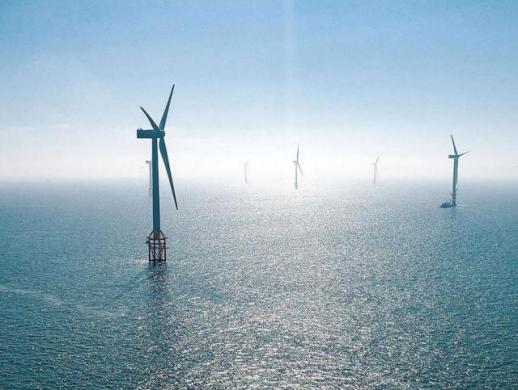 Doosan Enerbility wins $617 million Vietnam power plant SEOUL, October 01 (AJP) -Doosan Enerbility has won an 837.97 billion won ($617 million) contract to build a combined-cycle power plant in Vietnam, the South Korean company disclosed Thursday. The agreement with Vietnam National Industry–Energy Group, known as PVN, covers engineering, procurement and construction for the O Mon III power plant in Can Tho. Signed Wednesday, the contract is equivalent to 4.91 percent of Doosan Enerbility’s 2025 consolidated revenue of 17.06 trillion won. Work is scheduled to begin Oct. 6, when a formal notice to proceed is expected, with completion targeted for Oct. 6, 2030. The contract provides for an advance payment, with subsequent billing and payments tied to project milestones. The value excludes value-added tax and comprises payments denominated in U.S. dollars, Japanese yen and Vietnamese dong. Doosan converted the amounts into won using exchange rates quoted on the signing date. The company said the contract value and construction schedule could change as the project progresses. Shares of Doosan Enerbility were 1.5 percent higher at 82,800 won as of 11:30 a.m. 2026-10-01 11:39:12
 -
 Korea's Sept exports hit fresh monthly high, annual top $800B SEOUL, October 1 (AJP) — South Korea's September exports surged 83.5 percent to a fresh monthly record $120.9 billion as semiconductor shipments more than tripled, customs data showed Thursday. Imports increased 26.0 percent from a year earlier to $71.1 billion, leaving a record trade surplus of $49.9 billion, according to the Korea Customs Service. The record came despite fewer working days, with September having 21.5 working days compared with 24.0 a year earlier. Average daily exports more than doubled by 104.9 percent to a record $5.63 billion, exceeding $5 billion for the first time. Semiconductor exports also set a monthly record, the customs agency said. The Ministry of Trade, Industry and Resources (MOTIR) said chip shipments soared 263 percent from a year earlier, while exports excluding semiconductors also rose 23 percent. September's result marked another sharp increase from $98.3 billion in August and surpassed the previous monthly export record of $102.0 billion set in June. Semiconductor exports had already reached a record $46.7 billion in August, up 209 percent from a year earlier, before setting another high in September. The September figures pushed exports in the first nine months of the year to $814.5 billion, up 56.8 percent from a year earlier and above $800 billion for the first time. The nine-month tally also exceeded Korea's full-year 2025 exports of $709.3 billion, which had been the country's annual record. Imports totaled $562.1 billion in the January-September period, up 19.7 percent from a year earlier, leaving a cumulative trade surplus of $252.5 billion. Korea had already surpassed its 2025 full-year export record on Sept. 5, 117 days before the end of the year, prompting MOTIR to say annual exports of $1 trillion were coming into view. Reaching that threshold would put Korea alongside the United States, China and Germany as countries that have recorded annual exports of at least $1 trillion, according to MOTIR. AJP Takeaways - South Korea's September exports hit a record $120.9 billion, topping $120 billion for the first time. - Semiconductor exports surged 263 percent to a record, while exports excluding chips also rose 23 percent. - The trade surplus reached a record $49.9 billion, while nine-month exports surpassed $800 billion for the first time. 2026-10-01 10:05:35
 -
 Korea signals fiscal backstop as bond yields squeeze borrowers SEOUL, September 30 (AJP) — Seoul authorities armed with greater fiscal firepower from a chip-driven tax windfall signaled plans to buy back government bonds or curb new issuance to tame rising yields, potentially giving the central bank more room to sustain its fight against inflation. Fiscal, financial and monetary chiefs agreed Wednesday to prepare contingency measures as Korean bond yields tracked a surge in U.S. Treasury yields. The government said it could conduct emergency bond buybacks and use part of an expected 63.2 trillion won ($46.6 billion) tax windfall to reduce planned issuance. Officials also agreed that fiscal and monetary policies could work in tandem as the economy faces heightened external uncertainty and continued pressure on household finances. The additional revenue gives the government room to reduce the supply of bonds investors must absorb, while emergency buybacks could provide support if market conditions deteriorate. The rhetoric had immediate effect. The three-year government bond yield fell 6.5 basis points from Tuesday’s close to 4.011 percent, while the 10-year yield dropped 6.9 basis points to 4.407 percent. Most other maturities also moved lower. The decline followed a climb to multiyear highs as the U.S. 10-year Treasury yield breached 5 percent amid inflation concerns, heavy government borrowing and a hawkish shift among major central banks. The three-year Korean yield had reached 4.119 percent Monday before easing to 4.076 percent Tuesday. The 10-year yield ended Tuesday at 4.476 percent. Higher market rates are already feeding through to household borrowing costs. The average rate on newly issued mortgages rose 0.18 percentage point to 4.66 percent in August, marking a fourth consecutive monthly increase. The overall rate on new household loans climbed to 4.76 percent. A bond-market source said verbal intervention alone could help calm trading by signaling that authorities were prepared to act before conditions became disorderly. “Markets have generally responded better when authorities clearly state how much they will buy and over what period,” the source said on condition of anonymity because of the sensitivity of commenting on government policy. Actual purchases could have a stronger stabilizing effect during a crisis, the source said, but domestic intervention would struggle to counter a sustained rise in global yields. The constraint helps explain the division of labor taking shape in Seoul. The Bank of Korea (BOK) uses its policy rate to address inflation and financial imbalances, while the government can act more directly on bond supply and market liquidity. Reducing issuance could ease upward pressure on yields from domestic supply, and buybacks could help contain disorderly trading. Neither would insulate Korea from a global bond selloff. A BOK study released this month found that global inflation shocks played the largest role in the co-movement of Korean and U.S. long-term interest rates. Overseas shocks also fed into expectations for Korea’s future monetary-policy path. Kim Sung-soo, a bond strategist at Hanwha Investment & Securities, pointed to growing structural pressure in the U.S. market, where government borrowing and AI-related corporate issuance are adding to bond supply as overseas demand weakens. Overseas experience nevertheless suggests that targeted purchases can improve market functioning. The U.S. Treasury has expanded its liquidity-support buyback program, at least doubling the maximum purchase size for some longer-dated securities to $4 billion per operation this month. A 2025 International Monetary Fund study found modest improvements in liquidity among securities eligible for U.S. buybacks, including a roughly 0.2-basis-point narrowing in bid-ask spreads. Much of the effect, however, was short-lived. Britain’s intervention during acute market stress in 2022 was more dramatic. The Bank of England temporarily bought 19.3 billion pounds of long-dated government bonds after forced selling by pension funds threatened to trigger a self-reinforcing market spiral. It later unwound the entire position after conditions stabilized. Those purchases were explicitly temporary and aimed at restoring market functioning rather than holding yields permanently lower. Korea has yet to move from signaling support to announcing an emergency operation. The government has not disclosed the size, target maturities or duration of any emergency buyback. A finance ministry official told AJP that details would be provided once a plan was announced. No timetable has been given. The government’s regular October bond issuance plan is due Thursday, offering the next indication of how much supply authorities intend to bring to market. Officials have not said whether it will include details of emergency measures. AJP Takeaways - Korea has signaled emergency bond buybacks and issuance cuts as rising yields push up household borrowing costs. - An expected 63.2 trillion won tax windfall gives the government room to reduce planned bond issuance. - The average rate on new mortgages reached 4.66 percent in August, rising for a fourth consecutive month. - Supply cuts and targeted purchases could ease domestic market strains, but sustained increases in global yields would limit their impact. 2026-09-30 17:34:55
 -
 BOK to add gold to its coffers for the first time since 2013 SEOUL, September 30 (AJP) — The Bank of Korea (BOK) is going gold shopping in December for the first time since February 2013, adding about one metric ton of domestically produced bullion to its foreign reserves. The BOK expects to complete a transaction and settlement system for domestic gold purchases on Dec. 14, clearing the way for purchases around the middle of the month, according to data submitted to Rep. Jung Tae-ho of the Democratic Party. The initial purchase is expected to be around one metric ton, with the actual timing and volume depending on the availability of export-bound gold produced domestically. The BOK declined to provide further details beyond information already disclosed. The BOK told AJP that the new purchasing channel is intended to expand safe-asset holdings and diversify its foreign reserves over the medium to long term, while allowing it to acquire gold in Korean won without using foreign currency. The timetable adds detail to a plan announced Aug. 3, when the central bank established a framework with domestic gold producers, the Korea Exchange (KRX) and the Korea Securities Depository (KSD) but left the timing of actual purchases undecided. Under the plan, the BOK will buy gold that domestic producers had intended to export, using KRX and KSD trading, settlement and storage infrastructure. Transactions will be conducted through negotiated block trades based on international gold prices, a structure designed to avoid generating additional demand in the domestic gold market. The purchases will also give the BOK a new route to accumulate reserve gold using won rather than foreign currency. Gold-related investment has already resumed this year through financial assets. The BOK held 679,765 shares of the U.S.-listed SPDR Gold Trust at the end of June, valued at $250.41 million, after holding none of the exchange-traded fund at the end of the first quarter. InsiderSet The ETF purchase marked the BOK's return to gold-related investment after more than a decade, while its physical gold holdings have remained unchanged at 104.4 metric tons since its last purchase in 2013. At the end of August, gold was recorded at $4.79 billion in Korea's foreign reserves, accounting for 1.1 percent of the total under the central bank's accounting valuation. KDI EIE Center The BOK has said rising geopolitical risks have increased the role of gold as a safe asset and that expanding its relatively low gold allocation could support reserve diversification. AJP Takeaways - The Bank of Korea plans to resume physical gold purchases in December after a 13-year pause, with an initial purchase of about one metric ton expected. - The BOK plans to buy domestically produced, export-bound gold in won through infrastructure operated by KRX and KSD. - The central bank had already resumed gold-related investment in the second quarter through a U.S.-listed gold ETF worth about $250 million at end-June. 2026-09-30 16:47:40