

Journalist
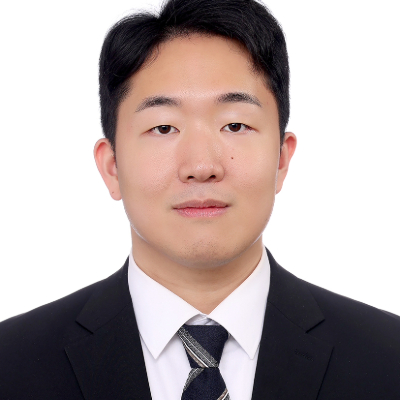
Kim Yeon-jae김연재
duswogmlwo77@ajupress.com
ReporterBank of Korea & Market, Macroeconomics
Kim Yeon-jae is a journalist at AJU Press (AJP's English platform),
covering macroeconomics, international finance, and geopolitics.
He closely tracks central bank monetary policies, global energy supply chains,
and the Korean defense industry. "Peering into the risks behind the euphoria."
covering macroeconomics, international finance, and geopolitics.
He closely tracks central bank monetary policies, global energy supply chains,
and the Korean defense industry. "Peering into the risks behind the euphoria."
Latest by Kim Yeon-jae
-
 Finance minister, BOK chief pledge closer policy coordination SEOUL, September 28 (AJP) — South Korea’s finance minister and central bank governor agreed Monday to strengthen policy coordination and joint market monitoring as rising global bond yields, geopolitical risks and tighter cross-market linkages increase uncertainty. Lee Hyoung Il, deputy prime minister and minister of finance and economy, visited The Bank of Korea (BOK) and met Governor Shin, Hyun Song, six days after Lee took office on September 22. The two officials assessed that economic growth was gaining momentum on strong exports and investment, supported by the semiconductor boom, while external uncertainty remained elevated amid rising interest rates in major economies and geopolitical risks. They also agreed that growing links among financial, foreign exchange and real estate markets require policymakers to look beyond headline macroeconomic indicators and identify risks early, according to a joint statement. “We should communicate more closely in various ways and discuss coordination for an optimal policy mix to achieve our shared goals of price stability, growth and financial stability,” Lee said in opening remarks. Lee called for stronger cooperation to monitor financial, foreign exchange and asset markets in an integrated manner and identify risks at an early stage. He also proposed longer-term cooperation on the internationalization of the Korean won, digital finance, measures to raise the country’s potential growth rate and ways to spread the benefits of growth more broadly. Shin said macroeconomic stability built on price and financial stability was a prerequisite for sustainable growth as the economy navigates a series of external shocks, including the Middle East conflict and rising long-term government bond yields in major economies. “The BOK’s recent monetary policy response is expected to help curb demand-side price pressures while strengthening confidence in our economy, stabilizing the exchange rate and easing cost pressures,” Shin said. He added that monetary policy, together with the government’s macroprudential measures, could also help ease financial imbalances. Shin stressed that closer communication between the government and the central bank was particularly important under current conditions, while each institution should faithfully carry out its respective responsibilities. The two sides agreed to continue cooperation through existing channels, including market monitoring meetings, while expanding communication through other channels. AJP Takeaways - South Korea’s finance ministry and The Bank of Korea agreed to strengthen policy coordination and joint monitoring of financial, foreign exchange and asset markets. - Finance Minister Lee Hyoung Il called for closer coordination on price stability, growth and financial stability, as well as longer-term cooperation on won internationalization and digital finance. - BOK Governor Shin, Hyun Song said price and financial stability were prerequisites for sustainable growth and emphasized closer communication between the government and central bank. 2026-09-28 12:10:54
 -
 BOK flags market volatility as global bond yields rise SEOUL, September 28 (AJP) — The Bank of Korea (BOK) said Monday it was closely monitoring South Korea’s financial markets after global bond yields rose considerably over the Chuseok holiday amid shifting monetary policy expectations and renewed Middle East tensions. The central bank held a market review meeting at 8 a.m., chaired by Deputy Governor Kwon Min-soo, to assess international market developments during the Sept. 24-27 holiday and their potential impact on Korea’s financial and foreign exchange markets. The BOK said expectations for a Federal Reserve rate increase strengthened during the period, while tensions in the Middle East resurfaced and oil prices fluctuated. Between Sept. 23 and 25, U.S. two-year Treasury yields rose 10 basis points and 10-year yields climbed 20 basis points. German and British 10-year government bond yields increased 14 and 13 basis points, respectively. U.S. Treasury data showed the 10-year yield at 5.17 percent and the 30-year yield at 5.49 percent on September 25, the latest trading day. The S&P 500 fell 0.3 percent, the Nasdaq declined 0.6 percent and the Euro Stoxx 50 lost 0.3 percent, while the U.S. dollar index gained 0.4 percent. “Movements in major-country stock prices and the U.S. dollar were relatively limited during the holiday, but global government bond yields rose considerably on changes in monetary policy expectations, heightening uncertainty in international financial markets,” said Kwon Min-soo, deputy governor of the BOK. The Korean won weakened 0.1 percent against the dollar in offshore non-deliverable forward trading during the holiday. The won was trading at around 1,361 per dollar Monday morning, slightly weaker than its September 23 daytime close of 1,358.4. Kwon said Korea’s economic fundamentals remained sound, but volatility in domestic financial and foreign exchange markets could increase depending on developments in U.S.-Iran talks, concerns over fiscal sustainability in major economies and shifts in expectations for the artificial intelligence industry. The BOK plans to maintain heightened vigilance and closely monitor domestic financial and foreign exchange market conditions. AJP Takeaways - The Bank of Korea said global government bond yields rose during the Chuseok holiday as Federal Reserve rate-hike expectations strengthened and Middle East tensions resurfaced. - The Korean won weakened 0.1 percent against the dollar in offshore NDF trading, while Korea’s CDS premium remained low at 23.6 basis points as of Sept. 25. - BOK Deputy Governor Kwon Min-soo said Korea’s economic fundamentals remained sound but external risks could increase volatility in domestic financial and foreign exchange markets. 2026-09-28 10:57:44
 -
 Korea's retail vacancy rate hits 13.36%, highest since 2021 SEOUL, September 28 (AJP) — South Korea's average vacancy rate for retail properties rose to 13.36 percent in the second quarter, the highest since 2021, Korea Real Estate Board data showed Monday. The rate increased 1.4 percentage points from 11.96 percent in the first quarter of 2021, according to data provided by the board to Rep. Hwang Hee. Vacancies have risen for seven consecutive quarters since the third quarter of 2024. The vacancy rate was higher than in early 2021 in 16 of the country's 17 major cities and provinces, with Ulsan the sole exception. Sejong recorded the highest rate at 22.79 percent, followed by Daegu at 17.84 percent, North Chungcheong Province at 17.43 percent, North Gyeongsang Province at 16.66 percent and Gwangju at 16.50 percent. Vacancies also increased on ground floors, typically among the most commercially valuable spaces in retail buildings. The nationwide first-floor vacancy rate rose to 6.68 percent in the second quarter from 4.79 percent in the first quarter of 2021. The rate for mid-sized and large retail buildings increased to 14.33 percent from 12.98 percent over the same period, while the rate for small retail buildings climbed to 8.47 percent from 6.41 percent. Sejong's vacancy rate for mid-sized and large retail properties reached 29.68 percent, the highest among the country's major regions. The Korea Real Estate Board calculates vacancy rates using vacant floor space as a share of total rentable space in its sample, rather than the number of empty storefronts. Its quarterly commercial real estate survey covers office and retail properties nationwide, including 5,761 mid-sized and large retail buildings and 5,526 small retail buildings. The latest figures extend a rise in commercial vacancies even as conditions differ sharply by region and property type. AJP Takeaways - South Korea's retail property vacancy rate rose to 13.36 percent in the second quarter, 1.4 percentage points above the first quarter of 2021 and the highest in data dating from that year. - Sejong posted the country's highest regional vacancy rate at 22.79 percent, while 16 of 17 major cities and provinces recorded higher vacancy rates than five years earlier. - Korea Real Estate Board data showed vacancies rising across both mid-sized and large retail properties and smaller buildings, with first-floor vacancy reaching 6.68 percent. 2026-09-28 10:06:43
 -
 Korea's factory sentiment improves, profit outlook lags: KCCI SEOUL, September 27 (AJP) — South Korean manufacturers turned less pessimistic about the fourth quarter, although six in 10 still expect annual operating profit to fall short of their targets, a Korea Chamber of Commerce and Industry (KCCI) survey showed Sunday. The manufacturing business survey index rose six points to 86 from 80 in the third quarter, according to the KCCI, which surveyed 2,413 manufacturers nationwide. A reading above 100 means more companies expect business conditions to improve from the previous quarter, while a reading below 100 indicates the opposite. The index has risen for two consecutive quarters but remains below the neutral level. Export-oriented companies' BSI rose five points to 91, while the index for domestic-focused manufacturers increased seven points to 85. The two measures increased together for the first time in five quarters. KCCI attributed the improvement among exporters to stronger shipments of major products including semiconductors and cosmetics, while it linked the gain among domestic-focused companies to easing imported raw-material costs as the won stabilized. The number of industries with a BSI above 100 increased to five from one in the third quarter. Semiconductors recorded a BSI of 139, the highest since KCCI began compiling the sector figure and the fourth consecutive quarter above 100. Cosmetics followed at 120, with medical and precision equipment at 108, shipbuilding at 103 and pharmaceuticals and biotechnology at 102. The semiconductor index jumped 26 points from the third quarter, while cosmetics gained 20 points and medical and precision equipment rose 28 points. Electronics and communications moved in the opposite direction, falling 13 points to 80 amid higher costs for memory chips, copper-clad laminates, copper and logistics, according to KCCI. Nonmetallic minerals rose 27 points to 88 as imported raw-material costs eased and the autumn construction season began. Improved sentiment did not translate into equally strong profit expectations. Some 60.4 percent of manufacturers expected full-year operating profit to fall short of targets set at the beginning of the year. Of the respondents, 43.5 percent expected profit to miss their target by less than 10 percent and 16.9 percent anticipated a larger shortfall. Another 31.7 percent expected to meet their target, while 7.9 percent projected profit above their initial goal. Rising raw-material and energy costs were cited as the biggest obstacle to meeting profit targets by 43.2 percent of respondents, followed by weaker sales and order conditions at 24.9 percent and rising labor costs and hiring difficulties at 11.7 percent. Exchange-rate volatility accounted for 6.8 percent of responses, followed by worsening trade conditions at 4.1 percent and regulatory and licensing issues at 1.3 percent. "Six in 10 companies still expect operating profit to fall short of their targets despite two consecutive quarters of improvement in manufacturing sentiment," said Kang Min-jae, head of KCCI's economic policy team. Kang added that policy support was needed to stabilize raw-material supplies and ease energy-cost burdens, with production costs remaining companies' biggest concern. AJP Takeaways - South Korea's manufacturing BSI rose six points to 86 for the fourth quarter in a KCCI survey, marking a second consecutive increase but remaining below the neutral level of 100. - Semiconductor manufacturers recorded a BSI of 139, the highest since KCCI began compiling the sector figure, while export- and domestic-focused companies both reported improved sentiment. - Korea Chamber of Commerce and Industry respondents remained cautious on profitability, with 60.4 percent expecting 2026 operating profit to fall short of targets set at the beginning of the year. 2026-09-27 16:45:41
 -
 LG Elec joins Nvidia network for AI data-center cooling SEOUL, September 27 (AJP) — LG Electronics has joined Nvidia's official partner network for power and cooling, expanding its reach to customers building artificial intelligence data centers. The company is listed under the Power and Cooling category of the Nvidia Partner Network (NPN), which connects customers with companies providing hardware, software, infrastructure and services for Nvidia's computing platforms. The listing follows a series of Nvidia qualifications for LG Electronics' coolant distribution units, or CDUs, designed to remove heat generated by high-density AI servers. LG's 600-kilowatt CDU passed more than 100 Nvidia technical evaluation criteria in July, covering cooling performance, reliability and failover capabilities. The company subsequently qualified 1-megawatt and 2.6-megawatt CDUs, with the largest model meeting requirements for Nvidia's DSX Ready program for AI factory infrastructure. Nvidia launched DSX Ready this month to identify power and cooling products that meet requirements under its DSX AI factory reference designs. LG Electronics, LiquidStack and Vertiv were included among the initial qualified CDU suppliers. A CDU circulates coolant between server equipment and a data center's cooling system, allowing heat generated by high-performance processors to be removed directly. Demand for liquid cooling has increased as AI accelerators consume more power and generate greater heat than conventional servers. LG Electronics has expanded its data-center cooling portfolio from conventional chillers to CDUs and cold plates, which absorb heat directly from chips, under what the company calls a "Chip-to-Chiller" strategy. The company plans to use the Nvidia partnership to expand business with hyperscale cloud providers and colocation operators, particularly in North America. LG Group Chairman Koo Kwang-mo met Nvidia founder and CEO Jensen Huang during Huang's visit to Seoul in June, including a dinner with SK Group Chairman Chey Tae-won and Naver Chairman Lee Hae-jin, before LG and Nvidia executives held a separate meeting at LG Twin Towers to discuss cooperation in AI infrastructure, physical AI and mobility. Koo met Huang again at Nvidia's headquarters in Santa Clara, California, in August, when LG and Nvidia signed a strategic business cooperation agreement covering AI factories, robotics and mobility, including cooperation on Nvidia-based AI infrastructure and LG's cooling, battery and power technologies. Under the agreement, LG plans to build an AI factory using Nvidia's next-generation Vera Rubin platform and combine Nvidia technology with its cooling, battery, power and IT infrastructure capabilities. The partnership also covers humanoid robots based on Nvidia's Isaac GR00T platform and an AI-defined vehicle platform using Nvidia Drive Hyperion. AJP Takeaways - LG Electronics has joined the Nvidia Partner Network as a Power and Cooling partner as it expands its AI data-center cooling business. - LG Electronics' liquid-cooling portfolio includes Nvidia-qualified 600-kilowatt, 1-megawatt and 2.6-megawatt CDUs, with the largest model qualifying under the DSX Ready program. - LG Group and Nvidia have expanded cooperation this year across AI factories, robotics, mobility and data-center infrastructure. 2026-09-27 15:12:57
 -
 Samsung plans DX town hall amid bonus dispute SEOUL, September 27 (AJP) — Samsung Electronics plans to hold an October town hall for all employees in its Device eXperience division, with compensation and business conditions expected to dominate discussions, industry sources said Sunday. Roh Tae-moon, Samsung Electronics' co-chief executive and head of the DX division, is expected to lead the meeting alongside other senior executives. The company previously shared plans for the town hall during a closed management briefing for team leaders and other managerial staff, according to the sources. Samsung has yet to publicly announce the date of the meeting. The DX division oversees Samsung's smartphones, televisions, home appliances, network equipment and other finished products, while the Device Solutions division houses its memory, system LSI and foundry businesses. Compensation has emerged as a major point of tension between employees in the two divisions after Samsung and its unions reached a wage agreement in May. The deal introduced a special performance bonus for DS employees funded by 10.5 percent of the semiconductor division's business performance, while DX employees were set to receive substantially less under the compensation structure. Samsung Electronics Labor Union Donghaeng, whose membership is concentrated in DX, has called for a companywide compensation pool that would reduce differences caused by the contrasting business cycles of semiconductors and consumer electronics. The union has staged protests in Suwon and Seoul and began an open-ended protest near Chairman Lee Jae-yong's residence earlier this month. The compensation dispute has also reshaped Samsung's labor landscape. Samsung Electronics' largest union voted Sept. 19 to restrict its membership to DS employees, effectively separating semiconductor workers from employees in the company's consumer businesses ahead of future wage negotiations. The gap comes as the two divisions face sharply different earnings conditions. Samsung said its DS division posted another record quarterly result in the second quarter as strong demand drove record DRAM and NAND sales. DX revenue increased from a year earlier on higher sales of premium and artificial intelligence-enabled products, but operating profit declined due to higher component costs, according to the company's July earnings release. Samsung expects difficult conditions for DX to continue in the second half amid global uncertainty and rising component costs, while pursuing stronger product competitiveness and cost efficiency. Artificial intelligence transformation is also expected to remain a major management issue for the division. DX began allowing employees to use ChatGPT, Gemini and Claude at work in June as part of a broader AI Transformation, or AX, program aimed at changing internal work processes and accelerating decision-making. Roh said at the time that the initiative was intended to improve execution across the organization and strengthen the division's business competitiveness. The October meeting would give DX employees a direct forum with senior management after months of demands for broader communication over compensation, profitability and the division's longer-term strategy. AJP Takeaways - Samsung Electronics plans an October town hall for employees in its Device eXperience division as compensation differences with its semiconductor business remain a source of internal tension. - The Device eXperience division has faced weaker profitability as component costs rose, while the Device Solutions division posted record earnings on strong semiconductor demand. - Roh Tae-moon, Samsung Electronics' co-chief executive and DX head, is expected to lead discussions covering compensation, business conditions and the division's AI transformation strategy. 2026-09-27 14:31:46
 -
 Korea's single-stock leveraged ETF trading falls below one-tenth after curbs SEOUL, September 27 (AJP) — Average daily trading in South Korean single-stock leveraged and inverse ETFs fell to less than one-tenth of pre-rule levels in the month after tighter cash-deposit requirements took effect, Korea Exchange data showed Sunday. Daily trading value across 16 ETFs tracking leveraged or inverse moves in Samsung Electronics and SK hynix shares dropped to 990 billion won ($729 million) from 12.25 trillion won in the preceding period, according to data submitted to Rep. Kim Yong-man. The comparison covered 22 trading days before the new requirement and 21 trading days beginning July 31, when the rule took effect. The Financial Services Commission (FSC) raised the minimum deposit for retail investors trading single-stock leveraged products to 30 million won in cash from 10 million won. Under the new rule, stocks, ETFs and bonds can no longer be counted toward the minimum deposit. Average daily trading in 14 leveraged ETFs fell to 800 billion won from 8.64 trillion won, leaving activity at about one-tenth of its previous level. Trading in two inverse 2X ETFs dropped to 190 billion won from 3.6 trillion won, or about one-twentieth of the earlier level. The average daily turnover rate for the 14 leveraged ETFs fell to 5.9 percent from 43.6 percent, while the rate for the two inverse 2X ETFs dropped to 125.0 percent from 1,110.4 percent. Average daily trading in the 14 leveraged ETFs remained below 1 trillion won in each of the first four weeks after implementation, compared with 6.44 trillion won over July 27-30. Daily trading value stood at 530 billion won on Aug. 31. Retail investors had been net buyers on an average daily basis in each of the five weeks before the rule change. They turned to net selling of 1.07 trillion won on July 31 and remained net sellers in most subsequent weeks, except during Aug. 24-28. The higher deposit requirement was part of measures announced by financial authorities in July to curb demand for single-stock leveraged products and strengthen investor protection. The FSC also barred new listings and advertising and marketing of the products from July 16, before the higher cash-deposit threshold took effect. "Reduced trading alone does not mean investor protection has been completed," Kim said. He added that authorities should continue monitoring whether the decline persists and whether investment demand shifts to products outside the restrictions. AJP Takeaways - South Korea's single-stock leveraged and inverse ETFs saw average daily trading fall to less than one-tenth of pre-rule levels in the month after tighter cash-deposit requirements took effect. - The 16 ETFs tracking Samsung Electronics and SK hynix recorded 990 billion won in average daily trading after the rule change, compared with 12.25 trillion won during the preceding period. - The Financial Services Commission raised the minimum deposit for single-stock leveraged products to 30 million won in cash from 10 million won and stopped recognizing stocks, ETFs and bonds toward the requirement. 2026-09-27 13:26:37
 -
 Korea's 5-year overseas chip tech leak tally more than triples SEOUL, September 27 (AJP) — South Korea detected 40 cases of semiconductor technology being leaked overseas from 2021 to 2025, more than triple the 12 cases recorded during the previous five years, government data showed Sunday. The National Intelligence Service (NIS) detected 107 industrial technology leaks overseas during the latest five-year period, according to Ministry of Trade, Industry and Resources (MOTIR) data provided to Rep. Koo Ja-geun. The total was 7 percent higher than the 100 cases recorded between 2016 and 2020, according to an AJP calculation based on ministry data. Semiconductor-related national core technology leaks more than doubled to nine in 2021 - 2025 from four in the previous five years. Overall national core technology leaks were little changed, however, rising to 31 from 30 over the same comparison period. National core technologies are technologies designated for special protection because their technological or economic value, or their growth potential, means an overseas leak could seriously affect national security or the economy. Among all industrial technologies leaked overseas between 2021 and 2025, semiconductors accounted for 40 cases, or about 37 percent, followed by displays with 21 and electrical and electronics technologies with 10. Automotive technologies accounted for seven cases and shipbuilding for six. The annual number of detected overseas leaks remained near 20 throughout the period, with 22 cases in 2021, 20 in 2022, 23 each in 2023 and 2024 and 19 last year. Small and medium-sized enterprises accounted for 64 of the 107 cases, compared with 33 involving large companies. Universities and research institutes accounted for the remaining 10 cases. Among the 31 national core technology leaks, semiconductors accounted for nine, followed by displays and electrical and electronics technologies with five each. Police referred 230 people to prosecutors in connection with 77 industrial technology leak cases from 2021 to 2025. Forty-one of the police cases involved overseas leaks, including 24 involving national core technologies. Prosecutors indicted 184 people in 74 of 95 cases investigated under the Industrial Technology Protection Act during the same period. The government requires institutions holding national core technologies to take protective measures to prevent unauthorized leaks, including access controls and confidentiality arrangements under the Industrial Technology Protection Act. AJP Takeaways - South Korea detected 40 overseas semiconductor technology leaks from 2021 to 2025, more than triple the 12 cases recorded during the previous five-year period. - National core semiconductor technologies were involved in nine overseas leak cases during the latest five years, up from four in 2016 - 2020, while overall national core technology leaks were nearly unchanged at 31. - Small and medium-sized enterprises accounted for 64 of the 107 overseas industrial technology leak cases detected from 2021 to 2025, almost twice the 33 cases involving large companies. 2026-09-27 11:17:33
 -
 Korea's Q3 profit estimates rise, chip forecasts climb SEOUL, September 27 (AJP) — Third-quarter operating-profit estimates for South Korean listed companies rose over the past three months, with forecasts for chipmakers Samsung Electronics and SK hynix revised higher even as nearly half of covered firms saw cuts, FnGuide data showed Sunday. Among 232 companies with third-quarter estimates from at least three brokerages, 127, or 55 percent, had their operating-profit forecasts raised as of Sept. 21, while estimates for 105 companies were lowered. Combined operating-profit estimates for the companies increased 4 percent over three months to 257.8 trillion won ($187.5 billion). Samsung Electronics' third-quarter operating-profit estimate rose 5 percent over the period, while the forecast for SK hynix increased 2 percent. The revisions followed record second-quarter earnings at both memory-chip makers as demand linked to artificial intelligence infrastructure remained strong. Samsung Electronics reported record quarterly operating profit in the second quarter, supported by strong DRAM and NAND sales and growing demand for AI server products. Forecast changes were considerably larger at some smaller and mid-sized companies. Samsung SDI recorded the largest upward revision, with its third-quarter operating-profit estimate rising more than eightfold from three months earlier, according to the FnGuide data. Com2uS followed with a 382 percent increase, while estimates for SK Innovation, HMM and S-Oil also more than doubled or nearly doubled. Downward revisions were led by Intekplus, whose third-quarter operating-profit estimate fell 95 percent over the period. LG Chem's estimate dropped 63 percent, followed by Mirae Asset Securities at 56 percent and HanaTour at 42 percent. Among major companies, Hyundai Motor's operating-profit estimate was cut 5 percent, while LG Energy Solution and Samsung Biologics saw reductions of 34 percent and 6 percent, respectively. The broader earnings revisions came despite a sharp appreciation of the won during the third quarter. The average won-dollar exchange rate stood at about 1,422 won in the third quarter, down 5.4 percent from the previous quarter, according to a Sept. 21 report by Yuanta Securities. KOSPI sales and operating-profit estimates nevertheless remained above their end-June levels, the report said. "The key variable for the third-quarter earnings season is individual industry conditions, not the exchange rate," Shin Hyun-yong, a quant analyst at Yuanta Securities, wrote in the report. Shin said periods of rapid earnings growth have previously coincided with a stronger won, cautioning against treating currency appreciation as a uniform drag on corporate profits. He also noted that companies whose earnings estimates are revised higher before results are announced have historically shown a greater likelihood of reporting earnings above market expectations. AJP Takeaways - South Korean listed companies saw combined third-quarter operating-profit estimates rise 4 percent over three months, with 127 of 232 covered firms receiving upward revisions. - Samsung Electronics and SK hynix had their third-quarter operating-profit forecasts raised 5 percent and 2 percent, respectively, helping lift the aggregate estimate despite cuts at 45 percent of covered companies. - Yuanta Securities said KOSPI earnings estimates remained above end-June levels even as the third-quarter average won-dollar exchange rate fell 5.4 percent from the previous quarter. 2026-09-27 10:24:30
 -
 Data-center AI chip market seen at $860 bln by 2030 SEOUL, September 27 (AJP) — The global market for artificial intelligence chips used in data centers is projected to reach $860 billion by 2030 from $124 billion in 2024, a state-run bank research institute said. The market is expected to expand at an average annual rate of 38 percent over the period as investment in AI infrastructure continues to increase. The outlook was included in an Aug. 31 report by the Overseas Economic Research Institute at the Export-Import Bank of Korea on the data-center AI semiconductor market. Nvidia held a 78.2 percent share of the market in 2025, followed by Google at 4.7 percent and Advanced Micro Devices at 4.1 percent, according to the report. Intel accounted for 3.7 percent and Huawei for 2.6 percent. The market remains concentrated among a small number of U.S. and Chinese companies, but the institute said changes in AI workloads could create openings for other chipmakers. Demand is expected to shift increasingly from training large AI models toward inference as AI services become more widely deployed. Graphics processing units, or GPUs, remain the dominant technology in AI data centers but are relatively expensive and consume large amounts of power. Neural processing units, or NPUs, designed specifically for AI workloads can offer lower costs and power consumption for inference, an area where Korean chip designers are seeking to expand. South Korean AI chipmakers FuriosaAI and Rebellions are developing second-generation NPUs for data-center applications. FuriosaAI began mass production of its second-generation RNGD chip earlier this year, while Rebellions plans to launch its REBEL 100 chip in the second half. The institute said Korean companies have developed competitive chip-design capabilities but still face gaps of more than three years against leading global companies in areas including capital, commercialization experience and industry ecosystems. Early deployment and customer references will be important as the AI chip market develops over the next three to five years, the report said. The institute called for measures to reduce the risks faced by companies adopting domestic AI chips, including tax incentives and subsidies. It also recommended government support for Korean companies seeking overseas customers and supply-chain opportunities. The Middle East could offer one such market as countries in the region expand AI infrastructure while facing high GPU costs, power and land constraints and uncertainty over access to advanced chips, the report said. AJP Takeaways - The global data-center AI chip market is projected to grow from $124 billion in 2024 to $860 billion by 2030, an average annual increase of 38 percent. - Nvidia held 78.2 percent of the data-center AI semiconductor market in 2025, far ahead of Google at 4.7 percent and AMD at 4.1 percent. - South Korean AI chipmakers FuriosaAI and Rebellions are targeting growing inference demand with second-generation NPUs, while a state-run bank research institute said Korean firms still face gaps in capital, commercialization and industry ecosystems. 2026-09-27 09:53:22