

Journalist

Kim Yeon-jae김연재
duswogmlwo77@ajupress.com
ReporterBank of Korea & Market, Macroeconomics
Kim Yeon-jae is a journalist at AJU Press (AJP's English platform),
covering macroeconomics, international finance, and geopolitics.
He closely tracks central bank monetary policies, global energy supply chains,
and the Korean defense industry. "Peering into the risks behind the euphoria."
covering macroeconomics, international finance, and geopolitics.
He closely tracks central bank monetary policies, global energy supply chains,
and the Korean defense industry. "Peering into the risks behind the euphoria."
Latest by Kim Yeon-jae
-
 BOJ rate increase fails to aid FX but sets a common path for BOK SEOUL, Sept. 18 (AJP) — The renewed tightening in Tokyo that places the base rate at its 31-year high came short in weakening the greenback's value against Asian currencies but set a common rate path for the Korean central bank. The Bank of Japan (BOJ) raised its policy rate by 25 basis points to 1.25 percent Friday, its highest in 31 years, in a 7-2 vote. The yen weakened to around 157 per dollar after the widely expected move as investors focused on the two dissenting votes and the pace of further tightening. "The outcome has somewhat tempered expectations for further rate hikes and conveyed a dovish impression," said Hirofumi Suzuki, chief foreign exchange strategist at SMBC in Tokyo. The won weakened to 1,383.3 per dollar at the Seoul close from 1,382.2 Thursday. It had briefly weakened past 1,386 in afternoon trading after strengthening below 1,380 earlier in the session. Before the BOJ decision, KB Kookmin Bank's capital markets group said a hawkish policy signal could strengthen the yen and pull the won higher in tandem. The yen's post-decision decline left that potential source of support for the Korean currency weaker than expected. Korean government bonds closed broadly stronger Friday. The three-year yield fell 2.8 basis points to 4.035 percent, while the benchmark 10-year yield dropped 4.0 basis points to 4.466 percent. The broader external backdrop has also turned less favorable for the won after the U.S. Federal Reserve raised its benchmark rate by 25 basis points this week to a range of 3.75 to 4.00 percent. Sixteen of 18 Fed policymakers projected at least one more increase this year, keeping U.S. rates and the dollar among the main external variables facing Asian currencies. For the Bank of Korea (BOK), the significance of Japan's move lies primarily in the exchange-rate and inflation channels. The BOK raised its base rate for a second consecutive meeting on Aug. 27 to 3.00 percent and said inflation was likely to remain above its 2 percent target for a considerable period. Its September Monetary Policy Report maintained a tightening bias, citing inflation, economic conditions and financial stability as the factors shaping further tightening. "All upcoming meetings are live," BOK Governor Shin Hyun-song said after the August decision, while emphasizing the need to monitor how two consecutive hikes feed through the economy and financial markets. The BOK's latest conditional rate projections also leave room for more tightening. Of 21 dots submitted by the seven Monetary Policy Board members, 10 were placed at 3.25 percent, six at 3.50 percent and five at the current 3.00 percent. Each member submits three conditional dots, meaning the distribution does not represent formal policy votes. "The policy focus has shifted from whether to raise rates to the timing and pace of further increases," said Kim Myung-sil, a researcher at iM Securities, in an assessment of the August policy minutes. Kim said the BOK could raise the key rate to 3.25 percent in November if strong growth, underlying inflation and risks from housing prices and household debt persist. A third consecutive hike in October appears less favored. The semiconductor boom has yet to produce the broader domestic spillover needed to meet higher growth expectations, reducing the case for another immediate increase, said Lim Jae-kyun, a researcher at KB Securities. JPMorgan also expects tightening to resume in November rather than October. Economist Park Seok-gil projects quarter-point increases in November, February and May, placing the final destination at 3.75 percent.' The BOK's remaining policy meetings this year are scheduled for Oct. 22 and Nov. 26. November therefore remains a prominent window in existing forecasts, while October could come back into play if the won weakens more sharply, oil prices remain elevated or domestic inflation and financial-stability risks intensify. A clearer BOJ signal of further tightening that strengthens the yen could work in the opposite direction, easing one source of pressure on regional currencies and giving the BOK more time to assess the effects of its previous increases. The BOJ decision therefore does not mechanically raise the likelihood of a Korean rate hike. Its significance for Seoul rests on whether Japanese tightening eventually strengthens the yen enough to support the won or leaves currency-driven inflation risks in place as the BOK decides when to move again. AJP TAKEAWAYS - Japan's rate increase to 1.25 percent failed to strengthen the yen, limiting a potential source of support for the South Korean won. - The won weakened to 1,383.3 per dollar at the Seoul close from 1,382.2 Thursday after trading as weak as the 1,386 level in the afternoon. - November remains a prominent window for the BOK's next increase, while a third consecutive hike in October is viewed as less likely unless currency, inflation or financial-stability risks intensify. 2026-09-18 16:59:54
 -
 South Korea sees growing use of electronic prepaid payments SEOUL, September 18 (AJP) - South Korea's use of prepaid electronic payment services jumped 21.9 percent in the first half of this year, driven by growing use of simple payments and money transfers, according to data by the Bank of Korea (BOK) released on Friday. The daily average value of such services rose to 1.55 trillion won (US$1.12 billion), up from 1.27 trillion won a year earlier, the central bank said. Daily transaction volume also increased 14.5 percent to 39.22 million. These services allow users to pay for goods and transportation or transfer money using prepaid funds or linked bank accounts. Most transactions were made through financial service providers, with their daily payment value rising 21.4 percent to 1.50 trillion won. Simple-payment value increased 23.1 percent to 237.2 billion won per day, while simple remittances rose 19.9 percent to 1.16 trillion won. Transportation-card payments increased 15.9 percent to 15.2 billion won. Across electronic financial firms, smartphone manufacturers and financial institutions, the daily value of simple-payment services rose 16.8 percent from a year earlier to 1.23 trillion won, while transaction volume increased 12.8 percent to 38.22 million. Electronic financial firms accounted for 55.4 percent of simple-payment value, up from 55.1 percent a year earlier. Smartphone manufacturers held a 23.3 percent share and financial institutions 21.2 percent. Among payment methods offered by electronic financial firms, credit cards remained dominant with a 58.1 percent share, followed by prepaid funds at 34.9 percent and account-based payments at 7.1 percent. Simple remittance services showed a divergence between value and volume. Their daily value rose 19.8 percent to 1.17 trillion won, while the number of transfers fell 1.5 percent to 7.43 million per day. Payment gateway services also expanded, with their daily transaction value rising 12.6 percent to 1.72 trillion won and transaction volume increasing 12.1 percent to 36.75 million. Credit-card payments, which accounted for 74.2 percent of payment gateway transaction value, increased 12.8 percent. Account-transfer payments rose 16.7 percent, while other payment methods climbed 27.7 percent. The daily value of escrow services increased 6.2 percent to 207.1 billion won, while electronic billing and payment services rose 8.9 percent to 97.6 billion won. The BOK survey covered 250 electronic payment service providers as of the end of June, including 226 registered electronic financial businesses and 24 financial institutions. AJP TAKEAWAYS - Daily prepaid electronic payment use rose 21.9 percent to 1.55 trillion won in the first half, supported by continued growth in simple payments and remittances. - Simple-payment value increased 16.8 percent to 1.23 trillion won per day, with electronic financial firms accounting for 55.4 percent of the market. - Remittance value climbed 19.8 percent even as transaction volume fell 1.5 percent, while payment gateway transactions increased 12.6 percent in value. 2026-09-18 15:11:34
 -
 Public-sector deficit widens to record 83.1 tln won SEOUL, September 18 (AJP) - South Korea's public-sector revenue rose in 2025, but spending grew even faster, widening the deficit to a record 83.1 trillion won ($60.1 billion), according to data released by the Bank of Korea (BOK) on Friday. The shortfall rose by 14.0 trillion won from a revised 69.1 trillion won in 2024, marking the largest deficit since public sector-related statistics began in 2007. The central bank revised the 2024 deficit from a previously reported 48.9 trillion won after incorporating additional settlement data from the government and public corporations, lowering total revenue by 10.9 trillion won and raising expenditure by 9.3 trillion won. Total public-sector revenue rose 4.7 percent to 1,192.1 trillion won last year, while expenditure increased 5.5 percent to 1,275.2 trillion won. Revenue increased by 53.0 trillion won, compared with a 67.0 trillion won rise in spending. Tax revenue increased by 45.2 trillion won to 502.0 trillion won and social contributions, including pension and health insurance payments, rose by 11.1 trillion won to 251.5 trillion won, while property-income receipts fell by 5.4 trillion won to 108.4 trillion won. On the spending side, other current transfers increased by 24.2 trillion won to 144.0 trillion won, partly reflecting livelihood-support consumption vouchers, while final consumption expenditure rose by 21.7 trillion won to 469.2 trillion won. Social benefit payments increased by 15.2 trillion won to 192.6 trillion won and investment rose by 7.7 trillion won to 171.8 trillion won. The central and local governments including social security funds posted a 60.1 trillion won deficit, widening from 57.5 trillion won a year earlier. Revenue rose by 54.6 trillion won to 903.2 trillion won, while expenditure increased by a larger 57.3 trillion won to 963.3 trillion won. The central government's deficit widened to 90.1 trillion won from 83.8 trillion won, while the local government's deficit narrowed sharply to 2.0 trillion won from 15.5 trillion won. The surplus at social security funds shrank to 32.0 trillion won from 41.8 trillion won as spending on social benefits increased faster than revenue from social contributions. Non-financial public corporations posted a 22.1 trillion won deficit, widening from 16.7 trillion won as increased investment in public housing construction, rental-home purchases and urban development outweighed lower raw-material costs. Their investment spending rose by 6.0 trillion won to 51.6 trillion won, while intermediate consumption, including raw-material and operating costs, fell by 3.3 trillion won to 145.8 trillion won. Financial public corporations swung to a 0.9 trillion won deficit from a 5.1 trillion won surplus in 2024 as lower interest rates reduced interest income. Their total revenue fell 4.8 percent to 66.3 trillion won, while expenditure rose 4.1 percent to 67.1 trillion won. The overall public-sector deficit was equivalent to 3.1 percent of nominal gross domestic product, up from 2.7 percent in 2024. Excluding social security funds, the deficit stood at 4.3 percent of GDP. The government's overall deficit was equivalent to 2.2 percent of GDP in 2025, compared with an OECD average of 4.4 percent and a euro-area average of 2.9 percent. AJP TAKEAWAYS - South Korea's public-sector deficit widened to a record 83.1 trillion won in 2025, the largest since the BOK began compiling the accounts in 2007. - Public-sector revenue rose 4.7 percent, but expenditure grew faster at 5.5 percent, with spending increasing by 67.0 trillion won against a 53.0 trillion won rise in revenue. - The general-government deficit widened to 60.1 trillion won, while non-financial public corporations posted a 22.1 trillion won shortfall and financial public corporations swung into deficit. 2026-09-18 14:47:06
 -
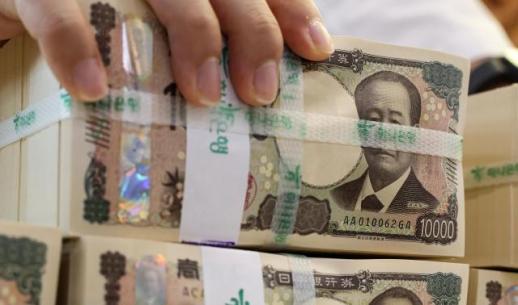 Seoul markets take Japan's 31-year high rate in stride SEOUL, September 18 (AJP) -South Korean capital markets responded coolly to the Bank of Japan's rate hike to a 31-year high Friday, with the widely expected move causing little ripple as the global tightening cycle had largely been priced in. The Bank of Japan (BOJ) raised its benchmark interest rate by 25 basis points to 1.25 percent in a 7-2 vote at the end of its two-day monetary policy meeting, resuming tightening after a three-month pause. The increase took the policy rate to its highest level since 1995. The South Korean won showed little immediate reaction to the decision. The U.S. dollar rose to 1,386.1 won as of 1:40 p.m. after touching 1,379.02 won earlier in the session. KOSPI was 2.6 percent higher at 6,890.88. Flattening deepened in the bond market as shorter-dated yields held firmer while longer maturities declined. The two-year government bond yield stood at 3.997 percent and the three-year yield at 4.034 percent. The benchmark 10-year yield fell 5.4 basis points to 4.452 percent, while the 30-year yield declined 3.3 basis points to 4.574 percent. The moves extended the flattening of South Korea's yield curve seen after the U.S. Federal Reserve raised its benchmark rate by 25 basis points earlier this week, as investors priced in tighter global monetary conditions while seeking longer-dated government bonds. AJP TAKEAWAYS - A 25-basis-point hike lifted the BOJ's benchmark rate to 1.25 percent, its highest level since April 1995. - The 7-2 decision marked Japan's first rate increase since June, while markets shifted their attention to Ueda's guidance on the pace of further tightening. - In Seoul, the dollar-won rate climbed to around 1,385 shortly after the decision, while Korean government bond yields had fallen broadly at the morning close. 2026-09-18 13:08:33
 -
 Korea extends fuel tax cuts, lowers Chuseok highway pump prices SEOUL, September 18 (AJP) — South Korea will extend temporary fuel tax cuts through November and lower pump prices at 226 highway gas stations during Chuseok as authorities grapple with a renewed spike in energy costs from the widening Gulf crisis, the government said Friday. The current tax reductions of 15 percent for gasoline and 25 percent each for diesel and liquefied petroleum gas butane will remain in place through Nov. 30, two months beyond their scheduled expiry, according to the Ministry of Finance and Economy (MOFE). "The fuel tax cuts scheduled to expire at the end of this month will be extended by two months to ease the public's fuel-cost burden," Deputy Prime Minister and Finance Minister Koo Yun-cheol said at an emergency economic meeting. The government said the existing reduction rates were maintained to ease household costs while preserving room to respond to further oil-price volatility amid continued instability in the Middle East. The cuts reduce taxes from pre-discount levels by 122 won per liter for gasoline, 145 won for diesel and 51 won for LPG butane. Diesel and butane will continue to receive the larger 25 percent reductions because of their widespread use in industrial and logistics operations and small commercial trucks, the ministry said. Fuel prices at 226 Korea Expressway Corp.-managed highway gas stations will be lowered by 100 won (about $0.07) per liter from Sept. 24 to 27 from Sept. 17 levels. Daytime electric-vehicle charging fees will also be discounted during the Chuseok holiday, when solar and other renewable-power supplies are relatively abundant. The government will announce its 10th round of petroleum-product price ceilings at 6 p.m. Friday after reviewing international oil prices and the burden on consumers, with the new ceilings taking effect at midnight Saturday. Global oil prices rose sharply again in September amid renewed uncertainty surrounding the Middle East conflict, with Brent crude climbing to $105.80 per barrel on Sept. 16 from $90.10 on July 31 and West Texas Intermediate rising to $102.40 from $84.70 over the same period. Brent stood at $90.50 at the end of August before rising to $104.60 on Sept. 11, while WTI climbed from $85.80 to $100.10 over the same period. Energy supplies are not expected to face major disruptions for the time being as the government pursues diplomatic efforts, diversifies crude-import sources and uses strategic petroleum reserve swaps, Koo said. He added that the government and domestic refiners will operate a joint response team to monitor crude supplies daily and take additional measures if needed. AJP TAKEAWAYS - South Korea will extend fuel tax cuts through Nov. 30, maintaining a 15 percent reduction for gasoline and 25 percent cuts for diesel and LPG butane. - Fuel prices at 226 highway gas stations will be lowered by 100 won per liter during the Sept. 24-27 Chuseok holiday, while daytime EV charging fees will also be discounted. - Brent crude rose above $105 per barrel in September as Middle East uncertainty intensified, prompting the government to prepare new petroleum-product price ceilings and maintain daily monitoring of crude supplies. 2026-09-18 10:47:40
 -
 Korea's producer inflation reaccelerates toward 8% annual gain *Updated with additional information and comments SEOUL, September 18 (AJP) -South Korea's producer prices spiked toward an on-year increase of 8 percent on re-accelerating energy costs and unrelenting chip prices, pointing to sticky price pressure and a tightening bias in the latter half, central bank data showed Friday. The producer price index for August added 0.2 percent from July and 7.9 percent from a year earlier, reversing an easing trend in July, when it fell 0.4 percent on month and rose 7.7 percent on year, according to the Bank of Korea (BOK). Energy prices resumed their climb after retreating in July. The BOK's energy subindex rose 1.0 percent from the previous month after falling 3.6 percent in July, while its on-year gain accelerated to 11.1 percent from 9.7 percent. Coal and petroleum products gained 0.4 percent on month, reversing a 4.2 percent fall in July, and were 54.3 percent higher than a year earlier. Industrial city gas prices surged 11.0 percent from July and 37.8 percent on year. The renewed energy pressure came as Dubai crude, South Korea's benchmark, averaged $88.75 per barrel in August, up 15.6 percent from $76.75 in July. Worse, the upper pressure has worsened from renewed tensions in the Middle East. International oil prices during Sept. 1-16 were about 29 percent higher than the August average, while wholesale industrial city gas rates rose 6.6 percent this month, which could add upward pressure to producer prices, said Lee Heung-hoo, head of the BOK's price statistics team. Chip prices remained another persistent source of inflation. Semiconductor producer prices rose 1.4 percent from July and 147.6 percent from a year earlier, while prices for computer and peripheral equipment jumped 6.3 percent on month and 158.3 percent on year. Computer memory device prices alone surged 8.8 percent from July, while DRAM prices were 476.1 percent higher than a year earlier, according to the BOK. Market researcher TrendForce expects conventional DRAM contract prices to rise 13 to 18 percent in the third quarter from the previous quarter as strong AI-server demand and tight supply continue to support prices. Higher agricultural prices from a scorching heat wave added to the monthly rise. Agricultural, forestry and fishery products climbed 3.8 percent from July, led by a 4.9 percent increase in agricultural products and a 2.8 percent gain in livestock prices. Fresh food prices jumped 7.4 percent on month. Underlying price pressure remained elevated even without food and energy. The producer price index excluding the two categories was unchanged from July but stood 8.2 percent higher than a year earlier despite a stronger won. The won averaged 1,406.3 per dollar in August, strengthening 6.1 percent from 1,497.4 in July, according to BOK data. The effect was evident in the domestic supply price index, which combines domestically produced and imported goods. It fell 1.3 percent from July as imported raw-material prices dropped 6.4 percent, imported intermediate goods fell 5.9 percent and imported final goods declined 5.8 percent. The overall index nevertheless remained 8.6 percent higher than a year earlier. The renewed uptick in producer price suggests sustained pressure on consumer inflation front through much of the second half. The BOK raised its benchmark rate by 25 basis points to 3.00 percent on Aug. 27, its second consecutive increase, saying inflation was likely to stay above its 2 percent target for a considerable period. Its September monetary policy report maintained a tightening bias, saying the bank would determine the timing and pace of additional rate hikes based on inflation, growth and financial stability conditions. AJP TAKEAWAYS - South Korea's producer inflation reaccelerates: August PPI rose 0.2% on month and 7.9% on year, reversing July’s monthly decline and edging closer to 8%. - Energy and chips stay hot: Energy prices rose 1.0% m/m and 11.1% y/y, while semiconductor producer prices climbed 1.4% m/m and 147.6% y/y; DRAM prices were up 476.1% y/y. - Second-half inflation pressure persists: The renewed producer-price uptick points to continued pass-through pressure on consumer prices, reinforcing the BOK’s tightening bias even as a stronger won cushions imported costs. 2026-09-18 07:42:56
 -
 Fed weakens won, flattens curve before BOJ decision SEOUL, Sept. 17 (AJP) — A Federal Reserve rate hike sent the won sharply lower and flattened South Korea's bond curve Thursday, leaving Friday's widely expected Bank of Japan rate increase — and its guidance on further tightening — as the next test for Korean markets. The won closed down 13.6 won at 1,382.2 per dollar from Wednesday's 1,368.6 after the Fed raised its benchmark rate by 25 basis points to 3.75-4.00 percent and signaled scope for another increase this year. The dollar climbed to a seven-week high after the decision. The three-year Korean government bond yield rose 1.0 basis point to 4.063 percent, while the 10-year yield fell 4.1 basis points to 4.506 percent Thursday. The gap between the two benchmarks narrowed to about 44.3 basis points from 49.4 basis points at Wednesday's close, flattening the yield curve. The rise in shorter maturities reflected expectations that further Fed tightening could also lift estimates for the eventual peak in the Bank of Korea's policy rate, as markets turned their attention across the Pacific. The BOJ is widely expected to raise its policy rate from 1 percent to 1.25 percent Friday, which would take the benchmark to a 31-year high. Attention has increasingly shifted to how Gov. Kazuo Ueda describes the timing and pace of subsequent increases. All 52 economists surveyed by Bloomberg expected a September increase, with most anticipating additional hikes either every quarter or at intervals of four to five months, according to a Thursday report by IBK Investment & Securities researcher Kim Ye-seul. Higher inflation risks and renewed yen weakness, which could raise import prices, were cited as reasons for continued tightening. Markets had already priced in a greater than 90 percent probability of a September hike before the meeting, limiting the likely impact of the quarter-point move itself, MUFG Research said in a Sept. 14 report. Ueda is expected to retain a data-dependent approach rather than commit to rapid consecutive increases, with the BOJ continuing to assess economic and inflation conditions before determining the timing and pace of further tightening, according to MUFG. MUFG said language suggesting broader policy discussions at coming meetings could nevertheless fuel expectations for back-to-back increases. The yen weakened toward 156 per dollar Thursday after the Fed decision strengthened the U.S. currency, reversing part of an earlier advance driven by expectations of faster BOJ tightening. A quarter-point BOJ increase alone may therefore offer limited support to the yen unless the central bank gives markets reason to expect a faster tightening path, according to analysts cited by Reuters. The yen's direction after the BOJ meeting was listed alongside the Federal Open Market Committee outcome, oil prices and foreign investor flows as key variables for the KOSPI this week in a Monday report by Kiwoom Securities researcher Han Ji-young. The report said stronger BOJ guidance could put further upward pressure on the yen and Japanese government bond yields and revive concerns over the unwinding of yen-funded carry trades, although it did not forecast that a particular yen move would determine the direction of Korean equities. Friday's market reaction can first be gauged through the dollar-yen rate and Japanese government bond yields, followed by the dollar-won rate and Korean government bonds at comparable maturities. Foreign investor flows will provide a separate indication of whether the BOJ decision triggers a shift in positioning in Korean equities. AJP Takeaways - The won closed down 13.6 won at 1,382.2 per dollar Thursday after the Fed raised rates and left room for further tightening. - Korean government bonds showed a twist flattening, with the three-year yield up 3.7 basis points and the 10-year yield down 1.1 basis points. - The BOJ is widely expected to raise its policy rate to 1.25 percent Friday, with markets focused more on guidance for subsequent increases than on the hike itself. - MUFG says the immediate hike is largely priced in, while Kiwoom flags the post-BOJ yen direction and foreign investor flows as separate variables for Korean equities. 2026-09-17 17:23:07
 -
 Korea's first-half knowledge-services deficit tops $6bn amid AI use SEOUL, Sept. 17 (AJP) — South Korea's knowledge-services trade deficit widened to $6.44 billion in the first half, the largest since the second half of 2010, as payments for overseas software and copyrights surged amid wider AI deployment, central bank data showed Thursday. The shortfall widened by $1 billion from the previous six months and was the second-largest half-year deficit in data going back to 2010, behind only the $7 billion deficit recorded in the second half of that year, according to the Bank of Korea (BOK). Knowledge-services exports totaled $20.36 billion in the January-June period, while imports reached $26.8 billion. Knowledge services cover cross-border transactions involving intellectual property, information and communications, cultural and leisure services, and professional and business services. Intellectual property usage fees accounted for most of the deterioration, with the deficit widening by $900 million from the second half of 2025 to $4.9 billion. Copyright-related trade posted a $2.88 billion deficit, compared with a $2.02 billion shortfall in the previous six months. The deficit in computer and mobile software widened by $530 million to $2.84 billion as the use of overseas software and online services increased, the BOK said. Multimedia copyrights swung to a $40 million deficit from a $290 million surplus as copyright exports by information and communications companies declined and payments for overseas copyrights increased. Cultural and leisure services posted a $720 million surplus, up from $530 million in the previous half. Multimedia production services recorded a $380 million surplus as music and video exports increased, while performance and exhibition-related services posted a $330 million surplus, helped by the music industry. Information and communications services remained in surplus at $2.42 billion, although the figure fell by $450 million from the previous six months. The BOK attributed the decline to a high comparison base following the previous half's record surplus and the deferral of some receipts for pre-installed applications to the second half of this year. Professional and business services posted a $4.67 billion deficit, narrowing by $170 million from the previous half. By industry, manufacturing recorded a $2.23 billion deficit, while the information and communications industry posted a $900 million surplus. Regionally, South Korea recorded a $2.62 billion surplus with Asia, while posting deficits of $3.32 billion with North America and $2.25 billion with Europe. A separate classification covering the information and communications technology industry showed an $860 million knowledge-services surplus in the first half. Within that category, game software development and production recorded a $1.91 billion surplus. AJP Takeaways - South Korea's knowledge-services trade deficit widened to $6.44 billion in the first half, the largest since the second half of 2010 and the second-largest half-year shortfall in data going back to 2010. - Intellectual property usage fees drove most of the deterioration, with the deficit widening by $900 million to $4.9 billion, including a $2.84 billion shortfall in computer and mobile software. - Cultural and leisure services posted a $720 million surplus, while game software development and production recorded a $1.91 billion surplus under a separate ICT classification. 2026-09-17 15:33:58
 -
 Won emerges as standout Q3 gainer as KOSPI rally takes back seat SEOUL, Sept. 17 (AJP) — The South Korean won emerged as a standout winner against the U.S. dollar in the third quarter to date, reversing its trend and place with the KOSPI that dominated the first half. The dollar stood at 1,359.4 won on Sept. 15, leaving the Korean currency 4.8 percent stronger than the end-July level of 1,424.0 won and 8.6 percent stronger than its first-half average of 1,486.79 won, showed the Bank of Korea (BOK) third-quarter market report Thursday. The dollar shot back up to 1,380.7 won by 1 p.m. Thursday following the Federal Reserve's overnight rate hike, which widened the gap between the U.S. and Korean benchmark rates to 1 percentage point at the upper end. The won's strength through Sept. 15 was notable against a 0.3 percent decline in the dollar index against a basket of six major currencies. The Japanese yen gained 1.9 percent against the dollar, the Taiwan dollar 1.4 percent and the Indonesian rupiah 1.8 percent over the same period. The BOK attributed the won's advance to improved domestic foreign exchange supply and demand, helped by a widening current-account surplus and expectations for solid economic growth despite continued geopolitical uncertainty in the Middle East. Volatility also eased sharply. The won-dollar rate's average daily fluctuation fell to 0.31 percent in August from 0.53 percent in July and 0.50 percent in June. The average daily trading range narrowed to 4.4 won from 8.0 won in July. Foreign investor flows also improved overall in August, although the underlying picture differed sharply between stocks and bonds. Net foreign investment in South Korean securities recorded an outflow of $4.50 billion in August on a settlement basis, narrowing from $21.65 billion in July and $30.72 billion in June. Stock investment swung to a modest $40 million inflow from a $20.70 billion outflow in July, while bond outflows widened to $4.53 billion from $960 million a month earlier. The BOK attributed the heavier bond outflow to rising market rates and worsening incentives for short-term arbitrage trades. On a trading-date basis, meanwhile, foreign stock outflows widened to $8.66 billion in August from $5.46 billion in July. Foreign exchange trading became more active even as day-to-day volatility declined. Average daily interbank foreign exchange trading increased to $57.23 billion in August from $54.55 billion in July, led by stronger spot-market activity. Spot transactions rose to $25.31 billion a day from $21.89 billion, while foreign exchange swaps declined to $25.36 billion from $26.83 billion. The picture for securities also reversed entering the second half, with bond yields rising sharply while the pace of equity gains moderated. South Korea's 10-year government bond yield climbed 34 basis points from end-July to 4.60 percent as of Sept. 15, outpacing increases of 27 basis points in the corresponding U.S. Treasury yield and 23 basis points in Japan's 10-year government bond yield. The KOSPI, which had driven South Korean asset gains in the first half, was up just 0.5 percent from end-July through Sept. 15. By comparison, the U.S. S&P 500 gained 1.3 percent, while Taiwan's TAIEX rose 5.5 percent. South Korean banks' overseas borrowing conditions remained broadly favorable despite some rise in funding spreads. The country's five-year credit default swap premium edged down to 22 basis points in August from 23 basis points in July. Short-term overseas borrowing spreads rose to 26 basis points from 17 basis points, while medium- to long-term spreads increased to 45 basis points from 41 basis points. AJP Takeaways - The won strengthened 4.8 percent against the dollar from end-July through Sept. 15, outpacing gains in the Japanese yen, Taiwan dollar and Indonesian rupiah over the same period. - The dollar-won rate rebounded to 1,380.7 won by 1 p.m. Thursday from 1,359.4 won on Sept. 15 following the Federal Reserve's overnight rate hike. - The KOSPI gained just 0.5 percent from end-July through Sept. 15, compared with the won's 4.8 percent advance, while South Korea's 10-year government bond yield rose 34 basis points. - Foreign securities outflows narrowed to $4.50 billion in August from $21.65 billion in July, while average daily foreign exchange volatility fell and interbank trading volume increased. 2026-09-17 13:36:14
 -
 Korean markets shrug off FOMC, turn to Tokyo and London SEOUL, September 17 (AJP) - South Korean capital markets on Thursday largely brushed aside the U.S. Federal Reserve’s widely expected overnight rate hike, with authorities forecasting limited immediate impact while keeping watch on elevated borrowing costs. The KOSPI rose 0.7 percent to 6,765.65 while the benchmark 10-year government bond yield fell 2.5 basis points to 4.528 percent as of 10:20 a.m. The dollar gained 2.4 won to 1,379.9 won, indicating modest weakness in the Korean currency. South Korean policymakers said the Fed’s quarter-percentage-point increase had largely been priced into financial markets and was unlikely to cause an immediate shock. They nevertheless vowed to closely monitor bond yields and foreign exchange movements ahead of rate-setting meetings in Tokyo and London, where further policy tightening could add to global market volatility. The Federal Open Market Committee unanimously raised its benchmark federal funds target range by 25 basis points to 3.75 to 4.00 percent overnight, its first increase in three years and two months. The Fed also left the door open to further tightening this year, with most policymakers projecting at least one additional increase. Deputy Prime Minister and Finance Minister Koo Yun-cheol chaired an expanded macroeconomic and financial meeting at 8 a.m. with Bank of Korea (BOK) Gov. Shin Hyun-song and the heads of the Financial Services Commission and Financial Supervisory Service. The Fed hike widened the interest-rate gap with South Korea, where the BOK’s benchmark rate stands at 3.00 percent following back-to-back increases over the past two months. The widely expected U.S. increase was accompanied by stronger growth and inflation forecasts and a higher projected interest-rate path, pointing to the possibility that U.S. borrowing costs could remain elevated for longer. Among the 18 Fed officials submitting rate projections, 16 expected at least another 25-basis-point increase this year. Twelve projected one additional hike and four saw room for 50 basis points of further tightening. Fed Chair Kevin Warsh did not submit a projection. The projections, commonly known as the Fed’s “dot plot,” indicate where individual policymakers expect interest rates to stand in the future. Warsh also said recent inflation trends had not improved meaningfully and that current financial conditions were difficult to describe as restrictive, according to the BOK. The BOK, which separately held a market monitoring meeting Thursday morning, said Warsh’s emphasis on price stability and the prospect of further rate increases suggested U.S. monetary policy would remain tight. Officials distinguished between the limited immediate impact of the well-anticipated hike and longer-term risks from additional U.S. tightening. Overnight, the two-year U.S. Treasury yield rose 7 basis points to 4.74 percent and the 10-year yield gained 2 basis points to 5.02 percent. The dollar index climbed 0.7 percent to 100.32. The S&P 500 fell 0.4 percent to 7,552, while West Texas Intermediate crude futures dropped 3.6 percent to $102.02 a barrel. South Korean authorities said volatility in the government bond market had increased as global financial conditions shifted and pledged to take stabilization measures if trading became excessively one-sided. Officials also said they would monitor rising lending rates and heavier repayment burdens on financially vulnerable borrowers while implementing existing support programs and considering additional measures if needed. The meeting reviewed how South Korea’s current account surplus and other changes in economic conditions could affect market liquidity and asset prices. Authorities said they would closely watch oil prices, global capital flows and monetary policy decisions from Japan and Britain alongside risks from the Middle East war, fiscal concerns in major economies and uncertainty surrounding the artificial intelligence industry. AJP Takeaways - South Korean markets showed little initial stress after the Fed hike, with the KOSPI gaining 0.7 percent and the 10-year government bond yield falling 2.5 basis points in morning trading. - Authorities said the 25-basis-point Fed increase had largely been priced in but remained alert to further U.S. tightening and upcoming policy decisions in Japan and Britain. - The Fed hike widened the Korea-U.S. policy-rate gap to as much as 1 percentage point, while Korean authorities said they were prepared to respond if bond or foreign exchange volatility became excessive. 2026-09-17 10:42:10