

Journalist
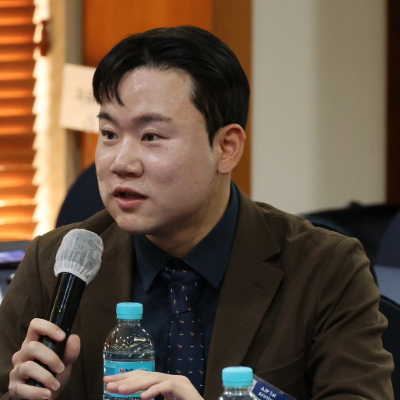
Lee Jung-woo이정우
cannes2030@ajupress.com
ReporterMinistry of Unification & North Korea, Politics, Foreign Affairs
I studied philosophy in college, and sociology and journalism in graduate school. I cover North Korea, South Korean politics, foreign affairs and films. I enjoy Nordic cinema, Indian cuisine and Japanese detective novels. I have a cat and like bright, acidic coffee.
"Were it left to me to decide whether we should have a government without newspapers, or newspapers without a government, I should not hesitate a moment to prefer the latter."
"Were it left to me to decide whether we should have a government without newspapers, or newspapers without a government, I should not hesitate a moment to prefer the latter."
Latest by Lee Jung-woo
-
 President Lee to go live with cabinet H2 briefings SEOUL, July 01 (AJP) -South Korean President Lee Jae Myung will once again receive live televised briefings on the government's second-half policy agenda, pressing ahead with the format despite criticism that it has become more of a public spectacle than a working policy review. The presidential office said Wednesday that Lee will receive reports from government ministries and agencies from July 15 to July 21 in nine sessions, reviewing progress on tasks assigned during the administration's first round of policy briefings late last year. The reviews will cover progress on structural reform, region-led growth initiatives and projects aimed at restoring state institutions. About 200 members of a public observer panel will attend the sessions, asking questions and offering suggestions after presentations by government officials and discussions with the president. Lee announced on Facebook that applications for the citizen panel would be accepted through July 6. "This is the first ministry briefing jointly conducted by the government and the people," Lee wrote. "Rather than simply announcing achievements, it will be an opportunity to review policy outcomes together with citizens and discuss the future direction of state affairs." The initiative has become a defining feature of Lee's governing style since his first round of ministry briefings, but it has also exposed a sharp political divide over how government should operate. Rep. Yoon Sang-hyun of the conservative People Power Party said the broadcasts could improve transparency but warned that they risked becoming political theater. "Lee Jae Myung government's livestreamed ministry briefings are meaningful in that they are an experiment to reveal the operation of government directly to the public," Yoon said. "However, the current format appears to place more emphasis on performance and public reprimands than on policy reviews." "Government is not a show but a system. The strengths of transparency and livestreaming should be preserved, but they need to be complemented with calm policy discussions and a long-term vision for state affairs, rather than controversial remarks and impromptu instructions," he added. Rep. Ahn Sang-hoon, also of the People Power Party, dismissed the format as "showmanship." "It's governance for show," Ahn said. "Ministries will spend more time preparing materials for presidential briefings than working on detailed implementation plans." He added that even "if a president is a genius, trying to oversee everything personally will ultimately produce weak governance," arguing that ministers should instead be given broader authority while the president focuses on major policy issues. Rep. Cho In-cheol of the ruling Democratic Party welcomed the initiative. "I wholeheartedly welcome it because government can no longer operate behind closed doors as it did in the past," Cho said. "It is also a promise to the people: 'This is what we will do. Please watch whether the government is doing well or not.'" Cho acknowledged that the process could be burdensome for civil servants but said, "The civil service should no longer be afraid of adopting private-sector practices," adding that Lee's informal style of communication was intended to ease pressure on government officials. 2026-07-01 17:07:02
-
 Google faces fresh Korean antitrust action over alleged app store exclusivity SEOUL, July 01 (AJP) - South Korea's antitrust regulator has launched formal proceedings against Google, accusing the U.S. tech giant of using financial incentives to induce major game developers to give preferential treatment to its Play Store, in what authorities describe as an abuse of its dominant market position. The Korea Fair Trade Commission (KFTC) said Wednesday it had sent an examiner's report to Google, marking the start of deliberations that could lead to corrective orders and a fine of up to 849.6 billion won ($547 million). The case targets Google LLC in the United States, Google Asia Pacific Pte. Ltd. in Singapore and Google Korea. According to the KFTC, Google signed agreements with 22 domestic and foreign game developers between July 2019 and March 2026 under its Games/Google Velocity Program (GVP), internally known as "Project Hug." The agreements required developers to launch games on Google Play under conditions that were at least as favorable as those offered on rival app stores, including release timing and service quality, in exchange for financial support for Google Cloud, Google Ads, YouTube and other Google services. The regulator alleges the contracts were structured so that Google's financial support increased as developers generated more revenue through Google Play, creating strong incentives to prioritize Google's marketplace over competitors. The KFTC said the arrangement significantly reduced developers' incentives to distribute games through competing app stores, including Korean app marketplace OneStore, effectively forcing developers into de facto exclusive dealing with Google and hindering rivals' business activities. Google's Play Store has maintained more than an 80 percent share of South Korea's Android app market, according to the regulator. The regulator also said the agreements discouraged some companies from launching their own app marketplaces. The KFTC estimated that Google's alleged conduct affected $9.22 billion in relevant revenue in Korea, allowing the commission to impose a fine of up to 6 percent of that amount under the country's antitrust law. The examiner recommended corrective measures and financial penalties, describing the alleged violations as "very serious." The case marks Google's second major antitrust action in Korea involving its app marketplace in three years. In 2023, the KFTC fined Google 42.1 billion won (about $32 million at the time) after finding that the company offered marketing and overseas expansion support to game developers on the condition that they did not release games on rival app store OneStore. Because the latest alleged violations occurred within five years of the previous case, any eventual fine could be increased under the regulator's penalty guidelines, although the statutory maximum remains unchanged. Google has up to eight weeks after receiving the examiner's report to submit a written response and review the evidence before the commission issues a final ruling. The KFTC said it plans to reach a decision as quickly as possible, calling the case significant for restoring competition in South Korea's app marketplace. 2026-07-01 15:21:26
-
 Korea's new PM Han Seong-sook vows AI focus and faster policy delivery SEOUL, July 01 (AJP) - South Korea's new Prime Minister Han Seong-sook pledged Wednesday bolder policy commitment in artificial intelligence and advanced industries while ensuring the benefits of economic growth reach ordinary citizens. Speaking to reporters as she arrived for her first day at the Government Complex Seoul, Han said she accepted "with great humility" the responsibility entrusted to her by the people and the National Assembly. Referring to the government's June 29 announcement of three flagship "mega projects" to expand chip-led AI infrastructure, Han said Korea was transforming "from a follower into a country leading major change." "We will pursue even bolder investment in AI and advanced industries," she said. "We will work to ensure that the results become part of people's daily lives and create opportunities for young people to grow and succeed." Han said the benefits of economic growth should extend beyond large corporations to small businesses and neighborhood merchants so that "all citizens can realize their potential." Asked about her most urgent task, Han said the government's speed would be critical. "I believe the speed of government is extremely important," she said. "I will do my best to make this a government that moves more quickly." Han added that she would prioritize policies with tangible benefits for the public, saying she wanted to focus on initiatives that people could directly experience in their daily lives. Addressing the division of responsibilities with President Lee Jae Myung, Han said the president would set the administration's overall direction while the Cabinet would focus on rapid execution. "If the president presents the big picture and delivers the overarching message, the Cabinet's job is to carry it out quickly," she said. Han, who becomes South Korea's second woman to serve as prime minister, downplayed the historic significance of the appointment. "Whenever I've taken on a new role, I've often carried the title of 'the first woman,'" she said. "I don't think much about that. I believe I am in a position where I can do this job now." Earlier Wednesday, Han received her letter of appointment from President Lee. She said the president encouraged her to continue the work she had been doing and told her that people had high expectations for her leadership. Han also identified suicide prevention as one of the government's priority policy areas. Echoing President Lee's emphasis on building "a government that saves lives," she said ministries should better coordinate and analyze data together to improve the effectiveness of suicide prevention efforts. Under South Korea's presidential system, the prime minister is the country's second-highest-ranking government official but serves under the president, who is both head of state and head of government. Appointed by the president with the consent of the National Assembly, the prime minister oversees government ministries on the president's behalf, coordinates Cabinet affairs and can recommend the appointment or dismissal of Cabinet ministers. Although the office carries less independent political authority than prime ministers in parliamentary democracies, it plays a key role in managing the day-to-day operations of the government and coordinating policy implementation across ministries. The prime minister is also first in the constitutional line of succession and assumes the powers of the presidency on an acting basis if the president is unable to perform official duties or the office becomes vacant. 2026-07-01 14:19:54
-
 Mocking Gwangju is no child's play, baseball aspirants learn SEOUL, July 01 (AJP) - "A man is responsible for his ignorance," Milan Kundera once wrote. Young Koreans are now learning that lesson the hard way. Just last week, Starbucks Korea was forced to close stores early nationwide for employee history lessons, absorbing an estimated 2 billion won ($12.8 million) in losses after a promotional campaign on May 18 sparked outrage in Gwangju. Its "Tank Day" promotion of 5/18 tumbler sparked social outrage for its painful associations with the May 18, 1980 Gwangju Democratization Movement, when military forces used tanks and lethal force to suppress a pro-democracy uprising, killing hundreds of civilians. The controversy was reignited during a high school baseball championship game between teams from Seoul and Gwangju last Monday. What may have begun as teenage taunting quickly escalated into a serious national issue, drawing investigations by education authorities and the Korea Baseball Softball Association. For the students involved, the consequences could be severe. Disciplinary action could affect not only their school records but also their future baseball careers. The controversy erupted during a game between Paichai High School of Seoul and Gwangju Jeil High School in the 81st Blue Dragon National High School Baseball Championship at Mokdong Baseball Stadium. Video footage circulating online showed multiple Paichai players repeatedly chanting, "Let's go, let's go, let's go to Starbucks," from the dugout during the top of the eighth inning as their team led 6-2. The baseball incident suggested that the lessons from the Starbucks controversy had not been fully learned. Critics accused the students of trivializing the May 18 Gwangju Democratization Movement as it remains one of the darkest chapters in modern Korean history. According to witnesses and game footage, the chanting continued until coaches from Gwangju Jeil protested. Paichai's coaches intervened only after the complaint was raised, and umpires stepped in to calm the situation. The Korea Baseball Softball Association has launched an investigation after Gwangju Jeil formally requested disciplinary action against those involved. The Seoul Metropolitan Office of Education also announced Tuesday that it would conduct its own investigation. "The office takes this matter extremely seriously," it said in a statement. "Expressions that can be interpreted as ridiculing historical suffering or mocking a particular region are educationally unacceptable and have no place in school sports." Education officials said they would visit Paichai High School to determine how the incident unfolded, whether coaches responded appropriately, how student athletes were supervised, and what measures the school plans to take to prevent similar incidents. The school's apology also came under criticism. Paichai High initially stated that it would discipline "the student athlete involved" under school regulations, wording many online critics said portrayed the incident as the actions of a single individual despite video footage showing numerous players chanting together. The apology sparked further controversy after internet users noticed that the first version carried a visible watermark indicating it had been generated using Google's Gemini artificial intelligence model. The watermark was later removed. The Korean Teachers and Education Workers Union criticized not only the students but also the adults responsible for supervising them. "The fact that no one stopped the students immediately demonstrates educational neglect," the union said in a statement Tuesday. "Society's failure to respond firmly to historical distortion and hate speech has ultimately influenced the language and behavior of adolescents." Residents of Gwangju told AJP the episode reflected what they described as deeply rooted prejudice and hostility toward the city, adding that such incidents occur with troubling frequency. Lee Dong-yoon, a physical education student at Chonnam National University, said that when he travels outside the region, it is "very common" for people to discriminate against those from Gwangju or disparage the May 18 Gwangju Democratization Movement. "I think almost everyone from Gwangju has had that kind of experience," he said. "I experienced a great deal of prejudice and discrimination, especially during my mandatory military service in Seoul." "Many senior soldiers referred to people from Gwangju as hongeo (ray fish), a derogatory slur, or repeated distorted claims about the May 18 Gwangju Democratization Movement." Having witnessed the chanting during the game, Lee said he was "deeply shocked that such young high school students were saying those things." "I'm worried because, after I graduate, I may have to teach students like them," he said. "It made me think that regional hatred is spreading like an internet meme," said Yun Young-jun, a business administration student at Chonnam National University. "The players targeted the opposing team simply because it represented Gwangju. It's unfortunate that even teenage athletes seem to consume and reproduce these expressions as casual jokes." Kim Ki-beom, a history education student at Chonnam National University, said he was particularly disturbed by the coordinated nature of the chants. "I was shocked to see the students chanting while performing choreographed gestures in the dugout," he said. "I believe this incident reflects how hostility toward Gwangju has become normalized in everyday life. Watching it was heartbreaking." The incident has reignited a longstanding debate in South Korea over regional discrimination and how younger generations perceive one of the country's darkest historical tragedies. The May 18 Gwangju Democratization Movement began after military strongman Chun Doo-hwan expanded martial law following the assassination of President Park Chung-hee. As students and citizens protested military rule in the southwestern city of Gwangju, paratroopers were deployed to suppress the demonstrations. Security forces used live ammunition, beat civilians and arrested thousands. Historians estimate that between 600 and 2,300 civilians were killed. The uprising has since become a defining symbol of South Korea's democratization movement and is officially commemorated each year on May 18. Seon Hee-ju, a history education student and baseball fan who watched the game live, said the incident reflected broader social prejudice rather than the actions of a few individuals. "One of my friends even had a man disparage the May 18 Gwangju Democratization Movement during a blind date," she said. "Derogatory remarks about the Honam region occur frequently, and it seems the number of people who view someone negatively simply because they are from Gwangju has actually increased." Yang Jae-hyuk was standing with his mother in front of the former South Jeolla Provincial Government building when soldiers attacked civilians during the 1980 crackdown. "The soldiers repeatedly beat my mother and me, then a middle school student, with clubs," he recalled. "Although 46 years have passed, I still frequently have nightmares in which soldiers beat my mother and me until we were covered in blood." His older brother, Yang Jae-young, fought against martial law troops as a member of the citizen militia. A high school senior at the time, Yang Jae-young suffered severe head injuries after being captured. He lived with the lasting effects of those injuries until his death in 2009 in his mid-40s. Yang said he hopes history education will be strengthened and that the May 18 Gwangju Democratization Movement will eventually be included in the preamble to South Korea's Constitution. Rep. Seo Young-kyo, chair of the National Assembly's Legislation and Judiciary Committee, said the controversy should become an opportunity to correct distorted perceptions of the uprising. "We must make it clear that regional discrimination and disparaging the democratization movement are unacceptable," she said. Park Ha-sung, who joined the citizen militia as a high school student during the uprising, said witnessing today's students mock the movement reinforced the need for stronger history education. "Watching today's high school students ridicule the Gwangju Democratization Movement convinced me that history education must be strengthened and that those who distort the history of May 18 should face tougher consequences." 2026-07-01 11:23:58
-
 Han Seong-sook heads for confirmation as Korea's second female PM SEOUL, June 30 (AJP) -Technocrat and SMEs Minister Han Seong-sook cleared a key parliamentary hurdle Tuesday to become South Korea's second female prime minister, as the ruling party pushed ahead with her confirmation despite a boycott by the main opposition. The National Assembly's special committee on Han's confirmation adopted a report endorsing President Lee Jae Myung's nominee, with support from lawmakers largely from the ruling Democratic Party (DP). The report said a majority of committee members found Han qualified for office, while also recording dissenting opinions that deemed her unfit. Lawmakers from the conservative People Power Party (PPP) boycotted the meeting in protest of the ruling party's decision to press ahead with the confirmation process. The DP planned to bring Han's confirmation motion to a vote during a plenary session later Tuesday. With the ruling party and its allies holding a parliamentary majority, the motion was widely expected to pass without opposition support. Under South Korean law, a prime ministerial nominee must win the support of a majority of lawmakers present at a plenary session, provided more than half of all National Assembly members are in attendance. Once confirmed, Han would become the first woman to serve as South Korea's prime minister in two decades and only the second in the country's history, following former Prime Minister Han Myeong-sook. Han, 59, began her career as a magazine journalist before moving into the technology sector. She joined internet giant Naver, where she rose to chief executive officer and was credited with expanding the company's mobile and artificial intelligence businesses. She was recruited as the first SMEs and Startups minister by Lee Jae Myung administration. Opposition lawmakers questioned her over an illegally expanded structure on a property she owns in central Seoul, alleging she failed to remedy the violation until after her nomination. The PPP also challenged her real estate holdings and raised concerns over an alleged leak of personal information, arguing that the controversies called into question her suitability for the country's second-highest office. Han has denied any wrongdoing and defended her actions throughout the confirmation hearings. 2026-06-30 15:09:01
-
 The trillion-dollar chip project revives Korea's old Jeolla-Yeongnam rivalry SEOUL, June 29 (AJP) - Pork-barrel projects are always political. The debate becomes even hotter when the prize is the world's most coveted commodity — AI memory chips — and nearly $1 trillion in investment. A government-backed plan to steer hundreds of trillions of won in new semiconductor investment toward South Korea's southwestern Honam region has erupted into one of the first major political battles of President Lee Jae Myung's administration. The conservative opposition accuses Lee of arm-twisting Samsung Electronics and SK hynix into politically motivated investment decisions, while the president argues the project is essential both to maintaining South Korea's semiconductor leadership in the AI era and correcting decades of regional economic imbalance. The dispute has rapidly expanded beyond industrial policy into a broader debate over how far governments should influence corporate investment, whether balanced regional development can coexist with industrial efficiency, and where the country's next semiconductor frontier should be built. Lee mounted an unusually direct public defense over the weekend after the main opposition People Power Party (PPP) alleged that the administration had improperly pressured Samsung Electronics and SK hynix to build major fabrication plants in Honam, the Democratic Party's traditional political stronghold encompassing Gwangju and the North and South Jeolla provinces. Writing in a series of posts on X, Lee rejected accusations that the region was receiving political favoritism. "Creating a semiconductor ecosystem in Honam is not preferential treatment for a particular region," Lee wrote, urging the opposition to debate the issue on its industrial merits rather than inflaming regional divisions. Lee argued that the country's southwest offers exactly the conditions semiconductor manufacturers increasingly require: abundant undeveloped land, plentiful industrial water, expanding renewable energy resources and relatively low seismic risk. He said South Korea should continue accelerating expansion around the existing semiconductor clusters in Yongin and Pyeongtaek while simultaneously establishing a second large-scale manufacturing hub outside the Seoul metropolitan area. The president framed the proposal as both an industrial necessity and a national development strategy. Responding to criticism from PPP lawmaker Ahn Cheol-soo that presidential requests for regional investment could constitute an abuse of authority, Lee argued that the government's role was limited to industrial promotion and administrative support rather than coercion. He also pointed to a 2023 government assessment conducted under former conservative President Yoon Suk Yeol, which ranked Gwangju and South Jeolla among the strongest candidates for future semiconductor industrial complexes. When former PPP presidential candidate Yoo Seong-min questioned why Honam had been selected, Lee argued that renewable energy would become increasingly important as semiconductor manufacturers face tighter global carbon-reduction requirements. Lee also dismissed allegations by PPP floor leader Jung Jeom-sig that Samsung and SK hynix had acted under political pressure, saying critics were projecting their own past experiences onto others. Kim Yong-beom, the presidential chief of staff for policy, described establishing a major semiconductor fabrication cluster outside the capital region as "a very powerful national strategy." Industry Minister Kim Jung-kwan likewise defended the proposal, citing the southwest's strong electricity self-sufficiency, abundant water resources and concentration of research institutions, including Chonnam National University, the Gwangju Institute of Science and Technology and the Korea Institute of Energy Technology. The opposition, however, intensified its criticism Monday. PPP Rep. Ahn Sang-hoon told AJP that directing Samsung Electronics and SK hynix toward Honam represented "a major policy mistake" that risked weakening one of South Korea's most globally competitive industries while fueling fresh regional tensions. The controversy comes as the Lee administration prepares to launch one of the largest industrial investment programs in South Korean history. Under the proposal, Samsung Electronics and SK hynix would each build two semiconductor fabrication plants in the southwest as part of an 800 trillion won ($519 billion) semiconductor ecosystem forming one pillar of Lee's broader AI strategy. Administration officials argue that expanding production beyond the Seoul metropolitan area has become unavoidable because existing manufacturing hubs around Yongin and Pyeongtaek are approaching practical limits in land availability, electricity capacity and industrial water. Critics counter that dispersing production risks weakening the tightly integrated supplier networks, engineering talent and manufacturing efficiencies that have helped South Korea dominate the global memory-chip industry. The political sensitivity extends well beyond semiconductors. During South Korea's state-led industrialization under former President Park Chung-hee in the 1960s and 1970s, much of the country's heavy industry was concentrated in the southeastern Yeongnam region, while Honam increasingly came to regard itself as economically marginalized. That perception of unequal development became deeply embedded in the region's political identity and has remained one of South Korea's most enduring political fault lines. The electoral map still reflects that history. Honam has long served as the country's most reliable liberal stronghold, while the conservative People Power Party continues to draw much of its support from the southeastern Yeongnam region. Consequently, few large-scale investment decisions involving Honam are viewed solely through an economic lens. The semiconductor initiative therefore represents more than a debate over where the next fabrication plants should be built. It has become an early test of President Lee's industrial philosophy — whether the government can simultaneously pursue AI leadership, reshape the country's economic geography and convince voters that one of the largest industrial projects in Korean history is driven by national strategy rather than regional politics. 2026-06-29 17:34:59
-
 South Korea to create second chip cluster at $520 billion *Updated with additional information SEOUL, June 29 (AJP) -South Korea envisions transforming itself into a "Chip Republic," committing more than 800 trillion won ($520 billion) to build a second semiconductor belt spanning the country's southwestern region in an unprecedented industrial strategy designed to preserve its leadership in AI-era chips. The master plan calls for four new wafer fabrication plants in the southwestern Honam region, an advanced semiconductor packaging hub in the central Chungcheong region and a supply-chain manufacturing cluster in the southeastern Yeongnam region, creating a nationwide semiconductor ecosystem beyond the Seoul metropolitan area. The AI-led industrial strategy rests on what Industry Minister Kim Jung-kwan called the "three S's" — speed, stronghold and spearhead. The completion of the Yongjin chip cluster project will be fastened by 12 years to 2033, he said. "We will move faster than our competitors, build an unshakable industrial stronghold and spearhead the next generation of AI technologies," Kim said Monday while unveiling what is expected to become the Lee Jae Myung administration's most ambitious state-backed industrial initiative. "I will personally oversee and deliver these three mega projects," President Lee Jae Myung said in his opening remarks, flanked by Samsung Electronics Executive Chairman Jay Y. Lee on his right and SK Group Chairman Chey Tae-won on his left. The three national initiatives comprise semiconductors, Physical AI and AI data centers, placing chips at the center of South Korea's next growth strategy. Samsung Electronics and SK hynix will each construct two state-of-the-art fabrication plants in Jeolla Province, creating what the government describes as a second national semiconductor cluster to complement the existing "K-Chip Belt" around Gyeonggi Province. The blueprint reflects the Lee administration's vision of building a fully integrated AI ecosystem stretching from semiconductor fabrication and advanced packaging to hyperscale AI data centers while reducing South Korea's decades-long economic dependence on the Seoul metropolitan area. Honam, encompassing Gwangju and the North and South Jeolla provinces, has historically received far less high-tech investment than the capital region despite its strong manufacturing base. The government hopes the semiconductor push will transform the region into a new growth engine for the AI economy. If completed as planned, the project would create a second semiconductor manufacturing corridor alongside the existing cluster surrounding Seoul, where Samsung, SK hynix and hundreds of suppliers currently concentrate their production. The strategy also reflects an intensifying global race to secure AI infrastructure, as governments increasingly view semiconductors, electricity, water resources and hyperscale computing facilities as strategic national assets rather than ordinary industrial investments. Unlike previous semiconductor policies focused primarily on manufacturing capacity, the new blueprint seeks to integrate the entire AI value chain — from chip production and advanced packaging to data centers and power infrastructure — into a single national industrial strategy. Samsung Executive Chairman Lee outlined a nationwide investment map extending well beyond semiconductors, saying Gwangju had emerged as the leading candidate for Samsung's next fabrication complex. "Among several candidates, Gwangju offers the greatest potential through secure electricity and water supplies, a skilled workforce and strong government support," Lee said. He noted that Samsung's investment timetable has accelerated significantly following the expansion of its Giheung, Hwaseong, Pyeongtaek and Yongin semiconductor campuses, making preparations for a new production base necessary sooner than expected. Lee said Samsung will concentrate investment in high-bandwidth memory (HBM) manufacturing around Cheonan and Onyang in the Chungcheong region, where advanced packaging capabilities are already being built. "HBM, which powers AI training and inference, requires cutting-edge chip stacking technology and manufacturing processes equivalent to a front-end fabrication plant," he said. Beyond semiconductors, Samsung plans to concentrate humanoid robots and Physical AI investments in Gumi, North Gyeongsang Province, supported by AI data centers serving the group's own operations. Samsung SDI will continue expanding next-generation all-solid-state battery and battery energy storage system production in Ulsan, while Samsung Heavy Industries will increase investment in next-generation shipbuilding in Geoje. Samsung Electro-Mechanics will expand production of advanced package substrates in Busan, and Samsung Biologics will continue to concentrate its biotechnology investments in Songdo, west of Seoul. Chey Tae-won, chairman of SK Group, unveiled an even larger investment blueprint, saying SK Telecom and SK hynix would commit about 1,100 trillion won to AI infrastructure and semiconductors through 2035, including 400 trillion won to build a new semiconductor cluster in the country's southwest. "The question is not why Korea should pursue AI, but what we want AI to accomplish," Chey said. "Korea should become a country that produces and exports intelligence." He proposed building multiple AI data centers totaling five gigawatts in the first phase before expanding to 10 gigawatts, describing them as "AI factories" that would manufacture intelligence rather than conventional industrial goods. Chey also confirmed that SK hynix will accelerate construction of its Yongin semiconductor cluster by 12 years, bringing completion forward to 2033, while investing 400 trillion won in the southwestern region to establish a second semiconductor manufacturing base. "Even after these investments, demand will continue to outstrip supply," he said, predicting persistent shortages of AI memory chips as computing demand accelerates worldwide. He compared the AI growth to a child whose brain capacity will grow along with the evolution, requiring that amount of memory capacity. Science and ICT Minister Bae Kyung-hoon said the government aims to facilitate more than 1,000 trillion won of cumulative investment in AI data centers by 2035, describing computing infrastructure as the next strategic battleground alongside semiconductors. President Lee closed the event by elevating the country's two business leaders to an unusual status rarely bestowed by a South Korean president. "This is a truly moving moment. Today marks the beginning of a new chapter in Korea's history," Lee said. Calling Lee Jae-yong and Chey "national heroes," he praised them for choosing to expand investment at home rather than overseas despite fierce global competition to attract semiconductor projects. "You have shown that companies can pursue profits while also serving the nation," Lee said. Lee then bowed separately to each chairman before taking both men's hands in a rare public display of appreciation toward corporate leaders, pledging to establish a dedicated office under the presidential secretariat to oversee what he described as Korea's three defining projects — semiconductors, Physical AI and AI data centers. Investors were equally pleased. The KOSPI that sank to as low as 8,127.99 recovered after the announcement to above 8,400 while the KOSDAQ soared more than 8 percent. 2026-06-29 14:49:49
-
 Korean justice minister calls to scrap statute of limitations on state crimes SEOUL, June 29 (AJP) - South Korean Justice Minister Jung Sung-ho on Monday called for abolishing the statute of limitations for crimes committed by the state, saying those responsible for torture and other forms of state violence must be held accountable regardless of how much time has passed. In a post on X, Jung referred to the so-called Nakdong River murder case, a wrongful conviction that was overturned in a retrial after two men spent more than two decades in prison for a killing they did not commit. "There should be no statute of limitations for crimes committed by the state," Jung wrote. "Those who committed crimes against humanity through state violence must be punished, and we must firmly establish the principle that there is no statute of limitations for justice." The minister also apologized to the victims, Choi In-cheol and Jang Dong-ik, saying they had endured more than 30 years of suffering. "I sincerely apologize for your sufferings of more than 30 years," Jung wrote. "The Ministry of Justice will do its utmost to ensure that no citizen ever becomes a victim of fabricated criminal cases." The case stems from the Jan. 4, 1990, abduction of a man and a woman near the Nakdong River in the southeastern city of Busan. The woman was killed and the man survived with injuries. Police accused Choi and Jang of the crime after allegedly extracting false confessions through torture. Both men were sentenced to life imprisonment and spent 21 years behind bars before being released. They later sought a retrial, and the Busan High Court acquitted them in February 2021. During the retrial proceedings, Choi and Jang filed perjury complaints against five police officers who testified as witnesses. Prosecutors indicted four of the officers on June 25, one day before the statute of limitations on perjury expired. Jung said the perjury charges were the only remaining legal avenue to pursue accountability because the statute of limitations had already expired for the alleged torture and fabrication of evidence. He urged the National Assembly to consider legislation eliminating the statute of limitations for crimes involving state violence, noting that President Lee Jae Myung has repeatedly emphasized the need to hold perpetrators of such acts accountable. "State violence not only destroys an individual's life but also undermines society's trust in the justice system," Jung wrote. "We must establish a just Republic of Korea where no one falls victim to fabricated criminal cases." 2026-06-29 14:01:59
-
 Tajikistan-led UN resolution establishes international peace through 2036 SEOUL, June 29 (AJP) - The U.N. General Assembly has adopted a resolution proclaiming 2027 - 2036 as the International Decade of Strengthening of Peace for Future Generations, following an initiative introduced by Tajikistan, the country's embassy in Seoul said Monday. The resolution, adopted on June 25, calls for greater international efforts to promote peace, dialogue and reconciliation while encouraging cooperation across generations to ensure that the interests of future generations are reflected in policymaking. According to the resolution, the decade will support engagement among children, young people and older persons and encourage governments, civil society organizations and other stakeholders to share best practices and participate in its implementation. The measure reaffirms the principles of the U.N. Charter, including the commitment to settle disputes by peaceful means and "to save succeeding generations from the scourge of war." It also recognizes the U.N. Declaration and Programme of Action on a Culture of Peace as a framework for promoting peace and nonviolence. The General Assembly also welcomed commitments made at the 2024 Summit of the Future, including the adoption of the Pact for the Future, which calls for stronger international cooperation to protect the interests of future generations. The resolution highlights recent diplomatic progress in Central Asia, welcoming efforts by Tajikistan, Kyrgyzstan and Uzbekistan to resolve border issues through peaceful negotiations and agreements. It requests the U.N. secretary-general, specialized agencies, regional commissions and other U.N. bodies to help implement the decade in cooperation with governments and other stakeholders. The Embassy of Tajikistan in Seoul said the resolution reflects the country's longstanding support for peace and dialogue, noting that the initiative was proposed by President Emomali Rahmon. The embassy said the adoption comes as armed conflicts continue to affect civilians in many parts of the world. 2026-06-29 12:48:21
-
 Stay-at-home fathers in South Korea hit record high in first quarter SEOUL, June 29 (AJP) - The number of South Korean men staying out of the workforce to care for preschool children or manage household duties climbed to a record high in the first quarter, while the number of women doing the same fell to the lowest level since comparable data became available. According to data released Monday by Statistics Korea through the Korean Statistical Information Service (KOSIS), 274,000 men were classified as economically inactive because of childcare or housework in the January-March period, up 16.6 percent from a year earlier. It was the highest first-quarter figure since the current classification of the economically inactive population was introduced in 2004. The year-on-year increase was also the largest since 2021. Of the total, 261,000 men cited housework as the reason for remaining outside the labor force, up 16.5 percent from a year earlier, while 13,000 stayed home to care for preschool children or grandchildren, an increase of 16.8 percent. The number of men devoted to childcare or housework has nearly doubled over the past two decades, rising from 151,000 in the first quarter of 2006. It first exceeded 200,000 in the first quarter of 2022. In contrast, the number of economically inactive women engaged in childcare or housework fell 1.9 percent from a year earlier to 6.536 million, the lowest first-quarter level since 2004. The figure had peaked at 7.684 million in the first quarter of 2013 before gradually declining. The trend suggests a gradual shift in traditional gender roles, with more men taking on caregiving and household responsibilities while more women remain in the workforce. The increase may also reflect a growing number of women in high-paying professional occupations. A report released in April by the Bank of Korea found that the ratio of economically active women aged 25 to 34 with four-year college degrees or higher to their male counterparts rose from 51.5 percent in 2002 to 95.5 percent last year. Among young professionals, the number of employed women was nearly equal to that of men last year. In office jobs, employed women outnumbered men, with the female-to-male employment ratio reaching 113.8 percent, according to the report. According to a September 2025 survey by South Korea's Ministry of Gender Equality and Family, among dual-income couples, wives spent an average of 2 hours and 51 minutes per day on housework—including household chores and family caregiving—while husbands spent 59 minutes. This means that even in dual-income households, wives spent 112 minutes more on housework than their husbands. Even in single-income households where only the wife was employed, wives spent 2 hours and 40 minutes on housework, 54 minutes more than husbands, who spent 1 hour and 46 minutes. 2026-06-29 12:47:27