
Journalist

Lee Hugh
=
-
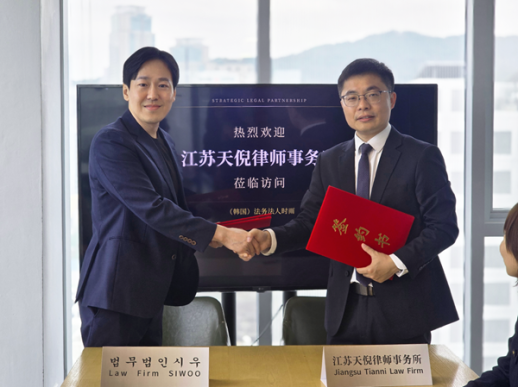 Siwoo Law Firm Signs MOU With China’s Jiangsu Tianni Law Firm Siwoo Law Firm has expanded its on-the-ground legal cooperation network in China by signing a strategic memorandum of understanding with TIANNI Law Firm, based in Nanjing, Jiangsu province. Siwoo said it signed the MOU on the 20th at its Seoul office in Seocho-dong. Attorney Ryu Seung-ho of Siwoo and Managing Attorney Zhang Zhihua of Tianni attended the ceremony and signed the agreement. Ryu oversees international work at Siwoo and handles legal matters involving greater China. Zhang serves as chair of the Duty Crime Prevention and Defense Committee of the Jiangsu Lawyers Association, Siwoo said. Siwoo has built working relationships with law firms in major Chinese cities including Beijing, Shanghai, Guangzhou and Xi’an. After forming a partnership last year with Shandong Zhongsheng Chengtai Law Firm, Siwoo said the addition of Jiangsu Tianni as an official MOU partner further broadens its base in China. Tianni, founded in 2019, operates its headquarters in Nanjing and branch offices in Taizhou in Jiangsu and in Yadong, Yadong County, in Rikaze, Tibet, Siwoo said. Taizhou is considered a manufacturing hub in the Yangtze River basin, while Yadong is a border trade port near India and Bhutan. Siwoo said the footprint gives it a local partner base to respond to legal demand tied to the East China economic region as well as transactions linked to South Asia. Tianni works in civil and commercial matters, international trade, corporate legal services and intellectual property, and has experience handling cross-border cases, Siwoo said. Practical cooperation with Siwoo will be led by Tianni partner attorney Luo Wei, who specializes in civil-commercial and cross-border matters. Under the agreement, the firms will cooperate on advisory work for Korean and Chinese companies entering each other’s markets and making investments, international trade and commercial disputes, intellectual property protection, company formation and tax-related advice. When legal needs arise involving either country, they plan to set up a priority referral and engagement system and, depending on the case, form joint response teams to provide integrated legal services. The firms also agreed to share client and network resources and to strengthen competitiveness in the global legal services market through joint marketing and information exchanges. Siwoo said it is expanding cross-border legal services in Vietnam, China, Japan and North America through a group structure in which specialists in corporate legal affairs, tax and accounting, and family and inheritance work together. “This agreement will serve as a foundation to support clients’ overseas expansion and investment risks in a more systematic way through cooperation with a capable local law firm in China,” Ryu said. “We will continue to expand global partnerships and provide integrated, client-centered legal services.” The two firms said they plan to use the MOU to build a long-term, stable cooperative relationship and support clients’ global activities across a range of Korea-China business areas.* This article has been translated by AI. 2026-04-29 11:27:20
 -
 Samsung Electronics Targets Heat Pumps as Key Growth Engine in Home Appliances Revamp As Samsung Electronics overhauls its underperforming home appliance business, it is putting heat pumps at the center of its next growth push. The company said it will move more aggressively into electrified heating in South Korea, building on proprietary heat pump technology it says has been recognized in Europe and other global markets. Song Byeong-ha, a group leader in Samsung Electronics’ DA (home appliances) business, said at a media briefing on April 29 for the company’s newly launched Korea-specific “EHS heat pump boiler” that heat pumps are “a key solution” for switching to electric heating and achieving carbon neutrality. “Based on proven technology and global R&D infrastructure, we will continue to innovate so domestic consumers can enjoy both stable heating performance and energy efficiency,” Song said. A heat pump absorbs heat energy from outside and uses it as an indoor heat source. It operates on a vapor-compression cycle in which a refrigerant repeatedly changes between liquid and gas, absorbing and releasing heat. The principle is similar to an air conditioner: refrigerant that has absorbed outside heat is compressed into a high-temperature, high-pressure gas, and the heat is transferred through a heat exchanger to indoor air or water. After releasing heat, the refrigerant expands, cools and returns to a liquid state that can absorb heat again. Samsung said its heat pump uses a large-capacity heat exchanger and a more efficient valve structure inside the compressor to reduce energy loss during compression. The company said the system can supply about five times as much heat energy as the electrical power it consumes. Samsung also said the system is designed to provide stable heating in severe cold. It said high-efficiency refrigerant compression and anti-icing technology allow operation at temperatures as low as minus 25 degrees Celsius, and that it can reliably supply hot water up to 70 degrees Celsius even at minus 15 degrees Celsius. Song cited a user case in Yangpyeong, saying temperatures there fell to minus 15 degrees Celsius in January and the home maintained an indoor temperature of 15 degrees Celsius for about 20 days, leaving the customer “very satisfied.” He said oil boiler users often turn systems on and off to manage fuel costs, while a heat pump can be left running, offering a convenience advantage. Samsung said heating costs can be reduced by up to 53% compared with typical city gas. Song said results vary depending on the relative prices of gas, oil and electricity, but the Yangpyeong customer cut heating costs by 53% after switching to a heat pump. He added that after about 2.5 to 3 years, a heat pump becomes clearly more cost-effective than city gas. Samsung said carbon dioxide emissions are about 60% lower. It also said the product uses R32 refrigerant, which it said has a global warming potential 68% lower than R410A, a refrigerant commonly used in residential air conditioners and other heating and cooling equipment. Song acknowledged limits, including difficulty installing the system in high-rise buildings such as apartments and higher upfront installation costs. He said heat pumps are currently optimized for typical houses, and that Samsung is working with Samsung C&T, a Samsung Group affiliate, to study what technology best fits high-rise apartments of 20 floors or more. He said the company expects to disclose results soon. Separately, the government began a heat pump boiler support program this month for households using briquette or kerosene boilers and for areas without city gas supply in major local governments including Jeju, South Jeolla and South Gyeongsang. Applicants can check eligibility through local government notices and apply in person. Eligible households can receive subsidies after installation is completed and verified through an on-site inspection by the local government. The subsidy can cover up to 70% per household, including purchase and installation costs. * This article has been translated by AI. 2026-04-29 11:25:13
 -
 Lotte Engineering Wins South Korea Certification for Quake-Resistant Fire Piping Brace Lotte Engineering & Construction said Tuesday that a quake-resistant firefighting piping technology it co-developed with Doosan E&C, HL D&I Halla and MakeSoon has received a construction new-technology certification from the Ministry of Land, Infrastructure and Transport (No. 1043). The technology, an integrated four-direction anti-sway brace for vertical and horizontal piping, is designed to prevent damage to firefighting pipes during earthquakes. The company said South Korea’s market for seismic bracing of firefighting piping has relied entirely on imported products, and the new system represents successful localization and domestic production. Under conventional two-direction bracing, pipes located away from the brace could be damaged by leverage effects. The new design combines two braces into a single integrated device, supporting the pipe in four directions at the same time and significantly improving seismic performance, the company said. Lotte Engineering said the method also showed environmental and cost benefits. For an underground parking garage in a 500-household apartment complex, it can reduce installation points to 25 from 39 under existing methods. It also cuts carbon dioxide emissions by about 51% and reduces raw material use by about 50%, it said. The company said the technology has also received related certifications, including designation as a disaster-safety new technology (NET) and green technology certification. It has been applied at multiple sites, including Hadan Lotte Castle and Seomyeon Lotte Castle Eluce, and Lotte Engineering said it plans to expand use nationwide, including at Munhyeon Lotte Castle Infiniel and Daejeon Lotte Castle The First. “Localizing a seismic technology that had a high dependence on overseas products and maximizing safety is highly meaningful,” a Lotte Engineering official said. “Because it is an innovative, eco-friendly method that reduces material use, we will continue to expand on-site applications.”* This article has been translated by AI. 2026-04-29 11:24:04
 -
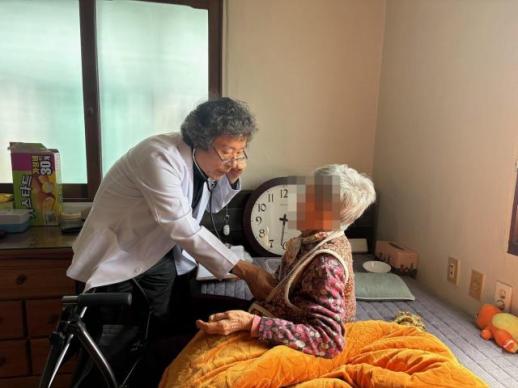 Nonsan Expands Home-Visit Medical Care to Reach Homebound Seniors “I don’t have to drag my sick body to the hospital.” A home-visit medical service introduced by Nonsan City in South Chungcheong province is drawing strong response from residents with limited access to care. The program, a long-term care home medical center service for seniors with mobility problems, is being cited locally as a new model for public health care. The service targets long-term care beneficiaries who have difficulty getting outpatient treatment. A team from Kim Hyeonjang Surgical Clinic, including medical staff and a social worker, visits patients at home to provide examinations and prescriptions, health monitoring, medication guidance and connections to care resources. Doctors assess patients on site and issue prescriptions, while nurses explain day-to-day health management. Social workers link patients to needed care services, providing medical and welfare support together. The city said the team also focuses on explaining results in detail to caregivers to help ease the burden of care. Users have welcomed the service. One senior said, “It was hard to go to the hospital because I’m not well, and it helps a lot that they come to my home.” A caregiver said, “It’s reassuring and truly helpful when they visit and explain what’s needed.” To reduce costs, the city supports part of the out-of-pocket payment for home visits. National Health Insurance subscribers pay 6,000 won, and Medical Aid recipients pay 2,000 won. Nonsan City said it expects the program to help prevent conditions from worsening, reduce unnecessary hospitalizations and ease caregiver burdens, shifting care from hospital-centered treatment to support rooted in daily life. A city official said home-visit care supports health and daily care in a person’s living space and plays a key role in improving access for residents who have difficulty traveling. The official said the city will continue expanding services by strengthening cooperation with local medical institutions. The city’s experiment with “care that comes to you” is being watched as a possible new standard for regional public health care.* This article has been translated by AI. 2026-04-29 11:23:16
 -
 NHN Dooray! Unveils AI Agent to Automate Workflows, Targets Finance Sector Growth “Generative AI used to talk. Now it acts. If a project is delayed, it finds the work on its own, messages the right people, and summarizes the results and leaves them in the wiki. Dooray AI will be a ‘member’ that works with you, not just a tool,” Baek Chang-yeol, CEO of NHN Dooray, said at a news briefing Tuesday in Pangyo. Baek said collaboration software is shifting from assistance to execution, as companies move beyond simple Q&A to “AI agents” that carry out tasks. NHN Dooray introduced a new “Dooray AI Agent” built into its collaboration platform, Dooray!, and outlined adoption results and its strategy focused on the public and financial sectors. The company launched its subscription-based AI service, DoorayAI, in 2024. Baek said the new agent is a step forward, moving from summarizing email and messenger content to taking actions based on data. He said the agent can automatically detect delayed tasks in a project and notify the person in charge, or capture meeting discussions in real time and turn them into documents. “The agent joins as the same kind of member as a person, entering messenger chats and projects to work alongside employees,” he said. Baek said the capability comes from Dooray’s data structure, which integrates personal tools such as email, messenger and calendars with shared spaces such as projects and wikis, allowing the AI to understand context and act. “For AI to work properly, you need not only personal data but also an organization’s shared data,” he said, calling Dooray’s coverage of both areas a competitive strength. NHN Dooray said revenue in its software-as-a-service business has been growing about 40% a year, and it has maintained the top position in the public sector by number of institutions served. In finance, it said it has secured 25 institutions, including Woori Financial Group and IBK Industrial Bank of Korea. Baek said winning 25 finance references in a year was a result the market would not easily expect from a small organization, and said it showed both service quality and speed of expansion. At the briefing, Woori Financial shared its rollout. Yoon Jong-pil, a deputy general manager in the ICT Planning Department at Woori Financial Holdings, said network-separation environments had made it difficult to use subscription software or generative AI for internal work, which he said went beyond inconvenience and hurt competitiveness. Woori reviewed SaaS-based collaboration tools to address the issue, comparing about 10 solutions, domestic and foreign, before choosing Dooray, Yoon said. He cited price competitiveness, ease of customization, and an all-in-one structure integrating email, messenger and task management. Yoon said usage rose sharply after adoption. Connections that were about 1,600 at the early stage of internal-network deployment in March 2025 have increased to more than 30,000 a month, he said. He added that generative AI use has moved from simple testing to use in actual financial work. “At first, there were many curiosity-driven questions, but now it has become a practical tool that improves productivity,” Yoon said, adding that 88% rated it positively in an employee satisfaction survey. Baek said market conditions are also turning favorable as the Financial Services Commission eases network-separation rules, lowering barriers to SaaS and AI adoption and accelerating cloud transitions in finance. He said approvals used to take significant time, but adoption can now move quickly if security standards are met, calling it an opportunity for Dooray, which he said already meets the standards. NHN Dooray said it plans to make growth in finance a core pillar this year, and it expects financial-sector revenue to grow about sevenfold from a year earlier as more institutions prepare new deployments. “In the end, AI is about how much you can automate and make work more efficient,” Baek said. He said Dooray lowered barriers to AI adoption with a structure that can be deployed with a few clicks, and is now expanding into actual task execution through agents. He added that with results proven in security-sensitive areas such as finance and the public sector, adoption could spread faster. * This article has been translated by AI. 2026-04-29 11:21:33
 -
 KOSPI takes breath amid growing uncertainty over AI-fueled rally SEOUL, April 29 (AJP) - South Korea's benchmark KOSPI fluctuated on Wednesday after opening lower, as investors weighed an overnight Wall Street selloff amid uncertainty over the sustainability of the recent artificial intelligence (AI)-fueled rally. Investors also appeared cautious ahead of earnings reports from five major tech companies, collectively dubbed the "magnificent seven," including Alphabet, Amazon, Apple, Meta, and Microsoft this week. The main index fell 0.43 percent to 6,612.20 shortly after trading began. Foreign investors sold a net 436.4 billion won, outweighing buying by retail and institutional investors. Heavyweight semiconductor shares such as Samsung Electronics and SK Hynix came under pressure, tracking weakness in U.S. technology stocks. Samsung Electronics fell 0.90 percent to 220,000 won, while SK Hynix slipped 0.31 percent to 1,296,000 won. Sentiment had initially been dampened after U.S. equities retreated overnight, with technology shares leading losses amid renewed concerns over elevated valuations tied to the AI boom. The S&P 500 fell 0.49 percent to 7,138.80 and the Nasdaq Composite dropped 0.90 percent to 24,663.80. Among other large caps, Samsung Biologics slipped 1.20 percent to 1,486,000 won, and Hyundai Motor fell 1.08 percent to 549,000 won. LG Energy Solution also declined 1.06 percent to 467,000 won. Gains were led by defense and industrial shares, with Hanwha Aerospace rising 1.79 percent to 1,420,000 won and HD Hyundai Heavy Industries jumping 3.15 percent to 688,000 won. Samsung SDI climbed 2.50 percent to 697,000 won, while SK Square edged up 0.37 percent to 814,000 won. Power equipment shares also remained firm, with Hyosung Heavy Industries adding 0.20 percent to 3,984,000 won. The junior KOSDAQ stocks were also mostly lower, led by Juseong Engineering, which tumbled 7.13 percent to 121,200 won, and LigaChem Biosciences, down 3.83 percent to 195,700 won. Ecopro fell 2.79 percent to 157,000 won, and Alteogen slipped 1.33 percent to 381,500 won. Rainbow Robotics dropped 1.65 percent to 657,000 won, and Ecopro BM lost 1.41 percent to 210,500 won. Among others, Leeno Industrial fell 1.97 percent to 109,200 won, EO Technics dropped 1.95 percent to 503,000 won, Wonik IPS shed 2.06 percent to 118,600 won, and Caregen slipped 1.31 percent to 105,600 won. Gainers were limited, with Alteogen rising 1.33 percent to 381,500 won and ABL Bio edging up 0.14 percent to 139,600 won. The South Korean won strengthened slightly to 1,472.50 per dollar from 1,473.60 previously. Elsewhere in Asia, Hong Kong's Hang Seng Index rose 0.63 percent to 25,842.63, while China's Shanghai Composite fell 0.41 percent to 4,061.82. Japan's Nikkei 225 was closed on Wednesday for Showa Day, a Japanese public holiday honoring former Emperor Hirohito, while markets in South Korea, China, Hong Kong, and Taiwan will be closed on Friday for Labor Day. 2026-04-29 11:21:20
 -
 Inside Korea’s Curated Singles Parties: Dating as Risk Management “Even in a crowd, there’s one person who stands out. Here, that feeling can even lead to marriage.” “I hesitated at first, but now it feels like I’ve walked onto a TV set. I’ve already sent a ‘signal’ to two people.” Lines that sound like they belong on a hit dating show were heard one April afternoon at a lounge party in Seoul’s Samseong-dong. In a room where dozens of men and women circulated, one couple said a few words were enough to set the direction of their relationship. A mid-30s professional identified by the surname Lim and a late-30s senior researcher at a major company identified by the surname Kim said they had avoided dating apps and casual meetups because of busy schedules. Over a glass of wine, they talked about everyday life and were drawn to each other’s approach to living. Without going to a second venue, they set a dinner date for the next day. The relationship has continued for a year. “We realized how efficient it is to meet someone who’s been vetted,” the couple said. As “natural” encounters become harder to come by, many young South Koreans are shifting their search for partners from screens to curated, in-person events. Nearly 3 in 4 men in their early 30s are unmarried The push toward “designed” meetings is backed by stark numbers. According to the National Data Portal’s population and housing census, as of 2024 the unmarried rate for ages 30-34 was 74.7% for men and 58% for women. For ages 35-39, it was 46.8% for men and 29.9% for women. The unmarried rate for men ages 40-44 was 30.1%. Participants said the challenge has moved beyond simply marrying later to the difficulty of forming relationships at all. Several told reporters that in ordinary daily life, the odds of meeting a partner feel as remote as winning the lottery, making it a waste of time to wait for chance. Introverts said they are not exempt. A man surnamed Park, who described himself as extremely introverted and works at a state-run company, said organizers introduced him to a freelance announcer surnamed Choi and they became a couple. “If I hadn’t come here, I would never have met the person next to me in my lifetime,” he said. A 36-year-old participant identified by the surname Lee said she came for “trust” and “naturalness,” contrasting the experience with a marriage matchmaking company. “At those companies, you sit for an hour introducing yourself. It felt like an interview,” she said. “You end up evaluating conditions, and you think, ‘I might meet someone with better conditions tomorrow,’ so your expectations rise and it’s hard to focus on the relationship.” Lee said she once had as many as seven blind dates scheduled in a week, a structure she said turns people into “comparisons” rather than partners. At curated parties, she said, basic qualifications are checked but what matters is the feel of meeting in person. “If you dress up once and meet 20 people, you realize who you’re actually drawn to,” she said. “When you meet people who’ve built results, you feel, in the intellectual depth of conversation, ‘This person is different.’” She said the rotation format also lowers pressure. “On a one-on-one date, if you’re asked questions you have to keep answering, which is stressful. Here, if an uncomfortable question comes up, you can naturally move on,” she said. “If matchmaking felt like homework, this feels like getting to know people more naturally, so you can see a more genuine side.” From TV ‘signals’ to real life A similar scene played out on a rooftop in Yeongdeungpo, where about 40 men and women in a black-and-white dress code talked with wine glasses in hand. A participant identified as LDJ, 35, called it a “real-life Heart Signal.” “It’s highly satisfying because people with great jobs who are hard to meet privately gather here,” he said, giving it a perfect 10. Shin Hye-rin, a professor of media studies at Korea University, said the comparison is more than a metaphor. “The structure of observing multiple candidates at once, comparing chemistry and strategically exchanging interest looks a lot like the program format,” she said. She added that as dating shows present romance as something to be interpreted, participants can internalize that evaluative gaze and try to read and judge others. Shin said dating reality shows can also function as a kind of script. “For today’s generation, the awareness that ‘someone is always watching, or I am posting and showing myself’ is deeply internalized,” she said, adding that the process of signaling among multiple potential partners can take on aspects of performance. Shin described the trend as “defensive realism”: In an uncertain environment, weighing practical factors such as education, job and finances becomes an adaptation strategy to reduce the chance of failure. “It’s not that young people don’t know the contradictions of these standards,” she said. “They feel society still operates on traditional criteria, so they choose to maximize usefulness within that system.” She also framed the appeal of rotation-style dating as an “emotional portfolio” approach: reducing the risk of placing all expectations on one person by spreading emotional investment across multiple possibilities, lowering the psychological blow of rejection or failure. The premium social club that runs the events, The Grace Club, says it relies on strict verification and screening. A government ID and proof of employment are required, and applicants must pass a pre-screening of photos for appearance described as “above average.” About 65% of attendees were born in the 1990s, and many work in professional fields such as medicine and law or at major companies including Samsung Electronics, Hyundai Motor and Kakao. Organizers said the rules are meant to reduce the chance of disappointment and prevent wasted time. They said word-of-mouth has spread to the point that about six cast members from the dating show “I Am Solo” have passed through, making it a perceived must-stop in the marriage market. A man in his 30s using the nickname “Chic” said, “People who focused on studying or work have fewer chances to build connections, and gatherings like this help break through blocked social networks.” The club also kept operating during the pandemic through remote formats. It used KakaoTalk group chats in an “online rotation” system in which identities were revealed only when a match was made. Organizers said online tools could not fully convey atmosphere or emotional exchange. They added that as the AI era advances, the value of meeting in person and feeling another person’s presence is growing. After distancing rules eased, they said, offline applications surged, with a noticeable increase among women in their 30s seeking serious relationships. Shin said the trend reflects fatigue with dating apps combined with a desire for face-to-face contact. “The form is offline, but the operating logic still carries the platform optimization mindset,” she said. Instead of an app algorithm, organizers’ screening and verification act as the filter, while participants still compare multiple candidates and make choices. By 10 p.m. in Yeongdeungpo, as wine glasses clinked, some attendees were already setting their next plans. 2026-04-29 11:14:44
 -
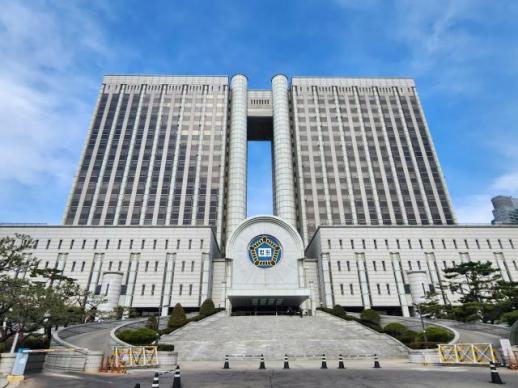 Court Grants Bail to Koo Se-hyeon in Wellbiotech Stock Manipulation Case Koo Se-hyeon, the former head of Wellbiotech accused of manipulating the company’s stock price by spreading false information, will stand trial while out of custody. According to the legal community on Tuesday, the Seoul Central District Court’s Criminal Division 32, led by Presiding Judge Ryu Kyung-jin, granted Koo’s request for bail the previous day as he faces a first-instance trial on charges of violating the Act on the Aggravated Punishment of Specific Economic Crimes (breach of trust) and the Capital Markets Act. The court’s reasons and bail conditions were not disclosed. Prosecutors allege Koo, around May 2023, misled investors and drove up the stock price by distributing information claiming participation in Ukraine reconstruction projects and entry into the secondary battery business. He was indicted in custody in November last year. In court, Koo’s side said it acknowledges the underlying facts but denied using false information to engage in unfair trading in the capital markets, arguing the information related to the Ukraine reconstruction and secondary battery businesses was not fabricated and had a real basis. * This article has been translated by AI. 2026-04-29 11:13:15
 -
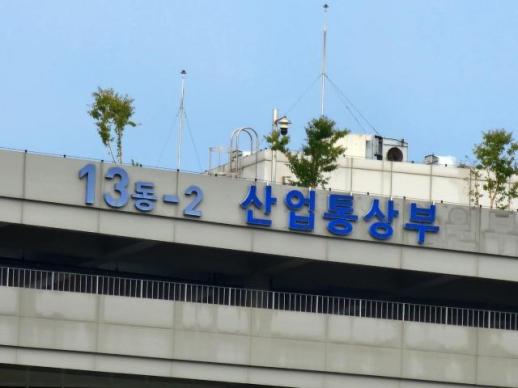 South Korea to Spend 52.75 Billion Won to Bring AI to Chip, Auto and Shipbuilding Plants The South Korean government is moving to apply artificial intelligence to production sites in key industries such as semiconductors, automobiles and shipbuilding to strengthen manufacturing competitiveness. It plans to invest 52.75 billion won in state funds next year to accelerate a broad AI shift in manufacturing. The Ministry of Trade, Industry and Energy said Tuesday it will 추진 an “AI Factory Leading Project” to support the development and rollout of industry-specific manufacturing AI technologies, as well as the adoption of AI robots, facilities and equipment. The ministry said the program was designed to lift manufacturing competitiveness as growth slows amid a shrinking working-age population and a decline in potential growth. It also cited unstable global supply chains, geopolitical risks and intensifying competition for technological leadership, which it said are increasing the importance of the ability to implement advanced technologies on factory floors and produce them at scale. Through the project, the ministry said it will push a full-scale “AI transformation” of manufacturing sites, dubbed M.AX, by developing and distributing sector-tailored manufacturing AI and introducing AI robots, facilities and equipment. It will select 32 tasks focused on industries and processes with high urgency and broad impact, and will diversify support types to better match industry demand, including models aimed at cooperation between large firms and small and midsize partners and models that delegate data and AI models. The program will operate under five types, including a “large-small cooperation” model in which major companies share AI models with small and midsize partner firms in their supply chains; a “data and AI model delegation” model that opens and delegates data and AI models to the government; and a “full-stack PoC” to build a full-stack AI factory run solely by AI. The ministry said applications for new tasks will be accepted from Feb. 6 to March 9. Details will be available on the 범부처통합연구지원시스템 website. It also said it will hold a project briefing at 2 p.m. on May 7 at the JW Marriott Dongdaemun Square, targeting manufacturing companies, AI firms and research institutions. The ministry said it will explain the new call for projects, the intent behind the request for proposals and the selection and evaluation plan, and will take questions and gather feedback to improve researchers’ understanding and encourage participation. “An era in which manufacturing and industrial competitiveness is national competitiveness,” a ministry official said, adding that the ministry will 추진 the AI Factory Leading Project without setbacks to become a top M.AX nation by 2030.* This article has been translated by AI. 2026-04-29 11:12:23
 -
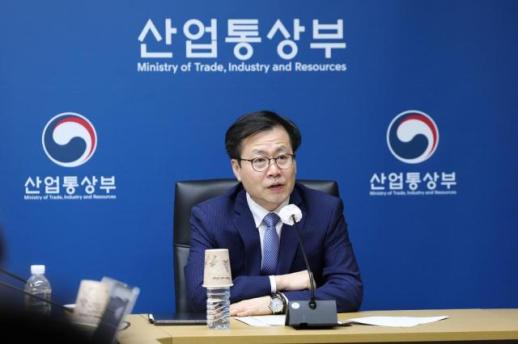 South Korea, Qatar discuss expanding investment cooperation in advanced industries Yeo Han-ku, South Korea’s minister for trade, met in Seoul on Tuesday with Ahmed bin Mohammed Al Sayed, Qatar’s minister of state for trade, to discuss ways to expand bilateral investment cooperation in advanced industries. The meeting followed up on talks held during a recent visit to Qatar by the president’s special envoy for strategic economic cooperation, aimed at turning discussions on advanced-industry investment into concrete outcomes. Yeo praised Qatar’s resilience as it moves quickly toward stability despite uncertainty in the Middle East. He also reaffirmed the close partnership built through cooperation on liquefied natural gas imports and energy infrastructure projects. The two sides agreed to broaden strategic investment cooperation by combining South Korea’s strengths in advanced industry and manufacturing with Qatar’s capital and push to diversify its economy. They discussed cooperation in future industries, including manufacturing AI transformation (M.AX) and robotics, as well as investment talks in biotech and semiconductors. Yeo said he hopes investment cooperation will grow in robotics that can be linked to AI solutions and infrastructure projects designed to help solve problems on factory floors. He also said he wants investment cooperation with promising South Korean biotech firms to expand, noting that more South Korean companies are entering Qatar in health checkups and pharmaceuticals. On semiconductors, Yeo cited the potential of South Korean AI semiconductor fabless companies with low-power, high-performance technology, and the two sides discussed ways to strengthen investment in the sector. Based on the talks, the two countries agreed to share information — including on interested companies — and to continue consultations so investment cooperation on promising projects can proceed smoothly. Yeo said the meeting would be an important milestone to reaffirm the strong trust built through the special envoy’s recent Qatar visit and to translate that trust into tangible results in advanced-industry investment. He said South Korea will keep widening the scope of economic cooperation with Qatar in future industries such as manufacturing AI and biotech, while strengthening energy security through the strategic partnership.* This article has been translated by AI. 2026-04-29 11:11:32