


Latest by
-
 SK Square Shares Rise 5% on Expectations of Increased Shareholder Returns from SK Hynix SK Square is experiencing a 5% increase in share prices amid expectations of expanded shareholder returns from SK Hynix. According to the Korea Exchange, as of 10:30 a.m. on June 17, SK Square shares rose by 75,000 won (5.00%) to 1,576,000 won. The stock opened at 1,534,000 won, up 2.20%, and reached an intraday high of 1,612,000 won, setting a new 52-week record. The rise in stock prices is attributed to heightened speculation regarding SK Hynix's potential for increased shareholder returns. Financial analysts report that SK Hynix is currently reviewing a large-scale shareholder return plan. SK Square holds approximately 20% of SK Hynix's shares, making it a direct beneficiary of any expansion in dividends or shareholder returns. However, SK Hynix stated in a public announcement the previous day that while it is considering various shareholder return options to enhance shareholder value, no specific details regarding the scale of these returns have been finalized. Despite this, the securities market remains optimistic about SK Square's potential benefits. Choi Kwan-soon, a researcher at SK Securities, noted in a report that "the direct benefits from expanded shareholder returns due to SK Hynix's performance improvement, which is expected to begin this year, are anticipated." Choi added, "SK Square has announced plans for 200 billion won in cash dividends and 40 billion won in share buybacks for shareholder returns in 2026," and predicted that if SK Hynix increases its dividends, expectations for enhanced shareholder returns from SK Square will also rise.* This article has been translated by AI. 2026-06-17 10:48:00
 -
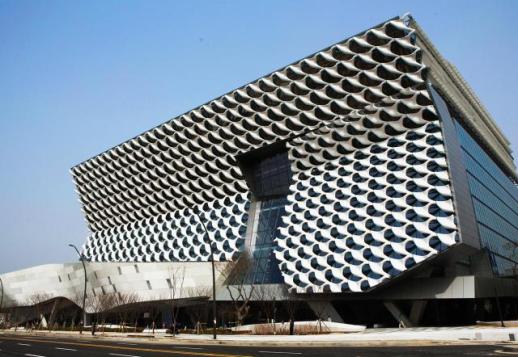 Kolon Life Science Secures TG-C Patent in Singapore, Expands Business in Asia Kolon Life Science has secured a manufacturing patent for its cell and gene therapy product TG-C, aimed at treating osteoarthritis, in Singapore. The company plans to expand its rights in Asia while accelerating preparations for the expected topline results from its U.S. Phase 3 clinical trial in July and for FDA approval.On June 17, Kolon Life Science announced that its patent for a "pharmaceutical composition for the prevention or treatment of osteoarthritis" has been registered in Singapore. This patent covers technology related to reducing cell aggregation during the cell culture process and ensuring stable acquisition of cells of a specific size.TG-C is a cell and gene therapy administered via injection into the knee joint, developed by mixing allogeneic cartilage-derived chondrocytes with TGF-β1 gene-transduced cells. Kolon Life Science explained that this patent grants them the rights to consistently manage cell characteristics during the manufacturing process.The patent is already registered in the U.S., South Korea, Japan, and Australia, with applications pending in China and Canada. Kolon Life Science aims to leverage the Singapore registration to further establish its business foundation in Asia.Lee Han-guk, CEO of Kolon Life Science, stated, "The technological competitiveness of managing cell quality during the TG-C manufacturing process is being recognized internationally," adding, "We will continue preparations for global commercialization."Kolon TissueGene is currently in the final stages of its U.S. Phase 3 trial, with topline results expected to be released in July.Additionally, Kolon Life Science recently decided to invest approximately 15 billion won in its wholly-owned subsidiary Kolon Biotech. Kolon Biotech specializes in contract development and manufacturing of cell and gene therapies and was spun off from Kolon Life Science in December 2020. This investment is seen as a step toward commercial production of TG-C.* This article has been translated by AI. 2026-06-17 10:48:00
 -
 ABL Bio's 'Givastomig' Receives FDA Fast Track Designation for Stomach Cancer Treatment ABL Bio, in collaboration with U.S. biotech firm Novabridge Biosciences, has received Fast Track designation from the U.S. Food and Drug Administration (FDA) for its bispecific antibody immuno-oncology drug, Givastomig (ABL111), as a first-line treatment for stomach cancer. This designation acknowledges the potential to address unmet medical needs, which is expected to accelerate the development and approval process. According to industry sources on June 17, the Fast Track designation is a program aimed at facilitating the development and review of new drug candidates that have the potential to address unmet medical needs in life-threatening or serious conditions. Designated candidates can benefit from rolling reviews, priority reviews, and accelerated approvals through close consultations with the FDA. Givastomig targets Claudin 18.2, which is overexpressed in stomach and pancreatic cancers, and also activates immune T cells through 4-1BB. A Phase 2 clinical trial is currently underway to evaluate its combination with the chemotherapy regimen FOLFOX and the immune checkpoint inhibitor nivolumab. ABL Bio and Novabridge have confirmed the anti-cancer efficacy and safety of the Givastomig combination therapy in a Phase 1b trial, with plans to present the full data at a global academic conference later this year. They also intend to initiate a Phase 3 registration trial for accelerated approval in the fourth quarter. ABL Bio is developing various preclinical and clinical pipelines based on its bispecific antibody platform, Grabody. Key pipelines utilizing Grabody-T include Givastomig and Rajistomig. Lee Sang-hoon, CEO of ABL Bio, stated, "Givastomig has demonstrated strong anti-cancer efficacy and excellent tolerability in the Phase 1b trial. This Fast Track designation will serve as a catalyst to accelerate the development of Givastomig."* This article has been translated by AI. 2026-06-17 10:48:00
 -
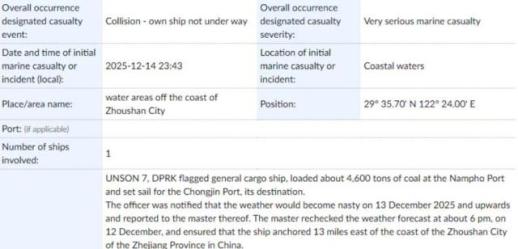 North Korean cargo ship sinking raises questions on sanctions evasion SEOUL, June 17 (AJP) - A North Korean cargo ship sank off China's eastern coast late last year after colliding with a fishing vessel, Voice of America (VOA) reported on Wednesday. Citing recently disclosed records from the International Maritime Organization (IMO), the U.S. government-funded broadcaster said the North Korean-flagged UNSON 7, which departed from Nampo, South Pyongan Province, carrying about 4,600 tons of coal and was reportedly bound for Chongjin, collided with a Chinese trawler near Zhoushan, Zhejiang Province, around midnight on Dec. 14 last year. The collision occurred amid "nasty" weather after the trawler failed to notice a warning signal from the UNSON 7 and struck its starboard side, prompting the North Korean ship's captain to order the crew to abandon the vessel. All crew members were rescued before the vessel sank 20 to 30 minutes later. The belated disclosure of the sinking has raised fresh doubts about North Korea's attempts to evade sanctions, as the accident occurred in waters known for illegal ship-to-ship transfers involving the reclusive country. Experts point to the location of the accident, which does not match with the vessel's reported destination of Chongjin, fueling speculation that it may have been transporting coal to China or preparing for a ship-to-ship transfer at sea. The Zhoushan area has frequently been cited as a hub for illicit trade and ship-to-ship transfers to evade international sanctions. North Korea has long been accused of evading international sanctions imposed under U.N. Security Council resolutions since 2017 that prohibit the country from exporting coal and other minerals, with revenues allegedly funneling into its nuclear weapons and ballistic missile programs. In a joint statement issued late last month with countries including Japan, the European Union and South Korea, the U.S. State Department called on North Korea to stop its illegal maritime activities, calling them "clear violations" of sanctions prohibiting the export of coal and iron ore. 2026-06-17 10:47:20
 -
 Netflix's 'Teach You a Lesson' tops non-English TV chart for second week SEOUL, June 17 (AJP) - Netflix's Korean series "Teach You a Lesson" remained No. 1 on the streamer's global Top 10 list for non-English TV shows in its second week, Netflix said Wednesday. "Teach You a Lesson" ranked No. 1 in 46 countries, including South Korea, Japan and Singapore, and entered the Top 10 in 91 countries, including the United States, Britain, India, France, Germany, Australia, Mexico and Brazil. The series logged 21.1 million views, a metric Netflix defines as total hours watched divided by a title's runtime, and 225.8 million hours watched during the week. Teach You a Lesson premiered on Netflix on June 5. It follows a fictional government body called the Teacher Rights Protection Bureau, whose members intervene in school-related cases on behalf of victims. The show stars Kim Moo-yul, Jin Ki-joo, Pyo Ji-hoon and Lee Sung-min as bureau members. 2026-06-17 10:47:20
 -
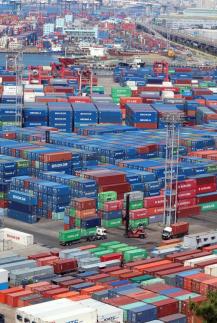 South Korea's Economic Growth Nears 3% Amid Semiconductor Export Surge South Korea's economy is projected to approach a 3% growth rate this year, bolstered by strong semiconductor exports and a recovery in domestic demand. As the economic recovery strengthens more than expected, the Bank of Korea is anticipated to shift its monetary policy stance and raise the benchmark interest rate twice in the second half of the year. According to a report by the Capital Market Research Institute titled "2026 Second Half Macroeconomic Outlook and Key Issues," the country's gross domestic product (GDP) growth rate is expected to reach 2.9% this year. This growth is attributed to robust exports, particularly in semiconductors, alongside a significant recovery in equipment investment and private consumption. In fact, the economy demonstrated a strong growth rate of 1.8% in the first quarter compared to the previous quarter. The average monthly export figures for April and May, driven by information technology (IT) products like semiconductors, reached $86.8 billion, significantly exceeding the first quarter average of $73.5 billion. The recovery in domestic demand is also expected to become more pronounced. After recording a decline of 1.6% in the fourth quarter of last year, equipment investment rebounded to 6.6% in the first quarter and is projected to increase by 4.9% for the year. Private consumption is expected to rise by 2.5%, surpassing the long-term average of 2.2% from 2010 to 2025, thanks to improved income conditions and consumer sentiment driven by economic recovery and rising stock prices. Construction investment is anticipated to gradually recover after a prolonged period of negative growth. However, the impact of high oil prices due to the ongoing conflict in the Middle East has been identified as a burden on the domestic economy. The petrochemical industry is facing delays in recovery due to raw material supply issues, while the construction sector is grappling with rising raw material costs and supply chain uncertainties. The automotive industry is also under pressure from reduced exports due to transportation disruptions to the Middle East and parts supply chain issues. Consumer prices are expected to rise by 2.8% annually. While increased consumption and rising international oil prices will exert upward pressure on prices, the likelihood of a return to high inflation rates like the 5.1% seen in 2022 is considered low. This is attributed to relatively stable prices for grains and non-energy raw materials, as well as a global supply chain disruption that is not as severe as during the pandemic. Nevertheless, the institute noted that stronger-than-expected economic expansion and recovery in private consumption could increase inflationary pressures, particularly in the personal services sector. Consequently, the Bank of Korea is expected to raise the benchmark interest rate by a total of 0.5 percentage points twice in the second half of the year, shifting its monetary policy toward tightening. Concerns over financial stability due to rising housing prices are also cited as a factor for interest rate hikes. The institute identified the rekindling of tensions between the U.S. and Iran, delays in the normalization of oil-producing countries' facilities, and a slowdown in global AI investment as major downside risks to the domestic economy. Additionally, it emphasized the need to prepare for a "Higher for Longer" environment, as the global monetary policy landscape shifts from expectations of rate cuts to a focus on combating inflation.* This article has been translated by AI. 2026-06-17 10:44:00
 -
 Coupang Fined $624.7 Million for Data Breach: A Debate on Fairness and Proportionality Coupang has been fined 624.7 billion won ($624.7 million) by the Personal Information Protection Commission for a data breach involving customer information. This fine marks the highest penalty ever imposed in South Korea for a violation of personal data protection laws. While it is the duty of government agencies to hold companies accountable for mishandling customer data, the severity of this fine has sparked criticism from both industry stakeholders and civil society regarding its fairness and proportionality. Last year, SK Telecom faced a fine of 134.8 billion won for a data breach affecting 23.24 million users. Other cases include a 15.1 billion won fine for a data leak involving Kakao Open Chat and a 7.5 billion won penalty for Golfzon. Google and Meta were fined 69.2 billion won and 30.8 billion won, respectively, for violations related to personalized advertising. Notably, Kakao Pay received a 5.9 billion won fine for unlawfully transmitting the credit information of 40 million users to China's Alipay without consent. This transmission included 24 data points, such as users' phone numbers, email addresses, and information related to their account balances. Each case involves different scales of data breaches, types of information, violations, and revenue structures, making direct comparisons challenging. However, the Coupang case is particularly serious as it involves not only data leakage but also the unauthorized collection of online activity records. This complexity necessitates a more nuanced explanation of why Coupang's fine is more than four times that of SK Telecom and why such a significant disparity exists compared to other platforms and IT companies. The public and market demand clear criteria for understanding these differences. The civic group Barun Social Civic Group criticized the fairness and proportionality of the sanctions in a statement on June 15. They pointed out that the SK Telecom incident, which involved the leakage of subscriber identification numbers and SIM authentication keys, posed significant risks for financial fraud and phone cloning. They noted that Coupang's fine is 4.6 times greater than that imposed on SK Telecom. The group emphasized that fines should not be an emotional punishment but rather a tool of lawful administration, and proportionality should be demonstrated through consistency with comparable cases. Coupang operates a complex platform that includes e-commerce, logistics, advertising, and membership services. If the majority of Coupang's domestic revenue was included in the fine calculation simply because it is related to personal data processing, it raises concerns that revenue not directly linked to the violations was used as a basis for the penalty. According to the Personal Information Protection Act, fines should be calculated excluding revenue unrelated to the violations. A clear explanation of which revenues were included or excluded is necessary. The company's preventive measures should also be considered in the assessment. While significant security investments do not absolve responsibility, it is essential to publicly clarify how much the presence of information security personnel, investments, certification systems, and post-incident actions were factored into the fine reduction. If sanctions are intended as administrative measures to prevent recurrence, businesses should have a predictable understanding of what efforts could lead to a reduction in penalties. There is also a possibility that this issue could escalate into a trade dispute between South Korea and the United States. Some members of the U.S. Congress have argued that the fine represents discrimination against Coupang, a U.S.-listed company, compared to Chinese firms like Alibaba and Temu, raising concerns about potential retaliatory tariffs. Coupang has indicated plans to pursue administrative litigation. In the forthcoming judicial review, the court must rigorously examine the intent behind the data breach, the appropriateness of the fine calculation, and the validity of the revenue scope considered. While strong personal data protection is essential, stringent regulations do not automatically equate to effective regulation. There must be a belief that similar cases are treated with the same standards, and more severe cases incur greater responsibilities. Holding Coupang accountable is necessary, but it is equally important to explain whether the 624.7 billion won figure was determined based on legal principles, standards, and comparable precedents. A lack of proportionality in strictness breeds distrust rather than upholding the rule of law. 2026-06-17 10:44:00
 -
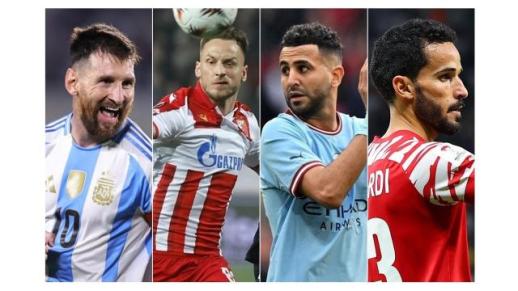 2026 FIFA World Cup: Argentina vs. Jordan Shows 40-Fold Value Gap The J Group of the 2026 FIFA World Cup clearly illustrates a significant disparity in team strength based on market values and FIFA rankings. As of June 17, the market value gap between Argentina, ranked first in FIFA, and Jordan, ranked 63rd, is approximately 39.8 times, according to Transfermarkt. The group consists of Argentina, Algeria, Austria, and Jordan. Argentina will face Algeria at 10 a.m. (Korean time), followed by Austria against Jordan at 1 p.m. Argentina's total market value is €875 million (approximately $1.4 billion), while Jordan's stands at €2.03 million (about $357,000). This stark contrast highlights that Argentina's market value is roughly 39.8 times that of Jordan. The competition among the mid-tier teams is tighter. Algeria's total market value is €256.9 million (around $451.2 million), while Austria's is €245.2 million (approximately $430.7 million), with a difference of €11.7 million (about $20.6 million). In terms of FIFA rankings, Argentina remains at the top, followed by Austria at 24th, Algeria at 28th, and Jordan at 63rd. Although Algeria has a higher market value than Austria, the FIFA ranking places Austria ahead by four spots. Argentina, the defending champion and world number one, includes key players from its 2022 victory, such as Lionel Messi, Lautaro Martínez, Enzo Fernández, and Alexis Mac Allister. Algeria returns to the World Cup finals for the first time since 2014, ranking second in market value within Group J. Notably, Riyad Mahrez is a prominent player, though he will start on the bench against Argentina. Austria, ranked second in Group J by FIFA, is making its first World Cup appearance since 1998. Under coach Ralph Rangnick, the team is known for its strong pressing and quick transitions. Jordan is making its debut in the World Cup finals. Despite having the lowest market value and FIFA ranking in Group J, the team has gained prominence in recent Asian competitions, scoring 32 goals in the qualifiers and showcasing a strong counter-attacking style. In this World Cup, which features 48 teams, the top two teams from each group, along with the eight best third-placed teams, will advance to the knockout stage. While Argentina appears to have a clear advantage, managing points in the opening matches is crucial for Algeria, Austria, and Jordan.* This article has been translated by AI. 2026-06-17 10:40:00
 -
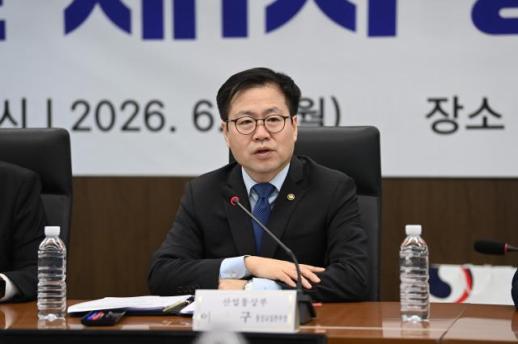 Korea and Morocco Aim for CEPA Agreement by Mid-2027 Yeo Han-goo, the head of the Trade Negotiation Bureau at the Ministry of Trade, Industry and Energy, announced plans to finalize the Comprehensive Economic Partnership Agreement (CEPA) between South Korea and Morocco by mid-2027. In an interview with local online media Hespress on June 16, Yeo stated that South Korea and Morocco will form a working group and begin official negotiations within the year. He emphasized the urgency of finalizing the agreement, noting Morocco's preparations for significant infrastructure investments ahead of the 2030 World Cup. Yeo projected that the CEPA could lead to expanded trade, increased South Korean investments, and enhanced people-to-people exchanges within two to three years after its conclusion. Yeo's push for a swift agreement stems from concerns that South Korean companies currently face unfavorable conditions compared to their competitors in the Moroccan market. "Under the current circumstances, South Korean companies cannot compete," he said, adding that they are not fully leveraging their substantial potential. He pointed out that tariffs on South Korean parts, equipment, and materials pose a significant burden for companies looking to use Morocco as a production base for exports to Europe. Some items are subject to non-preferential tariffs of up to 30%, while companies from countries with free trade agreements (FTAs) can import the same materials duty-free or at lower rates. Yeo stressed that even if more South Korean companies invest in Morocco, it may not be commercially viable without addressing tariffs, investment, and government procurement through the CEPA, which he sees as the only way to level the competitive playing field. He also noted that South Korea's economic cooperation with Morocco lags behind that of competitors such as China, India, and Japan. China has launched several battery-related projects in Morocco in recent years, with trade between China and Morocco now approximately nine times that of South Korea. India maintains a larger trade relationship with Morocco, while Japan has already established a more stable industrial base in the country. Despite these challenges, Yeo emphasized the competitiveness of South Korean companies. He cited Hyundai Rotem's $1.5 billion contract to supply trains to Morocco's state railway, stating, "There could be hundreds more opportunities like this." He added that South Korean firms are known for taking greater risks and moving more quickly than their competitors, maintaining a reputation for delivering results within set timelines and budgets. The potential for collaboration in the battery sector was also discussed. Yeo mentioned that LG Energy Solution is engaged in serious discussions to build a lithium refining facility in Morocco, which he views as a strategic location targeting European, North American, and African markets. 2026-06-17 10:40:00
 -
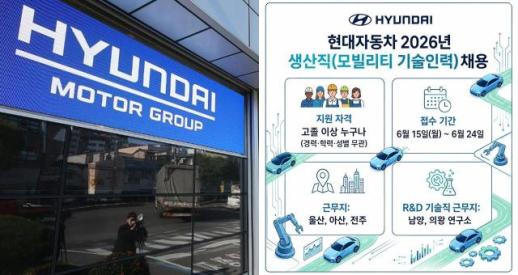 Hyundai Motor Offers Competitive Salaries and Benefits for Production Jobs Hyundai Motor is attracting attention from job seekers as it begins hiring for production positions (mobility technology personnel) in 2026. The company has opened applications to anyone with a high school diploma or higher, regardless of experience or gender, prompting reactions that the "Hyundai National Audition" has resumed. According to the recruitment announcement released by Hyundai, the application period runs from June 15 to June 24. Production positions will be based at the Ulsan, Asan, and Jeonju factories, while research and development (R&D) technical positions will be located at the Namyang Research Institute and the Uiwang Research Institute. A key feature of this hiring round is the eligibility criteria. Hyundai has made it possible for anyone with a high school diploma to apply, regardless of their background or gender. This has established the event as a major domestic recruitment initiative, attracting tens of thousands of applicants each year. The work schedule consists of two shifts during the day. The first shift runs from 6:45 a.m. to 3:30 p.m., while the second shift operates from 3:30 p.m. to 12:10 a.m. Additionally, the company is drawing attention for its high compensation structure. According to the disclosed information, first-year production workers can expect a gross salary ranging from approximately 90 million to over 100 million won. Last year, performance bonuses were reported to be 450% of the base salary, along with 15.8 million won, 200,000 won in gift certificates, and 30 shares of company stock. Monthly bonuses are also noteworthy, with a 50% bonus paid each month, and additional bonuses provided during the Lunar New Year, Chuseok, and summer vacation periods. During holidays, employees receive around 1.1 million won in support funds, and separate vacation expenses are provided during the summer holiday. Hyundai's welfare benefits are also considered among the best in the industry, including welfare points, vehicle purchase discounts, and access to various in-house facilities. However, the interest in Hyundai's production job openings is not solely due to the salary. Hyundai is recognized for its top-tier wage structure, benefits, job security, and stable employment environment in the domestic manufacturing sector. As economic uncertainties have increased, there is a growing preference for stable, regular jobs at large companies. Moreover, Hyundai is expanding its investments in electric vehicles, hybrids, software-defined vehicles (SDVs), and autonomous driving technologies in the global automotive market. This has created an image of being at the forefront of the future mobility industry, increasing its appeal among younger job seekers. Online reactions include comments such as "The ultimate production job in Korea," "More enviable than office jobs at large companies," "The competition will be fierce again this time," and "The biggest advantage is that high school graduates can apply." One user also commented, "I work there, and the job is really comfortable."* This article has been translated by AI. 2026-06-17 10:40:00