
Journalist

김혜준(Candice Kim)
candicekim1121@ajupress.com
-
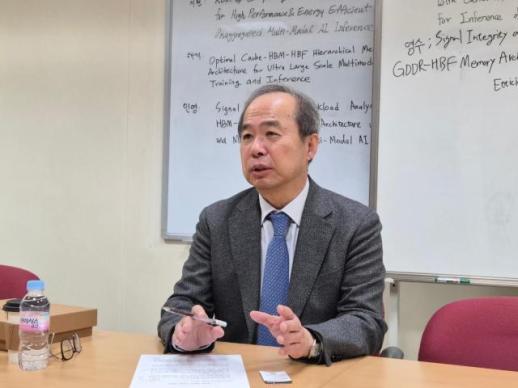 Beyond HBM: The next AI memory race is already underway DAEJEON, March 24 (AJP) - High bandwidth memory (HBM) is what enabled the current artificial intelligence boom, giving chips the speed needed to train large-scale models. But as AI shifts from training to real-world deployment, the industry is running into a different constraint — not speed, but scale. That shift is beginning to redefine the competitive landscape. The next phase of the AI chip race may hinge not on HBM itself, but on what comes after it: high bandwidth flash (HBF). Joung-ho Kim, a professor at the Korea Advanced Institute of Science and Technology (KAIST) and dubbed as the “father of HBM,” argues that this shift is not incremental but structural. In an interview with AJP, he argued the future of AI competitiveness will hinge on how quickly companies adapt their memory architecture to this new reality. “The memory architecture must be fundamentally restructured,” Kim said. “HBM defined the last decade, but HBF will likely determine the next.” The urgency stems from the rapid expansion of AI workloads, particularly in inference — the stage where trained models generate responses in real time. Unlike training, inference relies heavily on key-value (KV) caches, which store intermediate data and grow rapidly as models process longer context windows. What was once a manageable memory demand is now pushing into the terabyte range per system, exposing the limits of existing HBM-based designs. HBM, built on stacked DRAM, has served as an ultra-fast layer closely attached to GPUs, effectively acting as the system’s “working memory.” But its strengths — speed and bandwidth — are increasingly offset by limitations in scalability and cost. As models expand, simply adding more HBM becomes inefficient and prohibitively expensive. HBF addresses this bottleneck by introducing NAND flash into the memory hierarchy. While slower than DRAM, NAND offers significantly greater capacity at a fraction of the cost, enabling a new layered approach in which high-speed HBM handles immediate computation while HBF stores the massive datasets required for sustained inference. This shift marks a subtle but critical change in how AI performance is defined. “Once decoding begins, throughput becomes memory-bound,” Kim noted. “At that stage, capacity matters as much as bandwidth.” The implications are already shaping corporate strategies. SK hynix, which secured an early lead in HBM through aggressive investment in the 2010s, is once again moving ahead of the curve. In February, the company launched a high bandwidth flash standardization consortium with U.S.-based SanDisk, aiming to establish global specifications under the Open Compute Project. The move signals an attempt not just to develop technology, but to shape the broader ecosystem before the market fully materializes. The timeline remains long, with engineering samples expected around 2027 and commercialization closer to 2030. Yet the strategic positioning is taking place now, as companies seek to avoid repeating past missteps. Samsung Electronics, which was slower to commit to HBM in its early stages, is approaching the transition with greater caution. While focusing its immediate resources on next-generation HBM products such as HBM4E and HBM5, it is also investing in NAND-based architectures aligned with the HBF concept. The goal is clear: to ensure it does not lose its footing in another architectural shift. At its core, the emerging competition is less about a single product than about control over the entire memory system. The question is no longer who can produce faster chips, but who can design the most efficient hierarchy of compute and storage for an AI-driven world. The parallels with the past are difficult to ignore. SK hynix’s early bet on HBM reshaped the competitive landscape, while hesitation from rivals proved costly. Kim suggests that the same dynamic could play out again. “If companies fail to invest in HBF now, they could face the same risks we saw before,” he said. HBF may still be years away from commercial deployment, but the direction of the industry is already becoming clear. If HBM enabled the rise of large-scale AI training, HBF is positioning itself as the foundation for scalable, real-time AI services. In that sense, the next phase of the AI race may not be decided by raw processing power alone, but by something less visible — the architecture of memory itself. 2026-03-24 14:41:12
 -
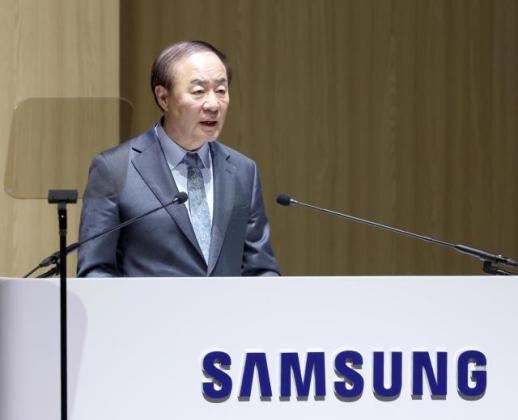 Samsung Electronics and union reopen talks, strike risk lingers SEOUL, March 23 (AJP)-Management at Samsung Electronics and its labor union held an unexpected executive-level meeting Monday, signaling a possible thaw in tensions after the union abruptly canceled a planned rally outside Chairman Lee Jae-yong’s residence. Vice Chairman Jun Young-hyun, who leads the critical Device Solutions (DS) division, met a four-member delegation from a joint protest committee that includes representatives of the National Samsung Electronics Union (NSEU). During the 90-minute meeting, Jun acknowledged employee grievances and proposed resuming formal negotiations, according to a union statement. “I am aware of the employees’ complaints, and we have arranged this meeting with the labor union to resolve them,” Jun said, adding the company is prepared to discuss key demands at the bargaining table. The union reiterated its preconditions for talks: scrapping the 50 percent cap on the Overall Performance Incentive (OPI) and overhauling the bonus system to improve transparency. It has strongly opposed the current use of Economic Value Added (EVA) as a benchmark, calling instead for metrics tied to operating profit. Jun signaled openness to reviewing the demands but cautioned that bonus allocation across semiconductor business units requires careful consideration. He also proposed a follow-up meeting in the near term. The dialogue came just hours after the union called off a press conference and rally planned outside Lee’s home in Seoul, citing “internal reasons,” in a move widely seen as lowering immediate tensions. Still, the risk of industrial action remains. The union recently secured legal strike rights after 73.5 percent of its roughly 90,000 members backed a walkout. It has threatened an 18-day general strike from May 21 to June 7 if negotiations fail. A mass rally involving about 9,300 members is scheduled for April 23 in Pyeongtaek, home to Samsung’s flagship chip plants. A strike would mark only the second in the company’s history, following a walkout in July 2024. Industry observers warn that any prolonged disruption could weigh on semiconductor output at a pivotal moment, as Samsung races to capture surging global demand for AI memory chips. 2026-03-23 18:10:00
 -
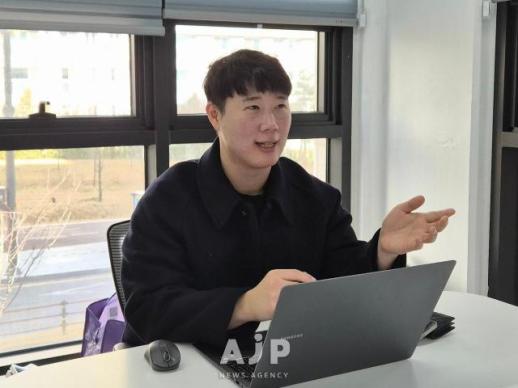 Samsung union chief: 'No. 1 means nothing without first-class treatment' PYEONGTAEK, March 20 (AJP) - Riding a two-year windfall from the global AI boom, Samsung Electronics is ramping up investment and shareholder returns at an unprecedented scale — but one stakeholder feels left out of the bounty: its employees. The company is pouring more than 110 trillion won ($74.6 billion) into semiconductors and has pledged to return 50 percent of its free cash flow to shareholders. Yet workers say the rewards of the AI-driven surge are not being shared on the ground. “We aren’t asking for the impossible,” said Choi Seung-ho, chairman of the Samsung Electronics Union Joint Action Committee, in an interview with AJP near the company’s Pyeongtaek fabs. “We are asking the company to act like the world-class leader it claims to be.” “Profit-hoarding days must end.” The rhetoric marks a shift from wage negotiations to a broader challenge of Samsung’s corporate identity, as the union escalates pressure following a 93.1 percent vote in favor of industrial action. Plans are now underway for a mass rally in April and a potential general strike in May. At the core of the dispute is compensation — and a widening gap with rival SK hynix that the union warns is fueling a “talent exodus.” While Samsung employees are widely perceived as elite earners, Choi pointed to a different reality for mid-level staff. A manager earning a base salary of around 76 million won ($57,000) often struggles to reach 100 million won in total compensation after taxes and relatively modest bonuses — a level increasingly out of step with the industry’s AI-driven gains. The contrast with SK hynix is stark. In 2025, its employees received average performance bonuses of 120 million to 130 million won under a transparent profit-sharing model. Comparable roles at Samsung, the union says, received roughly 37 million won — less than a third. “That gap creates a profound sense of deprivation,” Choi said. The union is demanding the removal of Samsung’s “Economic Value Added” (EVA) bonus cap, which limits payouts to 50 percent of salary and is based on a complex internal formula widely criticized by employees as a “black box.” By contrast, SK hynix shares 10 percent of operating profit directly with employees and removed its bonus cap last year. Tensions have been further aggravated by what the union calls a “divide-and-conquer” approach. Management recently proposed conditional bonuses tied to 100 trillion won in operating profit — but only for the Memory division, excluding Foundry and System LSI workers. “We were hired on the promise of equal treatment across the semiconductor pillar,” Choi said. “Excluding certain divisions now is nothing short of employment fraud.” The internal conflict comes as Samsung accelerates investment to maintain its lead in AI chips and high-bandwidth memory. Under its latest value-up plan, the company will boost facility and R&D spending to 110 trillion won this year, including a 37.7 trillion won R&D budget. At the same time, it reaffirmed its shareholder return policy, maintaining a payout ratio of 50 percent of free cash flow and planning to distribute 9.8 trillion won in dividends this year. For the union, the contrast is stark. “The company says it cannot afford to improve compensation, yet it commits over 100 trillion won to capital and generous shareholder returns,” Choi said. “There is no equivalent concept of ‘employee return.’” The stakes are rising quickly. Samsung’s Pyeongtaek production lines are estimated to generate up to 10 billion won per hour, meaning an extended strike could inflict losses exceeding 5 trillion won. “We are preparing,” Choi said, noting plans for large-scale mobilization ahead of April’s rally. He dismissed criticism that the dispute reflects excessive demands from high-paid engineers, framing it instead as a structural issue behind the so-called “Korea discount.” “If Samsung wants to maintain leadership in the HBM race, it must choose coexistence over disruption,” he said. “Without fair rewards, we cannot stop the outflow of talent.” Choi added that feedback from engineers who have already moved to SK hynix has been telling. “They report extremely high satisfaction,” he said. “When a company provides what employees feel they deserve, the result is obvious.” His final warning was blunt. “If this continues, the union may end up helping people leave,” Choi said. “We will support each other in finding opportunities elsewhere. 2026-03-20 16:36:44
 -
 Samsung Electronics adds AMD on HMB4 client list after Nvidia SEOUL, March 18 (AJP) - Samsung Electronics added AMD after Nvidia on its burgeoning client list for next-generation high bandwidth memory dubbed HBM4, gaining traction in the crucial in HBM race move to inference AI stage. A memorandum of understanding (MOU) with U.S. chip designer AMD to expand strategic partnership in next-generation AI memory and computing technologies was signed at Samsung’s Pyeongtaek campus. Under the terms of the agreement, Samsung will supply its advanced HBM4 solutions for AMD’s next-generation "Instinct MI455X" GPUs. The collaboration also extends to providing next-generation DDR5 memory for AMD’s EPYC server processors and its "Helios" data center platform. This move is seen as a strategic effort by both companies to diversify the AI semiconductor supply chain, which is currently seeing intense competition for high-capacity memory. "Powering the next generation of AI infrastructure requires deep collaboration across the industry," said Lisa Su, Chair and CEO of AMD. "We are thrilled to expand our work with Samsung, bringing together their leadership in advanced memory with our Instinct GPUs, EPYC CPUs and rack-scale platforms. Integration across the full computing stack, from silicon to system to rack, is essential to accelerating AI innovation that translates into real-world impact at scale.” Samsung Vice Chairman Jun Young-hyun emphasized the company’s "turnkey" capabilities, which integrate memory, foundry, and advanced packaging services under one roof. The two companies also discussed potential cooperation in semiconductor foundry services, leveraging Samsung’s advanced process technology to manufacture future AMD products. This deal marks a significant expansion of a 20-year partnership that began with graphics memory in 2007. On Tuesday, Samsung showed off its sixth-generation HBM4 being mass produced at Pyeongtaek at Nvidia's GTC 2026 as it a provider of a comprehensive memory and storage solution the U.S. top GPU maker's next-generation Vera Rubin platform. 2026-03-18 17:32:05
 -
 Samsung Elec AGM turns euphoric despite union's party-crashing strike news SUWON, March 18 (AJP) - Samsung Electronics’ annual general meeting struck an unusually buoyant tone Wednesday as a surging share price and AI-driven optimism lifted investor sentiment — even as a looming union strike cast a shadow over the outlook. More than 1,000 shareholders gathered at the Suwon Convention Center with little to complain about. The stock has nearly quadrupled from a year ago, while the company is now targeting 200 trillion won ($150 billion) in operating profit as it deepens its role in Nvidia’s AI supply chain. Samsung is also moving ahead with its largest-ever treasury stock cancellation — 87 million shares worth 16 trillion won ($11 billion) — in the first half of the year, reducing outstanding shares and boosting earnings per share. Against a backdrop of sustained applause, concerns over transparency and post-AI strategy were largely muted — a stark contrast to last year’s meeting, when shareholders openly criticized management over a stagnant share price stuck in the 50,000-won range. Momentum has been fueled in part by Nvidia’s endorsement. Earlier this week, CEO Jensen Huang gave Samsung a public shoutout at the GTC developer conference, highlighting its role in producing AI chips based on technology from startup Groq. Samsung’s 4-nanometer foundry is now “cranking as hard as they can” to manufacture Groq’s LP30 inference chips, slated for release in the second half, according to Huang and the company. “The mood today is completely different; people are actually saying ‘thank you’ to the board,” said a shareholder in his 50s, surnamed Oh, who reported a nearly 190 percent return on his holdings. Still, beneath the optimism, unease lingered. During the Q&A session, shareholders pressed management on the durability of the current upcycle and the company’s position in high-bandwidth memory (HBM), particularly as rival SK hynix maintains a lead in supplying advanced chips to key clients such as Tesla. Jun Young-hyun, head of the Device Solutions (DS) division, emphasized Samsung’s “one-stop solution” spanning logic, memory, foundry and packaging. But tensions surfaced when a shareholder compared employee incentives to the record-breaking bonuses at SK hynix. Jun appeared momentarily on the defensive, saying the company is “focused on securing long-term technological dominance,” which would ultimately translate into “sustainable rewards” for both employees and investors. Some attendees also questioned the authenticity of the meeting’s upbeat tone, describing it as “choreographed.” “It felt like an effort to shield executives from accountability just as the questions got difficult,” one shareholder said after the session. The gathering ended with a stark reminder of internal risks. The National Samsung Electronics Union (NSEU) said 93.1 percent of its members had voted in favor of industrial action, warning of a potential general strike starting in May — which would mark the first in the company’s 57-year history. The labor tension poses a tangible risk to Samsung’s “all-in-one” AI strategy, particularly as it seeks to close the gap with SK hynix in HBM and Taiwan’s TSMC in advanced foundry. For now, however, investors appear willing to look past the risks. Samsung reaffirmed its commitment to shareholder returns, announcing an additional 1.3 trillion won ($980 million) dividend alongside record R&D spending of 6.73 trillion won. The market response was unequivocal. Shares of Samsung Electronics rose 7.27 percent to close at 207,500 won ($156.82) on Wednesday, shrugging off the strike threat. 2026-03-18 16:46:09
 -
 Samsung Electronics union threatens walkout after near-unanimous strike vote SEOUL, March 18 (AJP) - More than 60,000 employees out of 89,874 union members at Samsung Electronics have voted to go on a general strike in May if their demands for fair and transparent compensation during the chip boom are not met, posing a potential headwind to the chipmaker’s AI-driven upswing. The joint union coalition announced Wednesday that 93.1 percent of participating members voted in favor of a strike in a 10-day ballot. A total of 66,019 employees from three separate unions took part, with 61,456 voting in favor. The collective action would mark the second such stoppage in the company’s 57-year history, following a 25-day walkout in July 2024. The strike threat cast a shadow over Wednesday’s annual shareholder meeting, where Vice Chairman Jun Young-hyun pledged to restore the company’s “technological hyper-gap.” While many retail investors celebrated the stock’s surge past the 200,000-won mark following Nvidia’s endorsement of Samsung’s HBM4 chips, the union finalized its walkout plans just three hours after the meeting concluded. Labor leaders are demanding a 7 percent wage increase, the removal of caps on performance-based incentives, and greater transparency in bonus calculations. “The sheer rate — 93 percent — in support demonstrates how deeply frustrated our members are with the company’s compensation proposal,” a union official told AJP. “This has given us powerful momentum for our struggle and a firm foundation to push even harder.” The potential impact of a walkout is significant, particularly for the critical Device Solutions (DS) division, which accounts for the bulk of Samsung’s profits. The union coalition warned that even an 18-day stoppage could result in losses of at least 5 trillion won ($3.79 billion), with some industry estimates suggesting the total impact could reach 9 trillion won if the strike is prolonged. The labor unrest is further complicated by escalating geopolitical tensions in the Middle East and rising raw material costs that threaten global supply chains. In response to these mounting pressures, Samsung’s consumer electronics divisions have already initiated cost-cutting measures, including requiring executives to fly economy class on short-haul trips. 2026-03-18 16:23:50
 -
 SK hynix owed 70% to US and 25% to Nvidia for record 2025 sales SEOUL, March 17 (AJP) - SK hynix has effectively pivoted into an American-centric powerhouse, with nearly 70 percent of its record-breaking 2025 revenue originating from U.S. customers, with NVIDIA alone accounting for a quarter, according to its annual business report released Tuesday. The fiscal transformation, fueled by an insatiable appetite for High Bandwidth Memory (HBM) among Silicon Valley giants, pushed the company into a "net cash" position for the first time in six years. Cash and cash equivalents skyrocketed by 146.8 percent to 34.94 trillion won (approximately $26.47 billion), far outstripping its total debt of 22.25 trillion won (approximately $16.86 billion). The American Surge The report underscores a dramatic shift in the company’s geographic footprint. Revenue from the U.S. market hit 66.89 trillion won ($50.67 billion) in 2025, a staggering jump from previous years when the U.S. share hovered between 39 percent and 53 percent. This 68.9 percent revenue concentration in the U.S. highlights the success of SK hynix’s strategy to tether its fate to the North American AI infrastructure build-out. While China sales grew to 19.14 trillion won (approximately $14.50 billion), the U.S. market expanded by more than 47 trillion won in a single year, widening the gap between the two regions to an all-time high. The NVIDIA Anchor Central to this U.S. dominance is a tightening grip on the supply chain for NVIDIA. SK hynix generated an estimated 23.26 trillion won ($17.62 billion) from the California-based AI leader alone—accounting for nearly a quarter (23.9 percent) of its total global sales. Following its success as a primary supplier of HBM3E, the company is now accelerating its transition to next-generation HBM4.The improved financial liquidity, characterized by a debt-to-equity ratio that fell to 45.95 percent from 62.15 percent, provides the necessary capital to lead the high-stakes AI memory race. Financial Fortification This robust cash flow is now being channeled into a massive R&D push. SK hynix reported a 35.9 percent increase in research and development spending, reaching 6.73 trillion won ($5.10 billion) in 2025. This record investment specifically targets the development of 16-layer HBM4 and next-generation packaging technologies essential for the evolving AI ecosystem. 2026-03-17 19:39:55
 -
 Samsung-SK hynix faceoff at NVIDIA GTC as race for HBM4 enters cutthroat phase SEOUL, March 17 (AJP) - The world’s most consequential semiconductor rivalry is increasingly being fought not in fabs but on the stage of artificial intelligence. At this year’s NVIDIA GPU Technology Conference in San Jose, the annual gathering hosted by Jensen Huang drew the usual global crowd eager to hear where AI infrastructure is headed next. But behind the keynote spectacle, another story unfolded: South Korea’s memory giants Samsung Electronics and SK hynix quietly squared off in what is becoming the semiconductor industry’s most decisive battleground — HBM4, the next generation of high-bandwidth memory powering AI accelerators. The rivalry sharpened after Huang unveiled NVIDIA’s next-generation Vera Rubin AI platform, alongside the Groq 3 Language Processing Unit, a specialized inference processor manufactured by Samsung’s foundry division. The message from the stage was unmistakable. AI computing demand is entering a new phase — and the companies that supply memory will determine who captures the value. “We are heading toward a world where AI infrastructure becomes a trillion-dollar industry,” Huang told the audience, projecting at least $1 trillion in revenue by 2027 as demand for accelerated computing explodes. For Samsung, the event served as a strategic reset. The world’s largest memory maker has spent much of the past two years trying to regain ground in the high-bandwidth memory segment after falling behind SK hynix in NVIDIA’s supply chain. At GTC, Samsung came armed with a clear message: it intends to retake the technological lead. The company showcased its sixth-generation HBM4, now entering mass production, and publicly introduced its successor HBM4E, signaling an aggressive roadmap aimed squarely at next-generation AI accelerators. Samsung’s pitch leaned heavily on a structural advantage it believes competitors cannot easily replicate — its position as the industry’s only fully integrated device manufacturer (IDM) capable of delivering a complete AI chip stack. The company highlighted a “total solution” approach combining:1c-nanometer DRAM memory dies, 4-nanometer foundry logic dies, and advanced 2.5D and 3D packaging technologies. By controlling memory, logic fabrication and packaging within one ecosystem, Samsung argues it can shorten design cycles and accelerate deployment for hyperscale AI customers. That strategy gained visibility during Huang’s keynote when he confirmed that the Groq 3 LPU, optimized for ultra-fast AI inference, will begin shipping in the second half of the year. “I want to say thank you to Samsung,” Huang said from the stage. “They are cranking as hard as they can.” The remark underscored Samsung’s role in scaling production for the next generation of AI silicon. But SK hynix – the dominant NVIDIA partner for past and current generation chips – isn't ready to give up its dominance. Under the theme “Spotlight on AI Memory,” the company emphasized its established position within NVIDIA’s ecosystem — a relationship built over several product cycles. SK hynix highlighted its HBM3E and upcoming HBM4 solutions already integrated into the NVIDIA DGX Spark AI supercomputer, positioning its products as the industry benchmark for reliability and mass production. The company’s presence was also notable for the level of leadership attending the event. Chey Tae-won, chairman of SK Group, appeared alongside senior executives to reinforce what insiders often call the “triangular alliance” linking SK hynix, NVIDIA and TSMC. That partnership model contrasts sharply with Samsung’s vertically integrated strategy. Where Samsung emphasizes end-to-end control of semiconductor manufacturing, SK hynix is doubling down on specialized collaboration, relying on deep engineering integration with NVIDIA and advanced logic fabrication from TSMC. The approach has paid off so far. SK hynix remains NVIDIA’s primary supplier of HBM used in its most powerful AI accelerators currently deployed across hyperscale data centers. The confrontation at GTC reflects a deeper shift underway in the semiconductor industry. For decades, memory companies competed largely on manufacturing scale and cost efficiency. In the AI era, the competition is increasingly about system architecture. HBM — stacks of vertically integrated DRAM connected through ultra-wide interfaces — has become the critical bottleneck for AI performance. The memory must deliver enormous bandwidth while staying tightly coupled to GPUs and custom accelerators. That shift is forcing memory makers to operate less like commodity suppliers and more like system engineering partners. Samsung is betting that its turn-key semiconductor ecosystem will allow it to integrate memory, logic and packaging into unified AI modules. SK hynix is betting that deep specialization and ecosystem partnerships will preserve its lead. The stakes could hardly be higher. During his keynote, Huang described the scale of change in stark terms. Computing demand, he said, has grown one million-fold over the past two years as generative AI moves from experimentation to real economic work. “AI has finally become able to do productive work,” Huang said. Investors quickly picked up on the implications. Shares of Samsung Electronics rose sharply following the GTC announcements. As of 10:05 a.m. KST, the stock was trading at 195,700 won, up 3.71 percent from the previous session. SK hynix also gained ground, climbing to 994,000 won, up 2.05 percent, reflecting broad optimism about the expanding role of Korean memory suppliers in the global AI semiconductor supply chain. Analysts say the next two years will likely determine the long-term hierarchy in the HBM market. With NVIDIA preparing the Vera Rubin generation of AI systems and hyperscale data centers expanding at unprecedented speed, demand for high-bandwidth memory is expected to surge. Some projections suggest Samsung’s HBM revenue alone could more than triple by 2026 if the company successfully ramps production. But SK hynix is unlikely to relinquish its lead without a fight. At GTC, the message from both companies was clear. The AI boom has created a semiconductor arms race — and the decisive battle may be fought not over GPUs, but over the memory stacked beside them. 2026-03-17 11:21:20
 -
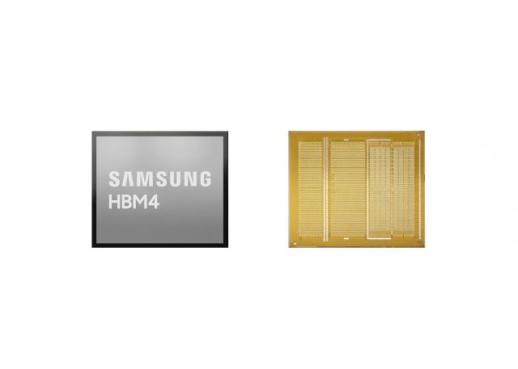 Samsung challenges SK hynix HBM dominance with HBM4E debut via NVIDIA alliance SEOUL, March 17 (AJP) - Samsung Electronics Co., Ltd. announced on Tuesday at NVIDIA GTC 2026 the first public showcase of its next-generation High Bandwidth Memory 4E (HBM4E) and its role as a provider of a comprehensive memory and storage total solution for NVIDIA’s Vera Rubin platform. The South Korean chip giant presented physical HBM4E chips and core die wafers, detailing a product that supports speeds of 16 gigabits-per-second per pin and a total bandwidth of 4.0 terabytes-per-second. Samsung confirmed it aims to complete sample shipments of HBM4E within the year to align with customer production schedules. Leveraging its position as an integrated device manufacturer, Samsung highlighted its ability to integrate its sixth-generation 10-nanometer-class (1c) DRAM process, 4-nanometer foundry logic dies, and advanced packaging technologies. This vertical integration allows the company to supply a full suite of memory and storage required for NVIDIA’s next-generation Vera Rubin AI superchip platform, including HBM4 memory, which is currently in mass production with speeds up to 13 gigabits-per-second. The company also displayed its SOCAMM2, an industry-first server memory module based on low-power LPDDR5X, and the PM1763 enterprise SSD utilizing the PCIe 6.0 interface. These solutions were demonstrated through NVIDIA SCADA workloads to showcase their performance in AI infrastructure. During the event, Samsung introduced its Hybrid Copper Bonding (HCB) technology, which the company claims improves thermal resistance by more than 20 percent compared to traditional thermal compression bonding. This technology is intended to enable the vertical stacking of 16 or more layers for future HBM generations, with implementation expected to begin with 16-layer HBM4E products. Samsung is also collaborating with NVIDIA to implement accelerated computing and Omniverse libraries to create digital twins of its manufacturing facilities. Samsung executives stated that HBM revenue in 2026 is projected to more than triple compared to 2025 levels as the company expands production capacity to meet global demand for AI infrastructure. 2026-03-17 05:45:27
 -
 Samsung's agentic-AI flagship posts record presales, software edge in premium market SEOUL, March 12 (AJP) - Samsung Electronics’ latest AI-strong flagship is off to a bar-raising debut, signaling a shift in the premium handset race from hardware specifications toward practical artificial intelligence features. The Galaxy S26 series, launched Wednesday in more than 120 countries including South Korea and the United States, logged 1.35 million preorders in its home market, the highest ever for the Galaxy S lineup. Industry observers say the strong early demand reflects a broader change in consumer priorities as smartphones increasingly compete on usable AI functions rather than processor speed or camera upgrades. Samsung’s new lineup centers on agentic AI, designed to move beyond passive assistance and carry out tasks autonomously for users. Among the most notable features is on-device real-time translation that works without an internet connection, allowing conversations across languages without relying on cloud processing. The phone also introduces generative AI tools such as “Call Screening,” which can answer incoming calls and summarize them for the user, and “Privacy Display,” a feature that blocks side-angle viewing to protect information in public spaces. The emphasis on practical AI utilities has become a key differentiator as rivals struggle to bring comparable capabilities to global users. Apple, which dominates the premium smartphone segment, has faced hurdles rolling out its Apple Intelligence system internationally. The platform’s expansion has been slowed by delayed support for non-English languages and staggered updates to core features, frustrating many users outside the United States. Recent survey data suggests that the AI gap may be influencing consumer loyalty. A study by resale marketplace SellCell of more than 2,000 smartphone users found that 16.8 percent of iPhone owners said they would consider switching to a Galaxy device for better AI features, compared with 9.7 percent of Samsung users willing to move to Apple for its AI system. The shifting sentiment is already beginning to show up in market data. Powered by aggressive deployment of on-device AI functions, Samsung has gradually narrowed Apple’s market-share lead in the United States to about 11 percentage points by late 2025, according to industry estimates. Real-world users echo the trend. “I tried my husband’s Galaxy, and it’s definitely much more user-friendly when it comes to AI,” said Kyuri Kim, a longtime iPhone user in Seoul. “I wish I could have those features on my iPhone. It gets frustrating at times.” “Choosing a smartphone without AI is now akin to buying a car without a navigation system or autonomous driving capabilities,” said Lee Soo-jun, a professor of business administration at Sejong University. “Privacy is the biggest concern with AI today, but Samsung’s on-device processing ensures that personal data remains strictly on the phone without leaking externally, which is a decisive factor for consumers.” With the smartphone industry entering what analysts describe as the “AI utility era,” the market is closely watching whether Samsung’s early push into practical, on-device intelligence can finally dent Apple’s long-standing dominance in the premium segment. 2026-03-12 16:36:01