
Journalist

Candice Kim· Ryu Yuna
candicekim1121@ajupress.com
-
 Korea's chip irony: record Samsung Elec shares and mass workers rally PYEONGTAEK, April 23 (AJP) -On the same day the KOSPI scaled a record high and South Korea posted its strongest quarterly growth in five years, tens of thousands of workers at the very heart of that boom took to the streets — protesting what they called a widening gap between record profits and compensation. “Even at this very moment, our colleagues are leaving,” shouted Thursday Woo Ha-kyung, acting head of the National Samsung Electronics Union, his voice hoarse as it carried across a sea of nearly 40,000 workers. The setting itself underscored the contradiction. Sprawling across a site roughly the size of Yeouido and employing around 60,000 workers, the campus is a monument to South Korea’s semiconductor supremacy — the very engine powering the country’s headline growth. Yet on this day, it became a stage for discontent. Workers arrived in waves, many clad in black vests, some traveling hours by bus, others taking leave to join what is fast becoming the largest show of labor force in Samsung’s history. “I took a day off to be here. I keep asking myself how we got to this point,” one union official said quietly. The rally, though limited to two hours, carried the unmistakable weight of escalation. A full general strike — scheduled from May 21 to June 7 — now looms, threatening only the second walkout since the company’s founding. At stake is not just pay, but the distribution of one of the most lucrative earnings cycles in corporate history. The union is demanding that 15 percent of annual operating profit be returned to workers as bonuses and that caps on performance pay be scrapped — a structure they argue better reflects the industry’s boom-bust reality. Management has drawn a firm line, insisting such demands are legally indefensible and financially destabilizing, warning that dismantling bonus limits could erode funds for research and future investment. The clash is unfolding against a backdrop of extraordinary profits. Samsung Electronics posted 57 trillion won in operating profit in the first quarter alone, with projections pointing to roughly 300 trillion won for the year — the bulk driven by its semiconductor division. To union leaders, the disparity is glaring. “Chairman Lee Jae-yong’s stock value has surged by tens of trillions, executives are taking home massive bonuses — yet for workers it’s ‘no performance, no reward,’” Woo said. “A standard that somehow stops at the executive floor.” The rally’s most arresting moment came when Choi Seung-ho, head of the enterprise-wide union’s Samsung Electronics branch, rose above the crowd — literally — delivering his speech from a crane lift suspended high in the air. “We are here because we can no longer endure this,” he declared, denouncing what he called an opaque and unequal compensation system. Below him, the scale of the gathering briefly overwhelmed the surrounding infrastructure. Workers queued for up to 30 minutes just to cross a single 100-meter intersection leading into the campus, moving in slow, disciplined lines under heavy police presence. Tensions flickered at the edges — a minor scuffle broke out when a livestreamer pushed through the crowd — but the union largely maintained order under a strict “no-response” directive. Elsewhere, a small group of shareholders staged a counter-protest, voicing unease over demands that could eclipse returns to the company’s 4.6 million investors. The economic stakes are substantial. Union estimates suggest an 18-day strike could inflict losses of 20 trillion to 30 trillion won — roughly 1 trillion won per day — once production disruptions and equipment downtime are factored in. The timing is especially fraught. With global uncertainty rising amid Middle East tensions and supply chain disruptions, semiconductors have become even more critical to South Korea’s economic resilience. Even as chants of “Transparently change!” reverberated across Pyeongtaek, Samsung Electronics shares closed at a record 224,500 won — a stark reminder of the widening gulf between financial markets and the factory floor. 2026-04-23 17:48:55
 -
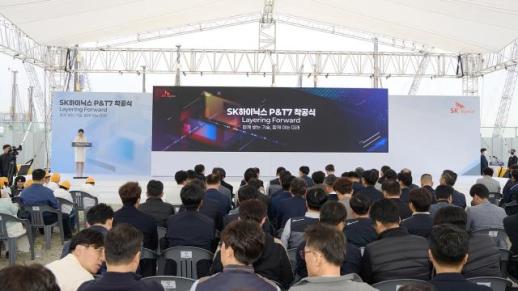 SK hynix redefines chip profit with 72% margin on HBM supremacy SEOUL, April 23 (AJP) -Regardless of the headline figures, SK hynix reigns as the most profitable chipmaker in the world and will likely stay so through the year as it consolidates leadership in high-bandwidth memory (HBM) critical to the AI transition through aggressive spending from its enhanced firepower. The Korean pure-play memory maker said it will test upgraded HBM4E prototypes in the second half for potential rollout next year depending on client demand, executives said during a conference call Thursday. “The base die for HBM4E is progressing smoothly, using optimal technology to meet customer performance requirements,” the company said. “The core die is being designed on a sixth-generation 10-nanometer-class (1c) process to address increasingly demanding performance needs.” The company added that its 1c process has already reached mature yield levels ahead of mass production starting later this year, enabling it to deliver HBM4E with “stable performance and supply capacity.” SK hynix, which pioneered HBM critical to Nvidia’s breakout AI chips, remains unrivaled in the premium segment, supported by overwhelming demand and long-term supply arrangements with hyperscale customers. Its record first-quarter results underscore its edge from a high concentration of HBM products. The company posted an operating margin of 72 percent, surpassing its previous high of 58 percent and outpacing TSMC’s roughly 58 percent and Samsung Electronics’ estimated 43 percent over the same period. The earnings surge reflects a structural shift in the memory market. DRAM supply growth is projected to slow to the mid-teens in 2026, well below the historical norm of 20–30 percent, while NAND supply growth is also moderating. At the same time, data center demand is rapidly absorbing supply, with its share of DRAM consumption expected to approach 70 percent this year, up sharply from about 35 percent in 2024. HBM’s revenue share is also expanding quickly, estimated to reach nearly 40 percent of total DRAM this year, underscoring its central role in profitability. The strong earnings were driven by surging demand for HBM — a key component in AI accelerators — alongside sharp price increases in conventional DRAM and NAND amid tight supply. Industry data show DRAM contract prices jumped more than 90 percent on quarter in the first three months of the year, reflecting a supplier-driven market that has significantly boosted profitability. The extraordinary dynamics in favor of the supply side will likely continue for some time, according to SK hynix. “This increase in memory prices is not the result of a temporary supply-demand imbalance, but rather a structural shift in the market,” the company said, noting that AI demand is fundamentally reshaping pricing dynamics. HBM accounted for around 30 percent of SK hynix’s DRAM shipments, with the remainder coming from conventional products such as DDR5 and LPDDR5X, which also benefited from the pricing upcycle. Samsung Electronics is also seeing strong gains from memory, with analysts estimating its memory division posted operating margins of 60 to 70 percent. However, its overall profitability remains lower due to weaker performance in other business segments, including foundry and consumer electronics. The shift is being reinforced by a rapid reallocation of manufacturing capacity toward AI infrastructure. Hyperscale cloud providers such as Meta, Google, Microsoft and Amazon have secured long-term supply agreements, effectively locking in production at premium prices. “Customers are prioritizing securing supply over price, and the growing importance of memory in AI computing is increasingly reflected in pricing,” the company said. As a result, even as overall memory output grows, supply available for consumer devices continues to shrink, contributing to a tightening cycle that is expected to persist. The scale of AI demand is further amplifying the imbalance. Nvidia’s latest AI systems consume hundreds of DRAM dies per unit, with a single rack requiring memory equivalent to that used in roughly 1,000 high-end smartphones. SK hynix said it is accelerating investment to meet demand but warned that supply expansion will take time. “Even under current strong demand conditions, there are clear limits to how quickly production capacity can be meaningfully expanded,” the company said, citing constraints from prior investment cuts and limited cleanroom availability. The company plans to expand capital expenditure this year, including ramping up its Cheongju M15X facility and advancing the Yongin semiconductor cluster, while securing critical equipment to support long-term capacity to maintain its comfortable lead in the premium HBM market. The red-hot earnings streak has bolstered its cashable assets by 19.4 trillion won from December to 54.3 trillion won as of March while debt was reduced to 19.3 trillion, translating into a net cash reserve of 35 trillion won. Despite geopolitical risks from the Gulf crisis, SK hynix said its production outlook remains largely unaffected. “We have already secured countermeasures against raw material and energy supply risks, and the impact on production is expected to be very limited,” the company said, citing diversified sourcing and long-term LNG contracts. Shares of SK hynix fell 1.27 percent to 1,207,000 won on profit-taking from recent rally as of 1:40 p.m. 2026-04-23 13:52:04
 -
 SK hynix Q1 profit nearly doubles from last best Q4 to record $25 bn SEOUL, April 23 (AJP) - SK hynix, a front-runner in high-bandwidth memory (HBM) chips designed for AI accelerators, delivered its best-yet quarter ended March with its three-month operating profit nearly doubled from the previous best and its top-line also at a record high. According to its disclosure Thursday, SK hynix’s quarterly operating profit of 37.61 trillion won ($25.4 billion) came in well above the market consensus of 34.9 trillion won compiled by FnGuide, nearly doubling its previous quarterly high of 19.17 trillion won in the fourth quarter of 2025 and 405 percent from a year ago. The red-hot performance follows a strong earnings signal from rival Samsung Electronics, which earlier projected first-quarter operating profit of 57.2 trillion won, surpassing its full-year 2025 income of 43.6 trillion won. The unprecedented earnings underscore SK hynix’s pricing power and dominance in the HBM segment, where demand has surged alongside the rapid expansion of artificial intelligence infrastructure by global hyperscalers. Revenue also hit a record of 52.57 trillion won, rising 60 percent from the previous quarter and 198 percent from a year earlier. 2026-04-23 07:59:23
 -
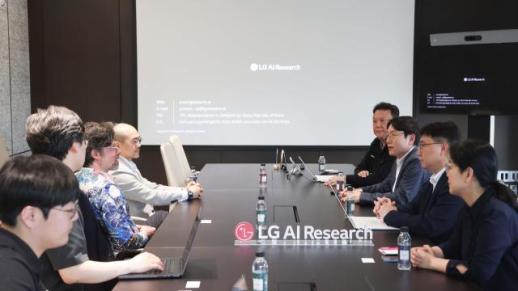 LG AI Research, NVIDIA to co-develop specialized AI models, deepen tech alliance SEOUL, April 22 (AJP) - LG AI Research and U.S. chipmaker NVIDIA will deepen their technology alliance to co-develop specialized artificial intelligence models. Executives from both companies, including LG AI Research Co-head Lim Woo-hyung and NVIDIA’s Vice President of Applied Deep Learning Research Bryan Catanzaro, met at LG's research headquarters in Seoul on Tuesday to discuss joint AI ecosystem strategies. Under the agreement, the companies will combine LG’s EXAONE AI model with NVIDIA’s Nemotron open ecosystem to build domain-specific models. The two firms have collaborated closely from the development of EXAONE 3.0 to the recently unveiled multimodal model, EXAONE 4.5. LG utilized Nemotron open datasets to ensure training data quality, while NVIDIA supplied its latest Blackwell GPUs, NeMo Framework, and TensorRT-LLM software to optimize the models' learning capabilities and inference efficiency. A recent Stanford University AI Index Report ranked South Korea third globally, behind the U.S. and China, for the number of notable AI models. Four of the five recognized Korean models belonged to LG's EXAONE series, including EXAONE Deep, EXAONE Path 2.0, EXAONE 4.0, and K-EXAONE. Catanzaro said the integration of EXAONE and Nemotron will help lead the development of "sovereign AI" and expand the broader ecosystem. Lim added the partnership aims to produce tangible sovereign AI results that can be applied directly to industrial sites. The NVIDIA tie-up follows a series of meetings earlier this month by LG Corp Chairman Koo Kwang-mo with Silicon Valley tech leaders, including Palantir CEO Alex Karp and Skild AI co-founders Deepak Pathak and Abhinav Gupta, as the conglomerate moves to accelerate its AI initiatives. 2026-04-22 10:37:18
 -
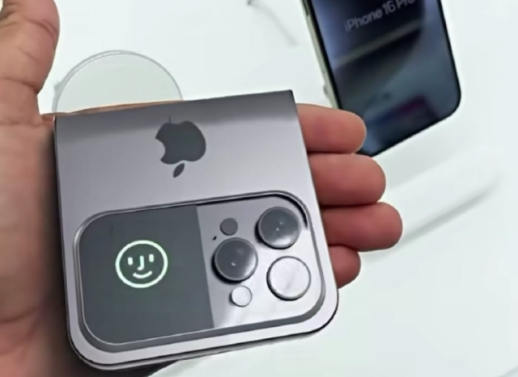 Samsung Display locks in Apple foldable edge over China SEOUL, April 21 (AJP) - South Korea’s premium OLED champion Samsung Display has reasserted itself as Apple Inc.’s primary iPhone panel supplier, staging a decisive comeback against Chinese rivals and tightening its grip on the high-end display market as Apple prepares to enter the foldable era. Samsung Display sharply expanded its share of Apple’s iPhone OLED supply chain in 2025, helped by production setbacks at China’s BOE and a reported three-year exclusive deal to supply panels for Apple’s first foldable iPhone. According to market tracker Omdia, Samsung Display accounted for 56.8 percent of Apple’s iPhone display procurement in 2025, up from 49.1 percent a year earlier. Shipments rose about 15 percent to 141.6 million units from 122.3 million in 2024, widening the gap again with LG Display and BOE after competition had briefly tightened the previous year. The surge translated directly into earnings. Samsung Display posted 9.5 trillion won ($6.6 billion) in fourth-quarter revenue and 2.0 trillion won in operating profit for the October–December period of 2025. For the full year, the display unit reported 29.8 trillion won in revenue and 4.1 trillion won in operating profit. For the first quarter, operating profit is projected at around 1 trillion won—roughly halved from the previous quarter but doubled from a year earlier during the typically slow season of the January–March period. The turnaround was driven in part by a technological inflection point. As Apple expanded the use of low-temperature polycrystalline oxide (LTPO) OLED panels across its latest iPhone lineup to improve power efficiency, BOE struggled to meet Apple’s stringent yield and quality thresholds. The bottleneck effectively pushed the Chinese supplier into a secondary role, allowing Samsung to capture incremental volume while strengthening its pricing power. "Apple’s quality standards are exceptionally high," said Kim Hyun-jae, a professor of electrical and electronic engineering at Yonsei University. "Because the latest LTPO technology is highly difficult and takes time to master, BOE had to step in as a secondary vendor for lower-tier products rather than premium models." Samsung’s lead is now set to deepen further. Industry reports indicate Apple has tapped Samsung Display as the sole OLED supplier for its first foldable iPhone for an initial three-year period—a move that underscores the still-wide gap in foldable panel durability, crease control and yield stability. "Apple initially hesitated to enter the foldable market, but currently, Samsung Display is the only manufacturer capable of producing what they need," Professor Kim noted. "Samsung possesses significant accumulated know-how from producing its own Galaxy Fold series." The reported exclusivity highlights a broader structural divide. While China dominates global LCD capacity, Korea continues to command the premium OLED segment, where margins are higher and technological barriers remain steep. Each time Chinese players narrow the gap in one generation, Korean firms have moved ahead with the next. "For about a decade, observers have warned that China would soon catch up, but the gap is constantly being maintained," Kim added. "While China is number one in overall volume like LCDs, Korea is still number one in the premium products that actually generate profit." To sustain that edge, Samsung Display is accelerating its next manufacturing leap. The company is ramping up the world’s first 8.6-generation OLED production line in Asan, South Chungcheong Province, with mass production targeted this year. The larger substrate size—2,250 by 2,600 millimeters—is expected to lower unit costs and reduce material waste, reinforcing a structural cost advantage that rivals will struggle to replicate. 2026-04-21 16:32:55
 -
 SK hynix rolls out new memory for Nvidia's Rubin SEOUL, April 20 (AJP) -South Korean chipmaker SK hynix announced Monday that it has begun mass production of its SOCAMM2 192GB memory module, a product specifically optimized for Nvidia's next-generation "Vera Rubin" AI platform. Based on 10-nanometer-class sixth-generation (1c) LPDDR5X DRAM, the new AI server module aims to resolve memory bottlenecks in massive AI models and maximize GPU processing speeds. The product reconfigures low-power mobile memory for server environments, offering a combination of high bandwidth, low power consumption, and easy module replacement. According to SK hynix, SOCAMM2 delivers more than twice the bandwidth and over a 75 percent improvement in energy efficiency compared to conventional server RDIMMs. The module acts as a "middle memory" layer between High Bandwidth Memory (HBM) and DDR5 system memory. By adopting an LPDDR-based structure, the product significantly lowers power and cooling costs for data centers. "Through close cooperation with Nvidia, we will resolve bottlenecks in AI infrastructure and provide optimal performance," said Kim Ju-seon, President of AI Infra at SK hynix. "With the supply of SOCAMM2 192GB, we have set a new standard for AI memory performance." The module features a press-fit connector structure, ensuring high signal integrity and making replacement and expansion easier compared to traditional onboard LPDDR setups. The deepened partnership comes as the U.S. tech giant accounts for a significant portion of the chipmaker's business. According to its recent business report, sales to Nvidia reached 23.26 trillion won last year, making up 24 percent of SK hynix's total revenue. Reflecting strong investor sentiment toward its AI-driven momentum, shares of SK hynix were trading at 1,170,000 won as of 11:35 a.m. on Monday, up 3.72 percent from the previous session. 2026-04-20 11:55:16
 -
 Samsung Elec seeks court injunction to block union strike SEOUL, April 17 (AJP) - Samsung Electronics has moved to legally block a planned general strike by its labor unions, warning that disruptions to its semiconductor cleanrooms could trigger losses exceeding $20 billion and damage key client relationships. The South Korean tech giant filed for a provisional injunction with the Suwon District Court on Thursday to prevent what it described as “illegal” protest activities by a joint strike body formed by its three largest labor groups, including the National Samsung Electronics Union (NSEU). The legal action comes as tensions escalate ahead of an 18-day nationwide strike scheduled from May 21 to June 7, following a partial walkout next week amid impasse over performance-based bonuses. Samsung has offered to allocate 10 percent of operating profit to employee bonuses, while unions are demanding 15 percent, emboldened by the company’s record earnings. The company reported stunning first-quarter operating profit of around 57 trillion won. Union leaders dismissed the company’s concerns over potential damage to cleanroom facilities, arguing the strike would remain within legal boundaries. “We will proceed with a lawful strike based on legal review,” said Choi Seung-ho, head of the Samsung Electronics chapter of the Super-enterprise Union in a press briefing Friday, adding that 30,000 to 40,000 members are expected to join a mass rally on April 23. The chipmaker and industry watchers however warn even limited disruptions could have outsized consequences given the nature of semiconductor manufacturing. Chip production relies on uninterrupted, highly sensitive processes and any halt could render in-process wafers unusable, forcing large-scale scrapping and delaying deliveries. “If production lines stop, everything currently in the process must be scrapped,” said Lee Jong-hwan, a professor of system semiconductor engineering at Sangmyung University. “The damage could far exceed initial estimates.” Beyond immediate losses, analysts point to longer-term risks. Delays in supplying high-bandwidth memory (HBM) chips or foundry orders could prompt major clients such as Nvidia to shift orders to rivals including SK hynix or TSMC. “Once trust is broken, it takes years to recover,” Lee said, warning the disruption could widen Samsung’s gap in the fast-moving AI chip market. Union officials estimate that an 18-day strike could result in direct production losses of at least 12 trillion won, with total damages potentially reaching 20 trillion to 30 trillion won when factoring in recovery time. Stopping the strike however won't be easy, experts say. "Courts tend to prioritize constitutional labor rights unless the industry is deemed essential, such as healthcare or railways,” said Lee Byung-hoon, a professor emeritus of sociology at Chung-Ang University. The dispute also reflects deeper tensions rooted in Samsung’s long-standing non-union management culture, which has only recently begun to shift. Underscoring the conflict between the management and union, Samsung has filed a criminal complaint against an employee accused of illegally collecting personal data of around 20,000 workers, allegedly to pressure non-union members. With global tech clients closely watching, the court’s decision could prove pivotal—not only for Samsung’s labor relations but also for its ability to sustain momentum in the ongoing AI-driven semiconductor boom. 2026-04-17 15:16:26
 -
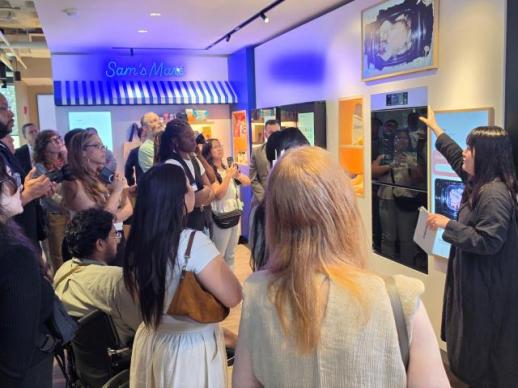 Samsung Electronics unveils AI-driven 'Home Companion' appliances for North American market SEOUL, April 17 (AJP) - Samsung Electronics showcased its latest vision for an artificial intelligence-integrated lifestyle during its "The Brief New York" technical seminar held from Thursday to Friday. The South Korean tech giant introduced its "Home Companion" scenario, a suite of appliance-based solutions designed to reduce household labor and enhance quality of life through advanced AI recognition technologies tailored specifically for North American consumer habits. Central to this new ecosystem is the 2026 Bespoke AI Family Hub refrigerator, which utilizes "AI Vision" technology. The system employs internal cameras to identify food items and even recognize container labels in real time, automatically updating a digital "Food List" to streamline inventory management and prevent unnecessary duplicate purchases. This seamless connectivity extends to the Bespoke AI Oven, where "AI Pro Cooking" monitors the color and condition of ingredients to suggest optimal settings and alert users via mobile notifications to prevent food from burning. The company also highlighted advancements in floor care with the Bespoke AI Steam Ultra robot vacuum, which integrates RGB cameras and infrared LEDs to distinguish between different types of household messes, including transparent liquid spills. Alongside these AI capabilities, Samsung introduced region-specific hardware enhancements such as "Space Max" for expanded internal storage and "Zero Clearance" hinges for flush, built-in installations. "We aim to aggressively target the North American market by evolving our AI appliances into 'home companions' that truly understand and assist our customers' lifestyles," said Moon Jong-seung, Vice President of Samsung’s DA Business. "Our goal is to provide practical convenience in everyday life through advanced recognition technologies that seamlessly connect shopping, cooking, and cleaning." 2026-04-17 13:38:50
 -
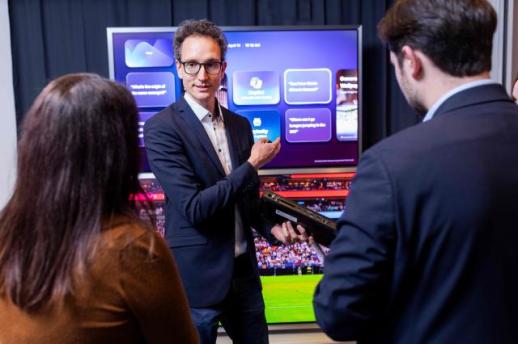 Samsung Electronics unveils 2026 AI TV lineup at European tech seminar SEOUL, April 16 (AJP) - Samsung Electronics held its '2026 Europe Tech Seminar' in Frankfurt, Germany, from Wednesday to Thurdsay, showcasing its 2026 artificial intelligence (AI) TV and audio product lineups to European media and industry professionals. During the event, Samsung demonstrated its 'Vision AI Companion,' an integrated TV platform that functions as a smart home hub. The platform provides real-time information on viewed content and supports tasks such as trip planning and recipe recommendations. The company also detailed its latest AI-driven picture and sound features, including 'AI Upscaling Pro' for enhancing low-resolution video, 'AI Football Mode,' and 'AI Sound Controller Pro.' On the hardware front, Samsung highlighted its new 'Micro RGB' TV, emphasizing that it meets 100 percent of the BT.2020 color gamut standard established by the International Telecommunication Union (ITU). The 2026 OLED TV models feature 'Glare Free' technology to reduce light reflection, along with Pantone's 'ArtfulColor' certification. Additionally, Samsung introduced an OLED gaming monitor (FG600S) with a 500Hz refresh rate, a 6K resolution monitor (G80HS), and the 'Music Studio' Wi-Fi speaker series, which supports 3D surround sound. "By applying advanced AI technology across our entire lineup, from premium to entry-level models, we will usher in an era of AI TV popularization for everyone," said Lee Heon, Executive Vice President of Samsung Electronics' Visual Display Business. Samsung has hosted tech seminars annually since 2012 to present its latest technologies to global video and audio experts. 2026-04-16 16:25:08
 -
 SK hynix to test Samsung's shock earnings as AI memory boom deepens SEOUL, April 16 (AJP) - After Samsung Electronics’ mind-blowing first-quarter numbers, its memory-focused rival SK hynix will be closely watched to see whether its three-month earnings can match — or even eclipse — expectations when it reports January–March results next week. According to financial data tracker FnGuide, the consensus among domestic brokerages estimates SK hynix’s operating profit for the period at 34.9 trillion won ($24.8 billion), with quarterly revenue projected to reach a record 50.13 trillion won. The heightened expectations follow Samsung Electronics’ preliminary estimate of 57.2 trillion won in first-quarter operating profit — a figure that surpassed its full-year 2025 earnings of 43.6 trillion won and reset the bar for the sector. Investors are now watching whether SK hynix can deliver a similar upside surprise, particularly given its heavier exposure to memory chips. Its full-year income for 2025 was record 47.2 trillion won. For the fourth quarter, it reported quarterly high of 19.17 trillion won in operating profit on revenue of 32.83 trillion won. SK hynix has emerged as a dominant player in high bandwidth memory (HBM), commanding nearly 57 percent of the market as of the fourth quarter of 2025. HBM, a critical component for AI accelerators such as Nvidia chips, has seen explosive demand from hyperscale data centers. That surge has strained cleanroom capacity, as HBM production requires roughly three times the resources of standard DRAM. The resulting supply constraints, combined with aggressive stockpiling, have pushed memory prices sharply higher — rising an estimated 90 to 95 percent in the first quarter from the previous quarter. Brokerages have been quick to revise target prices and earnings forecasts upward, citing tighter-than-expected supply of conventional memory and SK hynix’s pricing power in HBM. Mirae Asset Securities maintained its target price at 1.54 million won, projecting a higher first-quarter operating profit of 36.7 trillion won. “Elevated price levels are expected to persist due to irreversible specification upgrades in smartphones, polarized supply-demand conditions, and structural limits to capacity expansion,” said Kim Young-gun, an analyst at Mirae Asset Securities. “This should support sustained high returns on equity.” Analysts say the AI boom is now lifting the broader memory portfolio, not just premium HBM products. Pak Yu-ak of Kiwoom Securities raised his target price to 1.3 million won, noting that strong AI-driven demand is spilling over into mobile memory, including LPDDR5X and UFS. Still, he cautioned that the cycle may be entering a new phase. “As the memory semiconductor cycle shifts from price increases to shipment growth, the stock’s trajectory over the next six months could differ from the past half-year,” Pak said. Shares of SK hynix closed Thursday up 1.7 percent at 1,155,000 won. Some analysts argue the current rally reflects more than a typical cyclical upswing, pointing instead to a structural shift in the industry. “Robust growth is highly likely to continue amid limited supply increases,” said Ryu Young-ho of NH Investment & Securities. He added that SK hynix’s partnership with TSMC would be key to developing next-generation, high-efficiency memory solutions. With earnings projections reaching unprecedented levels, internal expectations are also rising. Under SK hynix’s profit-sharing structure — which allocates roughly 10 percent of operating profit to bonuses — employees are bracing for potentially record payouts if the current upcycle holds. SK hynix will release its first-quarter earnings and hold a conference call on April 23. 2026-04-16 16:02:51