
Journalist

Kim Dong-young
davekim0807@ajupress.com
-
 Hyundai Motor bets on EV re-pivot after Gulf crisis SEOUL, April 02 (AJP) -South Korea's Hyundai Motor Group is stepping harder on the pedal in battery development and factory upgrades, after a period of stalled investment amid weak demand, as it bets on a structural shift toward non-fuel vehicles triggered by the global energy crisis. Its affiliate Kia said Wednesday that domestic sales of eco-friendly vehicles — including hybrids, electric vehicles and hydrogen-powered cars — jumped 51.9 percent on-year in March to 35,480 units. Electric vehicle sales alone surged 122.5 percent to 14,488 units, marking the first time Kia’s monthly domestic EV sales topped the 10,000 mark. Pricing has emerged as a key lever. With government subsidies, models such as the PV5 and EV3 are priced in the 20 million won ($13,216) range, allowing Kia to reach a broader pool of cost-conscious consumers. Hybrid demand also remained solid, with sales rising 14.5 percent to 19,293 units, underscoring a transitional shift as consumers hedge between fuel efficiency and full electrification. “Sales in the Middle East and sub-Saharan Africa dipped due to geopolitical risks, but robust eco-friendly vehicle demand elsewhere drove us to our best-ever first-quarter performance,” a Kia spokesperson said. “We will continue to build sales momentum by leading with EVs and hybrid SUVs.” The rally comes as soaring crude oil prices — triggered by the blockade of the Strait of Hormuz — have laid bare Asia's dependence on fossil fuels and sharpened the economic case for electrification. "The most viable escape from a world where geopolitical instability dictates energy prices is clean energy," said Kim Do-hyun, a senior analyst at Samsung Securities. Beyond sales, Hyundai Motor Group is deepening its push into battery technology. The group has begun developing ultra-high-nickel batteries — with nickel content exceeding 90 percent — in partnership with cathode material suppliers L&F, POSCO Future M and Ecopro. The next-generation cells are designed to deliver a range of 500 to 700 kilometers on a single charge, about 10 percent more than current high-nickel batteries. No battery maker or automaker has yet succeeded in mass-producing such cells, which demand advanced engineering to manage heightened fire risks and shorter lifespans tied to extreme energy density. Industry sources say the batteries are expected to be fitted in Hyundai's premium EV lineup, including its N performance series and the Genesis Magma brand. The group plans to continue development at its upcoming Future Mobility Battery Campus in Anseong, south of Seoul, scheduled for completion later this year. The facility will serve as a hub for battery research across EVs and robotics. Hyundai has also signaled that even as it builds in-house battery capabilities, it will not reduce procurement from external cell makers such as SK On. Its solid-state battery technology — widely considered the next frontier for safer, higher-density energy storage — is reportedly on par with that of South Korea's three major battery manufacturers. Meanwhile, the group is overhauling its flagship Ulsan complex — the world's largest single automotive plant, spanning 5 million square meters with an annual capacity of up to 1.52 million vehicles. Two aging production lines at Plant 1 and Plant 4, where Hyundai's first assembled car, the Cortina, rolled off the line in 1968 and its first indigenous model, the Pony, was built starting in 1975, are slated for reconstruction. Industry sources estimate Hyundai will invest about 4 trillion won to transform the two lines into advanced EV production facilities. A separate new EV plant within the Ulsan complex is set to begin operations in the second half of this year — the company's first new domestic assembly plant in 29 years, since the Asan facility opened in 1996. The green vehicle push coincides with the group's broader physical AI ambitions, which include deploying Boston Dynamics' Atlas humanoid robots at its U.S. plants by 2028 and mass-producing on-device AI chips for autonomous robotics. With electrification gaining ground at the showroom and intelligent automation reshaping the factory floor, Hyundai is betting both fronts will define its next chapter. 2026-04-02 11:41:27
 -
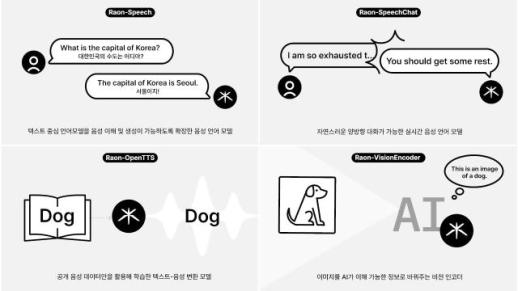 Krafton launches 'Raon' AI brand, releases four open-source models SEOUL, April 02 (AJP) - South Korean game developer Krafton unveiled a new artificial intelligence model brand called "Raon", releasing four open-source models on global AI platform Hugging Face as the company moves to establish itself as a serious AI contender beyond gaming. The four models — Raon-Speech, Raon-SpeechChat, Raon-OpenTTS and Raon-VisionEncoder — span speech, voice and visual processing, reflecting Krafton's push into multimodal AI. The brand name draws from the native Korean word "라온," meaning joy, and is designed to capture what the company calls the essential pleasure of gaming through AI. Raon-Speech, a 9-billion-parameter voice language model, claimed the top global ranking among open speech-language models under 10 billion parameters in both English and Korean, assessed across seven core tasks and 40 benchmarks. Raon-SpeechChat, meanwhile, is the first real-time, full-duplex voice conversation model developed in South Korea, capable of interrupting and being interrupted mid-conversation. Raon-OpenTTS, trained entirely on publicly available voice data, ranked among the world's best in blind listening tests against research-grade text-to-speech systems built on proprietary datasets. Raon-VisionEncoder, the fourth model, outperformed Google's SigLIP2 in select visual recognition tasks and will be integrated into Krafton's broader independent AI foundation model project. "The release of the Raon model series marks an important milestone in building our AI capabilities," Chief AI Officer Lee Kang-wook said. "By open-sourcing large-scale training data and core models, we hope to contribute to the advancement of multimodal technology and the growth of South Korea's AI ecosystem." 2026-04-02 10:41:01
 -
 Samsung Biologics completes $353 mln Maryland, US plant acquisition SEOUL, April 01 (AJP) -Samsung Biologics, South Korea’s leading contract drug manufacturer, has completed its acquisition of a biopharmaceutical manufacturing facility in Rockville, Maryland, marking its first production base in the United States to better access the world’s largest drug market and mitigate tariff risks. The company said in a press release on Wednesday its wholly owned unit Samsung Biologics America acquired Human Genome Sciences from GSK for $353.1 million, including $280 million for the facility and equity and $73.1 million for inventories and raw materials. The Rockville site comprises two manufacturing plants with a combined 60,000-liter drug substance capacity, supporting both clinical and commercial biologics production. The addition lifts Samsung Biologics’ total global capacity to 845,000 liters. The deal comes as the company seeks to mitigate supply chain risks and expand its contract manufacturing presence beyond Korea, where all of its production facilities had previously been concentrated. Samsung Biologics said it will continue supplying products previously manufactured at the site to GSK while expanding contract manufacturing services. It also plans further investments to increase capacity and upgrade technologies at the facility. The acquisition secures more than 500 jobs at the site and strengthens the company’s ability to offer multi-site manufacturing options to global clients, particularly in North America. “This represents a meaningful step in expanding our U.S. manufacturing footprint,” CEO John Rim said, highlighting the role of the new facility in building a geographically diversified production network. “Today’s ribbon cutting is the realization of that meeting and our state’s momentum,” Maryland Gov. Wes Moore said. “South Korea’s largest biotech company is opening its first U.S. manufacturing facility here in Maryland.” The deal’s closure came three months after Samsung Biologics announced the acquisition on Dec. 22 last year, as part of efforts to mitigate risks stemming from U.S. tariff policies on biopharmaceuticals. As of 2:00 p.m. Wednesday, KOSPI-listed Samsung Biologics were 5 percent up at 1,580,000 won ($1,047). 2026-04-01 14:13:58
 -
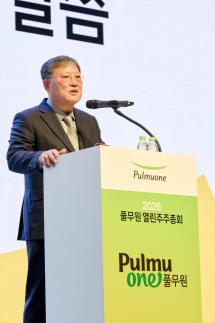 Pulmuone vows AI-driven growth push at annual shareholder meeting SEOUL, March 31 (AJP) - South Korean food company Pulmuone held its annual general meeting, pledging to accelerate its artificial intelligence transformation strategy and expand into new business segments as it eyes a deeper footprint in global markets. The meeting, held at the Korea Science and Technology Convention Center in Seoul's Gangnam district on Tuesday, drew shareholders and company executives under the theme "ONE" — a reference to the firm's corporate philosophy, its track record, and its strategic roadmap. General CEO Lee Woo-bong reported that Pulmuone posted consolidated revenue of 3.38 trillion won (about $2.2 billion) and operating profit of 93.2 billion won in fiscal 2025, calling the results a reaffirmation of the company's competitive resilience amid global economic headwinds. "We will leap forward to the next level as the global no.1 wholesome food and sustainable lifestyle company leading the K-food industry by creating sustainable growth momentum toward a new future through an organizational culture based on AX innovation and an entrepreneurial mindset," Lee said. Shareholders approved six agenda items, including the fiscal 2025 financial statements, amendments to the company's articles of incorporation, and the appointment of new directors. Under the charter revision, the mandatory ratio of independent outside directors was raised from one-quarter to one-third of the total board. Chun Young-hoon, CEO of Pulmuone Foods, was appointed as an inside director alongside two newly elected outside directors. On the growth front, the company said it is scaling up nascent businesses — including living care, pet products, food technology, and corporate food service — while pressing ahead with a company-wide AI transformation drive centered on a new future business division established earlier this year. Pulmuone said it plans to pursue both top-line growth and margin improvement across its domestic and overseas operations in 2026, with a particular focus on turning around its U.S., China, and Japan units and expanding into Europe and Canada. 2026-03-31 13:59:16
 -
 Ottogi joins hands with Gen.G Esports to chase global gaming audience SEOUL, March 31 (AJP) - South Korean food company Ottogi has signed a strategic partnership with global esports organization Gen.G Esports, targeting millennial and Gen Z gamers across key international markets, the company said Tuesday. The two companies plan to weave gaming culture into everyday consumer experiences by building an integrated marketing model spanning content, physical spaces, and commerce. Brand exposure will be carried through player uniforms and digital content centered on titles including League of Legends and Valorant. Joint campaigns tied to marquee global tournaments — including the League of Legends Mid-Season Invitational and World Championship — are also in the works, giving Ottogi visibility at some of esports' most-watched events. The two sides will also pursue co-branded content drawing on each company's intellectual property, with expansion plans targeting North America, Southeast Asia, and the Chinese-speaking market as part of a broader K-food and esports crossover strategy. "This partnership lays the groundwork for deepening our connection with the global younger generation and delivering a fresh brand experience," an Ottogi spokesperson said, adding the company would continue to expand its presence in international markets. 2026-03-31 09:17:02
 -
 HMM pushes ahead with move to Busan despite union protest SEOUL, March 30 (AJP) - South Korea's largest container shipping line HMM reportedly said its board of directors approved a charter amendment to relocate the company's headquarters from Seoul to the southeastern port city of Busan, setting the stage for a shareholder vote on May 8 that is all but certain to pass. The board convened an extraordinary session to endorse the revision to Article 3 of HMM's articles of incorporation, which currently designates Seoul as the registered seat. An extraordinary general meeting of shareholders will follow on May 8, where approval requires a special resolution backed by two-thirds of attending shareholders. With state-affiliated entities holding more than 70 percent of HMM shares — Korea Development Bank at 35.42 percent, Korea Ocean Business Corporation at 35.08 percent and the National Pension Service at 5.62 percent — passage is widely considered a foregone conclusion. The move is a centerpiece of President Lee Jae Myung's drive to transform Busan into a maritime capital, consolidating shipping administration, judicial functions and corporate headquarters in a city that already hosts the world's second-largest container transshipment port. Industry officials expect HMM to begin scouting office sites near Busan New Port in the second half of the year and to unveil relocation support packages for Seoul-based staff shortly after the vote. HMM's onshore labor union, however, struck a defiant tone. The union declared bargaining with management collapsed after the board acted without prior consultation and said it would move to secure the right to stage industrial action, raising the specter of a general strike before the May meeting. The union has argued the transfer could hollow out operational efficiency and trigger an exodus of seasoned employees whose work is embedded in Seoul's financial and logistics networks. Analysts say the Busan relocation could also accelerate the long-delayed privatization of HMM, as KDB seeks to shore up its capital adequacy by divesting its stake in the carrier. The headquarters shift follows the Ministry of Oceans and Fisheries' own relocation from the administrative capital of Sejong to Busan in December 2025, a move that prompted mid-sized bulk carriers SK Shipping and H-Line Shipping — both controlled by private equity firm Hahn & Company — to begin relocating to the port city earlier this year. 2026-03-30 17:08:02
 -
 Union-proof Samsung faces twin labor flare-ups as Biologics joins chip unit unrest SEOUL, March 30 (AJP) -Samsung Group, long seen as union-proof, is facing back-to-back labor unrest as its biopharmaceutical arm Samsung Biologics moved toward its first-ever strike, joining a parallel standoff at Samsung Electronics. The union at Samsung Biologics secured strike authorization with overwhelming support, marking the first such move since the company’s founding in 2011. About 95.5 percent of 3,678 eligible voters backed industrial action after months of stalled wage negotiations, the union said Sunday. The union represents roughly 3,689 workers, or about 75 percent of the company’s workforce. Labor and management have held 13 rounds of talks without narrowing differences. The union is demanding an average 14 percent wage increase, a 30 million won ($19,846) one-time incentive per employee, performance bonuses equivalent to 20 percent of operating profit, and stock grants over three years. Management has offered a 6.2 percent pay raise, citing alignment with compensation standards across major Samsung affiliates, including Samsung Electronics. “We are willing to talk at any time if management brings an improved proposal — there is clearly room for compromise at a reasonable level,” union chairman Park Jae-sung said. The standoff has raised concerns among industry observers, who warn that prolonged disruption could derail Samsung Biologics’ 15 trillion won ($10.8 billion) capacity expansion plan through 2034 and delay plant commissioning, at a time when global rivals Lonza and Fujifilm Diosynth are aggressively courting clients. The union plans to begin informal talks once CEO John Rim returns from an overseas trip. Failing progress, workers are set to launch a full-scale general strike on May 1. Samsung Electronics’ semiconductor workforce is locked in a parallel dispute. Its union — representing about 90,000 members — secured legal strike rights last month after 73.5 percent backed a walkout, and has warned of an 18-day general strike from May 21 to June 7 if negotiations over bonus reforms break down. The prospect of simultaneous industrial action across two of Samsung’s most critical units is raising concerns over operational disruptions at a time when the group is navigating intensifying global competition and supply chain uncertainty. At 1:30 p.m. Shares of Samsung Biologics were trading 4.05 percent down at 1,540,000 won ($1,018). 2026-03-30 13:30:57
 -
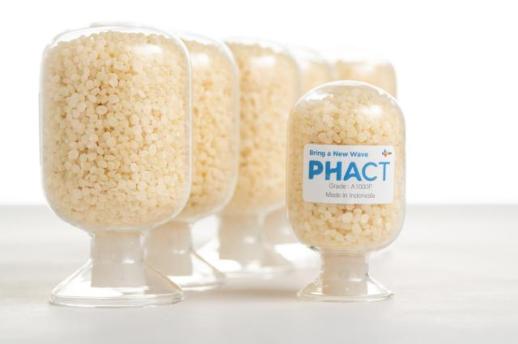 CJ CheilJedang to supply PHA bioplastic to India's Konspec as global green materials push gains pace SEOUL, March 30 (AJP) - CJ CheilJedang said Monday it will supply polyhydroxyalkanoate, or PHA, to Konspec, one of India's leading bioplastic compound manufacturers, marking the latest step in the South Korean food and biotechnology giant's push to commercialise its biodegradable materials business globally. Under the arrangement, CJ CheilJedang will deliver PHA to Konspec, which will use the material to produce compounds optimised for cutlery products such as forks and knives. The partnership comes as tightening environmental regulations — including the European Union's Packaging and Packaging Waste Regulation, or PPWR — and mounting pressure to move away from conventional plastics are driving demand for bio-based alternatives. PHA-based cutlery is biodegradable in both soil and seawater, while offering durability and a feel comparable to conventional plastic products. Cutlery firms across India, Thailand, and Malaysia are already evaluating PHA adoption, with further expansion into the United States and other major markets expected to follow. The Konspec deal adds to a string of recent commercial milestones for CJ CheilJedang's PHA business. PHA straws, piloted at select Paul Bassett cafes earlier this year, are set to roll out across all of the chain's domestic outlets. Last month, the company partnered with Yuhan-Kimberly and Eugene Hanil Synthetic Fiber to launch a biodegradable household wipe under the Kleenex brand — billed as the world's first commercial application of PHA in hygiene products. Since launching its dedicated biodegradable materials brand PHACT in 2022, CJ CheilJedang's bio materials division has steadily extended PHA's reach into cosmetic containers, disposable packaging, toothbrushes, and artificial turf infill. The material is drawing fresh attention as volatility in crude oil prices destabilizes the supply of naphtha and other petroleum-based inputs, prompting global packaging and vinyl film companies to seek alternatives. "As the shift away from plastics accelerates, the market for eco-friendly materials such as PHA is expected to grow rapidly," a CJ CheilJedang spokesperson said. "We will continue to strengthen our differentiated technological competitiveness and deliver PHA products that meet the highest standards of safety and convenience." 2026-03-30 10:12:23
 -
 Pulmuone inks MOU with Konkuk University animal hospital to promote canine blood donation culture SEOUL, March 30 (AJP) - Pulmuone's pet food division has signed a memorandum of understanding with the blood donation center at Konkuk University's veterinary hospital to promote a culture of canine blood donation in South Korea, the food company said Monday. Under the agreement, Pulmuone's pet business unit will provide cash and in-kind support to the KU I'M DOgNOR Blood Donation Center at Konkuk University Animal Hospital over the next three years, backing public awareness campaigns around dog blood donation. The partnership will encompass joint outreach programs, a rewards scheme for blood-donor dogs, and regular donations drawn from product revenues under Pulmuone's pet food brand Pulmuone Amio. "We hope this agreement will help establish a sound canine blood donation culture in Korea and raise public awareness through various campaigns," a Pulmuone spokesperson said, adding the company aims to build "a virtuous cycle where healthy eating and blood donation go hand in hand." Konkuk University opened the KU I'M DOgNOR center in 2022 as Asia's first dedicated companion animal blood donation facility. Pulmuone said it has also been donating to animal welfare organizations and stray animal shelters across the country. 2026-03-30 09:50:09
 -
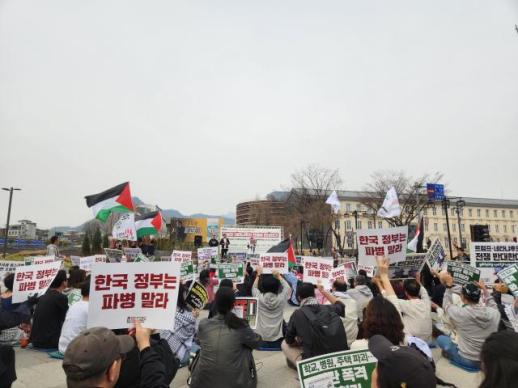 Pro-Palestinian, pro-U.S. rallies converge in Seoul on Land Day eve SEOUL, March 29 (AJP) - Rival demonstrations filled the streets of central Seoul on Sunday, as pro-Palestinian activists and Iranian expatriates backing the United States held back-to-back rallies that briefly brought opposing crowds face-to-face without incident. The larger of the two gatherings, organised by the group dubbed "People in Solidarity with Palestinians," drew about 200 participants to Jongno-district before marching toward the U.S. and Israeli embassies. South Koreans, resident Palestinians, and resident Americans joined the march, calling for an end to U.S. strikes on Iran and Israel's offensive in Gaza. The rally was timed to mark the 50th anniversary of Land Day, commemorated each March 30 in memory of six Palestinians killed by Israeli forces in 1976 during protests against land seizures. Participants laid out photographs of Iranian children killed in airstrikes alongside small backpacks in a silent tribute. A separate cycling contingent from the "BDS Korea" group rode from Jongno-district to the National Assembly in Yeongdeungpo-district, their bicycles bearing Palestinian flags and banners demanding a halt to what they described as a massacre in Gaza. On the opposing side, the "Iranian Network in Korea" held a pro-U.S., anti-regime rally near Uijeongbu Station in the afternoon. About 20 Iranian residents waved the flags of Iran, the United States, and Israel, chanting slogans including "We are the revolution" and "No justice, no peace." Tensions briefly spiked when the pro-Palestinian march passed the Iranian rally in progress, prompting the counter-demonstrators to raise their voices. Police, who had maintained control of the march route throughout the afternoon, prevented any physical confrontation between the two groups. 2026-03-29 18:00:05