


Latest by
-
 Hong Ik-pyo: Meeting Between Presidents Lee and Moon Planned Since Inauguration Hong Ik-pyo, Chief of Staff to the President, stated that the upcoming luncheon between President Lee Jae-myung and former President Moon Jae-in, scheduled for July 1, has been in the works since the beginning of Lee's administration.In a Facebook post on June 27, Hong noted, "Due to a hectic national agenda aimed at normalizing South Korea, this meeting has not taken place until now."He added, "I have been coordinating the schedule, and finally, both individuals are available on July 1 for the luncheon. I expect this meeting with former President Moon to be a meaningful opportunity to hear his insights on restoring livelihoods, promoting national unity, and ensuring the success of a government that prioritizes the people's sovereignty."Hong emphasized, "The achievements of the past year were made possible by the foundations laid by the administrations of Kim Dae-jung, Roh Moo-hyun, and Moon Jae-in. Now is the time to create changes that the public can feel in their daily lives based on those achievements."Earlier, the Blue House announced on June 25 that President Lee would invite former President Moon to the Blue House for a luncheon on July 1.In political circles, some analysts suggested that President Lee's meeting with former President Moon might be an effort to manage factional conflicts within the ruling Democratic Party ahead of its upcoming convention. Hong's comments appear to clarify any misunderstandings regarding the purpose of the meeting.* This article has been translated by AI. 2026-06-27 11:00:00
 -
 U.S. Eases Restrictions on Anthropic's 'Mythos 5' AI Model The U.S. government has relaxed restrictions on the use of Anthropic's artificial intelligence (AI) model, 'Mythos 5.' This change comes just two weeks after the Trump administration imposed export controls on the model.On June 26, the U.S. Department of Commerce announced that it would allow Anthropic to provide 'Claude Mythos 5' (referred to as Mythos 5) to trusted partners.According to anonymous sources, this easing of restrictions will enable over 100 companies and institutions, including those on the Fortune 500 list, to access Mythos 5. Verified companies, along with their foreign employees and foreign employees at Anthropic, will not need to obtain export licenses for Mythos 5.Previously, the Trump administration issued export control guidelines on June 12, blocking all foreign nationals from accessing Mythos 5 and another model, 'Fable 5,' citing national security concerns.As a result, Anthropic, which lacked the capability to verify users' nationalities, restricted access to both models for all users. This unprecedented and broad export control on advanced AI models raised concerns that it could undermine U.S. leadership in AI.Commerce Secretary Howard Rutnik stated in a letter to Anthropic that since June 12, the company has been working with the government to address related risks and has made significant progress. He emphasized that the government has worked diligently to ensure that the U.S. can maintain its position as a global leader in AI while safeguarding national security.* This article has been translated by AI. 2026-06-27 10:44:00
 -
 Two More South Korean Vessels Pass Through Hormuz Strait Amid Tensions Two additional South Korean vessels have successfully navigated through the Hormuz Strait, where they had been stranded due to the ongoing Middle East conflict.The Ministry of Oceans and Fisheries announced on June 27 that "two of our vessels waiting in the Hormuz Strait have passed through and are currently sailing normally." Both ships are carrying a total of four South Korean crew members. There are no South Korean vessels remaining at their destination.As a result, three South Korean vessels remain inside the Hormuz Strait. This includes the HMM Namoo, which is undergoing repairs in Dubai following an attack last month. In total, there are 43 crew members aboard South Korean vessels, including 13 South Koreans and 30 foreign crew members on other ships.The ministry stated, "Aside from the one vessel currently under repair, the remaining ships plan to navigate based on consultations with relevant countries and their own sailing schedules (including cargo loading)."At the end of February, the Iranian blockade of the Hormuz Strait left 26 South Korean vessels stranded. Following the signing of a memorandum of understanding (MOU) for peace between the United States and Iran, these vessels have been gradually departing the strait. However, tensions escalated after Iran attacked a Singapore-flagged cargo ship passing through the Hormuz Strait on June 26, prompting the United States to launch retaliatory airstrikes.* This article has been translated by AI. 2026-06-27 10:24:00
 -
 More ships run by Korean carriers exit Strait of Hormuz, 3 remain SEOUL, June 27 (AJP) - Two more South Korean-operated ships stranded inside the Strait of Hormuz have passed through the waterway and resumed normal navigation, Seoul’s Oceans Ministry said Saturday. Both vessels were carrying a total of four South Korean crew members, the ministry said. Neither ship is bound for South Korea. Their departure leaves three South Korean-operated vessels inside the strait, including the HMM Namu, which is undergoing repairs at a port in Dubai after being struck in early May. A total of 43 South Korean nationals remain aboard ships inside the strait, including 13 on South Korean-operated vessels and 30 on foreign ships. The ministry said it had provided diplomatic support through the Foreign Ministry and assisted the vessels with real-time monitoring and navigational information during their passage. Except for the vessel currently under repair, the remaining ships plan to transit the strait after consultations with relevant countries and in accordance with their operating schedules, including cargo-loading arrangements, it added. A total of 26 South Korean-operated ships were stranded inside the Strait of Hormuz after Iran closed the waterway following the outbreak of the Middle East war in late February. Two vessels were allowed to leave with Iran’s cooperation during the war. The remaining 24 have been gradually passing through the strait since the United States and Iran agreed to reopen the waterway as part of their peace deal. Although ships from various countries continue to leave the strait, security conditions remain unstable. The United States carried out airstrikes against Iran on Friday in response to an Iranian attack on a Singapore-flagged cargo ship transiting the Strait of Hormuz. 2026-06-27 10:17:46
 -
 Justice Minister Jeong Seong-ho Responds to Kim Geon-hee's 7-Year Sentence Justice Minister Jeong Seong-ho commented on the seven-year prison sentence handed to Kim Geon-hee, who was indicted on charges of bribery, stating it serves as a stern warning that public office should not be treated as a commodity. He described the ruling as a judgment against the political prosecution that previously dismissed similar charges under pressure from those in power.On June 27, Jeong posted on Facebook, noting that all charges, including the receipt of high-value jewelry and art in exchange for favors, were found guilty. He specifically mentioned the Dior bag, which had previously been overlooked by the prosecution under the Yoon Suk-yeol administration.Jeong criticized a small number of politically motivated prosecutors who have compromised the integrity of the justice system, stating, "The prosecution is facing a situation of de facto disbandment due to the actions of these individuals who have sold their souls to power and turned a blind eye to wrongdoing." He added that these prosecutors have trampled on the honor and pride of the majority of their diligent colleagues, eroding public trust in the judicial system and complicating necessary reforms.He urged these prosecutors to reflect on the harm they have caused to society and to take responsibility for their serious mistakes through ongoing special investigations. Jeong emphasized that significant changes are on the horizon for the criminal justice system and that the prosecution must strive for stronger reforms to regain public trust.He concluded by stating that the Ministry of Justice will work diligently for the people and ensure that the ultimate beneficiaries of judicial reform are the citizens.On June 26, the Seoul Central District Court's Criminal Division 21, led by Chief Judge Jo Soon-pyo, sentenced Kim Geon-hee to seven years in prison for receiving expensive jewelry and artworks in exchange for favors. The court also ordered the confiscation of items including a painting by Lee Ufan, a Vacheron Constantin watch, and a Van Cleef & Arpels necklace, along with a fine of 64.8 million won.* This article has been translated by AI. 2026-06-27 10:08:00
 -
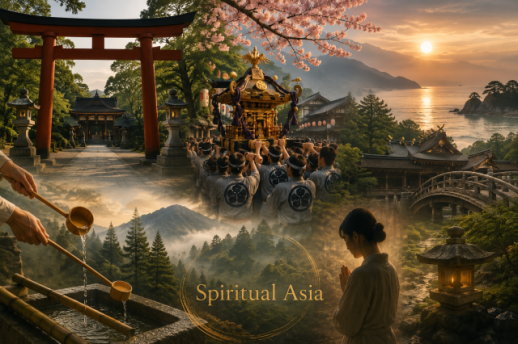 Spiritual Asia (21): Shrines and Matsuri sustain Japanese communities SEOUL, June 27 (AJP) - The second gateway to understanding Japanese Shinto is the shrine, or jinja. Shinto began with a sense of the sacredness of nature. At its roots was the belief that a divine presence dwelled in mountains and seas, forests and rivers, rocks and waterfalls, the sun and the wind. But for the sacredness of nature to enter people’s daily lives, there had to be a place where it could be remembered, enshrined and encountered repeatedly. That place was the shrine. A shrine is not merely a religious structure. It is a living site of Japanese spirituality that connects nature and humanity, ancestors and descendants, villages and the sacred. The first thing visitors encounter when entering a shrine is the torii gate. Standing like a doorway, usually painted red or left in its natural wooden color, the torii is one of the most powerful symbols of Japanese Shinto. It is not simply an entrance. It marks the boundary between the secular world and sacred space. As people pass through a torii, they momentarily set aside the noise and desires of everyday life. They step back from the world of business and competition, anger and calculation, fatigue and anxiety, and enter with the mindset of standing before the divine. Shinto is not a religion of many words. Yet a single torii can say a great deal: from this point onward, one must enter with a different state of mind. The torii is important because Shinto is, in many ways, a religion of space. Unlike Buddhism, with its vast canon of scriptures, or Christianity, with the Bible, Shinto has no single sacred text endowed with absolute authority. Instead, it expresses itself through places and rituals, gestures and repetition. Bowing before the torii, walking along the approach to the shrine, washing one’s hands and mouth, and bowing and clapping before the sanctuary are themselves forms of religious language. Rather than explaining the gods through long sentences, Japanese people have traditionally encountered the sacred by lowering themselves within a holy space. Near the entrance to most shrines is a water basin known as a temizuya or chozuya. Worshippers wash their hands and rinse their mouths there. This is not simply an act of hygiene. In Shinto, water symbolizes purification. As people go about their daily lives, their minds become unsettled, their bodies become unclean and their relationships leave them wounded. Before standing before the gods, they must first compose and cleanse themselves. Washing the hands signifies a desire to purify one’s actions, while rinsing the mouth reflects a resolve to speak with care. Shinto purification rituals tell us that to encounter the sacred, one must first empty and prepare oneself. The basic etiquette of shrine worship also carries deep meaning. The customary form is to bow twice, clap twice and bow once more. Although details may differ from shrine to shrine, the basic structure reflects the spirit of Shinto. Bowing is an act of humility. Clapping announces one’s presence to the deity and awakens the mind. The final bow expresses gratitude and resolve. This is not simply an incantation for good fortune. It is an act through which people restrain their desires and restore their inner balance before a sacred order. Most shrines contain a main sanctuary, or honden, and a worship hall, or haiden. The honden is the central space where the kami, or deity, is enshrined, while the haiden is where people offer their respects. Yet the essence of a shrine is not limited to its buildings. The surrounding forest, the approach, ancient trees, stone lanterns, water and wind are all part of the shrine. The groves surrounding shrines, in particular, reveal the Shinto view of nature. A shrine is not simply built in nature. Rather, people carefully create and preserve a space to protect the sacredness already present in nature. The shrine grove is not landscaping. It is a sacred forest. Ise Jingu is a representative example of this kind of Shinto space. It is regarded as one of Japan’s holiest shrines and is known as the place where Amaterasu, the sun goddess, is enshrined. It also has deep ties to the imperial family. What makes Ise Jingu distinctive, however, is not authority alone. Its buildings are not preserved indefinitely. Instead, they are rebuilt at regular intervals in order to carry on the tradition. The structures are renewed, but their form and spirit continue. The timber changes, but the craftsmanship is passed down. This reflects Shinto’s philosophy of renewal. Eternity does not lie in holding on to old things unchanged, but in carrying their spirit forward through constant renewal. Fushimi Inari Taisha in Kyoto presents another, more popular face of Shinto. The countless red torii gates stretching along its mountain paths have become one of the most recognizable images of Japan. Inari has long been worshipped as a deity of agriculture, prosperity and commerce. In agrarian society, people prayed for abundant harvests; in a commercial society, they prayed for business success. Shinto kami are not confined to abstract doctrine. They are present in people’s livelihoods, food, work and aspirations. That is why Shinto has remained so close to everyday Japanese life. Meiji Jingu in Tokyo carries yet another meaning. Dedicated to Emperor Meiji and Empress Shoken, symbolic figures of modern Japan, it stands within a vast forest in the heart of the capital. Meiji Jingu demonstrates how Shinto became connected to the modern state, while also showing how people in contemporary Japan seek silence and nature amid urban life. Large numbers of people visit shrines for the first prayer of the New Year, hold weddings there and turn to them at important moments in life. Shinto remains alive in the rites and transitions of Japanese daily life. Shrines are also connected to ancestor veneration. In Japanese Shinto, ancestors are not simply people who have died. They are the roots of families and villages, and beings believed to watch over the lives of their descendants. Ancestor worship reminds people that they are not born or destined to live alone. We are all descendants of someone, and we will become ancestors to someone else. Shinto ancestor worship reinforces this sense of continuity. The individual is not cut off from the past but exists within a chain of memory, bloodline and community. To Korean eyes, this is not entirely unfamiliar. Korea also had traditions involving mountain spirits, village guardian shrines, sacred trees, ancestral rites and village rituals. People regarded large trees at the entrances of villages as sacred, offered rites to mountains and rivers and paid respects to their ancestors. East Asian agrarian civilizations did not separate nature from ancestry. Japanese shrine culture institutionalized and spatialized these shared East Asian sensibilities in a distinctly Japanese form. Japan preserved them strongly through the shrine system, while Korea maintained them in more dispersed forms through Confucianism, Buddhism, shamanism and folk religion. The power of the shrine lies in repetition. People visit shrines at the beginning of the year, bring newborn children, and return at turning points such as school entrance, employment, marriage and the start of a business. This should not be dismissed simply as superstition. At important moments, people need to compose themselves before an order greater than themselves. A shrine serves as a spiritual way station: a place where people pause amid busy lives, wash, bow, give thanks and begin again. Shrine culture, however, has not always existed solely as a pure expression of spirituality centered on nature. Shrines were once centers of local communities, but in the modern era they also became connected to state power. It is therefore important to maintain a balanced view of both the original meaning of shrine culture and its potential for historical distortion. A shrine can be a beautiful space linking nature, ancestors and community. Yet when combined with nationalism, it can also become a dangerous instrument of political mobilization. Spirituality should be a force that humbles human beings, not a tool that sanctifies power. Matsuri: The Spirituality of Festivals That Moves Japanese Communities If the shrine represents spirituality in space, matsuri represents spirituality in motion. The shrine creates a sacred place, while matsuri brings that sacredness out among the people. A matsuri is a festival, but it is not merely entertainment. It is a ritual in which gods and humans meet, a communal act through which a village reaffirms its identity, and a cultural mechanism that brings together seasons, labor and memory. One cannot fully understand the Japanese sense of community without understanding matsuri. Matsuri began with gratitude and prayer. In agrarian society, human beings depended on nature. Rain had to fall at the right time, typhoons had to pass without destruction, rice had to ripen and the sea had to provide a plentiful catch. People could work hard, but without nature’s cooperation they could not secure food. Villagers therefore prayed to the gods for abundance and offered thanks after the harvest. Matsuri emerged from this rhythm of supplication and gratitude. It was a way for people to humble themselves before nature. Many matsuri feature a portable shrine known as a mikoshi. People carry the mikoshi, believed to house the presence of a deity, through the village. Drums and flutes, chants and processions, dances and food, lanterns and flags accompany the event. This is not simply spectacle. It signifies that the sacred does not remain confined within the shrine but moves throughout the entire community. The deity does not stay locked in the sanctuary. It enters alleyways, markets, homes, fields and shorelines. Matsuri extends sacredness across the whole community. Through this process, people rediscover that they belong to something larger than themselves. A matsuri cannot be held alone. Some people carry the mikoshi, others prepare food, clear the roads, care for children, play drums or offer prayers. A festival is an order of shared roles. Everyone is both a participant and a supporter. This is the social power of matsuri. People who ordinarily live separate lives come together again as one village through the festival. Japan’s sense of order and culture of cooperation are deeply connected to the tradition of matsuri. Matsuri teach people common rules. If someone moves ahead on their own, the procession falls apart. If someone neglects their role, the whole event is disrupted. When carrying a mikoshi, participants must move in rhythm. One person cannot bear all the weight, and no one can simply withdraw. It is a form of communal training. Matsuri take the form of celebration, but within them is an ethic of responsibility and cooperation. They are also repositories of regional identity. Different parts of Japan have their own festivals, including Kyoto’s Gion Matsuri, Osaka’s Tenjin Matsuri, Tokyo’s Kanda Matsuri, Aomori’s Nebuta Matsuri and Sapporo’s Snow Festival. Each reflects the history, climate and livelihoods of its region. Some began as rituals to ward off epidemics or disasters, while others were created to pray for good harvests or abundant catches. Matsuri are a way for regions to remember themselves. In that sense, matsuri are more than tourist attractions. Many festivals have, of course, become important resources for tourism and local economies. Yet at their roots lies communal memory. When a village carries on the same festival for centuries, it means that its people have not forgotten their story. Festivals preserve fragile memories through the body. They are not history read in books, but history enacted through walking, carrying, singing, eating and dancing. Shinto ancestor veneration also comes alive through matsuri. Many Japanese festivals honor not only deities of nature but also the memory of ancestors and predecessors who protected and sustained the village. Ancestors do not remain only in the past. They live on in the ethics and order of the community. Through festivals, descendants express gratitude to their ancestors and realize that they, too, will one day become people remembered by future generations. This is a community of time, in which the living and the dead, the past, present and future, all exist within a single order. The relationship between Shinto and Buddhism is also important here. For centuries, the two traditions influenced and blended with one another in Japan, a phenomenon known as shinbutsu shugo, or the syncretism of kami and buddhas. Kami were sometimes interpreted as manifestations of buddhas, and Buddhist temples and Shinto shrines often coexisted in the same space. People might pray at shrines for blessings in this life and turn to Buddhism for matters of death and the afterlife. What may appear doctrinally contradictory became a natural form of coexistence in everyday life. Japanese religious culture has often emphasized practical harmony over exclusive declarations of faith. This religious flexibility has been both a strength and a limitation of Japanese culture. Its strength lies in tolerance and harmony, allowing different beliefs and rituals to coexist in daily life. Its weakness lies in the blurring of principles. When religion becomes primarily custom and habit, society may fail to reflect critically on its dangers even when it becomes entangled with political power. The history of Shinto’s alliance with modern nationalism must be reconsidered from this perspective. What deserves particular attention, however, is the way shrines and matsuri have sustained Japanese life. A shrine is a place of pause, while matsuri is a time of movement. A shrine is where individuals cleanse their hearts; matsuri is when communities bring their bodies into rhythm. Shrines teach humility before nature and ancestors, while matsuri teach people how to live with their neighbors. Together, they allowed Shinto to take deep root in Japanese life. Modern society is rapidly dismantling traditional communities. Urbanization has weakened villages, while digital civilization has connected people and isolated them at the same time. People remain connected throughout the day, yet increasingly lack a deep sense of belonging. In such an age, shrines and matsuri pose important questions. Is individual freedom alone enough? Can healthy individuals exist without communal memory? Can society endure without festivals and rituals? Korean society cannot avoid these questions either. Korea also had traditions of village communities, communal rites, cooperative labor systems, seasonal customs and festivals. Yet much of this disappeared amid rapid industrialization and urbanization. There is no need to admire Japanese matsuri uncritically. Still, the power of rituals and festivals to sustain communities deserves renewed attention. People do not live by bread alone, nor by work alone. They become members of a community through moments of shared memory, gratitude and joy. The greatest lesson offered by shrines and matsuri is the restoration of relationships. They reconnect humanity with nature, the living with their ancestors, individuals with communities, and the everyday world with the sacred. Modern people have gained much, but they have also lost many relationships. Nature has become a resource, ancestors have become photographs, neighbors have become anonymous strangers and festivals have become consumer events. Shinto shrines and matsuri invite us to reconsider these lost connections. There is no need to adopt Shinto itself. Shinto was formed through Japan’s own history and culture and belongs to Japan. Yet its reverence for nature, remembrance of ancestors, responsibility toward community, sense of purification and celebration of the seasons are values worthy of reflection across East Asia. What is good should be learned from, while what is dangerous should be guarded against. That is the attitude required by truth, justice and freedom. Ultimately, the second face of Japanese Shinto is community. If the 20th installment of this series explored the sacredness of nature, the 21st shows how that sacredness lives and moves among people. Shrines create sacred space. Torii gates mark boundaries. Purification rituals cleanse the heart. Worship teaches humility. Matsuri bring communities together again. Together, these elements have shaped the spirituality embedded in Japanese daily life. 2026-06-27 10:02:40
 -
 Iran Strikes U.S. Military Bases in the Middle East in Response to Ceasefire Violation Iran announced on June 26 that it had targeted U.S. military bases in the Middle East in response to what it described as a violation of a ceasefire by the United States. This escalation comes as the two nations were engaged in follow-up negotiations after signing a memorandum of understanding (MOU) aimed at ending hostilities, raising concerns about the stability of the ceasefire.The Islamic Revolutionary Guard Corps (IRGC) stated in a statement, "Following the Zionist regime's (Israel) violation of the ceasefire in southern Lebanon, the U.S. government, as it has done in the past, also breached the ceasefire agreement." The IRGC claimed that its naval forces struck several U.S. military bases in the region in retaliation for these actions.The statement further accused the U.S. of using various pretexts to justify its attacks on Iranian coastal areas, citing the passage of unauthorized vessels through the Strait of Hormuz.Ebrahim Azizi, chairman of the National Security and Foreign Policy Committee of the Iranian Parliament, condemned the U.S. on social media platform X, stating, "The U.S. attacked Iran again during negotiations, demonstrating that the failed U.S. president does not uphold the principles of negotiation or ceasefire." He warned that such reckless violations of the ceasefire would lead to defeat and regret for the U.S.Azizi also asserted that according to Article 5 of the Islamabad Agreement (the MOU), Iran has control over the procedures and authority regarding navigation in the Strait of Hormuz. He cautioned that if the U.S. continues to violate this agreement, Iran would respond more broadly.Iranian state media reported that two projectiles struck a communications tower in the southern port city of Sirik, near the Strait of Hormuz, on June 26. Additionally, two projectiles were reported to have landed on Qeshm Island in the Strait, although the source of the fire was not confirmed, and details on damage were not provided.The U.S. Central Command, which oversees American forces in the Middle East, stated on X that its units conducted airstrikes against Iran in response to the previous day's attack on a commercial vessel passing through the Strait of Hormuz.U.S. aircraft targeted Iranian missile and drone stockpiles and coastal radar sites, according to Central Command.The U.S. launched the airstrikes on June 26, claiming that Iran had violated the ceasefire agreement by attacking a commercial vessel with drones while it was transiting the Strait of Hormuz.Since the MOU took effect on June 17, the U.S. and Iran have been engaged in negotiations regarding Iran's nuclear program and the lifting of sanctions. However, the recent attacks and retaliatory strikes have raised the likelihood of further disruptions to the negotiation process.* This article has been translated by AI. 2026-06-27 09:28:00
 -
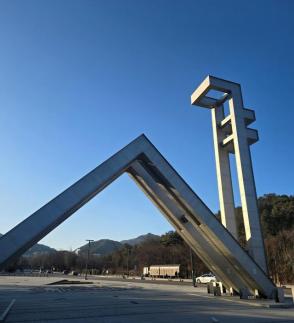 Will Adding a 'Seoul National University' Label to Local Colleges Retain Youth? <Education & Perspective> examines the issues in primary, secondary, and higher education amidst the decline of public education, decreasing school-age population, and fluctuating college admission systems. It also seeks sustainable alternatives while providing a critical yet compassionate view of our society.There seems to be a misunderstanding regarding the ambitious 'Creating 10 Seoul National Universities' policy, which aims to transform regional national universities into institutions comparable to Seoul National University. This initiative seeks to tackle both the decline of local populations and the hierarchy of universities. The plan to elevate nine regional national universities to the level of top-tier institutions is considered a cornerstone of the Lee Jae-myung administration's higher education policy.Currently, the policy has shifted to a 'selection and concentration' approach, prioritizing three regional national universities for initial support. However, when faced with practical realities, the discussion changes. This policy is fraught with a critical flaw, as it is trapped in idealistic rhetoric that overlooks the essence of higher education and financial limitations. Frankly speaking, what we need now is not ten replica comprehensive universities resembling Seoul National University, but rather ten specialized universities akin to KAIST, equipped with solid technological competitiveness. This has been suggested multiple times by experts concerned about the future of higher education.The challenges of the 'Creating 10 Seoul National Universities' initiative have already been reported through various media and academic channels. Nevertheless, given its significance as a major higher education policy of the Lee Jae-myung administration, it is worth revisiting. The most significant flaw of this initiative lies in the astronomical limits of financial procurement. According to the Ministry of Education, the average educational cost per student at Seoul National University is around 63 million won, while the average for the nine regional national universities is less than half that, at approximately 25.3 million won. To completely elevate regional national universities to the level of Seoul National University, annual additional funding of at least 2.4 trillion won would be necessary, far exceeding the limited national higher education budget. Ultimately, spreading resources thinly could lead to a situation where no university achieves top-tier status, resulting in a 'race to the bottom' and a 'budget-sharing trap.'A more significant issue is the inherent weight of the model represented by Seoul National University as a 'national university corporation' and 'comprehensive university.' Seoul National University encompasses a vast array of disciplines, including humanities, social sciences, natural sciences, engineering, medicine, and arts. While it embodies the noble value of balanced academic development, it is nearly miraculous for resource-strapped regional universities to establish a comprehensive ecosystem of basic and applied sciences at the level of Seoul National University in a short time. A university that performs adequately across all fields cannot serve as a weapon to prevent regional decline. The reason businesses and young people do not remain in these areas is not simply due to the absence of a 'comprehensive university label,' but rather the lack of specialized departments and advanced job opportunities.In contrast, the so-called 'Creating 10 KAISTs' initiative is based on clear selection and concentration. The KAIST model is a specialized university focused on advanced science and technology, particularly in engineering and natural sciences. By pursuing the 'Creating 10 KAISTs' approach, the structure is lighter and more agile compared to comprehensive universities, allowing for concentrated investment in future industries such as artificial intelligence (AI), semiconductors, biotechnology, and aerospace.The impact of establishing specialized engineering universities in regional areas has already been proven. KAIST in Daejeon, along with GIST in Gwangju, DGIST in Daegu, and UNIST in Ulsan, has led to the advancement of local economies with research capabilities that rival those of universities in Seoul. Instead of attempting to transform all regional national universities into a 'department store' version of Seoul National University, it would be far more efficient to reorganize them into 'KAIST-style technology ecosystem hubs' tailored to the specialized industries of each region. For instance, the Yeongnam region could focus on manufacturing and robotics, while the Honam region could specialize in renewable energy and AI.The world is now in an era where one innovative engineer, like Jensen Huang of NVIDIA, can sustain a nation more than 100 lawyers or humanities scholars. Only universities that seize the lead in advanced technology can attract businesses and retain young people.The alternative is 'selection and concentration.' We cannot afford to waste time on superficial 'label standardization' by building ten department stores. It is essential to abandon impractical idealism and pivot the policy towards 'Creating 10 KAISTs' that will transform regions into the heart of advanced technology. The purpose of education is not to replicate past prestige but to ensure future survival.* This article has been translated by AI. 2026-06-27 09:20:00
 -
 S. Korea slips to seventh in third-place race after Senegal routs Iraq SEOUL, June 27 (AJP) - South Korea’s hopes of reaching the World Cup round of 32 suffered another setback after Senegal’s 5-0 victory over Iraq pushed Korea down to seventh place in the race among third-place teams. Senegal defeated Iraq in their final Group I match in Toronto on Friday, improving to one win and two losses for three points and finishing third in the group. Senegal had trailed South Korea on goal difference, but the five-goal victory improved its mark to plus-three, pushing Korea, at minus-one, further down the standings. South Korea, also on three points with one win and two losses, is now seventh in the overall third-place standings and sixth among the seven teams that have completed all three group matches. Under the expanded 48-team format, the top two teams from each of the 12 groups advance to the round of 32, along with the eight best third-place finishers. Sweden, Ecuador and Bosnia and Herzegovina, each with four points, have already secured places in the knockout stage. Needing a convincing win to strengthen its qualification chances, Senegal attacked from the outset and took the lead through Habib Diarra in the fourth minute. Iraq’s task became even more difficult when defender Rebin Sulaka was sent off in the ninth minute following a video review. Senegal took advantage of its numerical superiority and scored four more goals in the second half. In the other Group I match, France defeated Norway 4-1 in Boston behind a hat trick from Ousmane Dembele. A highly anticipated meeting between France’s Kylian Mbappe and Norway’s Erling Haaland did not materialize after Haaland missed the match. France finished top of the group with three wins and nine points. Norway advanced as the runner-up with two wins and one loss and will face Ivory Coast in the round of 32 on July 1. 2026-06-27 09:04:16
 -
 Jellycat Opens First Store in South Korea with a Futuristic Theme A futuristic city set in 2075 has emerged in the heart of Yeouido, Seoul. With vibrant neon signs, the constant sounds of urban signals, and hover bikes soaring through the air, this cinematic space has come to life at the Hyundai Seoul. The star of this spectacle is the British plush toy brand Jellycat. On June 26, the 'Jellycat 2075 AD General Store,' the brand's first official store in South Korea, opened on the fifth floor of the Hyundai Seoul. Jellycat is renowned for creating unique spaces around the world, including 'Jellycat Fish and Chips' in London, 'Jellycat Cafe' in Shanghai and Beijing, and 'Jellycat Diner' in New York, each with its own theme. The theme for Seoul is a futuristic city in 2075. Greeting visitors at the entrance is a giant version of Jellycat's iconic character, 'Jack,' who welcomes guests from atop a flying hover bike. Upon entering, the futuristic atmosphere intensifies. Neon lights, large structures, and Jellycat characters hidden throughout create a cohesive vision of a future world. While futuristic cities often evoke cold and desolate imagery, this space offers a different perspective. It depicts a warm future where adorable characters coexist. Although set in the distant year of 2075, the whimsical and cheerful vibe characteristic of Jellycat remains intact. A Jellycat representative stated, "Jellycat stores are spaces for sharing 'joy.' The Hyundai Seoul store is the first official themed space where Korean customers can fully experience the Jellycat universe." As the first official store in the country, it features a collection of popular characters, including the beloved 'Bunny,' along with the Amuseables line, which reinterprets everyday fruits, foods, and household items in Jellycat's unique style. The most notable product at the Seoul store is the 'Bartholomew Bear Disco Ball.' This Jellycat character is dressed in a sparkling silver disco ball outfit, based on a storyline where he accidentally time-travels to the future while enjoying a galactic disco party. This product is making its global debut in Seoul. A Jellycat representative noted, "Jellycat has a global fanbase, and there are international tourists who visit the store specifically to purchase exclusive items. We expect many global fans to visit this time as well." The futuristic city of Jellycat extends beyond just visuals. On the second floor of the Hyundai Seoul, the department store's cafe brand, Til White, will offer two limited-edition drinks and one special dessert inspired by Jellycat. These collaborative menu items will be available until July 26, so be sure not to miss out. * This article has been translated by AI. 2026-06-27 09:04:00