


Latest by
-
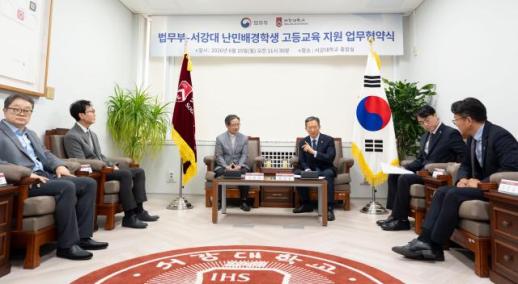 Justice Ministry and Sogang University Launch Comprehensive Support for Refugee Students The Ministry of Justice and Sogang University are establishing a comprehensive support system to expand higher education opportunities for refugee background students and help them settle into South Korean society. On June 15, the Ministry of Justice and Sogang University signed a memorandum of understanding (MOU) at Sogang University for a program aimed at supporting refugee background students. This initiative is designed to assist students who, despite having strong academic motivation and potential, face environmental constraints that hinder their ability to pursue their dreams. Refugee background students are defined as foreign students who have been officially recognized as refugees under the Refugee Act or have received humanitarian stay permits. While there have been occasional scholarships or individual support for these students in the past, this is the first time that a systematic support framework has been established through collaboration between government agencies and universities to manage the entire process from enrollment to social integration. Under the agreement, the two institutions will select two refugee background students each year. These selected students will receive essential Korean language education before entering university, along with scholarships to alleviate tuition burdens and support for a stable academic environment during their studies. Furthermore, after graduation, they will have access to employment and entrepreneurship programs to ensure they can achieve full independence in South Korean society, providing comprehensive support throughout their educational journey. This initiative is particularly meaningful as it coincides with the 75th anniversary of the adoption of the 1951 Refugee Convention, which aims to protect the rights of refugees worldwide. By presenting a new paradigm of refugee inclusion through collaboration between the government and educational institutions, it is expected to realize humanitarian values befitting South Korea's international standing and lay the groundwork for refugee students to thrive as members of society. Sogang University President Shim Jong-hyuk stated, "For young people who have been forced to leave their homes due to war, violence, poverty, and persecution, education is not just an opportunity to learn but a door of hope to restart their lives. I hope this agreement will lead our society toward becoming a more inclusive and responsible community." Justice Minister Jeong Seong-ho emphasized, "The collaboration between the government and universities to provide refugee background students with opportunities for independence and social participation through higher education is an investment in future generations and a responsible role in the international community." He added, "The Ministry of Justice will work closely with universities and relevant organizations to ensure that refugee background students can plan their futures in a stable educational environment." If this comprehensive support model through government and academic collaboration is successfully implemented, it is expected to serve as a positive catalyst for expanding refugee support programs to other higher education institutions in South Korea.* This article has been translated by AI. 2026-06-15 16:54:00
 -
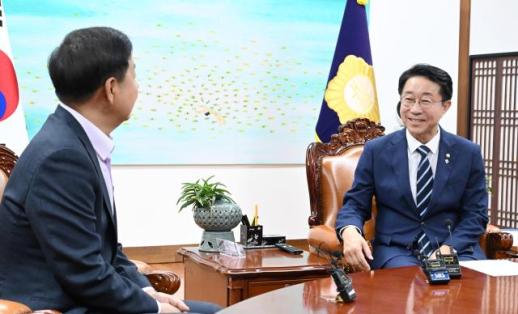 Choi Jung-sik Urges Deputy Prime Minister Koo Yoon-cheol to Address Economic Challenges Choi Jung-sik, Speaker of the National Assembly, met with Koo Yoon-cheol, Deputy Prime Minister and Minister of Economy and Finance, on June 15, urging him to address economic challenges exacerbated by external uncertainties stemming from the war between the U.S. and Iran, as well as issues related to youth employment and economic polarization. During their meeting at the National Assembly, Choi stated, "The overseas economic conditions are challenging due to the Middle Eastern conflict and the rise of nationalism in the international order. Fortunately, negotiations between the U.S. and Iran are progressing toward a peace agreement. I hope the South Korean economy can eliminate external uncertainties and make a rebound." Choi emphasized the need to tackle the decline in youth employment, devise strategies to utilize surplus tax revenue, and address economic polarization. "The ongoing decrease in youth employment is a significant concern. I hope you can help create expectations and hopes for young people," he said, urging Koo to develop effective ways to utilize surplus tax revenue generated from the boom in artificial intelligence (AI) and semiconductors. Choi also expressed his commitment to improving the lives of citizens and stated, "The National Assembly will do its utmost for the economic advancement of South Korea. We have decided to form a bipartisan legislative committee to discuss livelihood-related bills. We will prepare legislation for the economy, and I hope the government will pay attention to this effort." In response, Koo assured that the executive branch would actively collaborate with the National Assembly to support the livelihood economy. He noted, "Vulnerable groups, including youth, are facing difficulties due to inflation and exchange rates. While export conditions are favorable, our reliance on semiconductors is too high. We plan to invest in AI semiconductors to develop new export items akin to semiconductors." Additionally, it was reported that during the meeting, Choi called for strengthened youth policies, while Koo discussed plans to implement youth-targeted policies starting in the second half of the year. After the meeting, Jang Hyun-joo, Chief Public Relations Secretary, told reporters, "Choi emphasized the need for enhanced education in AI and finance to improve youth employment. Koo also responded that starting next month, policies focused on youth will be actively pursued to ensure that young people feel the impact of these initiatives."* This article has been translated by AI. 2026-06-15 16:54:00
 -
 At heaven lake, Mount Baekdu SEOUL, June 15 (AJP) - Visitors enjoy the view of Heaven Lake at the western slope of Mount Baekdu in Jilin Province, China, on June 11, 2026. AJP Han Jun-gu 2026-06-15 16:53:12
 -
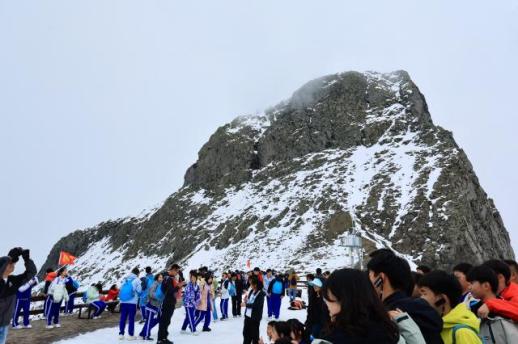 At heaven lake, Mount Baekdu SEOUL, June 15 (AJP) - Visitors at the western slope of Mount Baekdu in Jilin Province, China, on June 11, 2026. 2026-06-15 16:51:59
 -
 Trading Volume Reaches 52 Trillion Won, Yet 94% of Listed Companies See Under 1 Trillion Won The KOSPI's average daily trading volume surpassed 52 trillion won, marking the highest level this year, but trading remains concentrated among a few stocks. Of the 947 companies listed on the KOSDAQ, 94% reported daily trading volumes below 1 trillion won, while Samsung Electronics and SK Hynix accounted for nearly half of the total trading volume, highlighting a significant liquidity concentration. According to the Korea Exchange, from June 1 to June 12, the average daily trading volume in the KOSDAQ reached 52.58 trillion won. This figure exceeds the previous months: January (27.06 trillion won), February (32.23 trillion won), March (30.14 trillion won), April (29.55 trillion won), and May (50.21 trillion won), making it the highest level recorded this year. Despite the overall increase in trading volume, individual stock liquidity shows a stark disparity. Among the 947 listed companies, 890 had average daily trading volumes below 1 trillion won, accounting for approximately 94% of the total. This indicates that, despite the surge in market trading, most stocks are not attracting investor interest. In terms of trading volume categories, 110 companies (11.5%) had average daily trading volumes below 10 million won, 367 companies (39.0%) below 1 billion won, and 246 companies (26.0%) below 10 billion won. Additionally, 23 companies (2.5%) reported zero trades. While the overall trading scale has expanded, actual liquidity remains concentrated in a few stocks, exacerbating polarization among them. Conversely, only 57 companies exceeded an average daily trading volume of 1 trillion won. The combined average daily trading volume of these companies was approximately 46.38 trillion won, representing 88.2% of the total KOSPI average daily trading volume during the same period. These companies make up just 6.0% of all listed firms, yet they absorb most of the market trading. Notably, Samsung Electronics recorded an average daily trading volume of 11.54 trillion won, while SK Hynix reached 12.15 trillion won. Labor researcher Noh Dong-gil from Shinhan Investment Corp. noted, "The driving force behind the market's upward momentum in 2026 has been individual investors. They have concentrated their funds on Samsung Electronics and SK Hynix, where profit re-evaluation has already been confirmed, rather than investing broadly in the Korean market." He added, "The concentration in the market cannot be explained solely by investor sentiment. Samsung Electronics and SK Hynix have established themselves as common underlying assets in the commodity market, beyond just leading stocks in the Korean market." However, recent analyses suggest that market funds are beginning to spread across certain sectors and stocks. Kim Jun-young, a researcher at iM Securities, stated, "If we follow the market's rhythm, June appears to be a period where sector-wide expansion could continue in the short term. As a ceasefire approaches, we are seeing a rebound in indices that diverges from the existing leading stocks, indicating a broader recovery among various individual stocks."* This article has been translated by AI. 2026-06-15 16:51:00
 -
 Korea Food Industry Association Seeks Executive Director Candidates Until June 29 The Executive Recommendation Committee of the Korea Food Industry Association announced on June 15 that it is publicly recruiting candidates for the position of executive director until June 29. Candidates for the executive director position must possess expertise and experience related to the food or agriculture sectors, organizational management skills, a commitment to reform, integrity, and a strong ethical foundation. Additionally, any expert with suitable qualifications for the role is welcome to apply. Required application documents include a cover letter, resume, job performance plan, consent form for personal information, proof of highest education, work experience certificates, licenses, and other supporting materials. Applications will be accepted from June 12 until 11 a.m. on June 29, and can be submitted in person or by mail to the Management Planning Office of the Korea Food Industry Association, located at 41 Myeongdal-ro, Seocho-gu, Seoul. Only applications received by the deadline will be considered. The executive director will be appointed after the selection of final candidates recommended by the committee through document review and interview processes, pending approval from the board of directors. For more information, interested parties can contact the Management Planning Office of the Korea Food Industry Association or visit the association's website. Established in 1969, the Korea Food Industry Association represents the food industry and engages in policy support for food safety, enhancing industry competitiveness, expanding exports, and providing hygiene education.* This article has been translated by AI. 2026-06-15 16:48:00
 -
 Samsung Expands Automotive Business in Europe, Uniting All Affiliates' Strengths Samsung Electronics is accelerating its expansion into the European automotive market, focusing on the automotive electronics sector. The company aims to create synergies by leveraging the capabilities of the entire Samsung Group, including automotive semiconductors, displays, batteries, and infotainment systems. As the home appliance and TV sectors reach saturation, the automotive sector is emerging as a new revenue stream for Samsung.According to industry sources on June 15, the automotive business is identified as a key area for maximizing synergy among Samsung affiliates. Centered around Harman, a subsidiary acquired by Samsung Electronics in 2017, the company is enhancing its automotive semiconductor offerings, while Samsung Display focuses on automotive displays, Samsung SDI strengthens its electric vehicle battery production, and Samsung Electro-Mechanics boosts its production of multilayer ceramic capacitors (MLCC) for vehicles, expanding connections with automakers.This sector is particularly significant for Lee Jae-Yong, Chairman of Samsung Electronics, who has invested considerable effort into it. In 2016, he identified automotive electronics as Samsung's 'next growth driver' and led the acquisition of Harman for approximately 9.4 trillion won (about $8 billion), the largest overseas merger and acquisition by a South Korean company. Since then, Samsung has expanded collaborations with European automakers like BMW and Mercedes-Benz, and recently visited Italy to discuss automotive business cooperation with Ferrari's management.As a result, recent achievements from the affiliates are becoming evident. Samsung Electronics recently surpassed Micron to become the global leader in the automotive memory market. The company currently supplies automotive memory to clients including Qualcomm, Bosch, Tesla, and Denso. Last year, it began supplying automotive semiconductors for BMW's electric vehicles, marking its entry into the European market.Samsung Display has also agreed to exclusively supply four types of automotive OLED displays to the Italian supercar manufacturer Ferrari. Samsung SDI recently signed a large-scale electric vehicle battery supply contract with Mercedes-Benz, securing all three major German automakers—BMW, Audi, and Mercedes-Benz—as clients. Samsung Electro-Mechanics has developed the world's first ultra-high-capacity MLCC products for automotive use, enhancing its technological competitiveness.The competitiveness of Samsung's automotive business is reflected in Harman's performance. Last year, Harman recorded an operating profit of 1.5 trillion won, achieving its highest-ever results, with total sales reaching a record 15.7833 trillion won. This is more than double the sales of 7.1034 trillion won recorded in 2017, shortly after Samsung's acquisition. It is reported that the automotive sector accounts for more than half of Harman's total revenue. This year, Harman is expected to maintain a growth rate similar to last year, with projections indicating it may surpass Samsung Electronics' TV and home appliance division for the first time.An industry insider stated, "In the era of future vehicles, companies that possess semiconductors, displays, batteries, and software will hold competitive advantages. Samsung's structure, with all affiliates participating in the automotive business, will enable it to expand collaborations not only in Europe but also with Chinese companies, accelerating its growth further."* This article has been translated by AI. 2026-06-15 16:45:00
 -
 SK Hynix to Begin Wage Negotiations on June 22, Union Seeks Samsung-Level Treatment SK Hynix and its labor union are set to commence wage negotiations as early as June 22, 2026. This year's discussions are expected to be intense, with the union demanding improvements in working conditions to match those of Samsung Electronics, amid a recovery in the semiconductor industry. According to industry sources on June 15, SK Hynix and its labor union have agreed to hold their first face-to-face meeting for wage negotiations and collective bargaining on June 22. During this meeting, both sides will align on negotiation guidelines and clarify their positions on key issues. The labor union at SK Hynix operates under a three-union system, consisting of the 'Technical Staff Union' (affiliated with the Korean Confederation of Trade Unions), which represents college-educated engineers and office workers, and the 'Icheon and Cheongju Production Workers Union' (affiliated with the Federation of Korean Trade Unions), which focuses on field production staff. Given the differing characteristics and demands of each union, the company plans to conduct individual negotiations. As a result, even if one union's demands are met, ensuring fairness with the other union will be essential, suggesting that reaching a final agreement may take some time. The Technical Staff Union is expected to demand an 8% increase in base salary during this year's negotiations, aiming to reflect the recovery in semiconductor performance and address disparities in treatment compared to competitors. The union had previously proposed similar increases in 2024 and last year but ultimately agreed to a 6.2% increase. Additionally, the union is likely to push for enhanced compensation tailored to job characteristics. They are advocating for a fair compensation system for overtime work arising from research and development duties. Improvements to the 'salary cap,' which limits salary increases after reaching certain years of service or ranks, are also expected to be key issues in this negotiation. The Icheon and Cheongju Production Workers Union will form a joint negotiation team to lead the collective bargaining process. Their focus will be on supporting long-term employees and expanding housing stability. They are particularly concerned about the aging workforce and working conditions, demanding the abolition of the wage peak system, an increase in regular wages, and improvements in shift work conditions. The pivotal moment in the SK Hynix labor negotiations will be how much the company is willing to accommodate the union's demands for treatment on par with competitors. With both unions citing Samsung Electronics as a benchmark for significant demands such as wage increases, R&D compensation, and increased housing loan limits, a tense atmosphere is anticipated from the initial meeting. SK Hynix CEO Kwon Noh-jung has indicated that negotiations will begin this month, stating, "Recently, labor relations issues have become a concern for domestic companies. We must carefully address various internal and external situations to ensure we can grow even more significantly next year."* This article has been translated by AI. 2026-06-15 16:45:00
 -
 Cosmax to Double Production Capacity for Snack-Style Health Supplements Cosmax Group is significantly expanding its production facilities for snack-style health supplements, including jelly and liquid stick products. As the market shifts from traditional tablet and capsule formats to more enjoyable consumption methods, the company is ramping up its production capacity.On June 15, Cosmax Group announced that its health supplement ODM subsidiaries, Cosmax NBT and Cosmax Bio, have increased their monthly production capacity for jelly and liquid products from a combined 21 million units to 47 million units this year.Cosmax NBT has added a new 12-line production facility to enhance efficiency on its back stick line, effectively doubling its monthly capacity from 15 million units. Additionally, a new molding and filling facility has been established for the gummy production line.Cosmax Bio has increased its liquid stick filling machines from one to three, boosting its production capacity to three times the previous level of 6 million units per month.This expansion is a response to the growing export demand for snack-style health supplements. The company explained that the market is transitioning from traditional tablet and capsule formats to more convenient and flavorful options, such as jelly, liquid sticks, gummies, and mini tablets.The demand is reflected in the companies' performance. From January to March this year, the combined sales of liquid products from Cosmax NBT and Cosmax Bio in South Korea reached 32.9 billion won, a 37% increase compared to the same period last year. Sales of jelly products rose by 51% to 13.4 billion won, while gummy sales surged by 238% to 4.4 billion won.Both companies aim to strengthen their export competitiveness by focusing on innovative formats targeting the global market. They plan to participate in the HNC 2026, Asia's largest health supplement expo, held in Shanghai from June 15 to 17, to expand their connections with global buyers. A Cosmax Group representative stated, "We will broadly respond to various development needs from domestic and international clients based on the expanded snack format capacity and differentiated material technology."Meanwhile, Cosmax, a cosmetics ODM company, reported a record quarterly revenue of 682 billion won for the first quarter of this year, marking a 15.9% increase compared to the same period last year. Operating profit for the same period was 53 billion won, up 3.3% year-on-year.* This article has been translated by AI. 2026-06-15 16:45:00
 -
 The steps to heaven lake SEOUL, June 15 (AJP) - Visitors climb the 1,442 steps at the western slope of Mount Baekdu in Jilin Province, China, on June 11, 2026. 2026-06-15 16:43:44