

Samsung Electronics is accelerating its expansion into the European automotive market, focusing on the automotive electronics sector. The company aims to create synergies by leveraging the capabilities of the entire Samsung Group, including automotive semiconductors, displays, batteries, and infotainment systems. As the home appliance and TV sectors reach saturation, the automotive sector is emerging as a new revenue stream for Samsung.
According to industry sources on June 15, the automotive business is identified as a key area for maximizing synergy among Samsung affiliates. Centered around Harman, a subsidiary acquired by Samsung Electronics in 2017, the company is enhancing its automotive semiconductor offerings, while Samsung Display focuses on automotive displays, Samsung SDI strengthens its electric vehicle battery production, and Samsung Electro-Mechanics boosts its production of multilayer ceramic capacitors (MLCC) for vehicles, expanding connections with automakers.
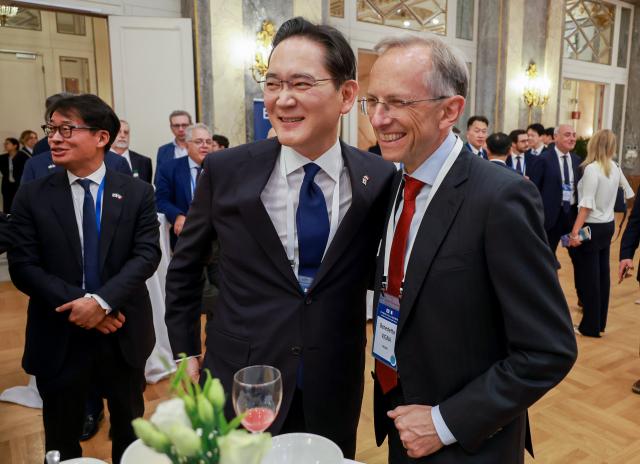
This sector is particularly significant for Lee Jae-Yong, Chairman of Samsung Electronics, who has invested considerable effort into it. In 2016, he identified automotive electronics as Samsung's 'next growth driver' and led the acquisition of Harman for approximately 9.4 trillion won (about $8 billion), the largest overseas merger and acquisition by a South Korean company. Since then, Samsung has expanded collaborations with European automakers like BMW and Mercedes-Benz, and recently visited Italy to discuss automotive business cooperation with Ferrari's management.
As a result, recent achievements from the affiliates are becoming evident. Samsung Electronics recently surpassed Micron to become the global leader in the automotive memory market. The company currently supplies automotive memory to clients including Qualcomm, Bosch, Tesla, and Denso. Last year, it began supplying automotive semiconductors for BMW's electric vehicles, marking its entry into the European market.
Samsung Display has also agreed to exclusively supply four types of automotive OLED displays to the Italian supercar manufacturer Ferrari. Samsung SDI recently signed a large-scale electric vehicle battery supply contract with Mercedes-Benz, securing all three major German automakers—BMW, Audi, and Mercedes-Benz—as clients. Samsung Electro-Mechanics has developed the world's first ultra-high-capacity MLCC products for automotive use, enhancing its technological competitiveness.
The competitiveness of Samsung's automotive business is reflected in Harman's performance. Last year, Harman recorded an operating profit of 1.5 trillion won, achieving its highest-ever results, with total sales reaching a record 15.7833 trillion won. This is more than double the sales of 7.1034 trillion won recorded in 2017, shortly after Samsung's acquisition. It is reported that the automotive sector accounts for more than half of Harman's total revenue. This year, Harman is expected to maintain a growth rate similar to last year, with projections indicating it may surpass Samsung Electronics' TV and home appliance division for the first time.
An industry insider stated, "In the era of future vehicles, companies that possess semiconductors, displays, batteries, and software will hold competitive advantages. Samsung's structure, with all affiliates participating in the automotive business, will enable it to expand collaborations not only in Europe but also with Chinese companies, accelerating its growth further."
* This article has been translated by AI.
Copyright ⓒ Aju Press All rights reserved.