

Journalist

유성혜 기자/ [번역] 이경
dorami@ajunews.com
-
 Bank of Japan Poised to Raise Interest Rates to 1% for First Time in 31 Years The Bank of Japan is increasingly likely to implement an interest rate hike at its monetary policy meeting this month. Rising oil prices due to instability in the Middle East have raised concerns that inflation could spread more broadly. The central bank is considering raising the current policy interest rate from 0.75% to 1.0%. If approved, this would mark the first time Japan's policy interest rate has reached the 1% level since 1995. On June 9, the Nikkei reported that the Bank of Japan plans to decide on the rate hike during its monetary policy meeting scheduled for June 15-16. Governor Kazuo Ueda and other officials are expected to present the proposal, which is anticipated to receive majority support from the nine-member policy board. The Asahi Shimbun also reported the likelihood of the central bank raising the policy rate to 1.0% during the June meeting. The Bank of Japan's inclination toward raising rates stems from concerns that inflationary pressures may be greater than previously anticipated. The central bank believes that rising oil prices, driven by geopolitical tensions, could lead to increased energy costs and higher prices for consumers. The consumer price index (CPI), excluding temporary factors such as government subsidies for electricity and gas, rose 2.8% in April compared to the same month last year, up from a 2.5% increase in March. Additionally, the corporate goods price index rose 4.9% year-on-year in April, marking the highest increase since May 2023. In a speech on June 3, Governor Ueda remarked on the potential impact of Middle Eastern tensions on the economy and prices, stating, "Overall, the risks of upward pressure on prices are greater, and the likelihood of these pressures appearing sooner is also higher." He indicated that if the risks of inflation outweigh those of economic slowdown, there would be a need for thorough discussions on the possibility of a rate hike. Ueda also suggested that the central bank could proceed with a rate increase despite the ongoing "uncertain situation" in the Middle East. Measures to Stabilize the Bond Market However, the Bank of Japan plans to implement measures to stabilize the government bond market while raising interest rates. Typically, an increase in rates leads to a decline in bond prices, prompting the central bank to take steps to prevent excessive drops in bond prices (and rising bond yields). According to the Nikkei, the Bank of Japan is coordinating to halt its current reduction of bond purchases after April 2027. This plan has garnered majority support from policy board members, and the central bank is in discussions with the government. Under the current plan, bond purchases will be reduced by 200 billion yen each quarter from January to March 2027, but it is being considered to maintain monthly bond purchases at 2.1 trillion yen starting in April of that year. This approach aims to raise interest rates to address inflation while simultaneously mitigating shocks to the bond market by pausing the reduction of bond purchases, thereby adjusting the pace of normalization. An increase in the policy rate generally raises short-term interest rates across the financial sector, while a reduction in bond purchases can exert upward pressure on long-term rates in the bond market. If both measures are aggressively pursued, bond yields could rise more rapidly, exacerbating market instability. Since 2013, the Bank of Japan has engaged in large-scale monetary easing, acquiring significant amounts of long-term government bonds. As a result, the central bank's holdings in the bond market reached around 54% at one point in 2023. The Bank has been gradually reducing its bond purchases since August 2024 to restore market functionality, but recent inflation and fiscal expansion concerns have led to a surge in long-term yields, increasing instability in the bond market. In May, the yield on Japan's 10-year government bonds briefly rose to around 2.8%, the highest level in nearly 29 and a half years. Nevertheless, halting the reduction of bond purchases does not mean the Bank of Japan is abandoning its path toward monetary policy normalization. As previously acquired bonds mature, the central bank's bond holdings will continue to decrease. The Bank aims to respond to inflation through interest rate hikes while managing the pace of normalization to avoid exacerbating instability in the bond market. This upcoming meeting will serve as a significant test for the Bank of Japan as it navigates the challenges of a weak yen, rising prices, and instability in the bond market. The yen has recently fallen below the 160 yen per dollar mark for the first time in a month. While a rate hike could help alleviate pressure from a weaker yen and rising import prices, it also poses a burden by increasing mortgage rates for households and borrowing costs for businesses. Conversely, pausing the reduction of bond purchases may stabilize the bond market but could signal a delay in the normalization of monetary policy. Balancing inflation control with bond market stability is becoming increasingly challenging for the Bank of Japan. Additionally, if the Bank of Japan proceeds with a rate hike, tensions with the government of Sanae Takaichi, which is pursuing an expansionary fiscal policy, are likely to arise.* This article has been translated by AI. 2026-06-09 17:57:00
 -
 Middle East Crisis Disrupts Japanese Airlines; ANA and JAL Pursue Code-Share Agreements The ongoing crisis in the Middle East is shaking the global airline industry once again. Disruptions in the Strait of Hormuz have caused a surge in jet fuel prices, leading to projections that global airline profits will drop by nearly half this year compared to last year. In Japan, All Nippon Airways (ANA) and Japan Airlines (JAL) are moving towards code-sharing agreements on low-profit regional routes as a response to rising costs. The Nikkei reported on June 9 that the International Air Transport Association (IATA) forecasts the total net profit for the global airline industry to be $23 billion (approximately 35 trillion won) this year, down from $45 billion last year. After a brief recovery in travel demand following the COVID-19 pandemic, the airline sector now faces a new challenge due to skyrocketing fuel costs stemming from the Middle East crisis. Fuel costs are the primary factor pressuring airline profitability. IATA estimates that total fuel expenses for the airline industry will reach $350 billion this year, a 40% increase from last year, amounting to an additional $100 billion. Typically, fuel costs account for about 25-30% of airline operating expenses. When fuel prices rise sharply, airlines have no choice but to respond with fare increases or capacity reductions; however, it is challenging to pass these costs onto passengers on less popular regional routes. The increase in ticket prices is also directly impacting demand for flights to the Middle East. IATA predicts that air travel demand in the region will decrease by 11% this year, measured in revenue passenger kilometers (RPK). As geopolitical tensions have dampened passenger demand for flights to and from the Middle East, major airlines such as Qatar Airways, which operates out of Doha, are reducing flight frequencies or suspending certain routes. Similarly, Lufthansa and Air India are cutting back on less profitable routes. The Japanese airline industry is not immune to these trends. According to the Nikkei, ANA and JAL are expected to pursue code-sharing agreements for domestic regional routes, particularly those that are difficult to replace with rail services but have low profitability. Discussions about collaboration between the two companies have been ongoing since before the Middle East crisis, but the recent spike in fuel prices has heightened the need for such partnerships. Japan's regional airline routes have already been weakened by declining populations and reduced business travel demand. With fuel costs rising, even major airlines are finding it increasingly difficult to maintain routes independently. This context explains why ANA and JAL are considering code-sharing on certain routes while still remaining competitors. Accelerating Global Restructuring in the Airline Industry This crisis differs from that of the COVID-19 pandemic. During the pandemic, airline demand plummeted, forcing carriers to rely on capital infusions and government support. In contrast, demand for air travel remains relatively strong outside the Middle East. IATA projects that global passenger numbers will increase by 2.4% this year, reaching 5.1 billion. While demand holds steady, the burden of soaring fuel costs is eroding airline profits. In response to these cost pressures, the global airline industry is experiencing accelerated restructuring following the escalation of the Middle East crisis. Larger airlines can benefit from economies of scale in fuel procurement and absorb stable passenger demand. Recently, Lufthansa invested in Italy's ITA Airways, and the merger of Korean Air and Asiana Airlines was confirmed. Additionally, U.S. investment fund Castlelake is reportedly supporting Air France-KLM's acquisition of Scandinavian Airlines (SAS) and is considering a takeover of the British low-cost carrier easyJet. In the U.S., discussions about a merger between United Airlines and American Airlines emerged in April. Historical instances, such as the 2008 merger of Delta Air Lines and Northwest Airlines, show that surging fuel prices have often triggered restructuring in the U.S. airline industry. Conditions for restructuring are also developing in Japan's airline sector. The Ministry of Land, Infrastructure, Transport and Tourism recently lifted restrictions on large airlines investing in medium-sized carriers, lowering the barriers for acquisition and investment proposals for domestic airlines. IATA Director General Willie Walsh noted, "The increase in fuel costs could threaten the very existence of many airlines." As the airline industry emerges from the shock of COVID-19, it now faces the challenge of soaring fuel prices due to the Middle East crisis. With increasing pressures for restructuring in the global airline sector, discussions on code-sharing for regional routes and the restructuring of medium-sized airlines in Japan are likely to gain momentum.* This article has been translated by AI. 2026-06-09 15:03:00
 -
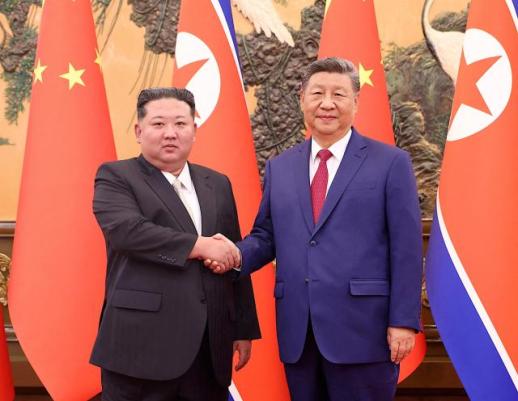 Japanese Media Focuses on Xi Jinping's Visit to North Korea Amid Trump Variables Japanese media are closely examining the complex strategic calculations behind Chinese President Xi Jinping's first visit to North Korea in seven years. As North Korea strengthens its ties with Russia, China is looking to regain influence over the Korean Peninsula, while North Korea aims to assess the potential for renewed dialogue with U.S. President Donald Trump. The Nihon Keizai Shimbun (Nikkei) reported that Xi will visit North Korea on June 8-9 as a state guest to meet with Kim Jong-un. The paper analyzed that North Korea's interest in gauging Trump's stance on the Korean Peninsula coincides with China's desire to assert control over the North Korean nuclear issue. Nikkei noted that each time Xi and Kim have met, the presence of Trump has been a significant factor. Xi's last visit to North Korea was in June 2019, shortly before Trump visited South Korea and held a third summit with Kim at Panmunjom. Nikkei interpreted that North Korea is particularly interested in Trump's views on its nuclear development. In an April press conference, Trump indicated that Kim possesses a significant number of nuclear weapons. While the official U.S. stance remains focused on North Korea's denuclearization, North Korea may view Trump's acknowledgment of its nuclear capabilities as a notable advancement. The ongoing tensions surrounding denuclearization are also a key factor in this meeting. Following a May summit between the U.S. and China, the U.S. announced that both countries reaffirmed their shared goal of North Korean denuclearization, but the Chinese side did not mention denuclearization in its statement. The Asahi Shimbun reported that Xi did not use the term 'denuclearization' in public remarks during last September's North Korea-China meeting or the May U.S.-China summit. Just before Xi's visit, Kim Yo-jong, the deputy director of the Workers' Party, emphasized North Korea's status as a nuclear power, raising questions about whether Xi might act as a bridge between the U.S. and North Korea. From China's perspective, North Korea's growing alignment with Russia poses a challenge. Following Russia's invasion of Ukraine, North Korea has reportedly received military and technical support from Russia in exchange for weapons and troops. Nikkei analyzed that China values stability on the Korean Peninsula but does not want to see Russia's influence over North Korea increase through military cooperation. There is also a calculation to take the lead on the nuclear issue and use it as leverage in negotiations with Trump. Asahi Shimbun echoed concerns that China is wary of North Korea's tilt toward Russia and may seek to strengthen economic support to keep North Korea within its sphere of influence. Will China Use North Korea to Access the East Sea? The Yomiuri Shimbun suggested that discussions during this meeting may include securing a maritime route for Chinese vessels to access the East Sea via the Tumen River. The lower Tumen River, about 15 kilometers long, runs between Russian and North Korean territory, making it difficult for Chinese ships to navigate freely into the East Sea. In China, the right to access the East Sea is referred to as 'chuhaiquan,' and there are hopes to connect this with development in northeastern Jilin Province. Yomiuri reported that if China can operate small military vessels through this route, it could gain military and security advantages aimed at South Korea and Japan. If Xi secures North Korea's consent during this visit, it could be seen as a diplomatic success for China and potentially lead to practical trilateral discussions among North Korea, China, and Russia. However, Yomiuri noted that the bridges over the Tumen River are only about 10 meters above the water, posing challenges for larger Chinese vessels. On the civilian front, signs of recovery and limitations are mixed. According to Asahi Shimbun, trade between North Korea and China from January to April this year reached approximately $990 million, about 30% higher than the same period in 2019, and the international train service between Beijing and Pyongyang resumed in March after nearly six years. However, exchanges involving workers and tourism have not returned to previous levels. Asahi reported that Russia's offers of wages approximately double those in China have led to a trend of North Korean workers being prioritized for placement in Russia, resulting in labor shortages in North Korean restaurants and factories in northeastern China. A North Korean restaurant in Shenyang, which had over ten female workers before the COVID-19 pandemic, now has only four, and performances have reportedly been suspended due to the lack of staff. The critical question of this meeting is whether China will treat North Korea as a de facto nuclear power. Asahi warned that if China does not clearly pressure for denuclearization, North Korea may accelerate its nuclear and missile development, potentially worsening the security environment for South Korea and Japan. Ahead of his visit, Xi published an article in the Rodong Sinmun advocating opposition to the 'revival of militarism,' which Asahi interpreted as a message aimed at Japan. The South Korean government, which is promoting dialogue between the two Koreas, is also closely monitoring the outcomes of this meeting.* This article has been translated by AI. 2026-06-08 13:57:00
 -
 Japan's Population Decline Reaches Major Cities as Birth Rate Hits Record Low Japan's population decline is now affecting not only rural areas but also major metropolitan regions. Yokohama, the largest city in Kanagawa Prefecture, has recorded its first population decrease since World War II, with Kanagawa, Chiba, and Saitama also experiencing declines. Last year, the total fertility rate fell to a historic low of 1.14. Even the metropolitan areas, which had absorbed population outflows from rural regions, can no longer compensate for the decline in births and the natural decrease due to aging. According to preliminary data from the Ministry of Internal Affairs and Communications based on the 2025 national census, Japan's total population was 123,049,524 as of October 1 last year, a decrease of 3,096,575 (2.5%) from five years earlier, marking the largest decline on record. The only areas that saw population growth were Tokyo and Okinawa. The Asahi Shimbun reported that 45 of Japan's 47 prefectures experienced population declines, indicating that this trend has become structural and is accelerating. Notably, changes in the metropolitan area are striking. The Yomiuri Shimbun pointed out that “the wave of population decline has reached the Tokyo area.” Despite maintaining a net increase in population due to more people moving in than out, the natural decrease in Kanagawa, Chiba, and Saitama has led to an overall population drop. Tokyo's population increased to 14,246,219, but the growth rate has significantly slowed from 532,000 five years ago to just 199,000. A symbolic case is Yokohama. According to the Nihon Keizai Shimbun (Nikkei), Yokohama's population is now 3,754,840, a decrease of 22,651 from five years ago, marking the first decline since the post-war period. The number of deaths (80,858) exceeded the number of births, despite a net migration gain of 74,320. Yokohama, which has grown as a residential city for Tokyo, is also facing aging issues. Among the 20 designated cities, 13, including Hiroshima, Kyoto, and Kobe, have also seen population declines. The speed of population decline is confirmed by demographic statistics. The Ministry of Health, Labour and Welfare reported on June 3 that the total fertility rate has dropped for ten consecutive years to 1.14, setting a new record low. The number of births in Japan was 671,236, the lowest since records began. The National Institute of Population and Social Security Research had projected a fertility rate of 1.25 for 2023, but the actual figure is closer to the pessimistic low estimate of 1.10. The point at which the number of births falls below 680,000 is now expected to occur in 2040, but this milestone has arrived 15 years earlier than anticipated. Even within the concentration of population in Tokyo, trends are mixed. While the overall population of the 23 wards has increased, the three wards of Chiyoda, Shibuya, and Meguro, which have high living costs, have seen declines. The Nikkei suggested that rising housing costs may have pushed families with children out of the city center. Conversely, the central area where the Harumi Flag residential complex was built for the Tokyo Olympics has seen a 7.53% increase, the highest in years. The population decline is also impacting public utility costs. According to the Yomiuri Shimbun, Yokosuka City in Kanagawa Prefecture, which experienced the 11th largest population decline (23,100), plans to raise water and sewage fees starting in October due to decreased revenue. Even with fewer users, maintaining facilities remains costly. The burden of social security is also increasing. Takuya Hoshino, chief economist at Dai-ichi Life Research Institute, estimates that the social security costs borne by each working individual will rise by about 20%, from 2.07 million yen in 2025 to 2.48 million yen in 2050. Even with more women and elderly people in the workforce, there are limits to preventing the decline in the working-age population. Hiroya Masuda, a senior advisor at Nomura Research Institute, told the Nikkei, “Japan has entered a period where the population will decline by one million each year,” predicting that the total population will fall to the 110 million range by the 2030 national census. He emphasized that merely encouraging childbirth or attracting businesses will not suffice; Japan must restructure its administration, urban planning, infrastructure, and social security systems to adapt to the shrinking population.* This article has been translated by AI. 2026-06-08 11:48:00
 -
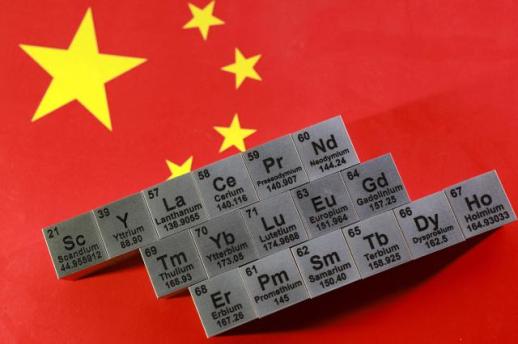 China's Rare Earth Exports to Japan Plummet by Over 80% China's tightening of export controls on rare earth elements has raised alarms for Japan's critical supply chains. As securing materials essential for electric vehicles (EVs), advanced electronics, and semiconductor equipment becomes increasingly difficult, Japanese companies are accelerating efforts to diversify their sources, turning to Australia and India. According to an analysis by the Nikkei, China's customs trade statistics revealed that exports of seven rare earth elements targeted by export restrictions dropped by 88% in March and 82% in April compared to the same months last year. Cumulatively, exports from January to April fell by 34% year-on-year. Notably, the decline in March and April significantly exceeded the 42% drop observed immediately after China implemented export restrictions on these elements in May of the previous year. The Chinese government introduced export regulations on Dysprosium, Terbium, and five other rare earth elements in April 2022. Since January of this year, it has intensified scrutiny on exports to Japan under the guise of dual-use items that can be utilized for both military and civilian purposes. The Nikkei noted that the deterioration of Sino-Japanese relations following comments made by Japanese Prime Minister Sanae Takaichi in November 2022 regarding Taiwan has likely influenced these developments. With China accounting for approximately 70% of global rare earth production, it appears to be leveraging this dominance to exert economic pressure on Japan. An official from the Japan-China Economic Association reported that during a Sino-Japanese summit in October 2022, China had temporarily eased some export restrictions. However, the official added, "Since the beginning of this year, government-to-government exchanges have ceased, leading to a complete halt in exports to Japan that had been temporarily sustained." In terms of specific items, there have been no exports of Dysprosium and Terbium to Japan since January. These elements are crucial for high-performance magnets used in EV motors and enhance the heat resistance of magnets. Although exports remained unstable after the introduction of China's export regulations in April 2022, there were signs of recovery toward the end of last year amid easing U.S.-China tensions. However, with the cooling of Sino-Japanese relations this year, exports to Japan have effectively ceased. Yttrium, used in medical devices, semiconductor manufacturing equipment, and aerospace applications, has also faced significant impacts. From January to April this year, China's exports of yttrium to Japan plummeted by over 90% compared to the same period last year. Yttrium is a material used in laser-related equipment and is difficult to replace in the short term. Exports of high-performance magnets that utilize rare earths are also facing disruptions. A representative from a Japanese company told the Nikkei, "Export permits for high-performance magnets containing Dysprosium and other elements are hardly being issued." China is known to dominate over 90% of the global market for subsequent processes such as rare earth separation, refining, and alloy processing. In response to the reduced reliance on China, Japanese companies are seeking alternative sources. JX Metals is investing in Australian mines rich in rare earth deposits. Proterial (formerly Hitachi Metals) is considering building a neodymium magnet factory in India that does not use heavy rare earths. Australia ranks third globally in rare earth production, while India is sixth. Mitsubishi Materials has decided to invest in a U.S. company specializing in rare earth recycling technology. However, establishing a supply chain to replace China in the short term is challenging. An executive from a major Japanese manufacturing firm expressed concern, stating, "If the current situation continues, it could disrupt production in Japan, potentially leading to factory shutdowns." Some companies have begun assembling motors and electronic components that use rare earth magnets in China before importing them to Japan. The Japanese government is monitoring the possibility that companies may shift production bases to China to avoid procurement difficulties. In 2010, during a period of heightened tensions over the Senkaku Islands, China temporarily halted rare earth exports to Japan, which subsequently led to an increase in local production by Japanese magnet companies and enhanced the technological capabilities and market influence of Chinese firms.* This article has been translated by AI. 2026-06-08 11:18:00
 -
 Japan's National Cancer Center Recommends Abstaining from Alcohol to Prevent Cancer Japan's National Cancer Center has strengthened its alcohol consumption guidelines in its cancer prevention recommendations, shifting from advising moderation to recommending complete abstinence. This change reflects accumulating research indicating that even small amounts of alcohol can increase the risk of developing cancer. According to the Yomiuri Shimbun, the National Cancer Center announced on June 3 that it has released an updated version of its booklet titled "5+1 Cancer Prevention Methods Based on Scientific Evidence." This booklet presents lifestyle habits that can reduce cancer risk, based on research conducted on the Japanese population. The most notable change in this revision is the alcohol consumption guideline. Previously, the center recommended moderation for drinkers, but the latest edition now advises against drinking altogether. The center's analysis of studies on Japanese individuals confirms that alcohol consumption significantly increases the risk of esophageal, liver, colorectal, and head and neck cancers, and it also establishes a strong link between alcohol and stomach cancer in men and breast cancer in premenopausal women. The research team explained that for certain cancers, the risk increases progressively with higher alcohol intake, and there is no safe level of drinking. Therefore, from a cancer prevention perspective, abstaining from alcohol is deemed the most advisable approach. The guidelines regarding body weight have also been adjusted. The National Cancer Center has lowered the recommended upper limit for body mass index (BMI) for men from 27 to 25, reflecting the increased cancer risk associated with higher BMI. Both men and women are now advised to maintain a BMI in the range of 21 to 25. However, the center also noted that being excessively underweight can increase cancer risk, emphasizing the importance of maintaining a healthy weight. The updated booklet is structured around five lifestyle habits, plus an additional focus on infection prevention, termed the "5+1" approach. Recommendations include not smoking or being exposed to secondhand smoke, reducing salt intake while increasing consumption of vegetables and fruits, allowing hot foods and beverages to cool before consumption, and increasing physical activity in daily life. It also includes guidelines for screenings and vaccinations to combat cancer-causing pathogens. Given Japan's deep-rooted culture of workplace drinking and social drinking, these recommendations are seen as a call for a broader change in lifestyle habits. The National Cancer Center has made it clear that, contrary to the common belief that "a little drinking is fine," the best approach to cancer prevention is to avoid alcohol altogether.* This article has been translated by AI. 2026-06-05 17:33:00
 -
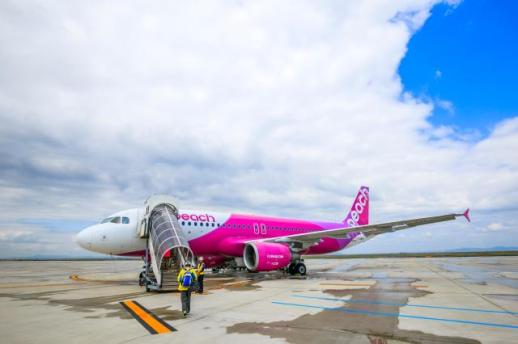 Japan's Low-Cost Airlines Struggle Amid Inflation Japan's low-cost carriers (LCCs) are facing challenges as their growth model falters amid rising inflation. The low-cost model, which thrived on deflation, low labor costs, and cheap operational expenses, is struggling as fuel, labor, and maintenance costs increase. Major airlines like All Nippon Airways (ANA) and Japan Airlines (JAL) are also lowering fares to fill empty seats, diminishing the price competitiveness that LCCs once enjoyed. According to a report by Nikkei Business, a publication under the Nihon Keizai Shimbun, the fare gap between major airlines and LCCs has decreased from 2.68 times in 2012 to less than 2 times by 2024. In 2012, when LCCs began to establish themselves in Japan, they were perceived as significantly cheaper than ANA and JAL. Analyzing passenger revenue data from the Ministry of Land, Infrastructure, Transport and Tourism, Nikkei Business found that the revenue per passenger kilometer for ANA and JAL dropped from 17.8 yen in 2012 to 17.0 yen in 2024. In contrast, Peach Aviation and Jetstar Japan saw their revenue rise from 6.6 yen to 8.7 yen during the same period. This indicates that LCC fares, which were about 40% of ANA and JAL's in 2012, have now surpassed half of their fares by 2024. The narrowing fare gap suggests that LCCs are losing their primary competitive advantage of offering value for money. A representative from Japan's Ministry of Land, Infrastructure, Transport and Tourism noted that even major airlines in the U.S. are adopting LCC-style services, such as Delta Air Lines introducing non-seat-assigned low-cost tickets, indicating that LCCs are at a turning point. Changes at Peach Aviation, Japan's First LCC Peach Aviation, a leading LCC in Japan, is also adapting to this trend. Launched in March 2012 as Japan's first full-scale LCC, Peach was seen as a pioneer in the industry. It attracted younger travelers with low fares and a distinctive branding strategy, achieving its first operating profit in March 2014. As of March 1 this year, Peach operates 25 domestic and 15 international routes, serving over 9 million passengers annually. However, as reliance on its low-cost image becomes less viable, Peach is shifting its strategy to broaden its customer base. In late March, the airline announced a rebranding, changing its bright pink logo to a more subdued beige to appeal to middle-aged customers. This move aims to expand its reach beyond the young female demographic that initially fueled its growth. Additionally, Peach became a wholly-owned subsidiary of ANA Holdings in December 2024. This change in status is reflected in its operational strategies and role within the group. Initially, Peach operated with a degree of separation from ANA to establish the LCC model in Japan. However, there is now a clear trend of collaboration between the major airline and LCC in sharing routes and customer segments. For instance, ANA recently suspended operations on four routes from Kansai Airport to Naha, Miyako, Ishigaki, and New Chitose, while Peach increased flights on the Naha and New Chitose routes. This indicates a shift where less profitable routes are being assigned to LCCs within the group. The changing dynamics are partly due to declining profitability for major airlines on domestic routes. ANA and JAL explained in a May meeting with Ministry of Land, Infrastructure, Transport and Tourism experts that without government support, their domestic operations would be unprofitable. Rising fuel, labor, and maintenance costs, coupled with a shrinking population making it difficult to expand domestic demand, have exacerbated the situation. ANA acknowledged that the internal compensation structure, which relied on profits from major routes to sustain regional services, has reached its limits. The evolution of the LCC model reflects Japan's economic shift from deflation to inflation. Companies that have thrived on low labor and operational costs are increasingly struggling to absorb rising expenses. The domestic airline market faces additional pressures from rising fuel prices due to geopolitical instability in the Middle East, further increasing the cost burden on airlines. Ultimately, LCCs are entering a phase where relying solely on low fares for growth is becoming unsustainable. The future competitiveness of these airlines will depend on whether they can raise fares in line with major airlines while enhancing service value or maintain low fares while developing a profitable structure. As inflation persists, a strategic reassessment of the low-cost business model in Japan will become inevitable.* This article has been translated by AI. 2026-06-05 16:15:00
 -
 Yen Exchange Rate Hits 160 Yen per Dollar as Japan's Intervention Effects Fade The Japanese yen has risen to around 160 yen per dollar, indicating a decline in its value, as the effects of the Japanese government's large-scale yen-buying intervention at the end of April have faded within a month. Amid ongoing tensions in the Middle East, rising oil prices, and expectations of interest rate hikes in the U.S., the market is now focused on the possibility of further intervention by Japanese authorities and the pace of additional tightening by the Bank of Japan (BOJ). The Nihon Keizai Shimbun reported on June 3 that the yen's exchange rate had climbed to approximately 160.09 yen per dollar in European and U.S. foreign exchange markets. The yen's value is nearing the 160.72 yen recorded just before the Japanese government and the BOJ intervened to buy yen and sell dollars on April 30. From the end of April to the end of May, the scale of Japan's foreign exchange market intervention reached 11.7349 trillion yen (about $112.45 billion). The renewed weakness of the yen is attributed to the strength of the dollar. With no significant progress in negotiations to end hostilities between the U.S. and Iran, there has been a growing trend in the foreign exchange market to purchase the safe-haven dollar. Concerns about renewed inflation in the U.S. due to rising oil prices, combined with the resilience of the U.S. economy, have fueled speculation about interest rate hikes by the Federal Reserve, further encouraging the sale of yen and purchase of dollars. The BOJ has hinted at the possibility of interest rate hikes to counter the yen's weakness, but market reactions have been limited. BOJ Governor Kazuo Ueda stated in a speech on June 3 that if inflationary pressures increase, it would be necessary to closely discuss the possibility of a rate hike at the monetary policy meeting on June 15-16. Following his remarks, the market nearly accepted a June rate hike as a certainty, and the yen briefly rose to the low 159 yen range against the dollar. However, the buying momentum for the yen did not last long, and the exchange rate quickly returned to levels seen before the speech. Outlook for Continued Yen Weakness Market analysts believe that even if the BOJ raises interest rates at the June meeting, it will be difficult to reverse the trend of yen weakness. Mari Iwashita, a rate strategist at Nomura Securities, stated, "One rate hike will not change the trend of yen weakness," noting that market attention is shifting to the timing of the next rate increase. The current policy interest rate set by the BOJ is 0.75%. The BOJ estimates the neutral interest rate to be around 1.1% to 2.5%, and the speed at which rates are raised toward the midpoint of this range, around 1.8%, is seen as a key factor influencing the yen's trajectory. The BOJ's inability to signal a strong tightening response to market demands is also contributing to the yen's weakness. The Nikkei reported that, according to Asian hedge fund managers, Ueda's remarks reflect the cautious nature of the BOJ, suggesting that he may be mindful of the Takaiichi Sanae administration's preference for monetary easing. The perception that the BOJ has consistently lagged in responding to inflation has already spread abroad, making it difficult for mere indications of potential rate hikes to serve as a catalyst for yen appreciation. Among foreign investors, there is also a lack of enthusiasm for actively buying yen. According to the Nikkei, Bank of America (BofA) raised its medium-term outlook for the yen from "weak" to "neutral" in mid-May, projecting an exchange rate of 152 yen per dollar by the end of 2026, a decrease of 5 yen from previous estimates (indicating a stronger yen). The median forecast from about 40 securities firms compiled by LSEG in the UK also suggests that the yen will strengthen to around 154 yen per dollar by the end of 2026. However, the Nikkei noted that investors view yen purchases as a "trap of undervaluation." Alres Kutni from Vanguard Asset Management predicted that even if the BOJ raises rates this month, it will only do so once every six months, and the yen could fall to 170 yen per dollar. Ironically, the possibility of renewed intervention by Japanese authorities is also fueling yen weakness. While speculation about intervention makes it difficult for traders to openly sell yen, Japanese importers and long-term investors in overseas stocks are unable to wait for a rebound in the yen and are preemptively buying dollars. In a low volatility environment, yen carry trades, which aim to profit from interest rate differentials, are also likely to expand. The trend of borrowing low-interest yen to invest in high-interest currencies or risk assets is increasing pressure on the yen's value. According to the Commodity Futures Trading Commission (CFTC), as of May 26, the net short position in yen held by non-commercial traders classified as speculators reached 114,667 contracts. In yen terms, this amounts to approximately 1.4 trillion yen, exceeding the roughly 100,000 contracts seen before the intervention and reaching the highest level since July 2024. The yen's weakness is deepening the BOJ's concerns about inflation. The consumer price index for April, calculated by the BOJ after removing the effects of government subsidies and tax cuts, rose by 2.8% compared to the same month last year. Although the official inflation rate has slowed, this indicates that inflationary pressures are actually strengthening when excluding the effects of energy subsidies and free education policies. If the yen's weakness leads to rising import prices, the BOJ may face even stronger tightening pressures. Prime Minister Takaiichi Sanae also stated on June 3 during a meeting of the House of Councillors that the government would respond appropriately to fluctuations in the exchange rate as needed. The market is once again viewing the 160 yen per dollar level as a threshold for assessing the likelihood of renewed intervention by Japanese authorities. However, with the simultaneous pressures of a strong dollar, the U.S.-Japan interest rate differential, and rising oil prices, there is a strong belief that intervention alone will not be sufficient to change the trend. The Nikkei quoted a foreign exchange dealer as saying, "Unless the BOJ acknowledges that its policy response has lagged and shows a willingness to accelerate the pace of rate hikes, it will be difficult to expect yen appreciation." The yen's return to the 160 yen level within a month indicates that Japanese authorities are once again facing the challenge of managing exchange rates, inflation, and interest rates simultaneously.* This article has been translated by AI. 2026-06-04 16:36:00
 -
 Japan's Top Products of 2026: Geopolitical Tensions and Pokémon Drive Consumer Trends This year, the key themes shaping Japan's consumer market have been high prices and value for money. As rising costs for crude oil and naphtha have driven up packaging prices, consumers have increasingly turned to products and services that offer satisfaction at lower costs. On June 3, the Nihon Keizai Shimbun (Nikkei) reported that the top products in its 2026 first-half Nikkei MJ Hit Product rankings included the 'Hormuz Shock' and the '30th Anniversary of Pokémon.' This ranking evaluates products and phenomena that have generated significant buzz and impact in the consumer market during the first half of the year, using a format inspired by Japan's sumo rankings. It is unusual for a geopolitical risk to rank among the top products. The instability in the Middle East has penetrated daily consumption in Japan, particularly as Iran effectively blocked the Strait of Hormuz, raising concerns over the supply of crude oil and naphtha. Naphtha is a key ingredient in plastics, packaging materials, and printing inks, and the supply issues have led to increased packaging costs. For instance, Japanese snack company Calbee has changed the packaging of its flagship products, including potato chips, from color to black and white. The supply chain shock originating from the Middle East has affected not just oil prices but even the color of snack bags. As inflationary pressures continue, consumers have become more defensive in their spending. The Nikkei noted that many of the hit products in the first half of the year were those that offered high satisfaction relative to their price. Apple's MacBook Neo, priced below 100,000 yen, garnered attention, while the Italian restaurant chain Saizeriya's 'Morning Saizeriya,' which offers breakfast menus with drinks starting at around 300 yen, also attracted interest. The 30th Anniversary of Pokémon refers not to a single product but to a wave of Pokémon-related excitement, including new games and commemorative merchandise. Since the release of its first game in 1996, Pokémon has become a long-lasting franchise, appealing to generations of players who now share the experience with their children. The new game 'Poco a Pokémon' for the Nintendo Switch 2 sold 4 million copies within five weeks of its March release, demonstrating Pokémon's enduring popularity. Affordable sports events have also gained popularity, allowing consumers to enjoy moments of joy without spending much. At the February Milan-Cortina Winter Olympics, the figure skating pair Riku Miura and Ryuichi Kihara made history as the first Japanese team to win a gold medal. In boxing, the match between undefeated fighters Naoya Inoue and Junto Nakathani attracted around 1 million views on paid online streaming. The Nikkei observed a trend where consumers are gravitating toward products that offer high satisfaction relative to their price amid ongoing high inflation. The inclusion of affordable dining, budget laptops, new games, and sports broadcasts among the hit products reflects a desire among Japanese consumers to find enjoyment while managing their spending burdens.* This article has been translated by AI. 2026-06-04 09:57:00
 -
 Kioxia Targets AI Server Market with Advanced NAND Technology Japanese semiconductor memory company Kioxia Holdings is making a push into the NAND flash market for artificial intelligence (AI) servers. Although it lags behind competitors like Samsung Electronics and SK Hynix in terms of memory cell stacking, Kioxia aims to compete on read and write speeds by leveraging its unique technology that separates memory cells from control circuits before combining them. According to the Nihon Keizai Shimbun (Nikkei), Kioxia is seeing improved performance driven by increased demand for memory in data centers, with its early adoption of substrate bonding technology leading to a rise in orders. During an investor briefing, Kioxia announced it would begin shipping samples of its next-generation NAND flash, referred to as the '10th generation,' this summer, with plans to increase the share of its enterprise sales, including data centers, to over 60% of total revenue. Atsushi Inoue, Kioxia's executive officer, stated, "We are achieving industry-leading performance and receiving high praise from many customers." NAND flash is a type of memory semiconductor used for long-term data storage, and the key to technological competition has traditionally been how many memory cells can be stacked. Kioxia's predecessor, Toshiba, pioneered vertical stacking technology in 2007, but it has recently been perceived as falling behind in the stacking race. Kioxia announced in 2023 that it successfully developed 218-layer NAND, but the gap became more pronounced when SK Hynix revealed products exceeding 300 layers in the same year. Kioxia's flagship products remain at 218 layers. The breakthrough for Kioxia is its CBA technology. While conventional NAND combines memory cells and control circuits on a single silicon wafer, CBA creates each on separate wafers and then precisely bonds them together. This process allows for more efficient use of wafer space and increases NAND storage density. However, the process is complex, requiring near-perfect alignment of the two wafers and precise connections between the upper and lower layer circuits. Kioxia was the first to commercialize this technology. Kazuyoshi Saito, a senior analyst at Daiwa Securities, noted that Kioxia's NAND is 20-30% faster in read and write speeds compared to its competitors. Initially, the reception was not entirely positive. When Kioxia announced CBA at the end of 2023, some in the industry viewed increasing stacking as the straightforward approach, arguing that CBA was unnecessarily complicated. However, as demand for NAND capable of quickly processing large amounts of data in AI servers grew, CBA began to gain attention for its speed advantages. Moreover, competitors like Samsung and SK Hynix focused their investments on DRAM, which saw a surge in demand during the early AI boom, creating an opportunity for Kioxia, which has concentrated on NAND research and development, to differentiate itself in the AI server storage market. Nevertheless, increasing market share will not be easy. According to Taiwanese research firm TrendForce, Kioxia held a 13.9% share of NAND sales by value from January to March this year, ranking third. Samsung led with a significant gap at 31.6%, while Micron and SanDisk also reached similar levels as Kioxia at 13.9%. Kioxia's customer base in data centers is relatively weak, and the impact of NAND price increases appears to have been reflected later than for its competitors. Given that Samsung and SK Hynix have secured long-term contracts with major customers based on their supply capabilities, it will be challenging for Kioxia to significantly boost its market share in the short term. Nonetheless, Nikkei views the shift in focus from stacking to processing speed in NAND competition, driven by the expansion of AI servers, as an opportunity. Analysts suggest that Kioxia's ability to secure data center customers with its CBA technology will be crucial for expanding its market share.* This article has been translated by AI. 2026-06-04 08:45:00