

The Bank of Japan is increasingly likely to implement an interest rate hike at its monetary policy meeting this month. Rising oil prices due to instability in the Middle East have raised concerns that inflation could spread more broadly. The central bank is considering raising the current policy interest rate from 0.75% to 1.0%. If approved, this would mark the first time Japan's policy interest rate has reached the 1% level since 1995.
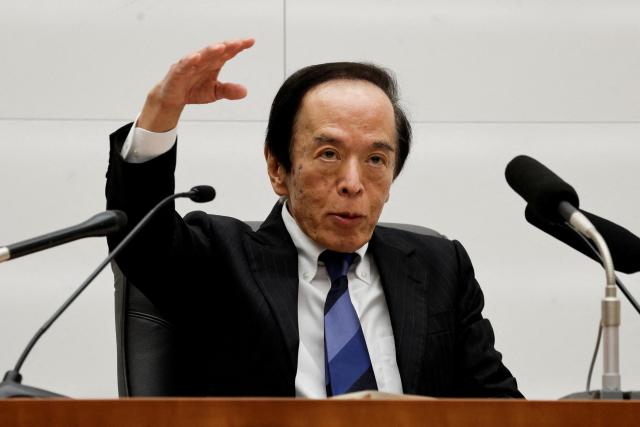
On June 9, the Nikkei reported that the Bank of Japan plans to decide on the rate hike during its monetary policy meeting scheduled for June 15-16. Governor Kazuo Ueda and other officials are expected to present the proposal, which is anticipated to receive majority support from the nine-member policy board. The Asahi Shimbun also reported the likelihood of the central bank raising the policy rate to 1.0% during the June meeting.
The Bank of Japan's inclination toward raising rates stems from concerns that inflationary pressures may be greater than previously anticipated. The central bank believes that rising oil prices, driven by geopolitical tensions, could lead to increased energy costs and higher prices for consumers. The consumer price index (CPI), excluding temporary factors such as government subsidies for electricity and gas, rose 2.8% in April compared to the same month last year, up from a 2.5% increase in March. Additionally, the corporate goods price index rose 4.9% year-on-year in April, marking the highest increase since May 2023.
In a speech on June 3, Governor Ueda remarked on the potential impact of Middle Eastern tensions on the economy and prices, stating, "Overall, the risks of upward pressure on prices are greater, and the likelihood of these pressures appearing sooner is also higher." He indicated that if the risks of inflation outweigh those of economic slowdown, there would be a need for thorough discussions on the possibility of a rate hike. Ueda also suggested that the central bank could proceed with a rate increase despite the ongoing "uncertain situation" in the Middle East.
However, the Bank of Japan plans to implement measures to stabilize the government bond market while raising interest rates. Typically, an increase in rates leads to a decline in bond prices, prompting the central bank to take steps to prevent excessive drops in bond prices (and rising bond yields).
According to the Nikkei, the Bank of Japan is coordinating to halt its current reduction of bond purchases after April 2027. This plan has garnered majority support from policy board members, and the central bank is in discussions with the government. Under the current plan, bond purchases will be reduced by 200 billion yen each quarter from January to March 2027, but it is being considered to maintain monthly bond purchases at 2.1 trillion yen starting in April of that year.
This approach aims to raise interest rates to address inflation while simultaneously mitigating shocks to the bond market by pausing the reduction of bond purchases, thereby adjusting the pace of normalization. An increase in the policy rate generally raises short-term interest rates across the financial sector, while a reduction in bond purchases can exert upward pressure on long-term rates in the bond market. If both measures are aggressively pursued, bond yields could rise more rapidly, exacerbating market instability.
Since 2013, the Bank of Japan has engaged in large-scale monetary easing, acquiring significant amounts of long-term government bonds. As a result, the central bank's holdings in the bond market reached around 54% at one point in 2023. The Bank has been gradually reducing its bond purchases since August 2024 to restore market functionality, but recent inflation and fiscal expansion concerns have led to a surge in long-term yields, increasing instability in the bond market. In May, the yield on Japan's 10-year government bonds briefly rose to around 2.8%, the highest level in nearly 29 and a half years.
Nevertheless, halting the reduction of bond purchases does not mean the Bank of Japan is abandoning its path toward monetary policy normalization. As previously acquired bonds mature, the central bank's bond holdings will continue to decrease. The Bank aims to respond to inflation through interest rate hikes while managing the pace of normalization to avoid exacerbating instability in the bond market.
This upcoming meeting will serve as a significant test for the Bank of Japan as it navigates the challenges of a weak yen, rising prices, and instability in the bond market. The yen has recently fallen below the 160 yen per dollar mark for the first time in a month. While a rate hike could help alleviate pressure from a weaker yen and rising import prices, it also poses a burden by increasing mortgage rates for households and borrowing costs for businesses. Conversely, pausing the reduction of bond purchases may stabilize the bond market but could signal a delay in the normalization of monetary policy. Balancing inflation control with bond market stability is becoming increasingly challenging for the Bank of Japan.
Additionally, if the Bank of Japan proceeds with a rate hike, tensions with the government of Sanae Takaichi, which is pursuing an expansionary fiscal policy, are likely to arise.
* This article has been translated by AI.

Copyright ⓒ Aju Press All rights reserved.