
Journalist

키우치 사토루 기자/ [번역] 이경
dorami@ajunews.com
-
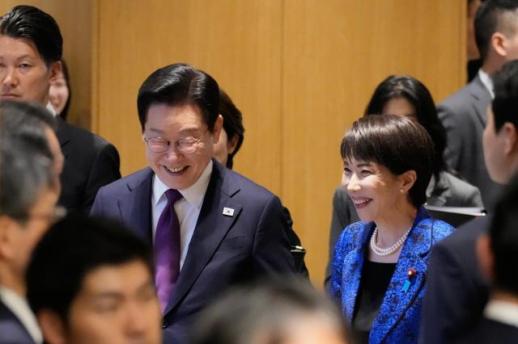 South Korea and Japan Discuss Mutual Oil Supply Cooperation at Summit South Korean President Lee Jae-myung and Japanese Prime Minister Sanae Takaichi are expected to discuss energy security and supply chain cooperation as key agenda items during their summit in Andong, South Korea, on May 19. Amid growing concerns over oil and petroleum product supply disruptions due to escalating tensions in the Middle East, the two leaders are reportedly considering measures for mutual supply of aviation fuel and other petroleum products in emergencies. To facilitate this, both governments and energy sectors are working on establishing a consultative body and coordinating the creation of a new dialogue on industrial and trade policies between the two nations. According to the Yomiuri Shimbun, the two governments are finalizing a joint document to be announced during the summit, which will outline cooperation on energy security. This document is likely to be released in the form of a "joint press release," focusing on strategies to enhance energy security and supply chain resilience. The Yomiuri Shimbun noted that since both countries rely heavily on the Middle East for crude oil imports, they are discussing plans to supply each other with oil and aviation fuel during crises. This initiative aims to establish a preemptive supply cooperation system. The report also highlighted that approximately 10% of South Korea's fuel oil exports go to Japan, leading to discussions on avoiding unnecessary export restrictions during emergencies. A Japanese government official stated, "It is important to avoid unnecessary export regulations even in crisis situations," according to the Yomiuri Shimbun. Cooperation in the liquefied natural gas (LNG) sector is also expected to be included in the joint document. Japan is the world's second-largest LNG importer, while South Korea ranks third. The two countries plan to discuss measures for supply chain stability and volume support during emergencies, addressing concerns over rising prices and transportation route uncertainties due to prolonged tensions in the Middle East. Additionally, the Nikkei reported that the two leaders are likely to agree on establishing a cooperative framework for crude oil procurement and stockpiling. There are also discussions about utilizing Japan's recently proposed $10 billion energy financing initiative, "Power Asia," to support energy security in Southeast Asian countries, aiming to stabilize regional supply chains and enhance the presence of both nations. New government channels will also be established to further specify energy cooperation plans. The Yomiuri Shimbun reported that a new "industrial and trade policy dialogue" involving senior officials from Japan's Ministry of Economy, Trade and Industry and South Korea's Ministry of Trade, Industry and Energy is set to be created. This dialogue is expected to cover a wide range of topics, including petroleum products, LNG, crude oil procurement, transportation, and supply chain enhancement. Security Issues, Including U.S.-China Relations, Also on the Agenda In addition to energy issues, the two leaders are expected to exchange views on U.S.-China relations and the security environment in East Asia. The Nikkei reported that they are likely to share insights from the recent meeting between U.S. President Donald Trump and Chinese President Xi Jinping held on May 14-15 in Beijing. Following the U.S.-China summit, both leaders had phone calls with President Trump to discuss the meeting's outcomes. Concerns have been raised that the deterioration of the situation in the Middle East could weaken U.S. engagement in Asia, and the implications of U.S.-China rapprochement on East Asian security are also seen as a backdrop for South Korea-Japan cooperation. However, there remain differences in defense cooperation. The Asahi Shimbun reported that during the first South Korea-Japan diplomatic and defense vice-ministerial meeting, known as the 2+2 meeting, held on May 7, Japan proposed signing a reciprocal logistics support agreement (ACSA) to facilitate fuel and supplies between the Self-Defense Forces and the South Korean military. However, South Korea expressed reservations, citing historical experiences of colonial rule that have led to significant domestic opposition to expanding cooperation with Japan's Self-Defense Forces. On the other hand, some defense exchanges are being restored. The Asahi reported that the Japan Maritime Self-Defense Force and the South Korean Navy are set to resume joint search and rescue exercises (SAREX) in early June for the first time since 2017. This development is seen in Japan as a sign of recovery in South Korea-Japan defense cooperation, which had cooled due to radar targeting issues in 2018. The upcoming summit appears to focus more on broadening practical cooperation in energy, supply chains, and security rather than resolving major issues in one fell swoop. As tensions in the Middle East and the potential for U.S.-China rapprochement grow, both South Korea and Japan are moving to manage the remaining differences in historical issues and security cooperation while expanding a framework centered on practical collaboration.* This article has been translated by AI. 2026-05-19 10:15:10
 -
 Japan's Defense Industry Sees Investor Interest Amid Market Changes Despite no factory expansions or major arms export contracts yet, the market is reacting. Mitsubishi Electric has emerged as one of the standout stocks in Japan's spring market, with its share price climbing to record highs since late March. Investors are drawn to the company due to its air defense and space technologies, particularly in light of U.S. President Donald Trump's plans for a next-generation air defense system, the "Iron Dome," and Japan's efforts to enhance its air defense capabilities. Investors are betting not on the current state of Japan's defense industry, but on future prospects fueled by increased defense spending, the lifting of export restrictions, and rising global military expenditures. According to the Stockholm International Peace Research Institute (SIPRI), global military spending is projected to reach a record $2.887 trillion in 2025, a 2.9% increase from the previous year. As geopolitical risks grow, demand for defense equipment is expected to rise. The Nikkei reported that the combined market capitalization of Japan's three major heavy industries has increased more than 14 times over the past six years, significantly outpacing the growth in net profits during the same period. A shift in profitability structures is also contributing to this trend. Historically, Japan's defense sector has been viewed as a "money-losing business." However, starting in 2023, the Ministry of Defense has raised the expected operating profit margin for defense equipment suppliers from about 8% to as high as 15%. This change makes it easier to reflect costs related to inflation and quality improvements in pricing. Kawasaki Heavy Industries has reported that contracts awarded under these new conditions are expected to increase to about 90% by the 2026 fiscal year, indicating a significant improvement in profitability. Market expectations for industry restructuring are also growing. Unlike the U.S. defense giant Lockheed Martin, which derives nearly 90% of its revenue from defense, Mitsubishi Heavy Industries generates less than 20% from this sector. The defense segment is dispersed among large corporations, making it vulnerable to underinvestment and inadequate resource allocation. Calls for reform are emerging from within the government as well. A research group led by former Defense Minister Yasukazu Hamada has proposed separating and consolidating the aircraft, drone, and missile sectors from private companies by the end of 2025. The market hopes for the emergence of a leading company akin to "the Toyota of the defense industry" that can unify fragmented defense capabilities to enhance quality, profitability, and scale. Changes are also occurring outside the traditional defense sector. According to the Nikkei, Japanese drone startup Terra Drone released a video in April showing its technology intercepting and targeting Russia's Shahed suicide drones. The company’s "Terra A1" drones cost less than 500,000 yen (approximately $3,700) each, significantly reducing the financial burden compared to existing intercept missiles, which can cost tens of millions to billions of yen. Last month, the Defense Equipment Agency gathered around 100 startups and venture capital firms, previously distant from the defense sector, to announce a "fast-track procurement" system aimed at shortening procurement processes that typically take over a year. The focus of defense manufacturing is beginning to expand beyond traditional heavy industries to include drones, AI, and robotics companies. However, rising stock prices and regulatory changes do not immediately translate into industrial competitiveness. Japan's defense sector will find it challenging to quickly match South Korea in terms of pricing, delivery, and mass production capabilities. Without increased overseas demand, economies of scale will not materialize, and it will take time to reestablish factories, partnerships, and skilled labor. The entry of drone and AI companies cannot replace the foundational heavy industries that produce destroyers, fighter jets, and missiles. Nonetheless, regulations have been relaxed, the government is restructuring profitability, and investment capital is beginning to flow. The focus should not be solely on today's Japanese defense industry but on how these changes will accumulate over the next decade.* This article has been translated by AI. 2026-05-19 04:15:00
 -
 Japan's Arms Export Ambitions: Are There Enough Products to Sell? Japan has long faced peculiar restrictions on the military equipment it can export. Despite possessing advanced capabilities, the country was limited to selling products for non-combat purposes such as structure, transport, surveillance, and mine clearance. This effectively meant that weapons could not be sold. However, the Japanese government recently revised its operational guidelines for the "Three Principles on Transfer of Defense Equipment," easing these restrictions. With case-by-case reviews, Japan can now export finished products with lethal capabilities. As South Korea's defense industry rapidly expands, Japan's long-dormant defense sector is beginning to awaken. The Center for Strategic and International Studies (CSIS), a U.S. think tank, views this move as a significant change for Japan's defense industry to enter the global market. However, it cautions that regulatory relaxation does not automatically lead to international competitiveness. Japanese companies must demonstrate a willingness to compete in overseas markets, supported by government initiatives for sales, joint development, and technology transfer. Additionally, Japan lacks major defense contractors like the U.S. firm Lockheed Martin, and even large manufacturers such as Mitsubishi Heavy Industries have a minimal focus on defense, making large-scale investments or business expansions challenging. While the regulatory barriers have been lifted, securing competitiveness remains a separate issue. The difficulty in transforming Japan's defense industry into an export sector stems from its long-standing market structure. For decades, the Self-Defense Forces were the sole customer for Japanese defense companies. With exports restricted, there was no opportunity to distribute development costs through bulk sales to allied nations like U.S. or European firms. Even when developing new tanks or armored vehicles, annual procurement quantities were limited to just a few dozen. The costs of maintaining production lines and investing in facilities were directly added to the equipment prices, creating a so-called "trap of low-volume, high-variety production." Profitability has also been low. The Ministry of Defense has expanded competitive bidding to enhance transparency and prevent corruption, but the price competition pressure on specialized defense materials has worsened companies' profitability. The average operating profit margin in the defense sector has remained at 2-3%, with many firms experiencing losses. Companies engaged in global business also face reputational risks. The mere fact of producing weapons can exclude them from ESG (Environmental, Social, and Governance) investments and negatively impact consumer perception. As a result, companies have gradually exited the defense sector. Komatsu halted new development of armored vehicles for the Ground Self-Defense Force in 2019, and Daicel withdrew from producing emergency escape device components for aircraft the following year. Sumitomo Heavy Industries and Mitsui E&S Shipbuilding ceased machine gun production in 2021, transferring their naval projects to Mitsubishi Heavy Industries. With low profitability and significant reputational burdens, there is little incentive for private companies to remain in the defense sector. Naval projects have been particularly stifled. Once, IHI operated a large shipyard in Toyosu, Tokyo, but it has since been replaced by high-rise apartments and commercial facilities. IHI last built a vessel, the Akebono frigate, in 2000 and has since exited shipbuilding. According to the Nikkei, the only companies currently capable of constructing new frigates in Japan are Mitsubishi Heavy Industries and Japan Marine United (JMU). As Japan seeks to ramp up arms exports, its shipbuilding capabilities are limited to these two firms. Given this reality, simply lifting export restrictions will not enable Japan to compete effectively in the international defense market. The lack of experience in bulk deliveries to foreign customers and the diminished shipbuilding infrastructure cannot be restored overnight. Awakening Japanese Defense Industry However, it is premature to conclude that Japan's defense industry lacks competitiveness based solely on its current state. Many of the weaknesses revealed thus far stem not from a lack of technological capability but from being constrained from selling, which has prevented the industry from achieving scale. Increased overseas sales could lead to larger production volumes and lower unit costs. The recent lifting of the five-type restriction signals the beginning of a shift away from Japan's classification as a "high-cost domestic equipment" producer. On April 18, Japan and Australia formally signed a contract to supply 11 upgraded Mogami-class frigates for the Royal Australian Navy. Three of these will be built in Japan by Mitsubishi Heavy Industries, while the remainder will be constructed in Australia starting in the early 2030s. Reuters described this as the most significant deal since Japan relaxed its arms export regulations in 2014. However, the Nikkei reported that prioritizing the three ships for Japan could delay the deployment of Self-Defense Forces vessels. The fact that even building just three ships may necessitate postponing domestic defense projects highlights that Japan's shipbuilding capacity is still insufficient. South Korea's defense industry excels in pricing, delivery times, and mass production capabilities. Due to the geopolitical reality of the Korean Peninsula's division, South Korea has maintained a certain level of arms production and maintenance infrastructure even in peacetime, contributing to its competitiveness. While U.S. and European defense firms have shown limitations in pricing and delivery, South Korea has expanded its market by providing quality weapons at reasonable prices and in a timely manner. Japan has largely remained outside this competitive landscape. However, with the lifting of the five-type restriction, this dynamic is beginning to change. While it will not be easy for Japan to catch up to South Korea's defense industry, the emergence of Japan as a variable in the competitive landscape that South Korea has enjoyed is evident. 2026-05-19 04:09:00
 -
 Japanese Prime Minister to Visit South Korea with State-Level Honors Ahead of Japanese Prime Minister Sanae Takaichi's visit to South Korea, Japanese media are highlighting that the South Korean side will welcome her with "state-level honors." The Korea-Japan summit will take place in Andong, the hometown of President Yoon Suk Yeol, and is seen by Japan as a continuation of the "hometown mutual visits" and a demonstration of shuttle diplomacy following the meeting held in Nara, Takaichi's hometown, in January. Japanese outlets, including the Nihon Keizai Shimbun (Nikkei), Jiji Press, and Kyodo News, reported on May 18, citing the Blue House, that Takaichi will visit South Korea for a two-day stay starting May 19. The summit will be held in Andong, where the Blue House plans to greet Takaichi with "state-level honors." President Yoon will personally welcome Takaichi at the hotel entrance, and a ceremonial guard and military band will be present. The symbolism of the ceremonial welcome has been particularly emphasized by Japanese media. When President Yoon visited Nara in January, Takaichi personally visited his accommodation to greet him. This time, Takaichi will visit Yoon's hometown of Andong. Nikkei noted that this will mark the sixth Korea-Japan summit since Yoon took office, with the two leaders meeting face-to-face again after four months. The Blue House also released details about the dinner and social events planned, which will feature local specialties from Andong, including Andong soju, as well as sake from Nara Prefecture, Takaichi's home region. After dinner, there will be a program at the UNESCO World Heritage site Hahoe Village, showcasing pansori (traditional Korean music) and a traditional fireworks display. Jiji Press described this as a production wishing for harmony and friendship between the two countries. However, there has been little political reaction in Japan regarding Takaichi's visit. While sensitive issues such as historical grievances remain, both countries have managed to avoid escalating these conflicts. The uncertainty in U.S.-China relations, the North Korean situation, and developments in the Middle East have increased regional security and supply chain risks, making it difficult for the two nations to remain at odds solely over historical issues. The Japanese government views this visit as an opportunity to reaffirm the importance of Korea-Japan relations and trilateral cooperation with the United States. Chief Cabinet Secretary Hirokazu Matsuno stated, "Under the current strategic environment, the importance of Korea-Japan relations and the trilateral cooperation among Korea, Japan, and the U.S. has increased significantly," adding that this visit will be a crucial opportunity for close communication. NHK reported that discussions will include strengthening cooperation in areas closely related to the economy and public safety, as well as international issues, including the situation in the Middle East. Jiji Press and others mentioned that the outcomes of the U.S.-China summit and the situation in Iran would also be on the agenda. On the surface, the Andong summit is a reciprocal visit by Takaichi and an extension of shuttle diplomacy between the two leaders' hometowns. However, underlying this meeting is the critical point of how far Korea and Japan can align their strategic perceptions amid uncertainties in U.S.-China relations, the situation in the Middle East, North Korea, and supply chain risks.* This article has been translated by AI. 2026-05-18 19:15:32
 -
 Japan to Enhance AI Security Checks Amid Concerns Over Claude Mythos As concerns grow that Anthropic's new AI model, Claude Mythos, could be exploited for cyberattacks, the Japanese government is moving to utilize AI for security checks on information systems in both the private and public sectors. Mythos is a high-performance AI that surpasses previous models in identifying software vulnerabilities. While it can be beneficial for security assessments, if it falls into the hands of hackers, it could be used to discover unknown security flaws known as "zero-day" vulnerabilities. In tests conducted by the UK's Artificial Intelligence Security Institute (AISI), the model successfully extracted desired information approximately 70% of the time. Anthropic names its AI models after literary terms, with Mythos meaning "myth" in ancient Greek. On May 18, the Nihon Keizai Shimbun (Nikkei) reported that the Japanese government would discuss measures related to Claude Mythos at an inter-agency meeting. The plan includes requiring information system providers to conduct vulnerability assessments using AI, establishing cybersecurity guidelines for businesses, and creating a framework for information sharing between the government and local authorities. The meeting is chaired by Digital Minister Naoki Matsumoto and includes participation from the Ministry of Economy, Trade and Industry, the Financial Services Agency, the Ministry of Health, Labour and Welfare, and the Ministry of Land, Infrastructure, Transport and Tourism. Due to concerns about misuse, Anthropic has limited access to Mythos to around 50 companies and institutions primarily based in the United States. This group reportedly includes major tech firms like Google, Apple, and NVIDIA, as well as cybersecurity company CrowdStrike. The AI Safety Institute in Japan has also sought access to Mythos but had not secured it as of early this month. Conversely, organizations already using Mythos have reported significant results. The Mozilla Foundation, which supports the Firefox browser, announced that Mythos identified 271 vulnerabilities in the latest version of the browser. Given that Firefox typically reports 10 to 20 vulnerabilities per month, this represents a substantial increase in productivity. While Anthropic plans to expand its offerings beyond the U.S., the American government opposes widening access for security reasons, leaving Japan's ability to secure access uncertain. The Japanese government has been considering broadening the scope of its preparations related to Mythos from the financial sector to encompass all critical social infrastructure. Japan's three largest banks have already secured access to Mythos for system safety checks, and the government intends to expand the assessment to 15 critical infrastructure sectors, including finance, information and communications, power, water, gas, airports, railways, healthcare, and administrative services. The guidelines are expected to include procedures for identifying and addressing system vulnerabilities using high-performance AI, as well as operational methods for cybersecurity frameworks. Companies unable to use Mythos will be instructed to utilize other AI tools for vulnerability assessments, and products with identified vulnerabilities will need to be patched and reissued. The scope of these assessments will not be limited to private enterprises. Information systems of central and local governments will also be included in vulnerability checks. The government plans to gather information related to AI-based cybersecurity defenses at the National Cybersecurity Headquarters and will explore how to utilize AI when handling highly confidential information. A system for public-private information sharing will be established in collaboration with AISI, and cooperation with AISI institutions in major countries like the U.S. and the U.K. will be pursued. Service providers responsible for essential societal functions, such as power companies, telecommunications firms, railway and airport operators, hospitals, and financial institutions, will also be subject to these checks. The Japanese government will request that these providers' management teams ensure security system assessments and secure necessary budgets and personnel, urging them to prepare for potential disruptions to product or service supply due to cyberattacks. The controversy surrounding Mythos highlights the dual risks of AI being used as a tool for cyberattacks and the reality that defending against such attacks without AI is increasingly challenging. The Japanese government's requirement for system providers and critical infrastructure operators to conduct AI-based assessments reflects a shift in cybersecurity focus from human checks to continuous AI monitoring.* This article has been translated by AI. 2026-05-18 15:34:05
 -
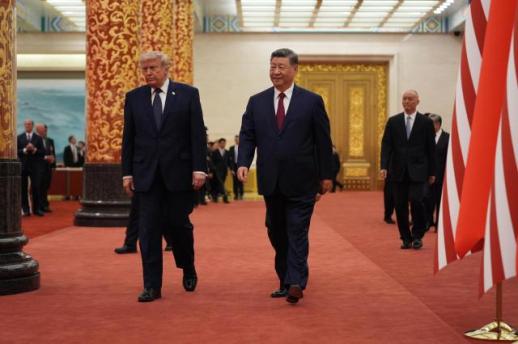 Trump Uses Taiwan as Negotiation Leverage Amid U.S.-China Talks Japanese media reported that while U.S. President Donald Trump and Chinese President Xi Jinping avoided direct conflict during their recent summit in Beijing, tensions surrounding Taiwan have intensified. Trump suggested that arms sales to Taiwan could be used as a bargaining chip in negotiations with China, raising concerns that the U.S. commitment to Taiwan's defense may be wavering. Although both nations publicly advocate for 'stability,' Japan perceives the situation as an 'unstable stability' influenced by Taiwan, supply chains, and U.S.-China transactions. Asahi Shimbun highlighted Trump's remarks during a Fox News interview on May 16, where he stated that Taiwan arms sales depend on China and described them as “very good negotiation material.” He avoided giving a definitive answer on whether he would approve arms sales, saying, “We could do it, or we could not.” Asahi noted that this statement could undermine the longstanding U.S. practice of not consulting China prior to arms sales to Taiwan. Asahi particularly pointed out the 'Six Assurances' established by the Reagan administration in 1982, one of which stipulates that the U.S. would not consult China regarding arms sales to Taiwan. This has been a key aspect of U.S. policy toward Taiwan. However, Trump indicated that he does not regard this practice as significant, stating, “The 1980s was quite a long time ago.” If arms sales to Taiwan become a bargaining tool with China, it could raise questions about the U.S. commitment to Taiwan's security. Nikkei also reported on May 17 that while the U.S. and China presented a 'constructive strategic stability relationship,' the Taiwan issue remains a major flashpoint. The stability that China refers to is predicated on the U.S. respecting its stance on Taiwan. Xi warned during the summit that mishandling the Taiwan issue could lead to confrontation and put U.S.-China relations in a precarious position. Nikkei noted that Trump’s mention of using Taiwan arms sales as a negotiation card could provoke a backlash from China if implemented, while withholding sales could heighten anxiety in Taiwan and Japan, keeping the Taiwan issue as a significant destabilizing factor in U.S.-China relations. Japanese media focused more on the underlying implications of the U.S.-China summit rather than its immediate outcomes. Asahi described the meeting as an example of “unstable stability.” While both countries avoided direct confrontation over tariffs and export regulations, this was interpreted not as a resolution of conflicts but as a result of mutual dependence on each other’s vulnerabilities, such as rare earth elements and advanced technology. Asahi likened this to the détente of the Cold War era, noting that history shows such arrangements can be fragile. Yomiuri Shimbun also assessed that the tangible outcomes of the summit were limited. Trump emphasized a “great trade deal,” but specifics were confined to increased soybean imports from China and orders for Boeing aircraft. Yomiuri highlighted Trump’s display of personal rapport with Xi, noting that after a stroll in the Zhongnanhai gardens, Trump remarked, “We have really gotten close,” underscoring the strengthening of ties between the two leaders. Particularly concerning for Yomiuri was Trump’s reference to a 'G2' (Group of Two) dynamic, calling the U.S. and China “two great countries.” This terminology could imply an equal status for the U.S. and China as superpowers, raising concerns that Trump may be pursuing an international order prioritizing national interests alongside Xi. This has led to fears that Japan’s interests may not be adequately represented in potential U.S.-China negotiations. There are also analyses suggesting that China aims to buy time through this summit. Yomiuri posited that China seeks to delay confrontations with the Trump administration while securing time to recover from its real estate slump and sluggish consumption. Asahi noted that while China agreed to low-level demands such as increasing purchases of U.S. products, it avoided making concrete commitments on issues like the situation in Iran, indicating that the summit was largely conducted on China’s terms. Asahi reported a growing confidence within China that it can negotiate on equal footing with the U.S. This trend poses challenges for Japan as well. Asahi pointed out that while leaders and business figures from various countries, including the U.S., are engaging with China, Japan's relations with China have cooled to the point of a breakdown in dialogue. There are concerns that Japan may be sidelined in both diplomatic and economic spheres as the U.S. and China strengthen their ties. The potential for the U.S. to negotiate with China over Taiwan, the timing of U.S.-China interactions regarding supply chains, and Trump’s G2-style diplomacy could all limit Japan’s options. Major Japanese media do not view the U.S.-China summit as merely a step toward improving relations. While both countries have clearly decided to avoid reigniting a trade war and continue dialogue, this stability rests on precarious factors such as the Taiwan issue, supply chain dependencies, China’s strategy to buy time, and Trump’s transactional diplomacy. In particular, if Taiwan arms sales are treated as a bargaining chip in negotiations with China, the stability of U.S.-China relations could mark the beginning of new instability for security in East Asia, a point emphasized by major Japanese outlets.* This article has been translated by AI. 2026-05-17 15:54:43
 -
 Japan Watches U.S.-China Summit with Concern Over Taiwan and Rare Earths Japan is approaching the U.S.-China summit with caution rather than anticipation. The Yomiuri Shimbun reported on May 14 that key issues such as the situation in Iran, navigation through the Strait of Hormuz, U.S.-China trade relations, rare earth export regulations, and the Taiwan issue are expected to be discussed. All these matters are directly linked to Japan's security and economy. Japanese media view this summit as a critical moment not only for assessing whether U.S.-China trade tensions will ease but also for determining if the two countries will bypass Japan to negotiate their interests directly in a 'Group of Two' (G2) framework. The Nikkei reported on May 14 that the Japanese government had considered a plan for President Trump to stop in Japan before heading to China. It stated that Prime Minister Sanae Takaichi aimed to convey Japan's concerns about the threat from China directly to President Trump. The Japanese government has been wary of the possibility that the U.S.-China summit could lead to a major compromise between the two nations that excludes Japan. Japan's concerns extend beyond mere diplomatic exclusion. If the U.S. and China grow closer, there is a fear that U.S. engagement in East Asian security could wane, undermining deterrence regarding Taiwan or North Korea's nuclear and missile issues. Additionally, a loosening of economic security measures against China in areas like semiconductors and rare earths could burden Japan. The Nikkei reported that Prime Minister Takaichi wanted to directly communicate to President Trump that such trends would ultimately benefit China. This is not the first time Japan has attempted such outreach. Former Prime Minister Shinzo Abe has repeatedly emphasized the military threat posed by China since Trump's election in 2016, presenting data to underscore the importance of the U.S.-Japan alliance in countering China. Prime Minister Takaichi appears to have sought a similar approach. However, this plan was overshadowed by developments in the Middle East. Japan initially viewed the U.S.-China summit as a pivotal moment for its foreign diplomacy, considering Takaichi's visit to the U.S. and Trump's planned stop in Japan to reinforce awareness of the Chinese threat. However, following the U.S. and Israel's attack on Iran in late February, key topics shifted from China to the Middle East, particularly concerning stability in the Strait of Hormuz and energy transport. President Trump postponed his originally scheduled trip to China from late March to May due to the situation in the Middle East, which also derailed Japan's plan for a pre-China visit. Japan's Diminished Importance On May 12, U.S. Treasury Secretary Scott Vessenet visited Japan and met with Prime Minister Takaichi, but the meeting lasted only 15 minutes. When asked by reporters afterward if Takaichi had made specific requests regarding China, Vessenet replied, "No." In contrast, a meeting on the same day between Finance Minister Satsuki Katayama and Vessenet lasted 35 minutes, focusing on currency trends amid the Middle East crisis. A Japanese Foreign Ministry official noted, "This time, discussions between finance ministers were crucial." China is attempting to frame this visit as a U.S.-China bilateral issue. The Asahi Shimbun reported on May 14 that China insisted during pre-summit negotiations that President Trump would not stop in any other countries. During his first visit to China in January 2017, Trump visited Japan and South Korea before arriving in China. This time, the analysis suggests that China aims to showcase its influence through direct exchanges with the U.S. Japan is particularly focused on the Taiwan issue. China considers Taiwan a "core interest," and President Trump has indicated he will discuss U.S. arms sales to Taiwan with President Xi. If U.S. policy toward Taiwan changes, Japan may face pressure to reassess its own security strategy. Japan views this summit not merely as a U.S.-China diplomatic event but as a turning point that could influence its own security and economic strategies. While easing U.S.-China tensions could stabilize supply chains and energy markets, any retreat in U.S. measures to contain China could increase Japan's strategic burdens. This is why the Japanese government is closely monitoring President Trump's visit to China.* This article has been translated by AI. 2026-05-14 16:10:16
 -
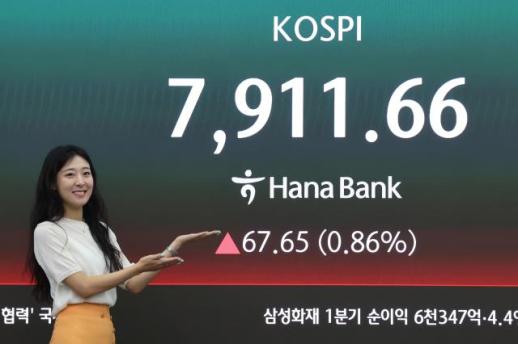 Wall Street Turns Its Attention to South Korean Stocks Beyond Semiconductors The South Korean stock market is emerging as a new investment destination for Wall Street, fueled by the surge in artificial intelligence (AI) and semiconductors. Beyond the soaring stock prices of SK Hynix and Samsung Electronics, companies like SK Square and Samsung Life, which hold stakes in these firms, are also attracting global investors' attention. Two years ago, foreign capital was primarily focused on reevaluating the Japanese stock market, but that gaze is now shifting toward Korea. The Nihon Keizai Shimbun reported on May 14 that "walking the streets of New York, one can feel the popularity of Korean culture, from music to food and cosmetics. Wall Street is no different," noting that both institutional and individual investors are increasingly drawn to South Korean stocks. This trend was evident at the "Sorn Investment Conference" held in New York on May 12. Known as a "hedge fund festival," the event showcased investment ideas from both emerging and veteran fund managers. Eduardo Marques of hedge fund Pertento Partners took the stage, stating, "Lately, I have been focused on uncovering complex value investment opportunities hidden within Korean stocks." The driving force behind the rise of the South Korean stock market is the demand for high-performance memory for AI data centers. The Nihon Keizai Shimbun highlighted that the KOSPI index has tripled in the past year, marking the steepest rise among major global indices. The tight supply of high-performance memory for data centers has led to soaring stock prices for SK Hynix and Samsung Electronics, lifting the entire market. On the surface, South Korean semiconductor stocks still appear undervalued. According to the Nihon Keizai Shimbun, the projected price-to-earnings ratios (PER) for SK Hynix and Samsung Electronics are both around six, still below their American competitor Micron Technology, which stands at nine. However, Marques emphasizes that he is not focused on this PER gap. He remarked, "PER comparisons are already well-known in the West," suggesting that there are much more deeply discounted stocks available for purchase. He pointed to SK Square and Samsung Life as notable examples. SK Square is a major shareholder in SK Hynix, while Samsung Life holds significant shares in Samsung Electronics. The Nihon Keizai Shimbun noted that the market capitalizations of these two companies are only about half the value of their stakes in memory firms. Due to the unique cross-shareholding structure of South Korean conglomerates, these long-ignored discount factors are now seen as attractive value investment opportunities by Wall Street investors. Investor expectations are also being fueled by the South Korean government's push for improved corporate capital efficiency. There is growing anticipation among foreign investors that the undervaluation of holding companies and insurance firms, long viewed as a symbol of the Korea Discount, may be resolved in conjunction with the government's corporate value-up program. Similar to the recent reevaluation of the Japanese stock market amid pressures for improved capital efficiency and activism from investors, a similar transformation may be on the horizon for the South Korean market. There are also projections that the AI memory boom could translate into domestic consumption in South Korea. Jonathan Lennon of Present Lake Partners recently analyzed that Samsung Electronics is considering a plan to pay bonuses equivalent to 10% of operating profits, similar to its competitors, after interviewing several former employees. He stated, "Our calculations suggest that the total bonuses for both companies could reach $40 billion, which corresponds to several percent of South Korea's GDP," indicating that this could have unprecedented ripple effects. Individual investors are also rapidly pouring funds into the market. A memory stock exchange-traded fund (ETF) launched by U.S. firm Roundhill attracted over $6 billion within a month of its debut in early April. The Nihon Keizai Shimbun reported that this marks the fastest inflow rate ever, surpassing that of Bitcoin ETFs in 2024. Nearly half of the ETF's assets are in SK Hynix and Samsung Electronics. Access for U.S. investors to South Korean stocks is also expanding. Interactive Brokers, a U.S. online brokerage, began offering trading services for stocks listed on the Korea Exchange on May 7. Previously, U.S. investors could only access South Korean stocks through ETFs or American Depositary Receipts (ADRs), but now they have broader options for investing in individual South Korean stocks. Strengths Compared to U.S. and Japanese Markets This trend is also linked to the high valuation pressures in the U.S. stock market. Marques noted, "No matter how much one believes in artificial intelligence, the valuations of U.S. stocks appear very high." The Nihon Keizai Shimbun reported that the S&P 500 index reached an all-time high on May 13, with projected PERs in the 21 range, significantly exceeding the 15-year average of 17. While the AI growth story remains valid, there is a growing perception that it has become difficult to generate additional returns solely from U.S. stocks, increasing interest in alternative investment destinations like South Korea. A notable point is the contrast with the Japanese market. The Nihon Keizai Shimbun reported that Japanese stocks were hardly mentioned at the Sorn Conference. Just two years ago, activist investors were prominent speakers, drawing attention to the Japanese market, but now it has been noted that "the narrative has run dry" for Japanese stocks. The strategies of investment banks and brokerages are also changing. Hong Kong-based CLSA is set to hold a new investor event called the "Northeast Asia Forum" in Seoul in June. In contrast, the existing "Japan Forum," which has been held for over 20 years, is expected to be renamed and scaled down, according to the Nihon Keizai Shimbun. This shift of a marquee Asian stock event from Tokyo to Seoul symbolically reflects where global investment banks see the flow of capital in Northeast Asia heading. The competition among Northeast Asian stock markets to attract global money is intensifying. It is noteworthy that a leading Japanese economic newspaper framed the situation as "Japanese stocks are running out of steam, while South Korean stocks present new investment ideas." This signals that the recent rally in the South Korean stock market is being interpreted as a shift in the allocation of global capital in Northeast Asia, extending beyond just a semiconductor boom.* This article has been translated by AI. 2026-05-14 14:17:08
 -
![[ASIA BIZ] China in No Rush, Japan Stands Firm: Will APEC in Shenzhen Provide a Breakthrough?](https://image.ajunews.com//content/image/2026/05/11/20260511093348483321_518_323.jpg) [[ASIA BIZ]] China in No Rush, Japan Stands Firm: Will APEC in Shenzhen Provide a Breakthrough? Earlier this month, Yasutoshi Nishimura, head of the ruling Liberal Democratic Party's election strategy, visited Beijing. This marked the first trip to China by a senior member of the ruling party since the Takaiichi administration took office, but he did not meet with any high-ranking Chinese officials. Despite traveling to Beijing, Japan was unable to find any clues for dialogue. While Japan seeks a way out, China sees no reason to rush, reflecting the current state of Japan-China relations. Currently, China has little motivation to expedite improvements in relations with Japan. The country faces a series of significant domestic political events. In November, the Asia-Pacific Economic Cooperation (APEC) summit will be held in Shenzhen, followed by the once-every-five-years party congress scheduled for next autumn. Notably, the party congress is a critical stage for the top leadership, including President Xi Jinping. The international environment is also favorable for China. Last month, Spanish Prime Minister Pedro Sánchez visited Beijing and met with Xi, and U.S. President Donald Trump is set to visit China from May 13 to 15. Leaders from major European countries, including the UK and France, have also made their way to China. Observing the influx of foreign leaders, a senior official from Japan's Foreign Ministry remarked, "There is no visible motivation for China to reach out to Japan first." Japan's situation is equally complex. As China has criticized and taken countermeasures against Prime Minister Takaiichi, domestic backlash has intensified. The Nikkei newspaper analyzed that this reaction contributed to the Liberal Democratic Party's significant victory in the recent elections. Instead of weakening the Takaiichi administration, China's pressure has provided justification for a hardline stance, leaving the Prime Minister in a position where he cannot retract his statements. So, who should take the initiative? In the past, parliamentary diplomacy and party channels played that role. In 2015, then-LDP Secretary-General Toshihiro Nikai led a delegation of about 3,000 Japanese business leaders to Beijing to deliver a letter from then-Prime Minister Shinzo Abe to Xi. The Komeito party, as a coalition partner, also regularly sent delegations to engage with Chinese leadership. Even when official government channels were blocked, parliamentary channels remained active. However, those channels have now dried up. Makoto Kawashima, a professor at the University of Tokyo, stated that the Komeito party's departure from the coalition has left a significant void in Japan-China relations. The internal situation within the LDP is not much different. Hiroshi Moriya, the former chairman of the Japan-China Friendship Parliamentary Alliance, is distanced from Prime Minister Takaiichi, and the parliamentary alliance did not organize a delegation to visit China during the recent holiday period. One member of the alliance noted, "Parliamentary diplomacy cannot move forward unless the Takaiichi administration first presents a direction for dialogue." Nevertheless, there are still official platforms where both countries can meet. The APEC Trade Ministers' Meeting in Suzhou later this month, a delegation from the Japan External Trade Organization visiting China in June, and the APEC summit in Shenzhen in November all present opportunities for dialogue. Ultimately, the key to improving relations will lie in these events. Twelve years ago, at the 2014 APEC summit in Beijing, it was widely believed that a meeting between the two leaders would be difficult until spring of that year. However, after behind-the-scenes negotiations began in the summer, a meeting between then-Prime Minister Abe and Xi was successfully arranged. For Xi, the Shenzhen APEC summit is also an important diplomatic stage ahead of next year's party congress. Regardless of the relationship with Japan, it would be difficult to leave a meeting with Prime Minister Takaiichi to end in a cold atmosphere. Now, six months after Prime Minister Takaiichi's statements, Xi has not extended a hand, and Takaiichi cannot retract his remarks. The channels for parliamentary diplomacy have effectively been severed. In six months, at the Shenzhen APEC summit, the two leaders will inevitably meet. The remaining time will serve as a test of whether they can restore at least minimal connections in the frozen Japan-China relationship.* This article has been translated by AI. 2026-05-12 05:32:49
[[ASIA BIZ]] China in No Rush, Japan Stands Firm: Will APEC in Shenzhen Provide a Breakthrough? Earlier this month, Yasutoshi Nishimura, head of the ruling Liberal Democratic Party's election strategy, visited Beijing. This marked the first trip to China by a senior member of the ruling party since the Takaiichi administration took office, but he did not meet with any high-ranking Chinese officials. Despite traveling to Beijing, Japan was unable to find any clues for dialogue. While Japan seeks a way out, China sees no reason to rush, reflecting the current state of Japan-China relations. Currently, China has little motivation to expedite improvements in relations with Japan. The country faces a series of significant domestic political events. In November, the Asia-Pacific Economic Cooperation (APEC) summit will be held in Shenzhen, followed by the once-every-five-years party congress scheduled for next autumn. Notably, the party congress is a critical stage for the top leadership, including President Xi Jinping. The international environment is also favorable for China. Last month, Spanish Prime Minister Pedro Sánchez visited Beijing and met with Xi, and U.S. President Donald Trump is set to visit China from May 13 to 15. Leaders from major European countries, including the UK and France, have also made their way to China. Observing the influx of foreign leaders, a senior official from Japan's Foreign Ministry remarked, "There is no visible motivation for China to reach out to Japan first." Japan's situation is equally complex. As China has criticized and taken countermeasures against Prime Minister Takaiichi, domestic backlash has intensified. The Nikkei newspaper analyzed that this reaction contributed to the Liberal Democratic Party's significant victory in the recent elections. Instead of weakening the Takaiichi administration, China's pressure has provided justification for a hardline stance, leaving the Prime Minister in a position where he cannot retract his statements. So, who should take the initiative? In the past, parliamentary diplomacy and party channels played that role. In 2015, then-LDP Secretary-General Toshihiro Nikai led a delegation of about 3,000 Japanese business leaders to Beijing to deliver a letter from then-Prime Minister Shinzo Abe to Xi. The Komeito party, as a coalition partner, also regularly sent delegations to engage with Chinese leadership. Even when official government channels were blocked, parliamentary channels remained active. However, those channels have now dried up. Makoto Kawashima, a professor at the University of Tokyo, stated that the Komeito party's departure from the coalition has left a significant void in Japan-China relations. The internal situation within the LDP is not much different. Hiroshi Moriya, the former chairman of the Japan-China Friendship Parliamentary Alliance, is distanced from Prime Minister Takaiichi, and the parliamentary alliance did not organize a delegation to visit China during the recent holiday period. One member of the alliance noted, "Parliamentary diplomacy cannot move forward unless the Takaiichi administration first presents a direction for dialogue." Nevertheless, there are still official platforms where both countries can meet. The APEC Trade Ministers' Meeting in Suzhou later this month, a delegation from the Japan External Trade Organization visiting China in June, and the APEC summit in Shenzhen in November all present opportunities for dialogue. Ultimately, the key to improving relations will lie in these events. Twelve years ago, at the 2014 APEC summit in Beijing, it was widely believed that a meeting between the two leaders would be difficult until spring of that year. However, after behind-the-scenes negotiations began in the summer, a meeting between then-Prime Minister Abe and Xi was successfully arranged. For Xi, the Shenzhen APEC summit is also an important diplomatic stage ahead of next year's party congress. Regardless of the relationship with Japan, it would be difficult to leave a meeting with Prime Minister Takaiichi to end in a cold atmosphere. Now, six months after Prime Minister Takaiichi's statements, Xi has not extended a hand, and Takaiichi cannot retract his remarks. The channels for parliamentary diplomacy have effectively been severed. In six months, at the Shenzhen APEC summit, the two leaders will inevitably meet. The remaining time will serve as a test of whether they can restore at least minimal connections in the frozen Japan-China relationship.* This article has been translated by AI. 2026-05-12 05:32:49 -
![[ASIA BIZ] Tensions Rise Between China and Japan Amid Diplomatic Strain](https://image.ajunews.com//content/image/2026/05/11/20260511083416371536_518_323.jpg) [[ASIA BIZ]] Tensions Rise Between China and Japan Amid Diplomatic Strain On May 3, during China's Labor Day holiday, state-run Xinhua News Agency broadcast a statement from the Chinese Foreign Ministry marking the 80th anniversary of the Tokyo Trials. While China commemorates this day as the start of the Allied prosecution of Japanese war criminals after World War II, it is unusual for the Foreign Ministry to issue a statement on the occasion. The key theme of the statement was 'new militarism,' accusing Japan's right-wing factions of using the guise of a 'peaceful nation' to bolster military capabilities and reform systems, thereby posing a regional security threat. This statement encapsulates China's gradual shift in its approach to Japan over the past six months. The situation traces back to November of last year when Japan's Prime Minister Sanae Takaichi responded to a question in the House of Representatives Budget Committee regarding Taiwan, stating that it could lead to a "crisis for Japan's existence." This implied the potential for Japan's Self-Defense Forces to exercise collective self-defense. China reacted vehemently, with Japan clarifying that it was merely a reinterpretation of existing laws and not a specific scenario. However, China remained unyielding, viewing any mention of military intervention by the Japanese Prime Minister as an infringement on what the Xi Jinping administration considers a 'core interest.' In response, China summoned the Japanese ambassador for a reprimand. The most significant impact was felt not in diplomatic circles but in the daily lives of ordinary citizens. A 23-year-old graduate student from Jiangsu Province, whose dream is to become a judge, expressed her dismay last month. She had planned to attend law classes at a university in Tokyo this spring, but the school canceled her enrollment citing "safety concerns" just a month after her acceptance. Despite her willingness to sign a waiver accepting full responsibility, the school remained firm in its decision. In China, major universities have suspended study abroad programs to Japan. A company that has facilitated Japanese study for 25 years reported sending nearly 60 students last year but only five this year. This situation is unprecedented, even more so than during the 2012 Senkaku incident when study abroad programs continued despite intense anti-Japanese protests. Economic Relations Also Cooling The landscape for tourism has also changed. While the number of foreign tourists visiting Japan reached an all-time high in March, visitors from China dropped by 55.9% compared to the previous year. One official lamented that the current situation is worse than during the politically tense Koizumi administration, stating, "Back then, while politics were frozen, the economy was thriving. Now, both politics and the economy are cooling off together." China has targeted Japan's manufacturing sector as well. In January, it tightened export regulations on dual-use items to Japan, and in February, it added 20 Japanese companies to a regulatory list. Although Chinese authorities claimed there would be no impact on civilian life, the reality was different. In March, China's exports of rare earth magnets to Japan fell to 184 tons, a decrease of 27.2% year-on-year and 17.3% from the previous month. A representative from a Japanese company in Beijing reported that customs clearance has been inexplicably delayed recently. Some major corporations are exploring alternative sourcing, but it is challenging to eliminate inexpensive Chinese products quickly. The conflict has even extended to maritime issues. On April 17, Japan's Maritime Self-Defense Force destroyer Ikazuchi passed through the Taiwan Strait for the first time in about ten months. This operation had been on hold since Takaichi's remarks about Taiwan. According to the Yomiuri Shimbun, the Japanese government decided that continuing to postpone operations out of concern for China would only encourage China's maritime expansion. China's response was immediate and intense. The military newspaper PLA Daily criticized the passage, stating it coincided with the day Taiwan was ceded to Japan under the Treaty of Shimonoseki, which "greatly hurt the feelings of the Chinese people." Two days later, on April 19, China's missile destroyer Baotou and frigate Huanggang appeared 60 kilometers southwest of Yokota Island in Kagoshima Prefecture, approaching as close as 300 kilometers to the southern tip of Kyushu. Around the same time, new structures for gas field development were detected on the Chinese side of the median line in the East China Sea. China's pressure has expanded across multiple fronts. However, the sentiment among Chinese civilians towards Japan appears largely unaffected. On May 1, Labor Day, a park in downtown Shanghai hosted an event related to the Japanese anime "Pokémon." Families were seen taking photos in front of a Pikachu model. A 35-year-old company employee participating in the event remarked, "I don't care about the deterioration of China-Japan relations. My favorite Pokémon is irreplaceable." This situation reflects a disconnect between government-imposed pressure and the remaining demand for Japanese culture among the public. This contrast illustrates the current state of affairs. Unlike the explosive anger seen during the 2012 Senkaku incident, the pressure now is a meticulously designed strategy from above. What began with a single line in the Prime Minister's parliamentary response has, six months later, shaken Japan's daily life, industry, and maritime activities simultaneously.* This article has been translated by AI. 2026-05-12 05:30:18
[[ASIA BIZ]] Tensions Rise Between China and Japan Amid Diplomatic Strain On May 3, during China's Labor Day holiday, state-run Xinhua News Agency broadcast a statement from the Chinese Foreign Ministry marking the 80th anniversary of the Tokyo Trials. While China commemorates this day as the start of the Allied prosecution of Japanese war criminals after World War II, it is unusual for the Foreign Ministry to issue a statement on the occasion. The key theme of the statement was 'new militarism,' accusing Japan's right-wing factions of using the guise of a 'peaceful nation' to bolster military capabilities and reform systems, thereby posing a regional security threat. This statement encapsulates China's gradual shift in its approach to Japan over the past six months. The situation traces back to November of last year when Japan's Prime Minister Sanae Takaichi responded to a question in the House of Representatives Budget Committee regarding Taiwan, stating that it could lead to a "crisis for Japan's existence." This implied the potential for Japan's Self-Defense Forces to exercise collective self-defense. China reacted vehemently, with Japan clarifying that it was merely a reinterpretation of existing laws and not a specific scenario. However, China remained unyielding, viewing any mention of military intervention by the Japanese Prime Minister as an infringement on what the Xi Jinping administration considers a 'core interest.' In response, China summoned the Japanese ambassador for a reprimand. The most significant impact was felt not in diplomatic circles but in the daily lives of ordinary citizens. A 23-year-old graduate student from Jiangsu Province, whose dream is to become a judge, expressed her dismay last month. She had planned to attend law classes at a university in Tokyo this spring, but the school canceled her enrollment citing "safety concerns" just a month after her acceptance. Despite her willingness to sign a waiver accepting full responsibility, the school remained firm in its decision. In China, major universities have suspended study abroad programs to Japan. A company that has facilitated Japanese study for 25 years reported sending nearly 60 students last year but only five this year. This situation is unprecedented, even more so than during the 2012 Senkaku incident when study abroad programs continued despite intense anti-Japanese protests. Economic Relations Also Cooling The landscape for tourism has also changed. While the number of foreign tourists visiting Japan reached an all-time high in March, visitors from China dropped by 55.9% compared to the previous year. One official lamented that the current situation is worse than during the politically tense Koizumi administration, stating, "Back then, while politics were frozen, the economy was thriving. Now, both politics and the economy are cooling off together." China has targeted Japan's manufacturing sector as well. In January, it tightened export regulations on dual-use items to Japan, and in February, it added 20 Japanese companies to a regulatory list. Although Chinese authorities claimed there would be no impact on civilian life, the reality was different. In March, China's exports of rare earth magnets to Japan fell to 184 tons, a decrease of 27.2% year-on-year and 17.3% from the previous month. A representative from a Japanese company in Beijing reported that customs clearance has been inexplicably delayed recently. Some major corporations are exploring alternative sourcing, but it is challenging to eliminate inexpensive Chinese products quickly. The conflict has even extended to maritime issues. On April 17, Japan's Maritime Self-Defense Force destroyer Ikazuchi passed through the Taiwan Strait for the first time in about ten months. This operation had been on hold since Takaichi's remarks about Taiwan. According to the Yomiuri Shimbun, the Japanese government decided that continuing to postpone operations out of concern for China would only encourage China's maritime expansion. China's response was immediate and intense. The military newspaper PLA Daily criticized the passage, stating it coincided with the day Taiwan was ceded to Japan under the Treaty of Shimonoseki, which "greatly hurt the feelings of the Chinese people." Two days later, on April 19, China's missile destroyer Baotou and frigate Huanggang appeared 60 kilometers southwest of Yokota Island in Kagoshima Prefecture, approaching as close as 300 kilometers to the southern tip of Kyushu. Around the same time, new structures for gas field development were detected on the Chinese side of the median line in the East China Sea. China's pressure has expanded across multiple fronts. However, the sentiment among Chinese civilians towards Japan appears largely unaffected. On May 1, Labor Day, a park in downtown Shanghai hosted an event related to the Japanese anime "Pokémon." Families were seen taking photos in front of a Pikachu model. A 35-year-old company employee participating in the event remarked, "I don't care about the deterioration of China-Japan relations. My favorite Pokémon is irreplaceable." This situation reflects a disconnect between government-imposed pressure and the remaining demand for Japanese culture among the public. This contrast illustrates the current state of affairs. Unlike the explosive anger seen during the 2012 Senkaku incident, the pressure now is a meticulously designed strategy from above. What began with a single line in the Prime Minister's parliamentary response has, six months later, shaken Japan's daily life, industry, and maritime activities simultaneously.* This article has been translated by AI. 2026-05-12 05:30:18