
Journalist

Kim Yeon-jae
duswogmlwo77@ajupress.com
-
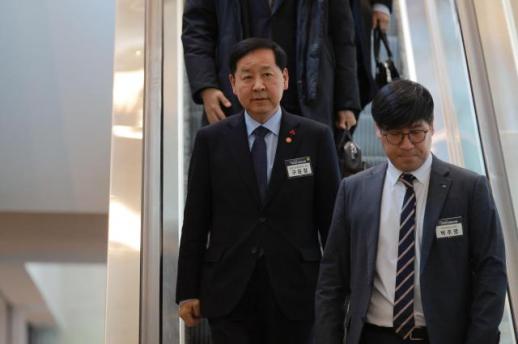 S. Korea, U.S. finance chiefs share concerns over won volatility Seoul, April 19 (AJP) —South Korean and U.S. finance chiefs agreed a volatile exchange rate is undesirable for the interests of the two countries, the Ministry of Finance and Economy said in a statement Monday. Finance Minister Koo Yun-cheol met with U.S. Treasury Secretary Scott Bessent during the G20 Finance Ministers and Central Bank Governors Meeting in Washington, D.C., last Friday to discuss key bilateral issues including the action plan for Seoul's pledge of investments in the U.S., foreign exchange rate, and supply chain disruptions from the Gulf conflict. The primary agenda was the high volatility of the Korean won. "Both ministers agreed that excessive volatility in the Korean won is not desirable, and agreed to continue consultations on foreign exchange market developments," the statement said. Last month, the average daily gap between the appropriate non-deliverable forward (NDF) rate—based on the weekly closing price of the won at 3:30 p.m.—and the actual final quote for one-month NDFs in New York was tallied at 12.2 won. This marks the first time since 2020 that the gap between the appropriate quote and the actual exchange rate has exceeded 10 won. "We shared the view that the volatility of the Korean won has been particularly high and decided to maintain a cooperative relationship to stabilize foreign exchange market trends," Koo separately wrote on his X page, adding that the two leaders also discussed the impact of the U.S.-Israel and Iran conflict on the Korean economy. Another key issue was the ongoing discussion regarding investment in the U.S. following tariff negotiations. South Korea plans to invest a total of $350 billion in the U.S. market over the next 10 years, including a $150 billion investment in the shipbuilding industry. The U.S. had once rolled back tariffs on Korean automobiles from 15 percent to 25 percent, citing delays in legislation by the Korean National Assembly. In response, the National Assembly passed the Special Act on Investment in the U.S. on March 12. Koo explained the Korean government's efforts to implement memorandums of understanding regarding bilateral investments, including the Special Act, to which Bessent responded positively. In the Seoul foreign exchange market on Monday, the won opened at 1,479.5 per dollar. 2026-04-20 10:50:50
 -
 Seoul flags rising downside risks as Middle East war drags on SEOUL, April 17 (AJP) -South Korea’s government on Friday highlighted increased "downside risks" for the economy as the prolonged Middle East conflict fuels inflationary expectation and dampens domestic sentiment. In its monthly “Green Book” report for April, the Ministry of Economy and Finance said “downside risks to the economy are increasing” due to heightened geopolitical uncertainty stemming from the war — toned up from last month’s milder phrasing of “concerns over rising downside risks.” The shift reflects growing concern that the impact of the conflict is beginning to filter through the broader economy. “Exports, led by semiconductors, have remained strong and domestic demand had been on a recovery trend, but the Middle East war is weighing on consumer and business sentiment, while higher global oil prices are adding to inflation and the burden on livelihoods,” the ministry said. Recent data points show early signs of strain. Consumer prices rose 2.2 percent in March from a year earlier, accelerating from 2.0 percent the previous month, driven largely by a sharp rebound in energy costs. Petroleum prices surged 9.9 percent on-year, reversing a decline in February as global oil prices spiked amid the conflict. Sentiment indicators also weakened. The consumer sentiment index fell 5.1 points to 107.0 in March, while business sentiment readings edged lower, pointing to growing caution among households and firms. Consumption data painted a mixed picture. Card spending at discount stores dropped sharply, while growth in department store sales slowed, suggesting softening discretionary demand. Still, overall card spending rose at the fastest pace since September, and domestic car sales rebounded, indicating that a broader consumption downturn has yet to take hold. “We see pockets of weakness across sectors, but it is difficult to conclude that overall consumption has turned down,” a ministry official said. External demand continues to provide a key buffer. Exports jumped 49.2 percent in March from a year earlier, with semiconductors and computers leading gains, underscoring the resilience of Korea’s tech-driven trade sector despite external shocks. The labor market also remained relatively stable, with employment rising by 206,000 in March, marking a second consecutive month of gains above 200,000. Looking ahead, the ministry warned that global conditions remain fragile. “Volatility in international financial markets and energy prices has increased due to the Middle East conflict and tariff measures by major economies, raising concerns over slower trade and growth,” it said. The government said it will maintain an emergency economic response system, closely monitor developments and push for swift execution of supplementary budget measures to cushion the fallout. 2026-04-17 14:05:35
 -
 After Gulf war, Section 301 looms as next hit to Korean economy SEOUL, April 16 (AJP) — As South Korean markets price in a winding down of the Middle East conflict, another front is quietly opening — this time in trade. With the KOSPI hitting fresh highs on easing war concerns, attention is shifting to Washington, where a new round of investigations under Section 301 of the Trade Act is gathering pace, raising the risk of fresh tariffs on key trading partners, including South Korea. Seoul, alongside Japan and China, is among 16 countries targeted in the probe announced March 11 by the Office of the United States Trade Representative. Those same countries have also been repeatedly singled out by U.S. President Donald Trump for offering limited support during the Gulf conflict despite their heavy reliance on the Strait of Hormuz for energy imports — a linkage that is increasingly shaping Washington’s trade posture. The Trump administration is turning to Section 301 as a workaround after a Feb. 20 Supreme Court ruling struck down its reciprocal tariff framework, effectively reviving one of its most powerful trade tools. From war shock to trade pressure The potential fallout of the Section 301 investigation was initially overshadowed by the Gulf crisis. Following the Feb. 28 U.S. strike on Iran and Tehran’s subsequent blockade of the Strait of Hormuz, oil markets were jolted. Dubai crude surged nearly 150 percent, while disruptions to supply chains drove up freight rates and fuel surcharges, feeding directly into the real economy. With the immediate energy shock beginning to ease, analysts say Washington is likely to revert to trade pressure. “Tariffs could be back at previous levels by early July,” U.S. Treasury Secretary Scott Bessent said at a Wall Street Journal event this week, citing ongoing Section 301 investigations into what the U.S. deems “unfair” trade practices, including excess profits and oversupply. South Korea’s persistent trade surplus leaves it structurally exposed. In autos, Hyundai Motor Group captured a record 11.3 percent share of the U.S. market in 2025, ranking fourth behind General Motors, Toyota and Ford. The Trump administration had previously imposed a 25 percent tariff on automobiles, later reduced to 15 percent after Seoul pledged large-scale investment under the “Special Act on Investment in the U.S.” Even so, Hyundai’s first-quarter operating profit fell 32 percent on-year to 2.46 trillion won, reflecting the end of a near tariff-free environment. Semiconductors present another point of friction. U.S. tech firms, particularly in artificial intelligence, rely heavily on chips from Samsung Electronics and SK hynix, while U.S.-based Micron Technology has lagged behind in high-value segments such as high-bandwidth memory. Non-tariff barriers remain a persistent source of tension. For years, Seoul restricted exports of high-precision 1:5,000-scale maps to foreign firms, citing national security concerns and the need to protect domestic platforms such as Naver and Kakao. Conditional approval for exports to Google was only granted in late February. Washington has also flagged issues such as network usage fees as potential barriers. Section 301 as a “permanent tool” Economists say the likelihood of tariffs under Section 301 is high. “The U.S. has been maintaining a temporary 15 percent tariff under Section 122, but that expires in July,” said Kang In-soo, an economics professor at Sookmyung Women’s University. “Raising Section 301 suggests they intend to impose tariffs in some form even after that.” Section 122 allows tariffs of up to 15 percent for 150 days. By contrast, Section 301 offers a more durable legal basis. “Unlike the IEEPA framework used previously, Section 301 is a permanent tool with stronger legal footing,” said Jang Sang-sik of the Korea International Trade Association, reinforcing expectations of a more sustained tariff regime. The Korea Institute for International Economic Policy also warned of broad-based damage, noting the lack of precedent for applying Section 301 measures to a close U.S. ally. Some analysts see geopolitical factors compounding the risk. Seoul remained cautious when Washington called for naval support to secure tanker routes through the Strait of Hormuz, saying no formal request had been received. At the same time, South Korea engaged in a series of diplomatic exchanges with countries such as Brazil and France, while extending $2.5 million in humanitarian aid to Iran and Lebanon. The Center for Strategic and International Studies (CSIS) recently described Section 301 as a “strategic tool,” suggesting it could be used as a form of calibrated retaliation. Still, others caution against over-interpreting the linkage. “Section 301 is grounded in claims of unfair trade practices,” Kang said. “It is unlikely that the U.S. would formally tie tariff measures to Korea’s diplomatic positioning.” For South Korea, the concern is less about whether pressure will come than when. With the won already under strain from prolonged energy shocks and trading above 1,400 per dollar for more than six months, additional tariffs could further weaken the currency and fuel inflation. “If large-scale outward investment continues, it could erode Korea’s capacity to stabilize the exchange rate,” Kang said. As the Gulf conflict moves toward de-escalation, markets may be looking past the next risk. But for Korea’s export-driven economy, the end of one crisis may simply mark the beginning of another. 2026-04-16 17:52:05
 -
 Foreigners dump over $30 bn KOSPI shares and turn net bond sellers in March SEOUL, April 16 (AJP) -Foreign investors staged a record monthly sell-off in South Korean equities in March amid risk aversion and concerns over the energy-dependent economy from the outbreak of the conflicts in the Gulf and de-facto blockade of the Strait of Hormuz. According to the Financial Supervisory Service on Thursday, foreigners net sold 43.5 trillion won ($31.8 billion) worth of locally listed shares last month, more than doubling from February’s 19.6 trillion won outflow. The exodus was concentrated in the benchmark KOSPI which was making record-breaking rally until the war outbreak. Foreign nationals 43.9 trillion won on the main bourse, while posting a modest 384 billion won net buy in the KOSDAQ. By end-March, foreign holdings of Korean equities fell to 1,576.2 trillion won, down 449.4 trillion won from a month earlier, with their ownership share slipping to 30.7 percent of total market capitalization. The sell-off was broad-based across regions. Europe led the outflows with 26.4 trillion won, followed by the Americas at 9.8 trillion won and Asia at 5.6 trillion won, while the Middle East was the only region to post a net purchase. At the country level, the United Kingdom and the United States accounted for the bulk of selling, while Qatar and the Cayman Islands were among the few net buyers. In fixed income, foreign investors turned net sellers for the first time in five months, withdrawing 10.9 trillion won overall. They purchased 5.4 trillion won worth of bonds but redeemed 16.4 trillion won at maturity, resulting in a net outflow, fanning the bond yields to rise to levels of the rapid tightening cycle in the U.S. Foreign holdings of listed bonds stood at 323.8 trillion won, or 11.6 percent of outstanding balances, at end-March. 2026-04-16 07:50:25
 -
 BOK nominee Shin faces intense scrutiny over foreign assets, family issues SEOUL, April 15 (AJP) — The nominee to head the Bank of Korea (BOK) came under intense scrutiny Wednesday as opposition lawmakers questioned his foreign-denominated wealth and family-related issues, raising concerns over potential conflicts of interest. Lawmakers on the National Assembly’s Finance and Economy Committee focused on nominee Shin Hyun-song’s asset structure, noting that the central bank chief is tasked with stabilizing the Korean won and the housing market. According to his disclosure, more than 90 percent of Shin’s 4.6 billion won ($3.1 million) in financial assets are held in foreign currencies, including U.S. dollars, British pounds and Swiss francs. Opposition lawmakers argued that such a portfolio could allow him to benefit from a weaker won, minimizing losses during depreciation while gaining when major currencies strengthen. “Approximately 93 percent of the nominee’s 4.6 billion won in financial assets are in foreign currencies,” said Rep. Park Dae-chul of the People Power Party, questioning whether it is appropriate to appoint a central bank governor whose assets could gain from currency weakness. “People are saying it is like letting a cat guard the fish,” added Rep. Park Sung-hoon. The scrutiny comes as the Korean won remains under pressure. The average exchange rate for April stood at 1,493.42 per dollar, among the highest on record, although it showed signs of stabilizing at 1,474.2 on Wednesday. The Bank of Korea has also spent more than $7 billion in foreign exchange reserves since late last year, with the country’s global ranking in reserves slipping from ninth to 12th as of February. Shin, previously described as a “pragmatic hawk” for advocating preemptive tightening following Russia’s 2022 invasion of Ukraine, has recently assessed the current exchange rate and reserve levels as stable—adding to concerns over consistency and potential conflicts. Lawmakers also raised questions over his real estate holdings. Shin owns an apartment in Seoul’s Gangnam district and a studio in Jongno, with a combined value exceeding 3.3 billion won. He reportedly allowed his mother to continue living rent-free in the Gangnam apartment after purchasing it from her, prompting allegations of possible tax avoidance through family transactions. The issue has gained further traction amid President Lee Jae Myung’s remarks criticizing multi-homeownership among public officials. Additional controversy surrounds Shin’s academic transfer during military service and his daughter’s citizenship status. Lawmakers alleged that his daughter, who acquired British citizenship, continued to use a Korean passport for decades without proper reporting. “Using a Korean passport for convenience while bypassing residency and immigration laws is ‘cherry-picking’ and deceptive,” said Rep. Chun Ha-ram of the Reform Party. Shin has yet to submit related documents addressing these concerns. Civic groups and experts also weighed in, arguing that a portfolio benefiting from currency depreciation represents a textbook conflict of interest for a central bank chief. “It is natural for the public to distrust a nominee whose portfolio benefits as the real economy falters,” an opposition official said. 2026-04-15 18:01:17
 -
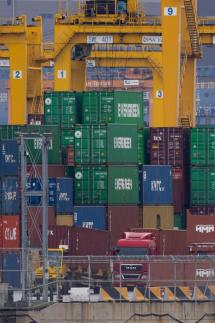 Korea's import-export prices surge to Asian crisis-era levels on Gulf shock SEOUL, April 15 (AJP) - South Korea's import prices jumped at the steepest pace in nearly three decades as the outbreak of a full-blown war in the Gulf triggered a sharp surge in energy prices and the U.S. dollar against the Korean won, but trade terms remained robust so far as export prices rose at a similar pace on strong global demand for refined fuels and memory chips. According to preliminary export and import price data for March released by the Bank of Korea (BOK) on Wednesday, import prices in won terms soared 16.1 percent from the previous month, the steepest increase since a 17.8 percent jump in January 1998. From a year earlier, they rose 18.4 percent. The primary catalyst for this surge was international oil prices. Dubai crude jumped 87.9 percent, rising from $68.40 per barrel in February to $128.52 in March, driven by actual supply disruptions amid escalating military tensions between the United States and Iran, combined with fears over a blockade of the Strait of Hormuz. During the same period, Brent crude and West Texas Intermediate (WTI) also breached the $100 and $90 levels, respectively. The dollar rose 2.6 percent from the February average of 1,449.32 won to 1,486.64 won. That translated into surges of 88.5 percent quarter on quarter and 76.9 percent year on year in crude import prices — levels not seen since records began in won terms in 1985. The gain of 83.8 percent on contract exchange rate term marked the biggest increase since a 98.3 percent jump in January 1974 during the first oil crisis. Jet fuel import prices soared 67.1 percent quarter-on-quarter and 81.8 percent year-on-year. Import prices of raw materials jumped 40.2 percent from the previous month and 40.0 percent from a year earlier. Coal and petroleum product import prices rose 37.4 percent month-on-month and 31.3 percent year-on-year. Export prices also rose 16.3 percent from the previous month in March, the biggest increase since 23.2 percent in 1998. Prices for coal and petroleum products surged 88.7 percent month-on-month, led by major fuels including diesel and jet fuel. Chemical product prices also turned upward, indicating that rising energy costs are spreading across intermediate goods. Korean refiners, which supply about 4 percent of global jet fuel, benefited from wider margins, partly supported by prewar inventories. The won weakened sharply following the outbreak of the war, delivering a double hit alongside rising oil prices. As won-denominated trade prices are directly affected by currency fluctuations, the higher exchange rate lifted import prices while also amplifying export price gains. The rise in export prices also reflected continued strength in semiconductor pricing. Prices for computers, electronic and optical devices rose 12.7 percent month-on-month. However, while the first two months of the year were characterized by demand-driven growth centered on chips, the March surge increasingly reflects cost-push pressure from higher energy prices. Trade terms remained solid for now. The net barter terms of trade index rose 22.8 percent year-on-year, while the income terms of trade index jumped 50.9 percent. The surplus largely reflects export prices for semiconductors and petroleum products rising faster than import prices. Market attention is now shifting to April data, as structural pressures from rising raw material and energy costs are expected to become more visible. In a scenario where energy prices and the exchange rate rise simultaneously, higher import costs are likely to spill over into consumer inflation. This could increase the cost burden for corporations and weigh on economic growth. If Middle East risks persist, there are concerns that energy price increases will become entrenched across production costs. The Hyundai Research Institute (HRI) projected that if oil prices remain above $100 per barrel throughout the year, South Korea’s economic growth rate would drop by at least 0.3 percentage points. French investment bank Natixis went further, cutting its growth forecast for South Korea from 1.8 percent to 1 percent — a reduction of 0.8 percentage points. 2026-04-15 09:08:44
 -
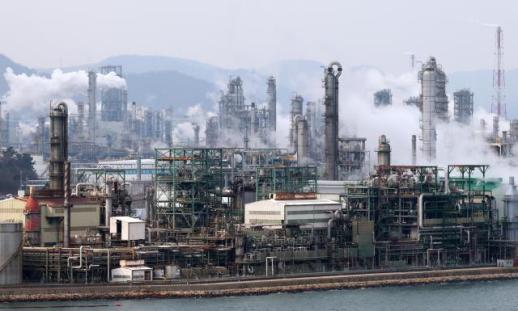 South Korea's refining edge turns Achilles' heel in Gulf shock SEOUL, April 14 (AJP) — South Korea’s world-class oil refining industry — long a pillar of its export strength — is fast turning into a structural vulnerability as the Gulf crisis disrupts energy flows and exposes the economy’s deep dependence on imported crude. Global investment banks are rapidly turning cautious. French lender Natixis on Monday slashed its 2026 growth forecast for South Korea to 1 percent from 1.8 percent, marking one of the steepest downgrades so far. The revision follows a broader wave of cuts, including the OECD’s late-March downgrade to 1.7 percent from 2.1 percent. Natixis singled out Korea’s heavy reliance on imported energy as the key risk, having already flagged the country in March as the most exposed among major economies. Since the conflict erupted, oil prices have surged by as much as 70 percent from recent lows. West Texas Intermediate is hovering near $96 per barrel, while Dubai crude has climbed above $100. Meanwhile, 26 South Korean vessels remain stranded, unable to pass through the blocked Strait of Hormuz. The shock cuts deeper in Korea than elsewhere. The country’s refining model — importing crude, processing it, and exporting high-value petroleum products — has become a double-edged sword. Petrochemicals and refined oil products ranked as the third- and fourth-largest export items last year, trailing only semiconductors and automobiles. Combined, they generated $88.5 billion in exports, surpassing automobiles at $76.5 billion and accounting for 14 percent of total outbound shipments. Korea’s dominance in refined fuel is as formidable as its leadership in semiconductors. As of 2025, the country’s four major refiners — SK Energy, GS Caltex, S-OIL and HD Hyundai Oilbank — exported 86 million barrels of jet fuel, accounting for roughly 4 percent of global supply, the largest share worldwide. “South Korea is one of the top five exporters of petroleum products globally,” said Chang Tae-hun, an associate research fellow at the Korea Energy Economics Institute. “If this disruption persists, the impact on growth will be significant.” The ripple effects are already global. Despite being the world’s largest oil producer, the United States remains structurally dependent on Korean refined fuel. Korean shipments accounted for 71 percent of U.S. jet fuel imports last year — equivalent to about 7 percent of total supply. In western regions such as Washington and California, dependence rises to as high as 85 percent of imports. The imbalance reflects structural differences. While the U.S. dominates crude output following the shale revolution, much of its production is light crude, which yields lower refining margins. South Korea, by contrast, imports heavier Middle Eastern crude — particularly from Saudi Arabia — to produce higher value-added fuels. As Korean jet fuel exports stall, the impact is cascading through aviation markets. Fuel surcharges have surged. Korean Air has seen its maximum surcharge jump from around 99,000 won to over 300,000 won. Delta Air Lines is expected to incur an additional $300 million in fuel costs in the second quarter alone, potentially tipping the carrier into losses. In the base oil market — a key input for engine lubricants — South Korea holds a dominant 38 percent global market share, supplying roughly 28 million barrels. Any sustained disruption risks forcing cutbacks in industrial operations worldwide. “Prices have not spiked immediately due to inventories, but once reserves are depleted, increases will be unavoidable,” a domestic refiner said. “This level of volatility is unprecedented.” The strain is already visible in trade data. In March, export volumes of petroleum products fell 5 percent for gasoline, 11 percent for diesel and 12 percent for jet fuel. While export value rose 18 percent on higher prices, a prolonged blockade would inevitably drag down both volume and earnings as shipments become physically constrained. That leaves South Korea increasingly reliant on its remaining export pillars — semiconductors and automobiles. According to the Ministry of Trade, Industry and Energy, March exports reached a record $86.1 billion despite the Gulf shock. Semiconductor shipments surged more than 150 percent year-on-year to $26.5 billion, accounting for 30 percent of total exports. Yet even these sectors face mounting risks. The Bank of Korea warned that the semiconductor cycle could cool if China ramps up production of legacy DRAM and tighter U.S. credit conditions curb Big Tech investment. The auto sector is also under pressure, as BYD overtook global rivals to become the world’s top EV seller in 2025 with more than 2.25 million units sold. The message from economists is increasingly clear: unless oil-linked industries stabilize, South Korea’s export-driven growth model will remain exposed. What was once a strategic strength is now a fault line. 2026-04-14 17:41:24
 -
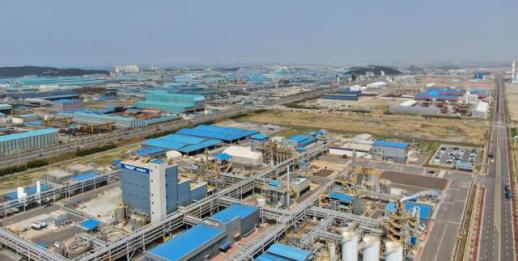 Seoul targets sovereign AI and AI belt in Saemangeum for new strategic funding SEOUL, April 14 (AJP) -South Korea will channel around 10 trillion won ($7.4 billion) into a new slate of strategic industries from high-value OLED displays to sovereign artificial intelligence and AI infrastructure belt along the southern coast in a bid to widen its technological edge over fast-following rivals and anchor future growth engines. The second round of “mega projects” under the 150 trillion won National Growth Fund spans six areas — next-generation bio and vaccines, OLED displays, future mobility and defense, sovereign AI, renewable energy infrastructure and a large-scale industrial hub in Saemangeum. Financial Services Commission Chairman Lee Eog-weon announced the plan Tuesday after chairing the fund’s second strategy committee meeting, describing the selections as sectors “where Korea can further expand its super-gap over latecomers.” The most immediate deployment of capital is expected in bio and vaccines, targeting firms that have entered global Phase 3 clinical trials — the final and most capital-intensive stage before commercialization. The fund will provide low-interest loans for facility investment tied to new drug development, alongside direct investments through joint ventures. Initial approvals could come as early as May. In displays, the government is moving to reinforce Korea’s dominance in premium OLED, as Chinese competitors rapidly narrow the gap. Samsung Display and LG Display are expected to be among key beneficiaries, with policy financing aimed at supporting large-scale capital expenditures needed to push into higher value-added segments. Future mobility and defense projects will focus on unmanned systems — including drones, UAVs and autonomous helicopters — covering the full spectrum from airframes to electronic systems and propulsion. Officials emphasized the broad industrial spillovers, noting the sector’s deep linkages with materials, components, batteries, semiconductors and engines. Sovereign AI has emerged as another central pillar. The initiative aims to build a fully independent AI ecosystem — from foundation models to data centers — reducing reliance on foreign technologies. This marks a shift from the first round of projects, which focused more narrowly on AI semiconductors such as neural processing units. The fund will also invest in large-scale renewable energy projects, including solar and offshore wind farms in regions such as Haenam and Gochang. Beyond energy transition goals, the projects are designed to secure stable power supplies for energy-intensive AI data centers, increasingly seen as critical national infrastructure. Another flagship investment targets Hyundai Motor Group’s planned industrial complex in Saemangeum. The project envisions a cluster integrating robotics, AI and hydrogen energy, backed by roughly 9 trillion won in private investment. The fund will provide tailored support through a mix of direct investment, infrastructure financing and loans aligned with project milestones. The government expects to mobilize more than 50 trillion won over the next five years to support the broader advanced industry ecosystem, combining 35 trillion won in indirect investment through public-private funds and 15 trillion won in direct financing. The structure is designed to address persistent “investment blind spots” in areas where private capital alone has been insufficient, while also expanding participation to new fund managers and incorporating entrepreneurial track records — including failed ventures — into selection criteria. The first round of mega projects, announced in December, included offshore wind, next-generation batteries and AI semiconductor production bases. Of the 6.6 trillion won approved so far, funding has already begun flowing into projects such as the Shinan offshore wind farm, a Pyeongtaek AI chip cluster and Rebellions’ capital increase. The government plans to begin executing initial investments for the second-round projects as early as next month. 2026-04-14 16:23:24
 -
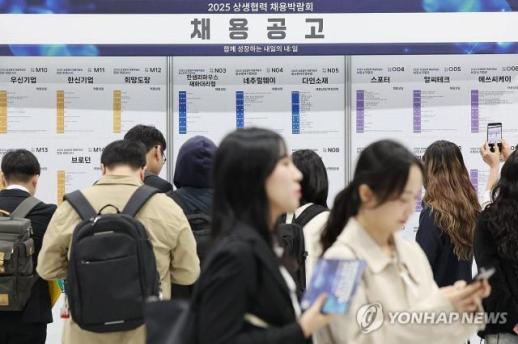 Young Korean men squeezed out as women and AI reshape labor market SEOUL, April 14 (AJP) — Young South Korean men are being squeezed out of the labor market at a notable pace amid increased competition from women and artificial intelligence, a study by the Bank of Korea showed Tuesday. According to the central bank, the economic participation rate for men aged 25 to 34 fell from 89.9 percent in 2000 to 82.3 percent in 2025, in contrast to a steady average of around 89 percent from 1995 to 2024. The downward trend is even more pronounced across generations. While Baby Boomers recorded participation rates around 90 percent and Generation X around 88 percent, the 82.3 percent rate for Millennials comes as a significant drop. The BOK attributes this largely to “shifts in the competitive structure,” coupled with the increased entry of highly educated women into the labor market. “As women's economic participation expanded, competitive pressure intensified significantly, particularly among youth with university degrees or higher,” said Yoon Jin-young. “The number of female employees in professional and office roles is now reaching levels similar to those of men.” In fact, the probability of economic participation for highly educated men born between 1991 and 1995 decreased by 15.7 percentage points compared to previous generations, while it rose by 10.1 percentage points for women. Changes in the industrial structure have also worked against young men. As middle- to low-skilled jobs in manufacturing and construction declined, the labor supply probability for men with an associate degree or less fell by 2.6 percentage points compared to 2000. “The overall labor demand for men with an associate degree or less has declined as middle- to low-skilled jobs centered on manufacturing and construction have shrunk,” Yoon explained. The entry path for youth is narrowing further as employment among the elderly expands and AI continues to proliferate. Between 2004 and 2025, the employment rate for older workers rose by 12.3 percentage points, with most of this increase concentrated in higher-education jobs. Furthermore, 98.3 percent of youth jobs lost over the past four years were concentrated in industries with high exposure to AI, indicating that automation is replacing entry-level positions. During this process, the number of “idled” individuals and those in a state of job preparation has grown, leading to a broader withdrawal from economic activity. The proportion of “idled” youth, which was 3.3 percent in 2003, reached 10.7 percent in 2025 — meaning at least one in ten young men is not even seeking a job. Evaluating the trend, Yoon said, “The decline in the economic participation rate of young men and the expansion of participation among women and the elderly represent a diversification of labor supply following demographic changes.” The central bank emphasized the need to establish institutional conditions that allow youth to enter the labor market more easily, preventing a “zero-sum game” in which competition between genders and groups intensifies while the total number of jobs remains stagnant. Yoon added that structural labor market reforms — such as reducing excessive protection for regular workers and promoting the transition of non-regular workers to regular status — must be implemented in tandem. 2026-04-14 15:51:55
 -
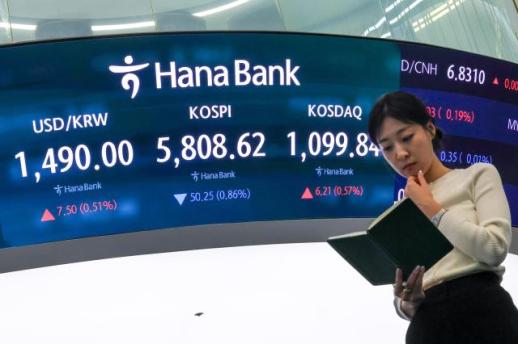 WGBI impact muted as external shocks pressure Korean bonds, won SEOUL, April 13 (AJP) - South Korean sovereigns joining the World Government Bond Index (WGBI) hardly proved to be a magic wand for both the currency and bonds in the first month. Extraordinary factors — including escalating Middle East conflicts and a shifting interest rate and inflation environment — have partly undermined the honeymoon period. Some experts say Korea’s structural challenges run too deep to rely simply on a WGBI boost. Since FTSE Russell began including Korean bonds in the WGBI on April 1, authorities have highlighted expectations of strong foreign inflows to ease pressure on the won and bond market. Finance Minister Gu Yun-cheol reiterated that stance Friday, pointing to foreign net purchases of 6.8 trillion won ($4.57 billion) in government bonds so far this month. Yet the impact on markets has been limited. Despite steady foreign buying, the won and bonds have shown little sign of relief. Entering its third week of inclusion, the Korean won closed Monday at 1,489.3 per dollar and has hovered near the 1,500 level — territory last seen in the aftermath of the 2008 global financial crisis. The bond market has shown similar strain. The three-year government bond yield rose 4.7 basis points to 3.407 percent, while the 10-year yield climbed 5.7 basis points to 3.743 percent — still 30 to 40 basis points higher than at the start of the year. Foreign participation has also underwhelmed relative to expectations. According to the Korea Financial Investment Association (KOFIA), foreign holdings of domestic bonds stood at 340.4 trillion won at the end of March, down 10.2 trillion won from a month earlier. A key driver has been the shift in the rate environment. The Hyundai Research Institute warned that if Middle East maritime disruptions persist and oil prices exceed $100 per barrel, South Korea’s consumer inflation could rise to 3.1 percent — more than one percentage point above the Bank of Korea’s 2 percent target. That outlook is pushing the central bank toward a more hawkish stance. After removing references to a rate cut in January, the Bank of Korea is now widely expected to consider rate hikes as early as July, reinforced by the policy stance of governor-nominee Shin Hyun-song. Major financial institutions, including Shinyoung Securities and Citi, say this shift is reducing the relative attractiveness of Korean bonds and diluting the impact of WGBI inclusion. Such over-optimism is not new. New Zealand, which began phased inclusion in the WGBI in November 2022, initially expected $4.5 billion in inflows. However, aggressive rate hikes by the Reserve Bank of New Zealand in response to inflation reduced actual inflows to roughly one-third of that estimate. South Africa offers a similar case. Despite high yields — with its 10-year bond yield around 8.4 percent — the rand weakened 5.9 percent as of April 7 from February levels, a steeper decline than the won’s 4.3 percent drop over the same period. Analysts attribute this to the high share of foreign ownership in South African bonds, about 40 percent compared with Korea’s 15 percent, which amplifies capital outflow risks. Broader structural factors, including social instability, have also weighed on investor sentiment. Experts stress that strengthening economic fundamentals must take priority over one-off catalysts such as index inclusion. Reflecting concerns over Korea’s heavy reliance on Middle East energy supply chains, Natixis recently cut its growth forecast for the country to 1.0 percent from 1.8 percent, well below the OECD average of 1.7 percent. “We must abandon the illusion that WGBI inclusion alone will dictate the trajectory of bonds and the exchange rate,” said Kim Chan-hee, an analyst at Shinhan Securities, pointing to the need to address structural vulnerabilities such as energy dependence. Goldman Sachs echoed that view, noting that capital flows are driven primarily by global rates and risk sentiment rather than index events, and that improving the structural appeal of the Korean market remains key to supporting both the won and government bonds. 2026-04-13 17:32:01