

Journalist

Seo Hye Seung, Kim Yeon-jae
duswogmlwo77@ajupress.com
-
 BOK governor sees economic recovery despite last year's stagnation SEOUL, Feb 23 (AJP) - South Korea’s central bank expects economic growth in 2026 to rise significantly compared to the previous year, despite last year’s performance falling short of initial market expectations. "Despite uncertainties surrounding US tariff policies, domestic demand is recovering on the back of favorable consumer sentiment, while exports continue their upward trend led by the robust semiconductor sector," BOK Governor Rhee Chang-yong stated during a parliamentary report to the Strategy and Finance Committee on Monday. Regarding inflation, Rhee projected that consumer price growth would maintain a stable trajectory near the 2 percent target. He, however, left the door open for possible fluctuations in international oil prices and exchange rates - which could serve as potential risk factors. The volatility of the won-dollar exchange rate and stock prices was also identified as a significant concern. "While the rise in the exchange rate has been tempered by year-end measures to stabilize foreign exchange supply and demand, the market remains highly volatile, still influenced by external variables such as the movements of the US dollar and the Japanese yen," Rhee noted. On the equity market, he explained that while stock prices rose sharply driven by the boom in key sectors like semiconductors, volatility is now increasing due to concerns over overinvestment in Artificial Intelligence (AI) and the potential displacement of traditional industries. Governor Rhee further emphasized the need for vigilance regarding financial stability. "Credit risks remain prevalent in vulnerable sectors, such as the self-employed, while concerns persist over accumulating financial imbalances caused by rising housing prices in the Seoul metropolitan area," he said. The BOK plans to calibrate its future monetary policy by comprehensively evaluating economic growth, inflation, and financial stability, as global and domestic uncertainties remain elevated. Following Governor Rhee's remarks, yields in the Seoul bond market saw a broad uptick on Monday. The benchmark three-year government bond yield closed at 3.154 percent per annum, rising 1.1 basis points from the previous trading day. The 10-year Treasury yield rose by 3.8 basis points to finish at 3.578 percent. The South Korean economy contracted by 0.3 percent in the fourth quarter of 2025 compared to the previous quarter, according to data released by the BOK on Jan. 22. On an annual basis, the economy recorded a growth of 1.0 percent, significantly missing the central bank's original consensus of 1.8 percent. 2026-02-23 17:40:09
 -
 Korean sovereign wealth fund reaps 13.91% return in 2025, AUM at record high SEOUL, February 23 (AJP) -Korea Investment Corporation (KIC) posted a double-digit investment return in 2025 thanks to global equity rally that bolstered its assets under management to a record high. The sovereign wealth fund said Monday that it recorded an annual return of 13.91 percent last year, while its 10-year annualized return from 2016 to 2025 stood at 7.07 percent. Total assets under management (AUM) rose to $232 billion, driven by net investment gains of $28.5 billion. Cumulative net investment gains since inception reached $122.4 billion, exceeding entrusted principal of $118.6 billion for the first time, marking a symbolic milestone for the state-run fund. By asset class, traditional assets — equities and fixed income — accounted for 78.1 percent of total AUM, while alternative assets, including private equity, real estate, infrastructure and hedge funds, made up 21.9 percent. Traditional assets generated a return of 15.1 percent, led by equities at 22.24 percent and fixed income at 7.46 percent. Alternative assets posted a 10-year annualized return of 8.48 percent, reflecting their long-term investment nature. KIC said disciplined portfolio management helped lift returns, with traditional assets outperforming benchmarks by 24 basis points. Fixed income strategies generated 47 basis points of excess return through currency and duration management, while equities delivered 16 basis points of excess performance. “Despite persistent global interest-rate volatility and geopolitical uncertainty, KIC delivered balanced performance through disciplined analysis and rigorous risk management,” said Il Young Park, chief executive officer of KIC. “With market volatility expected to persist, we will focus on enhancing long-term portfolio stability and resilience,” Park said, adding that KIC will implement its Total Portfolio Approach this year to strengthen sustainable returns. Still, the fund, which is restricted to relatively conservative strategies and overseas assets as part of managing the nation’s foreign exchange reserves, performed modestly when compared to the National Pension Service (NPS), which reaped investment return rate of 20 percent last year. 2026-02-23 12:11:29
 -
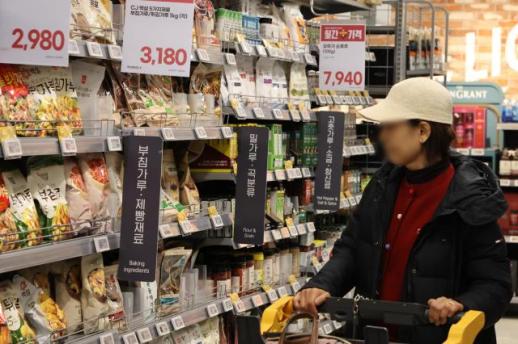 Antitrust watchdog moves to penalize seven flour millers over price-fixing cartel SEOUL, Feb 20 (AJP) - South Korea’s competition authority has initiated formal sanctioning procedures against seven major flour producers and distributors, including industry giants CJ CheilJedang and Daehan Flour Mills, for alleged price-fixing. The Korea Fair Trade Commission (KFTC) announced Friday that it has dispatched examination reports—equivalent to a criminal indictment—to seven companies: CJ CheilJedang, Daeseon Flour Mills, Daehan Flour Mills, Sajo Dongawone, Samyang Corp., Samhwa Flour Mills, and Hantop. The move marks the start of a formal deliberation process by the antitrust watchdog to determine the illegality of their actions and subsequent penalties. Under South Korea’s legal framework, the KFTC serves as a quasi-judicial body, with its final decisions functioning as a first-instance court ruling. The latest move is part of a broader government crackdown on cartels that threaten consumer price stability. Since launching its investigation last October, the regulator has concluded that these seven firms, which command an 88 percent share of the domestic business-to-business (B2B) flour market, colluded to fix prices and allocate sales volumes over a period of six years. The commission estimates the relevant revenue affected by the cartel to reach approximately 5.8 trillion won ($4.1 billion). Consequently, the watchdog has proposed corrective orders and significant administrative fines for violating the Fair Trade Act. "Under relevant laws, the commission can impose fines of up to 20 percent of the revenue affected by the collusion," said Yoo Seong-wook, Director General for Investigation Coordination at the KFTC. Yoo stressed that the agency will "strive to substantially block any incentive for cartels through aggressive law enforcement against practices that threaten the people's livelihood." This follows a 2006 case where the authority penalized millers for similar charges. Notably, the current report includes a recommendation for a "price reset order," forcing companies to re-evaluate and lower their prices to competitive levels. "While most cartel cases end with a cease-and-desist order and fines, we determined that an effective restoration of competition is necessary for items so closely tied to daily life," Yoo explained, noting that the price reset order was included as a measure to proactively restore market competition. The KFTC’s decision to publicly announce the dispatch of the report is considered unusual. Historically, the antitrust regulator has maintained a "Neither Confirm Nor Deny" (NCND) stance before final deliberations are concluded. "We considered the need to strengthen the public's right to know and enhance procedural transparency," Yoo said. While the agency plans to disclose information within a scope that does not infringe on the defendants' right to defense, it will follow global trends, such as those in the European Union, where reports are made public before final decisions. The seven firms have eight weeks to submit written opinions or request access to evidence. Given the direct impact on consumer prices, the competition watchdog plans to hold its final plenary session as soon as the defense procedures are completed. The crackdown comes as the government intensifies its focus on essential goods. On Feb. 13, a "Special Task Force for Consumer Price Management" was launched to monitor collusion in markets for flour, sugar, and other necessities. During a meeting on Thursday, President Lee Jae Myung specifically highlighted sugar, flour, meat, and school uniforms as key items requiring scrutiny. 2026-02-20 16:09:37
 -
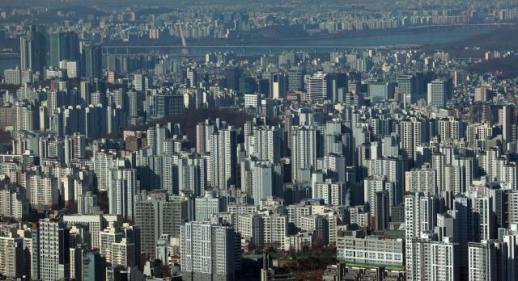 Korean household debt hits new height as hot assets fuel leveraged investment SEOUL, Feb 20 (AJP) - Red-hot asset markets in South Korea pushed household debt to a fresh record by the end of 2025, as investors increasingly relied on borrowing for property and stock investment, data showed Friday. According to the Bank of Korea, total household credit outstanding stood at 1,978.8 trillion won ($1.37 trillion) at the end of the fourth quarter of 2025, up 14 trillion won from the previous quarter. It marked the highest level since data collection began in the fourth quarter of 2002. For the full year, household debt expanded by 56.1 trillion won, or 2.9 percent, the largest year-on-year increase since 2021. Loans from commercial banks rose by 6 trillion won in the fourth quarter, sharply easing from a 10.1 trillion won gain in the third quarter, as banks tightened lending to meet year-end regulatory caps. By contrast, lending by non-bank depository institutions increased by 4.1 trillion won, more than double the 2 trillion won rise recorded in the previous quarter. Within this sector, mortgage loans jumped by 6.5 trillion won, reflecting an influx of borrowers turned away by major commercial banks. “Other loans,” including personal credit lines and non-mortgage borrowing, added 3.8 trillion won. These loans, often linked to equity market trading, pushed the balance of credit used for leveraged investment to around 27 trillion won toward the end of the year. Borrowing from “other financial corporations”—including credit card companies, financial holding firms and moneylenders—rose by 1.1 trillion won to 526.1 trillion won. Within this category, non-mortgage loans increased by 5.1 trillion won to 260.4 trillion won, offsetting a decline in housing-related lending. “This appears to be a temporary migration as commercial banks managed loan caps toward the end of the year,” said Lee Hye-young, head of the BOK’s Monetary and Financial Statistics Team. She played down concerns over a long-term deterioration in debt quality, noting that a similar pattern was observed in the fourth quarter of 2024, when non-bank lending surged by 6.6 trillion won after a decline in the previous quarter. In October last year, the government introduced a series of stricter measures, capping mortgage limits from as high as 600 million won to as low as 200 million won depending on property values. Despite the move, critics argue that the impact on overall loan growth was limited, pointing out that the quarterly increase in personal credit loans fell by only 900 billion won from the third quarter. Lee rejected claims that the regulations had failed. “While growth in insurance company loans and card loans partly offset the decline in mortgages, the purposes of these loans vary, including stock investment,” she said. She added that changes in lending patterns should not be interpreted as evidence of regulatory weakness. The central bank projects that South Korea’s household debt-to-GDP ratio will decline slightly from 2024 levels. “We will have a clearer picture after checking nominal GDP statistics in March and flow-of-funds data in April,” Lee said, adding that current indicators suggest the ratio will fall below the 89.6 percent recorded in 2024. However, she cautioned that uncertainty remains high, given fluctuations in mortgage lending and credit-based investment. “It is still too early to draw firm conclusions,” she said, citing volatility in housing finance and leveraged trading demand. 2026-02-20 14:02:37
 -
 Déjà vu on housing as Seoul launches another real estate war SEOUL, Feb 19 (AJP) - Seoul has once again taken a hard-line approach to real estate policy — deploying higher taxes, stricter lending caps and strong-worded warnings from the president. Yet instead of cooling the market, the measures have fueled another surge in housing prices and rents in the capital. Sound familiar? Koreans have witnessed this cycle under almost every progressive government over the past two decades. The pattern is repeated: authorities crack down on multi-home owners to suppress demand, while supply remains constrained and demand stays concentrated in Seoul. The result is the opposite of what policymakers intend. According to the Korea Real Estate Board (REB), the average sale price of apartments in Seoul rose about 9 percent in 2025, the steepest increase since 2006, when prices surged nearly 20 percent. Over the same period, Seoul’s price-to-income ratio (PIR) approached 14 based on median income. In practical terms, this means a household would need to save its entire income for more than 14 years — without spending a single won — to afford a home. Since PIR does not account for living expenses or widening income inequality, the actual burden is even heavier. Regulatory tightening, limited impact To rein in prices, the government has rolled out successive regulations. On June 27 last year, mortgage loans in major regulated areas were capped at 600 million won ($440,000), and buyers were required to move in within six months. On Oct. 15, Seoul and major cities in Gyeonggi Province, including Suwon, Anyang and Gunpo, were designated as land-use permit zones, extending mortgage restrictions even to non-regulated areas. Despite these interventions, prices have continued to climb. Supply shortage meets excessive liquidity Two essential conditions for stabilizing housing prices — expanding supply and absorbing excess liquidity — have remained unmet. According to the Korean Statistical Information Service (KOSIS), nationwide housing supply in 2025 fell to about 380,000 units, down 14.5 percent from the previous year. In Seoul, supply dropped nearly 20 percent to 41,566 units from 51,452 in 2024. While supply in 2025 was slightly higher than in 2023, the key difference was liquidity. In 2023, M2 money supply growth stood at just 3.89 percent. By 2025, it had surged to 8.5 percent, more than doubling in two years. Liquidity was being injected into the market at a much faster pace. History shows that housing booms have consistently coincided with rising M2 growth. In 2006, when prices jumped about 24 percent, M2 growth reached 8.3 percent. In 2021, when prices rose nearly 20 percent, it climbed to 11.7 percent. Similar regulatory regimes were in place at the time. Under former President Roh Moo-hyun, the government strengthened comprehensive real estate taxes and introduced the reconstruction excess profit restitution system. During the Moon Jae-in administration, speculative zones and tighter mortgage limits became the policy centerpiece. Abundant liquidity tends to push down interest rates and inflate asset prices. When strict regulations collide with shrinking supply, competition for remaining inventory intensifies, driving prices even higher. Liquidity debate After the Jan. 15 Monetary Policy Committee meeting, Bank of Korea Governor Rhee Chang-yong argued that M2 growth excluding securities was only 4.74 percent in 2025, saying the money supply had not increased significantly. However, data suggests that a large portion of liquidity entered the housing market through stock gains. According to documents submitted to Rep. Kim Jong-yang’s office on Feb. 10, more than 2 trillion won in stock profits was used for home purchases in the second half of last year alone. This weakens the rationale for excluding securities from liquidity assessments. Need for liquidity management and tax reform Financial authorities acknowledge the importance of liquidity control. Explaining the rate freeze on Jan. 15, Rhee noted that “abundant liquidity acts as a driver for rising asset prices,” implicitly recognizing its role in real estate inflation. Experts also warn that tax policies can backfire. “Holding taxes can reinforce the perception of property as a premium asset, while high transaction taxes discourage selling,” said a real estate research institute official, adding that taxes ultimately become part of a home’s price tag. Supply is key — but no quick fix The most effective long-term solution remains boosting supply. On Jan. 29, the government announced plans to prioritize 60,000 units in Seoul and surrounding areas. Yet few expect immediate relief. “Construction will not begin until 2027 or 2028 at the earliest, so it will take time for supply to reach the market,” said Lee Chang-moo, a professor at Hanyang University. “These measures should be viewed from a mid- to long-term perspective.” A similar lag occurred under the Roh administration, when new towns such as Pangyo, Dongtan and Gwanggyo were planned. Although roughly 300,000 units were announced, large-scale move-ins did not begin until 2009, after Roh left office. Experts say today’s policies should be judged in the same way — not by short-term price movements, but by whether they ultimately correct the structural imbalance between supply, liquidity and demand. 2026-02-19 17:49:09
 -
 Chip-led export price gains more than offset Korea's import inflation in Jan SEOUL, February 13 (AJP) - South Korea's export prices picked up far faster than import prices in January on the back of strong semiconductor demand, more than offsetting import inflation caused by a weak currency, data showed Friday. According to the Bank of Korea, January export prices climbed 4.0 percent from December and 7.8 percent from a year earlier, accelerated from a 0.6 percent monthly gain and a 0.1 percent annual decline in December. Strong demand for chips and IT products more than offset the slight softening of the dollar. The won averaged 1,456.51 per dollar in January, compared with 1,467.4 in December. The export volume index jumped 28.3 percent from a year earlier, while the export value index surged 37.3 percent, more than tripling December’s growth pace and overwhelming gains in imports. Import volume and value indices increased 14.5 percent and 12.5 percent, respectively, from a year earlier. The electronics segment, including semiconductors, bolstered export prices, rising 12.4 percent from December and 34.2 percent from a year earlier. DRAM prices surged 31.6 percent from the previous month, while flash memory rose 9.9 percent. Compared with a year earlier, prices for both items more than doubled — up 102.7 percent for DRAM and 115.1 percent for NAND. Primary metal products, including copper, also supported the upward trend, rising 7.1 percent from December and 22.0 percent from a year earlier. Strong copper demand from semiconductor and power-grid sectors, combined with rallies in precious metals such as gold and silver, lifted prices. Silver ingots jumped 42.1 percent from December, while refined copper products rose 10.4 percent. Gold prices surged more than 80 percent between December and January to reach $5,000 per troy ounce, while silver climbed to a record above $120. Copper also gained about 5 percent to around $8,800 per ton. Import Prices Rise Moderately Import price gains remained relatively mild despite prolonged weakness in the won, reflecting softer international fuel prices and subdued domestic demand. Import prices edged up 0.4 percent from December and fell 1.2 percent from a year earlier. Copper ore recorded the sharpest increase, jumping 10.1 percent from the previous month, as demand expanded across AI-related industries, from semiconductors to power grids. Primary metal products led import price increases, posting a 6.3 percent monthly gain and an 18.5 percent annual rise. Refined precious metals rose 24.6 percent from December and surged 129.5 percent from a year earlier, driven by price spikes in non-ferrous metals used in semiconductors, including platinum and palladium. Trade Conditions Improve The net terms-of-trade index rose 8.9 percent from a year earlier, up from around 5 percent in December, and climbed 4.4 percent from the previous month. The income terms-of-trade index jumped 39.7 percent from a year earlier, reflecting sharply improved export earnings. Fuel Prices Decline, With Exceptions Export prices for coal and petroleum products fell 0.4 percent from December and dropped 13.1 percent from a year earlier, reflecting lower crude oil prices. Dubai crude fell to around $61 per barrel in December, and those cheaper imports were processed and exported in January. Gasoline export prices declined 3.7 percent from December. Retail gasoline prices in Seoul fell from 1,802 won per liter in December to 1,763 won in January. Diesel prices dropped 13.1 percent from a year earlier amid slowing demand for diesel vehicles and rising inventories. Bunker C oil prices slid 25.1 percent as global cargo volumes softened. Jet fuel prices rose 0.4 percent from December, supported by strong year-end travel demand and increased air cargo linked to tensions around the Strait of Hormuz. On the import side, crude oil and bunker fuel prices fell 22.9 percent and 20.5 percent, respectively, from a year earlier. By contrast, liquefied petroleum gas prices rose 5.3 percent from December, as winter heating demand remained strong and Saudi Aramco raised its January contract prices by more than 6 percent per ton. 2026-02-13 14:53:08
 -
 Seoul embarks on massive cleanup of penny stocks while market is hot SEOUL, Feb 12 (AJP) - Hoping to keep alive the sizzling momentum in the Korean stock market, now ranked among the world’s top 10 by valuation, Seoul has toughened rules to clean out zombie stock names. According to a new set of delisting requirements unveiled Thursday by the Financial Services Commission (FSC), members of the KOSPI will face stronger market capitalization and financial health standards, similar to those applied to the smaller KOSDAQ. As of September 2024, “zombie companies” accounted for nearly a quarter of KOSDAQ listings and around 10 percent of the KOSPI. Financial authorities estimate that the ratio of marginal firms across both markets remains at similar levels today. Zombie companies, also known as marginal firms, refer to businesses unable to cover even their interest expenses with operating profits, often falling into capital erosion. Previously, the FSC considered delisting only firms that were in a state of capital erosion at the end of a fiscal year. Under the new rules, however, companies that fall into capital erosion even on a semiannual basis will immediately face delisting procedures. The message is clear: firms that cannot — or will not — rapidly restore their financial standing will no longer be allowed to linger in the capital market. The deadline for meeting minimum market capitalization requirements has also been sharply brought forward. Originally, listed firms were required to reach a market capitalization of 15 billion won ($10.4 million) by January this year, 20 billion won by January 2027, and 300 billion won by January 2028. Under the revised plan, firms must reach 20 billion won by July this year and 300 billion won by January 2027. Furthermore, share prices must be maintained at 1,000 won or higher. “In the U.S. Nasdaq, being a ‘penny stock’ is grounds for delisting,” FSC Vice Chairman Lee Eog-won said during a regional meeting in Gwangju the previous day. “We intend to introduce similar provisions here.” The threshold for delisting due to disclosure violations has also been lowered from 15 penalty points to 10. Disclosure violations are typically categorized into failure to disclose, changes in disclosure, and reversals of disclosure, with penalties ranging from 1 to 10 points depending on severity. This means a single major violation could now trigger immediate delisting proceedings. A notable example is Kumyang, a KOSPI-listed firm that was handed 10 penalty points for allegedly inflating performance figures for a mine in Mongolia. While Kumyang accumulated a total of 17 points annually in that instance, under the new rules such a firm would enter delisting review immediately upon reaching the 10-point mark. The review period itself has been shortened from 18 months to one year. To prevent firms from using injunction lawsuits to stall proceedings, the FSC plans to coordinate closely with relevant courts. The regulator has also launched an “Intensive Delisting Management Task Force,” led by the vice chairman of the KOSDAQ Market Division, which will operate for the next 17 months until July next year. The FSC estimates that up to 220 companies could be delisted this year under the new regulations, far exceeding the original estimate of 50. Among them, 160 firms are classified as penny stocks trading below 1,000 won, representing 9 percent of all KOSDAQ-listed companies. “For the past 20 years, the KOSDAQ market has maintained a structure of ‘many births and few deaths,’ with 1,353 entries and only 415 exits,” the FSC said. “While the number of listed firms grew eightfold, total market capitalization increased only 1.6 times.” After surpassing the 1,000 mark during the dot-com bubble on Sept. 14, 2000, the KOSDAQ remained trapped between 600 and 900 for more than 25 years before recently breaking above 1,000 again. The FSC plans to apply the same strengthened standards to the benchmark KOSPI market. On Thursday, the KOSDAQ closed at 1,125.99, up 1 percent. The modest gain contrasted with the KOSPI, which surged 3.13 percent to a record high of 5,522.27. While the KOSPI climbed 4.2 percent between Feb. 9 and Feb. 12, the KOSDAQ remained virtually flat, edging up just 0.14 percent. 2026-02-12 16:34:26
 -
 Korean won recovery capped by capital outflows despite weaker dollar SEOUL, Feb 12 (AJP) -Despite a broad retreat in the U.S. dollar, the South Korean won has failed to stage a meaningful recovery, frustrating authorities attempting to break what officials increasingly describe as a cycle of “structural undervaluation.” According to data released Thursday by the Bank of Korea, the won-dollar exchange rate stood at 1,459.1 as of Feb. 10, marking a 1.4 percent depreciation from December’s average of 1,439. The decline came even as authorities deployed more than $4.7 billion in foreign exchange reserves over the past two months to stabilize the currency. Market data point to clear signs of intervention. Average daily spot turnover jumped by $3.72 billion — from $13.95 billion in December to $17.67 billion in January — a surge widely attributed to official efforts to defend the won. The won’s weakness stands in sharp contrast to global currency trends. Over the same period, the U.S. Dollar Index (DXY) fell 1.5 percent from 98.3 to 96.8, lifting most major currencies. The Japanese yen strengthened from 156.7 in December to 154.3 as of Feb. 10. The euro and British pound gained 1.5 percent and 1.3 percent, respectively. Among major advanced economies, the won was the only currency to lose grounds. The divergence is even starker against emerging markets. The J.P. Morgan Emerging Market Currency Index rose 2.4 percent, from 46.6 to 47.7. The Brazilian real advanced 5.7 percent, the Mexican peso climbed 4.7 percent and the Russian ruble rose 2.2 percent. Even the Chinese yuan — the only emerging-market currency included in the IMF’s Special Drawing Rights basket — appreciated 1.1 percent despite Beijing’s easing measures. India, the only BRICS member maintaining a weakening trend due to domestic policy easing, saw a modest 0.5 percent depreciation — far smaller than Korea’s decline. Yet underlying indicators suggest no structural shortage of dollars. The three-month swap rate — a key gauge of dollar funding conditions — rose 16 basis points from minus 1.48 percent in December to minus 1.32 percent as of Feb. 10, reflecting a narrowing Korea-U.S. interest rate gap. Currency swap rates climbed from 2.6 percent to 2.84 percent during the same period. The data indicate that the won’s weakness stems more from external sentiment and capital flows than from physical dollar scarcity. External confidence metrics remain stable. The spread on short-term external borrowing narrowed from 13 basis points in December to 11 basis points in January. Korea’s five-year credit default swap premium edged down from 22 basis points to 21 basis points. The Bank of Korea pointed to outbound retail flows as a key driver. Overseas investments by individuals more than tripled from $1.5 billion in December to $4.8 billion in January, the BOK noted, mounting significant upward pressure on the exchange rate. The pressure was partially offset by the National Pension Service, which reduced its overseas investment target for this year from 38.9 percent to 37.2 percent. Despite the continued undervaluation, the Korean won showed signs of recovery, gaining 10 to close at 1,446 per dollar on Feb. 11. As of 2:00 p.m. on Feb. 12, the currency climbed an additional 6 to reach 1,440. This rebound comes as foreign investors scooped up 1.6 trillion won in the KOSPI market, driving capital inflows, while authorities are presumed to be continuing their market interventions. 2026-02-12 14:14:20
 -
 Job data hints AI stealing entry-level high-skill jobs in Korea SEOUL, Feb. 11 (AJP) – South Korea’s youth employment remains in the doldrums for a second straight year, and fresh losses in science, technology, law and accounting services suggest the country’s rapid embrace of artificial intelligence is steadily worsening job prospects for college graduates. January job data indicate that hiring is slowing just as companies accelerate automation, raising concerns that AI is quietly narrowing access to stable, long-term employment for young workers. According to January job data released Wednesday by the Ministry of Data and Statistics, net payroll growth slowed to 108,000 jobs, the smallest increase in 13 months. The youth employment rate for those aged 15 to 29 fell 1.2 percentage points to 43.6 percent, marking its 21st consecutive month of decline. Weak job creation is hardly new. What stands out is where new losses stemmed from. Employment in professional, scientific and technical services fell by 98,000 in January, a 6.6 percent year-on-year plunge – the steepest decline since the category was created in 2013. The sector includes legal affairs, accounting, consulting, marketing, research and development, and quality control, fields that typically require undergraduate or higher degrees and regarded as resilient to economic downturns and technological disruption. Even in April 2020, when the COVID-19 pandemic wiped out more than 470,000 jobs nationwide, employment in this category rose by 19,000. That buffer is shaken. After rebounding in 2022, growth in the professional sector slowed sharply in 2023 and weakened further in 2024 and 2025. Over the same period, youth employment fell by more than 210,000, reversing the brief post-pandemic recovery. AI hits juniors first Economists increasingly point to AI as the main driver behind the shift. A report by the Bank of Korea released last October found that 208,000 of the 211,000 youth jobs lost over the past three years were in occupations with high exposure to automation. Younger workers are heavily concentrated in routine-intensive tasks such as document review, data processing, basic research, internal reporting and customer support – areas where AI systems are rapidly replacing human labor. “These are precisely the functions companies are automating first,” said a Seoul-based labor economist. “It is the junior layer of professional work that is being hollowed out.” A study by the Thomson Reuters Institute shows that many practitioners in law and accounting expect AI to reduce long-term staffing needs. A November survey by the Organization for Economic Cooperation and Development found that 14 percent of small and medium-sized firms in seven countries, including Korea, now handle marketing, research and public relations internally using AI tools. Global shift reaches Korea Major global firms have already begun adjusting their workforces. International law firm Baker McKenzie has restructured about 10 percent of its back-office staff in parts of Europe, while U.S. software company Salesforce laid off roughly 4,000 customer-support workers last year. In South Korea, strict labor protections have limited large-scale layoffs. Instead, companies are responding by freezing recruitment and trimming entry-level hiring. “We have not hired anyone since early last year,” said an executive at a Seoul-based IT services startup, speaking on condition of anonymity. “Basic work is now handled by AI systems. There is simply less need for junior staff.” Industry insiders say this quiet pullback in hiring is having a bigger long-term impact than visible job cuts, especially for new graduates trying to enter competitive fields. ‘AI-washing’ or structural change? Some analysts caution that AI is sometimes used as a convenient justification for cost-cutting. “Some executives cite AI as a rationale for downsizing that is actually driven by overhiring or margin pressure,” said Fabian Stephany, a researcher affiliated with the Oxford Internet Institute. In such cases, “AI” becomes a branding tool for traditional restructuring, rather than the real cause of job losses. Others argue that a deeper transformation is under way. “This is not simply about fewer jobs,” said Yoon Seok-bin, a professor at Sogang University’s Graduate School of AI and Software. “It is about different jobs. Demand is shifting toward people who can define problems, structure arguments and create value, rather than those who only process information,” he said. 2026-02-11 17:29:48
 -
 NPS' big bet on US tech stocks pay off, with '25 gains near $30 bn SEOUL, February 11 (AJP) - South Korea’s National Pension Service (NPS) booked nearly $29.4 billion in valuation gains from its U.S. stock portfolio last year from its aggressive bet on Big Tech and artificial intelligence-driven growth despite rising concerns over market froth. The fund - one of the largest institutional players in the world - in its latest 13F filing to the U.S. Securities and Exchange Commission reported that it held stakes in 561 U.S.-listed companies as of Dec. 31, 2025. The market value of its U.S. equity holdings stood at $135.07 billion, up 27.8 percent from a year earlier and marking an increase of $6.29 billion in valuation terms. The number of stocks in the portfolio rose from 552 to 561 over the quarter, while total shares climbed 3.36 percent to 888.4 million. The rally was led by technology heavyweights, particularly those linked to AI infrastructure and platforms. The largest quarterly increase came from Alphabet, the parent of Google. The valuation of the pension fund’s combined Class A and C shares surged from $5.39 billion in September to $7.16 billion at year-end, despite only a modest increase in share count. Holdings in Apple rose 8.45 percent in value to $8.21 billion, while pharmaceutical giant Eli Lilly posted a sharp 42.9 percent jump. Semiconductor maker Micron Technology also stood out, with its valuation nearly doubling to $870 million on strong memory chip demand linked to AI servers. As of end-2025, the largest single holding in the NPS U.S. portfolio was NVIDIA, accounting for 6.9 percent of total assets, or $9.34 billion, followed by Apple (6.1 percent), Microsoft (5.2 percent), and Amazon (3.4 percent). The combined exposure highlights the fund’s continued concentration in U.S. technology and platform leaders that dominate the global AI ecosystem. While maintaining an aggressive stance on Big Tech, the NPS continued selective portfolio adjustments in the fourth quarter. Holdings in Intel fell 2.3 percent, while stakes in Roblox, Nike, and Applied Materials were also reduced. Its holding in Estée Lauder jumped from fewer than 5,000 shares to more than 400,000, while stakes in Reddit, Dollar Tree, and Ulta Beauty increased multiple times. The NPS also initiated new positions in Spotify and space company Rocket lab. 2026-02-11 16:49:42