
Journalist

Lee Jai-hee
ellenshs@ajunews.com
-
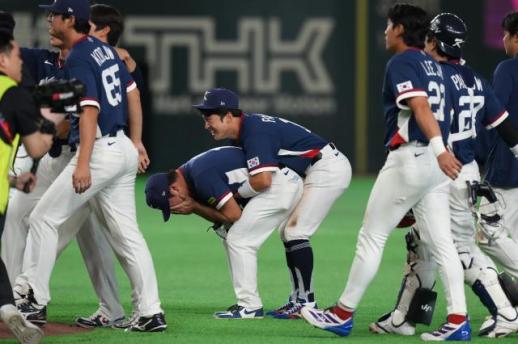 South Korea survives a dramatic tiebreaker to advance WBC quarterfinals in 17 years SEOUL, March 10 (AJP) - South Korea advanced to the quarterfinals of the World Baseball Classic for the first time in 17 years on Monday, defeating Australia 7–2 in Tokyo through a combination of disciplined execution, mathematical precision — and a measure of luck. The win at Tokyo Dome gave South Korea the exact margin it needed — a victory by at least five runs while allowing no more than two — to edge past Australia and Chinese Taipei in Pool C and secure the final ticket to the knockout stage. Designated hitter Moon Bo-gyeong delivered the decisive performance, blasting a two-run homer and finishing with four RBIs to power South Korea’s offense in the must-win finale. Still, South Korea’s path to the quarterfinals came down to the final inning and a sequence of fortunate moments. Leading 6-2 entering the ninth, South Korea still needed one more run to maintain the required five-run margin. Kim Do-yeong drew a leadoff walk, and Lee Jung-hoo’s sharp grounder deflected off Australian pitcher Jack O’Loughlin’s glove, triggering a rushed throw by shortstop Jarryd Dale that sailed into right field. The error placed runners on the corners before Ahn Hyun-min lifted a sacrifice fly to right field, restoring the crucial five-run cushion. South Korea then held firm in the bottom of the ninth to seal the victory and the long-awaited return to the WBC quarterfinals — its first since finishing runner-up in 2009. Fortune had also tilted the broader tournament math slightly in Korea’s favor. South Korea, Australia and Chinese Taipei all finished Pool C with identical 2–2 records. With head-to-head results tied, the standings were determined by the team run-prevention average in games among the tied teams. All three teams allowed seven runs in those matchups, but South Korea edged the tiebreaker by recording one more defensive inning than the others, giving it the best run-prevention ratio. Earlier in the tournament, Australia’s upset 3–0 victory over Chinese Taipei also helped keep the mathematical pathway open for South Korea, which had appeared on the brink of elimination after losing to Taipei the previous day. South Korea will now travel to Miami to face the winner of Pool D — likely Venezuela or the Dominican Republic — in the quarterfinals on March 14 (Korea time). 2026-03-10 07:26:09
 -
 Korea's WBC hopes hang on Australia after Taipei loss SEOUL, March 08 (AJP) -South Korea’s hopes of advancing at the 2026 World Baseball Classic were left hanging by a thread Sunday after a 5–4 extra-innings loss to Chinese Taipei at Tokyo Dome, requiring the team a convincing final-game victory to stay alive. The defeat dropped South Korea to 1–2 in Pool C, while Chinese Taipei finished its schedule at 2–2. South Korea will close the opening round against Australia at 7 p.m. Monday, but its path to the quarterfinals depends first on Japan defeating Australia in Sunday night’s game. If Japan wins, South Korea could still force a three-way tie at 2–2 by beating Australia. The final standings would then be determined by tournament tiebreaker rules, beginning with fewest runs allowed, followed by earned runs allowed, batting average and drawing lots. That scenario leaves South Korea with the steepest task among the tied teams. To realistically advance, Korea would likely need a decisive victory over Australia while keeping its runs allowed low, making Monday’s game effectively a must-win by a wide margin. Sunday’s loss came despite a standout performance from Kim Do-yeong, who nearly carried South Korea to victory with a two-run homer in the sixth inning and an eighth-inning RBI double that tied the game at 4–4. Chinese Taipei broke the tie in the 10th inning under the WBC’s tiebreak rule that begins with a runner on second base. Chiang Kun-Yu’s bunt drove in the go-ahead run, and South Korea failed to capitalize on its own scoring chance in the bottom half. The loss also extended a troubling trend for South Korea, which is still trying to reach the knockout stage for the first time since 2009, when it finished runner-up. The defeat followed another narrow loss a day earlier against defending champion Japan. South Korea stunned the Tokyo Dome crowd by jumping to a 3–0 lead in the first inning and later clawed back from a 5–3 deficit, but ultimately fell short 8–6 on Saturday night. 2026-03-08 17:00:14
 -
 Samsung union vote on strike to add memory supply concerns SEOUL, March 08 (AJP) - Unionized workers at Samsung Electronics on Monday begin a 10-day vote on whether to launch a strike, raising fresh concerns over chip supply at a time of surging demand for artificial-intelligence memory. The ballot, which runs from March 9 to 18, could pave the way for a joint protest next month and a full-scale strike from May 21 to June 7 if a majority of union members approve the action. The vote follows a breakdown in wage negotiations after the National Labor Relations Commission suspended mediation between Samsung and its three major labor unions — the Samsung Electronics Labor Union (SELU), the National Samsung Electronics Union and Samsung Electronics Co. Union. Together the unions represent more than 90,000 employees, roughly 70 percent of Samsung Electronics’ 129,000 workforce, making the vote one of the most consequential labor actions in the company’s history. Union leaders say the strike authorization vote is necessary to secure legal rights for industrial action. “We aim to secure the legal right to strike by mid-March,” said Choi Seung-ho, chairman of SELU and head of the unions’ joint negotiation committee, during a livestream last week. “We expect the vote to pass and plan to take a long-term approach to negotiations.” The dispute centers on the company’s excess profit incentive (OPI) scheme, which the unions want to reform. Labor groups are demanding the removal of the current ceiling on OPI payouts — capped at 50 percent of annual salary — arguing the limit prevents workers from benefiting fully during strong profit cycles. Samsung rejected the proposal, saying removing the cap could create compensation disparities between divisions. The company instead offered to maintain the existing limit while allowing employees to choose between operating profit or economic value added as the basis for calculating incentives. Management also proposed special payouts if certain targets are met, including an additional 100 percent OPI bonus for memory-chip employees if operating profit surpasses 100 trillion won ($75 billion). Union members say the plan still falls short, pointing to rival SK hynix’s performance bonuses — reportedly reaching 2,964 percent of base salary in some cases — as evidence Samsung employees are being under-rewarded. Union leaders have also stirred controversy after warning that employees who refuse to participate in strike actions could face consequences. During a livestream announcement, union officials said they would monitor offices and keep records of workers who continue working during a strike, suggesting such employees could face disadvantages in future negotiations. If approved, the strike would mark Samsung Electronics’ second major labor stoppage, following the company’s first strike in July 2024 that lasted about a month. While production disruption during the earlier strike proved limited, analysts say the stakes may be higher this time. Union membership has expanded significantly since 2024, particularly within the semiconductor division that generates the bulk of Samsung’s profits. Industry observers warn that labor disruptions could affect the production ramp of next-generation HBM chips, a critical component for AI accelerators produced by Nvidia. Samsung recently began mass production of HBM4, intended for Nvidia’s next-generation AI platform known as Vera Rubin. The chips typically require four to five months of wafer processing followed by up to two months of packaging, meaning production will be in full swing during the proposed May strike window. “Semiconductor manufacturing is highly automated, so a strike may not immediately halt production,” an industry official said. “But even the perception of instability can worry customers and investors.” The labor dispute comes at a sensitive time for Samsung’s semiconductor business. The company has been trying to regain ground in the fast-growing HBM market after losing early momentum to SK hynix, which has secured key supply contracts with Nvidia. SK hynix controlled roughly 53 percent of the HBM market in the third quarter of 2025, compared with about 35 percent for Samsung. Any disruption to Samsung’s memory production schedule could strengthen SK hynix’s advantage in the AI chip supply chain. The possibility of a strike also adds to broader uncertainty facing Samsung Electronics as geopolitical tensions rise. The company has significant exposure to global consumer markets, including the Middle East, where escalating conflict between the United States, Israel and Iran threatens to dampen economic sentiment. Samsung remains the leading smartphone vendor in the region, with roughly 34 percent market share as of the third quarter of 2025, while the Middle East also represents a major market for its home appliance business. 2026-03-08 14:11:59
 -
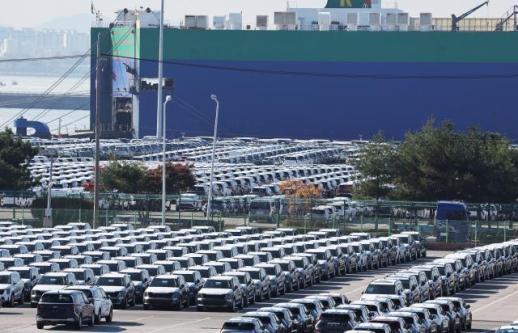 Asian carmakers risk collateral damage from prolonged Iran war: report SEOUL, March 08 (AJP) -Asian automakers, led by Chinese brands but also including Japan’s Toyota Motor Corporation and South Korea’s Hyundai Motor Company, could face the biggest fallout if the war triggered by U.S. and Israeli strikes on Iran turns into a prolonged conflict, according to a report by Bernstein Research. In a recent report, the brokerage said the conflict could hit the global automotive sector through three main channels: collapsing vehicle demand in Iran, disruptions to vehicle shipments across the Gulf region and rising oil prices that weaken global car sales. The report warned that the risks are particularly concentrated in Asia, where automakers have built strong market positions in the Middle East and rely heavily on shipping routes passing through the Strait of Hormuz. Chinese manufacturers are expected to suffer the most immediate impact due to their growing export reliance on the region. According to Bernstein, about 17 percent of China’s passenger-car exports are shipped to the Middle East, with roughly 500,000 vehicles delivered to the region last year. Chinese brands have expanded aggressively in Iran in recent years after Western automakers withdrew under sanctions, with companies such as Chery, Changan and others filling much of the market previously occupied by European and Japanese firms. The brokerage said the Middle East has become a crucial outlet for China’s export-driven auto industry, leaving it vulnerable to geopolitical disruptions. The report also highlighted Iran as the region’s largest automotive market. Total vehicle sales across the Middle East reached roughly 3 million units last year, with Iran accounting for about 38 percent of that total. A collapse in Iranian demand would therefore ripple across the wider regional auto market, Bernstein said. While Chinese manufacturers face the largest direct exposure, the report said established Asian automakers also have significant stakes in the region. As of early March, market share across the Middle East stood at roughly 17 percent for Toyota, 10 percent for Hyundai Motor, and 5 percent for China’s Chery, together representing nearly a third of regional vehicle sales. The Middle East has also become an important export destination for Korean automakers. Hyundai Motor sends roughly 8 percent of its global wholesale shipments — about 317,000 vehicles annually — to the Middle East and Africa, highlighting how geopolitical shocks in the Gulf could ripple through Asian auto supply chains. Bernstein said the most serious long-term risk lies in the potential impact of higher oil prices on global vehicle demand. If the conflict pushes crude prices higher — particularly if shipping traffic through the Strait of Hormuz is disrupted — consumers worldwide may delay car purchases, especially internal-combustion models that still dominate most markets. “The biggest risk for the auto sector is that a prolonged war drives oil prices higher and undermines global economic confidence,” the report said, warning that such a scenario could weaken vehicle demand well beyond the Gulf region. 2026-03-08 13:38:40
 -
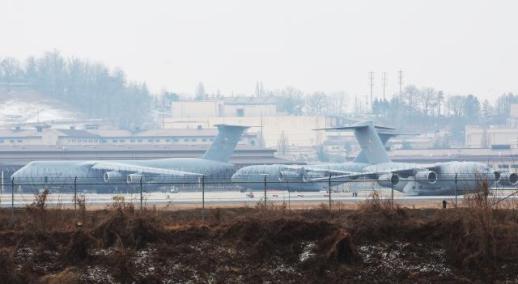 Osan airlift fuels U.S. redeployment speculation amid Iran war SEOUL, March 08 (AJP) - A series of departures by large U.S. military transport aircraft from a key American air base in South Korea has fueled speculation that some U.S. Forces Korea (USFK) air defense assets could be redeployed to the Middle East amid the escalating conflict involving Iran. According to the real-time flight tracking service Flightradar24, multiple U.S. Air Force C-5 and C-17 transport aircraft that arrived at Osan Air Base in Pyeongtaek, south of Seoul, in late February departed the base in early March. Most of the aircraft were tracked heading toward Anchorage, Alaska, a major U.S. military logistics hub. Particular attention has been drawn to the movements of the C-5 Galaxy, a strategic transport aircraft significantly larger than the more commonly seen C-17 Globemaster. At least two C-5 aircraft arrived at Osan in late February and departed on Feb. 28 and March 2, respectively. The aircraft’s final destinations were not publicly listed, though flight data showed journeys lasting more than 14 hours, raising the possibility they were bound either for the U.S. mainland or the Middle East. While C-17 aircraft regularly operate through Osan to transport personnel and equipment, visits by the larger C-5 are considered relatively uncommon. The activity has prompted speculation that the aircraft may have transported Patriot air defense components. U.S. Forces Korea is known to have recently moved several Patriot missile batteries from other bases in South Korea to Osan. If confirmed, the movement could suggest that some of those air defense assets have already been loaded onto transport aircraft and relocated outside the peninsula. Flight tracking data shows that C-17 aircraft departed Osan intensively between March 3 and March 7, with at least six confirmed flights heading to Anchorage. Some security watchers speculate the increased air traffic could also be linked to preparations for the annual South Korea–U.S. joint military exercise Freedom Shield, which begins March 9. Others note that if the conflict with Iran becomes prolonged, the temporary redeployment of certain U.S. assets stationed in South Korea could become increasingly likely. A similar precedent occurred last year, when two Patriot missile batteries stationed with USFK were temporarily deployed to the Middle East in June last year during a major U.S. military operation targeting Iranian nuclear facilities. The systems returned to South Korea in October. Any redeployment of air defense systems from the peninsula has raised concerns about potential impacts on deterrence against North Korea, though experts say any such move would likely be carefully calibrated. U.S. Forces Korea declined to comment on the aircraft movements. “For operational security reasons, we do not comment on the movement, relocation or potential repositioning of specific military capabilities or assets,” USFK said in a statement. “USFK remains focused on maintaining a strong and ready force posture on the Korean Peninsula, and the United States remains firmly committed to the defense of the Republic of Korea.” South Korea’s defense ministry also declined to comment on USFK operations. “It is not appropriate for the government to comment on the operational activities of U.S. Forces Korea,” a ministry official said, adding that Seoul and Washington continue close consultations to maintain a firm combined defense posture and ensure stability on the Korean Peninsula and in the region. Foreign Minister Cho Hyun said during a parliamentary session on Friday that the United States and South Korea are in close consultation regarding the operation of USFK assets, though he declined to provide details. 2026-03-08 12:50:33
 -
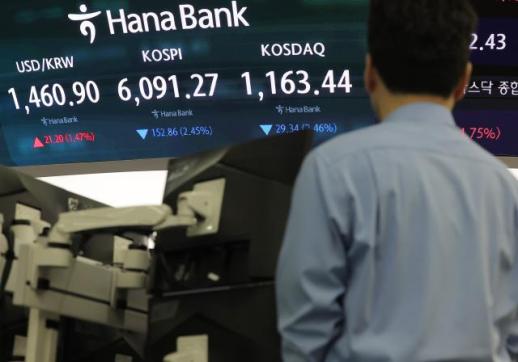
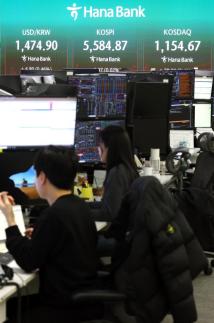 Korean markets hardest hit among key markets in first week of Gulf SEOUL, March 08 (AJP) -South Korea’s financial markets absorbed one of the sharpest shocks among major economies during the first week of the Middle East war, with equities, the currency and bond yields swinging more violently than those of global peers as investors rushed to price in the country’s heavy dependence on Gulf energy supplies. Market data compiled by the Financial Supervisory Service show that Korean assets underperformed most major markets across multiple indicators — stocks, foreign capital flows, exchange rates and sovereign yields — highlighting how exposed the export-driven economy remains to disruptions in the Strait of Hormuz, the narrow waterway through which roughly one-fifth of the world’s oil shipments pass. The benchmark KOSPI fell 10.56 percent from the end of February to early March, the steepest decline among major global indices tracked by regulators. The secondary KOSDAQ lost 3.20 percent. Over the same period, Japan’s Nikkei 225 dropped about 5.49 percent, Taiwan’s TAIEX roughly 5.12 percent, while the Euro Stoxx 600 slipped around 4.48 percent. U.S. equities showed far milder reactions, with the S&P 500 down less than 1 percent over the same window. The scale of the decline reflects the structure of the Korean market, which is dominated by cyclical exporters such as semiconductor manufacturers, automakers and shipbuilders — sectors highly sensitive to global trade conditions and energy prices. Foreign investors accelerated their withdrawal from Korean equities as geopolitical risks mounted. Data show that overseas investors have sold a net 8.1 trillion won ($6 billion) in Korean stocks in March. On March 6 alone, foreigners dumped more than 2.4 trillion won of KOSPI shares, highlighting the speed with which global funds exit Korean assets during periods of uncertainty. The Korean won also emerged as one of the weakest and most volatile major currencies in the early phase of the crisis. According to Bank of Korea data, the average daily fluctuation in the won–dollar exchange rate reached 13.2 won in early March, the highest level of volatility since the panic of March 2020 during the COVID-19 pandemic. The currency weakened 2.6 percent against the dollar over the week, compared with a 1.04 percent decline in the Japanese yen, while the dollar index gained 1.75 percent over the same period. At one point in overnight trading, the exchange rate surged to 1,505.8 won per dollar, briefly breaching the psychologically important 1,500 level for the first time since the global financial crisis in 2009. Currency swings were particularly pronounced during overnight trading hours when market liquidity is thinner and official intervention is more limited, allowing relatively small orders to move prices sharply. The divergence with Japan has been notable. While the Japanese yen historically strengthened during global crises as a safe-haven asset, the current war shock has instead pushed the yen weaker to around ¥158 per dollar, its softest level in about six weeks. Analysts attribute the move to Japan’s own heavy dependence on imported oil and expectations of rising dollar demand for energy payments. Still, the won has weakened more sharply than the yen, reinforcing its reputation among global investors as a high-beta currency that tends to amplify swings in global risk sentiment. Bond markets also reflected rising stress. The yield on three-year Korean Treasury bonds climbed to 3.227 percent, while the 10-year yield rose to 3.616 percent, increases of nearly 20 basis points from late February, roughly in line with the rise in U.S. Treasury yields but far exceeding the 5.4 basis-point increase in Japan’s 10-year government bond. Corporate borrowing costs rose even faster, with yields on three-year AA-rated corporate bonds breaching 3.8 percent, indicating a widening risk premium in domestic credit markets. Underlying the turbulence is South Korea’s structural dependence on Middle Eastern energy. The country imports the vast majority of its crude oil from the region, much of it transported through the Strait of Hormuz. Any prolonged disruption to tanker traffic there could quickly feed through to domestic fuel prices, manufacturing costs, inflation and the trade balance. Japan faces a similar reliance on imported energy, but its markets proved more resilient during the initial shock. Analysts attribute the difference partly to the relatively larger role of domestic institutional investors in Japan and the yen’s residual reputation as a defensive asset. Oil prices have surged in tandem with the conflict. WTI crude jumped 20.87 percent from late February and 41 percent from the end of 2025, while Dubai crude gained 7.67 percent over the week and 26.6 percent from late December. Brent crude rose 17.84 percent in a week and 40.3 percent from the end of last year. The instability underscores how deeply South Korea is integrated into global capital flows and commodity markets. Korean assets are often treated as a liquid proxy for investor sentiment toward global growth and emerging markets — making them particularly vulnerable when geopolitical risks spike. For investors and policymakers alike, analysts say the trajectory of markets will ultimately hinge on a single variable: the duration of the conflict and whether oil shipments through the Strait of Hormuz return to normal. If disruptions persist and crude prices push toward $100 per barrel, the financial turbulence seen in the first week of the war could deepen into a broader economic shock — one that would be felt most acutely in energy-importing economies like Korea. 2026-03-08 08:12:15
 -
 Seoul fiddles with price controls as gasoline price near sensitive threshold SEOUL, March 08 (AJP) -South Korea is approaching a politically sensitive threshold as gasoline prices surge toward 2,000 won ($1.35) per liter, prompting the government to consider emergency price controls for the first time in decades amid a global oil shock triggered by the war involving Iran. President Lee Jae Myung has ordered an aggressive multi-agency response as international crude prices jump to multi-year highs and domestic fuel prices climb rapidly. According to the Korea National Oil Corporation’s Opinet system, the nationwide average gasoline price reached 1,890.87 won per liter late Friday, while prices in Seoul — traditionally the most expensive market — have already climbed to around 1,942 won, placing the psychologically important 2,000-won level within reach. The surge follows a sharp spike in global crude markets after the U.S.–Israeli strikes on Iran and the subsequent disruption to tanker traffic in the Strait of Hormuz, a shipping chokepoint that carries roughly one-fifth of global oil supply. Brent crude and U.S. benchmark West Texas Intermediate (WTI) have surged to around $90 a barrel, with some analysts warning that $100 oil is increasingly possible if the conflict persists. The rapid domestic price response has pushed the government to review a rarely used emergency measure — the designation of a maximum retail price for petroleum products under the Petroleum and Alternative Fuel Business Act. The policy would allow the industry ministry to set a ceiling on gasoline prices if extreme market volatility threatens economic stability. President Lee raised the possibility during an emergency Cabinet meeting on March 5. “There has been no serious disruption to fuel supply, yet prices at gas stations suddenly surged,” Lee said, instructing officials to examine price control measures. He later warned against what he described as “anti-social profiteering” exploiting the crisis. The government has since launched a broad enforcement campaign targeting price collusion, hoarding, illegal fuel distribution and adulterated petroleum products, while the Fair Trade Commission is reviewing possible anti-competitive behavior among gas stations. Facing growing political pressure, industry groups representing refiners, fuel distributors and gas station operators said they would cooperate with the government to slow the pace of price increases. But market forces have so far overwhelmed those efforts. Refining margins and international benchmark prices have climbed sharply as tanker movements out of the Persian Gulf slow and war-risk insurance costs surge. Energy analysts say the speed of domestic price transmission has been unusually fast during the current crisis, amplifying consumer anxiety. Implementing a price ceiling however may not be easy. The measure has not been used in practice since South Korea liberalized petroleum pricing in 1997, and economists warn that artificial price suppression could create unintended consequences. If prices are capped below market levels, refiners and retailers could cut supply or delay shipments, potentially triggering fuel shortages. The law also requires the government to compensate businesses for losses caused by price controls — a clause that could impose a substantial fiscal burden if high oil prices persist. For that reason, policymakers are also reviewing alternative options, including expanding fuel tax cuts and releasing strategic oil reserves, before deciding whether to activate the emergency mechanism. The fuel price surge in South Korea reflects a broader global shock. In the United States, the average gasoline price climbed to $3.41 per gallon, up 14 percent in a week, according to AAA data. The gains hinge on the duration of the conflict and the security of shipping routes through the Strait of Hormuz. For South Korea — which imports nearly all of its crude oil and relies heavily on Middle Eastern supply — the crisis represents one of the most direct economic spillovers from the war. 2026-03-08 07:36:34
 -
 Korea hopes to win full fleet of Canadian submarines - industry minister SEOUL, March 05 (AJP) -South Korea will push to win the full order of Canada’s next-generation submarine fleet rather than settle for a split contract with a European rival, Industry Minister Kim Jung-kwan said Thursday, as Ottawa is said to be weighting the option of dividing one of its largest-ever defense awards. Speaking to reporters at Incheon International Airport before departing for Canada, Kim said Seoul is working “with everything it has” to secure the entire fleet of 12 diesel-electric submarines under Canada’s Canadian Patrol Submarine Project (CPSP). “Without prejudging whether things are going well or not, we are doing everything we can,” Kim said. “Twelve is a symbolic number for us.” Kim cited the famous line from Joseon naval commander Admiral Yi Sun-sin — “I still have 12 ships” — a rallying cry during the 16th-century Japanese invasions of Korea, adding that South Korea would strive to achieve a similar “12-ship miracle” in the Canadian submarine competition. His comments come as Canadian media reported that the government of Prime Minister Mark Carney is considering splitting the multibillion-dollar contract between the two finalists — buying six submarines each from South Korea’s Hanwha Ocean consortium and Germany’s ThyssenKrupp Marine Systems (TKMS). The CPSP aims to acquire up to 12 diesel-electric submarines to replace Canada’s aging Victoria-class fleet, which is expected to retire by the mid-2030s. Under the reported split scenario, Germany’s Type-212CD submarines would patrol the Atlantic, while South Korea’s KSS-III Batch-II submarines would be deployed on the Pacific coast and potentially in the Indo-Pacific region. Defense experts have warned that operating two different submarine classes could complicate supply chains, training and maintenance. Carney himself previously expressed skepticism about a mixed fleet, saying a single-class fleet offers “overwhelming” efficiency advantages. Still, Ottawa is also weighing the broader economic benefits of the procurement as it seeks to diversify trade ties with Europe and Asia amid rising economic friction with the United States. Both bidders have emphasized industrial cooperation and job creation in Canada. Hanwha has projected that its proposal could generate roughly 25,000 Canadian jobs annually between 2026 and 2044, while TKMS has signaled it could build some submarines in Canada. Kim said the scale of industrial cooperation would inevitably differ depending on whether Seoul wins all 12 submarines or only part of the order. “The scale of cooperation will naturally differ between 12 and six submarines,” he said. “Ultimately, it depends entirely on the decision of the Canadian government.” Kim is visiting Windsor, Ontario, for the completion ceremony of an LG Energy Solution battery plant and plans to meet Canadian officials, including Industry Minister Mélanie Joly, to promote South Korea’s shipbuilding capabilities and industrial partnership proposals. Canada’s government is expected to review the final bids submitted this week before making a decision as early as June, with the contract targeted to be awarded before the end of the year. 2026-03-05 11:13:02
 -
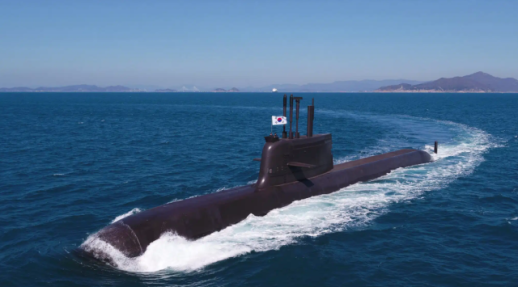 Korean industry minister flies to Canada after Team Korea submits bid for submarine deal SEOUL, March 04 (AJP) -South Korea’s industry minister will head to Canada this week to lend a final push to Team Korea’s bid for Ottawa’s multibillion-dollar submarine program, as Seoul throws its weight behind a national effort to secure one of the world’s largest naval procurement deals. Industry Minister Kim Jung-kwan is scheduled to depart Thursday for Canada to support a South Korean consortium competing for the Canadian Patrol Submarine Project (CPSP) — a program valued at up to 60 trillion won ($40 billion) to replace the Royal Canadian Navy’s aging fleet. The Korean team led by Hanwha Ocean and HD Hyundai Heavy Industries is competing against a European bid spearheaded by Germany’s Thyssenkrupp Marine Systems (TKMS), which is working with partners including Norway. Both sides submitted their final proposals to the Canadian government on Monday, moving the competition into its final phase. Kim’s trip will officially center on attending the completion ceremony for LG Energy Solution’s electric-vehicle battery plant in Ontario, but the visit is expected to double as a diplomatic push for the submarine bid. During the trip, he is expected to meet senior Canadian officials including Industry Minister Mélanie Joly to highlight Korea’s submarine construction capabilities and discuss broader industrial cooperation between the two countries. The CPSP program calls for the procurement of up to 12 conventionally powered submarines, with Canada aiming to deploy the vessels beginning in the early 2030s as its Victoria-class submarines approach retirement. Canadian officials have made clear that the winning bidder will be judged not only on capability, cost and delivery schedule but also on which proposal delivers the greatest economic and manufacturing benefits within Canada. That requirement has effectively turned the competition into a wider industrial partnership race. Hanwha Ocean has framed its proposal as the foundation for a long-term industrial partnership between South Korea and Canada, pledging investment in sectors including steel, artificial intelligence and space technologies. The company estimates the initiative could generate around 25,000 jobs annually between 2026 and 2044, while strengthening Canada’s marine manufacturing supply chain. Hanwha has also signed cooperation agreements with Canadian partners including Ontario Shipyards and Mohawk College to support workforce training and shipbuilding capability in Ontario. The plan includes establishing a shipbuilding training hub at the Hamilton shipyard aimed at addressing labor shortages in skilled trades and developing next-generation shipbuilding expertise. Hanwha Ocean is pitching its KSS-III class submarine, a platform currently operated by the Republic of Korea Navy. The design features lithium-ion batteries and an air-independent propulsion (AIP) system, allowing extended submerged endurance and a cruising range exceeding 7,000 nautical miles, along with Korean-developed sonar and combat systems. The company says it could deliver the first submarine by 2032 and four vessels by 2035, supported by what it describes as a firm delivery schedule and established supply chain. “In short, this is not just a platform pitch,” Charlie SC Eoh, president of Hanwha Ocean, said in a written response to the Canadian Press on March 2. “It is a risk-eliminated delivery plan paired with a generational industrial partnership that aligns with Canada’s defense industrial strategy.” The rival bid led by TKMS proposes a European partnership model. The German shipbuilder says it could deliver two submarines by 2034, though it has not publicly disclosed detailed cost or employment estimates. TKMS Chief Executive Oliver Burkhard described Canada’s procurement timeline — with a decision expected as early as mid-2026 — as “very ambitious,” noting that earlier plans had envisioned a decision closer to 2028 or 2029. The scale of the contract and Canada’s emphasis on domestic economic benefits have prompted a government-level lobbying push from Seoul, involving multiple ministries and defense agencies supporting the bid. South Korea’s Defense Acquisition Program Administration and other ministries have established a coordinated support framework aimed at facilitating technology transfer, training opportunities for Canadian submarine crews and broader defense-industrial cooperation. Kim’s visit follows an earlier trip to Canada in January alongside senior presidential officials to promote industrial collaboration and the submarine bid. Canada is expected to select the winning bidder as early as mid-2026, making the CPSP one of the largest defense procurement decisions in the country’s history. 2026-03-04 15:41:43
 -
 Middle East Crisis: Seoul enters emergency mode, readies contingency plan SEOUL, March 03 (AJP) -South Korea postured itself to an emergency mode Tuesday, launching round-the-clock surveillance and readying financial support for exporters as it braces for protracted conflicts in the Middle East and disruption in the fuel flow that could unsettle the economy heavily dependent on external demand and energy imports. Authorities moved swiftly as geopolitical tensions following U.S.-Israeli strikes on Iran rippled across global energy and financial markets, raising concerns over oil supply stability and capital-market volatility. Vice Finance Minister Lee Hyoung-il chaired an inter-agency emergency response meeting, reviewing developments in the Middle East and assessing spillover risks to domestic and overseas financial markets, energy logistics and the real economy. “Given the high uncertainty surrounding developments in the Middle East, all agencies must keep every possibility open and closely monitor changes,” Lee said, adding that the joint emergency response team will convene daily until tensions stabilize. The Bank of Korea (BOK) installed “Middle East Situation Monitoring Task Force” under Governor Rhee Chang-yong to assess the impact on financial and foreign-exchange markets as domestic trading resumed for the first time since the escalation. The central bank said it will maintain the task force and operate a 24-hour monitoring system in coordination with its overseas offices. “We will closely monitor market developments and respond in a timely manner if necessary,” a BOK official said. The BOK had already held an emergency videoconference on Feb. 28 — the day the strikes began — followed by additional briefings on March 2 based on reports from its overseas branches covering Asian and European markets. Global markets reflected heightened geopolitical stress. West Texas Intermediate crude rose 6.3 percent, gold gained 1.2 percent and the dollar index climbed 0.9 percent. The offshore non-deliverable forward (NDF) won rate jumped 26 won to 1,466 per dollar. Authorities warned that volatility in stock and currency markets could intensify depending on how tensions unfold. If abnormal signals emerge, officials stand ready to deploy the government’s “100 trillion won plus alpha” market stabilization program to support corporate bond and commercial paper markets and ensure a soft landing for real estate project financing (PF). Regulators also pledged a strict zero-tolerance policy against fake news, market manipulation and other unfair trading practices. The Financial Supervisory Service and the Korea Exchange will jointly monitor suspicious transactions. To cushion potential spillovers to the real economy, authorities will provide up to 20.3 trillion won in financial support for companies exposed to Middle Eastern trade. Earlier outlined as a 13.3 trillion won package, the framework was expanded to reflect growing uncertainty. Measures include liquidity support, interest rate reductions and dedicated consultation channels for affected firms. While South Korea’s overall export exposure to the Middle East is limited, officials acknowledged that certain small and mid-sized enterprises remain heavily dependent on the region. Rising tensions around the Strait of Hormuz — a critical global oil chokepoint — have prompted intensified monitoring of maritime logistics. Authorities said no abnormal safety developments involving Korean vessels in the region have been identified. Seoul on Tuesday claimed it held oil and natural gas reverses that could last at least 208 days of consumption. Including private-sector stockpiles, total reserves amount to roughly seven months — well above the International Energy Agency’s 90-day recommendation. For now, officials assess the near-term economic impact as manageable unless oil prices surge above $100 per barrel on a sustained basis. Brent crude has risen to around $77–80 per barrel in offshore trading. According to a National Assembly Budget Office estimate, oil at $100 per barrel would widen Korea’s trade deficit by $40.8 billion and lift consumer inflation by 1.3 percentage points. A 5 percent supply disruption could shave 0.6 percentage point off real GDP growth. The government and the BOK currently project 2026 growth at around 2.0 percent, while the Korea Development Institute forecasts 1.9 percent. Sustained oil above $100 could push growth into the low-1 percent range. 2026-03-03 10:27:32