

Journalist

Eun-mi. Won
silverbeauty@ajunews.com
-
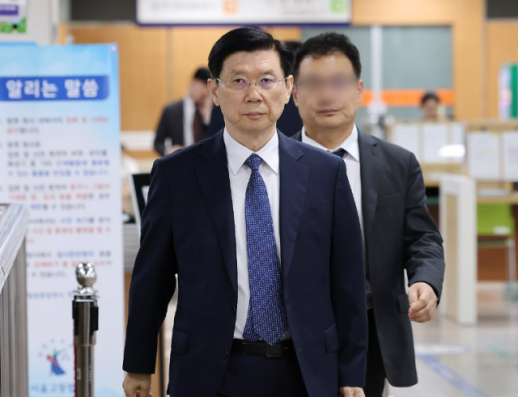 Seoul Court Seeks Heavy Sentences for Presidential Security Officials The Special Prosecutor's Office for Insurrection, led by Special Prosecutor Cho Eun-seok, has requested severe sentences for top officials of the Presidential Security Service accused of obstructing the execution of an arrest warrant for former President Yoon Suk Yeol. The prosecution claims these officials mobilized the security service to hinder the court's enforcement of the warrant to evade criminal responsibility for Yoon. During a sentencing hearing on June 1 at the Seoul Central District Court, presided over by Judge Lee Hyun-kyung, the prosecution requested a seven-year prison sentence for both Park Jong-jun, the former chief, and Kim Sung-hoon, the former deputy chief. They also sought five years for Lee Kwang-woo, the former head of the security division, and three years for Kim Shin, the former head of family security. The defendants were indicted for mobilizing security personnel to obstruct the execution of an arrest warrant for Yoon, which was sought by the Corruption Investigation Office in January of the previous year. Kim Sung-hoon is also accused of ordering the deletion of secure phone call records following the declaration of a state of emergency on December 3. In its closing arguments, the prosecution characterized the incident as an organized crime that undermined the nation's criminal justice system rather than a mere on-site clash. They emphasized, "The Presidential Security Service is not merely a private bodyguard group for the president. The defendants disregarded the service's fundamental duties and fully mobilized its resources to help Yoon evade criminal accountability." The prosecution further stated, "They physically obstructed a legally issued arrest warrant, shaking the foundations of the rule of law. We must not set a precedent that allows resistance to investigations or trials through physical force when it is unfavorable to oneself." The prosecution argued that the security service had prepared in advance by establishing barriers and increasing personnel before the warrant's execution. Evidence presented during the trial included videos and testimonies showing confrontations between Corruption Investigation Office investigators and security personnel, as well as scenes of barricades and barbed wire installations, and security staff forming a so-called 'human scrum.' The prosecution contended that Park Jong-jun played a key role as the highest authority in the security service in obstructing the warrant's execution. They asserted that Kim Sung-hoon effectively commanded the response on-site and attempted to destroy evidence related to secure phones. Lee Kwang-woo and Kim Shin were also found to have participated in the obstruction efforts through barricade installations and personnel deployments. In contrast, Park Jong-jun's defense argued that while they did not dispute the objective facts, there was no intent to obstruct public duty. His lawyer stated, "In a situation where the legality of the warrant was still in question, we believed we had the authority to deny entry into the security zone and emphasized that there should be no violations of law or physical confrontations." Kim Sung-hoon's defense also denied some charges, asserting that he only ordered the blocking of external access rather than the deletion of call records. They further claimed that regarding armed patrols, he did not lead a show of force but rather instructed officers to secure their weapons and end the patrol early. Lee Kwang-woo's defense maintained that he acted solely on orders from superiors and did not conspire in any wrongdoing, while Kim Shin's defense also denied any collusion. Meanwhile, former President Yoon was sentenced to seven years in prison in a related appeal case involving charges of obstructing the execution of the arrest warrant. This case is currently under review by the Supreme Court.* This article has been translated by AI. 2026-06-01 18:21:00
 -
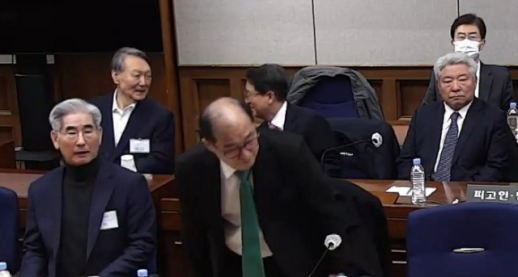 Supreme Court Begins Review of Yoon Suk Yeol's Recusal Request in Rebellion Case The appeal trial concerning former President Yoon Suk Yeol's rebellion charges has been halted as the Supreme Court has begun reviewing a recusal request filed by Yoon's legal team. If the Supreme Court dismisses the recusal, the suspended appeal trial for the rebellion case is expected to resume. According to legal sources on June 1, the Supreme Court has assigned the recusal request case to its Second Division. This division is composed of Justices Oh Kyung-mi, Kwon Young-jun, Eom Sang-pil, and Park Young-jae, with Justice Oh serving as the presiding judge. Previously, Yoon filed a recusal request against the Seoul High Court's Criminal Division 12-1, which is handling his rebellion charges appeal. A recusal request is a procedure where a defendant asks for the exclusion of a trial panel due to concerns about its impartiality. Yoon's legal team argued that the panel had used expressions that seemed to acknowledge Yoon's guilt in a case involving former Prime Minister Han Duck-soo, claiming this made it difficult for him to receive a fair trial. However, the Seoul High Court's Criminal Division 1, led by Judge Yoon Seong-sik, rejected Yoon's recusal request. The division stated that the related case and the main case are separate criminal matters, and that the main case would be judged based on the evidence presented by the prosecution and the defense's responses, thus finding no grounds for concerns about an unfair trial. Dissatisfied with this decision, Yoon filed a recusal appeal to the Supreme Court. This appeal is a procedure to seek the Supreme Court's judgment on a decision made by the High Court. The recusal requests filed by former Defense Minister Kim Yong-hyun and former Director of the Defense Intelligence Command Noh Sang-won against the same appeal panel are also being handled by the Supreme Court's Second Division, with Justice Oh as the presiding judge. Both Kim and Noh have also filed recusal requests against the Seoul High Court's Criminal Division 1, which reviewed their initial requests. This is referred to as a 'recusal of the recusal' case. The Seoul High Court's Criminal Division 1 deemed this to be clearly aimed at delaying the proceedings and dismissed it quickly, with the appeal against this dismissal also assigned to the Supreme Court's Second Division. Under criminal procedure law, the filing of a recusal request generally halts the progress of the trial. As a result, the appeal trials for Yoon, Kim, Noh, and former Major General Kim Yong-gun regarding the rebellion case are currently on hold pending the Supreme Court's decision. However, the Seoul High Court's Criminal Division 12-1 is continuing proceedings for four co-defendants, including former National Police Agency Commissioner Jo Ji-ho, former Seoul Police Agency Commissioner Kim Bong-sik, former National Assembly security chief Mok Hyun-tae, and former National Police Agency National Investigation Service planning and coordination officer Yoon Seung-young, by separating their cases. If the Supreme Court dismisses the recusal requests from Yoon and others, the suspended appeal trial for the main rebellion case will resume. Conversely, if the Supreme Court finds merit in the recusal requests, it may necessitate a change in the trial panel, potentially delaying the second trial further.* This article has been translated by AI. 2026-06-01 14:03:00
 -
 Special Prosecutors Extend Detention of Kim Dae-ki and Yoon Jae-soon, Indictment Expected Next Week The second special prosecutor team, led by Kwon Chang-young, has extended the detention of former presidential chief of staff Kim Dae-ki and former chief secretary Yoon Jae-soon. They are the first individuals to be detained by the special prosecutors. According to legal sources on June 1, the special prosecutors requested the court to extend the detention period of Kim and Yoon, who were arrested on charges of abuse of authority, until June 10. Their initial detention period was set to expire on May 31. The special prosecutors are investigating allegations of illegal diversion of the Ministry of Interior budget related to the presidential residence. Kim and others are accused of illegally diverting funds from the Ministry of Interior's budget to cover excess construction costs for the relocation of the presidential residence in 2022, paying an unqualified contractor, 21 grams, more than the originally allocated contingency budget. The special prosecutors believe that Kim and others were involved in diverting 2.8 billion won from the Ministry of Interior's budget. The budget for the residence relocation was set at 1.44 billion won, but the actual construction costs ballooned to 4.116 billion won, prompting the presidential office at the time to pressure the Ministry of Interior to cover the additional expenses. Previously, on May 22, the special prosecutors successfully secured their first arrests after 86 days of operation, obtaining arrest warrants for Kim and Yoon. Kim O-jin, the former administrative secretary, who was also included in the warrant request, had his warrant denied and continues to be investigated while not in custody. The special prosecutors are expected to decide on whether to indict Kim and Yoon before the new detention period expires on June 10. They may also take legal action against Lee Sang-min, the former Minister of Interior, who is scheduled to be summoned for questioning on June 4 for similar allegations. If Kim and Yoon are indicted, the special prosecutors will need to assign at least one dispatched prosecutor to handle the prosecution, which poses a challenge. The maximum investigation period for the special prosecutors is until July 23, and they currently have 12 dispatched prosecutors. On May 22, the special prosecutors also requested the Ministry of Justice to dispatch three additional prosecutors, but this has not yet been fulfilled.* This article has been translated by AI. 2026-06-01 12:09:00
 -
 Special Prosecutors Investigate Former Police Chief Yoon Hee-keun in Unification Church Case The second special investigation team, led by Special Prosecutor Kwon Chang-young, is probing allegations that the police covered up an investigation into overseas gambling linked to the Unification Church. On May 29, the team announced that it conducted raids on the residences and offices of four individuals, including former Police Chief Yoon Hee-keun and former Gangwon Police Chief Kim Do-hyung, the day prior. The special investigation team executed search warrants based on allegations of abuse of power and breach of confidentiality. However, they did not disclose the specific charges against each suspect. Yoon is currently identified as a suspect in the investigation. The special investigation team is looking into claims that the police were aware of allegations involving Unification Church leader Han Hak-ja and other officials engaging in overseas gambling but failed to pursue a formal investigation. Reports indicate that in 2022, the police received a tip from an insider suggesting that Han had been gambling abroad using church members' cash and subsequently prepared an intelligence report. Although this report was classified as a top-priority alert, it was never assigned as a formal case, leading the special investigation team to suspect a potential cover-up. The team is particularly focused on evidence suggesting that the Unification Church received information about the investigation before it officially began. Previously released recordings involving former Unification Church leader Yoon Young-ho reportedly include comments advising to prepare for possible raids and indicating that the police's awareness of the investigation was communicated by influential figures. Earlier, the Kim Geon-hee special investigation team, led by Special Prosecutor Min Jung-ki, indicted Kwon Seong-dong, a member of the National Assembly, and Han for exchanging intelligence. However, the investigation into the internal leak of police information and the cover-up process remains unresolved. The special investigation team plans to analyze the seized materials and summon Yoon and others to investigate potential involvement from police leadership and the presidential office. 2026-05-29 18:15:00
 -
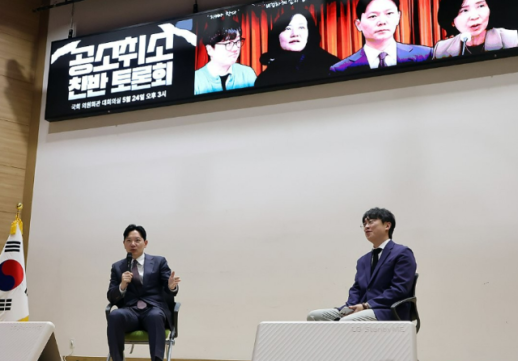 Prolonged Suspension for Prosecutor Park Sang-yong Amid Ongoing Investigations The Ministry of Justice has effectively extended the suspension of Park Sang-yong, a deputy chief prosecutor at the Incheon District Prosecutors' Office, indefinitely. Following a request for disciplinary action from the Supreme Prosecutors' Office, additional investigations by the Incheon District Prosecutors' Office are underway, raising expectations for a potential increase in the severity of the disciplinary measures. According to legal sources on May 29, the Ministry of Justice sent a formal notice to the prosecution the previous day, stating that Park's suspension would continue from June 6 until further notice. Park has been suspended since April 6. At that time, acting Prosecutor General Ku Ja-hyun requested the suspension from Justice Minister Jeong Seong-ho, which the Ministry accepted for a maximum of two months. The initial suspension was set to expire on June 5. The Ministry's decision was reportedly made under Article 8, Section 2 of the Prosecutor Disciplinary Act, which allows the Justice Minister to order a suspension if deemed necessary for a disciplinary investigation. Previously, the Supreme Prosecutors' Office sought disciplinary action against Park after a review by its inspection committee. It was determined that Park had improperly demanded a confession through the attorney of Lee Hwa-young, the former Vice Governor of Gyeonggi Province, during the investigation into the Ssangbangwool North Korea remittance case. He was also accused of failing to document the investigation process and providing external food to a suspect. In response, Park has reportedly stated that some of the grounds for his disciplinary action are inaccurate. An independent investigation into Park is ongoing. The Incheon District Prosecutors' Office is examining whether Park violated his political neutrality by refusing to take an oath as a witness during a parliamentary hearing in April and attending a discussion hosted solely by the People Power Party while under suspension. Justice Minister Jeong Seong-ho commented after casting his vote in the early voting for the 9th nationwide local elections in Gyeonggi Province on the same day, saying, "We will proceed carefully after reviewing the results of the Incheon District Prosecutors' Office's investigation. We are also reviewing the records submitted by the Supreme Prosecutors' Office and conducting related inspections." The Ministry of Justice is expected to convene a Prosecutor Disciplinary Committee to determine the final disciplinary measures for Park after a comprehensive review of the records from the Supreme Prosecutors' Office and the findings from the Incheon District Prosecutors' Office's investigation.* This article has been translated by AI. 2026-05-29 16:42:00
 -
 Prosecutors Raid Semiconductor Material Suppliers Over Price-Fixing Allegations Prosecutors have launched an investigation into allegations of price-fixing involving key semiconductor material suppliers for Samsung Electronics and SK Hynix. According to legal sources on May 29, the Seoul Central District Prosecutors' Office's Criminal Proceeds Recovery Department, led by Chief Prosecutor So Jung-soo, began raiding MK Electronics, LT Metal, and Duksan Hi-Metal on May 28 for suspected violations of fair trade laws. The prosecutors suspect that these companies coordinated prices and supply volumes for bonding wires and core solder balls used in semiconductor manufacturing. The raids reportedly included searches of corporate offices and the residences of executives. These suppliers provide essential materials to major domestic semiconductor manufacturers, including Samsung Electronics and SK Hynix. Prosecutors are examining whether there was collusion in the process of raising or adjusting product prices. Bonding wires and core solder balls are critical materials used in semiconductor packaging processes. Once the analysis of the seized materials is complete, prosecutors plan to summon relevant individuals to investigate the extent and nature of the alleged collusion.* This article has been translated by AI. 2026-05-29 14:50:00
 -
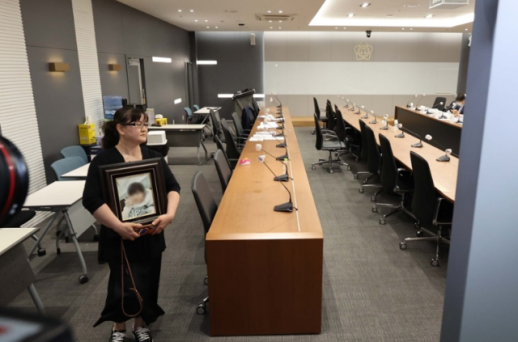 Supreme Court Rules on Compensation for School Violence Case The Supreme Court has upheld a ruling requiring lawyer Kwon Kyung-ae to pay 65 million won to the family of a school violence victim after she failed to appear in court three times during the appeals process. The court also stated that the validity of a 90 million won payment agreement Kwon signed after the fact must be reassessed, potentially increasing her financial liability. On May 29, the Supreme Court's first division, led by Justice Seo Kyung-hwan, overturned part of the lower court's ruling regarding the settlement claim filed by Lee Gi-cheol, the mother of the late Park Joo-won, and sent the case back to the Seoul High Court. The Supreme Court confirmed the lower court's decision that Kwon and her law firm, Haemir, must pay Lee 65 million won in damages. The court also upheld the ruling that Haemir must pay an additional 2.2 million won in settlement fees. At the center of the case is the 90 million won payment agreement Kwon drafted after informing the family of her defeat in the appeals process. Kwon stated she would pay 30 million won annually for three years, totaling 90 million won. However, the second court did not recognize the validity of this agreement, determining it was based on the assumption that Kwon's misconduct would not be publicly reported. Once the case received media attention, the conditions for payment were deemed unmet. The Supreme Court disagreed, stating, "The payment agreement does not specify any conditions for the payment, nor does it contain any language that could lead to differing interpretations regarding the existence of such conditions." The court added, "The objective meaning of the content is clear and leaves little room for alternative interpretations," noting that Kwon, as a legal professional, likely understood the implications and content of the agreement well. The Supreme Court's reversal of the lower court's ruling on the agreement's validity means the family's claim for the 90 million won settlement will be reconsidered. Depending on the outcome of the retrial, Kwon's compensation could exceed the currently confirmed 65 million won. The case began when Kwon represented the family of Park Joo-won, a victim of school violence, in their damages lawsuit. The family filed the suit in 2016 against the parents of the perpetrator, the school corporation, and the Seoul Metropolitan Office of Education, with Kwon acting as their legal representative. However, Kwon failed to appear in court for three consecutive hearings during the appeals process. Under the Civil Procedure Act, repeated failure to attend court without just cause is treated as a withdrawal of the appeal, leading to the confirmation of the plaintiff's loss in this case. Kwon did not inform the family of her defeat for about five months, causing them to miss the opportunity to appeal. Subsequently, the family filed a separate damages lawsuit against Kwon and Haemir. The first court deemed Kwon's actions as "gross negligence bordering on intent," ordering her to pay 50 million won in damages. The second court increased the amount to 65 million won, emphasizing that the family's long-standing pursuit of justice for their daughter's death ended in vain due to their lawyer's mistakes. The Supreme Court found no legal misunderstanding in the lower court's rulings regarding damages and property loss, maintaining those decisions. As a result of this case, Kwon received a one-year suspension from the Korean Bar Association in 2023. Meanwhile, the main lawsuit for damages related to the school violence incident is currently being retried at the Seoul High Court. The family argues that Kwon's absence constitutes an "abuse of agency rights," and thus the withdrawal of the appeal should not be recognized. The Seoul High Court has recently resumed hearings and is expected to deliver a ruling on June 24.* This article has been translated by AI. 2026-05-29 12:48:00
 -
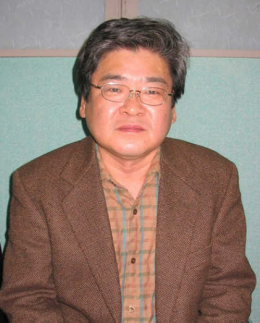 Prosecutors Cancel Charges Against Victim of 43-Year-Old Spy Case Prosecutors have canceled the suspended charges against Kim Byung-jin, a 71-year-old victim of a fabricated spy ring case involving the Military Security Command, 43 years after the initial charges were filed. This marks the first instance of prosecutors taking action to relieve a victim of suspended charges on their own authority. The Seoul Central District Prosecutors' Office announced on May 28 that it had reinstated Kim's case, which had been suspended due to violations of the National Security Law, and subsequently declared him not guilty. This decision comes approximately nine months after Kim submitted a petition to the Supreme Prosecutors' Office requesting the cancellation of the suspended charges last August. Prosecutors explained that they considered the illegal detention and investigation conducted by the Military Security Command, which lacked civilian investigative authority, as well as the fact that Kim's co-defendant, Seo, was acquitted after a retrial in 2017. In July 1983, while studying at Yonsei University, Kim was taken into custody without a warrant by the Military Security Command and subjected to interrogation for about three months. At that time, the command believed Kim had met with Seo, a Korean resident in Japan, during his studies and had received ideological training, returning to Korea in 1976 to collect state secrets and receive operational funds. Kim received a suspension of charges in November 1983 from the Seoul District Prosecutors' Office. This suspension, under Article 20 of the National Security Law, allows for charges to be postponed based on the motives for the crime or circumstances following the offense. It is similar to the current concept of deferred prosecution, effectively presuming guilt. However, the issue lies in the absence of a separate relief procedure for those who receive a suspension of charges. While individuals with confirmed guilty verdicts can request a retrial, those with suspended charges do not undergo a trial and thus cannot seek retrial. Even after Seo's acquittal, Kim was unable to pursue any legal relief. A suspension of charges cannot lead to prosecution after two years, yet the suspension itself remains in effect. Considering this institutional gap, prosecutors decided to reinstate the case and declare Kim not guilty. A prosecutor stated, "This is the first case where a prosecutor has reinstated a case and declared it not guilty, taking into account the lack of a separate relief procedure for individuals with suspended charges." Kim has long claimed that he was coerced into making false confessions under torture and threats from Military Security Command investigators. After moving to Japan in 1986, he published a book titled 'Security Command' in 1988, exposing the realities of state violence at the time. The Truth and Reconciliation Commission also made two determinations regarding the truth of Kim's case in 2009 and 2024. Prosecutors stated, "We will faithfully fulfill our duty to comply with due process and ensure human rights as representatives of the public interest and as an objective law enforcement agency in past human rights violation cases."* This article has been translated by AI. 2026-05-28 18:08:00
 -
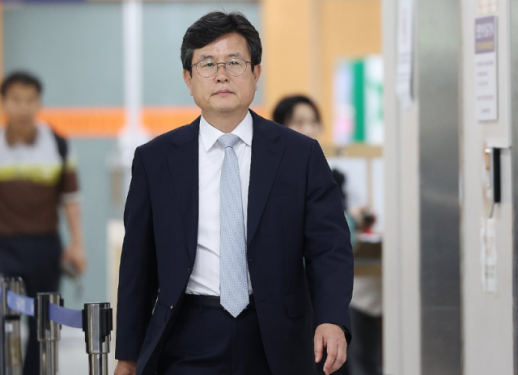 Former Presidential Aide Sentenced to 18 Months for Drafting Post-Hoc Martial Law Document Kang Ui-goo, a former aide to the presidential office, was sentenced to 18 months in prison and taken into custody after being found guilty of drafting a post-hoc martial law declaration following the lifting of emergency martial law on December 3. The Seoul Central District Court’s Criminal Division 30, led by Judge Park Ok-hee, sentenced Kang on May 28 for charges including the creation of false documents, damage to public property, and violations of the Presidential Records Management Act. The court stated, "The defendant recognized that the declaration of martial law was not made through the proper procedures involving the Prime Minister and relevant ministers, and created false documents to conceal this procedural flaw." It added, "Despite lacking prior instructions from former President Yoon Suk-yeol, Kang was responsible for drafting the cover page of the martial law declaration and obtaining signatures from former President Yoon, former Prime Minister Han Duck-soo, and former Defense Minister Kim Yong-hyun, indicating significant involvement in the crime. As a senior public official closely assisting the president, the defendant bears a heavy responsibility." However, the court ruled Kang not guilty of using false documents, noting that it was unlikely he actually used them since he stored them in a desk drawer before disposing of them. Regarding sentencing, the court considered that Kang generally acknowledged the facts of the crime and cooperated during the investigation by explaining the circumstances surrounding the document's creation. Kang was charged with creating a cover page for the post-hoc martial law declaration on December 6, 2024, to make it appear as though it followed legal procedures. The document was reportedly signed by former Prime Minister Han, former Minister Kim, and former President Yoon before being stored in Kang's office. Kang is also accused of shredding the document at the request of former Prime Minister Han after the insurrection investigation intensified. Previously, the special investigation team on insurrection, led by Special Prosecutor Jo Eun-seok, sought a five-year prison sentence for Kang.* This article has been translated by AI. 2026-05-28 15:30:00
 -
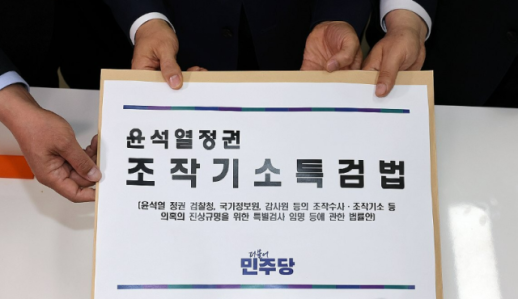 Concerns Raised Over Special Prosecutor Bill's Authority to Dismiss Charges The Corruption Investigation Office has expressed concerns regarding a clause in the special prosecutor bill, known as the "manipulated prosecution special prosecutor law," which would allow the special prosecutor to decide whether to maintain charges. The office submitted its opinion to the National Assembly, stating that this provision could violate the principle of separation of powers. On May 28, legal sources reported that the Corruption Investigation Office conveyed its concerns in a written response to Representative Koo Ja-geun of the People Power Party. The office noted that the clause allowing the special prosecutor to take over cases and decide on charge maintenance raises potential issues with the principle of separation of powers, warranting careful consideration. However, the office clarified that the decision on whether a special prosecutor is needed for specific cases should be determined by the National Assembly, which holds legislative authority. This decision should take into account the necessity for an independent special prosecutor, public interest, and various circumstances surrounding the cases. The clause in question is Article 8, Section 7 of the bill, which states that "the special prosecutor shall perform the duties related to the maintenance of charges for the cases received." Previously, the Democratic Party introduced the bill on April 30, aimed at appointing a special prosecutor to investigate allegations of manipulated investigations and prosecutions by the Yoon Suk-yeol administration, the National Intelligence Service, and the Board of Audit and Inspection. The bill includes a total of 12 cases for investigation, such as the Daejang-dong development corruption scandal, the Ssangbangwool North Korea remittance case, and the shooting of a civil servant in the West Sea. Legal experts have pointed out that this clause could effectively grant the special prosecutor the authority to dismiss charges. The Supreme Prosecutors' Office also expressed concerns on April 30, stating that it could unduly influence the independence of the judiciary. The Economic Justice Action has also called for the removal of the clause granting charge dismissal authority. Political disputes continue over the advancement of the bill. The People Power Party has labeled the bill as a "charge dismissal special prosecutor" and has opposed it. In contrast, the Democratic Party has stated that it will gather opinions on the timing and procedures for processing the bill after the local elections.* This article has been translated by AI. 2026-05-28 11:09:00