
Journalist

AJP
-
 Asian stocks weaken as oil prices climb toward $100 amid Hormuz attacks SEOUL, March 12 (AJP) — Asian stock markets ended mostly lower Thursday as oil prices surged toward the $100 mark following renewed attacks around the Strait of Hormuz, heightening concerns over potential disruptions to global energy supplies. Crude prices climbed sharply after a series of attacks on commercial vessels near the strategic waterway, which carries roughly one-fifth of the world’s seaborne oil shipments. U.S. benchmark West Texas Intermediate rose 4.8 percent to $91.5 per barrel, while global benchmark Brent crude gained 5.2 percent to $96.8. Geopolitical tensions have intensified after multiple tanker attacks near the Strait of Hormuz and escalating military confrontation between Iran and the United States. Iran has effectively restricted maritime traffic in the area since Feb. 28 following U.S. and Israeli missile strikes, raising fears of prolonged disruption to global energy flows. The International Energy Agency said Wednesday that its member countries agreed to release 400 million barrels from strategic petroleum reserves — the largest coordinated drawdown in the agency’s history — in an effort to stabilize global markets. The move, however, did little to calm investor sentiment. In Seoul, the benchmark KOSPI fell 0.5 percent to close at 5,583.25 after swinging between 5,629.07 and 5,527.47 during the session. Foreign investors continued heavy selling, offloading 2.36 trillion won ($1.5 billion) worth of shares. Individual investors purchased 2.23 trillion won while institutions bought 53.9 billion won. Large-cap semiconductor stocks weighed on the index. Samsung Electronics fell 1.1 percent to 187,900 won, while SK hynix declined 2.6 percent to 930,000 won. Automakers showed mixed performance. Hyundai Motor dropped 1.7 percent to 521,000 won, while Kia rose 3.1 percent to 167,000 won. Battery maker LG Energy Solution gained 3.9 percent to 384,000 won, while Samsung Biologics fell 1.9 percent to 1,625,000 won. Defense-related stocks advanced amid rising geopolitical tensions. Hanwha Aerospace climbed 3.9 percent to 1,465,000 won, while LIG Nex1 added 1.8 percent to 755,000 won. Nuclear-related shares also strengthened, with Doosan Enerbility rising 2.5 percent to 103,500 won. Shares of OrbiTech surged 29.9 percent to 8,160 won after the company announced a contract with Korea Hydro & Nuclear Power related to radioactive concrete waste treatment. The tech-heavy KOSDAQ outperformed the main board, rising 1 percent to close at 1,148.4 after touching an intraday high of 1,150.65. Retail and institutional investors led buying on the secondary market, purchasing 507.4 billion won and 252.4 billion won worth of shares respectively, while foreigners sold a net 688.1 billion won. Elsewhere in Asia, Japan’s Nikkei 225 fell 1.1 percent to 54,453 while the broader TOPIX index dropped 1.3 percent to 3,649.9. Taiwan’s TAIEX declined 1.6 percent to 33,581.9. Mainland Chinese markets were relatively stable, with the Shanghai Composite Index slipping just 0.1 percent to 4,129.1. The Korean won weakened, with the dollar rising to 1,481.6 won. 2026-03-12 17:21:36
 -
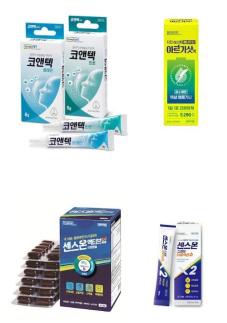 Korean Pharma-Bio Brief: Dongkook, Daewon, Magok CHA Hospital, Huons, Alteogen Dongkook Pharmaceutical offers spring tips for allergic rhinitis and fatigue Dongkook Pharmaceutical, citing increased outdoor activity in spring, on the 12th suggested ways to help prevent allergic rhinitis symptoms and support energy and recovery from fatigue. Co&Tech, an ointment-type nasal barrier product, is an avoidance-therapy product made with medical-grade white soft paraffin that has completed biocompatibility testing. It helps form a protective layer on the nasal mucosa to block the penetration of allergens inhaled through the respiratory tract. For people feeling run down by a busy routine, the company said the over-the-counter Argishot Solution can help replenish energy. Arginine is an amino acid involved in vasodilation and improved blood flow and may help relieve fatigue and boost vitality. SenseOn Active Up, a premium supplement containing magnesium and active vitamins, may help with muscle relaxation and recovery from physical fatigue. It contains more than 350 mg of magnesium, the recommended daily intake, and includes 138 mg of active vitamin B1 (benfotiamine), described as an optimal daily intake level to improve bioavailability. For those needing faster recovery during outdoor activities, the company said SenseOn Speed Double Action Solution, sold in stick packs, can be taken conveniently. Daewon Pharmaceutical launches Liposomal Albumin King Daewon Pharmaceutical said on the 12th it has expanded its high-content Albumin King brand with the launch of Liposomal Albumin King, designed to improve absorption in the body. The product applies the company’s “liposome formulation technology,” which wraps nutrients in phospholipids similar to human cell membranes. The company said the approach helps deliver nutrients more stably and can increase absorption compared with conventional formulations. As its main ingredient, the product uses a 100% albumin complex that underwent strict quality control, the company said. Liposomal Albumin King contains 33,000 mg of high-protein formulation per bottle (ampoule) and keeps the liquid ampoule format that has been popular, it added. Magok CHA Hospital fertility center certified to attract foreign patients Magok CHA Hospital’s fertility center said on the 12th it received the Health and Welfare Ministry’s certification as a “medical institution for attracting foreign patients.” The certification is granted to institutions that meet standards for international medical capability, patient safety and service quality. The center operates a dedicated treatment area for international patients, called Building B. It provides one-on-one consultations and assigns professional interpreters to support tailored care. The hospital said it has a system for consultations in multiple languages, including English and Chinese, as well as Mongolian, Japanese and Russian. Medical staff provide specialized consultations and individualized treatment plans, while a global communication team supports the process in a one-stop service, from scheduling to linking consultations and tests and providing protocol services. The hospital also cited airport access and medical-tourism infrastructure as strengths. Huons wins IND approval for Phase 2 trial of dry-eye drug candidate HUC1-394 Huons said on the 12th it received approval from the Ministry of Food and Drug Safety on March 11 for an investigational new drug application for a Phase 2 clinical trial of HUC1-394, a new drug candidate for dry eye disease. HUC1-394 is a peptide-based eye drop Huons licensed from Novacell Technology. The candidate selectively binds to and activates formyl peptide receptor 2, a receptor involved in the body’s inflammation-resolution process, the company said. By helping repair damaged tissue and improving keratoconjunctivitis, or inflammation of the cornea and conjunctiva, it is expected to address dry eye disease at its root, it added. Huons said it previously demonstrated safety and tolerability in a Phase 1 trial last year involving 60 healthy adults. No serious adverse events occurred after single and repeated dosing, the company said, providing sufficient basis for follow-up trials. With the Phase 2 plan approved, Huons will conduct a multicenter, randomized, double-blind (RCT) trial in 150 dry-eye patients at major medical institutions including Severance Hospital at Yonsei University College of Medicine. The study will assess safety and efficacy and explore the optimal dosing regimen. Alteogen registers U.S. patent for Keytruda SC composition; protection through early 2043 Alteogen said on the 12th it registered with the U.S. Patent and Trademark Office a composition patent related to a subcutaneous Keytruda product that combines its Hybrozyme platform-based ALT-B4 (berahyaluronidase alfa) with Keytruda (pembrolizumab). Under the patent, the subcutaneous formulation of Keytruda using ALT-B4, marketed as Keytruda Qurex, will be protected in the United States until early 2043, or about 17 years, the company said. Keytruda Qurex received approval from the U.S. Food and Drug Administration in September and is now sold in the United States, Alteogen said. The company said it can receive up to $1 billion in sales milestones based on annual and cumulative revenue, followed by sales-based royalties. Alteogen said the patent is part of its broader portfolio strategy to strengthen protection of the Hybrozyme platform, adding that the registration again confirms the novelty and proprietary invention of ALT-B4.* This article has been translated by AI. 2026-03-12 17:18:00
 -
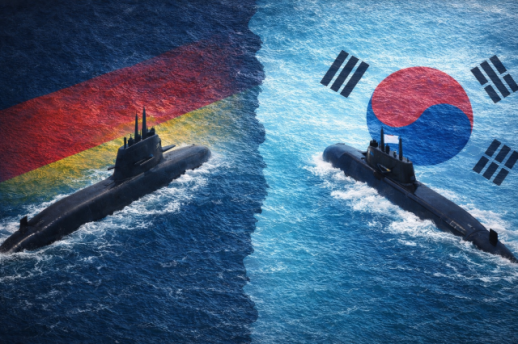 Canada unlikely to split $40B submarine contract between Korea and Germany SEOUL, March 12 (AJP) - Canada is unlikely to divide its planned multibillion-dollar submarine procurement between South Korea and Germany despite speculation in local media, as analysts say a split contract would drive up costs and complicate naval operations. The idea of awarding portions of the project to both bidders — sometimes described as a “6+6” split procurement — has circulated in Canadian media as Ottawa weighs final proposals from a South Korean consortium and a rival bid led by Germany and Norway. But South Korean officials say the option is not under consideration. Kim Jung-kwan, South Korea’s minister of trade, industry and resources, told lawmakers at a parliamentary committee meeting Monday that Canadian officials had made it clear there were no plans to divide the order between multiple suppliers. Analysts broadly agree. One major obstacle is the program’s financial structure. The Canadian Patrol Submarine Project (CPSP) — valued at roughly $40 billion and aimed at replacing Canada’s aging Victoria-class submarine fleet — was designed on the assumption that a single supplier would deliver the entire fleet of up to 12 submarines. Splitting the order between two countries would require separate contracts, logistics networks and maintenance systems, likely pushing the overall cost significantly higher. Given the political sensitivity surrounding defense spending in Canada, analysts say Ottawa would face difficulty justifying such increases. Operational considerations pose another hurdle. Running two different submarine classes would complicate maintenance, repair and overhaul (MRO) operations as well as day-to-day fleet management. Separate supply chains, spare-parts inventories, training programs and shore infrastructure would be required for each platform, eroding economies of scale and raising life-cycle costs. The debate over a possible split comes as the CPSP reaches a key stage. Final bids for the project were submitted on March 2, narrowing the competition to two contenders: a South Korean consortium and Germany’s Thyssenkrupp Marine Systems (TKMS). The Korean bid is led by Hanwha Ocean, with participation from HD Hyundai Heavy Industries. A Hyundai Heavy Industries official said Hanwha Ocean handled the formal submission of the proposal documents. Ottawa is currently reviewing the bids, with a preferred bidder expected to be selected between May and June, followed by contract negotiations. Canadian officials have emphasized that the project is intended not merely as a procurement deal but as a long-term defense-industrial partnership. According to the Canadian government’s project guidelines, bidders must propose not only submarine construction but also long-term in-service support, supply-chain development and industrial partnerships with Canadian companies. Both competitors have therefore focused heavily on local industrial cooperation. TKMS has strengthened ties with Canadian firms in recent months. According to naval industry outlet Naval Today, the German shipbuilder recently signed a partnership with Canadian simulation and training company CAE to develop submarine crew training and maintenance support systems. The company is also working with Canadian aerospace manufacturer Magellan Aerospace to explore cooperation in heavy-torpedo production and maintenance, while proposing next-generation digital operational technologies through partnerships with artificial-intelligence firms. The Korean consortium has also broadened its industrial partnership proposals. Hanwha Ocean has reportedly outlined cooperation with Canadian companies in areas including steel, satellite communications, artificial intelligence and battery technology as part of its supply-chain development plan. Hyundai Motor Group has suggested potential collaboration within Canada’s hydrogen industry ecosystem. Industry observers say long-term sustainment capabilities will likely prove decisive in the competition. “Maintenance costs are just as important as the initial acquisition price for submarines,” one industry source said. “The ability to secure personnel and infrastructure for long-term operations and maintenance will be a crucial evaluation factor.” Some analysts say recent developments may slightly improve South Korea’s chances. Volkswagen Group, previously seen as a potential industrial partner supporting the German bid, recently said it would not participate in the Canadian submarine program. According to local media reports, Volkswagen CEO Oliver Blume said Tuesday that the company would not take part in the procurement project, effectively declining Ottawa’s request for additional industrial investment linked to the German proposal. The move, analysts say, could modestly strengthen the South Korean consortium’s position as Ottawa weighs the competing bids. 2026-03-12 17:11:46
 -
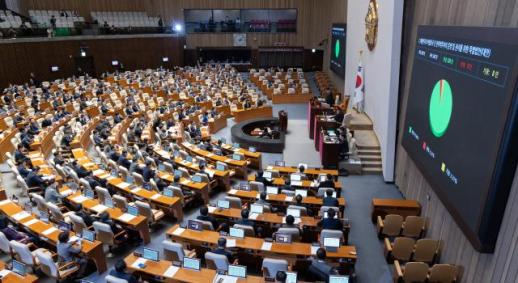 Nat'l Assembly passes bill to implement investment pledges under trade deal with US SEOUL, March 12 (AJP) - A bill outlining South Korea's massive investment pledges to the U.S. was passed at a plenary session in the National Assembly on Thursday. Of the 242 lawmakers present, 226 voted in favor, eight against and another eight abstained, clearing the way for South Korea's pledges to invest US$350 billion in the U.S. as part of a broader trade deal reached between the two countries last fall. The bill would provide a legal framework to establish a fund for implementing bilateral agreements with the U.S., along with investment pledges that include $150 billion for shipbuilding and $200 billion for other key strategic sectors such as semiconductors, critical minerals, energy, and artificial intelligence. The bill's passage with bipartisan support comes just months after U.S. President Donald Trump threatened in January to raise reciprocal tariffs on South Korea from 15 percent back to 25 percent, complaining about delays in Seoul's legislative process for the trade deal. But much still remains to be worked out, and it may be a long and tough road ahead before details are finalized through further negotiations, as things become complicated after the U.S. Supreme Court struck down Trump's sweeping global tariffs policy late last month. 2026-03-12 17:06:30
 -
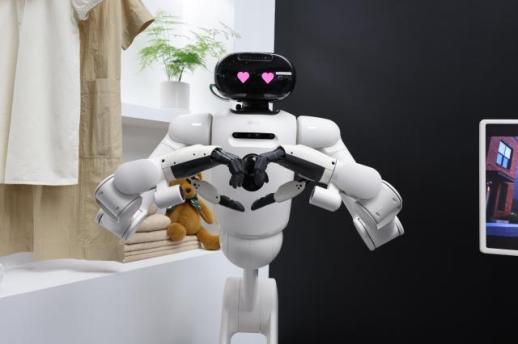 K-battery makers bet on premium to fight EV slump and China dominance SEOUL, March 12 (AJP) - South Korea's battery industry is doubling down on premium technologies — from high-nickel chemistries to all-solid-state prototypes and advanced cell engineering — as it seeks to outpace Chinese rivals and move beyond the slowing electric-vehicle market. The strategic pivot was on full display at the InterBattery 2026, the three-day exhibition that opened Wednesday at COEX in southern Seoul. The 14th edition of the show drew 667 companies from 14 countries across 2,382 booths, marking the largest turnout in the exhibition's history and underscoring how battery technology is rapidly expanding beyond automobiles into robotics, artificial intelligence and energy storage. National pavilions from Sweden, the United Kingdom, the United States, Australia, Canada and the Netherlands highlighted growing international demand for partnerships with Korean battery firms. China fielded 79 exhibitors, the largest single-country contingent. "Batteries are the heart of advanced industries," said Moon Shin-hak, vice minister of trade, industry and energy, at the opening ceremony, pledging continued government backing to help domestic manufacturers maintain their technological edge amid a slowdown in EV demand and an increasingly volatile global trade environment. On the exhibition floor, one theme was unmistakable: premium technology over low-cost chemistry. Discussion of lithium iron phosphate (LFP) — the inexpensive battery chemistry that has underpinned China's dominance in entry-level EVs and energy storage — was relatively muted. Instead, booth after booth highlighted high-nickel cathodes, all-solid-state batteries and sophisticated packaging technologies, signaling that Korean manufacturers are staking their future on the high-performance end of the market. SK On made perhaps the most vivid statement of that strategy by placing a Genesis GV60 Magma electric SUV at the center of its booth. The performance-focused vehicle carries an 84-kilowatt-hour battery pack built with SK On's high-nickel NCM pouch cells and offers a driving range of about 346 kilometers on a single charge. The company also unveiled a "Hyper Fast" battery capable of charging from 10 percent to 80 percent in just seven minutes, alongside its cell-to-pack architecture and immersion-cooling battery system. SK On further showcased its first sulfide-based all-solid-state battery, targeting mass production by 2029. Across the hall, LG Energy Solution occupied the largest exhibition space at 540 square meters. Its centerpiece was the JF2 DC LINK 5.0, a grid-scale energy storage system that won the InterBattery Awards 2026 and represents the company's first use of LFP chemistry in an ESS product. A Renault Scenic fitted with LG's mid-nickel battery — containing about 70 percent nickel — illustrated a different strategic approach. The configuration aims to balance the performance of high-nickel batteries with a cost profile that sits between premium cells and low-cost LFP alternatives. Robotics also made an appearance on the show floor, though demonstrations were limited. LG Electronics displayed its home robot CLOiD, first introduced at CES 2026, which greeted visitors with a heart-hand gesture while remaining largely static. Meanwhile, Samsung SDI drew heavy crowds with the first public unveiling of a pouch-type all-solid-state battery sample designed for robotics and other "physical AI" applications. The company aims to begin mass production in the second half of 2027. Samsung selected the pouch format for its lighter weight — a crucial advantage for robots that require high energy density and burst power in compact spaces. While the company declined to identify potential humanoid-robot clients, its booth slogan — "AI thinks, Battery enables" — left little doubt about its intended market. Samsung SDI also displayed a high-energy prismatic cell with a volumetric energy density of 700 watt-hours per liter, capable of powering an EV for roughly 800 kilometers on a single charge. Among cathode material suppliers, the emphasis on performance over cost was equally clear. POSCO Future M presented ultra-high-nickel cathodes with nickel content above 95 percent, along with newly developed steel battery cans. Rival suppliers L&F and EcoPro also attracted steady traffic. The premium-focused posture reflects a broader strategic calculation. With Chinese competitors dominating much of the mid-tier battery market, Korean manufacturers are betting that advanced chemistries, all-solid-state technology and sophisticated cell engineering will secure territory where margins remain higher and technological barriers harder to replicate. "The robot battery market is expanding very rapidly, with different technical requirements depending on the type of robot," said Jung Ji-sub, team leader at LG Energy Solution's small-size battery division on the sidelines of the exhibition. "While many robots rely on GPUs or CPUs for intelligence, their actuators and operating time create very different battery demands." Safety, however, remains the overriding concern. "One client at the vice-president level told us directly that they lose sleep over the prospect of a robot catching fire near people," Jung said. "Energy density and battery life are important, but for robots to coexist safely with humans, safety is the most critical requirement." 2026-03-12 17:02:36
 -
 Seoul theater troupe’s ‘Big Mother’ explores algorithm-driven power in the data age "With a mother-like warmth, it uses our information to change and manipulate what we think." Lee Jun-woo, who leads the Seoul Metropolitan Theatre Company, said at a news conference on March 12 at the Sejong Center for the Performing Arts that the play "Big Mother" looks at a kind of power different from "Big Brother," the symbol of coercive control. The company’s first production of the year, "Big Mother," asks in an era dominated by algorithms, "What is truth?" Centered on the struggle of New York investigative reporters trying to expose a conspiracy by a massive power, it portrays how unseen information can function as power in today’s big-data age. Lee said he wanted audiences to reconsider how they slip into comfort and familiarity and follow algorithms, adding that the work is "humorous and light rather than serious." The play draws audiences in with familiar-seeming characters and settings, but does not stay there. "It gets the audience to follow scenes without thinking, then leaves a bitter aftertaste at the end," Lee said. He compared it to reality: people keep watching videos guided by algorithms until they reach a moment when their thinking becomes polarized. A French original staged in a small theater used projection, but the production at Sejong Center’s M Theater will make heavier use of video to fit the larger venue. Lee said audiences will be able to watch both the images on the onstage screen and how those images are created, calling that the biggest difference from the French version. He said he hopes audiences enjoy "Big Mother" the way they watch a Netflix drama. "My goal is for audiences to follow each of the four reporters’ stories easily and with interest," Lee said. He added that he wants the media environment around the story — including news, breaking alerts, and relationships between political parties and companies — to feel realistic. The show runs from March 30 to April 25. * This article has been translated by AI. 2026-03-12 16:36:18
 -
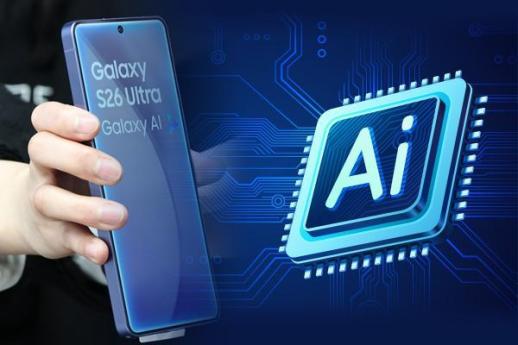 Samsung's agentic-AI flagship posts record presales, software edge in premium market SEOUL, March 12 (AJP) - Samsung Electronics’ latest AI-strong flagship is off to a bar-raising debut, signaling a shift in the premium handset race from hardware specifications toward practical artificial intelligence features. The Galaxy S26 series, launched Wednesday in more than 120 countries including South Korea and the United States, logged 1.35 million preorders in its home market, the highest ever for the Galaxy S lineup. Industry observers say the strong early demand reflects a broader change in consumer priorities as smartphones increasingly compete on usable AI functions rather than processor speed or camera upgrades. Samsung’s new lineup centers on agentic AI, designed to move beyond passive assistance and carry out tasks autonomously for users. Among the most notable features is on-device real-time translation that works without an internet connection, allowing conversations across languages without relying on cloud processing. The phone also introduces generative AI tools such as “Call Screening,” which can answer incoming calls and summarize them for the user, and “Privacy Display,” a feature that blocks side-angle viewing to protect information in public spaces. The emphasis on practical AI utilities has become a key differentiator as rivals struggle to bring comparable capabilities to global users. Apple, which dominates the premium smartphone segment, has faced hurdles rolling out its Apple Intelligence system internationally. The platform’s expansion has been slowed by delayed support for non-English languages and staggered updates to core features, frustrating many users outside the United States. Recent survey data suggests that the AI gap may be influencing consumer loyalty. A study by resale marketplace SellCell of more than 2,000 smartphone users found that 16.8 percent of iPhone owners said they would consider switching to a Galaxy device for better AI features, compared with 9.7 percent of Samsung users willing to move to Apple for its AI system. The shifting sentiment is already beginning to show up in market data. Powered by aggressive deployment of on-device AI functions, Samsung has gradually narrowed Apple’s market-share lead in the United States to about 11 percentage points by late 2025, according to industry estimates. Real-world users echo the trend. “I tried my husband’s Galaxy, and it’s definitely much more user-friendly when it comes to AI,” said Kyuri Kim, a longtime iPhone user in Seoul. “I wish I could have those features on my iPhone. It gets frustrating at times.” “Choosing a smartphone without AI is now akin to buying a car without a navigation system or autonomous driving capabilities,” said Lee Soo-jun, a professor of business administration at Sejong University. “Privacy is the biggest concern with AI today, but Samsung’s on-device processing ensures that personal data remains strictly on the phone without leaking externally, which is a decisive factor for consumers.” With the smartphone industry entering what analysts describe as the “AI utility era,” the market is closely watching whether Samsung’s early push into practical, on-device intelligence can finally dent Apple’s long-standing dominance in the premium segment. 2026-03-12 16:36:01
 -
 Korea Auto Industry Welcomes Passage of Special Law on Strategic U.S. Investment South Korea’s auto industry welcomed the National Assembly’s passage on Thursday of a special law on strategic investment management with the United States, a follow-up step to tariff negotiations. The Korea Automobile & Mobility Association said in a statement Thursday that it “sincerely welcomes” the bill’s approval, thanking the Assembly for bipartisan cooperation and government officials for pursuing trade talks. The association said the industry had been concerned that if U.S. export tariffs on Korean vehicles were raised again from 15% to 25%, it could weaken export competitiveness, reduce domestic production and shrink the broader auto industry ecosystem. With the law’s passage, it said, uncertainty over possible tariff hikes has been eased and Korean companies will be able to compete on equal footing with rivals. The association added that the measure is expected to help create a more stable business environment across the industry — including automakers and parts suppliers — and support expanded investment. It said the industry will continue investing in technology innovation, productivity improvements and the shift to future vehicles, while also working to strengthen the domestic production base through efforts such as boosting domestic demand and building a virtuous cycle in the parts ecosystem.* This article has been translated by AI. 2026-03-12 16:18:30
 -
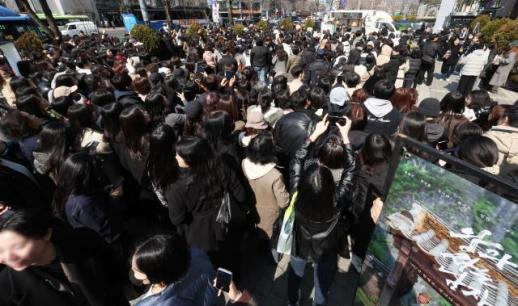 Director Jang Hang-jun treats fans to coffee to celebrate his box-office success SEOUL, March 12 (AJP) - Director Jang Hang-jun shared the joy of his latest film’s huge box-office success with an up-close, personal event for Seoulites in central Seoul on Thursday. Jang served around 200 cups of coffee in front of the Korea Press Center, expressing his gratitude to his fans. The event was arranged as a gesture of appreciation after period film "The King's Warden" attracted over 10 million moviegoers, about a month after its release on Feb. 4. A large crowd gathered at the venue even before the event began, and all the prepared coffee ran out quickly. Citizens took photos with Jang and cheered in celebration of the film's success. The 117-minute film tells the story of Danjong, the sixth king of the Joseon Dynasty, who was exiled to Yeongwol in Gangwon Province. 2026-03-12 16:17:05
 -
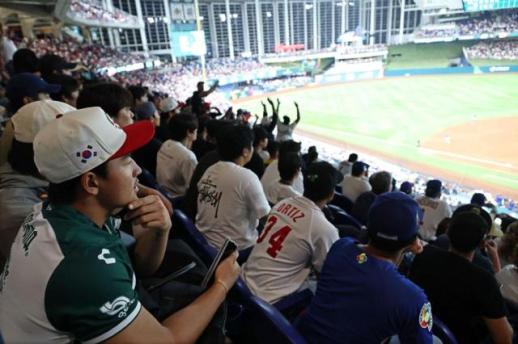 South Korea to face Dominican Republic in WBC quarterfinals in Miami SEOUL, March 12 (AJP) - South Korea will face the Dominican Republic in the quarterfinals of the World Baseball Classic (WBC) in Miami later this week. The formidable Dominican Republic wrapped up the quadrennial tournament's regional matchups by defeating Venezuela 7‑5 at loanDepot park in Miami on Wednesday, extending its undefeated run to advance to the quarterfinals as the top finisher in its group. With the win, the Dominican Republic is now set to face South Korea at the same ballpark, the home of the Miami Marlins on Friday. Led by manager Ryu Ji-hyun, South Korea, which advanced to the quarterfinals with a dramatic victory over Austria earlier this week, will face a tough challenge against the Caribbean country's star-studded lineup, which includes Fernando Tatís Jr., Juan Soto, Manny Machado and Vladimir Guerrero Jr., all in Major League Baseball (MLB). This year's WBC, featuring 20 teams split into four groups with regional rounds held in Houston, Miami, Puerto Rico, and Tokyo, runs until March 17. The top two teams from each group advanced to the quarterfinals, with games to be played in Houston and Miami, while the semifinals and finals will be held in Miami. 2026-03-12 15:40:40