

Journalist

Abraham Kwak
-
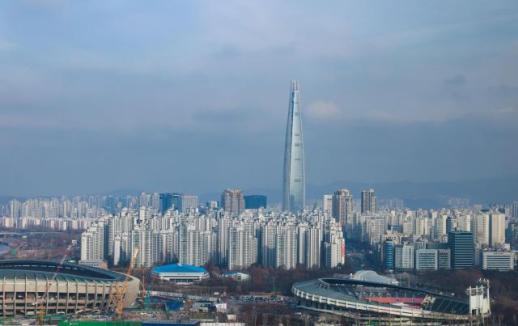 Post-Election Property Tax Reforms Expected Amid Rising Housing Prices As the local elections conclude, discussions on property tax reforms by the government and ruling party are expected to accelerate. With a persistent "triple strength" trend of rising sales, lease, and rental prices across the metropolitan area, the absence of national elections for nearly two years is seen as a factor supporting the push for property tax reforms. According to industry sources, President Lee Jae-myung stated on June 1 via his X (formerly Twitter) account, "We will definitely escape from the disastrous real estate income republic." While he did not directly mention property taxes, there is speculation that discussions on property tax reforms, including adjustments to the holding tax, may gain momentum following the local elections. The President also reviewed the government's response to rising housing prices in Seoul during a Cabinet meeting at the end of last month. Market indicators are also lending weight to the possibility of further government action. According to the Korea Real Estate Agency's April housing price trend survey, the rate of increase in apartment sales prices in Seoul rose from 0.34% in March to 0.55% in April. During the same period, the prices for jeonse (long-term lease) and monthly rent increased by 0.82% and 0.74%, respectively, outpacing the sales price increase. Currently, discussions within the government and ruling party include strengthening the residency requirements for long-term holding tax exemptions for non-resident homeowners and increasing the property tax burden on multiple homeowners. There are two main approaches to reform: adjusting the comprehensive real estate tax rate through legislative action or modifying the requirements for long-term holding exemptions, and adjusting the fair market value ratio for the comprehensive real estate tax through amendments to enforcement regulations without separate legislation. The current fair market value ratio for the comprehensive real estate tax is 60%, and the government could raise it to a maximum of 100% through regulatory changes alone. However, some analysts suggest that immediate changes to this year's property tax may be challenging. Given the procedural requirements for regulatory amendments and tax schedules, there is limited time to adjust tax burdens in the short term. With this year's public housing prices in Seoul already rising significantly, maintaining the current fair market value ratio could naturally increase the tax burden due to a larger tax base. As a result, the market anticipates that this year will focus on designing reforms such as the long-term holding exemption adjustments, with fair market value ratio changes potentially implemented gradually starting next year. Proposals for amending tax laws related to the fair market value ratio have already been introduced in the ruling coalition, laying the groundwork for medium- to long-term legislative discussions. With the outlines of tax reforms still unclear, market participants are adopting a wait-and-see approach. According to the Supreme Court's registration information portal, the number of real estate registration applications nationwide in May decreased by about 20% compared to the previous month. The average number of permit applications in land transaction approval zones dropped from around 700 before the end of the capital gains tax exemption to about 200 after the resumption of the tax. The uncertainty surrounding tax reforms and the resumption of the capital gains tax has created a climate where both buyers and sellers are hesitant to act. The challenge is that merely tightening tax regulations may not effectively quell upward price pressures. With a prevailing belief that supply shortages will persist for years, it remains uncertain whether increased property tax burdens will lead to a surge in listings. There are concerns that if non-resident homeowners convert to actual residency to avoid tax burdens, the reduction in rental listings could exacerbate instability in the rental market. In fact, following the end of the capital gains tax exemption, listings for apartments in Seoul have rapidly declined. According to the real estate platform Asil, the number of apartment listings in Seoul fell by nearly 7,000 within a week after the exemption ended, dropping to around 63,000. There are predictions that the pace of decline in listings could accelerate from June to July. While tightening tax regulations may dampen buyer sentiment, experts caution that a decrease in transaction volume does not necessarily lead to price stabilization. In a market with reduced listings, if some transactions are reported at record prices, expectations for market prices could rise again. In a situation where both jeonse and monthly rent prices are increasing, the pressure for actual buyers to transition remains strong. Lee Eun-hyung, a researcher at the Korea Construction Policy Institute, stated, "Even if transaction volumes decrease, there is a possibility that prices will continue to rise in the second half of the year based on the prices of transactions that do occur. Considering supply conditions along with macroeconomic factors such as inflation, oil prices, and exchange rates, merely adjusting the tax system will have limited impact on the upward trend in housing prices for the time being."* This article has been translated by AI. 2026-06-03 18:06:00
 -
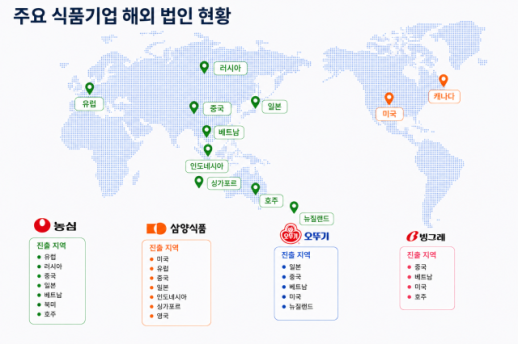 Food Companies Accelerate Overseas Expansion Beyond Exports Domestic food companies are rapidly establishing overseas subsidiaries. With the K-food craze driving growth in international markets, there is an increasing competition to secure local distribution, marketing, and product development capabilities beyond simple exports. According to industry sources on June 3, major food companies such as Ottogi, Nongshim, Samyang Foods, and Binggrae are either launching new overseas subsidiaries or expanding infrastructure investments to target global markets. Ottogi established a local subsidiary in Tokyo, Japan, last month, which is set to begin operations in September. This new base, following locations in New Zealand, the United States, Vietnam, and China, will allow Ottogi to introduce ramen, sauces, and sesame oil, while also developing products tailored to local tastes. Ottogi's entry into Japan aligns with its rapid overseas growth. In the first quarter of this year, the company reported sales of 955.2 billion won, a 3.7% increase from the same period last year, with overseas sales rising by 9.6%, significantly outpacing overall sales growth. The share of overseas sales in total revenue increased from 10.9% to 11.5%. This strategy aims to maintain growth momentum by securing local bases as overseas performance drives overall expansion. Nongshim, which established its European subsidiary, Nongshim Europe, in Amsterdam last March, plans to launch its sales subsidiary, Nongshim Russia, in Moscow this month. This move is part of a strategy to capture the Russian and Central Asian markets, which are expected to grow at an annual rate of around 10%. Currently, Nongshim operates subsidiaries in North America, China, Japan, Vietnam, Australia, and Europe. The Russian subsidiary will target the local premium ramen market while also expanding its sales network to countries in the Commonwealth of Independent States (CIS) such as Kazakhstan and Uzbekistan. Nongshim has set a goal of achieving $300 million in European sales and $30 million in revenue from its Russian subsidiary by 2030. Samyang Foods is accelerating the establishment of local infrastructure to penetrate the European market. After setting up a European sales subsidiary in the Netherlands in 2024, it recently launched a logistics-focused subsidiary and established Samyang Foods UK earlier this year. Additionally, it has set up a research and development center near Wageningen, Netherlands, to enhance its research on plant-based and functional foods. In the first quarter of this year, Samyang Foods reported European sales of 77 billion won, a 215% increase from the same period last year. The company currently operates subsidiaries in Shanghai, the United States, Japan, Indonesia, Singapore, and the United Kingdom. Binggrae established its Australian subsidiary, BC F&B Australia Pty Ltd., in December last year. This move aims to reduce distribution steps and strengthen localized sales and marketing efforts, moving away from a direct export-focused structure. Binggrae is also considering developing Australia as a manufacturing and export hub for the Oceania and European markets. The company currently operates four overseas subsidiaries in China, the United States, Vietnam, and Australia, with the U.S. subsidiary generating 97 billion won in revenue last year, becoming a key base for its overseas operations. Industry experts note that overseas subsidiaries are evolving from simple sales organizations to strategic bases responsible for local distribution network building, brand management, and product development. A source in the food industry stated, "As demand for K-food grows, the ability to directly manage local consumers and distribution networks has become crucial. Overseas subsidiaries play a key role in quickly responding to market changes and developing products tailored to local needs."* This article has been translated by AI. 2026-06-03 18:06:00
 -
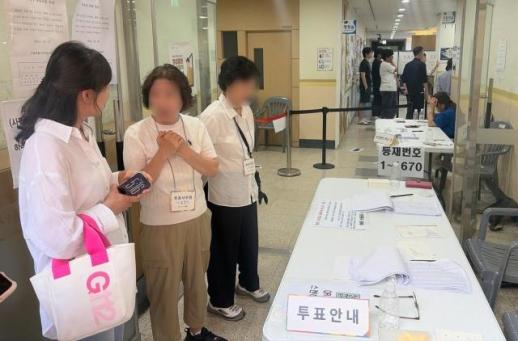 Voting Chaos in Songpa as Ballots Run Out On June 3, the day of the 9th nationwide local elections, voters in the Jamsil area of Songpa District faced significant delays as ballots ran out at several polling places, leaving hundreds waiting in line. According to a report by Yonhap News, starting at 1 p.m., at least four polling places, including the 6th polling station in Jamsil 2-dong and the 3rd polling station in Garak 2-dong, experienced ballot shortages, leading to long wait times for voters. By 4:30 p.m., it was reported that voting had effectively ceased at these locations. Election officials on-site informed voters that they were awaiting instructions from the election commission, but some voters chose to leave due to the uncertainty. Concerns about not being able to exercise their voting rights prompted protests from citizens. One voter questioned an election official, asking, "How will you distinguish between those who arrive after 6 p.m. and those who have been waiting?" In response, the National Election Commission issued a statement explaining that the voter turnout for this local election was higher than in previous elections, resulting in a shortage of ballots at some polling places in Songpa. They confirmed that ballots were being transported to these locations. The commission reassured voters that those waiting in line would still be able to cast their votes even after the official closing time, urging them not to misunderstand that voting would be impossible due to the ballot shortage.* This article has been translated by AI. 2026-06-03 18:06:00
 -
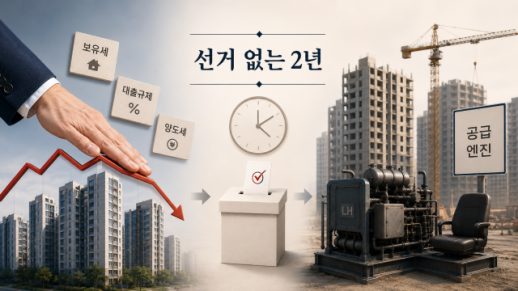 Two Years Without Elections: The Government's Real Estate Performance Will Be Revealed The local elections on June 3 have concluded. Regardless of the results, one fact is clear: there will be no nationwide elections for nearly two years. The next general election is scheduled for April 2028. The time for hiding real estate policies behind election schedules has passed. The conditions are in place. The ruling Democratic Party holds 166 seats in the National Assembly, a majority on its own. The numerical conditions for processing general legislation do not disadvantage the ruling party. The president's approval rating has remained around 60% as he approaches his first anniversary in office. Therefore, the question is no longer whether they can act, but rather what actions they will take and how they will implement them. In a position where there is nothing left to hide, the government's true capabilities in real estate will be revealed. The First Year Was a Time for Direction Change In summary, the first year of the Yoon Suk Yeol administration can be described as a "change in direction." The initial declaration was to end the structure of profiting from real estate, followed by the implementation of policies. The first measure was not a tax but a loan restriction. The limit on mortgage loans for homes in the metropolitan area and regulated zones was set at 600 million won, and loans for multiple homeowners were completely banned. The supply expansion plan was introduced, and measures were taken to designate all of Seoul and parts of Gyeonggi Province as regulated areas and land transaction permission zones. Extensions on loans for multiple homeowners in regulated areas were halted, and as of May 9, the suspension of the heavy taxation on capital gains for multiple homeowners also ended. During this time, the president sold his own home and instructed that non-resident owners of high-value properties be excluded from policy approval lines. At a recent cabinet meeting, he directly asked whether measures were being prepared as housing prices began to rise again. The direction was clear from the start. The most powerful weapon was saved until the end. The comprehensive real estate tax, the fair market value ratio, and the long-term holding special deduction were all left unchanged. The reason became evident in April when discussions about modifying the long-term holding deduction emerged, prompting the ruling party to quickly draw a line. They indicated that such discussions would burden them in the local elections. While measures to suppress the market were implemented, those affecting voter sentiment were postponed. The elections effectively served as a brake on strengthening the holding tax. With Elections Over, the Holding Tax Is the Closest Card The brakes have been released. The line drawn by the president throughout the year has been to "support residents while suppressing non-residents," and this line can now be translated into tax rates and assessment values. The lever is within reach. The core of the comprehensive real estate tax, the fair market value ratio, currently stands at 60%, but it can be raised to 80% with just a presidential decree, without needing parliamentary approval. Adjustments to the comprehensive real estate tax rate and the long-term holding special deduction will require legislative changes, but with a majority in the National Assembly, numerical obstacles are minimal. The market also provides justification. Since the suspension of the heavy taxation on capital gains ended on May 9, housing prices in Seoul have continued to rise. This is largely due to a lack of inventory and resilient asking prices rather than a sudden surge in demand. The supply is dwindling while asking prices continue to rise, indicating that the pressure on the market has not been effective, providing justification for stronger measures. However, a deeper level of consideration is necessary. While changing direction requires willpower, sustaining the market demands skill. It is essential to calculate whether raising taxes will lead to an increase in inventory and how the costs will be passed on to rental prices when tightening regulations on non-resident owners. The real skill lies not in simply raising the holding tax but in carefully distinguishing between resident homeowners and non-resident multiple homeowners while designing mechanisms to prevent adverse effects. The ability to apply pressure was clearly demonstrated in the first year; the challenge lies in what comes next. The Holding Tax Is a Policy for Suppression, Not for Filling The real test lies beyond the reach of the holding tax. While taxes can suppress demand, they cannot revive a stagnant supply. In particular, the leading indicators for supply in Seoul, the epicenter of market instability, are already declining. According to the Ministry of Land, Infrastructure and Transport, housing permits in Seoul from January to April this year totaled 12,760 units, a 24% decrease from the previous year, while construction starts fell by 16% to 7,023 units. When looking specifically at apartments in Seoul, permits dropped by 32.6% and construction starts by 33.4%. While suppressing housing prices, a reduction in new housing construction only postpones the problem by two to three years. Raising the holding tax will not reverse the decline in construction starts. In contrast, non-metropolitan areas are experiencing the opposite issue. Although construction starts are increasing outside the capital, the number of unsold units in April rose by 2.6% from the previous month to 47,881 units. Cities like Busan, Daejeon, and Ulsan all saw increases. The number of unsold units classified as problematic stands at 29,504 nationwide. While supply indicators in Seoul are declining, prices are rising, and in the provinces, new constructions are not selling. One area needs to be suppressed while the other needs to be revived. Taxes aimed at suppressing Gangnam will not help sell vacant homes in Busan and Ulsan. Rental markets are shifting towards monthly leases. The cumulative proportion of monthly rental transactions from January to April reached 68.5%, an increase of 8.1 percentage points from the previous year. Pressuring non-resident owners may reduce the availability of jeonse (long-term lease) units, shifting the burden to monthly rents and deposits. If policies aimed at capturing multiple homeowners end up reflected in tenants' monthly rent bills, that would signify failure, not success. The Yoon Suk Yeol Administration's Competence Is Not Solely Dependent on the Holding Tax In reality, the challenges of filling the market are even more pressing. The public housing plan under the Yoon administration remains caught between conceptualization and institutional design. Many names have been floated since the introduction of basic housing, but how to fund it and what legal and project structures will support it remain unclear. The executing body is also lacking. The president has repeatedly emphasized "direct supply by LH (Korea Land and Housing Corporation)," yet the position of CEO at LH was vacant until just before the elections. In the meantime, LH's immediate action can only involve purchasing existing homes and unsold units in the provinces for rental purposes. However, this approach merely relocates existing homes rather than creating new ones. The blueprint is still being drawn, and the hands needed to turn that blueprint into reality are still absent. Even if they are filled late, it will be difficult to make up for lost time. The direction has been proclaimed, but the preparations to fill the market are still insufficient. Deciding whether to raise the holding tax is merely the first test. The real challenge lies ahead: reconnecting interrupted construction starts, reducing vacant homes in the provinces, and retaining tenants who are being pushed into the monthly rental market. In the two years without elections, the government's real estate competence will be judged not by the ability to apply pressure but by the ability to fill the market. And the engine for that filling is still not fully warmed up. 2026-06-03 18:06:00
 -
 Snowflake Targets Corporate AI Agent Market Global AI data cloud company Snowflake is targeting the corporate artificial intelligence (AI) agent market. The company has enhanced its support for AI app development, knowledge worker tasks, data governance, and open data interoperability. At the 'Snowflake Summit 26' taking place in San Francisco until June 4, Snowflake unveiled new features for its coding agent 'Snowflake Coco,' personal AI agent 'Snowflake CoWork,' 'Snowflake Horizon Catalog,' and open data and AI interoperability. The announcement focuses on connecting data, development environments, and security systems within a single platform to enable the practical application of AI agents across enterprises. Snowflake addressed challenges companies face in adopting AI, such as data fragmentation, lack of governance, security control issues, and a shortage of development personnel. In the development area, Snowflake enhanced the capabilities of its AI coding agent, Coco, which supports enterprise data-based AI development and operations. Coco assists developers in automating data workflows, app development, and AI operations with simple prompts. Coco supports AI app building by integrating with existing tools such as desktop, mobile, Slack, and VS Code, and combines with DataStream, a fully managed streaming service based on Apache Kafka, to facilitate real-time data-driven AI app development. In the operational realm, Snowflake has advanced CoWork as a personal AI agent designed for knowledge workers, enhancing its functionality to help companies translate insights into actionable outcomes. CoWork supports execution tailored to roles and workflows through features like artifacts, Cortex Sense, and personalization. It also facilitates AI model training based on company-specific data through Cortex Training. Snowflake has also strengthened AI trust and security. The Horizon Catalog integrates governance, business context, and security across corporate data. Through Horizon Context, Snowflake ensures that users, tools, and AI agents operate based on the same business definitions and data standards. Security features such as agent identity and trust center allow for tracking and managing the access and activities of AI agents. On the data front, Snowflake has expanded open interoperability. The company supports Apache Iceberg v3 and storage for Iceberg tables, enabling the use of external data lakes and open system data without data movement or duplication. This strategy helps companies build an 'AI-ready' data environment with consistent governance while reducing vendor lock-in. Christian Kleinerman, Senior Vice President of Product at Snowflake, stated, "With data movement and duplication, it is difficult to keep pace with AI, and data fragmentation is a significant constraint. Snowflake provides a reliable data foundation for teams and AI agents based on interoperability and openness."* This article has been translated by AI. 2026-06-03 18:03:00
 -
 Mountjaro and Wegovy Expand Dosage Options in Obesity Drug Market The two leading obesity treatments, Mountjaro and Wegovy, have entered a new phase of competition as they expand dosage options and bolster clinical data. With the obesity treatment market transitioning from supply expansion to a focus on high-dose and high-efficacy products, growth in the sector is expected to accelerate.According to industry sources, Korean pharmaceutical company Lilly will launch high-dose Mountjaro (12.5mg and 15mg) in the domestic market on June 10, completing its full lineup alongside the existing four dosage levels. Meanwhile, Novo Nordisk has countered by presenting high-dose data for Wegovy at a global conference.A representative from a global pharmaceutical company noted, "Initially, the competitive edge for both companies was prescription accessibility and supply volume, but now the key comparison point is the efficacy and safety of high-dose products." The focus has shifted to which drug can demonstrate greater weight loss effectiveness.Specifically, Lilly's strategy involves adding 12.5mg and 15mg options for Mountjaro to enhance its tiered treatment offerings. Given the GLP-1 class's characteristic of starting at lower doses and gradually increasing, securing high-dose products will allow healthcare providers to prescribe more flexibly based on patient needs. Notably, higher doses may lead to greater weight loss, potentially meeting the demands of patients who prioritize weight reduction outcomes.Novo Nordisk is responding by unveiling high-dose data for Wegovy. Recent data presented at the European Obesity Congress indicates that in the high-dose group receiving 7.2mg of Wegovy, 84% of the weight lost was fat, with visceral abdominal fat reduced by over 30%. In contrast, muscle function remained comparable to that of the placebo group.Market analysts suggest that the competition between the two companies is narrowing down to how effectively they can demonstrate weight loss results across various dosages of their obesity treatments.The growth trajectory of the market is further fueled by this competition. According to global healthcare research firm IQVIA, the global obesity treatment market is projected to grow at an annual rate of 30%, reaching $200 billion by 2030. Previous analyses by market research firms like Morgan Stanley estimated the market would reach an average of $98 billion by 2030. With the sales of GLP-1 treatments like Wegovy and Mountjaro accelerating, research institutions are now forecasting a market size that exceeds previous estimates by more than double.The increasing attention on obesity treatments is also attributed to a shift in perception regarding the condition, which is now recognized as a precursor to various diseases, including diabetes, hypertension, dyslipidemia, cardiovascular diseases, and sleep apnea, highlighting the growing need for treatment.Looking ahead, the competitive landscape is expected to shift from weight loss to the expansion of indications. Semaglutide has demonstrated clinical results in reducing major cardiovascular events in patients with cardiovascular disease, while tirzepatide has shown symptom improvement in patients with obesity-related heart failure. Additionally, in the U.S., tirzepatide has been approved for the treatment of obstructive sleep apnea.An industry insider remarked, "The potential for obesity drugs to evolve into a treatment platform for metabolic diseases is increasingly becoming a reality."* This article has been translated by AI. 2026-06-03 18:03:00
 -
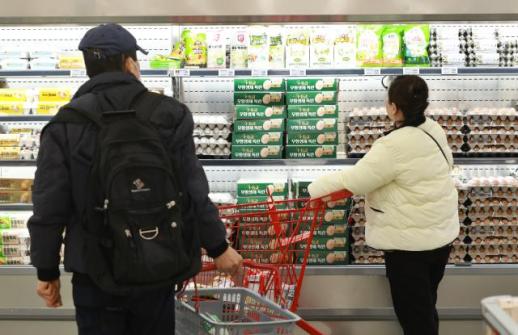 Egg Prices Surge Amid AI Outbreak and Heatwave, Supermarkets Scramble for Supplies "It's hard to find a 30-egg carton. Even when I do, the price is so high that I hesitate to buy it," said Kim Jin-joo, a 42-year-old housewife, while browsing the egg section of a supermarket on June 2. She expressed concern, stating, "I used to cook with eggs often when I ran out of side dishes, but now that's becoming difficult too."The burden on consumers is increasing as the supply of eggs diminishes due to the impact of highly pathogenic avian influenza (AI). The culling of hens has led to a decrease in production. With the added concern of a heatwave this summer, supermarkets are actively seeking to secure supplies through discount promotions and the sale of imported eggs.According to the Korea Agro-Fisheries & Food Trade Corporation (aT), the average consumer price for domestic special eggs (30-count) was recorded at 7,412 won as of June 1. This marks an increase of about 6% from the average price of 7,008 won in June of last year. At the end of last month, prices for special eggs in Seoul exceeded 8,500 won.Egg prices, which were in the low 6,000 won range earlier this year, surged to the 7,000 won level by late April and have remained high. Although there has been some recent adjustment, prices are still above the average levels seen in previous years. Some supermarkets have posted notices indicating temporary shortages of eggs, and Costco has limited purchases to two cartons per person.The primary cause of rising egg prices is the spread of highly pathogenic AI, which has led to the culling of over 11 million hens, drastically reducing the supply. Additionally, it takes time to raise new chicks to laying hens, making a quick recovery in supply unlikely.The summer heat is also a significant factor. Chickens experience heat stress when temperatures exceed 27 degrees Celsius, which can reduce their laying rates and, in severe cases, lead to mortality. As a result, industry experts predict that prices will remain high until egg production stabilizes in July.In response, supermarkets are considering discount promotions and the sale of imported eggs. Lotte Mart is offering a discount of 1,000 won on its Happy Egg special (30-count) from June 3 to June 10, selling it for 6,990 won through a government-supported agricultural discount program. Last month, Lotte Super sold fresh eggs from the U.S. at prices more than 35% lower than the average domestic price for the same size. A representative from Lotte Mart and Super stated, "We plan to explore various product management strategies that can help stabilize prices." E-Mart is reportedly considering importing eggs from Thailand.The government is also implementing measures to stabilize the egg supply. The Ministry of Agriculture, Food and Rural Affairs plans to import an additional 20 million fresh eggs from the U.S. and Thailand this month and next to prepare for the expected decrease in production during the summer. Deputy Minister Kim Jong-gu stated, "The government will continue to promote discount support programs to stabilize consumer prices for eggs," adding that discussions are ongoing with relevant departments to expand tariff quotas for egg products and increase the supply of fresh eggs.* This article has been translated by AI. 2026-06-03 18:03:00
 -
 Hanwha Aerospace's Safety Management System Under Scrutiny After Explosion Concerns are growing regarding Hanwha Aerospace's safety management system, which has been structured to report key safety issues to the CEO only twice a year. Additionally, there is no dedicated executive overseeing safety operations. This raises the likelihood of ongoing debates about accountability as investigations into the cause of a recent explosion at the Daejeon facility continue. According to industry sources, Hanwha Aerospace has confirmed that it operates a system where key safety and health issues are reported to the CEO. The core content of these reports includes key performance indicators (KPIs) related to safety and health. The company has managed KPIs to enhance safety management and prevent serious accidents, regularly reporting on safety personnel, budget execution for accident prevention, and the identification of hazardous factors at the workplace. In its 'Sustainability Management Report 2025' released in June last year, Hanwha Aerospace stated that it reports key safety and health issues to the CEO biannually. However, some critics argue that given the nature of defense operations, which involve numerous hazardous processes, biannual reporting may not be sufficient for timely management of safety risks. The recent fatal incident at the Daejeon facility has intensified scrutiny over the effectiveness of this safety management system. On June 1, an explosion occurred in a cleaning room at Building 56 of the Daejeon facility, resulting in seven casualties. In response, the Ministry of Employment and Labor has formed a dedicated investigation team of about 20 members to determine the cause of the incident. The absence of a dedicated executive responsible for safety at Hanwha Aerospace has also sparked controversy. Currently, the highest safety-related position in the company is held by the head of the Environment, Safety, and Health (ESH) department, which is managed by a mid-level manager. This individual also serves as the head of the safety management team and the Chief Safety Officer (CSO). In contrast, smaller domestic defense companies like LIG Defense & Aerospace (D&A) and Hyundai Rotem have already established dedicated safety executive systems. LIG D&A has an executive in charge of the safety and environment department, while Hyundai Rotem's executive director, Kim Ik-soo, serves as the CSO, with a separate safety management support team led by Park Young-soon. Concerns have been raised that Hanwha Aerospace may have been neglecting its overall safety management system. The company's industrial accident rate has risen for two consecutive years since 2022. After a slight decrease from 0.15% in 2021 to 0.11% in 2022, the rate increased to 0.13% in 2023 and 0.14% in 2024. The company had initially set a target of 0.10% for 2026 but raised it to 0.11% starting in 2024. However, a Hanwha Aerospace representative noted that the current head of the ESH department has over 20 years of experience in safety-related positions and holds a doctorate in safety engineering, making him the company's top safety expert. An industry insider stated, "We will need to wait for the results of the accident investigation to determine exact accountability, but we should also scrutinize how the safety management system has been operated thus far."* This article has been translated by AI. 2026-06-03 18:03:00
 -
 Korean Economy Relying on Semiconductors Faces Growth Illusions Major domestic and international economic institutions have raised their forecasts for South Korea's economic growth rate. However, a significant gap remains between macroeconomic indicators and the real economy as experienced by ordinary citizens. Most sectors, except for semiconductors, continue to struggle, raising concerns about economic polarization. This phenomenon is attributed to what is termed the "semiconductor illusion effect." While the semiconductor export boom has boosted exports and growth rates, the real economy continues to lag due to high inflation and exchange rates. According to the Ministry of Economy and Finance, the Organization for Economic Cooperation and Development (OECD) has revised its forecast for South Korea's economic growth rate upward by 0.9 percentage points to 2.6% for this year. Growth is expected to continue in the second half of the year, primarily driven by semiconductors, although the polarization between semiconductor and non-semiconductor manufacturing is expected to deepen. A recent report from the National Assembly Budget Office indicates that the production capacity index for the semiconductor sector has surged by 80 percentage points over the past five years. This increase is attributed to the AI boom and the recovery of global information technology demand, leading to significant investments and production increases. In contrast, the production capacity index for non-semiconductor manufacturing has declined by 14 percentage points during the same period. This decline reflects the weakening fundamentals of traditional manufacturing sectors, such as steel, petrochemicals, and automotive parts, which have been the backbone of the South Korean economy. A representative from the Budget Office stated, "Due to global supply excess, the operating rates for steel and petrochemical sectors have been declining for several years. High inflation is also constraining consumption, leading to negative growth in the domestic service sector." The inability of the semiconductor boom to spread to other industries and the overall economy is attributed to external uncertainties. The prolonged conflict in the Middle East, coupled with geopolitical risks, has kept international oil prices elevated. Given South Korea's high dependence on energy imports and its export-oriented economic structure, high oil prices contribute to rising production costs and inflationary pressures. The high exchange rate, hovering around 1,500 won per dollar, also poses challenges. In the past, a rising exchange rate was seen as enhancing the price competitiveness of export companies. However, current analyses suggest that it primarily exacerbates the costs of imported raw materials, negatively impacting the profitability of domestic firms. Rising international oil prices and exchange rates lead to increased import prices and production costs. This, in turn, triggers price hikes for products and raises living costs. The increase in living costs results in a decline in real household income, ultimately leading to a vicious cycle of reduced consumption. This trend is evident in various indicators. According to the National Data Agency's industrial activity trends for April, the retail sales index, which reflects consumption, fell by 3.6% compared to the previous month, marking the largest decline since February 2024. Equipment investment also decreased by 3.6%, and the construction performance index, which indicates domestic construction activity, dropped by 1.4%. Some experts warn that excessive reliance on semiconductors for national economic growth could lower South Korea's potential growth rate. If the global AI boom ends or the semiconductor market enters a downturn, there may not be sufficient industrial foundations to replace or supplement it. A representative from the Budget Office emphasized, "The semiconductor industry has limited spillover effects, so if semiconductor demand slows, it could exert significant downward pressure on the overall manufacturing sector. Policies are needed to diversify away from semiconductor dependence and strengthen the resilience of other manufacturing and domestic-based industries."* This article has been translated by AI. 2026-06-03 18:00:00
 -
 Early Heatwave and Rising LNG Prices Pressure Electricity and Gas Rates Rising international liquefied natural gas (LNG) prices and an expected increase in cooling demand this summer are intensifying pressure for electricity and gas rate hikes in the second half of the year. The surge in LNG prices is beginning to be reflected in domestic gas rates, while the potential for increased electricity demand is raising concerns about higher wholesale electricity prices, which could further strain the finances of Korea Electric Power Corporation (KEPCO) and Korea Gas Corporation (KOGAS). ◆ LNG Prices Drive Gas Rate Fluctuations According to KOGAS on June 3, the wholesale price of natural gas for city gas power generation has risen to 20.8335 won per megajoule this month, a 10.4% increase from last month’s 18.8694 won. Wholesale prices for industrial and transportation natural gas have also increased by around 10%, indicating that the rise in international LNG prices is starting to affect domestic rates. The upward trend in international LNG prices continues. The Japan Korea Marker (JKM), a key indicator for spot LNG prices in East Asia, rose from $10.7 per million British thermal units (MMBtu) on February 27 to $18.6 per MMBtu as of June 2, marking an increase of over 70% in approximately three months. A key issue is that the rise in LNG prices impacts domestic energy rates with a delay. Typically, the import price of LNG is reflected in electricity and city gas rates four to five months later. If the current trend of high international prices continues, the pressure for rate adjustments in the second half of the year could intensify. The Korea Energy Economics Institute recently projected in a report that even if geopolitical uncertainties in the Middle East ease, the domestic LNG import price is expected to remain high until October. The report noted that high oil prices, which influence LNG pricing, combined with increased cooling demand in Asia, will likely limit the speed of price declines. ◆ Rising Costs Amid Frozen Rates Burden Energy Companies The electricity supply situation is also becoming increasingly strained. The Korea Meteorological Administration forecasts that temperatures this summer are likely to be above average. Indeed, the average temperature across the country this spring was the second highest since 1973, and early June has already seen temperatures exceeding 30 degrees Celsius in many areas, leading to an earlier-than-usual increase in cooling demand. If the heatwave persists, the share of LNG in power generation is expected to increase to meet the surge in electricity demand. This could further accelerate the rise in wholesale electricity prices (SMP), which typically increase as LNG generation costs rise. So far this year, SMP has been on an upward trend each month. The average SMP was 90.43 won in December last year, rising to 103.54 won in January, 108.52 won in February, 110.03 won in March, 118.94 won in April, and reaching 121.36 won in May. In June, the daily average is approaching the 130 won mark. If SMP rises above a certain level, KEPCO's electricity procurement costs could increase by billions of won in a short period. Currently, KEPCO has maintained a freeze on rates for industrial users since the fourth quarter of 2024 and for general users for 12 consecutive quarters, forcing it to absorb rising costs. KEPCO's financial burden remains significant, with its consolidated debt reaching approximately 206 trillion won and borrowings at 128 trillion won. Daily interest expenses amount to about 11.4 billion won, raising concerns that prolonged increases in electricity procurement costs could hinder profitability recovery. KOGAS faces similar challenges. As of the end of March, the 'receivables from residential customers' due to supplying gas below cost amounted to 13.3717 trillion won. Its debt is also around 42 trillion won, indicating substantial financial pressure. In this context, the burden of high exchange rates must also be considered. Given South Korea's high dependence on energy imports, rising exchange rates inevitably lead to increased raw material costs. Reports indicate that for every 10 won increase in the won-dollar exchange rate, KEPCO and KOGAS face annual foreign exchange losses of 200 billion won and 20 billion won, respectively. While inflation remains stable, the ongoing rise in energy costs has industry insiders anticipating that discussions on adjusting electricity and gas rates will intensify in the second half of the year. An industry official stated, "The recent simultaneous rise in LNG prices and summer electricity demand is concerning. Public rate increases have been effectively suppressed due to local elections, but if cost burdens continue to accumulate, rate adjustments in the second half of the year will be unavoidable."* This article has been translated by AI. 2026-06-03 18:00:00