
Journalist

Andre Lim
-
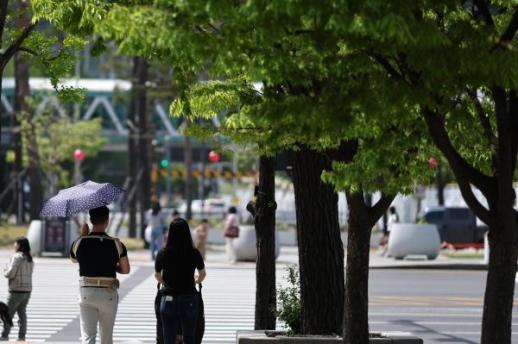 Weather Forecast: Early Summer Heat with Showers Expected in Gwangju and Jeonnam On Thursday, May 14, daytime temperatures are expected to reach a high of 31 degrees Celsius, signaling an early onset of summer weather.According to the Korea Meteorological Administration on May 13, the weather across the country will generally be clear, although some areas in the southern regions may see increased cloud cover in the afternoon. The heat is expected to spread across most inland areas, with temperature differences between day and night reaching around 15 degrees Celsius.Morning low temperatures are forecasted to be between 12 and 15 degrees Celsius, while daytime highs will range from 18 to 31 degrees Celsius, which is above the average of 20 to 25 degrees Celsius for this time of year.The expected morning low temperatures across the country are as follows: △Seoul 15 degrees △Incheon 14 degrees △Chuncheon 14 degrees △Gangneung 15 degrees △Daejeon 14 degrees △Daegu 15 degrees △Jeonju 15 degrees △Gwangju 15 degrees △Busan 15 degrees △Jeju 14 degrees.In Seoul, the daytime high is projected to reach 31 degrees. Other regions are expected to see the following highs: △Incheon 29 degrees △Chuncheon 28 degrees △Gangneung 20 degrees △Daejeon 30 degrees △Daegu 26 degrees △Jeonju 29 degrees △Gwangju 28 degrees △Busan 23 degrees △Jeju 24 degrees.In the Jeolla region and western South Gyeongsang, clouds will develop in the afternoon, with possible showers from daytime into the evening. Areas experiencing rain may also encounter gusty winds and thunderstorms. Expected rainfall amounts are: △Gwangju and Jeonnam, Jeonbuk 5 to 20 mm △Western inland South Gyeongsang 5 to 20 mm.Fine dust levels are expected to be rated as 'good' to 'moderate' across all regions.* This article has been translated by AI. 2026-05-13 19:14:57
 -
 The Strategic Importance of the Strait of Hormuz, Malacca, and Taiwan Strait The recent conflict in the Middle East has raised concerns about the potential blockade and toll collection in the Strait of Hormuz, prompting renewed attention from the international community on the strategic significance of this and other straits. Issues related to the Strait of Hormuz are closely linked to other international straits and choke points. The United Nations Convention on the Law of the Sea, adopted in 1982, expanded the territorial sea limit from 3 nautical miles to 12 nautical miles. As a result, 116 straits that were previously open for international navigation became part of the territorial waters of coastal states, leading to restrictions on the previously free right of passage. To address this issue and balance the interests of coastal states and user states, the international community introduced the legal concept of transit passage for straits used for international navigation. This guarantees the right for ships, submarines, and aircraft to pass quickly and without interference through relevant straits and their airspace. If the right of transit passage is denied in the Strait of Hormuz and tolls are imposed, it would directly contradict the United Nations Convention on the Law of the Sea and have profoundly negative implications for all international straits worldwide. In the Malacca and Singapore Straits, which are familiar to us, a significantly larger volume of crude oil and refined oil passes through daily compared to the Strait of Hormuz. The volume of general cargo is also vastly greater than that of Hormuz. Over 30% of South Korea's import and export cargo and about 90% of its crude oil imports transit through these straits. Moreover, the narrowest point of the Strait of Hormuz is approximately 39 kilometers wide, while the narrowest point of the Singapore Strait is only about 3.7 kilometers, making the Malacca/Singapore Straits strategically more sensitive. Recently, Indonesia's finance minister suggested imposing tolls in the Malacca Strait, but this proposal was withdrawn due to backlash from coastal states Malaysia and Singapore, as well as negative domestic reactions. However, if the maritime order in the Strait of Hormuz fundamentally changes, there is no guarantee that their stance will remain unchanged. The Taiwan Strait, through which over 45% of our import and export cargo and more than 85% of our crude oil imports pass, is another critical choke point. Although its narrowest point is about 130 kilometers wide, it is a heavily trafficked route, with approximately half of the world's container ships passing through it. If tensions between China and Taiwan escalate or if military conflict erupts, the impact on both the South Korean economy and the global economy would be unimaginable. The current situation in the Strait of Hormuz raises fundamental questions about straits: “Can coastal states charge tolls for straits like the Suez Canal or Panama Canal? Who owns the straits, and who can control them?” Toll collection is possible for artificially constructed waterways under the complete territorial sovereignty of individual nations, as seen with the Suez Canal and Panama Canal, which are granted the right to collect tolls under separate international treaties. In contrast, international straits are recognized as having the right of transit passage, which is a stronger right than the innocent passage allowed for foreign vessels in territorial waters. This means that international straits are not entirely under the sovereign control of coastal states and are guaranteed the right of passage free from interference by coastal nations as international public goods. Of course, reality cannot be explained solely by law. International law provides norms, but actual control over straits is heavily influenced by military power and geopolitical logic. When a specific coastal state militarizes islands or maritime features within or around a strait, or attempts to extend control beyond what international law permits, the legal principles agreed upon by the international community face significant challenges. What implications does this situation hold for South Korea? As a maritime trading nation that relies heavily on imports for energy and raw materials, South Korea's economy would suffer tremendously if energy supplies through the Strait of Hormuz and the Malacca Strait were disrupted. South Korea's import and export volumes are also significantly dependent on maritime routes in East Asia, including the Taiwan Strait. Therefore, South Korea must recognize this issue not merely as a regional dispute but as a structural risk directly related to national survival. First, it must consistently support the freedom of navigation and the right of passage, which are core to the international maritime order. Second, strategies to reduce dependence on specific straits through diversification of energy and supply chains are necessary. Third, South Korea should strengthen its naval capabilities and international cooperation to protect maritime routes. Most importantly, a balanced approach is crucial. Rather than aligning with the position of any specific country, maintaining a principled stance based on international law and multilateralism aligns with long-term national interests. A clear message runs through the Strait of Hormuz, Malacca, and Taiwan Strait: when norms collapse, most countries, including ours, suffer tremendous losses. Straits are not the exclusive property of any one nation; they are lifelines for the entire international community.* This article has been translated by AI. 2026-05-13 19:12:31
 -
 Lotte Department Store Expands VIP Experience with Culinary Tours and Luxury Content Lotte Department Store is evolving its VIP membership program from a focus on point accumulation to a "lifestyle curation" model. The revamped AvenueL program aims to enhance the experiences of its top-tier customers by expanding exclusive travel, fine dining, and unique cultural events. On May 13, Lotte Department Store announced the transition from the existing "AvenueL Points" system to "AvenueL Curation," which will strengthen content-focused VIP services. AvenueL Curation allows customers to utilize tiered points to experience luxury lifestyle content at over 100 partner locations across six categories: luxury hotels, fine dining, golf and leisure, stay, cuisine, wellness, store, and charity. A highlight of the program is an exclusive tour of Ulleungdo scheduled for next month, featuring a private dining experience with Chef Jeong Ho-young and wine pairings by Lotte Department Store's sommelier Han Hee-soo, set against the backdrop of the luxury resort "Cosmos Villasome." The tour will also include a scenic drive along the Ulleungdo coastline in a BMW 7 Series and visits to local attractions, combining nature, gastronomy, and mobility into a single experience. Customer response to AvenueL's exclusive content has already been positive. Last month, Lotte Department Store hosted a gala dinner with Michelin three-star chef Yannick Alléno, which sold out quickly due to limited seating. Previously, a private wedding showcase held at the high-end Hanok resort "The Hanok Heritage" in Yeongwol, Gangwon Province, was also a success. Directed by renowned wedding planner Moon Jeong-kyung, the event included accommodations, a dress and hanbok runway, and an after-party, and despite a high package price of 1 million won for two, it received rave reviews and sold out early. Park Sang-woo, head of marketing at Lotte Department Store, stated, "We plan to continuously expand differentiated content for our AvenueL customers, offering experiences that are more finely tailored to their tastes and lifestyles."* This article has been translated by AI. 2026-05-13 19:09:32
 -
 Com2us Holdings Reports Increased Losses in Q1 Due to Declining Game Revenue Com2us Holdings reported disappointing results for the first quarter, attributing the decline to reduced revenue from its games. The company aims to revitalize its performance by placing its two-year-old title, 'Soul Strike,' on a long-term success trajectory and launching over ten new titles in the second half of the year. On May 13, Com2us Holdings disclosed that its consolidated revenue for the first quarter of 2026 fell 26.1% year-on-year to 17.1 billion won. The operating loss increased to 9.9 billion won, up from a loss of 3.2 billion won in the same period last year, and a shift from an operating profit of 2.5 billion won in the previous quarter. A company representative explained, "The operating loss was influenced by factors such as losses from equity method investments." On a standalone basis, the company reported revenue of 12.9 billion won and an operating profit of 2.9 billion won. The standalone operating profit increased by over 50% compared to the same period last year and marked a return to profitability from the previous quarter. Com2us Holdings is strengthening its fanbase through collaboration events for 'Soul Strike.' Launched in January 2024, 'Soul Strike' has surpassed 4 million cumulative downloads globally. To ensure its long-term success, Com2us Holdings conducted a collaboration with the 'Zenonia' intellectual property in March. This year, the company plans to host various IP-related events and introduce a seasonal system to sustain the growth of 'Soul Strike.' In the second quarter, Com2us Holdings is set to release 'Star Sailor,' a collectible RPG featuring animated graphics and characters, in the global market. Additionally, a mobile puzzle game called 'Paw Pop Match,' which includes town-building and various mini-games, is also in the works. The company is preparing to expand into larger games and PC and console platforms. Four of the new titles scheduled for the second half of the year are being developed for consoles. 'Ares' will build anticipation through early previews to enhance user engagement and establish a fanbase. The game will undergo a complete overhaul to focus on single-player gameplay and emphasize action elements, with a global release planned for the second half of the year. The comic-style game 'Fading Echo' is targeting the Asian market on PC and console platforms. The Metroidvania-style action RPG 'Fatal Claw' is also set for global release in the second half of the year. 'Zenonia 1: Thread of Memory' and 'Lone Chef' are included in the lineup for PC and console platforms in the latter half of the year. Com2us Platform, a subsidiary, is driving growth in the cloud sector based on its game backend service 'Hive.' The company is particularly expanding its AI-based B2B business in collaboration with Tencent Cloud. A representative from Com2us Holdings stated, "We plan to strengthen our growth momentum by expanding our game business through the release of new titles across various genres and enhancing the technology business of our platform subsidiary."* This article has been translated by AI. 2026-05-13 19:07:06
 -
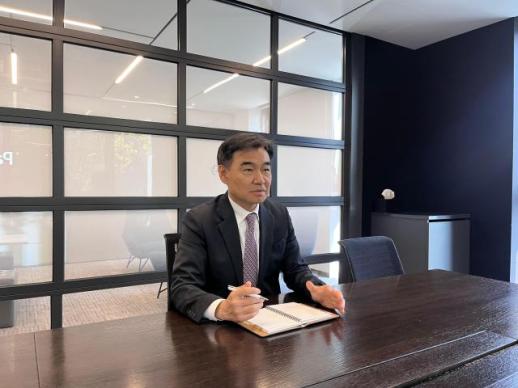 Trusstone Asset Management CEO Lee Sung-won: Capital Reallocation Key to Korea's Value Enhancement As South Korea's stock market approaches the KOSPI 8000 mark, the demand for improved corporate governance has intensified. Despite the government's value enhancement program gaining traction, some companies' closed management styles and low shareholder returns continue to hinder the Korean capital market. Lee Sung-won, CEO of Trusstone Asset Management, has been vocal about the need for corporate reform from the frontlines of the capital market. A former journalist turned CEO, Lee is recognized for setting new benchmarks in shareholder engagement in South Korea. In a recent interview, he emphasized the importance of 'authenticity' and 'capital efficiency.' He stated, "Activism is not just about boosting stock prices and exiting; it’s about guiding companies to allocate capital more productively, finding a path for both the company and its shareholders to thrive." - Your evaluations of Taekwang Industrial and KCC, two companies recently involved in shareholder activities, seem to differ significantly. What are the specific differences? "In a word, it boils down to the 'owner's perception.' Taekwang Industrial is a company that Trusstone has identified as having the most room for improvement, yet it continues to disappoint. Currently, the average price-to-book ratio (PBR) of Taekwang's listed affiliates is only 0.25. Taekwang itself has a PBR of 0.24, Daehan Synthetic Fiber is at 0.18, and Heungkuk Fire & Marine Insurance is at 0.33. This indicates that their stock prices are severely undervalued compared to their asset values. However, at this week’s shareholders' meeting, the company only passed a bylaw amendment regarding treasury shares, failing to present any concrete plans for share buybacks or value enhancement that shareholders had hoped for. The issue of board independence is particularly serious, as outside directors are being appointed in a circular manner among affiliates. Existing outside directors from Taekwang move to Daehan, and vice versa. Is this in line with the intent of the recent amendments to the Commercial Act, which stipulate the fiduciary duty of directors to shareholders? It is unacceptable for a major shareholder to provide generous dividends to unlisted companies while offering only 1-2% to listed companies." - On the other hand, you mentioned seeing 'hope' in KCC. Can you elaborate? "KCC has begun to actively embrace changes in the world. We have been demanding that KCC liquidate its stake in Samsung C&T, valued at approximately 6.888 trillion won, and conduct share buybacks. In response, KCC decided to split the buyback of 13.21% (1,174,300 shares) of its treasury shares, which account for 17.24% of its total shares, by September 2027. This is not just about the numbers; the communication has been positive. The company explained to us, 'We cannot sell now as Samsung C&T's stock price is low, but we will liquidate it for shareholder returns once the price recovers.' We understood their reasoning and made concessions. Ultimately, this case illustrates that the key to corporate change lies in how actively the board and owners accept changes in the world alongside institutional reforms." - You have consistently pointed out the low capital efficiency of Korean companies. Why is 'capital reallocation' urgent? "Currently, many Korean companies are accumulating cash or real estate instead of investing or returning profits to shareholders, despite generating substantial profits. This is toxic. When equity becomes too large, the return on equity (ROE) inevitably declines. A low ROE indicates that capital is not being used productively, leading to market discounts. Take Taekwang Industrial as an example. There are unofficial claims that its real estate value alone reaches 20 trillion won, yet its market capitalization is just over 1 trillion won. Not re-evaluating assets and merely sitting on land is akin to real estate speculation rather than corporate management. Therefore, we propose capital reallocation. Companies should sell unnecessary assets to invest in high-growth industries or optimize their capital size through share buybacks or dividends. This is the essence of productive finance that enhances corporate profitability and leads the entire capital market into a virtuous cycle. It’s not just a demand for 'give me money,' but a strategic dialogue about where to allocate capital for better corporate performance." - How do you respond to the perception of Trusstone Asset Management as 'hardline activism'? "I want to draw a clear line here. We are not speculative capital aiming for short-term profits and quick exits. How can we be considered hardline when we have invested in companies like Taekwang Industrial and BYC for over eight years, attempting sincere dialogue? Thus, I prefer the term 'shareholder engagement' over 'activism.' Public confrontations are merely a last resort when numerous private discussions are insincerely rejected. We aim to serve as long-term partners to improve governance. While shareholder activities have become more active recently, the actual size of funds executing activist strategies is only one-thirtieth of that in Japan. Without the financial power to secure voting rights, our influence diminishes. Ultimately, we must enhance our research capabilities to prove our returns and grow our fund size for true democratization." - What institutional improvements do you believe are necessary? "The most urgent need is to ensure the independence of the shareholders' meeting chair. Currently, most CEOs also serve as the chair, which is akin to a player also being the referee. We need to change the system so that the chair can be proposed by shareholders or appointed by an independent party approved by the court. Given the chair's significant authority over agenda setting and proceedings, they must be independent from major shareholders to ensure fair decision-making. Another point is the flexible application of the '5% rule.' It is excessive regulation to restrict voting rights by categorizing discussions about enhancing shareholder value, such as increasing dividends, as 'joint ownership.' We need to differentiate regulations between management issues like director appointments and general shareholder rights. Only when an environment is created where minority shareholders' voices can be genuinely reflected will the Korea discount be resolved, and value enhancement can be achieved."* This article has been translated by AI. 2026-05-13 18:58:25
 -
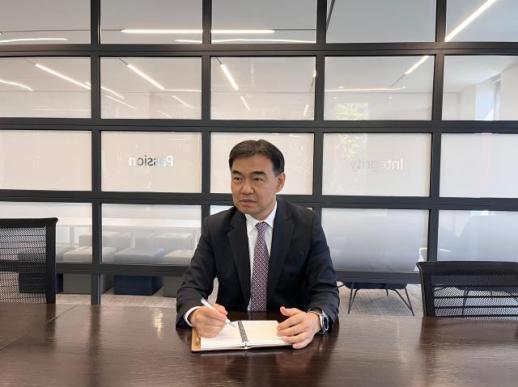 Trusstone Asset Management Aims to Evolve into Comprehensive Investment Firm Lee Sung-won, CEO of Trusstone Asset Management, is recognized as an expert in corporate governance and activism in the capital markets. However, his vision for Trusstone extends far beyond this reputation. He explains that the shareholder engagement activities known in the market represent only a fraction of the approximately 30 trillion won in assets managed by Trusstone. His broader vision is to transform Trusstone into a 'comprehensive asset management house.' Recently, Trusstone has experienced notable growth in its alternative investment sector. The firm has gained the trust of institutional investors by generating stable returns in specialized areas such as overseas social infrastructure investments and domestic renewable energy projects. "We are not just a company that engages in stockholder activities," Lee stated. "The reason large institutions, such as pension funds and insurance companies, choose us is ultimately due to our thorough research and risk management capabilities." The sharp corporate analysis demonstrated in shareholder engagement is also a foundation for accurately assessing asset values and maximizing returns in the alternative investment sector. He noted, "Our goal is to create a revenue structure that remains resilient against market fluctuations through a diverse business lineup." As a CEO with a background in journalism, Lee has chosen to maximize his strengths by collaborating with the latest technologies. He is an early adopter who regularly utilizes paid artificial intelligence (AI) models in his work. "Even in areas where one might feel like a non-expert, having AI allows for data-driven, precise decision-making," he said. "Such investments to enhance productivity are essential for management." Lee is embedding this smart management approach throughout the organization. He believes that Trusstone must lead by example in embracing change, especially when he is vocal about the shortcomings of companies resistant to transformation. "Trusstone Asset Management will become a leading asset management house in South Korea through a balanced portfolio that encompasses stocks, bonds, and alternative investments," he expressed. "By combining fundamental research with technological innovation, we aim to become the most trusted comprehensive asset management firm for investors."* This article has been translated by AI. 2026-05-13 18:55:46
 -
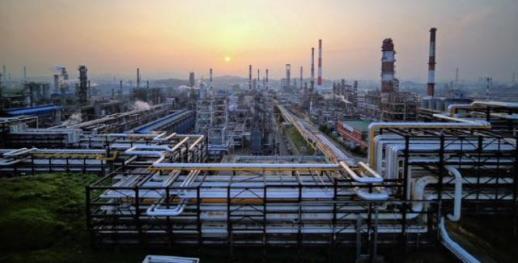 SK Innovation Reports $1.6 Billion Operating Profit in Q1 Amid Rising Oil Prices SK Innovation reported a return to profitability in the first quarter, driven by increased inventory-related profits amid soaring oil prices due to conflicts in the Middle East. In a disclosure on May 13, SK Innovation announced that it achieved revenues of 24.2 trillion won (approximately $18.3 billion) and an operating profit of 2.16 trillion won (about $1.6 billion) for the first quarter. These figures represent increases of 4.54 trillion won and 1.87 trillion won, respectively, compared to the previous quarter. Year-over-year, revenues rose by 3.19 trillion won, and the company returned to profitability. The improvement in first-quarter results was significantly influenced by the lagging effect between crude oil imports and petroleum product sales, as well as increased inventory-related profits. SK Innovation stated, "The operating profit of SK Energy, which operates in the refining sector, saw a substantial increase compared to the previous quarter due to the lagging effect of rising oil prices and increased inventory-related profits. However, these gains are reflected as accounting figures and may diminish or disappear in the event of falling oil prices in the future." The company revealed that approximately 60% of SK Energy's total operating profit of 1.28 trillion won (around $960 million) for the first quarter came from inventory-related profits, amounting to about 780 billion won (approximately $580 million). SK Energy's operating profit increased by 1.05 trillion won compared to the previous quarter, largely due to the surge in oil prices resulting from the blockade of the Strait of Hormuz amid regional conflicts. SK Geo Centric also returned to profitability in the first quarter, benefiting from inventory effects due to rising naphtha prices. The profitability of aromatic products improved due to scheduled maintenance of regional paraxylene facilities and the partial resumption of benzene exports. Despite a decline in margins due to rising oil prices, SK Enmove reported a 7.4 billion won increase in operating profit compared to the previous quarter, thanks to inventory effects. SK Earth On saw a 39 billion won increase in operating profit due to improved composite selling prices driven by rising oil and gas prices. The battery division continued to experience losses, with SK On reporting first-quarter revenues of 1.79 trillion won (approximately $1.35 billion) and an operating loss of 349.2 billion won (about $260 million). The company plans to enhance long-term profitability by stabilizing operations at its European production base and expanding orders for North American energy storage systems (ESS), anticipating favorable conditions from local production incentives and strengthened subsidies in Europe. Additionally, SK Incheon Petrochemicals reported revenues of 3.15 trillion won and an operating profit of 647.1 billion won; SK On Trading International reported revenues of 15.11 trillion won and an operating profit of 156 billion won; SK IE Technology reported revenues of 359 billion won and an operating loss of 732 billion won; and SK Innovation E&S reported revenues of 36.96 trillion won and an operating profit of 283.2 billion won. Looking ahead to the second quarter, SK Innovation plans to operate flexibly in response to global uncertainties stemming from the Middle East conflicts. The chemical industry will address oil price volatility risks through strategic inventory management and optimized marketing. Despite uncertainties from the Middle East conflicts, the lubricants business is expected to see improved spreads due to supply disruptions among competitors and raw material supply issues. With heightened interest in supply stability amid geopolitical risks, the company aims to secure profitability based on its differentiated competitiveness from multiple production bases. Seo Geon-ki, head of SK Innovation's finance division, stated, "With the expansion of global geopolitical risks, the volatility and uncertainty in the energy market are greater than ever. We will strive to secure stable profitability based on operational optimization and competitive business portfolio while continuing to play a responsible role in ensuring stable supply of domestic petroleum products and maintaining energy supply chains." * This article has been translated by AI. 2026-05-13 18:50:59
 -
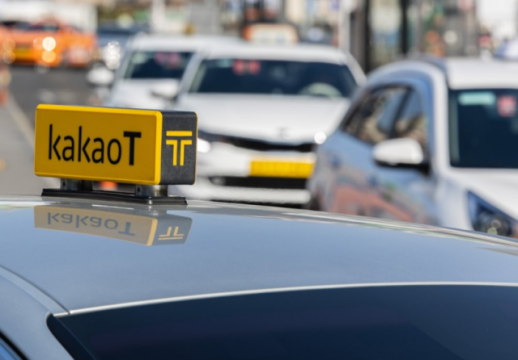 Kakao Mobility Clarifies Nasdaq Listing Speculation, Exploring Various Investment Options Kakao Mobility has addressed speculation regarding its potential listing on the Nasdaq, stating it is currently in discussions with multiple potential investors and buyers about various options. On May 13, Kakao Mobility responded to reports suggesting it is undergoing a re-audit in preparation for a U.S. initial public offering (IPO), clarifying that it is exploring a range of options beyond just an IPO or a one-time sale. Earlier, Herald Economy reported that Kakao Mobility is conducting a three-year re-audit for 2023 to 2025 and had signed an external audit contract with Anjin Accounting Corporation in April. This led to interpretations in the market that the company is preparing for a Nasdaq listing. In response, Kakao Mobility emphasized that the selection of the accounting firm is part of a process to evaluate various possibilities, stating, "To view this as a push for a specific IPO direction is an over-interpretation." Industry analysts suggest that these discussions are linked to the exit strategy of Texas Pacific Group (TPG), a financial investor that has invested approximately 1 trillion won in Kakao Mobility since 2017. With the IPO process delayed for an extended period, TPG is reportedly considering various exit strategies, including attracting new investors or selling shares, and discussions regarding transaction structures with overseas investors are also underway.* This article has been translated by AI. 2026-05-13 18:49:25
 -
 Ildong Foodis Launches High-Myun Products at Musinsa Megastore in Seongsu Ildong Foodis announced on May 13 that it has begun selling its High-Myun products at the Musinsa Megastore in Seongsu, targeting the 2030 demographic and foreign tourists as part of its strategy to expand its offline presence. The Musinsa Megastore in Seongsu is a multi-level shopping space spanning approximately 2,000 square meters, featuring fashion and beauty brands alongside experiential content areas and food and beverage facilities. Ildong Foodis is showcasing a total of 11 products, including eight varieties of High-Myun Protein Balance Active and three types of energy gel products called High-Myun Amino Poten, located in the 'Musinsa Beauty' section on the second floor of the megastore. High-Myun Active is a high-protein beverage containing 20 to 22 grams of protein per pack, featuring essential amino acids BCAA (leucine, isoleucine, valine) at 4,500 mg and L-carnitine. The accompanying High-Myun Amino Poten is a high-amino acid energy gel product designed for immediate energy replenishment, available in three lines tailored for specific energy needs. It was noted in a survey by the Korea Consumer Agency last year as the only product designed primarily with amino acids as the main ingredient. Ildong Foodis plans to enhance product experience opportunities for consumers visiting the Seongsu area and increase brand awareness through this launch. An Ildong Foodis representative stated, "We hope that consumers will have the opportunity to experience High-Myun products directly at the Musinsa Megastore in Seongsu. We also plan to continue expanding our offline sales channels to increase consumer touchpoints." According to Musinsa, the megastore, which opened in April, recorded 42,000 visitors during its first weekend from April 24 to 26, with sales totaling 900 million won during that period.* This article has been translated by AI. 2026-05-13 18:48:00
 -
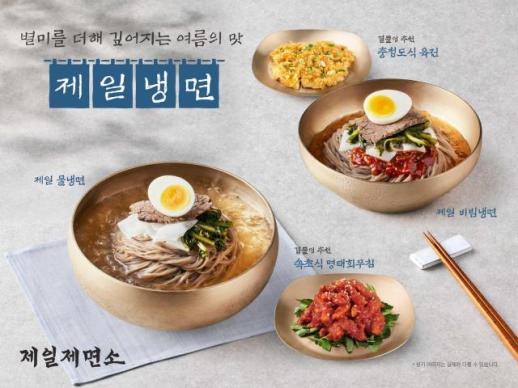 CJ Foodville Launches Cold Noodle Menu with Regional Delicacies CJ Foodville's Jeil Jemyunso is kicking off the summer season by launching its cold noodle menu. This year, the restaurant has expanded its offerings to include regional delicacies as side dishes. On May 13, Jeil Jemyunso announced that it will begin selling its summer-exclusive 'Jeil Mul Naengmyeon' (cold noodles in broth) and 'Jeil Bibim Naengmyeon' (spicy cold noodles) starting May 14. 'Jeil Mul Naengmyeon' features chewy noodles served in a chilled broth with ice flakes, while 'Jeil Bibim Naengmyeon' is designed to stimulate the palate with a sweet and tangy special sauce. This year, the restaurant has also introduced regionally inspired side dishes to complement the cold noodles. The 'Chungcheong-style Yukjeon' is a pork dish enhanced with a special sauce, which has received positive feedback since its initial launch at the Yeouido IFC Mall. It will now be available at all locations this season. Additionally, 'Sokcho-style Myungtae Hoe-muchim' will be offered, featuring pollock mixed with a spicy and tangy seasoning, enhancing the flavors of the cold noodles. Jeil Jemyunso has also created set options for customers to enjoy the cold noodles along with the side dishes. When ordering cold noodles, customers can add Chungcheong-style Yukjeon for 4,000 won or Sokcho-style Myungtae Hoe-muchim for 5,000 won to create a set meal. Moreover, the restaurant has combined these new offerings with existing Korean dishes such as Yangji Suyuk (brisket) and Hangjeong Suyuk (pork jowl) to provide a complete summer dining experience. A CJ Foodville representative stated, "We planned this year's cold noodle menu with a focus on regional characteristics, which are consistently popular every summer. Customers will be able to enjoy a variety of combinations to savor summer delicacies according to their preferences."* This article has been translated by AI. 2026-05-13 18:43:57