

Journalist

CGTN
-
 South Korean households spend more as income gap widens in Q1 SEOUL, May 29 (AJP) - South Korean households spent more in the first quarter, but their savings declined as spending grew faster than earnings for the first time in nearly two years, the Ministry of Data and Statistics said on Friday. According to the ministry, average monthly household income rose 2.4 percent from a year earlier to 5.48 million won (US$4,000) in the first quarter of 2026. Among them, average income for salaried workers stood at 3.42 million won. Average monthly household spending rose 5.3 percent from a year earlier to 3.11 million won, marking the fastest increase since the first quarter of 2023, and spending exceeded income for the first time since the second quarter of 2024. The average propensity to consume also increased 1.7 percentage points to 71.5 percent. The income gap widened as lower-income households faced growing financial pressure, while large performance bonuses at major companies such as Samsung Electronics and SK hynix boosted earnings among higher-income households. The average propensity to consume among the bottom 20 percent reached 155.3 percent, with households earning an average of 1.17 million won per month but spending 1.46 million won. By contrast, households in the top 20 percent saw the strongest income growth, with average monthly income rising 4.2 percent to 12.38 million won. They were also the only group to see their income grow, up 2.6 percent to 4.08 million won. As a result, the income gap between the two groups widened to 6.59 times from 6.32 times a year earlier. The ministry attributed the widening gap partly to wage growth at large corporations and performance bonuses from major chipmakers such as Samsung Electronics and SK hynix, which were partly reflected in February's income data. Households in the top 20 percent of the income bracket tend to include a higher proportion of employees at large companies, where wage gains were stronger in the first quarter. 2026-05-29 16:19:02
 -
 White Buffalo Resembling Trump Saved from Slaughter in Bangladesh A white buffalo in Bangladesh, famous for resembling U.S. President Donald Trump, has dramatically escaped slaughter just before it was to be sacrificed. The local government halted the slaughter due to "excessive public interest and safety concerns." According to the UK’s Daily Mail on May 28, the buffalo, weighing 750 kilograms, gained attention online while living on a farm near the capital, Dhaka. With its blonde-like forelock and pink skin, the buffalo became popular on social media, with local residents even naming it "Donald Trump." The so-called "Trump" buffalo was slated to be sacrificed for Eid al-Adha, the largest Islamic holiday. However, as photos and videos circulated on social media, visitors flocked to see the buffalo, prompting the Bangladeshi government to intervene. According to reports, Interior Minister Salahuddin Ahmed ordered the buffalo to be excluded from the sacrifice due to security concerns, and refunds were issued to the buyer. The buffalo is expected to be relocated to the National Zoo in Dhaka. A representative from the Interior Ministry explained to local media, "We decided to halt the slaughter considering the unusually high public interest and safety." The buffalo's owner stated, "My brother jokingly started calling it Trump because of its hairstyle," adding that albino buffaloes are generally known for their gentle nature.* This article has been translated by AI. 2026-05-29 16:18:00
 -
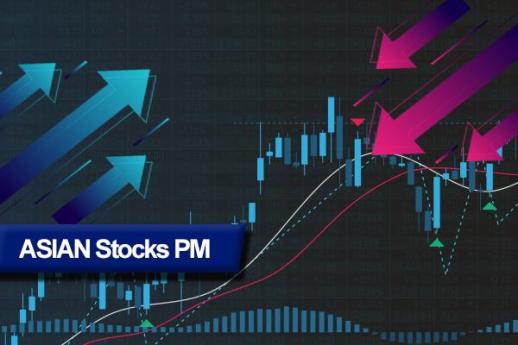 KOSPI surges to record 8,476 on Iran-Hormuz deal reports SEOUL, May 29 (AJP) - The KOSPI surged 3.55 percent to close at a record 8,476.15, its sharpest advance this week, as reports of a United States-Iran deal in principle to reopen the Strait of Hormuz unleashed a broad rally that lifted autos and batteries alongside semiconductors — a breadth the AI-driven run had conspicuously failed to deliver in prior sessions. The catalyst was unambiguous. A senior American official confirmed during the session that Washington and Tehran had reached a framework agreement to reopen the Strait, with Secretary of State Marco Rubio signaling a formal announcement was imminent, though cautioning that any initial deal would be time-limited rather than a permanent settlement. For South Korea — which sources roughly 70 percent of its crude through the waterway — the relief was immediate. Oil prices fell, the inflation premium compressing Korean assets eased, and the market re-rated broadly rather than selectively. Samsung Electronics rose 5.84 percent to 317,000 won ($210.3), recovering sharply from Thursday's retreat, while SK hynix advanced 1.92 percent to 2,333,000 won. The more telling signal came from Hyundai Motor, which surged 6.79 percent to 723,000 won — a name whose rally tracks Hormuz relief directly, given its dependence on Middle Eastern and European export lanes. The contrast with Thursday's session, when the index slid 0.53 percent even as SK hynix held firm, illustrated how different today's driver was: not AI demand, but geopolitical de-escalation reaching sectors that had been left behind. Foreign investors remained net sellers for a sixteenth consecutive session, extending a streak during which they have unloaded nearly 50 trillion won, a cumulative figure that now dwarfs any comparable episode in the Korean market's history, including the COVID-19 panic of 2020. Domestic individuals and institutions absorbed the supply for the third straight session, continuing the structural shift that has sustained record highs even as foreign capital exits. The Korean won closed at 1506.5 against the dollar — that number is the key test of whether today's Hormuz relief reached the currency, or whether the inflation pressure the Bank of Korea cited just one session ago remains unresolved. The breadth figures published this morning set the day's advance in sharper relief. Over the past month, 82 percent of the 2,764 stocks listed on the KOSPI and KOSDAQ have declined even as the headline index has risen nearly 24 percent — fewer than one in seven listed names has advanced. Today's sector rotation into autos and batteries was a partial answer to that concentration, not a resolution of it. Japan's Nikkei 225 closed up 2.53 percent at 66,329.50, with SoftBank Group advancing 4.60 percent to 7,453 yen as geopolitical relief lifted the region broadly. China moved in the opposite direction, the Shanghai Composite declining 0.65 percent to 4,072.09, with CATL and BYD both closing marginally lower — a reminder that the Hormuz story transmits more directly to energy-import-dependent economies like Korea and Japan than to China. The Iranian deal framework, if it holds, reshapes the inputs to nearly every forecast that matters for Korean markets. Lower oil prices reduce the imported inflation that drove the Bank of Korea's hawkish tilt on Thursday. A stabilizing won would ease the foreign-selling cycle that has defined May. And a broader sector rally, if today's auto and battery gains persist, would begin to address the concentration risk that has made the headline index a misleading indicator of how most Korean investors have actually fared this year. Whether Friday's relief translates into a durable repricing depends on whether the deal is signed, not merely signaled. 2026-05-29 16:11:50
 -
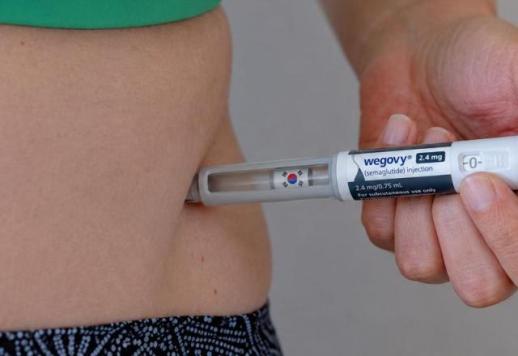 The world is getting thinner on a needle, and Korea wants in SEOUL, May 29 (AJP) - South Korean companies have a knack for catching up — and then overtaking. Their latest target is a class of drugs first designed to manage blood sugar that has since become the most coveted weight-loss tool on the planet, reshaping pharmacy shelves, celebrity bodies, and the business model of personal trainers everywhere. The drugs, known as GLP-1 receptor agonists, mimic a gut hormone that curbs appetite and slows digestion. Marketed by Denmark's Novo Nordisk as Wegovy and by Eli Lilly as Mounjaro and Zepbound, they have delivered double-digit weight loss in clinical trials and turned obesity treatment into one of the most lucrative frontiers in modern medicine. The numbers are staggering. Mounjaro and Zepbound together accounted for nearly 56 percent of Eli Lilly's $65.2 billion in revenue in 2025. Novo Nordisk's diabetes and obesity segment generated roughly $44 billion. Lilly's CEO has said 20 to 25 million patients are now on the two companies' drugs. What began as a medical breakthrough has long since spilled into popular culture. In Korea, interest in Wegovy surged after Bang Si-hyuk — the once-portly chairman of K-pop powerhouse HYBE — appeared markedly slimmer in public, reportedly with the drug's help. Overseas, a parade of slimmed-down celebrities has fueled a social-media frenzy that critics say glamorizes a dangerous thinness. The hype has outrun both the supply chains and, at times, the science. Studies show the drugs must be taken indefinitely to keep weight off; research published this year found that patients who quit regain weight up to four times faster than those who stop conventional dieting. Researchers are still mapping the fuller picture. Large observational analyses have linked semaglutide to sharply lower rates of Alzheimer's diagnosis — but the first major Phase III trials, reported in March, found that an oral form of the drug did not slow the disease's progression. A separate concern, that the drugs strip muscle along with fat, has driven much of the current innovation race. More recent studies temper the alarm, suggesting the apparent loss comes largely from liver and other tissue rather than skeletal muscle, and that strength is mostly preserved. The side effects, though, are real. Korean regulators have logged cases of acute pancreatitis, gallbladder disease, and kidney failure among Wegovy users, alongside prescriptions wrongly issued to children and pregnant women. Cost has divided the world into haves and have-nots. In the United States, list prices have topped $1,000 a month, pushing some patients to buy abroad. In China, Wegovy launched at around $193. Indian generics — available after patents lapsed there — have appeared for as little as $14. Korea sits somewhere in between. Wegovy is not covered by national health insurance, leaving patients to pay 400,000 to 800,000 won (roughly $290 to $580) per four-week pen, though a price war touched off by Mounjaro's arrival has since pushed some clinics lower. That gap, combined with easy access through clinics and telemedicine apps, has bred misuse: prescriptions have flowed from psychiatry, dentistry, and ophthalmology offices. On Wednesday the country's drug-safety ministry said it would tighten controls on overseas purchases and customs clearance, citing a surge in purely cosmetic use. It is into this turbulent, fast-globalizing market that Korean firms are pressing their case — not as pioneers, but as fast followers betting on better formats and lower prices. The local push rests on three ideas: pills for the needle-averse, longer-lasting injections, and drugs that spare muscle. A 2025 survey across 21 countries found 62 percent of respondents preferred oral weight-loss drugs over injectables, which drew only 16 percent. Hanmi Pharmaceutical said Wednesday it will present eight studies on two obesity candidates at the American Diabetes Association meeting in New Orleans next week, including the first disclosure of HM500197, a peptide designed to build muscle while cutting fat. Celltrion said Friday it had begun primate toxicity testing of CT-G32, a drug acting on four biological targets simultaneously, with a regulatory filing planned for the first half of next year and an oral version targeted for 2028. Samsung has joined the race too, with Samsung Bioepis striking a March deal to develop a monthly version of semaglutide and Samsung Biologics weighing U.S. manufacturing plants. Because the drugs' full range of effects remains uncharted, researchers are probing where else they might reach. At the Korea Research Institute of Bioscience and Biotechnology, scientists are studying GLP-1's potential as an anti-aging therapy. "Both Novo Nordisk and Eli Lilly spoke at an international aging conference last year about developing GLP-1 as an anti-aging treatment," said Oh Doo-byoung, head of the institute's Aging Research Institute. "Many experts believe obesity drives aging by triggering inflammation, and there is an idea that GLP-1 could counter that — and even help reverse aging, though nothing is settled yet." Oh added that his institute is exploring exercise-mimicking drugs to see how they might help older people losing muscle mass. "There are honestly so many indications that some call it a cure-all," he said. "If an anti-aging drug is developed, it too could likely be used across a wide range of conditions." 2026-05-29 16:08:57
 -
 US House bill broadens guardrails against USFK troop cuts amid China rivalry SEOUL, May 29 (AJP) - A new U.S. House defense bill seeks to strengthen congressional guardrails against any reduction of American troops in South Korea, at a time when the role of U.S. Forces Korea is increasingly being discussed in the broader context of Washington’s Indo-Pacific strategy and rivalry with China. The chairman’s mark of the fiscal 2027 National Defense Authorization Act, or NDAA, would amend a provision in the fiscal 2026 defense law that restricts the use of funds to reduce the number of U.S. troops stationed in or deployed to South Korea below 28,500. Under the 2026 NDAA, funds authorized by that law cannot be used to cut the U.S. military presence in South Korea below the current level or to complete a transfer of wartime operational control of the South Korea-U.S. Combined Forces Command in a way that deviates from a bilaterally agreed plan, unless the defense secretary submits required certifications and assessments to Congress. The 2027 House draft goes a step further by broadening the funding restriction. Instead of applying only to amounts authorized under the NDAA itself, the draft would prohibit the use of funds “authorized to be appropriated by this Act or otherwise made available for fiscal years 2026 or 2027” for such purposes. The change appears aimed at closing a potential loophole that could allow the administration to use other defense funds to carry out troop reductions, even if NDAA-authorized funds were restricted. If enacted, the provision would make it harder for the executive branch to move forward with a unilateral or rapid reduction in U.S. Forces Korea without first going through congressional oversight procedures. The provision comes amid lingering concerns in Seoul that the Trump administration could push for a reshaping of U.S. overseas military posture as part of its broader pressure campaign on allies to shoulder more defense costs and take on larger regional security roles. “The U.S. will not be able to act entirely on its own,” said Koh Yu-hwan, a professor of North Korean studies at Dongguk University. “Given its strategic competition with China, it would be difficult for Washington to reduce U.S. Forces Korea significantly. It may be able to scale back some ground troops, but there is little reason to move them to Japan or Guam, especially when Camp Humphreys in Pyeongtaek is such an advanced and well-established base.” Koh said Washington may still pressure Seoul over defense cost-sharing or other alliance issues, but the strategic value of the U.S. military presence in South Korea remains too important to abandon. “For South Korea, even the symbolic presence of U.S. troops serves as a deterrent,” he said. “For the United States, there are few locations as strategically useful as South Korea when it comes to keeping China — and even Russia — in check.” During Trump’s first term, the possibility of reducing U.S. troops in South Korea repeatedly surfaced alongside contentious defense cost-sharing negotiations. Congress responded at the time by inserting troop-level safeguards into annual defense policy bills. Similar concerns have resurfaced since Trump returned to office, particularly as his administration has reviewed U.S. force posture in Europe and other regions. The House draft does not itself order the United States to maintain troops in South Korea permanently, nor does it eliminate the possibility of a reduction. But it would require the defense secretary, in consultation with senior military, diplomatic and intelligence officials, to certify that any reduction below 28,500 is in the national security interest of the United States and follows consultations with allies, including South Korea and Japan. The required assessment would also have to analyze the impact of such a reduction on U.S., South Korean and Japanese security, U.S. deterrence, the defense posture of U.S. Indo-Pacific Command and the ability of American forces to carry out contingency plans, including operations beyond the Korean Peninsula. That last point is drawing renewed attention after Gen. Xavier Brunson, commander of U.S. Forces Korea, recently described South Korea as a “dagger” in the heart of Asia from China’s strategic perspective. His remarks underscored Washington’s growing view of the Korean Peninsula not only as a frontline against North Korea but also as a key strategic location in the wider Indo-Pacific theater. Brunson has also previously emphasized the need for closer operational links among South Korea, Japan and the Philippines, reflecting the U.S. military’s push to build a more networked regional deterrence posture. For Seoul, the developments point to a two-sided challenge. On one hand, the House NDAA language could reassure South Korea by making abrupt U.S. troop cuts more difficult. On the other hand, the growing emphasis on the peninsula’s strategic value in a potential China-related contingency could fuel debate over how far South Korea should align with U.S. regional operations beyond deterring North Korea. The Chinese Embassy in Seoul has strongly criticized Brunson's remarks, portraying South Korea and USFK as a forward base aimed at China, warning that he had “clearly crossed the line.” The bill remains a draft and must still go through committee deliberations, House passage and negotiations with the Senate before becoming law. But the language offers an early signal that Congress is seeking to preserve oversight over U.S. force posture in South Korea as the Trump administration weighs broader changes to America’s global military footprint. 2026-05-29 16:01:38
 -
 New York–inspired fashion brand opens flagship store in Seoul's Yeonnam-dong SEOUL, May 29 (AJP) - Contemporary designer brand CARLYN held the grand opening of its new flagship store in Seoul's trendy neighborhood of Yeonnam-dong on Friday. Known for its New York–inspired modern aesthetic, CARLYN has built a following among young consumers in South Korea and across Asia for its handbags and accessories. The new four-story store features an exterior inspired by the brand's signature quilting design, with spaces divided into four themes — "volume," "freedom," "lightness," and "colorways" —offering visitors an immersive experience of the brand's collections. Located in Seoul's hip district near Hongik University areas, a popular destination for young people and international tourists, the store is expected to attract plenty of visitors and raise the brand's profile. The opening event was attended by Wendy of K-pop girl group Red Velvet, Yook Sung-jae of boy group BTOB, Leeseo of girl group IVE, as well as Thai actors EMI, BONNIE and MIK. 2026-05-29 16:01:27
 -
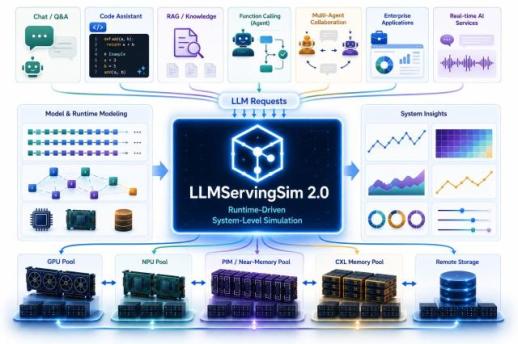 South Korean researchers develop virtual simulator for AI servers SEOUL, May 29 (AJP) - Researchers at the Korea Advanced Institute of Science and Technology in South Korea have developed a virtual platform to test the performance of large artificial intelligence server setups without building physical systems, the prominent research institute said Friday. Created by a team led by Professor Park Jong-se at the Korea Advanced Institute of Science and Technology (KAIST) School of Computing, the software is called LLMServingSim 2.0. It models the complex hardware and software interactions needed to run large language models. The tool allows developers to experiment with different designs and verify performance before buying expensive server equipment. Running large artificial intelligence models usually requires thousands of servers. Testing new chips or system layouts in the real world takes a lot of time and money. The new simulator solves this by copying tasks like data processing, request sorting, and memory use on a regular computer. The technology goes beyond traditional graphics processing units to support newer chips. Users can test neural processing units and memory chips that handle calculations directly within a virtual data center. This helps researchers see if a certain chip will speed up processing, use less power, and stay stable across huge server networks. It can also analyze setups where different server resources are physically separated but connected over a network. The research was led by master's students Cho Jae-hong and Choi Hyun-min. It won the best paper award at the IEEE International Symposium on Performance Analysis of Systems and Software (ISPASS) 2026. The simulation tool has been released to the public as open-source software so businesses and schools can use it freely. "AI service competitiveness is determined not only by the model itself but also by the infrastructure technology that operates it stably and efficiently," Park said. "I hope this simulator will serve as an important foundation for researchers and the industry to develop next-generation AI infrastructure more quickly and efficiently." (Reference Information) Journal/Source: IEEE International Symposium on Performance Analysis of Systems and Software (ISPASS) 2026 Title: LLMServingSim 2.0: A Unified Simulator for Heterogeneous and Disaggregated LLM Serving Infrastructure Link/DOI: 10.1109/ISPASS69572.2026.00012 2026-05-29 15:54:20
 -
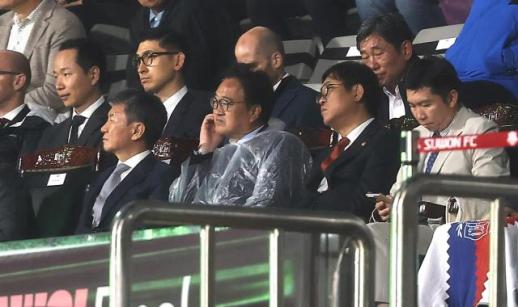 KFA chief Chung Mong-gyu to step down after 2026 World Cup SEOUL, May 29 (AJP) - Chung Mong-gyu, president of the Korea Football Association, said Friday he will step down after the 2026 FIFA World Cup in North America, ending his 13-year tenure at the helm of South Korean football. In a statement released two weeks before the tournament opens, Chung said he intends to resign after the World Cup, calling support for the national team his final duty as head of the association. "I intend to step down as president of the Korea Football Association after this World Cup," Chung said. "I believe my last duty as president is to do my best to support the national team so it can produce meaningful results at the tournament." "I am aware that there have been various controversies and criticisms during my time leading the association," Chung said. "I believe all of this is due to my shortcomings." The KFA said Chung made the decision to urge football fans to give their full support to the national team during the World Cup. It also said he concluded that taking responsibility was necessary for the association to move past the current situation and return to long-term planning for South Korean football. Chung won a fourth term in February last year with 85.6 percent support. He has led the KFA since 2013, when he took office as the association's 52nd president. South Korea, coached by Hong Myung-bo, is preparing for the World Cup finals, which open next month in North America. Chung plans to submit his resignation after the tournament, which is scheduled to conclude on July 19 local time. 2026-05-29 15:49:26
 -
 Nike teams up with BTS for customization, tour merchandise collection SEOUL, May 29 (AJP) - Nike has partnered with K-pop legend BTS to launch a Nike By You customization experience and tour merchandise tied to the group's BTS WORLD TOUR "ARIRANG," Nike said Friday. The project combines customized Nike products with tour merchandise, giving BTS fans a way to personalize apparel and accessories connected to the group's upcoming world tour. The Nike By You experience features 10 custom graphics created specifically for BTS. The designs can be used to personalize select Nike apparel and tote bags. Nike said the graphics use bold shapes, fluid movement and custom typography to reflect the group's musical evolution and its connection with fans around the world. The collaboration also includes Nike x BTS tour merchandise, including T-shirts, a hoodie and a Korea-only cap. The items will be sold in select cities on the "ARIRANG" world tour and online in China. The collection references BTS' Korean heritage alongside themes of legacy and creativity. Some Nike By You designs highlight the number seven, representing the seven members of BTS, while others reference musical bars and measures. The Nike By You customization experience will begin June 1 at select Nike stores in Seoul, Busan, Tokyo and Osaka. It will later expand to cities across Asia, Europe and North America through February 2027. Nike x BTS tour merchandise will launch June 12 in Seoul, Busan and Tokyo, followed by releases in major U.S. cities, including Chicago, Boston, San Francisco, Los Angeles, New York City and Las Vegas, on July 5 and in London on July 6. Additional merchandise drops are scheduled for China, Singapore, Taguig, Bangkok, Kuala Lumpur, Jakarta, Toronto, Melbourne and Sydney through February 2027. 2026-05-29 15:48:43
 -
 Ruling Party Warns Opposition Candidates of Serious Consequences Amid Election Controversies On May 29, the Democratic Party issued a warning to the opposition amid ongoing controversies surrounding the local elections, specifically addressing allegations of deepfake video production and distribution linked to Park Wan-soo, the People Power Party's candidate for Gyeongnam governor, and accusations of online comment manipulation involving Oh Se-hoon, the party's candidate for Seoul mayor. The party asserted that these issues would lead to serious consequences for the opposition. Kang Jun-hyun, the party's spokesperson, spoke to reporters at the National Assembly, emphasizing the importance of active voter participation on the first day of early voting. "We urge the public to exercise their valuable right to vote," he said, noting that problems related to the People Power Party candidates continue to emerge. Kang highlighted reports from May 28 that raised concerns about illegal AI deepfake election videos being created and distributed by Park's campaign, as well as indications of election interference by Gyeongnam provincial officials. He stated, "If true, this constitutes a serious violation of the Public Official Election Act and is one of the most severe election crimes." He further remarked, "This is also an instance of administrative power being mobilized for electoral purposes. Elections are a stage for the people's choice, not a mud fight where one can win through crime and rule-breaking." Regarding the recent controversy surrounding Oh's alleged comment manipulation, Kang noted, "There are reports that malicious posts were created and systematically disseminated with the intent of causing the defeat of candidate Jeong Won-ho. A representative from Oh's camp even mentioned that they had previously changed the game during the 2021 by-elections through a comment campaign." Kang criticized the People Power Party, questioning whether they take pride in manipulating public opinion. He recalled the remnants of similar tactics from the Lee Myung-bak administration, warning that the unethical approach of prioritizing electoral victory over political integrity would now face severe scrutiny. Additionally, Kang pointed to recent polling data indicating that Lee Won-taek is leading Kim Kwan-young in the race for the Gyeongbuk governor position, suggesting that public sentiment in the region is rallying behind the Democratic Party. He concluded by stating, "What Kim should do now is not to dream of an unrealistic return to the party but to show integrity by apologizing to party members and resigning. I urge the voters of Jeonbuk, who support President Lee Jae-myung, to choose him."* This article has been translated by AI. 2026-05-29 15:45:00