

Journalist

CGTN
-
 Number of single-person households exceed 30% in S. Korea as traditional family structures decline SEOUL, February 28 (AJP) - South Korea's residential landscape has undergone a radical atomization over the last 40 years, with the number of households nearly tripling even as population growth stalled. A report released Saturday by the Korea Institute for Health and Social Affairs reveals that the traditional multi-generational family has been largely replaced by individuals living alone and elderly couples. According to the report, "Trends and Implications of Household Structure Changes Due to Demographic Shifts," South Korea recorded approximately 22.73 million households in 2023. This is a 2.8-fold increase from the 8 million recorded in 1980, far outstripping the 1.4-fold increase in the general population over the same period. This divergence highlights a transition where, despite a shrinking working-age population, the total number of households continues to climb as families fracture into smaller, independent units. The most profound shift is the ascension of the "solo" household. In 1980, people living alone accounted for a mere 4.8 percent of all households. By 2023, that figure surged to 35.47 percent, meaning more than one in three homes is now occupied by a single person. Conversely, the extended family model—once the societal standard—has collapsed, falling to just 11.89 percent of households by 2020. Increasing life expectancy and shifting social norms have also cemented "couple-only" residences as a permanent demographic fixture. While once considered a brief transition before childbirth, these households now frequently consist of aging couples living independently for decades after their children have moved out. The population living in such arrangements skyrocketed from 570,000 in 1980 to 6.36 million in 2020. The report identifies the aging baby boomer generation as the primary engine behind this fragmentation. This trend is further accelerated by an increasing preference for autonomy among young adults in their 20s and rising instances of divorce or widowhood among older women, many of whom choose to maintain separate homes rather than reintegrating into larger family units. This move toward an atomized society has weakened the traditional family safety net, which historically provided a buffer against unemployment, illness, and poverty. The report warns that current housing and welfare systems remain rigidly designed around the nuclear family model of a couple and their children, leaving a policy gap for the growing number of small, isolated households. "South Korea's household changes follow the trends of developed nations, but the speed is unprecedentedly steep," said Woo Hae-bong, a research fellow at the Korea Institute for Health and Social Affairs. "As the fragmentation of households may create new social risks, strategic responses through institutional and policy interventions are necessary beyond simply observing demographic changes." 2026-02-28 10:23:45
 -
 Trump calls for rehearing on tariff ruling as South Korean firms seek massive refunds SEOUL, February 28 (AJP) - U.S. President Donald Trump on Friday (local time) questioned whether the Supreme Court could revisit its decision to strike down his administration's tariff authority, a move that comes as South Korean exporters and other global firms prepare to seek billions of dollars in refunds. Writing on his social media platform Truth Social, Trump expressed frustration with the February 20 ruling, which invalidated reciprocal tariffs he had imposed under the International Emergency Economic Powers Act (IEEPA). He argued the decision would allow countries and companies that have "ripped off" the United States for years to receive an "undeserved windfall" through duty refunds. "Is a Rehearing or Readjudication of this case possible?" Trump wrote, publicly signaling a desire to challenge the 6-3 decision that found the executive branch had exceeded its legal authority. The ruling has sparked immediate interest in South Korea, where industries are assessing the potential for reclaiming duties paid since 2025. According to reports from the South Korean news agency Yonhap and major business outlets, an estimated 6,000 South Korean companies out of 24,000 exporters to the United States could be eligible for refunds. Many of these firms operated under "Delivered Duty Paid" (DDP) terms, meaning the South Korean exporters, rather than the U.S. importers, bore the direct cost of the tariffs. Global media outlets, including Bloomberg and the Wall Street Journal, estimate the total pool of potential refunds to be between 133.5 billion dollars and 175 billion dollars. For South Korean firms, the ruling effectively targets the 15 percent reciprocal tariff previously applied to their goods under the IEEPA. South Korea's Ministry of Trade, Industry and Energy has begun coordinating with local industries to monitor the situation. While the decision increases market uncertainty, the ministry noted that it would provide information regarding refund procedures as they become available. Major South Korean exporters, including Hyundai Motor, Kia, Samsung Electronics, and LG, are expected to review their past tariff payments to determine their eligibility for recovery. Legal experts suggest that a rehearing in the Supreme Court is unlikely under current judicial rules. A petition for a rehearing must be filed within 25 days of a judgment and requires the support of a majority of the justices, including at least one who originally voted with the majority to strike down the tariffs. The Trump administration has already moved to implement replacement measures. These include a 10 percent global tariff under Section 122 of the Trade Act of 1974, which the president has signaled could be raised to 15 percent in the coming months. 2026-02-28 09:28:47
 -
 How MyData Services Are Automating Rate-Cut Requests and Boosting Credit Scores MyData services have taken a step forward. What once mainly gathered scattered personal information in one place is increasingly being used to deliver practical financial benefits. The Financial Services Commission said on the 27th that a service launched on the 26th will automatically file requests for loan rate cuts without requiring customers to visit bank branches each time. Under the system, a MyData-based artificial intelligence agent asks lenders for a rate reduction on behalf of borrowers. Users can sign up through MyData operators such as Naver Pay and Kakao Pay, as well as MyData services offered by banks, insurers and card companies, and then consent to automatic filing. Korea’s rate-cut request right allows borrowers to ask a financial company to lower loan interest when their credit standing improves, such as through higher assets or income. Until now, many consumers failed to use it because they had to track credit changes themselves and apply separately to each lender. With a one-time consent, the right can now be used automatically. Signals of improved credit — including financial assets, income gains, reduced debt and changes in credit scores collected through MyData — are analyzed in real time, and the system submits a request when conditions appear most favorable. Requests can be filed regularly up to once a month, and can also be submitted at other times when there is a clear reason such as higher income or an improved credit score. If a request is rejected, the AI identifies the specific reason and advises what needs to be improved. MyData can also be used to raise credit scores. Fintech firms such as BankSalad and Finda help “thin-file” consumers — those with little financial history or no current income — by reflecting nonfinancial and public data in ways intended to improve scores. Among mid- to low-credit users with scores of 850 or below on the KCB scale who used a credit-score-boosting service over the past three months, one case showed a score rising 226 points, from 692 to 918. The user moved into a prime-credit range, and based on pre-screened loan approval data, the expected interest rate fell to 5.6% from 10.2%, a drop of 4.6 percentage points. On average, mid- to low-credit users saw scores rise by 20 points. BankSalad’s interest-rate prediction model estimates that a 20-point increase can translate into an average rate reduction of 1.3 percentage points. MyData is also being used more broadly for personal finance. Consolidating insurance contracts spread across multiple insurers can help cut unnecessary coverage, such as overlapping benefits or excessive riders, and support policy redesign. Card-optimization tools can recommend cards that offer higher discounts based on an individual’s spending patterns.* This article has been translated by AI. 2026-02-28 07:03:00
 -
 BTS’ V Builds Influence Through Image as Group Nears March Comeback With BTS set to return in March, anticipation is rising again worldwide. News of the comeback and plans for a world tour, shared through “Arirang,” is drawing immediate attention beyond music, with ripple effects expected across tourism and broader economies. BTS is seen as both a force that can affect the global economy and a symbolic name that elevates South Korea’s image. Ahead of the comeback, this outlet is publishing a “BTS Member Profile” series, taking a closer look at each of the group’s seven members in turn. <Editor’s note> BTS’ V is a name that operates both inside and outside music. Within the group, he stands out for a distinct vocal color. In broader pop culture, however, the power that defines him is often closer to “image.” Across fashion, beauty, social media photos, exhibitions and other records, V is consumed not only as a person but as a mood. Commentators often say the atmosphere of a scene changes the moment he appears. In fashion and beauty, V established himself early as an icon. From stage styling to everyday outfits, what he chooses quickly becomes a talking point and is reproduced as a reference. Rather than relying on flashy embellishment or exaggerated staging, he has stuck to tones and textures that suit him — an approach summed up in the phrase “a V-like image.” By using his own taste as the standard instead of following a specific trend, he has been positioned less as a consumer of trends than as a producer of them. That image-making has expanded alongside his music. His first solo album, “Layover,” pushed “simplicity” as a consistent keyword not only in sound but across its visual concept. The tracks, including the title song “Slow Dancing,” emphasized mood and texture over showy devices. The five music videos were also built to focus on V’s face and voice without heavy explanation — a project designed so music and image shared a single tone. V’s influence has also continued through photography and documentation. His photobook “TYPE 非” focused on “non-fixedness,” crossing boundaries of form and genre rather than leaning on a staged concept. By taking part from the planning stage through the shoot and deciding how he wanted to be recorded, the work aimed to show the posture of “artist V,” not simply deliver a glossy photo collection. A related project that expanded into an exhibition also sought to turn the act of consuming images into an experience. His acting experience is another strand in that image narrative. His appearance in the 2016 drama “Hwarang” served as a moment when he stood before the public not only as an idol member but as a character. While his path afterward leaned more toward music and image-based work than full-scale acting, that single experience became a starting point for audiences to picture both “V on stage” and “V in a scene.” His starting point, however, remains music. His husky mid-to-low register and soulful tone create a clear color within BTS’ vocal line. Yet the core of how V is described now goes beyond a vocal position. The article argues he has largely designed for himself how he will be remembered — treating the way he is seen, from fashion and photography to music, documentation and his offstage posture, as part of the work itself. As BTS’ next chapter approaches, the question is what face V will present this time. What is clear, the article says, is that he can no longer be explained by a single genre or position. In an era when image becomes influence, the name V is functioning as a cultural signifier.* This article has been translated by AI. 2026-02-28 06:03:33
 -
 KAI committee recommends Kim Jong-chul as inside director candidate for CEO selection Korea Aerospace Industries (KAI) said its director candidate recommendation committee on Thursday recommended Kim Jong-chul, former director general of the Defense Technology Protection Bureau at the Defense Acquisition Program Administration, as an inside director candidate as part of the process to select a new CEO. KAI held an extraordinary board meeting the same day and approved an agenda item to appoint a director for submission to a shareholders meeting. The company plans to put the item to an extraordinary shareholders meeting on March 18 and then make a final decision on the CEO appointment at a board meeting. KAI said Kim, a founding member of DAPA, is regarded as an export specialist who understands the defense industry market, having served as head of the defense export support team and as director of the offset trade division. He also held key posts including creative innovation officer, deputy head of the strategic planning group and planning and coordination officer, and is seen as having a strong grasp of defense and aviation industry policy and strategy, the company said. It added that his expertise in future businesses and advanced technologies, built during his tenure as head of the unmanned business division and as director general of the Defense Technology Protection Bureau, is considered essential to KAI’s global expansion. The committee said Kim is “a suitable candidate equipped with outstanding expertise across the defense industry and insight into future businesses,” adding it expects him to play a key role in helping KAI grow into a global aerospace company based on his export network and strategic planning capabilities.* This article has been translated by AI. 2026-02-27 18:15:20
 -
 Korea Low-Cost Airlines Post Losses as Weak Won and High Fuel Costs Bite Despite a rebound in passenger demand, South Korea’s low-cost carriers posted a string of losses as a weak won and high oil prices drove up costs, the industry said. Intensifying competition — often described as a “chicken game” — further squeezed margins. Carriers say they will prioritize tighter, efficiency-focused management this year to improve profitability. According to the industry on Feb. 27, T'way Air posted 1.7981 trillion won ($) in revenue last year and an operating loss of 265.4 billion won. Revenue rose 17% from a year earlier to a record high, but the operating loss more than doubled. Other listed low-cost carriers also reported weak results. Jeju Air, the sector leader, was the only listed carrier to post an operating profit in the fourth quarter, but it still recorded an annual operating loss of 110.9 billion won, swinging to a loss. Jin Air and Air Busan also turned to losses, posting operating losses of 16.2 billion won and 4.5 billion won, respectively. The main drivers were the strong dollar and high oil prices. With aircraft lease payments, fuel and maintenance largely settled in U.S. dollars, a higher won-dollar exchange rate directly increases costs. Fuel expenses also rose as global oil-price volatility persisted. T'way Air said profitability deteriorated due to higher investment costs tied to introducing larger aircraft, rising costs from the exchange rate and oil prices, and tougher competition as capacity increased. Competition has also weighed on earnings. As carriers rapidly expanded capacity on routes to Japan and Southeast Asia, fare increases have been limited while price competition to attract passengers has dragged on. A Jin Air official said stagnant domestic travel demand, the weak won and increased LCC supply also hurt profitability. Carriers outlined plans centered on financial discipline. Jeju Air said it will avoid a major expansion in scale while introducing seven next-generation aircraft and reducing older planes, and will manage liquidity and financial ratios through asset sales. Jin Air said it will maximize earnings by adjusting capacity based on route-by-route demand and profitability analysis, while strengthening cost competitiveness through steps including introducing more fuel-efficient aircraft. Air Busan said it will focus on a flexible route strategy and more efficient fleet operations to support a mid- to long-term recovery and competitiveness. T'way Air said it plans to create a turning point through new aircraft, expanded passenger and cargo supply, stabilizing mid- and long-haul routes, and adding new routes from regional airports. An industry official said the number of people entering and leaving South Korea hit a record high last year, but LCC earnings and financial conditions were significantly damaged. If the current operating environment persists, the official said, some carriers could face restructuring. The official added that in 2027, the Korean Air-Asiana Airlines merger and the integration of three LCCs — Jin Air, Air Busan and Air Seoul — could ease oversupply to some extent.* This article has been translated by AI. 2026-02-27 18:03:00
 -
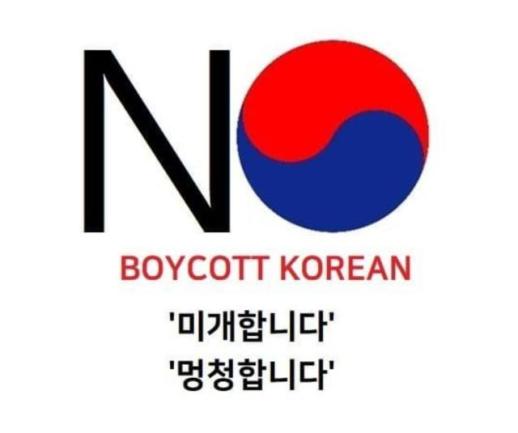 K-wave at a high tide; ripples of dissent surface in ASEAN SEOUL, February 27 (AJP) - At a moment when the Korean Wave appears once again near its global crest — with artists climbing international charts and anticipation building ahead of BTS’s March 21 return at Gwanghwamun — a quieter, less comfortable current has begun to surface in one of Hallyu’s most enduring strongholds: Southeast Asia. On Monday, an X user posted a terse declaration of disillusionment. “I used to really like Korea. But what happened yesterday was too much. I’m no longer interested in this country. I even canceled my ticket and hotel for next month,” the user wrote, adding the hashtag #SEAbling. The post offered no elaboration or any ties to the upcoming BTS event. Attached was a stark image: a South Korean flag laid on the ground, stepped on by sneakers. The image traveled quickly. The word did, too. “SEAbling” — a portmanteau of “SEA” (Southeast Asia) and “sibling” — has surfaced across regional online communities in recent weeks, signaling solidarity among some Southeast Asian netizens who say they are pushing back against what they perceive as condescension or disrespect from Korean fans and internet users. In some corners, calls for boycotts of Korean brands and cultural content have followed. Whether this marks the beginning of a sustained backlash, however, remains an open question. The spark, according to regional media reports including Singapore’s The Straits Times, appears to have been an incident at a January 31 concert by South Korean band DAY6 in Kuala Lumpur. A Korean fan was stopped by venue staff for allegedly attempting to use a prohibited telephoto camera. Video of the confrontation circulated widely online. What began as a dispute over concert rules quickly escalated. Social media exchanges between Korean and Southeast Asian users grew heated. Some Korean users reportedly posted mocking comments about Southeast Asian fans’ appearance, culture and economic standing. In response, Southeast Asian users pointed to South Korea’s low birth rate, suicide statistics and cosmetic surgery culture. The exchange revealed less about the initial incident than about accumulated sensitivities. The question, then, is whether “SEAbling” reflects a passing digital flare-up — or a deeper undercurrent. Kim Hyung-jun, professor of cultural anthropology at Kangwon National University, cautions against viewing the controversy in isolation. “Before 2010, anti-Hallyu sentiment was not particularly visible,” he said. “But as Hallyu succeeded on a larger scale, it became inevitable that some would feel uncomfortable about its rise. Based on related data, roughly 20 percent may hold such sentiments.” The Ministry of Culture, Sports and Tourism’s 2024 Overseas Hallyu Survey reported that 68.8 percent of respondents in major Southeast Asian markets held favorable views of Korean cultural content. The numbers suggest continued dominance rather than decline. Yet dominance carries its own tensions. Kim argues that those voicing dissatisfaction are not typically core Hallyu consumers. “They are often on the periphery, observing the phenomenon rather than actively participating in it,” he said. “But they are not marginal. In some countries, these voices are more visible among university-educated and white-collar professionals who interpret Hallyu through a nationalist lens.” In Indonesia, for example, Kim notes that some former enthusiasts have publicly distanced themselves from Korean culture, framing their disengagement almost as a personal reckoning. “They post reflections that resemble confessions,” he said. “Others respond in solidarity — almost like narratives of recovery. Compared to the past, such sentiments are expressed more clearly and confidently.” In this sense, the backlash may be less about music or television than about hierarchy — cultural, economic and symbolic. The hashtag “SEAbling” suggests a unified Southeast Asian front. Kim, however, doubts that the sentiment will evolve into a sustained regional movement. “In the past, such feelings remained largely within national boundaries,” he said. “Now, digital platforms allow sentiments that exist in varying degrees across Southeast Asia to appear simultaneous. That creates the impression of cross-border solidarity.” But a cohesive regional identity strong enough to sustain coordinated backlash remains, in his view, still forming — if at all. Historically, anti-Hallyu episodes have surfaced periodically in different countries, often fading as quickly as they appear. “For now, these emotions may reflect envy,” Kim added carefully. “But they should not be dismissed. Complacency would be a mistake.” Hyun Si-nae, professor at the Institute for Korean Studies at Inha University, situates the controversy within a broader Asian context. “The term may be new, but discrimination toward Southeast Asians has long been an underlying issue,” she said. “What changed this time is that the issue was named — and amplified.” Hyun suggests the debate reveals anxieties over perceived cultural hierarchy within Asia itself. “In parts of Southeast Asia, there has historically been resentment toward larger regional powers, including China, over political and economic dominance,” she noted. “After the pandemic, the ‘Milk Tea Alliance’ demonstrated that online solidarity across borders is possible. What we are seeing now is not entirely unprecedented.” In her reading, “SEAbling” is less an anti-Korean crusade than a symptom of unresolved regional asymmetries — economic gaps, labor migration patterns, racial perceptions and the uneasy pride of rising cultural exporters. “At its core, this reflects a gap in mutual understanding,” she said. “Like many collective backlashes, its shape will continue to change.” The Korean Wave, by most measurable standards, remains formidable. Southeast Asia continues to be one of its most enthusiastic markets. BTS’s return alone underscores the scale of global anticipation. Whether “SEAbling” fades as another fleeting hashtag or signals a more sustained recalibration of regional sentiment will depend less on fandom than on something more enduring: how Korea navigates its growing cultural power — and how it listens when that power is questioned. 2026-02-27 17:31:06
 -
 Korea, Japan end lower Fri after stunning February SEOUL, February 27 (AJP) - Asian equities diverged Friday as chip-heavy markets in South Korea and Japan retreated following a reassessment of AI earnings momentum, while sentiment improved modestly in China-related markets ahead of next week’s pivotal Two Sessions. In Seoul, the benchmark KOSPI fell 1.0 percent, or 63.14 points, to close at 6,244.13, after swinging between a high of 6,347.4 and a low of 6,153.9. The pullback followed a near-uninterrupted rally since Feb. 9. Foreign investors were heavy sellers, offloading 7.12 trillion won worth of shares. Individuals bought 6.31 trillion won and institutions added 545.8 billion won, suggesting the recent rally has been driven largely by domestic liquidity rather than offshore inflows. Turnover on the KOSPI reached 52.94 trillion won ($36.8 billion), underscoring active repositioning after a year-long bullish run. Foreign outflows pressured the currency, with the dollar rising 7.20 won to 1,440 won. Technology heavyweights led declines. Samsung Electronics slipped 0.7 percent to 216,500 won, while SK hynix dropped 3.5 percent to 1,061,000 won. Although Nvidia posted strong quarterly results, U.S. markets reacted cautiously, with its shares falling sharply overnight. Investors reassessed the sustainability of AI-driven earnings momentum, particularly after disclosures of sharply rising long-term purchase commitments raised questions about demand visibility. The tech-heavy KOSDAQ edged up 0.4 percent to 1,192.8 after touching an intraday high of 1,201.9, remaining near record levels. On the KOSDAQ, foreigners bought 63.5 billion won and institutions added 444.5 billion won, while individuals were heavy sellers, offloading 470.7 billion won — indicating selective rotation into mid- and small-cap growth names. Autos provided a notable counterweight. Hyundai Motor surged 10.7 percent to 674,000 won after announcing plans to invest approximately 9 trillion won in the Saemangeum region to build an AI data center, robotics manufacturing facilities and hydrogen infrastructure. The investment, structured around an AI-centered industrial cluster, reinforced investor optimism toward advanced manufacturing and next-generation mobility themes. Samsung Biologics rose 0.7 percent to 1,778,000 won, Kia edged down 0.2 percent to 205,500 won, and Doosan Enerbility gained 2.4 percent to 106,300 won. In Tokyo, the Nikkei 225 edged up 0.05 percent to 58,781.6, while the broader TOPIX advanced 1.4 percent to 3,934.5, reflecting strength in domestic-oriented shares even as semiconductor-linked names retreated. Tokyo Electron fell 2.9 percent, Advantest slid 4.5 percent and SoftBank declined 2.6 percent, mirroring global technology weakness. In contrast, Toyota gained 1.3 percent. Tokyo’s February core consumer price index, excluding fresh food, rose 1.8 percent year-on-year — slightly above expectations but still below the Bank of Japan’s 2 percent target. The “core-core” measure, excluding both fresh food and energy, accelerated to 2.5 percent, reinforcing the view that policy normalization will remain gradual and data-dependent. The yen traded around 156 per dollar. China’s Shanghai Composite added 0.4 percent to 4,162.9, while Hong Kong’s Hang Seng Index gained 1.0 percent to 26,647.9, outperforming regional peers despite lingering geopolitical uncertainty. Markets also monitored developments after the United States and Iran concluded a third round of nuclear talks without a breakthrough, though both sides signaled that technical discussions would continue. 2026-02-27 17:02:52
 -
 How South Koreans celebrate Lunar New Year's first full moon SEOUL, February 27 (AJP) - Markets are bustling with shoppers as the first full moon of the lunar year, known as Daeboreum, approaches. As Daeboreum, a day when people traditionally pray for health and a good harvest falls next Tuesday, Gyeongdong Market, one of the largest farmers' markets in Seoul, was packed with shoppers on Friday. Stores and stalls there were selling a variety of nuts such as walnuts, peanuts, pine nuts, and ginkgo nuts, tempting shoppers. In an age-old tradition, South Koreans eat nuts on this festive day, as cracking and eating hard-shelled nuts is believed to strengthen teeth. People also enjoy "ogokbap," a bowl of five grains with an assortment of seasoned vegetables, to get the healthy nutrition their body needs in winter. They also believe that eating them helps the body endure the hot summer months. 2026-02-27 17:00:48
 -
 Koyote’s Shinji Shares Wedding Photos Ahead of May Marriage to Singer Moon Won Koyote member Shinji has released wedding photos. Shinji posted several images on social media on Feb. 27 with the caption, “Wedding photo.” In the photos, she poses in a wedding dress and other outfits. Comments included “Bless you,” “A goddess, literally,” and “It’s a full-on photo shoot.” Shinji is set to hold a wedding ceremony in May with singer Moon Won.* This article has been translated by AI. 2026-02-27 16:51:15