


Latest by
-
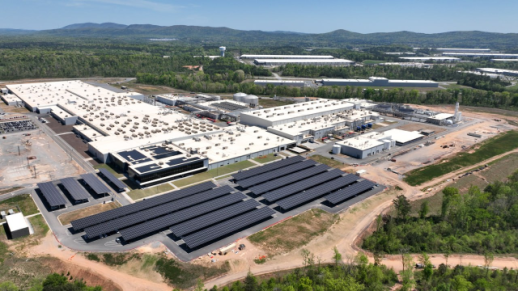 Hanwha Qcells completes US solar hub, to begin cell production in July SEOUL, June 10 (AJP) - Hanwha Solutions Qcells has completed its solar cell production line at its Cartersville plant in Georgia and will begin mass production in July, the company said Wednesday. With the completion, Hanwha Qcells has finalized the construction of its U.S. “solar hub,” an integrated solar manufacturing base that covers the full value chain from ingots and wafers to cells and modules. The company said its U.S. production capacity now stands at 3.3 gigawatts each for ingots, wafers and cells, and 8.6 gigawatts for modules, making it the largest silicon-based solar module manufacturer in North America. The completion of the solar hub is expected to strengthen the company’s profitability by expanding benefits from U.S. clean energy policies. The company also expects its U.S.-made modules to gain a price premium in the American market, as the use of U.S.-made cells is considered important for solar project developers seeking to qualify for the Domestic Content Bonus Credit under the U.S. Inflation Reduction Act. Under the credit, developers that meet domestic content requirements can receive an additional tax credit equivalent to 10 percent of their total investment. Hanwha Qcells said it has maintained a strong position in the U.S. solar module market. Citing global research firm Wood Mackenzie, the company said it held a 38.5 percent share of the U.S. residential module market and a 15.5 percent share of the commercial module market in 2025. The figures marked the company’s eighth consecutive year at No. 1 in the U.S. residential module market and its seventh consecutive year at No. 1 in the commercial module market. “The completion of the U.S. solar hub is a milestone that reflects the technological and business capabilities Hanwha Qcells has steadily built despite external uncertainties and market changes,” said Park Seung-deok, CEO of Hanwha Qcells. “It is also significant in that we have established a strategic base to move beyond solar manufacturing and become a comprehensive renewable energy company,” he said. 2026-06-10 13:19:27
 -
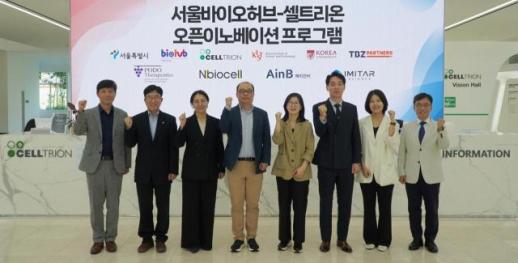 Emerging Bio Startups Focus on Personalized Medicine and Innovative Treatments Seoul City is collaborating with major biotech firms to nurture promising bio startups, drawing attention to the technological capabilities of the selected companies. While biotechnology may seem complex, these innovative firms are focused on transforming injections into pills, developing new drugs without animal testing, and identifying personalized medications for patients in advance. One standout is EnbioCell, selected in the fourth round by Celltrion. The company is developing a technology to convert GLP-1 class obesity treatments, which currently require injections, into oral medications. While these treatments are effective, the burden of self-injection can be significant for patients. EnbioCell aims to tackle this challenge with its proprietary technology that enhances absorption in the body while resisting stomach acid and digestive enzymes. If successful, this could greatly improve patient compliance and attract global market interest. AINB is leveraging artificial intelligence (AI) to design new drug candidates. Traditional drug development often involves a lengthy process of repeated experiments to identify potential candidates. However, AINB uses computer simulations to predict antibody structures that best bind to disease proteins, effectively acting as an AI that selects promising drug candidates. This approach has the potential to significantly reduce drug development costs. Imita Science exemplifies the future direction of biotechnology with its focus on "animal-free drug development." The company utilizes organ-on-a-chip technology that mimics human organ environments to verify drug efficacy and toxicity in advance. By obtaining data from human cell-based environments instead of traditional animal testing, the company aims to enhance clinical success rates. This technology is gaining traction in the global pharmaceutical industry due to ethical and cost considerations. Podotherapeutics, with its innovative organoid technology, cultivates stem cells extracted from patient tissues to create mini-organs in the lab. This allows for testing which drugs are most effective for individual patients before administering treatment, marking a significant step toward personalized precision medicine. Daewon Pharmaceutical has also selected intriguing companies. OmniaMed is developing a smart drug delivery system that releases medication only when specific substances, often found in cancerous tissues or inflamed areas, are detected. This aims to minimize common side effects of cancer treatment, such as hair loss and vomiting, by concentrating the drug's effects on the targeted lesions. CurioSabioScience possesses a platform technology that helps maintain consistent drug efficacy in the body over extended periods. The company is working on technologies to convert injections into oral medications that provide long-lasting effects, thereby reducing patient dosing burdens and enhancing global commercialization potential. Industry experts view the selected companies as pushing the boundaries of existing biotechnology. Seoul City, along with Celltrion and Daewon Pharmaceutical, will support joint research and commercialization verification over the next year. The initiative aims to combine the research capabilities of large corporations with the innovative technologies of startups to cultivate global biotech unicorns. Lee Soo-yeon, Director of the Economic Office at Seoul City, stated, "The open innovation at Seoul Biohub serves as a ladder for startups to gain experience and networks from global anchor companies, while providing large corporations with a platform to secure innovative technologies. We will spare no effort in supporting the selected startups to grow into unicorn companies that lead the global biotech market beyond South Korea." 2026-06-10 13:03:00
 -
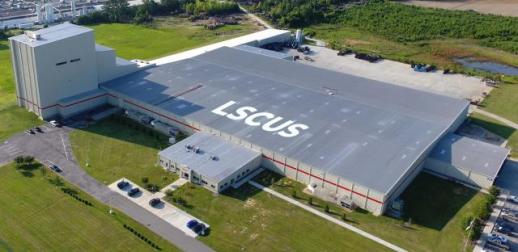 Power is Key in the AI Era: Gaon Cable Emerges as a Leader in AI Data Center Infrastructure The market's perception of Gaon Cable is shifting. Once regarded as a traditional manufacturer focused on medium and low-voltage cables, the company is now being reevaluated as a beneficiary of the growing U.S. AI data center market, positioning itself not merely as a "cable stock" but as a key player in "AI data center infrastructure." According to industry sources on June 9, interest in companies providing power infrastructure for AI data centers has surged alongside AI semiconductor firms in global stock markets. The rapid increase in power demand due to advancements in AI models and the expansion of data centers has heightened the importance of reliable power supply and distribution infrastructure. AI data centers consume significantly more power than traditional data centers. Next-generation AI data centers based on NVIDIA GPUs are reported to require hundreds of megawatts to over 1 gigawatt of power for a single campus. Consequently, investments in power infrastructure, including power grids, transformers, power cables, and bus ducts, have become critical components of data center construction. A major change for Gaon Cable is the expansion of its data center business centered around its U.S. subsidiary, LSCUS. LSCUS is enhancing its capabilities to execute data center projects locally and is broadening its business foundation to meet the surging demand for AI data center investments. Notably, LSCUS has secured multiple supply contracts for bus ducts aimed at data centers with global tech giants, rapidly expanding its presence in the North American market. Reports indicate that LSCUS recently signed a supply contract worth approximately 1.2 trillion won (about $1 billion) with a global tech company for three years, followed by another long-term contract worth around 4 trillion won (about $3 billion) with another major tech firm for five years. These contracts are significant not only as one-time orders but also as framework agreements that extend over several years. This structure allows for additional supply volumes as client companies expand their data center investments and construct new campuses, suggesting that actual supply levels could exceed the contracted amounts. In the North American data center market, the increasing complexity of power wiring and cooling designs due to high-density GPU servers is leading to a growing trend of adopting bus ducts, which offer higher installation efficiency and stability compared to traditional cables. AI data centers are characterized by ongoing expansions even after initial construction. With global tech giants like Meta, Microsoft, Amazon, and Google planning substantial investments in AI infrastructure over the coming years, the demand for data center power infrastructure is expected to rise accordingly. Considering that Gaon Cable's annual revenue is around 2 trillion won, the recently secured long-term contracts exceed twice the company's annual revenue. Given the nature of framework contracts, there is potential for additional orders based on the scale of client data center expansions and investment plans, indicating that future supply volumes could grow even larger. Industry experts believe that the expansion of AI data centers will not only drive demand for servers and GPUs but will also lead to overall growth in the power infrastructure market. In particular, the bus duct market, which efficiently distributes large amounts of power within data centers, is expected to be one of the rapidly growing sectors. In this context, the AI power infrastructure value chain centered around LS Cable is also gaining attention. LS Cable is expanding its core power infrastructure businesses, including ultra-high voltage cables, submarine cables, HVDC, and bus ducts, to meet the demands of the AI era. The construction of a submarine cable factory in Virginia and increased investments in the North American power grid are further strengthening its market presence in the U.S. LS Materials is also expanding its ultra-capacitor business. Ultra-capacitors are devices that stabilize power quality and compensate for instantaneous power fluctuations, finding increasing applications in data centers, power grids, and energy storage systems. Analysts suggest that LS affiliates are evolving beyond traditional cable companies to become players in the AI infrastructure sector. One industry insider noted, "In the past, the focus was primarily on semiconductor companies as beneficiaries of data centers, but now attention is shifting to infrastructure companies that supply and distribute power. Gaon Cable is likely to be evaluated not just as a cable manufacturer but as an AI data center infrastructure company." He added, "The long-term supply contracts secured by LSCUS hold significance beyond mere orders, as they establish a structure that can grow alongside the expanding AI investments of global tech companies, indicating potential for a reevaluation of corporate value in the future."* This article has been translated by AI. 2026-06-10 13:03:00
 -
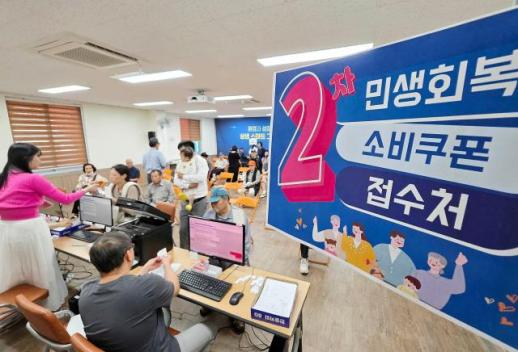 Korea's cash stimuli program helped merchants but stopped short of aiding economy: BOK SEOUL, June 10 (AJP) -The handouts of consumer coupons by the new Korean government last year aimed to jump-start lethargic consumption boosted revenue of around 2.8 trillion won ($1.8 billion) for small businesses last year, the Bank of Korea said Wednesday while acknowledging short-lived effect from cash benefits on broader economy. The central bank said in its latest study in Issue Note that about 30.9 percent of the 9.1 trillion won distributed through credit cards translated into additional sales at retail stores. Depending on the methodology used, the sales boost was estimated at between 1.4 trillion won and 3.6 trillion won, with the ratio of additional sales to fiscal input ranging from 16.1 percent to 39.8 percent. The consumer coupon program was included in the 2025 supplementary budget to stimulate household consumption and support small merchants. A total of 13.522 trillion won was distributed nationwide through credit cards, local gift certificates and prepaid cards, with credit cards accounting for about 70 percent of the total. The BOK analyzed credit card sales data from six card companies to estimate the impact on eligible merchants and conducted self-reported surveys of coupon recipients to assess the effect on household consumption. Local gift certificates and prepaid cards were excluded from the credit card sales analysis. Average monthly sales at eligible stores rose 2.91 percent more than at non-eligible stores, the BOK said. Under alternative estimation methods, the effect ranged from 1.46 percent to 3.76 percent. The impact was concentrated in the early stages of both the first and second rounds of payments and lasted only briefly. The BOK said the findings showed the coupon program was suited as a short-term policy response when stabilizing livelihood conditions was urgent. By region, the impact was stronger outside the Seoul metropolitan area in both the first round, which included differentiated regional support, and the second round, which did not. The overall effect was largest in non-capital regions, suggesting that coupons may generate a stronger consumption response in areas with weaker spending capacity. By sector, the effect was largest at general merchandise stores, followed by restaurants and leisure goods stores. The result indicates that the sales boost was concentrated in everyday consumption sectors, including food, clothing and optical goods. The effect on household consumption was more limited. The BOK estimated the marginal propensity to consume out of the coupons at 0.20, meaning households increased new spending by about 20,000 won for every 100,000 won received. Spending that would have taken place even without the coupons was excluded from the estimated consumption effect. The marginal propensity to consume tended to be higher among lower-income households. The BOK said the consumption effect could be increased if support targets were set more precisely and differentiated assistance was used together. By item, new consumption was more pronounced in durable goods, semi-durable goods and leisure, while the effect was smaller for necessities such as non-durable goods, education and medical services. The marginal propensity to consume was 0.21 in the first round, slightly higher than 0.18 in the second round. The BOK said the lower second-round effect may have reflected weaker policy visibility or a reduced sense of benefit, as the per-person payment fell to 100,000 won from 150,000 won to 550,000 won in the first round. Overall, the BOK estimated that the consumer coupon program lifted South Korea's gross domestic product growth in 2025 by about 0.12 percentage point. Depending on the methodology, the growth effect ranged from 0.07 percentage point to 0.15 percentage point. The central bank said the policy channel from higher disposable income to actual spending and merchant sales had functioned effectively. It also said income- and region-based differentiated support appeared to have helped boost spending among vulnerable groups and sales outside the capital region. Still, the BOK said similar programs in the future should be designed more precisely in terms of timing, differentiated support and eligible merchants to improve their economic effectiveness. It added that policy efforts are also needed to structurally improve the competitiveness and productivity of self-employed workers and small businesses. 2026-06-10 12:59:52
 -
 U.S.-Iran Tensions Boost Defense Stocks; Hanwha Aerospace Rises for Second Day Military tensions between the United States and Iran have intensified, leading to a surge in defense stocks. Hanwha Aerospace, which had seen a decline in investor sentiment following a recent explosion at its Daejeon facility, has experienced two consecutive days of gains amid expectations for increased defense demand. As of 12:49 p.m. on June 10, Hanwha Aerospace shares were trading at 1,025,000 won, up 9,000 won (0.89%) from the previous trading day. This follows a 0.99% increase the day before, marking a continued upward trend. The rise in defense stocks is attributed to escalating tensions in the Middle East. According to CNN, the Iranian Revolutionary Guard Corps (IRGC) announced via its Telegram channel that it had launched missiles and drones at U.S. targets in the region. This action is reportedly a retaliatory measure following U.S. airstrikes in response to the downing of an Apache helicopter belonging to the U.S. Army, which was shot down by an Iranian drone while patrolling over the Strait of Hormuz. President Donald Trump also indicated the possibility of further action, stating on his social media platform Truth Social that the U.S. would have to respond to the attack. As geopolitical risks in the Middle East grow, expectations for benefits to the global defense industry are increasing, leading to a surge in buying activity for domestic defense stocks like Hanwha Aerospace. However, uncertainties remain regarding the recent explosion at the Daejeon facility, which resulted in five fatalities and two injuries. Investigators are currently looking into the exact cause of the incident.* This article has been translated by AI. 2026-06-10 12:57:00
 -
 Korean Inc. scores second best in profitability, but zombie firms hit record high SEOUL, June 10 (AJP) -Korean Inc. scored their second-best in profitability last year largely thanks to staggering margins of chipmakers, while the broad polarization deepened with zombie population hitting their all-time high, central bank study showed Wednesday. According to the preliminary corporate management analysis for 2025 released by the Bank of Korea (BOK), the revenue growth rate for non-financial corporations subject to external audits stood at 2.5 percent last year. That was down 1.7 percentage points from 4.2 percent a year earlier. The headline profitability improved sharply. The operating profit margin rose from 5.4 percent in 2024 to 6.2 percent last year, marking the highest level since 2021, when it stood at 6.8 percent. The pre-tax net profit margin also climbed from 5.2 percent to 6.3 percent. The overall corporate balance sheet also strengthened. The debt-to-equity ratio fell from 103.4 percent to 98.3 percent, and borrowing dependency dropped from 28.4 percent to 27.3 percent. It marked the first time in five years that the average debt ratio fell below 100 percent, since 2020, when it recorded 97.3 percent. Top-line growth slowed across both manufacturing and non-manufacturing sectors. Revenue growth in manufacturing fell from 5.2 percent to 3.2 percent, while non-manufacturing growth dropped from 3.0 percent to 1.6 percent. Within manufacturing, petroleum refining and chemicals suffered notable slumps. Revenue growth for petroleum refining and coke swung from 1.0 percent to negative 7.4 percent, while chemicals fell from 4.0 percent to negative 2.4 percent. The BOK attributed the decline in refining to deteriorating supply-demand conditions and lower oil prices. Chemicals were hit by persistent global oversupply. In the non-manufacturing sector, the construction slump was stark. The construction revenue growth rate deepened its decline from negative 3.2 percent to negative 9.6 percent. The BOK said construction was dragged down by shrinking real estate demand and a prolonged slowdown in housing starts since 2023. By company size, growth weakened across the board. Large companies saw revenue growth slow from 4.4 percent to 2.8 percent, while small- and medium-sized enterprises (SMEs) cooled from 3.2 percent to 1.2 percent. The rebound in profitability was led largely by the semiconductor sector. The manufacturing operating profit margin rose from 5.5 percent to 6.9 percent, while the margin for electronic, visual and communications equipment jumped from 8.8 percent to 15.0 percent. The BOK said rising semiconductor prices and increased sales of high-value-added products for AI servers drove the improvement. However, the sector's revenue growth slowed from 21.6 percent to 15.1 percent, indicating a moderation in growth momentum. Utilities also helped lift non-manufacturing profitability. The operating profit margin for electricity and gas rose from 5.8 percent to 8.3 percent, helped by utility rate adjustments, lower power purchase costs and fiscal normalization efforts. The aggregate improvement did not translate into broader corporate health. Large companies' operating profit margin rose from 5.6 percent to 6.6 percent, while SME margins slipped from 4.8 percent to 4.6 percent. In manufacturing, margins at large firms climbed from 5.7 percent to 7.3 percent. Those at SME manufacturers edged down from 4.7 percent to 4.6 percent, suggesting that semiconductor gains did not spread widely to smaller businesses. A similar divergence was evident in debt-servicing capacity. The overall interest coverage ratio rose from 305.8 percent to 369.8 percent, supported by higher operating margins and lower financing burdens. However, the share of firms with an interest coverage ratio below 100 percent expanded from 38.5 percent to 39.9 percent. An interest coverage ratio below 100 percent means a company's operating profits are insufficient to cover its interest expenses. The BOK said the share was the highest since the current data series began in 2013. The strain was also visible in the distribution of corporate earnings. The proportion of loss-making companies grew from 26.2 percent to 28.2 percent. The share of firms with an interest coverage ratio of 500 percent or higher shrank from 33.1 percent to 32.6 percent. This indicates that strong performances by a handful of large tech firms lifted aggregate averages, even as financial strains on vulnerable businesses worsened amid sluggish domestic demand and elevated interest rates. Cash flows improved marginally as operating activities generated stronger inflows. The cash flow coverage ratio rose from 51.4 percent to 52.8 percent. The preliminary statistics are based on a survey of 34,456 non-financial corporations subject to external audits that filed audit reports as of the end of 2025, excluding certain companies and industries. 2026-06-10 12:53:34
 -
 New Baby Panda Born at Everland, Joining Bao Family A new life has arrived at Everland's Panda World. The resort, operated by Samsung C&T, announced on June 10 that a female baby panda was born on June 3 to parents Ai Bao and Lu Bao. At birth, the cub weighed 171 grams. Both the mother and baby panda are reported to be in good health and are receiving care from zookeepers and veterinarians. This birth is considered a significant achievement in the history of panda conservation in South Korea. Following the birth of Fu Bao, the first naturally bred panda in the country in 2020, and the first set of panda twins, Rui Bao and Hui Bao, in 2023, this marks the third instance of natural breeding. Ai Bao and Lu Bao are now parents of four cubs. Ai Bao's condition had been a topic of interest among fans even before the birth. Observations of increased sleep and decreased appetite led to speculation about a possible third pregnancy on social media and online communities. In late May, Everland moved Ai Bao to a private area for focused care. Natural breeding among pandas is challenging. A female panda's fertility period occurs only once a year and lasts just a few days. Hormonal changes during actual and pseudopregnancy are similar, making it difficult to confirm pregnancy until just before birth. Everland prepared for this delivery by monitoring the panda couple's condition based on data from previous births. In February, they successfully achieved natural mating with the assistance of the China Panda Protection Research Center. This year's birth is particularly meaningful as it coincides with the 10th anniversary of Panda World, which opened in 2016. The facility is the only panda experience space in South Korea and serves as a site for joint research on panda conservation between South Korea and China. To date, it has welcomed approximately 18 million visitors. The Bao family has always been marked by both reunions and farewells. The first cub, Fu Bao, returned to China in 2024. There are also concerns among fans about the potential future relocation of the other popular pandas, Rui Bao and Hui Bao, to China. Amid these changes, the news of the new baby panda brings joy to those who love the panda family. Everland plans to provide focused care for the baby panda until it can walk independently and adapt to its environment. The growth process will be shared on Everland's YouTube channel, 'Everland,' 'Talking Zoo Buppa TV,' and the Naver Cafe 'Zootopia' before the public unveiling. 2026-06-10 12:39:00
 -
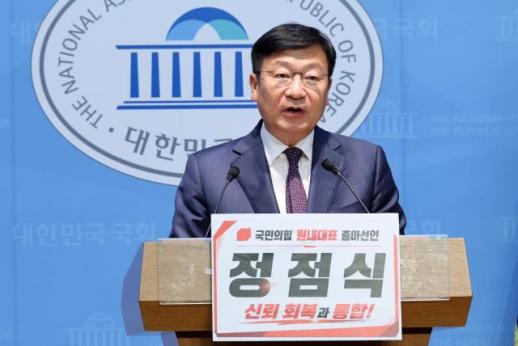 Jung Jeong-sik Elected as New Floor Leader of People Power Party Jung Jeong-sik, a three-term lawmaker, has been elected as the new floor leader of the People Power Party. His election comes just seven days after the resignation of former floor leader Song Eon-seok following local elections.On June 10, the People Power Party held a general meeting at the National Assembly to conduct the floor leader election. The contest featured three candidates: Kim Do-eup, Jung Jeong-sik, and Seong Il-jong. Since no candidate received a majority of votes in the first round, a runoff was held.In the runoff, Jung secured 55 votes out of a total of 103, defeating Kim, who received 48 votes.In his acceptance speech, Jung expressed gratitude for being elected at such a critical time for the party, stating, "I deeply appreciate the members who entrusted me with this heavy and significant responsibility." He emphasized that the votes cast were not just for him personally but a serious mandate to rebuild the People Power Party and restore public trust.Jung stressed the need for unity, saying, "We cannot have factions, divisions, or confrontations. There can only be one People Power Party that serves the public will." He assured that he would not be swayed by the voices of specific factions and would prioritize collective wisdom in his leadership.After his election, Jung addressed concerns regarding perceptions of a pro-Yoon faction within the party, stating, "I will take such criticisms to heart. I believe that the pro-Yoon faction does not exist as a faction. I understand that this perspective may exist externally, and I will actively express my opinions to dispel it in the operation of the National Assembly and the party."* This article has been translated by AI. 2026-06-10 12:39:00
 -
 Shift Up and Neowiz Expand to Nintendo Switch 2 with New Titles Neowiz and Shift Up are expanding their console intellectual property games, 'P's Lies' and 'Stella Blade', to the Nintendo Switch 2. After targeting the global market primarily through PC and PlayStation (PS) and Xbox platforms, they are now broadening their lineup to include the Nintendo Switch 2, aiming to enhance their global user engagement. According to the gaming industry on June 10, Neowiz and Shift Up announced during the official Nintendo online showcase, 'Nintendo Direct 2026', that they will release versions of their games for the Nintendo Switch 2. Both 'P's Lies' and 'Stella Blade' have achieved success in the global PC and console markets. Neowiz plans to launch 'P's Lies: Complete Edition' for the Nintendo Switch 2 on August 6. This edition will combine the main game 'P's Lies' with the downloadable content (DLC) 'P's Lies: Prelude'. Shift Up also intends to release the Nintendo Switch 2 version of the action-adventure game 'Stella Blade' later this year. Developed by Neowiz's Round8 Studio, 'P's Lies' was released in September 2023 for PC, PlayStation, and Xbox platforms. Despite being a new intellectual property, it has recorded cumulative sales of 4 million copies in the global console market. Choi Ji-won, the director of 'P's Lies', expressed hope that "more global fans will be able to enjoy 'P's Lies' through additional platforms." 'Verified as a global hit, 'Stella Blade' was initially set to launch on PC, Xbox, and PS4, but due to an exclusive agreement with Sony, it was released for PS5 in April 2024. A year later, it was made available for PC, achieving total sales of over 6 million copies, including 3.7 million on consoles and 2.4 million on PC. The upcoming release for the Nintendo Switch 2 will further diversify the platforms for 'Stella Blade'. Kim Hyung-tae, the director of 'Stella Blade', stated, "It is meaningful for 'Stella Blade' to reach more users through the Nintendo Switch 2, and we will ensure that players can fully experience its unique action and immersion on the new platform." 2026-06-10 12:21:00
 -
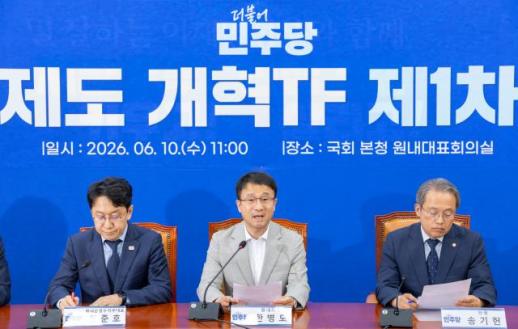 Democratic Party Launches Task Force to Reform Election System Following Voting Paper Shortage The Democratic Party has activated a task force (TF) to address the shortage of ballots that occurred during the recent June 3 local elections. The party also warned Jang Dong-hyuk, leader of the People Power Party, against politicizing the situation. On June 10, the Democratic Party launched the "Election System Reform TF for the Protection of Citizens' Voting Rights," beginning its investigation into the incident. The task force is led by Representative Song Gi-hun, with Representatives Kim Young-bae and Park Sang-hyuk serving as deputy leaders, alongside members including Lee Hae-sik, Lee Joo-hee, Park Kyun-taek, Lee Jeong-heon, Lim Mi-ae, and Park Hee-seung. The party has characterized the ballot shortage as a significant issue that infringes on the sovereignty of the people and has announced plans for major reforms to the National Election Commission. Han Byeong-do, the floor leader, stated, "This incident has clearly revealed the limitations of our election management system. It is heartbreaking that such a situation has occurred in 21st-century South Korea, which prides itself on being a leading democracy. The Democratic Party will focus all its efforts on reforming the election system to meet the expectations of the public and the spirit of the times." Representative Song emphasized, "An unprecedented situation has occurred that infringes on citizens' voting rights. Voting rights are a core element of democratic systems. The TF will identify the causes of this incident and comprehensively review all related legislation to improve laws and systems. We will prepare measures for fundamental reform of the Election Commission." Representative Kim added, "The foundation of trust in a democratic republic is fair and free elections. If we lose that trust, the very existence of our democratic republic is threatened. This incident necessitates thorough investigation and institutional reforms to prevent recurrence, and it may even require constitutional amendments." The Democratic Party also urged Jang to refrain from using the situation for his political gain and to actively participate in constructive dialogue instead of engaging in irresponsible political disputes. Representative Lim stated, "There are citizens who have taken to the streets to protest the infringement of voting rights. If necessary, I will engage with them. However, Jang should be mindful not to exploit healthy voices for his political survival." Representative Kim reiterated, "Jang is claiming there should be a re-election and alleging election fraud. Instead of engaging in irresponsible political disputes to escape his political crisis, he should join us in building trust in our democratic republic through institutional reforms." Additionally, the Democratic Party plans to hold a second meeting on June 16 and a public forum on June 17 to expedite the reform process for the Election Commission. Representative Lee Joo-hee noted, "During the first meeting, we confirmed the participating members and discussed operational directions. Given the seriousness of the situation, we quickly convened the second meeting for June 16. A public forum for improving the Election Commission will also be held on June 17."* This article has been translated by AI. 2026-06-10 12:21:00