
Journalist

Jeon Woon
-
 Seoul Mayoral Candidates Focus on Youth Engagement Seoul mayoral candidates Jung Won-o of the Democratic Party and Oh Se-hoon of the People Power Party both engaged with young voters on May 18, aiming to capture the support of a demographic with a significant number of undecided voters. Jung held an event titled "Jung Won-o Goes: Interviewing Seoulites, Episode 9 - Youth Living in Seoul" in the afternoon at Cheonggyecheon in the Gwanghwamun area. The event was designed to hear the challenges faced by young people living in Seoul and included participation from a newlywed couple running a small sewing factory, startup representatives, and young individuals involved in urban planning. After listening to the attendees, Jung stated, "Seoul should not just be a city that survives but one that plans for the future and allows its residents to feel hopeful based on their hard work," promising to develop tailored support policies. Following the event, he moved to the front of Seoul City Hall in Jung-gu to announce his housing pledges for youth and newlyweds. His proposals include expanding the number of youth rent support recipients to 50,000, providing 10,000 affordable homes for newlyweds, and supplying 30,000 public rental units, along with 50,000 dormitory and shared housing units for young people. On the same day, Oh visited the Yeongdeungpo campus of the Seoul Youth Employment Academy with Ahn Cheol-soo, a member of the National Assembly from the People Power Party, to meet with young trainees. The Seoul Youth Employment Academy is an educational institution established by the city of Seoul and the Seoul Business Agency (SBA) to train professionals in digital fields, including artificial intelligence (AI), and connect them with job opportunities. Ahn remarked, "Oh is focusing on the current youth generation, and he expressed his commitment to creating excellent programs for young people in Seoul that can be expanded nationwide to improve our country. I felt his sincerity here." Oh emphasized to the attendees, "In the AI era, it is crucial to cultivate the abilities of young people to help them secure jobs and start businesses, which is vital for the competitiveness of future Seoul." He pledged to make efforts to secure advanced talent that the city needs amid rapidly changing technological advancements. Oh also announced separate pledges related to youth employment. In his "Quality of Life Special City: Seoul Economy and Job Pledge," he stated that he aims to create an average of 985,000 jobs annually from next year through 2030. To support this initiative, the city will invest 200 billion won to establish a 4 trillion won "Next Economy Seoul Fund," which will be used to transform Seoul into five major hubs for advanced and creative industries.* This article has been translated by AI. 2026-05-18 21:00:00
 -
 DBKorea Opens First 'Hong Kong Banjum' Location in Mongolia DBKorea, led by CEO Baek Jong-won, has opened its first Korean-style Chinese restaurant, 'Hong Kong Banjum,' in Ulaanbaatar, the capital of Mongolia. On May 9, DBKorea announced the opening of the first Hong Kong Banjum location in Mongolia. This marks the company's second brand expansion in the country, following the launch of Saemaul Restaurant in 2023, which currently operates five locations in Mongolia. DBKorea chose to expand with Hong Kong Banjum due to the growing demand for Korean-style Chinese dishes, such as jajangmyeon and jjamppong, in the local market. Ulaanbaatar, home to over 2.5 million of Mongolia's approximately 3.5 million residents, is the largest consumer market in the country, with increasing interest in Korean food culture fueled by the popularity of Korean content and OTT platforms. The first Hong Kong Banjum location has received a warm reception since its opening. Following the initial rush of customers on May 9, the restaurant temporarily limited operations due to the overwhelming demand. By the next day, sales had nearly doubled compared to the opening day. Local media outlets also visited the restaurant for coverage, highlighting Hong Kong Banjum as Mongolia's first Korean-style Chinese food franchise. DBKorea is planning to open a second Hong Kong Banjum location in the Ayud Tower, where the fifth Saemaul Restaurant is located, aiming for a launch in the second half of this year. As of the end of March, DBKorea operates a total of 154 stores across seven brands, including its flagship, Hong Kong Banjum, Saemaul Restaurant, Baekdabang, and Hanshin Pocha, in 13 countries. The company plans to expand its international presence, starting with the opening of its first Baekdabang location in Japan later this year. A DBKorea representative stated, "As global interest in Korean cuisine grows, requests for localization of various Korean-style menus are increasing in different countries. We will continue our global expansion by reflecting the characteristics of each market and consumer trends based on our multi-brand operational expertise." Meanwhile, the trend of South Korean food companies expanding overseas is gaining momentum. According to a survey conducted by the Ministry of Agriculture, Food and Rural Affairs and the Korea Agro-Fisheries & Food Trade Corporation (aT), out of 4,156 surveyed companies, 122 have ventured abroad, with a total of 139 overseas brands and 4,644 stores across 56 countries.* This article has been translated by AI. 2026-05-18 20:54:51
 -
 Kyochon Chicken Reports Average Franchise Revenue of 780 Million Won with 0% Closure Rate Kyochon F&B, the operator of Kyochon Chicken, announced on May 18 that its franchisees achieved an average revenue of 780 million won last year, with a closure rate of 0% in the first quarter of this year. According to performance data released by Kyochon F&B on May 12, the average revenue for franchises in 2025 was reported at 780 million won, significantly higher than the average revenue of 328 million won for chicken franchises, as per the Fair Trade Commission's statistics. This figure also surpasses the average revenue of the top five companies in the same industry, which stands at 584 million won. The closure rate remains exceptionally low. For the first quarter of this year, the closure rate was recorded at 0.0%, a decrease from the 0.6% reported in the 2025 business report. In comparison, the average closure rate for chicken franchises is 12.0%, while the overall restaurant industry averages 15.8%. The closure rates based on disclosure documents were 0.2% in 2022, 0.7% in 2023, and 2.1% in 2024. The 2024 figure reflects the impact of contract expirations for 20 special stores, including theme parks and resorts. Excluding these, the company maintains a consistent closure rate near 0%, according to company officials. A representative from Kyochon F&B stated, "The high average revenue and low closure rate are results of our focus on enhancing franchise operational stability and profitability. We aim to strengthen franchise competitiveness and expand brand value, targeting an annual revenue of over 800 million won per store by 2028." Meanwhile, Kyochon F&B's consolidated revenue for the first quarter was provisionally reported at 123.4 billion won, with an operating profit of 5.3 billion won. This reflects a 1% decrease in revenue and a 50.6% drop in operating profit compared to the same period last year, impacted by the prolonged avian influenza outbreak and rising costs.* This article has been translated by AI. 2026-05-18 20:52:06
 -
 Iran Blames U.S. and Israel for Middle East Instability in Call with South Korea's Foreign Minister Iran's Foreign Ministry announced that Foreign Minister Abbas Araghchi discussed bilateral relations and regional stability with South Korean Foreign Minister Cho Hyun during a phone call. In a statement released on May 17 via its official Telegram channel, the ministry noted, "Minister Araghchi emphasized the importance of a forward-looking perspective for the development of relations between the two countries, referencing their historical ties." Araghchi also described the current situation in the Persian Gulf and the Strait of Hormuz, asserting that the imposed instability and its global ramifications stem from aggressive actions by the United States and the Zionist regime against Iran. He stressed that these entities must be held accountable for their violations and crimes before the international community. Additionally, the Iranian Foreign Ministry reported that Minister Cho highlighted South Korea's position on ensuring security and safety for maritime navigation in the region and worldwide, expressing hope for a swift resolution through diplomatic channels. However, the Iranian Foreign Ministry's announcement did not address the recent incident involving the South Korean vessel HMM Namoo in the Strait of Hormuz. The South Korean Foreign Ministry stated that during the May 17 call, Minister Cho informed Araghchi that the South Korean government is conducting further investigations into the incident and has requested Iran's stance on the facts surrounding it.* This article has been translated by AI. 2026-05-18 20:50:19
 -
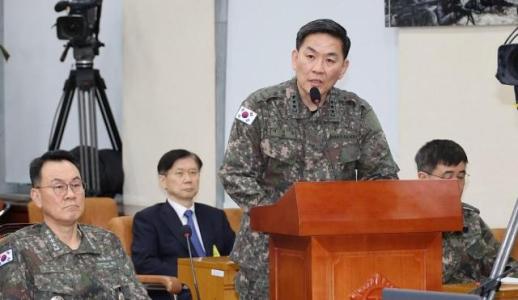 Former Legal Chief of Capital Defense Command Questions Constitutionality of Emergency Declaration During the emergency declaration on December 3, 2024, the former legal chief of the Capital Defense Command expressed doubts about its constitutionality upon reading the official statement. On May 18, at the Seoul Central District Court, the trial of former Commander Lee Jin-woo, who faces charges related to insurrection, continued. Colonel Moon Sang-won, the former legal chief of the Capital Defense Command and current head of the Gangwon Regional Army Prosecutor's Office, testified about the events surrounding the emergency declaration. Before his testimony, Colonel Moon stated that he found it difficult to face his former superior, Commander Lee. In response, the court installed a partition between the witness stand and the defendant's seat to prevent them from seeing each other. Colonel Moon began his testimony only after confirming the partition was in place. During questioning by the special prosecution team, Colonel Moon recounted the situation during the emergency declaration, stating, "After the emergency was declared, I received a notification for an emergency assembly and encountered the presidential statement and the first emergency proclamation through news from portal sites while in a taxi heading to the unit." He added, "The content of the statement cited legislative dictatorship and anti-state actions as justifications, but as a legal professional, I had serious doubts about its constitutionality and legality." He specifically noted that the first article of the proclamation, which banned all political activities of the National Assembly and local councils, was particularly perplexing, as it seemed to violate the principle of separation of powers. Upon arriving at the unit, Colonel Moon headed to the command and control center but did not encounter Commander Lee there. He testified that orders had already been issued to deploy troops to the National Assembly, and the situation was extremely chaotic. "It was confusing to determine where the orders were coming from, whether from the Army Headquarters, the Joint Chiefs of Staff, or somewhere in Yongsan," he said. The special prosecution team engaged in a debate with Commander Lee's defense regarding the legality of deploying Capital Defense Command troops to the National Assembly. They pressed Colonel Moon on whether the command's general operational manuals or training for hybrid warfare included directives for blocking the National Assembly or arresting lawmakers. Colonel Moon responded, "I have never seen any content in the Capital Defense Command manuals that involves sending troops to the National Assembly for large-scale infiltration or responding to lethal weapons." He also stated he did not recall any mention of supporting counterintelligence operations for joint investigations or arrests during the emergency situation. In contrast, Commander Lee's defense argued that the Capital Defense Command's mission primarily focused on responding to terrorism at key facilities in Seoul, and that the legal chief mainly handled disciplinary or administrative tasks, thus lacking knowledge of operational terminology or specific situations. Colonel Moon countered, saying, "If legal terminology is involved, it is my duty as an expert to verify and provide advice." Furthermore, Commander Lee's attorney claimed that testimonies from former Capital Defense Command 1st Security Battalion Commander Jo Sung-hyun and others, who stated they received orders to arrest lawmakers, were unreliable, asserting that Commander Lee was focused on maintaining control of the command center and dismissed any claims of arrest orders as perjury. However, Colonel Moon supported Commander Jo's testimony, stating, "Commander Jo considers his subordinates like family, and I want to emphasize that the accounts of the subordinates who were in the car during the deployment to the National Assembly are likely accurate." In closing, Colonel Moon shared a personal story about how his father, originally from Masan, Gyeongnam, passed down a tie he wore during the June Democratic Uprising in 1987. He remarked, "My father believed that because of the events in Gwangju in May 1980, we were able to safely protest and achieve direct elections in June 1987. The past helps the present, and the dead assist the living. I hope this trial becomes a beacon of light for our democracy," before leaving the courtroom. The court plans to make a final judgment on Commander Lee's involvement in the insurrection based on further witness testimonies and evidence regarding Commander Jo and other related individuals.* This article has been translated by AI. 2026-05-18 20:48:00
 -
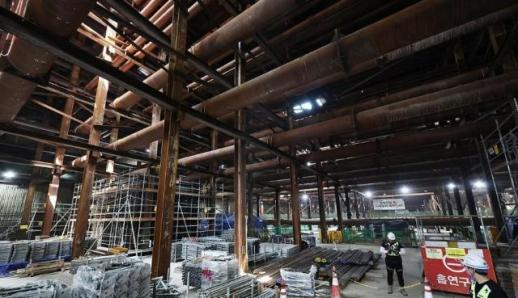 Korea Railroad Corporation Denies Seoul's Claims of Missing Rebar in GTX-A Project The Korea Railroad Corporation (KRC) has firmly denied media reports claiming that the city of Seoul notified them three times about missing rebar in the GTX-A project at the Samsung Station section. In an official statement on May 18, KRC stated, "While it is true that Seoul submits monthly construction management reports, the issue of missing rebar in the Samsung Station section was not included in the 'Summary of Key Contents' of the report, and it was reported as 'not applicable' under the 'Construction Failure Cases' section. This made it impossible for KRC to be aware of the facts in advance." KRC further clarified that details regarding the missing rebar could only be partially identified in the extensive report, specifically in the individual work logs of construction managers. They emphasized that the inclusion of certain phrases in the vast amount of data submitted under relevant laws cannot be considered formal reporting. Regarding the timeline of their awareness, KRC criticized the delay in reporting from the city. They noted, "On April 24, the city sent an email to KRC's personnel requesting attendance at a consultation meeting regarding column reinforcement, which seemed to substitute for the report on the missing rebar. After KRC strongly requested a factual report from the city and the Ministry of Land, Infrastructure and Transport, the city officials attempted to delay the report. It was only after repeated requests that KRC became aware of the specific details on April 29." KRC expressed regret that despite ongoing coordination through regular meetings and site inspections among the Ministry of Land, KRC, and the city regarding the non-stop operation of the GTX-A at Samsung Station, the city had not reported or discussed any significant defects affecting the opening until April 29. Finally, KRC stated that they plan to thoroughly verify the safety of the reinforcement plans established by the city and the existing structures. A KRC public relations official remarked, "Regarding the city's claim that they submitted related reports to KRC through inquiries in the National Assembly, we have confirmed the actual contents of the extensive construction management reports with the relevant departments. Given the seriousness of the matter, an audit of KRC is expected to take place soon."* This article has been translated by AI. 2026-05-18 20:45:00
 -
 Hyundai Engineering Applies 120 Years of Expertise from Seoul Club to Apgujeong Hyundai Engineering announced on May 18 that it has signed a business agreement with the Seoul Club to apply the club's operational expertise to the Apgujeong Hyundai community. Established in 1904, the Seoul Club is the only international social club in South Korea, fostering social exchanges among diplomats and both domestic and foreign members for 120 years. Hyundai Engineering reported that this marks the first time the club has formed a strategic partnership with an external entity. Under the agreement, the Seoul Club will propose community spaces that enhance social interactions and develop operational scenarios to facilitate exchanges among residents. Signature areas will feature the Seoul Club's certification mark. Additionally, community programs will be implemented to encourage natural interactions among residents, including activities in music, art, sports, and charitable initiatives that embody the principle of 'noblesse oblige.' A representative from Hyundai Engineering stated, "We are collaborating to transform the Apgujeong redevelopment area into a 'private social town' where global leaders can connect and find inspiration, rather than just a residential space. We aim to demonstrate a unique residential value that only Apgujeong residents can enjoy by combining the history of the Seoul Club with Hyundai Engineering's technological expertise." Meanwhile, Hyundai Engineering highlighted that at the promotional center for Apgujeong District 5, located near Apgujeong Station on Line 3 in Gangnam, visitors can enjoy a 420-meter circular walking path comfortably throughout the year, regardless of the season. The facility will also include a fitness center, all-day dining, a wellness spa, a sauna, and a premium two-story golf course with a 35-meter driving range.* This article has been translated by AI. 2026-05-18 20:42:22
 -
 Nexon Partners with Naver to Enhance User Experience and Expand Gaming Ecosystem Nexon is teaming up with Naver to enhance user convenience and expand the gaming and streaming ecosystem. On May 18, Nexon announced a transition event for 'Naver Login Members' and introduced the Chijijik 'N Connect' project. Naver Login Members can use their Naver ID to log into Nexon and make payments through Naver Pay. Nexon users aged 14 and older who have completed identity verification can convert their existing accounts to a Naver ID. After switching to a Naver Login Member, users will retain their previous gaming records, and all transactions within Nexon will be processed via Naver Pay. Additionally, Nexon is launching the N Connect project to promote the creation of broadcast content based on Nexon IP through Naver's live streaming platform, Chijijik. N Connect aims to connect users, creators, and games. It will offer rewards based on activity, growth, and impact, reflecting viewer participation in Chijijik broadcasts. A content support center will also assist creators in producing Nexon-related content. Nexon plans to support Chijijik partners, pro, and rookie streamers in creating and broadcasting content based on Nexon games. The collaboration will enhance the experience for users, allowing them to seamlessly transition from watching their favorite streamers to playing games. The Chijijik N Connect will operate in a preseason phase until September 22, with the regular season set to begin in October. Through this collaboration, the two companies aim to strengthen user data connections and organically combine Nexon's game intellectual property with Naver's services, providing personalized content and an expanded gaming experience for users. To celebrate the opening of the Naver Login Member application page, Nexon will offer benefits to participants. Users who switch their login account to a Naver ID by July 20 can choose a coupon pack for one Nexon game, such as Dungeon & Fighter, MapleStory, or Mabinogi Mobile. Participants in the FC Online 8th anniversary event will also receive rewards. Last September, Nexon and Naver signed a strategic partnership agreement to combine 'playing games' and 'watching games' using AI and data to provide new content. This project marks the first linked service introduced since the agreement was signed. The account integration is expected to facilitate mutual user inflow between Nexon's gaming audience and Naver and Chijijik's platform users, enhancing the lock-in effect where gaming and content consumption occur simultaneously.* This article has been translated by AI. 2026-05-18 20:39:22
 -
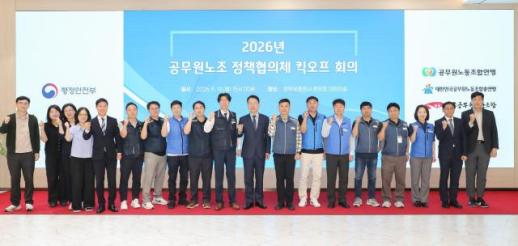 Government Launches Policy Council to Address Public Employee Issues The South Korean government is initiating serious discussions to improve the treatment of public employees involved in 24-hour disaster response and various emergency duties. On May 18, the Ministry of Interior and Safety held the first meeting of the "2026 Public Employee Union Policy Council," chaired by Deputy Minister Kim Min-jae. About 20 representatives from three major public employee unions—the Korean Public Service and Transport Workers' Union, the Federation of Korean Public Service Workers' Unions, and the National Public Service Workers' Union—attended the meeting to discuss improvements in working conditions for local public employees, including personnel and service matters. Established in 2018 and operating annually, the policy council serves as a crucial communication channel for discussing institutional improvements related to personnel, service, and compensation for local public employees. This year, the unions proposed a total of 20 agenda items reflecting practical challenges in the public sector, categorized into organization and personnel (four items), service and allowances (eight items), budget (three items), and training (two items). Key discussion topics included improving treatment for emergency responders, abolishing the part-time public employee system, and reforming the duty work system. Other issues related to public employees' work environment, such as mandatory labor education and raising the upper limit for negotiated contracts, were also addressed. The policy council plans to conduct detailed practical discussions on each agenda item following this initial meeting, with final results expected to be confirmed in December. Deputy Minister Kim stated, "Each agenda item presented to the policy council reflects the real voices from the field of policy implementation. We will actively work to ensure that the difficulties faced by frontline public employees are effectively resolved through in-depth discussions."* This article has been translated by AI. 2026-05-18 20:36:55
 -
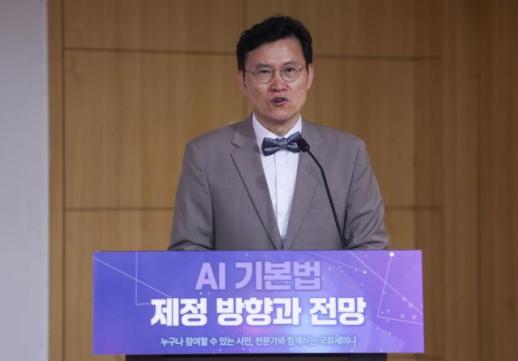 South Korea's AI Safety Institute Faces Scrutiny Over Lack of Results The Korea AI Safety Institute (AISI), established to evaluate the risks associated with artificial intelligence (AI) models, has come under fire for failing to report any assessments related to the potential use of AI in terrorism and various crimes. Concerns have been raised about the effective use of approximately 15 billion won (about $13 million) in taxpayer money, especially as the institute's website has been down for several days. As of May 18, the AISI's website has been inaccessible for several days. Since its inception, the institute has received a government budget of around 15 billion won. The AISI was created with several objectives, including responding to AI risks, leading global AI norms and policies, supporting domestic AI companies, and fostering specialized personnel and technology. Among these, the most critical task is the CBRN (Chemical, Biological, Radiological, and Nuclear) assessment, which evaluates the highest risk levels associated with whether AI models can provide information related to the synthesis of chemical weapons, design of pathogens, or assembly of nuclear devices. It is reported that a significant portion of the 15 billion won budget was allocated for these assessments. However, in its third year of operation, there have been no public disclosures of CBRN assessment results for domestic AI companies. In contrast, the UK's AI Security Institute tested over 30 advanced AI models last year and has enhanced its capabilities in cyber, chemical, and biological assessments. In 2024, it publicly conducted CBRN assessments on five AI frontier models. The U.S. AISI has also conducted pre-release evaluations on OpenAI's models and disclosed CBRN assessments for OpenAI's o1 model. Due to the strengthened CBRN evaluations in the U.S. and Europe, major tech companies like Anthropic, OpenAI, and Google DeepMind conduct CBRN assessments for their models upon release and publicly share detailed results. Among domestic companies, Kakao is the only one that has publicly disclosed safety assessment results for its AI models. In December of last year, Kakao announced the safety assessment results for its self-developed language model, Kanana-1.5-9.8B. However, the assessment focused on general risk factors such as violence and discriminatory expressions, and did not include CBRN-specific items. No safety assessment reports have been made public by major AI developers such as Naver, SKT, and LG, and it has been confirmed that none are currently undergoing safety evaluations with the AISI. The AISI stated that it engages in many confidential collaborations with various governments, which limits what it can disclose. When asked about specific results, an AISI official responded, "Various projects and results of AISI are disclosed on our website." However, the website's inaccessibility made verification impossible. Given the substantial budget of 15 billion won, the explanation that collaboration with foreign governments is a primary task is difficult to accept. An official from the Electronics and Telecommunications Research Institute (ETRI), which oversees the AISI, explained, "AISI's major projects include national policy development and collaboration with foreign governments. Most matters are confidential, so there may not appear to be many public results."* This article has been translated by AI. 2026-05-18 20:34:25