
Journalist

Kang Min seon
-
 Microsoft Seeks to Reduce Dependence on OpenAI by Targeting AI Startups Microsoft is exploring acquisition and investment opportunities in artificial intelligence (AI) startups to reduce its dependence on OpenAI. The company aims to maintain its collaboration with OpenAI while simultaneously expanding its own AI models and talent pool to broaden its technological options. According to Reuters, on May 13, Microsoft is preparing a strategy to lessen its reliance on long-term partner OpenAI by considering potential acquisitions and investments in AI startups. Sources familiar with the matter indicated that this move is part of Microsoft's efforts to secure AI talent and develop advanced AI models by 2027. Microsoft had previously considered acquiring Cursor, a startup that provides AI tools for software developers to write and modify code. However, discussions were reportedly halted due to internal concerns that acquiring Cursor could face antitrust scrutiny, especially since Microsoft already owns GitHub Copilot. The company is also in discussions with Inception, an AI startup founded by researchers at Stanford University. Inception is developing language models using a diffusion-based approach, distinct from existing large language models (LLMs). Microsoft's venture capital arm, M12, participated in a $50 million initial investment in Inception at the end of last year. Inception has recently hired an investment bank to explore potential sale options, with reports suggesting it is seeking over $1 billion. However, discussions are ongoing, and it remains uncertain whether a deal will materialize. The push to enhance its own AI capabilities comes amid evolving dynamics in Microsoft's relationship with OpenAI. Microsoft began its partnership with OpenAI in 2019 with a $1 billion investment. Following the success of ChatGPT in late 2022, Microsoft actively integrated OpenAI's technology into its products and Azure cloud services. As the collaboration expanded, the interests of both parties became increasingly complex. Reuters reported that Microsoft faced contractual limitations in developing foundational models that could compete with OpenAI, which in turn believed that the computing resources provided by Microsoft were insufficient. Consequently, both companies have relaxed their agreements multiple times. In a securities filing on April 29, Microsoft disclosed that it had executed $11.8 billion of the $13 billion it promised to OpenAI. Additionally, a Microsoft corporate development executive testified in court that the company has spent over $100 billion on OpenAI investments, infrastructure development, and hosting costs.* This article has been translated by AI. 2026-05-14 11:18:35
 -
 HD Hyundai to Support Partners Amid Ongoing Middle East Crisis HD Hyundai is stepping up to support its partners facing difficulties due to the prolonged conflict in the Middle East by expediting payments for materials. On May 14, HD Hyundai announced it would advance a total of 740 billion won in material payments by up to nine days. This decision comes in response to the increased financial burden on partners caused by global supply chain instability and rising raw material costs. In the shipbuilding and marine sectors, HD Hyundai Heavy Industries and HD Hyundai Samho will prepay approximately 568 billion won in material costs. HD Hyundai Marine Engines and HD Hyundai Marine Solutions are also set to expedite payments of 25.7 billion won and 10 billion won, respectively. Additionally, HD Hyundai Electric in the energy sector will advance 133 billion won. In the construction machinery sector, HD Construction Machinery will adjust the payment linkage system to reflect fluctuations in raw material prices for partners struggling with supply issues due to the ongoing crisis. The company will also enhance its response speed to urgent requests from partners, expanding its support. A representative from HD Hyundai stated, "In a situation where external uncertainties persist, these measures are aimed at supporting the stable operation of our partners' businesses. Since our partners are in a community of shared destiny, we will continue to pursue win-win strategies for mutual growth." Meanwhile, HD Hyundai reported the previous day that its consolidated revenue for the first quarter of this year reached 19.6019 trillion won, with an operating profit of 2.8348 trillion won. This marks a 14.7% increase in revenue and a 120.4% increase in operating profit compared to the same period last year.* This article has been translated by AI. 2026-05-14 11:17:48
 -
 Alteogen Shares Surge 8% After Patent Ruling, Reclaims Top Spot in KOSDAQ Market Alteogen's shares jumped over 8% in early trading after news broke that the U.S. Patent Trial and Appeal Board (PTAB) eased the company's litigation burden. This surge has propelled Alteogen to reclaim the top position in market capitalization on the KOSDAQ. As of 9:58 a.m. on May 14, the Korea Exchange reported that Alteogen's stock was trading at 383,500 won, up 29,500 won (8.33%) from the previous trading day. The company's market capitalization now stands at 20.53 trillion won, surpassing EcoPro BM's 19.66 trillion won to take the lead in the KOSDAQ rankings. This development follows the PTAB's ruling on May 12 (local time), which invalidated a U.S. patent held by Halozyme. Analysts believe this decision could favor both Alteogen and MSD in ongoing patent infringement lawsuits. Eom Min-yong, a researcher at Shinhan Investment Corp, predicted that the PTAB's ruling would lead to the dismissal of Halozyme's patent infringement lawsuit in U.S. civil court, as the patent in question has been invalidated. He added that with the invalidation of Halozyme's patent, the ALT-B4 patent is now secured until 2043, which is expected to enhance its value. Consequently, he raised his target price for Alteogen from 570,000 won to 620,000 won.* This article has been translated by AI. 2026-05-14 11:15:01
 -
 Cisco to Cut 4,000 Jobs as It Shifts Focus to AI Investments Networking equipment manufacturer Cisco announced plans to reduce its workforce by fewer than 4,000 employees, representing less than 5% of its total staff, as part of a strategy to increase investments in artificial intelligence (AI). Following the announcement, Cisco's stock surged nearly 20% in after-hours trading. On May 13, during its quarterly earnings report, Cisco revealed its intention to cut the workforce in the fourth quarter of fiscal year 2026 (May to July). This decision aligns with the company's efforts to reallocate resources toward AI-related growth areas. Chuck Robbins, Cisco's CEO, stated on the company’s website, "The companies that will win in the AI era will be those that have the discipline to continuously shift their investments toward areas of focus, urgency, demand, and long-term value creation." Cisco explained that it is making strategic investments across various sectors, including silicon, optics, security, and employee AI utilization. The layoffs are seen as a restructuring effort to facilitate this shift in investment. The company reported third-quarter revenue of $15.8 billion, slightly above the market expectation of $15.6 billion, according to LSEG data. The demand for AI infrastructure has also contributed to this positive outlook. Cisco noted that it has secured $5.3 billion in AI infrastructure orders from hyperscalers, which are companies operating large-scale AI data centers. As a result, Cisco has significantly raised its overall AI infrastructure order forecast for the fiscal year from $5 billion to $9 billion. The revenue forecast has also been adjusted upward, with Cisco now expecting fiscal year 2026 revenue to be between $62.8 billion and $63 billion, higher than the previous estimate of $61.2 billion to $61.7 billion. Following the earnings announcement, Cisco's stock showed a notable increase in after-hours trading, reaching $122.00, up $20.13 (19.76%) from the previous trading day, as of 9:59 AM KST on May 13.* This article has been translated by AI. 2026-05-14 11:13:33
 -
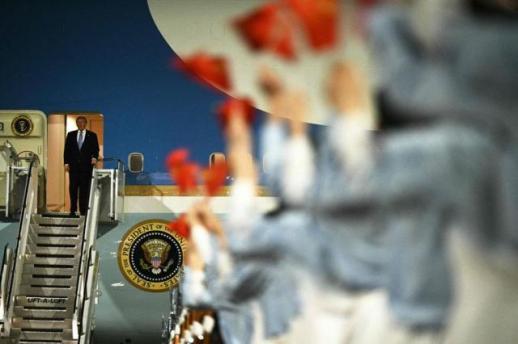 ASIA INSIGHT: What Melania Trump's absence from Beijing means SEOUL, May 14 (AJP) - When U.S. President Donald Trump boarded Air Force One for Beijing for a summit with Chinese President Xi Jinping this week, one absence stood out immediately. Melania Trump did not join him. Technically, that is not unusual. First ladies are neither constitutionally required nor politically obligated to accompany presidents abroad. But presidential trips are never only about policy. They are also about symbolism, optics and public perception. Particularly with China, even photo ops are carefully choreographed. When the Trumps visited Beijing in 2017, Melania was central to the visual choreography of the trip. Chinese state media devoted lavish attention to the couple's appearances, carefully staging scenes of ceremony, continuity and prestige. In highly managed diplomatic environments, spouses are not decorative additions. They are instruments of soft power. This time, however, the atmosphere surrounding the visit is entirely different. More than a traditional state visit, the trip appears heavily focused on business. Trump's large entourage includes technology executives, trade advisers, corporate leaders and economic negotiators, with Nvidia CEO Jensen Huang joining the trip at the last minute. The agenda is centered on tariffs, artificial intelligence (AI), semiconductors and economic rivalry between the world's two largest markets. The atmosphere surrounding the summit feels less like a traditional state visit and more like a high-level business negotiation. The two-day summit starting Thursday, in fact, arrives at a moment when Trump is politically preoccupied at home and strategically constrained abroad, with the U.S. still entangled in the prolonged conflict in the Middle East that began with its joint airstrike with Israel against Iran in late February. Tariffs remain unresolved, while AI has emerged as the defining battleground in the rivalry between the world's two largest powers. Restrictions on exports of semiconductors, rare earth minerals and soybeans, along with broader supply-chain issues, now dominate their talks, leaving long-standing concerns over North Korea's nuclear threat quietly sidelined on the agenda. Trump's delegation reflects those priorities. CEOs and technology leaders are taking center stage, and the trip is squarely focused on "opening up" China to American business interests and easing economic friction between the two countries. That alone may explain why Melania chose to stay home. In that sense, her absence may not be particularly mysterious at all. But timing still matters in politics. Her decision not to travel comes just weeks after her rare public statement denying renewed allegations linked to the late American financier and convicted sex offender Jeffrey Epstein. Speaking from the White House last month, she dismissed the claims as false and politically motivated. But the unusual nature of the statement and its timing only revived public attention to a controversy Trump would rather leave behind, even as it had been fading from the front pages. It also raised fresh questions about why Melania had chosen to step into such a legal and political minefield at all. Melania has long kept a certain distance from Washington politics. Unlike previous first ladies who embraced advocacy campaigns or constant public visibility, she speaks publicly less often, appears at fewer political events and carefully controls her visibility. For years, that distance created mystery. Now, it fuels speculation amid rumors that the first couple have become increasingly isolated, though the White House would clearly prefer the Beijing summit to focus on economic issues, with its business-heavy delegation reflecting that goal. In Beijing, Trump will spend the coming days trying to demonstrate his trademark deal-making skills and economic pragmatism at a time when geopolitical tensions and domestic political pressures continue to weigh on him. But sometimes, the people missing from a room attract as much attention as those inside it. 2026-05-14 11:08:27
 -
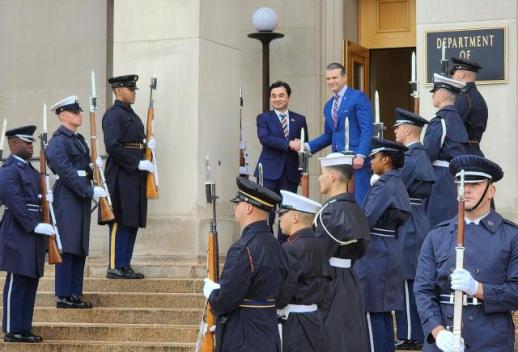 S. Korea, US defense officials discuss alliance goals without OPCON details SEOUL, May 14 (AJP) - South Korea and the U.S. held senior-level defense talks in Washington this week to discuss the future direction of their alliance, as the two sides appear to remain divided over key issues, including the transfer of wartime operational control. South Korea’s defense ministry said Thursday that the Korea-U.S. Integrated Defense Dialogue, or KIDD, was held in Washington from Tuesday to Wednesday, led by Kim Hong-cheol, Seoul’s deputy minister for defense policy, John Noh, U.S. assistant secretary of war for Indo-Pacific security affairs, and James Finch, acting deputy assistant secretary for East Asia. Senior officials from the defense and foreign affairs ministries of both countries also attended. During the meeting, the two sides agreed to step up cooperation to carry out defense-related commitments from last November’s leaders’ joint fact sheet and the joint statement adopted at the 57th Security Consultative Meeting, or SCM. The joint fact sheet included cooperation on South Korea’s plan to build nuclear-powered submarines, while last year’s SCM statement said the two sides would set a target year for the transfer of wartime operational control, or OPCON, by the end of this year. The latest KIDD talks are believed to have included efforts to narrow differences over pending alliance issues, including OPCON transfer. But the ministry’s announcement did not include any specific mention of discussions on the issue. Ahead of the KIDD session, South Korean Defense Minister Ahn Gyu-back met U.S. Secretary of War Pete Hegseth in Washington on Monday. Ahn said the two sides shared the view that OPCON should be transferred at an early date, but added that “there are some areas where the U.S. side has slightly different views.” Other pending issues, including cooperation on nuclear-powered submarines and a proposal for divided management of the Demilitarized Zone, currently overseen by the U.N. Command, are also believed to have been discussed. But the ministry did not disclose details on whether or how those issues were addressed. Still, the reference to implementing the leaders’ joint fact sheet and last year’s SCM outcome suggests the two countries intend to keep seeking progress on the pending issues. Launched in 2011, the KIDD is a senior-level consultative body designed to support timely and effective security coordination between Seoul and Washington. The talks are held once or twice a year, alternately in South Korea and the U.S. This week’s meeting also served as part of preparations for this year’s SCM between the defense chiefs of the two countries, which is expected to be held later this year. 2026-05-14 11:03:40
 -
 First Quarter National Budget Deficit Reaches 39.6 Trillion Won, Lowest Since COVID-19 The national budget deficit for the first quarter of this year has decreased to below 40 trillion won, marking the lowest level since the COVID-19 pandemic. This improvement is attributed to a significant increase in revenue, primarily from national taxes. According to the "Monthly Fiscal Trends for May" report released by the Ministry of Economy and Finance on May 14, the management fiscal balance recorded a deficit of 39.6 trillion won as of the end of March. This figure represents an improvement of 21.7 trillion won compared to the same period last year and is the smallest deficit for March since 2020. The management fiscal balance excludes the revenues from social security funds such as the National Pension, providing a clearer picture of the government's actual fiscal condition. During the same period, the consolidated fiscal balance showed a deficit of 22.8 trillion won, while social security funds reported a surplus of 16.8 trillion won. A spokesperson from the Ministry of Economy and Finance noted, "In terms of cumulative figures for March, this is the ninth lowest level since we began tracking these statistics in 2012. Compared to the deficit of 55.3 trillion won during the COVID-19 period in 2020, we are seeing a normalization of fiscal conditions." The improvement in fiscal balance is driven by increased revenue. Total revenue for the first quarter reached 188.8 trillion won, an increase of 28.9 trillion won from the previous year. National tax revenue rose by 15.5 trillion won, along with increases in non-tax revenue (5.8 trillion won) and fund revenue (7.5 trillion won). The rise in national tax revenue is attributed to several factors, including an increase in income tax and capital gains tax, improved corporate performance leading to higher corporate taxes, a decrease in value-added tax refunds, and increased import volumes. Additionally, the expansion of stock market transactions contributed to higher securities transaction taxes, further boosting revenue. The increase in fund revenue was significantly influenced by expanded investment returns from the National Pension. The recent positive performance in financial markets has been reflected in the growth of fund revenues. Total expenditures amounted to 211.6 trillion won, an increase of 1.7 trillion won compared to the same period last year. The growth in revenue outpaced the increase in expenditures, leading to an overall improvement in the fiscal balance. Central government debt saw a slight decrease. As of the end of March, central government debt stood at 1,303.5 trillion won, down by 9 trillion won from the previous month.* This article has been translated by AI. 2026-05-14 11:01:07
 -
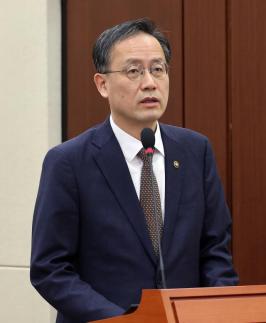 Government Strengthens Regulations Against Price Gouging Amid Middle East Conflict The government is set to amend the Price Stability Act to strengthen sanctions against unfair practices such as price gouging, in response to rising price uncertainties stemming from the conflict in the Middle East. A multi-agency approach will also be implemented to stabilize prices of essential goods. On May 14, Lee Hyung-il, First Deputy Minister of Finance, chaired a meeting of the "Middle East War Price Response Team and Price-Related Deputy Ministers" at the Government Seoul Building, where he reviewed price trends of key items and discussed response measures. Lee stated, "While inflation in our country is lower compared to major countries, there are upward pressures on prices due to uncertainties from the Middle East conflict and base effects. I urge all relevant ministries to work together to stabilize prices of individual items." He emphasized a strong response to unfair practices, particularly price gouging, saying, "Unfair practices such as price gouging must be eradicated to stabilize living costs. We will swiftly push for amendments to the Price Stability Act, which will include measures to ensure the effectiveness of confiscation, reward systems for reporting, and penalties for unjust profits." The government plans to implement price stabilization measures for essential goods, including agricultural, livestock, and fishery products, as well as petroleum. Between May and June, it will provide 22 billion won in discounts for agricultural and fishery products and plans to supply 8,000 tons of government reserves of key fish species such as mackerel, squid, and hairtail to the market this month. To increase the supply of livestock products, the government will apply emergency tariff quotas to import 30,000 tons of chicken by the end of July and 12,000 tons of pork by the end of the year. It is also considering increasing the supply of pork in wholesale markets and additional imports of eggs from the United States or Thailand. For petroleum products, which are currently under a price ceiling, the government plans to encourage price reductions through designating "good gas stations" and will raise the payment criteria for diesel price-linked subsidies to alleviate the burden on bus and freight transport operators.* This article has been translated by AI. 2026-05-14 11:00:39
 -
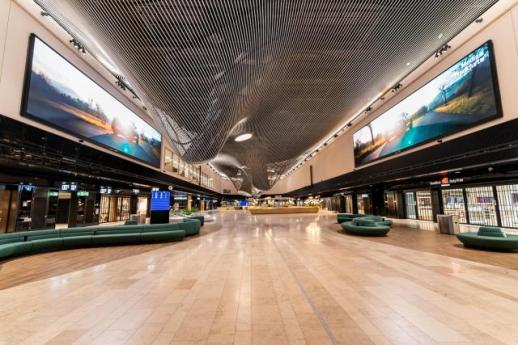 LG Electronics Supplies Large LED Signage to Frankfurt Airport LG Electronics has supplied large LED signage to Germany's Frankfurt Airport, a key hub for European air traffic. This installation goes beyond simple display delivery, showcasing the company's technology in an airport infrastructure market where 24/7 reliability and safety are critical. On May 14, LG Electronics announced the completion of its supply of large LED signage and other commercial display products to Terminal 3 of Frankfurt Airport, which opened at the end of April. The supplied LED signage covers a total area of 115 square meters and is installed in the 'Marketplace' at the center of Terminal 3, providing travelers with flight information, advertisements, and cultural content. Frankfurt Airport is the busiest airport in Germany and a major transportation hub in Europe. Given the continuous flow of passengers, the signage is evaluated for its sharp image quality, long-term operational stability, and rapid maintenance capabilities. LG Electronics applied components typically used in industrial settings where safety is paramount. The signage is designed to slow the spread of fire, ensuring a high level of safety without the need for additional construction. The signage meets European fire safety standards, specifically 'VdS 6024', and safety and electromagnetic compatibility regulations, 'CE-LVD/EMC'. By adhering to the safety standards required in the European public infrastructure market, LG Electronics has laid the groundwork for expanding contracts in airports, railways, and large complex facilities. The company also emphasized its competitive edge in image quality. LG's LED signage offers a wide viewing angle, allowing travelers to see the screen clearly from various positions. It can deliver high-quality information, including flight guidance, advertisements, and local cultural content, enhancing digital communication within the airport. LG Electronics has previously supplied commercial displays to major airports across Europe, including Germany, the UK, Italy, Hungary, as well as in South Korea, the United States, Argentina, Australia, and the United Arab Emirates. As airports and commercial complexes increase their investments in digital guidance and advertising infrastructure, the demand for commercial displays that combine stability, security, and maintenance capabilities is expected to grow. LG Electronics is expanding its commercial display product lineup, including the ultra-high-definition signage 'LG Magnit'. The company plans to accelerate its efforts in the airport and large commercial facility markets by enhancing its capabilities for tailored solutions that encompass installation, operation, and maintenance. The company is also strengthening its security capabilities. Last year, LG applied its proprietary security system 'LG Shield' to its standard signage products, UH5Q and UH7Q. LG Shield integrates product security capabilities to support data protection and stable operation of commercial displays. Min Dong-seon, head of LG Electronics' MS Business Division ID Business Unit, stated, "We will solidify our leadership in the global commercial display market with customized solutions specialized for spaces where stable operation and maintenance are crucial, including airports."* This article has been translated by AI. 2026-05-14 11:00:17
 -
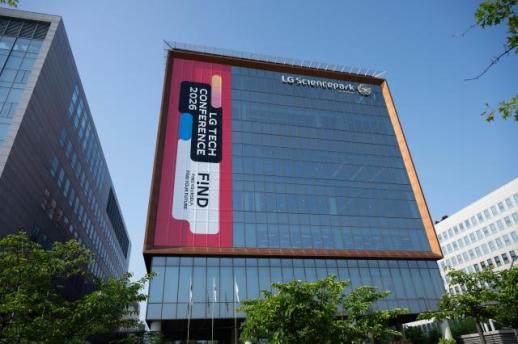 LG Targets Future Tech Talent at 2026 Tech Conference LG is actively seeking to secure future tech talent, inviting both Alpha Generation science prodigies and domestic and international graduate students. This generation, born between 2010 and 2024, is characterized by its familiarity with advanced technologies such as artificial intelligence (AI). On May 14, LG hosted the "LG Tech Conference" at LG Science Park in Magok, Seoul, inviting STEM talent to participate. Launched in 2012, the conference serves as a platform for LG to share its vision for technological innovation and the future with outstanding talent at the heart of its research and development efforts. Rather than merely promoting its products, the conference aims to communicate a vision to graduate-level talent, emphasizing that "at LG, you can freely explore the future technologies you wish to research." This year, in addition to inviting domestic graduate R&D talent, LG expanded its outreach to include 100 gifted science high school students and international students, enhancing the diversity of its talent pool. The event featured over 70 executives and technology leaders from LG's nine affiliates, including LG's Chief Operating Officer Kwon Bong-seok and LG Science Park CEO Jeong Soo-hun, who is also the chair of the LG Technology Council. Kwon Bong-seok emphasized, "LG considers our members, who are the source of customer value creation, as our most important asset. LG will be the strongest supporter for you to fully realize your dreams and passions on this stage." A special session for gifted science high school students included speeches from experienced engineers currently active in the field. Lee Hong-rak, co-director of LG AI Research and chief AI scientist, shared his journey from being a science high school student to becoming a global AI expert, inspiring students who aspire to be future scientists. For the first time, international students from nine countries, including China, Russia, and Vietnam, were invited to enhance LG's global talent acquisition efforts. These students are graduate students enrolled in domestic universities, selected for their growth potential across LG's various affiliates. A "Tech Session" featured 31 technology leaders sharing their research achievements. Notably, the newly established "One LG" Tech Session showcased the synergy of technological collaboration across different affiliates and the potential for cross-disciplinary research expansion. Examples of collaborative technology ecosystems, such as the "Vertical Farm" initiative involving LG Electronics, LG CNS, and Farm Han Nong, drew significant attention for overcoming environmental constraints in crop cultivation.* This article has been translated by AI. 2026-05-14 11:00:00