


Latest by
-
 Interview: Park Ji-hyun on 'Wild Thing' and Co-stars Kang Dong-won and Um Tae-goo Park Ji-hyun has been expanding her acting range without hesitation. Known for her roles in dramas such as 'Yumi's Cells' and 'The Youngest Son of a Conglomerate,' she has built trust with viewers by showcasing different facets of her talent. Now, she takes on a new challenge in the film 'Wild Thing.' The movie tells the story of 'Triangle,' a mixed-gender dance group that once dominated the music scene but disbanded due to unforeseen circumstances, now attempting a comeback after 20 years. Park plays the main vocalist, Domi, and embraces comedic acting, further broadening her acting spectrum."I thought being the center would require confidence. I was worried because I had no stage experience and there were so many visually stunning people around me. But I decided to approach it with a fresh mindset and confidence. I watched many artists perform to try to eliminate my self-consciousness and aimed to enjoy the experience. Looking back, I feel I could have immersed myself even more," she said.Born in 1994, Park Ji-hyun did not fully experience the era depicted in the film. However, her deep understanding of childhood memories and idol culture helped her embody that time."I was a bit late to the scene, but I liked the music and artists from that time. Therefore, I didn't have much difficulty capturing the emotions and atmosphere of that era. I did a lot of research and tried to reference the artists who were active back then," she explained.The essence of that time is hard to describe in words. Hairstyles, outfits, interview styles, and stage presence all contributed to creating the characters."As you can see in the film, I tried to replicate the hairstyles and outfits that were trendy back then. There was a specific way of speaking used by those who appeared on shows at that time. I made an effort to use that style during music show interviews. I can't take all the credit; many staff members helped recreate the background, props, and atmosphere of that era, making it feel authentic. The places I researched were accurately recreated, and I felt immersed in that environment," she said.In preparing for Domi, Park drew significant inspiration from Lee Hyori during her Fin.K.L days and her solo career. She saw a connection between Domi's evolution from a fresh and pure concept to a bold and glamorous performance style."I was a fan of god and Fin.K.L. My past experiences helped me understand the film's background. I referenced Lee Hyori as a model for Domi. The character Domi and Triangle's transition from a fresh concept in their first album to a bold performance in their second album reminded me of Lee Hyori. When she was with Fin.K.L, her first album was similar, but her solo work had a sexy and intense concept. I thought if Domi could embody both aspects, it would showcase the best of both albums," she said.The efforts of her co-stars also motivated Park. She praised Kang Dong-won's dancing skills and dedication, while noting that Um Tae-goo transformed completely on stage."Dong-won is incredible when it comes to dancing. I saw him practicing breakdancing and headspins in the studio, and it was amazing how quickly he mastered them. I wondered how much effort it took to achieve that. He would arrive at the studio three to four hours early, drenched in sweat, and then practice with us for another three to four hours. It seemed like he was putting in six to seven hours of practice each day. I was truly impressed by his dedication," she said."Tae-goo didn't show much during practice, but he became a different person on stage. Dong-won said I have a natural stage presence, but I think Tae-goo embodies that even more. I felt blindsided. I thought I could just wink during my part, but he winked a million times during the rap section. I felt like he stole my moment. He was soaring on stage. Tae-goo has a charm that rivals any active idol," she added.Park's time on stage was brief, lasting only about two days. Despite the short duration, she felt the thrill of performing and reflected on the weight that real singers carry."I only filmed on stage for two days, but I felt a sense of longing. I wanted to experience that joy again. I had an unrealistic dream. The film is a product of edited footage. While singers perform without any support, I hadn't considered that aspect before," she said.Park sees similarities between herself and Domi in terms of honesty and living in the moment. However, she drew a line when asked if she could live like Domi, citing the need for manners, norms, and order in reality."I think we share traits of honesty and being present. But I don't think I could live like Domi. I experienced vicarious satisfaction. Living like Domi might bring happiness to her, but I don't think she would be loved by everyone. We need to maintain manners, norms, and order. I might dream of living like Domi, but I think I embody those traits to a lesser extent," she said.Comedic acting presented a new challenge for Park. She believes that conveying genuine feelings in a scene is more important than simply trying to be funny. With limited experience in comedy, she often questioned herself during filming."In all my acting, I focus on how to twist certain parts to make them different. I think it's crucial for everyday dialogue and emotional acting to appear realistic. I realized that this is especially important in comedy. Since I haven't done much comedic acting, I kept asking myself if I was doing it right. Even after watching the film, I wasn't sure if I did well. Instead of focusing on how to make Domi funny, I pondered how to make her feel genuine," she said.For Park, 'Wild Thing' represents a significant challenge. It is not just about showcasing a side of herself that she hasn't revealed before; it is one of the most difficult acting roles she has taken on, prompting her to rethink her approach to comedy."This project was a major challenge for me. It wasn't just about showing a different side of myself; I considered it one of the most difficult acting experiences. It left me with a sense of artistic homework, and I believe I presented a unique side of myself. After completing it, I realized, 'This is the essence of this genre.' I feel inspired to study acting further and hope this marks the beginning of my journey in comedy," she concluded.* This article has been translated by AI. 2026-06-14 15:12:00
 -
 Trump Announces Iran Agreement Signing Scheduled for June 14 Donald Trump, the President of the United States, announced that an agreement with Iran regarding the end of war and denuclearization is set to be signed on June 14 (local time). However, Iran has maintained a cautious stance on the timing of the signing, suggesting that variables remain before a final agreement is reached. On June 13, Trump stated on the social media platform Truth Social, "The agreement is scheduled to be signed tomorrow," adding that "the Strait of Hormuz will be open to all immediately after the signing." Trump criticized the Iran nuclear deal (JCPOA), which was finalized during the Obama administration in 2015 and abandoned during his first term, calling it a "smooth and beautiful path to nuclear weapons." He asserted that the agreement he intends to make with Iran will be the opposite, serving as a "wall to no nuclear weapon." He emphasized, "In fact, Iran no longer wants nuclear weapons and will not possess them through purchase, development, or any form of procurement," asserting that this agreement will secure Iran's commitment to denuclearization. He claimed, "Our relationship with Iran will be very different and better than those established by previous (U.S.) administrations." Trump also noted, "Unlike the billions of dollars, including the $1.7 billion in cash paid to Iran by the Obama administration, no money will change hands this time." The preliminary memorandum of understanding (MOU) agreed upon by both countries reportedly involves lifting sanctions and freezing funds in exchange for Iran fulfilling its denuclearization commitments. Trump's remarks suggest that no separate economic compensation will be provided to Iran at the time of the MOU signing. He further stated, "At an appropriate time when all situations are stable, we will go in and secure the 'nuclear dust' (highly enriched uranium) buried deep in the strong granite mountains, thanks to our excellent B-2 bombers and outstanding pilots who participated in last year's bombing of Iran's nuclear facilities, to dilute and destroy it, whether in Iran or the U.S." Trump expressed his eagerness to work with Iran and the entire Middle East, hoping that the process of implementing the agreement with Iran will proceed quickly, easily, and smoothly. He warned, "If not, we have a last resort that we hope will never be used." This suggests a potential reconsideration of military options against Iran if the agreement's implementation encounters obstacles. Regarding the signing method, virtual meetings and electronic signatures are being discussed. Axios reported that the U.S. and Iran are expected to hold a virtual meeting with mediating countries Pakistan and Qatar on June 14, during which they will electronically sign an MOU extending the ceasefire by 60 days, opening the Strait of Hormuz, and commencing negotiations related to Iran's nuclear program. Initially, there were discussions about U.S. Vice President JD Vance and Iranian Parliament Speaker Mohammad Bagher Ghalibaf signing the agreement in person in Geneva, Switzerland. However, due to Trump's schedule at the G7 summit, remote signing has gained preference. Earlier, Iranian Foreign Minister Abbas Araghchi stated on June 12 during an interview with state television that "the signing and announcement of this agreement will occur as soon as the final stage of negotiations is completed," adding that "the signing will be done digitally and remotely." However, Iran has not yet provided a definitive answer regarding the specific timing of the signing. According to the Iranian state news agency IRNA, Foreign Ministry spokesman Esmail Baghaei stated at a press conference that "the exact timing of the MOU signing remains to be seen," noting that "it may not happen tomorrow, but we cannot rule out the possibility of it occurring within the next few days." The Islamic Revolutionary Guard Corps (IRGC) also expressed skepticism about the signing on June 14. The IRGC claimed via its Telegram channel that Trump is exhibiting "unusual stubbornness" by attempting to finalize the MOU on his birthday, June 14. They added, "The proposed signing schedule by the U.S. is a test for our negotiation team," emphasizing that the Iranian negotiation team has clearly stated that the MOU has not yet been finalized and will not be signed on Sunday (June 14). 2026-06-14 15:06:00
 -
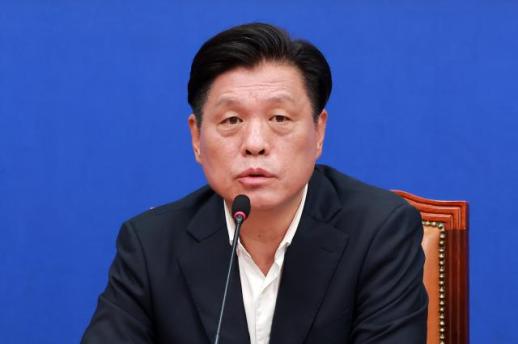 Democratic Party to Complete Procedures for August Convention This Month The Democratic Party announced plans to finalize procedures for its convention scheduled for August 17. During this announcement, the party addressed the timing of Jeong Cheong-rae's potential resignation, stating, "There are no specific regulations regarding resignation in our party rules." Cho Seung-rae, the party's Secretary General, stated during a press conference on June 14 at the National Assembly, "The Democratic Party is preparing to hold its convention in Daejeon on August 17. Relevant procedures are currently underway." Cho emphasized that the party will seek approvals from various committees, including the Central Committee, the Party Affairs Committee, and the Convention Preparation Committee, as part of the process leading up to the convention. He noted, "The Central Committee must finalize the amendments to the party rules by June 16 for the convention to proceed on August 17. After that, we will hold meetings of the Supreme Council and the Party Affairs Committee to continue the process. Tentatively, we plan to convene the Supreme Council on June 24 and the Party Affairs Committee on June 26 to approve the establishment of the Convention Preparation Committee." Additionally, Cho mentioned that candidate registration for the party leader and Supreme Council members is expected to take place on July 16 or 17. He explained that if there are four or more candidates for party leader, a preliminary election will be held, with the main election occurring about a week after candidate registration. Regarding the calls for Jeong Cheong-rae's resignation, which arose following the confirmation of the convention, Cho stated, "There is no deadline for resignation in our party rules concerning re-election challenges." He added, "However, there is a precedent; when President Lee Jae-myung was preparing for re-election as party leader, he resigned before the establishment of the Convention Preparation Committee."* This article has been translated by AI. 2026-06-14 15:06:00
 -
 Investors Turn to Leverage Products Amid Market Volatility Domestic and international individual investors are increasingly gravitating toward leverage products. In South Korea, leveraged exchange-traded funds (ETFs) have dominated trading volumes, while in the U.S. market, ETFs that track the Philadelphia Semiconductor Index threefold have emerged as the top choice for South Korean retail investors. Despite recent market volatility, individual investors are actively betting on high-risk products that maximize returns rather than reduce risk. According to the Korea Exchange, from June 8 to 12, eight of the top ten ETFs by trading volume in South Korea were either leveraged or inverse products. The KODEX Leverage ETF topped the list with a trading volume of 14.59 trillion won. Following it, the KODEX SK Hynix Single Stock Leverage ETF ranked third with 12.33 trillion won, while the KODEX Samsung Electronics Single Stock Leverage ETF (8.63 trillion won), TIGER SK Hynix Single Stock Leverage ETF (7.31 trillion won), and TIGER Samsung Electronics Single Stock Leverage ETF (5.37 trillion won) also saw significant trading volumes. Notably, funds have concentrated on single-stock leverage ETFs based on Samsung Electronics and SK Hynix. The trading volume of four single-stock leverage ETFs from the KODEX and TIGER brands reached 33.65 trillion won over the week, comparable to the trading volumes of the top KOSPI market capitalization stocks during the same period. In fact, when examining the total trading volumes of all listed stocks, SK Hynix led with 61.30 trillion won, followed by Samsung Electronics at 49.48 trillion won. Samsung Electro-Mechanics (13.16 trillion won) and Naver (7.23 trillion won) followed. The KODEX Leverage ETF recorded trading volumes comparable to Samsung Electro-Mechanics, while the KODEX SK Hynix Single Stock Leverage ETF surpassed most individual stock trading volumes, excluding Samsung Electro-Mechanics. The KODEX Samsung Electronics Single Stock Leverage ETF also attracted significant attention, recording higher trading volumes than Naver. The preference for leverage among domestic investors is also evident in overseas markets. According to the Korea Securities Depository, South Korean retail investors, known as “Seohak Ants,” net purchased $1.75 billion (approximately 2.6 trillion won) worth of SOXL (Direxion Daily Semiconductor Bull 3X Shares), which tracks the Philadelphia Semiconductor Index threefold, from June 8 to 12. This amount is nearly nine times greater than the second-highest net purchase during the same period. SOXL is a high-risk product that aims to triple the daily returns of the Philadelphia Semiconductor Index, which includes global semiconductor companies such as Nvidia, TSMC, AMD, and Micron. While South Korean investors had been net sellers of U.S. stocks until the first week of June, they shifted to net buyers in the second week, indicating a renewed aggressive investment strategy. This shift is attributed to expectations of improved semiconductor market conditions and increased investments in artificial intelligence (AI). However, investors should exercise caution with leveraged ETFs, as they are designed to multiply the daily returns of their underlying assets. Increased volatility can lead to returns that deviate from expectations. In particular, during periods of significant downward volatility, a phenomenon known as 'negative compounding' can occur, resulting in losses that exceed those of the underlying assets.* This article has been translated by AI. 2026-06-14 14:57:00
 -
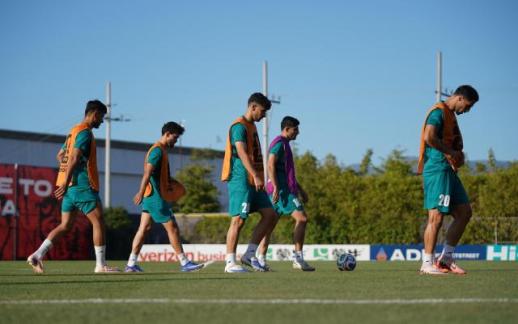 U.S. Approves Visa for Only Four Members of Iran's World Cup Team The United States has granted visas to only four members of Iran's national soccer team for the 2026 North American World Cup. According to the BBC on June 14, of the 15 Iranian officials whose visa applications were denied, 10 re-applied after arriving in Mexico for training, but only four—including two staff members from the Iranian Football Association's international department and one performance analyst—received approval. Mehdi Taj, president of the Iranian Football Association, and the remaining six who re-applied were all denied visas, while one media officer did not reapply. Despite being in a state of conflict with Iran, the U.S. has allowed the entry of the Iranian players for the World Cup but has faced criticism for denying visas to key officials necessary for team operations. Iran, placed in Group G, is set to face New Zealand on June 16, Belgium on June 22 in Los Angeles, and Egypt on June 27 in Seattle for the group stage finale. Initially, Iran planned to set up its base camp in Tucson, Arizona, but due to the ongoing conflict, the team has been training in Tijuana, Mexico, near California. Under strict U.S. travel restrictions, the Iranian team will only be allowed to enter the U.S. for matches and must return to Tijuana immediately after each game, repeating this process for subsequent matches. Additionally, the U.S. has denied entry to Somali referee Omar Artan, citing suspicions of ties to a terrorist organization.* This article has been translated by AI. 2026-06-14 14:36:00
 -
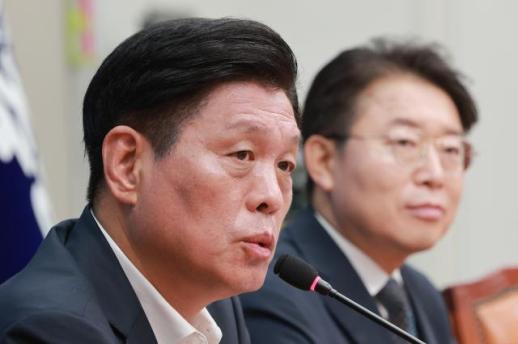 Democratic Party Responds to Misinterpretation of President Lee's Accountability Remarks The Democratic Party has criticized interpretations suggesting that President Lee Jae-myung's recent comments on party accountability were aimed at Jung Cheong-rae, asserting that such interpretations distort the President's intentions. During a press conference on June 14, Secretary General Cho Seung-rae addressed the President's social media remarks, stating, "There can be various interpretations," but emphasized that "the President is also a member of the ruling party. This message is understood as highlighting the party's accountability rather than targeting specific leadership." Cho further stated that narrowing the interpretation of the President's comments to target specific leaders, such as Jung, is politically motivated and inappropriate, adding, "Distorting the President's intentions in that manner is not suitable." He explained that the remarks should be seen in the context of the upcoming party conventions, which will shape the leadership during the remainder of the President's term, indicating that it is appropriate to interpret the message as guidance on how the leadership intends to manage the party. On June 13, President Lee stated on social media that the ruling party must demonstrate accountability through its ability to manage power, deliver results, and foster inclusivity and unity, thereby presenting a case for the party's responsibility. Following the release of these comments, some speculated that the message was directed at Jung. In response, Cho officially denied these allegations, emphasizing that there is no conflict between the party and the government. Additionally, after the Democratic Party's defeat in the Seoul mayoral election during the June 3 local elections, the issue of leadership accountability arose. Cho remarked, "It is inappropriate to say that everyone lost just because we lost Seoul." He highlighted the party's achievements, noting, "We elected the first female metropolitan mayor and two three-term local government heads. We need to assess how the Democratic Party has produced results. Out of 3,192 candidates who ran in this local election, 2,294 were elected, achieving a 72% success rate."* This article has been translated by AI. 2026-06-14 14:33:00
 -
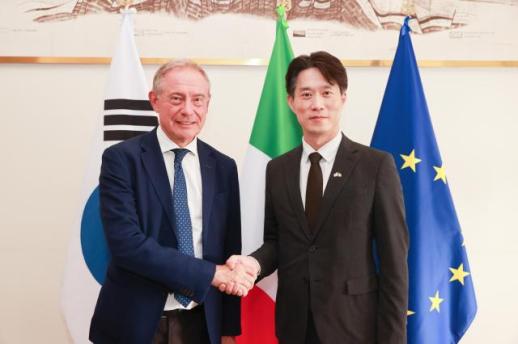 Korea and Italy Establish Partnership for SMEs and Small Businesses The Ministry of SMEs and Startups announced on June 14 that it signed a memorandum of understanding with Italy's Ministry of Enterprises and Made in Italy (MIMIT) on June 12 in Rome, with the leaders of both countries present. This memorandum expands the existing cooperation framework focused on small and medium enterprises to include manufacturing-based small businesses. It also includes provisions for mutual exchanges between cooperatives. Italy is a country where small and medium enterprises are central to the local economy. Notably, local cooperatives operate within a 'network ecosystem' that connects various small cooperatives, allowing them to compete on par with large corporations and gain global recognition. Prior to the agreement, the Ministry of SMEs and Startups and MIMIT held a bilateral meeting to solidify their commitment to implementing the memorandum and promised practical cooperation. No Yong-seok, First Vice Minister of the Ministry of SMEs and Startups, expressed hope that Korea and Italy would become economic partners that grow together, stating, "We will further expand the entry of our small and medium enterprises into Europe through continuous exchanges." Additionally, the Ministry hosted the 'K-Beauty Glow Week in Rome' from June 12 to 13, providing opportunities for promising K-brands to promote themselves in Europe. Ten small brands with strong export performance in the beauty, clothing, and lifestyle sectors participated in the event.* This article has been translated by AI. 2026-06-14 14:33:00
 -
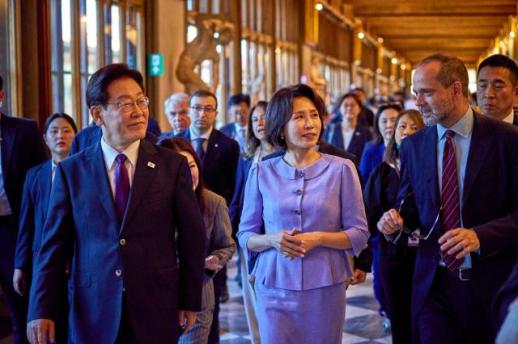 President Lee Begins Visit to Vatican, Attends Special Mass President Lee Jae-myung, currently on a European tour, will begin his visit to the Vatican on June 14. On that day, he will conclude his schedule in Italy and attend a special mass for "Peace and Solidarity" at St. Paul’s Basilica in Rome, where he is expected to deliver a commemorative speech. In his address, President Lee is anticipated to convey South Korea's firm commitment to peace and solidarity amid a rapidly changing international landscape, while also seeking support and attention for peace on the Korean Peninsula. Additionally, he will meet with Cardinal Yoo Heung-sik, the first Korean to be appointed as the Prefect of the Congregation for Clergy, along with other Korean clergy gathered from various regions. On June 15, President Lee will have a private meeting with Pope Leo XIV at the Vatican and is also scheduled to meet with Pietro Parolin, the Secretary of State of the Vatican. 2026-06-14 14:33:00
 -
 AI Revolution in Manufacturing: Can Gyeongnam Maintain Its Status as a Global Leader? "(ABC Broadcasting asks) In an era where AI is transforming shipyards and factories, can Gyeongnam maintain its status as the world's leading manufacturing hub?"Gyeongnam is the heart of South Korea's manufacturing industry, home to the largest industrial belt in the country, which includes shipbuilding, defense, machinery, nuclear power, and aerospace industries. The shipbuilding sector, in particular, symbolizes the Gyeongnam economy. However, the global shipbuilding industry is at a turning point. In the past, labor costs and production capacity were the key competitive factors, but now, AI, automation, digital twins, and autonomous navigation technologies are defining competitiveness.Gyeongnam Governor Park Wan-soo has made 'Manufacturing AI Innovation Valley' and 'Physical AI Industry Development' central promises of his administration. His vision is to establish Changwon as a hub for manufacturing AI and integrate AI across the shipbuilding, defense, and nuclear power sectors.Ultimately, the success of Park Wan-soo's second term hinges on one question."Can Gyeongnam remain the world's leading manufacturing center in the age of the AI revolution?" The Shift from Labor to AI in ShipbuildingSouth Korea's shipbuilding industry has long been the strongest in the world.Companies like HD Hyundai Heavy Industries in Geoje, Hanwha Ocean, and medium-sized shipyards in Tongyeong and Goseong have led the country's exports.However, the competitive landscape of the shipbuilding industry is changing rapidly.In the past, the number of welders and design engineers was a key competitive factor.Now, things are different.An era is emerging where AI designs, robots weld, and digital twins optimize production processes.In fact, the global shipbuilding industry has already entered the AI competition.Generative AI is being utilized in the ship design phase.During the construction process, AI-based quality control systems are expanding.In the operational phase, autonomous navigation technology is moving toward commercialization.Ultimately, the future shipbuilding industry is transforming from a sector that builds ships to one that operates data.This is why Governor Park emphasizes manufacturing AI.He aims not just to increase the number of factories but to fundamentally change the manufacturing industry itself.The Manufacturing AI Innovation Valley project, centered in Changwon, aims to integrate AI into existing manufacturing industries to enhance productivity and competitiveness.This is not merely an industrial policy.It is a survival strategy for Gyeongnam's manufacturing sector.China is already catching up to South Korea in production scale.The competition based on labor costs is no longer meaningful.The remaining path is technology.And AI is at the core of that technological revolution. The AI Shipbuilding Revolution: A Project to Transform Gyeongnam's Manufacturing SectorMany people focus solely on the shipbuilding industry.However, Governor Park's vision extends beyond shipbuilding.The AI he envisions is a platform that connects shipbuilding, defense, nuclear power, and machinery industries.In fact, Park has pledged to develop Changwon as a hub for manufacturing AI, small modular reactors (SMR), and defense.This carries significant implications.Gyeongnam possesses the strongest manufacturing cluster in South Korea.Changwon is home to the machinery industry.Geoje is known for shipbuilding.Sacheon is developing its aerospace industry.Jinju is focused on avionics and defense.These industries can be interconnected through the technology of AI.For example, AI can optimize production processes in shipyards.It can reduce design times for defense companies.It can automate quality inspections for nuclear power components.It can also innovate the production processes for aircraft parts.In other words, AI is not just a technology for a specific industry.It is a universal technology that upgrades the entire manufacturing sector.That is why Governor Park places AI at the center of industrial policy rather than viewing it as a mere digital initiative.Particularly noteworthy is Physical AI.Park has also proposed transforming Changwon National University into Gyeongnam Science and Technology University and establishing a specialized research hub for defense, SMR, and Physical AI.Physical AI is a technology that combines robotics and AI.If generative AI changes offices, Physical AI will change factories.In the future, a significant portion of shipyards and manufacturing plants is likely to be operated by AI robots.Ultimately, Park Wan-soo's AI strategy can be seen as an investment to secure the future of manufacturing.3. Can Gyeongnam Become a Testing Ground for South Korea's Industrial Revolution in Aerospace and Shipbuilding?Gyeongnam's greatest strength lies in its industrial diversity.It is not just about shipbuilding.There is also defense.Aerospace.Nuclear power.Machinery.This structure is rare globally.Especially, the growing aerospace industry centered in Sacheon symbolizes Gyeongnam's future.Governor Park has made the creation of an aerospace complex city and the expansion of the aerospace industry ecosystem key promises.The aerospace industry is also closely linked to AI.Satellite data analysis.Autonomous flight.Space robotics.Digital twins.All require AI technology.Ultimately, shipbuilding and aerospace share the commonality of being future industries.And Gyeongnam possesses both industries simultaneously.This is a powerful asset.While Busan aims to combine its maritime capital with AI,Gyeongnam seeks to merge manufacturing with AI.While Jeonbuk discusses AI in agriculture,Gyeongnam talks about an AI manufacturing revolution.This is where the uniqueness of Park Wan-soo's administration emerges.He does not view AI as a new industry.He sees it as a tool for innovating existing industries.This approach is quite pragmatic.Upgrading existing strengths is more likely to lead to success than creating new industries.4. Gyeongnam's Real Challenge: People Over TechnologyHowever, there is a crucial premise for the AI revolution.It is people.AI factories can be built.Data centers can be established.But without talent, none of it matters.The biggest issue facing Gyeongnam is the outflow of young people.Young people from good universities are leaving for the capital region.Companies are lamenting the shortage of talent.If this problem is not resolved, the AI revolution will struggle to succeed.This is also why Governor Park is pushing for the establishment of the Gyeongnam Institute of Science and Technology.Gyeongnam lacks research-focused universities like KAIST or GIST.While the industry is strong, the research foundation is relatively weak.In the AI era, research capability equates to industrial competitiveness.Ultimately, Gyeongnam's future is likely to be determined not by the number of factories but by the number of talented individuals.Manufacturing in the AI era is no longer a simple production industry.It is a high-tech industry that combines software, data, and algorithms.The ability to secure talent in this field will determine the outcome.Governor Park's true challenge is not to increase the number of shipyards.It is to create a Gyeongnam where AI talent gathers.If successful, Gyeongnam could become the center of South Korea's industrial revolution, surpassing its role as merely a manufacturing hub.: SWOT Analysis:StrengthsGyeongnam boasts South Korea's largest manufacturing cluster, encompassing shipbuilding, defense, machinery, nuclear power, and aerospace. Governor Park Wan-soo has a clear vision to integrate AI into existing industries through the Manufacturing AI Innovation Valley and Physical AI development strategies.WeaknessesThe outflow of young people and lack of research and development infrastructure are structural limitations. Compared to the capital region, Gyeongnam's competitiveness in securing AI talent is weaker, and the digital transformation pace of small and medium-sized partner companies may be slower than expected.OpportunitiesThe AI manufacturing revolution, growth of the aerospace industry, and expansion of defense exports present significant opportunities for Gyeongnam. It is rare for a region to simultaneously possess shipbuilding, aerospace, and defense capabilities, increasing the likelihood of becoming a leading area for manufacturing AI.ThreatsThe competition from China's shipbuilding industry, global economic downturns, and a slowdown in manufacturing investment are major risks. Falling behind in AI technology competition could weaken existing manufacturing competitiveness.Key Question"In an era where AI is transforming shipyards and factories, can Gyeongnam maintain its status as the world's leading manufacturing hub?" This is the most important question that Governor Park Wan-soo's second term must address.* This article has been translated by AI. 2026-06-14 14:30:00
 -
 U.S. Blocks Foreign Access to Anthropic AI Models, Emphasizing AI Sovereignty The U.S. government has begun treating artificial intelligence (AI) models similarly to advanced semiconductors and military technology. On June 12, Anthropic announced that the U.S. government directed it to halt foreign access to its latest AI models, 'Claude 5' and 'Mitos 5,' citing national security concerns. This order applies to all foreigners, including foreign nationals employed by Anthropic. While this action may be a temporary response to safety concerns surrounding specific models, it signifies a more critical shift: the U.S. government now views AI models as strategic assets directly tied to national security. This is not merely a case of corporate regulation; it signals that the AI competition has entered a new phase. Previously, the AI race was centered around semiconductor capabilities—who could secure more GPUs and build larger data centers. Now, the AI models themselves, which operate on these semiconductors, have emerged as core assets of national competitiveness. If strategic assets during the Cold War were nuclear weapons, the information age was defined by semiconductors, and the AI era is characterized by AI models, data, and AI agents as new strategic assets. However, the decision has sparked considerable controversy. Anthropic argues that the jailbreak techniques cited by the government represent a limited vulnerability that can occur only under specific circumstances, and similar vulnerabilities can be found in other leading AI models. Critics within the industry contend that targeting specific companies and models raises fairness concerns. The action reveals several contradictions. While the U.S. government has initiated regulations citing AI safety, it remains unclear whether the same standards will apply to other AI companies. Critics argue that blocking an entire commercial model based on a single vulnerability is excessive. If such precedents are established, AI companies may become hesitant to launch new models. Another point of contention involves allied nations. While the U.S. emphasizes AI alliances, this measure effectively includes companies and research institutions from allied countries like the U.K. and South Korea in the access restrictions. Some experts criticize this approach, suggesting that it appears to prioritize controlling allies over countering China. Yet, beyond these controversies lies a more significant issue: the question is not whether the U.S. government or Anthropic is correct. The essential reality is that AI has entered the realm of national security. For South Korea, the situation is even more complex. Samsung Electronics and SK Hynix are leading the market for high-bandwidth memory (HBM), a crucial component in the AI era. The role of South Korean companies is vital for the operation of U.S. AI data centers and super-scale AI infrastructure. However, the most advanced AI models operating on top of this infrastructure are predominantly held by U.S. firms. This incident starkly illustrates South Korea's reality. While we are a key supplier of essential components in the AI era, we rely on foreign AI models. If a specific country restricts access to AI models for political or security reasons, what choices do we have? This incident has brought that question to the forefront. However, it would be premature to conclude that South Korea must develop its own GPT. There are differing perspectives within the AI industry. Companies like OpenAI, Google, Anthropic, and xAI invest tens of trillions of won annually. Competing on the same level to create world-class general-purpose AI is not realistically feasible for South Korea. South Korea does not necessarily need to compete with the U.S. to create the world's top AI model. Not having developed a smartphone operating system does not mean South Korea is not an IT powerhouse. It is not essential to independently develop every core technology to maintain competitiveness. However, creating the world's best AI and securing AI sovereignty are distinct issues. AI sovereignty does not stem from surpassing GPT; it arises from possessing the minimum AI capabilities necessary for a nation to choose and control its own technology when needed. Relying on foreign AI across critical sectors such as defense, finance, manufacturing, public administration, and healthcare could pose significant risks. Therefore, South Korea should focus not on general-purpose AI competition but on industrial AI. Areas such as manufacturing AI, semiconductor AI, financial AI, defense AI, healthcare AI, and public AI present substantial opportunities. We possess world-class manufacturing competitiveness and industrial data, allowing us to achieve competitiveness comparable to the U.S. in specific sectors. More importantly, the future competition will hinge on who can secure better data and build more powerful AI agents rather than merely who possesses larger LLMs. While LLMs may gradually become universal infrastructure like electricity or the internet, the creation of services and innovation in industries built on top of that infrastructure will be the responsibility of each nation. The government must also shift its perspective on AI policy. If AI has been viewed as part of digital industry promotion, it should now be approached as a national strategic industry. Just as we nurture semiconductors, defense, and space industries, AI should be pursued as a long-term national project. Developing AI talent, securing data, building computing infrastructure, and creating industry-specific models should be approached from the perspective of national competitiveness. Businesses should not perceive AI merely as a tool for improving productivity. AI is a technology that will transform the operating systems of all industries. The gap between companies that utilize AI and those that design it will only widen over time. The fundamentals lie in technology. The principle is self-reliance. The common sense is that a nation cannot entirely entrust its future to foreign technology. The Anthropic incident may end as a temporary event. However, the lesson for South Korea is clear: the AI supremacy competition has already begun. Semiconductors alone will not suffice. We must also be wary of illusions surrounding the world's top AI. What is needed now is the AI capability for a nation to choose and control its technology when necessary—essentially, AI sovereignty. Whether South Korea remains a mere supplier of components in the AI era or becomes a technological powerhouse capable of designing its own future depends on the choices made today.* This article has been translated by AI. 2026-06-14 14:24:00