

Journalist

Lee Baek-soon
-
 Sejong Law Firm to Host Seminar on Labor Legislation Trends Post-Local Elections Sejong Law Firm, led by Managing Partner Oh Jong-han, announced on June 2 that it will hold a hybrid seminar titled "Labor Legislation Trends After the Local Elections" on June 8 at 2 p.m. in the seminar room on the 24th floor of Sejong Grand Seoul. Following the local elections, discussions are expected to intensify regarding the implementation of labor pledges by the Lee Jae-myung administration, including the worker presumption system, the Basic Law for Workers, retirement age extension, and the abolition of the comprehensive wage system along with reduced working hours. The Sejong Labor Group aims to provide insights into the legislative trends and progress related to these key labor issues, as well as to identify potential legal challenges that may arise if new laws are enacted. The seminar will also offer practical strategies for companies to proactively respond to these changes. The seminar will begin with opening remarks from Kim Min-seok, a senior advisor who previously served as the Vice Minister of Employment and Labor. The first session will feature Cho Chan-young, an attorney who joined Sejong early last year after working as a judge in the Labor Division of the Seoul High Court, discussing the worker presumption system and the Basic Law for Workers. Next, attorney Yoon Hye-young, who has extensive experience with cases related to wage peak systems, will address retirement age extension and age discrimination. Finally, Kim Jong-soo, head of the Sejong Labor Group, will outline key issues surrounding the abolition of the comprehensive wage system and working hour measurement. Managing Partner Oh Jong-han remarked, "The worker presumption system and retirement age extension are critical issues that could significantly impact the labor and industrial sectors, similar to the Yellow Envelope Law. I hope this seminar will help assess labor legislation trends in light of changes in the political and policy environment, enabling companies to respond more strategically to future regulatory changes." Participation in the seminar is available both in-person and online, with inquiries for registration directed to the Sejong Planning Office at seminar@shinkim.com. Additionally, the Sejong Labor Group, led by Kim Jong-soo, consists of approximately 50 attorneys and experts, and has been strengthening its capabilities, including the recent recruitment of Lee Seung-jae, an attorney from Kim & Chang. The group is proactively responding to significant changes in labor policies and legislative environments, providing comprehensive legal services that encompass collective labor relations, industrial safety, and serious accidents.* This article has been translated by AI. 2026-06-02 09:33:00
 -
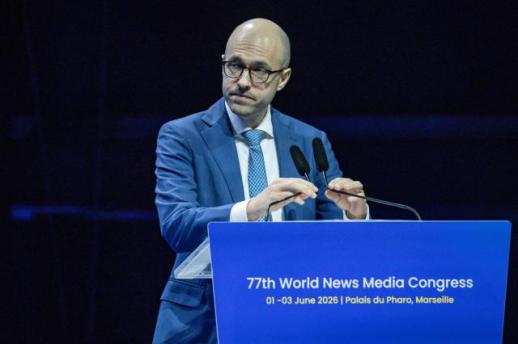 WNMC 26: NYT chair delivers a rallying cry for journalism in the AI age MARSEILLE, June 02 (AJP) - For 40 minutes, A.G. Sulzberger stood before an audience of more than 1,300 editors, publishers and journalists from around the world and delivered what many attendees would later describe as one of the defining speeches of the World News Media Congress. The New York Times chairman and publisher did not simply warn about artificial intelligence. He mounted a sweeping defense of journalism itself — arguing that AI companies are building trillion-dollar businesses on the back of original reporting while simultaneously threatening the economic foundations that make that reporting possible. After Sulzberger concluded his keynote, the audience responded with sustained applause. Moments later, BBC journalist and conference moderator Ros Atkins offered his own assessment. "One of the most impressive addresses I've heard on journalism in the age of AI," Atkins told the audience. The reaction reflected the mood in the room. While many discussions at WNMC 2026 focused on how publishers can adapt to AI, Sulzberger focused on a more fundamental question: what happens if the institutions that produce reliable information are weakened in the process? 'Original reporting is how you know what you know' Speaking on the theme "AI Journalism and the Uncertain Future of the Public Square," Sulzberger made clear he was not arguing against artificial intelligence itself. "The New York Times has a long record of embracing technology to advance the mission of independent journalism," he said. "We had a history of respectful partnerships with tech companies." He noted that Times journalists are already using AI tools "responsibly, ethically and with humans making the decisions," adding that "holding a powerful new technology at arm's length is a recipe for failure." Yet the speech repeatedly returned to a central argument: AI systems ultimately depend on journalism. "AI models are made of four basic ingredients," Sulzberger said. "Talent, compute, energy and data." The first three, he noted, are paid for. "In contrast, AI companies take data without consent or compensation." What technology companies call "data," he argued, often means something far more specific: journalism, books, music, films and other copyrighted creative works. "What might more accurately be called copyrighted content." The heart of the speech came when Sulzberger described the unique role of journalists in creating information that does not previously exist. "Reporters are the ones enriching the public record with previously unknown information," he said. "That surprising fact, that telling detail, that quote from an eyewitness, that secret document." Then came a line that many attendees later cited as the keynote's defining message. "Original reporting is very often how you know what you know." The value behind the headlines To illustrate the scale of that work, Sulzberger pointed to The New York Times' own investment in journalism. Last year alone, he said, the Times produced nearly half a million pieces of journalism — articles, photographs, videos and podcasts — at a cost of more than $2 billion. The organization deployed journalists across all 50 U.S. states and in 155 countries. In Ukraine alone, more than 70 journalists and support staff worked on the ground during 2025. "This original work is valuable," Sulzberger said, "because it's been carefully written and edited, independently verified, held to the highest standards of fairness and accuracy." Yet, he argued, many AI companies have treated that work as a free resource. "OpenAI confessed that it would be impossible to train today's leading AI models without using copyrighted materials," he said. And while AI companies pay engineers, purchase chips and build massive data centers, "AI companies take data without consent or compensation." 'We cannot sit by' The most forceful portion of the address came when Sulzberger called on publishers to stop being passive. "Our profession has been too quiet, too passive and too fragmented in the face of abuses by the companies leading the AI revolution," he said. "We cannot allow AI cheerleaders to dominate the public conversation." Nor, he said, can publishers remain silent while their content is used to create products that compete directly with them. "We cannot sit by as this work is used to build replacement products that undermine our ability to earn the audience and revenue necessary to continue reporting the news." The audience responded with one of the keynote's strongest rounds of applause. A threat beyond journalism Sulzberger argued that the stakes extend far beyond the news industry. Creative industries worldwide employ millions of people and generate trillions of dollars in economic value annually. The erosion of intellectual property protections, he warned, would weaken not only journalism but books, film, music and research. But his deepest concern centered on public trust. As AI-generated content proliferates online, distinguishing truth from fiction becomes increasingly difficult. "It is becoming harder and harder to know where things came from and whether they are true," he said. This dynamic, he warned, risks producing a culture in which people no longer trust anything. "The effect isn't just that people believe untrue things." "It's that they no longer believe true things." According to Sulzberger, that loss of trust is already encouraging many people to disengage from public life altogether. Four calls to action Rather than ending with a warning, Sulzberger closed with a challenge to the industry. His first message was blunt. "Stand up for your rights." "Intellectual property rights must hold if our profession is to have a path forward." Second, he urged publishers to negotiate carefully with AI companies. Third, he called on news organizations to push lawmakers to strengthen protections for journalism and intellectual property. And fourth, he encouraged publishers to work together. "The news industry's only path to counteracting that influence is by working together." At the same time, he argued that newsrooms must embrace AI responsibly rather than reject it. "Use AI the right way." And perhaps most importantly, he urged publishers to build direct relationships with audiences rather than relying on platforms. "Be a destination first." 'Information is valuable. Journalism is valuable.' As the address drew to a close, Sulzberger returned to a phrase that echoed throughout the hall. Decades ago, Silicon Valley popularized the idea that "information wants to be free." But, he said, many people forgot the second half of Stewart Brand's famous observation. "Information wants to be expensive because it's so valuable." Then came the line that served as both a warning and a defense of journalism's future. "Information is valuable. Journalism is valuable." In a digital environment increasingly crowded by bots, synthetic content and misinformation, Sulzberger argued that trusted journalism may become more important, not less. "News organizations should stand up as the reliable alternative to this mess." As delegates rose from their seats and applauded, the message appeared to resonate. For many in Marseille, the speech was not simply about AI. It was about whether journalism can preserve the economic and civic foundations necessary to continue producing the original reporting on which both democracy — and increasingly AI itself — depend. 2026-06-02 09:27:34
 -
 Singer Jeong Sewoon to Enlist in Military on June 23 가수 정세운이 오는 23일 군 입대한다고 밝혔다. On June 1, Jeong Sewoon's agency, C9 Entertainment, announced through multiple media outlets that he will enlist in the military on June 23. The agency expressed, "We ask for your support as Jeong Sewoon fulfills his duty to the country and returns healthier and more mature. We hope you look forward to seeing him grow as an artist after his service." Previously, Jeong Sewoon shared his enlistment news with fans during a recent live broadcast. Born in 1997, Jeong Sewoon is 30 years old this year. He gained recognition through SBS's 'K-Pop Star' Season 3 and Mnet's 'Produce 101' Season 2 before debuting in 2017. In March, he released the EP 'Love in the Margins' and held a solo concert titled 'Margins' in April to connect with his fans. Fans have reacted positively, saying, "It's just like Jeong Sewoon to want to go quietly," "As long as he returns healthy, that's all that matters," and "I look forward to the day we meet on stage again." Others expressed their hopes for him to create good memories before his enlistment and noted how touching it was to hear the news directly from him during the live broadcast. Many conveyed their support, wishing him a safe and healthy service, and expressed excitement for his return as a more mature artist.* This article has been translated by AI. 2026-06-02 09:27:00
 -
![[WNMC 2026] Arthur Gregg Sulzberger: Original Reporting Cannot Be Replaced by AI](https://image.ajunews.com//content/image/2026/06/02/20260602091028915936_518_323.jpg) [[WNMC 2026]] Arthur Gregg Sulzberger: 'Original Reporting Cannot Be Replaced by AI' "The important facts that people know ultimately come from original reporting by the press." Arthur Gregg Sulzberger, Chairman and Publisher of The New York Times, addressed the World News Media Congress (WNMC 2026) in Marseille, France, on June 1, emphasizing the crisis and role of journalism in the age of generative artificial intelligence (AI) during a 40-minute speech. He criticized AI companies for unauthorized use of content and copyright infringement while stressing the need for journalism to strengthen its original reporting to survive. Sulzberger's speech resonated with the audience of over 1,300 journalists and media executives, eliciting applause multiple times. BBC journalist Ros Atkins, who moderated the session, described it as "one of the most powerful speeches I've heard from journalists recently." The keynote address, titled "AI Journalism and the Uncertain Future of the Public Square," focused more on the value of journalism and survival strategies than on criticizing AI technology itself. Sulzberger stated, "The New York Times is not an organization that has rejected technological innovation. We have long collaborated with tech companies and are currently using AI responsibly and ethically." He added, "Avoiding powerful new technologies is a shortcut to failure," and described AI as a technology that can have many positive impacts on the world. However, he pointed out serious issues with the current growth model of the AI industry. Sulzberger explained that the AI industry operates based on four elements: talent, computing infrastructure, energy, and data. He noted that AI companies invest tens of millions to hundreds of millions of dollars to secure top engineers and spend enormous amounts on data centers, semiconductors, and energy, yet apply a different standard to data. "AI companies are taking data without consent or compensation," he said, adding that much of what they call data is actually copyrighted material such as news articles, books, music, and films. He emphasized, "Even OpenAI acknowledges that today's major AI models cannot learn without copyrighted material, and ultimately, the success of AI models depends on the datasets they use." Sulzberger repeatedly highlighted that media content is a core resource for the AI industry. He shared that The New York Times produced approximately 500,000 pieces of content, including articles, photos, videos, and podcasts last year, investing over $2 billion in the process. He also mentioned that the organization has reporters in all 50 U.S. states and 155 countries worldwide. "The information uncovered by reporters in the field, witness testimonies, confidential documents, expert analyses, photos, and videos enrich public records," he said. "The important facts that people know ultimately come from these original reports." He added, "AI can analyze and reconstruct publicly available information, but it cannot conduct reporting activities that discover or verify new facts," emphasizing that AI also relies on information produced by journalism. Sulzberger also addressed the issues of errors and distortions exhibited by recent AI services. He stated, "AI is often vulnerable in expressing uncertainty, frequently delivering incorrect information with a tone of certainty. Unlike news organizations, AI companies do not correct or take responsibility for misinformation." A more significant concern is that AI is beginning to replace the direct relationship between news organizations and readers. Sulzberger noted, "In the past, search platforms connected users to news sites, but AI only provides answers, causing users to stop visiting original sources. This could further weaken the revenue structure and reader base of the news industry." He referenced research indicating that AI services send significantly less traffic to news organizations than traditional search services, warning, "If the connection with readers weakens following a decline in advertising revenue, the news industry will face a more significant crisis." Sulzberger cautioned that AI could have serious implications for the public square as well. He remarked, "It is becoming increasingly difficult to know what is true and where information comes from. While it is problematic for people to believe falsehoods, it is even more dangerous when they stop believing the truth." He added, "As a result, people disengage from the public sphere, and social trust diminishes. Research shows that in communities where local journalism has disappeared, civic participation declines and corruption increases." To address this crisis, Sulzberger proposed four actions for journalism. First, he emphasized the importance of copyright protection, stating, "Intellectual property rights must be upheld for the future of the news industry. We must make it clear that theft is wrong, based on simple ethical principles." Second, he advised careful contracting with AI companies, urging news organizations to scrutinize whether fair compensation is provided and whether they can maintain control over content usage, even when entering licensing agreements. Third, he called for legislative action, advocating for stronger copyright protections, transparency in AI training data, and enhanced accountability for AI companies. Fourth, he stressed the need for solidarity within the journalism industry, stating, "AI companies are engaging in lobbying and promotional activities with their vast financial resources. The only way for the journalism industry to respond is to act together." At the same time, he urged journalism to adapt. Sulzberger stated, "We must use AI in the right way, actively leveraging technology to enhance the quality of journalism and strengthen business models." He also emphasized the need to reduce dependence on platforms and become brands that connect directly with readers. "To survive in a world mediated by AI, we need differentiated journalism that readers will seek out intentionally," he said, adding, "There is no other place to provide this reporting for readers or AI." At the conclusion of his speech, Sulzberger asserted, "Information has value. Journalism has value." He remarked, "The internet is already overflowing with bots and low-quality content, making it increasingly difficult to discern what is true. News organizations must be a reliable alternative amid this confusion." As his 40-minute address concluded, the audience of over 1,300 journalists responded with applause. Sulzberger's message about the anxieties and challenges surrounding the future of journalism in the AI era, and the need to uphold the value of original reporting, resonated with journalists from around the world. He ended by stating, "The future of our news organizations and the health of the public square depend on how we respond now." 2026-06-02 09:24:00
[[WNMC 2026]] Arthur Gregg Sulzberger: 'Original Reporting Cannot Be Replaced by AI' "The important facts that people know ultimately come from original reporting by the press." Arthur Gregg Sulzberger, Chairman and Publisher of The New York Times, addressed the World News Media Congress (WNMC 2026) in Marseille, France, on June 1, emphasizing the crisis and role of journalism in the age of generative artificial intelligence (AI) during a 40-minute speech. He criticized AI companies for unauthorized use of content and copyright infringement while stressing the need for journalism to strengthen its original reporting to survive. Sulzberger's speech resonated with the audience of over 1,300 journalists and media executives, eliciting applause multiple times. BBC journalist Ros Atkins, who moderated the session, described it as "one of the most powerful speeches I've heard from journalists recently." The keynote address, titled "AI Journalism and the Uncertain Future of the Public Square," focused more on the value of journalism and survival strategies than on criticizing AI technology itself. Sulzberger stated, "The New York Times is not an organization that has rejected technological innovation. We have long collaborated with tech companies and are currently using AI responsibly and ethically." He added, "Avoiding powerful new technologies is a shortcut to failure," and described AI as a technology that can have many positive impacts on the world. However, he pointed out serious issues with the current growth model of the AI industry. Sulzberger explained that the AI industry operates based on four elements: talent, computing infrastructure, energy, and data. He noted that AI companies invest tens of millions to hundreds of millions of dollars to secure top engineers and spend enormous amounts on data centers, semiconductors, and energy, yet apply a different standard to data. "AI companies are taking data without consent or compensation," he said, adding that much of what they call data is actually copyrighted material such as news articles, books, music, and films. He emphasized, "Even OpenAI acknowledges that today's major AI models cannot learn without copyrighted material, and ultimately, the success of AI models depends on the datasets they use." Sulzberger repeatedly highlighted that media content is a core resource for the AI industry. He shared that The New York Times produced approximately 500,000 pieces of content, including articles, photos, videos, and podcasts last year, investing over $2 billion in the process. He also mentioned that the organization has reporters in all 50 U.S. states and 155 countries worldwide. "The information uncovered by reporters in the field, witness testimonies, confidential documents, expert analyses, photos, and videos enrich public records," he said. "The important facts that people know ultimately come from these original reports." He added, "AI can analyze and reconstruct publicly available information, but it cannot conduct reporting activities that discover or verify new facts," emphasizing that AI also relies on information produced by journalism. Sulzberger also addressed the issues of errors and distortions exhibited by recent AI services. He stated, "AI is often vulnerable in expressing uncertainty, frequently delivering incorrect information with a tone of certainty. Unlike news organizations, AI companies do not correct or take responsibility for misinformation." A more significant concern is that AI is beginning to replace the direct relationship between news organizations and readers. Sulzberger noted, "In the past, search platforms connected users to news sites, but AI only provides answers, causing users to stop visiting original sources. This could further weaken the revenue structure and reader base of the news industry." He referenced research indicating that AI services send significantly less traffic to news organizations than traditional search services, warning, "If the connection with readers weakens following a decline in advertising revenue, the news industry will face a more significant crisis." Sulzberger cautioned that AI could have serious implications for the public square as well. He remarked, "It is becoming increasingly difficult to know what is true and where information comes from. While it is problematic for people to believe falsehoods, it is even more dangerous when they stop believing the truth." He added, "As a result, people disengage from the public sphere, and social trust diminishes. Research shows that in communities where local journalism has disappeared, civic participation declines and corruption increases." To address this crisis, Sulzberger proposed four actions for journalism. First, he emphasized the importance of copyright protection, stating, "Intellectual property rights must be upheld for the future of the news industry. We must make it clear that theft is wrong, based on simple ethical principles." Second, he advised careful contracting with AI companies, urging news organizations to scrutinize whether fair compensation is provided and whether they can maintain control over content usage, even when entering licensing agreements. Third, he called for legislative action, advocating for stronger copyright protections, transparency in AI training data, and enhanced accountability for AI companies. Fourth, he stressed the need for solidarity within the journalism industry, stating, "AI companies are engaging in lobbying and promotional activities with their vast financial resources. The only way for the journalism industry to respond is to act together." At the same time, he urged journalism to adapt. Sulzberger stated, "We must use AI in the right way, actively leveraging technology to enhance the quality of journalism and strengthen business models." He also emphasized the need to reduce dependence on platforms and become brands that connect directly with readers. "To survive in a world mediated by AI, we need differentiated journalism that readers will seek out intentionally," he said, adding, "There is no other place to provide this reporting for readers or AI." At the conclusion of his speech, Sulzberger asserted, "Information has value. Journalism has value." He remarked, "The internet is already overflowing with bots and low-quality content, making it increasingly difficult to discern what is true. News organizations must be a reliable alternative amid this confusion." As his 40-minute address concluded, the audience of over 1,300 journalists responded with applause. Sulzberger's message about the anxieties and challenges surrounding the future of journalism in the AI era, and the need to uphold the value of original reporting, resonated with journalists from around the world. He ended by stating, "The future of our news organizations and the health of the public square depend on how we respond now." 2026-06-02 09:24:00 -
![[6·3 Local Elections] Ruling Party Calls for Support of Lee Government, Critiques Ineffective Yoon Administration](https://image.ajunews.com//content/image/2026/06/02/20260602085536975934_518_323.jpg) [[6·3 Local Elections]] Ruling Party Calls for Support of Lee Government, Critiques Ineffective Yoon Administration The Democratic Party urged voters on June 2 to support the capable Lee Jae-myung government in the upcoming June 3 local elections, emphasizing the need to judge the ineffective local governments established under the Yoon Suk-yeol administration. During a meeting at the National Assembly, Han Byung-do, the party's floor leader, stated, "This election is a starting point for normalizing the nation and moving toward a country where local communities thrive." He highlighted the progress made in the past year, noting that the KOSPI index is nearing the 9,000 mark. Han emphasized, "We cannot allow irresponsible local governments that have damaged our regions to continue, especially those that emerged with the support of Yoon Suk-yeol four years ago." Han Jeong-ae, chair of the party's policy committee, remarked, "Over the past year, the public has felt the effectiveness of the regime change brought about by the capable Lee Jae-myung government." She pointed out that the early voting turnout for this local election has reached a record high, reflecting the public's desire to judge the ineffective local governments under the Yoon administration and to support the capable Lee government. Additionally, Han urged the National Election Commission to provide clear guidance, noting that many local council candidates are nominated by a single party, which can lead to invalid votes if voters select multiple candidates. She requested that voters be advised to vote for only one candidate.* This article has been translated by AI. 2026-06-02 09:06:00
[[6·3 Local Elections]] Ruling Party Calls for Support of Lee Government, Critiques Ineffective Yoon Administration The Democratic Party urged voters on June 2 to support the capable Lee Jae-myung government in the upcoming June 3 local elections, emphasizing the need to judge the ineffective local governments established under the Yoon Suk-yeol administration. During a meeting at the National Assembly, Han Byung-do, the party's floor leader, stated, "This election is a starting point for normalizing the nation and moving toward a country where local communities thrive." He highlighted the progress made in the past year, noting that the KOSPI index is nearing the 9,000 mark. Han emphasized, "We cannot allow irresponsible local governments that have damaged our regions to continue, especially those that emerged with the support of Yoon Suk-yeol four years ago." Han Jeong-ae, chair of the party's policy committee, remarked, "Over the past year, the public has felt the effectiveness of the regime change brought about by the capable Lee Jae-myung government." She pointed out that the early voting turnout for this local election has reached a record high, reflecting the public's desire to judge the ineffective local governments under the Yoon administration and to support the capable Lee government. Additionally, Han urged the National Election Commission to provide clear guidance, noting that many local council candidates are nominated by a single party, which can lead to invalid votes if voters select multiple candidates. She requested that voters be advised to vote for only one candidate.* This article has been translated by AI. 2026-06-02 09:06:00 -
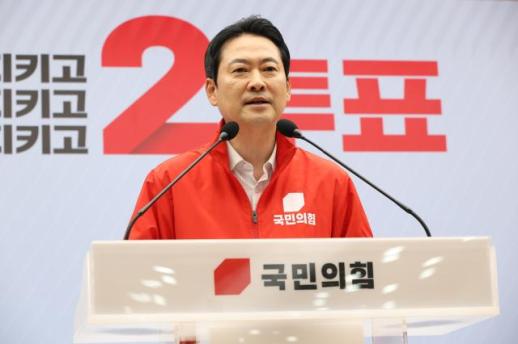 Jang Dong-hyuk Appeals for Votes to Stop President Lee's Agenda Ahead of Local Elections Jang Dong-hyuk, chairman of the People Power Party, made a public appeal on June 2 for voters to support his party in order to halt President Lee Jae-myung's agenda, just one day before the local elections. He criticized the president and the Democratic Party for neglecting the public's livelihood and emphasized the need for checks on their power. In a statement at the party's headquarters in Yeouido, Jang urged, "A vote for the People Power Party will be a step toward reviving the South Korean economy and protecting our lives. Please vote for us." Jang highlighted the economic challenges facing the country, stating, "The triple threat of high exchange rates, inflation, and interest rates is weighing heavily on our economy. We must stop President Lee and the Democratic Party's reckless governance that harms the public's well-being." He sharply criticized President Lee's real estate policies, saying, "Many experts and opposition figures had predicted that housing prices would rise, but the president ignored their warnings. Housing prices have skyrocketed even more than during the previous administration's tenure, which was marked by a housing crisis." Jang continued, "The ladder to homeownership for ordinary citizens has been completely severed. Now, asking the minister for solutions is futile. We must stop the tyranny of Lee Jae-myung, who has driven up housing prices." He also addressed youth employment issues, noting, "There are 1.71 million young people in the 2030 age group who are not working, with 720,000 of them simply idling. The suffering of the youth is being overlooked, and it is time for them to take action for change." He added, "Every vote from the youth for the People Power Party will translate into better job opportunities." Jang pointed to President Lee's legal troubles, stating, "What matters to the president is not the economy, public welfare, foreign affairs, or security, but erasing his own crimes. He will suppress the opposition and the media to remove obstacles related to his trials." He concluded, "With control over the government and the legislature, and influence over the judiciary and media, the president has nothing to fear. If we allow this to continue, the country will become one solely for him. We must hold him accountable through our votes."* This article has been translated by AI. 2026-06-02 09:03:00
 -
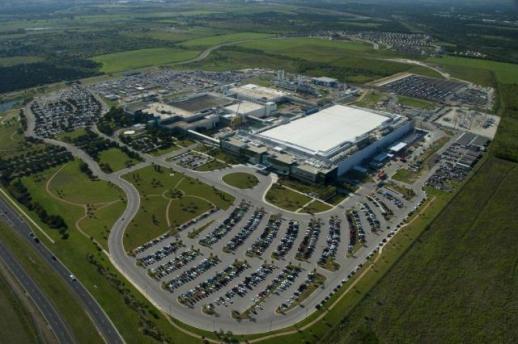 Samsung Electronics to relocate US headquarters from New Jersey to Texas SEOUL, June 2 (AJP) - Samsung Electronics will relocate the headquarters of its U.S. unit from New Jersey to Texas, according to industry officials. The electronics giant has reportedly informed employees that it plans to relocate its U.S. headquarters from Englewood Cliffs, New Jersey, to Plano, Texas, by the end of this year. The move, which industry observers say is intended to strengthen coordination across Samsung's semiconductor, mobile, and network businesses, would come about a year after it relocated its U.S. headquarters from Ridgefield Park to Englewood Cliffs, both in New Jersey. About 1,000 employees currently work at the Englewood Cliffs office. Samsung is expected to relocate most of them to Plano, while retaining a small number of staff to manage local operations. Plano is home to Samsung's U.S. mobile and network operations, while nearby Austin has a semiconductor manufacturing plant. Samsung is also building an advanced foundry facility in Taylor, also in Texas, which is slated to begin operations by the end of the year. Texas has emerged as a major investment hub for global companies, supported by relatively low corporate taxes, various tax incentives, and lower real estate costs. Companies such as Tesla and Oracle have also relocated their headquarters or expanded key operations in the state in recent years. 2026-06-02 09:00:30
 -
 Hana Bank Launches Small-Scale Credit Loan for Pension Recipients Hana Bank announced the launch of a fully online small-scale credit loan product, 'Hana OneQ Pension Living Expense Loan,' designed for customers receiving public pensions on June 2.The Hana OneQ Pension Living Expense Loan targets customers who receive one of the four major public pensions: the National Pension, the Government Employees Pension, the Teachers Pension, and the Military Pension. This product expands access from in-person applications at bank branches to mobile, online channels.Customers can now manage everything from limit inquiries to applications, agreements, and disbursements through the Hana Bank mobile app, 'Hana OneQ,' without visiting a branch. The process has been simplified to minimize paperwork, making it easier for older customers to use with an intuitive interface.The loan offers a fixed interest rate of 1.0% and is available for a single limit of 500,000 won for customers receiving public pensions through Hana Bank. It operates as a revolving credit line, allowing for flexible use for temporary small expenses such as utility bills, medical costs, or event-related expenses.Designed to ensure stable repayment linked to pension accounts, the loan also aims to protect vulnerable groups from high-interest loan markets. Hana Bank is diversifying its offerings for public pension recipients, including the Pension Living Expense Loan, Happy Pension Loan, and home pension-linked loans.A Hana Bank official stated, "As the aging population accelerates, the demand for small living funds among pension recipients has increased, prompting the development of this product. We expect that the launch of this online product will enhance financial convenience for our customers and provide low-interest loan benefits to public pension recipients."* This article has been translated by AI. 2026-06-02 08:57:00
 -
 U.S. AI Companies Accelerate IPOs as Anthropic Files for Public Offering U.S. artificial intelligence (AI) companies are ramping up their initial public offerings (IPOs). Anthropic has submitted a draft registration statement for its public listing, while SpaceX has identified water supply issues as a significant investment risk in its IPO filing. The competition in the AI sector is expanding beyond model development to include infrastructure needs such as power, semiconductors, and water resources. Anthropic Begins IPO Process, Outpacing OpenAI U.S. AI firm Anthropic has initiated the process for its IPO. On June 1, Anthropic announced on its blog that it had privately submitted a draft registration statement (Form S-1) to the U.S. Securities and Exchange Commission (SEC) for a common stock listing. This submission lays the groundwork for a potential IPO, contingent upon the completion of the SEC review. However, the actual listing will depend on market conditions and other factors. The number of shares to be offered and the pricing details have not yet been finalized. Anthropic clarified that this announcement is a disclosure under Section 135 of the U.S. Securities Act and is not an offer to sell or buy securities. Any future securities sales will follow the appropriate registration procedures as mandated by law. According to reports from TechCrunch and other outlets, Anthropic is valued at approximately $10 billion. Previously, the company raised $65 billion in a Series H funding round, attracting investments from firms including Altimeter Capital, Dragoneer, Greenoaks, Sequoia Capital, and Capital Group. SpaceX Adds Water Supply Risk to IPO Filing U.S. aerospace company SpaceX has updated its IPO registration statement to include the critical risk of securing water supply for its data center operations. On June 2, reports from TechCrunch and other sources indicated that SpaceX submitted the revised IPO application on June 1. In the amended filing, SpaceX stated, "The operation of large-scale data centers requires substantial amounts of cooling water," adding that securing water is a crucial consideration in site selection, development, and operation of data centers. The company noted that issues such as water shortages, droughts, regional competition for water resources, and regulations on water usage could limit access to cooling water, potentially leading to reduced cooling capacity, increased costs, or delays in infrastructure expansion. It also mentioned that alternative cooling technologies may need to be implemented, which could be more expensive or limited in supply. Additionally, SpaceX indicated in the revised filing that it plans to allocate up to 5% of the IPO offering to employees and friends of management. The filing also highlighted that a significant issuance of new shares could occur after the IPO, presenting another investment risk.* This article has been translated by AI. 2026-06-02 08:57:00
 -
 SK Group's Chey Tae-won and Nvidia's Jensen Huang Meet to Strengthen AI Semiconductor Collaboration SK Group Chairman Chey Tae-won met with Nvidia CEO Jensen Huang to enhance collaboration on AI semiconductors. As competition intensifies over high-bandwidth memory (HBM) in the global supply chain, the strategic partnership between SK Hynix and Nvidia is becoming increasingly evident. According to industry sources, Chey attended the 'GTC Taipei 2026' event on June 1 alongside SK Hynix President Kwak Noh-jung, where he met with Huang. This marks the third meeting between Chey and Huang this year. After listening to Huang's keynote speech, Chey reportedly held a private meeting with Nvidia executives. Published photos show Chey, Huang, and other key executives from both companies smiling and embracing, highlighting the trust built around their AI memory collaboration rather than a mere ceremonial encounter. This meeting comes as SK Hynix has established itself as a core supplier of HBM for Nvidia's AI accelerators. As Nvidia transitions to next-generation AI platforms, the stable supply of high-performance memory like HBM4 has become crucial, leading to more frequent communications between the two companies' top executives. Industry analysts suggest that this meeting likely went beyond mere congratulations, possibly addressing the supply schedule for HBM4 and coordinating responses to next-generation AI server demand. Attention is also on Huang's upcoming visit to Korea, where he is expected to meet with leaders of major domestic companies. Following last year's notable 'partner meeting,' there is speculation about a second gathering in Korea, potentially featuring a casual meal of samgyeopsal (grilled pork belly). For Chey, these consecutive meetings represent a pivotal moment in solidifying SK Hynix's leadership in HBM. Given Nvidia's dominant influence in the AI semiconductor market, Chey's direct engagement with Huang is seen as a strategic move that extends beyond client management to encompass the broader semiconductor strategy of the group.* This article has been translated by AI. 2026-06-02 08:51:00