


Latest by
-
 Daishin Securities Raises Samsung Electro-Mechanics Target Price to 2.4 Million Won Daishin Securities announced on June 10 that it has reevaluated Samsung Electro-Mechanics as a major beneficiary of the expanding artificial intelligence (AI) server and data center market, raising its target price from 920,000 won to 2.4 million won. The firm maintained its "buy" rating on the stock. Park Kang-ho, a researcher at Daishin Securities, stated, "With the securing of a 1.6 trillion won order for silicon capacitors, we have added a new growth driver for after 2027," and noted that earnings per share (EPS) for 2027 has been adjusted upward by 5.8% due to this order. He added, "With the expansion of sales for FC-BGA aimed at AI servers and data centers, we expect the utilization rate to reach nearly 100% by the end of 2026," and mentioned that additional investment plans targeting 2028 are likely to become visible in the third quarter of this year. Park explained that "silicon capacitors are a low-investment, high-profit business," and with reliability established through applications in AI servers, the company is expected to secure additional customers and expand orders. He also highlighted that "the increasing demand for AI servers and industrial applications suggests a strong possibility of price hikes for multilayer ceramic capacitors (MLCCs)," indicating that ongoing supply shortages and rising demand could provide further opportunities for profit increases. Park anticipates visible achievements in the fields of robotics and humanoids, predicting that the increased adoption of FC-BGA and MLCCs will align with the growth of the robotics market, establishing a new growth axis.* This article has been translated by AI. 2026-06-10 08:54:00
 -
 EcoPro Begins Mass Production at Hungary Plant, Accelerating European EV Market Strategy EcoPro's cathode materials plant in Debrecen, Hungary, has officially commenced mass production. The facility aims to accelerate its strategy in the local electric vehicle (EV) market by meeting European regulatory standards. According to industry sources on June 10, EcoPro held a shipment ceremony on June 8 for its high-nickel NCA (nickel-cobalt-aluminum) products, which will be supplied to European OEM (original equipment manufacturer) automotive brands. The Debrecen plant spans approximately 440,000 square meters and houses EcoPro BM, which produces cathode materials, EcoPro Innovation, which processes lithium, and EcoPro AP, which produces industrial oxygen and nitrogen. The annual production capacity for cathode materials is 54,000 tons across three lines, sufficient to supply batteries for 600,000 electric vehicles. EcoPro Innovation can produce 8,000 tons of lithium hydroxide annually, while EcoPro AP can supply 16,000 cubic meters of oxygen per hour. An EcoPro representative stated, "We are considering plans to build a second plant based on the overall order situation. Once completed, the capacity of the Debrecen plant will more than double compared to the current level." With the recent implementation of the EU-UK Trade Cooperation Agreement (TCA) and the Critical Raw Materials Act (CRMA), which mandates the use of EU-produced cathode materials, the EcoPro Hungary plant is expected to serve as a strategic hub for compliance with regional regulations. At the shipment ceremony, Choi Moon-ho, CEO of EcoPro BM, remarked, "We are expanding our supply to European premium OEMs, recognized for our top-quality and technological capabilities, and we are also achieving visible order results in the European market, the heart of eco-friendly future mobility." 2026-06-10 08:51:00
 -
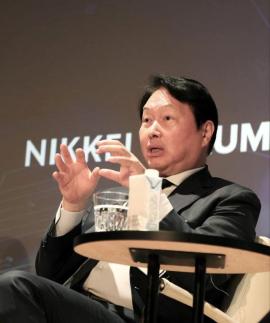 SK Group Executives to Hold Intensive Discussions on AI Strategies in Icheon SK Group executives and members will gather in Icheon for a three-day intensive discussion on AI transformation strategies. The aim is to explore measures to not only survive but also secure leadership in the rapidly changing AI landscape. From June 11 to 13, SK Group will host the "2026 New Icheon Forum" at the SKMS Research Institute in Icheon, focusing on the theme "Disruptive Innovation Brought by AI: A Major Shift to AX-Centric Management." Approximately 50 executives, including Chairman Choi Tae-won, Vice Chairman Choi Jae-won, and Chairman Choi Chang-won of the Supex Council, along with CEOs from major member companies, are expected to attend. The New Icheon Forum combines the management strategy meetings, where SK executives have traditionally discussed group strategies, with the Icheon Forum, which centers on discussions among SK members. This marks the first time the two have been integrated. Every June, SK Group's top executives convene for a management strategy meeting to assess the business environment and discuss survival and growth strategies. In August, the Icheon Forum is held, where SK members and domestic and international experts engage in focused discussions on global industry trends, innovative technologies, and future business directions. This integration stems from a serious sense of crisis, recognizing that failing to keep pace with AI advancements jeopardizes future survival. The rapid pace of change in AI technology necessitates a more flexible response than the previous discussion structures allowed. The goal is to enhance communication between executives and members, ensuring that discussions are swiftly reflected across the organization, thereby increasing the group's execution capabilities. During the forum, SK executives and members will share the understanding that the current moment, as the AI era intensifies, represents a golden opportunity to accelerate the group's response speed. They plan to focus on discussing response strategies and execution roadmaps. The forum will be structured so that on the first day, executives will engage in intensive discussions to lay the groundwork for AI-related topics. On the second day, members will voice their honest opinions on AX, continuing the discussions. The final day will see executives consolidate the insights from two days of rigorous discussions to finalize plans for accelerating AX. On the first day, executives will share the AX goals and roadmaps of major member companies and discuss ways to secure the execution power for AI innovation through a CEO panel discussion. They will also broadly communicate the necessity and direction of AX tailored to each company's situation. On June 12, discussions led by members will take place. They will share the changes they perceive in the AI era in connection with the executives' discussions and brainstorm solutions to challenges faced during the AX process, as well as ways to enhance organizational operations. On the final day, June 13, SK executives will share the AX initiatives discussed by each company and reaffirm the group's commitment to accelerating AX. Industry observers believe this year's forum will serve as a platform to gauge SK Group's future blueprint beyond mere discussions. Previously, SK Group has been expanding AI investments and restructuring its business while repeatedly emphasizing AI as a key pillar for future growth, urging all affiliates to enhance their AI utilization. An SK official stated, "This year's forum will be a broad discussion on AX strategies to lead the AI era. We will accelerate the transition to AX-centric management based on consensus among our members."* This article has been translated by AI. 2026-06-10 08:51:00
 -
 Finda Partners with Upstage to Develop Financial AI Agent Technology Finda, a fintech company, is taking steps to lead the market in financial-focused artificial intelligence (AI) agents. The company aims to accelerate the development of next-generation financial services by combining financial data with generative AI technology.On June 10, Finda announced that it has signed a memorandum of understanding (MOU) with AI specialist Upstage to establish a financial AI agent platform.The agreement aims to leverage the technological expertise and financial knowledge of both companies to innovate existing financial workflows and develop specialized AI agent services.Finda will provide financial domain data, direct preference optimization (DPO) labeling, and support from financial experts for user acceptance testing. The company will also offer advice on financial regulations and compliance.Upstage will lead the development of AI agents optimized for the financial environment based on its proprietary large language model (LLM), Solar. The company will be responsible for developing the financial-focused LLM model, building a reinforcement learning platform based on synthetic data, and overseeing agent design, development, and testing.Both companies plan to collaborate on discovering new business opportunities utilizing financial AI agents. They will conduct joint marketing and promotion based on the achievements of AI model development while seeking new partnership opportunities in the financial AI sector.Kim Seong-hoon, CEO of Upstage, stated, "It is meaningful to build an agent platform that encompasses all financial operations in collaboration with Finda. We will develop AI agents optimized for the financial environment based on our LLM, Solar, to drive practical business innovation."Park Hong-min, co-CEO of Finda, expressed, "I am pleased to work with Upstage on a project that goes beyond a simple technological partnership to change the paradigm of the financial industry. We will focus our efforts on advancing financial AI innovation through a sophisticated agent platform and establishing it as a reliable service."* This article has been translated by AI. 2026-06-10 08:51:00
 -
 LS Securities Calls Hyundai Engineering's 0% CB Issuance a Strategic Move, Lowers Target Price LS Securities stated on June 10 that Hyundai Engineering's decision to issue 500 billion won in zero-interest convertible bonds (CB) reflects both confidence in its growth and financial efficiency. The firm adjusted its target price from 210,000 won to 200,000 won, while maintaining a 'buy' rating. Kim Se-ryeon, an analyst at LS Securities, noted, "The issuance of convertible bonds with a 0% coupon rate and maturity interest rate sends a clear message about the company's growth potential while reducing financing costs to zero." Hyundai Engineering announced the issuance of the 500 billion won private convertible bonds, which will mature on July 7, 2031. The conversion price is set at 150,607 won, with the conversion period running from July 7, 2027, to June 7, 2031. The number of shares available for conversion is approximately 3,319,898, representing about 2.98% of the total shares issued. The funds raised will be used for operating expenses related to new energy projects, including offshore wind, solar power, small modular reactors (SMR), and large nuclear power plants. Hyundai Engineering plans to invest 250 billion won in each of the years 2026 and 2027. Kim emphasized the significance of this funding decision, considering Hyundai Engineering's financial structure. He stated, "As of the first quarter, Hyundai Engineering's net borrowings are only around 300 billion won, with cash reserves of 3.8 trillion won and total borrowings of 4.1 trillion won. The debt ratio stands at 157.6%, well below the industry average of 200%, indicating a solid financial foundation." LS Securities assessed that the recent stock price adjustments across the energy sector have enhanced Hyundai Engineering's valuation appeal. Kim pointed out, "Hyundai Engineering's forward price-to-book ratio (PBR) has dropped to around 1.5, while global nuclear EPC and plant EPC companies have a PBR of at least 2. This indicates an attractive valuation opportunity." He added, "Considering the potential for growth in the nuclear sector due to the Holtec SMR 300MW project in the U.S., expectations for nuclear project contracts in Bulgaria, and the expansion of investments in the U.S., the momentum for stock price increases remains valid." * This article has been translated by AI. 2026-06-10 08:45:00
 -
 RESCENE: A Multinational Girl Group Blossoming in Their Own Time Every day, dozens of songs and artworks are created. While music, drama, and film are introduced through countless media, what reaches the public is often less than half. The artists who sing and act face similar challenges. Despite their exceptional talents, they are frequently undervalued or go unnoticed. is a segment dedicated to introducing various artists and exploring their growth. It is also a heartfelt tribute to these artists. "Every flower has its own time to bloom."Some flowers bloom in early spring, while others wait until after enduring the cold winter to fully blossom. The group RESCENE has chosen a path of gradual growth rather than immediate attention. They have remained steadfast, maintaining their unique essence even if their blooming has been somewhat delayed. They have walked their path without rushing or hesitating, and now they are finally facing their season and blooming vibrantly.Comprising five members—Wonnie, Minami, Rive, Mei, and Jena—RESCENE is a multinational girl group that dreams of leaving a lasting fragrance. The group's name combines 'Scene' and 'Scent,' signifying their desire to linger in someone's heart through music, just as a specific moment's memory is tied to a fragrance. In an industry where fleeting trends come and go, RESCENE has chosen to cultivate their own unique emotions rather than be swept away by the current. Their journey, built on a sophisticated musical foundation, demonstrates why they have not rushed their blooming.Their discography reflects a journey of crafting different fragrances with each album. The debut single 'Re:Scene' started with a floral scent. The pre-released track 'YoYo' invited listeners drawn to RESCENE's essence, while the title track 'UhUh' showcased a confident and captivating energy through the 'Burning Flower' concept. The flowers they have cultivated are elegant, resilient, and encapsulate their solid strength within a fragrant image.Following this, RESCENE expanded their world by varying the texture and temperature of their scents. In their first mini-album 'SCENEDROME,' they explored the meaning of existence, which becomes clearer when meeting other scents through Ambergris. Their second mini-album 'Glow Up' captured their growth in style and skill within a fresh and clean emotional landscape reminiscent of soap. The third mini-album 'Lip Bomb' blended five berry scents, resulting in a product that vividly expressed the stories of both 'me' and 'us' through the unique colors of each member.With the digital single 'Runaway,' the narrative of their scent became more robust. RESCENE depicted a journey of breaking free from the confines they had imposed on themselves, set against the heavy and somber echoes of incense. The blurred boundaries of their identities became clearer, as the five members forged a bond on a shared path. From the initial excitement of floral scents to the depth of Ambergris, and from the clarity of soap scents to the vitality of berries and the determination of incense, RESCENE's journey has borrowed different fragrances but ultimately aimed for a singular essence. Starting from a desire to be remembered, they are now completing their true 'me' and 'us' on the path they have chosen. What they have accumulated has become a tangible force that changes the indicators of reality outside the stage. Recently, the viral meme 'Geoje Yaho-!' featuring Japanese member Minami, along with local content showcasing the Gyeongsang dialect, has become a crucial gateway for the public to engage with their music. The buzz around this content has directly translated into listener engagement, leading to a remarkable resurgence of their mini-album's title track 'Love Attack,' which was released nearly two years ago. The song has soared 719 spots on the Melon 'TOP 100' chart, reaching a peak of 28, and has also secured the 10th spot on Apple Music's 'TOP 100 Korea' and the 11th spot on YouTube Music's 'Top 100 Korean Songs,' solidifying the 'RESCENE boom' as a tangible achievement.In a K-pop market dominated by the capital and marketing of large agencies, RESCENE's ability to carve out their own space is not due to luck but rather a steadfast attitude cultivated over time. In their early days, when they lacked recognition, the agency's representative personally promoted them on an Arsenal football fan cafe and traveled to Geoje to cast members. The members' dedication to expanding their connection with the public, even performing on elementary school dirt playgrounds, has laid a solid foundation. Coupled with the well-crafted music from a dedicated songwriting team led by a Berklee College of Music graduate, their progress has gained momentum. The recent success of 'Love Attack' is not merely a stroke of luck from the outside but an inevitable outcome of good music and the time they have invested. RESCENE's progress signifies more than just a passing trend. They have proven that the essence of music and skill remains valid in a market where buzz can easily translate into consumption. Their commitment to maintaining their unique essence amidst fleeting trends is invaluable. Even if their blooming has been slightly delayed, the fragrance they have cultivated through their own strength will not easily dissipate.Having demonstrated their presence through good music and dedication, RESCENE will release a remake digital single in July. While 'Runaway' showcased a profound internal transformation, this upcoming release will present a new stage reinterpreted with their unique sensibility. Building on the solid foundation established through their resurgence, they are now ready to embrace the next season with an even deeper and clearer fragrance. 2026-06-10 08:45:00
 -
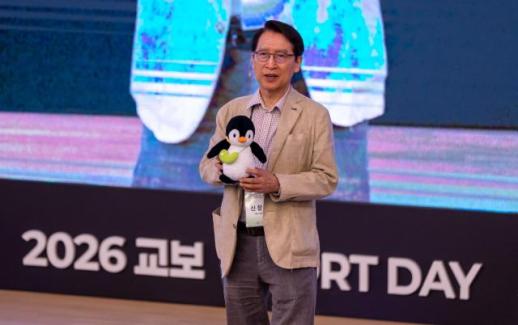 Kyobo Life Chairman Shin Chang-jae: In the Age of AI, Humanity Remains Essential Artificial intelligence (AI) is transforming the world. ChatGPT writes text, AI assists in medical diagnoses, and robots operate factories. The financial industry is no exception. Asset management is increasingly handled by algorithms, insurance underwriting is performed by AI, and even customer service is being managed by chatbots. Many believe that AI will determine the future of financial companies. However, every technological revolution comes with its paradox. As technology advances, the value of human touch becomes even more critical in certain areas. Insurance is a prime example. While it begins with contracts and numbers, it ultimately deals with people's lives, accompanying them through the most uncertain moments of illness, accidents, aging, and death. Shin Chang-jae, chairman of Kyobo Life, recently emphasized that “in the age of AI, providing emotional satisfaction and meaningful experiences to customers is crucial.” He stated that the careful touch that comforts customers is the essence of insurance. This is not mere rhetoric; it is the reason Kyobo Life maintains a system centered around its financial planners (FPs) even amid rapid digital transformation, and it is a core aspect of Shin's management philosophy. Interestingly, Shin is not a manager who shuns technology. He has pioneered a mydata initiative in the insurance industry, established a healthcare platform, and actively invests in AI strategies at the group level. He practices what he calls “ambidextrous management,” strengthening traditional insurance operations with one hand while pushing for digital innovation with the other. Shin's entrepreneurial spirit in finance does not involve choosing between AI and humanity. Instead, it seeks to actively utilize AI while enhancing human values. This may be the direction the financial industry should take in the age of AI. From Doctor to Insurer: A Consistent Perspective on Healing Shin Chang-jae's career is one of the most unique in South Korea's financial sector. He graduated from Seoul National University’s medical school and was a professor of obstetrics and gynecology. He was on a completely different path from typical financiers or businesspeople until he joined management in 1996 at the suggestion of his father, Shin Yong-ho, the founder of Kyobo Life. At that time, many questioned whether a doctor could effectively manage an insurance company. However, the outcome was different. Since becoming CEO in 2000, Shin has transformed Kyobo Life into a leading life insurance company in South Korea. Despite navigating through the Asian financial crisis, the global financial crisis, and a low-interest-rate environment, he has maintained a stable financial structure and established a unique position in the life insurance industry. His management philosophy is deeply influenced by his medical background. A doctor treats patients' illnesses, while an insurer manages clients' risks. Although the subjects differ, both ultimately aim to protect lives. Shin does not view insurance as a mere financial product; he sees life insurance as a social safety net. He emphasizes that insurance helps individuals recover their daily lives when faced with unexpected accidents and illnesses. This perspective frames insurance not as a product to sell, but as a support system for life. This philosophy has led to stakeholder-centered management at Kyobo Life. He believes that for a company to develop sustainably, it must grow alongside customers, financial planners, employees, and the community. This focus on long-term trust over short-term profits has been a key factor in his management approach. While many financial companies concentrate on performance-driven management, Shin repeatedly emphasizes customer value and trust. Although this may appear inefficient in the short term, he believes it can become the strongest competitive advantage in the long run. The Value of Humanity Grows in the Age of AI AI is reshaping the financial industry. Customer consultations are increasingly handled by chatbots, and investment advice is provided by algorithms. Insurance planning has also become largely automated. Amid this trend, many insurance companies are downsizing their financial planner organizations or shifting to a general agency sales model. However, Shin has chosen a different path. He believes that the role of humans becomes even more important in the age of AI. Insurance operates not merely as a product sale but as a trust-based relationship with customers. Clients are not purchasing policy terms; they are buying peace of mind about the future. And that reassurance cannot be provided solely by technology. This is why Kyobo Life maintains its exclusive FP system. Shin views FPs not just as salespeople but as pace-setters in customers' lives. He believes that a structure where FPs are responsible for the entire process—from policy enrollment to maintenance and claims payment—builds long-term customer trust. Indeed, Kyobo Life boasts one of the highest contract retention rates in the industry, and its financial planner retention rate is also notably high compared to competitors. This reflects not just sales performance but the result of trust-based relationships. AI can calculate risks, but it cannot soothe customer anxieties. AI can recommend optimal insurance products, but it cannot understand the grief of a customer who has lost a family member. AI can facilitate contract signings, but it cannot build trust. Shin emphasizes that as technology advances, the empathy and emotional value that humans provide become increasingly important. This issue extends beyond the insurance industry. As AI becomes more widespread, understanding what unique value only humans can provide will likely become a central challenge across all industries. Ambidextrous Management: Evolving Insurance Companies into AI Enterprises To view Shin solely as a human-centered manager is to see only half the picture. He is also a strong advocate for digital innovation. Shin has long believed that the future of the insurance industry lies in data and AI. This belief has led to initiatives such as the mydata project, the healthcare platform, and strategies for nurturing digital insurance companies. Kyobo Life was the first in the insurance industry to launch mydata services, enhancing personalized services using customer data. This initiative aims to build a platform that encompasses not just insurance sales but also asset management and health management. The healthcare business follows a similar trajectory. Kyobo Life has established a healthcare subsidiary, Kyobo Dasom Care, to strengthen health management services. This represents an effort to transform from a company that pays out insurance claims to one that actively manages customers' health. At the center of these changes is AI. In analyzing customer data, predicting health conditions, and providing tailored services, AI becomes a core technology. Shin envisions the future of insurance not merely as a guarantee industry but as a data-driven platform industry. Kyobo Life's continued support for Kyobo Life Planet, a digital-focused insurance company, aligns with this vision. While it may seem a challenging choice when viewed through the lens of short-term performance, it is an investment aimed at securing digital competitiveness in the long run. Shin does not fear technology. Instead, he believes it should be used to assist humans rather than replace them. In this regard, his digital strategy aims not just for cost reduction but for value creation. In the Age of AI, Expanding the Spirit of Mutual Assistance Digitally The core of Shin's management philosophy is mutual assistance. He views a company not merely as an organization that exists for shareholders but as a community where customers, employees, and the local community grow together. Recently, Kyobo Life provided AI training programs for small and medium-sized enterprises (SMEs), reflecting this philosophy. By offering generative AI training to SMEs that often lack such opportunities, the company aims to bridge the digital divide. This is not just a social contribution activity. AI is likely to become a key infrastructure determining productivity and competitiveness in the future. While large corporations may adapt quickly, SMEs may struggle. Shin appears to believe that reducing this gap is ultimately a way to enhance the overall competitiveness of society. Kyobo Life's Darwin service operates under the same principle. Named to symbolize “growing and developing together,” Darwin embodies the stakeholder-centered management philosophy. Shin does not view AI merely as a tool for technological innovation. He sees it as a means to provide more opportunities to more people and enable more businesses to grow. In the age of AI, mutual assistance begins with sharing technology. Shin is demonstrating a new model of social leadership in the AI era that goes beyond the traditional role of an insurer. The AI revolution has already begun. The financial industry will become increasingly digitalized. A significant portion of underwriting, customer consultations, and asset management is likely to be replaced by AI. However, as technology advances, human values will not diminish; they may become even more significant. Shin Chang-jae is a manager who understood this fact earlier than most. He has embraced AI while not abandoning humanity. He has pursued digital transformation while keeping trust with customers as the most important value. He has sought to transform an insurance company into a data-driven enterprise while preserving human warmth. This may be the essence of Shin's entrepreneurial spirit in finance. The winner in the age of AI may not be the company with the best technology, but rather the one that utilizes technology without losing its humanity. Shin's experiments are aimed precisely at that future. SWOT Analysis: Strengths: As the only owner CEO in the domestic life insurance industry, he can consistently pursue long-term strategies. The exclusive FP-centered sales network and high contract retention rates are strong competitive advantages. Proactive investments in future businesses such as mydata, AI, and healthcare are also strengths. Stakeholder-centered management and high brand trust are differentiating factors.Weaknesses: His cautious decision-making has led to missed opportunities for large-scale mergers and acquisitions. The pace of monetization in the digital business sector has not met expectations. Some new businesses still have limited results, and investment burdens persist.Opportunities: The entry into a super-aged society is increasing demand for health management and healthcare. AI, mydata, digital insurance, and financial holding transitions can become new growth engines. The acquisition of SBI Savings Bank also increases the potential for a leap into a comprehensive financial group.Threats: Low birth rates and population decline weaken the growth foundation of the life insurance industry. The entry of big tech and platform companies into finance poses a threat. The low-growth structure of the insurance industry and increasing interest and market volatility may also continue to be burdensome.* This article has been translated by AI. 2026-06-10 08:42:00
 -
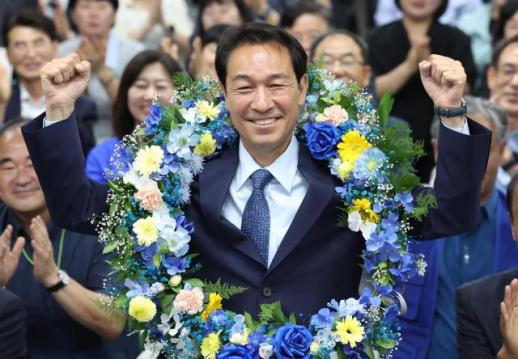 U Sang-ho: Making Gangwon a Hub for AI Data Centers "(ABC Broadcasting's question) Governor, Gangwon has long been a land of nature and tourism. However, in the AI era, data and power are becoming new assets. Are you confident in making Gangwon the capital of South Korea's AI infrastructure?" Gangwon has always stood in the shadows of South Korea's development. During the industrialization era, it lagged behind the metropolitan area and the Yeongnam region, and in the information age, it fell behind Pangyo and Daedeok Special Zone. While it boasts abundant natural beauty and tourism resources, it has failed to create an industrial base strong enough to retain its youth. Despite the establishment of a special autonomous province, Gangwon continues to face the dual crises of population decline and regional extinction. However, U Sang-ho, the newly elected governor of Gangwon, has proposed a different path for the province's development. He has declared his intention to shift from a tourism and SOC-centered strategy to a new industrial map that combines AI data centers, aerospace industry, and clean energy. In particular, attracting the AI data center to Gangneung and developing an aerospace industry cluster in Wonju represent a bold challenge to transform Gangwon's economic structure. The success of U Sang-ho's administration ultimately hinges on one question. Can Gangwon become a land of AI infrastructure beyond its natural beauty? Why did Gangwon choose AI data centers? In the AI era, national competitiveness is not solely determined by semiconductors. The computing infrastructure that powers AI is equally important. Data centers serve as the power plants and factories of the AI era. Just as steel mills and shipyards symbolized national growth during the industrialization era, data centers now fulfill that role. AI requires processing vast amounts of data. Generative AI, like ChatGPT, demands significant power and computing resources each time it operates. Without data centers equipped with thousands of NVIDIA GPUs, the AI industry itself cannot exist. This is why countries like the United States, China, and those in the Middle East are currently competing to secure data centers. U Sang-ho's emphasis on the Gangneung AI data center as a core promise stems from this reality. He aims to attract a massive AI data center to Gangneung to serve as an engine for economic growth in Gangwon. This initiative is not merely about installing servers; it envisions creating a new industrial ecosystem where AI companies, startups, and research institutions converge around the data center. In fact, Gangwon has significant advantages as a location for data centers. It offers ample land and relatively lower land costs compared to the metropolitan area. The East Coast has a robust power infrastructure and substantial potential for renewable energy. Additionally, it does not suffer from the power shortages that plague the metropolitan area, enhancing its competitiveness. Data centers in the AI era are not just buildings; they are industrial platforms that attract businesses, investments, and talent. Securing an AI data center means attracting the entire AI industrial ecosystem. The key is not the data center itself, but what industries can be nurtured based on it. Beyond Tourism: Gangwon as an AI Industry Hub Gangwon's biggest challenge has been the absence of diverse industries. While tourism is important, it has limitations in sustaining the local economy. The tourism sector is seasonal and sensitive to economic fluctuations. Most importantly, it is difficult to create a large number of quality jobs that can retain young people. As a result, Gangwon has long struggled with youth outmigration. After graduating from university, many young people move to Seoul for employment opportunities. Ultimately, only an aging population remains in the region. The essence of Gangwon's population decline issue lies here. U Sang-ho aims to address this problem through industrial development. A prime example is the aerospace industry cluster in Wonju. He has announced plans to foster drone, space, and advanced aviation industries centered in Wonju. By utilizing military-related infrastructure and vacant land, he aims to create a new industrial belt. It is noteworthy that AI and the aerospace industry are not separate sectors. The future of drones will be driven by AI. Autonomous flight is impossible without AI. Satellite data analysis will also rely on AI. In the defense sector, AI-based unmanned systems are becoming a core competitive advantage. Thus, the AI data center in Gangneung and the aerospace industry in Wonju are interconnected rather than isolated ventures. If Gangwon secures an AI data center and develops its aerospace industry, it could transform from a mere tourist destination into a testing ground for future technologies. More importantly, the direction of the industry matters. In the past, Gangwon focused on attracting factories. However, moving forward, it must attract high-value-added industries based on AI and data. This is the path to retaining youth and combating population decline. Gangwon's Future Depends on Energy What is the most crucial resource in the AI era? Many people think of semiconductors. However, what AI companies are truly concerned about is power. AI consumes enormous amounts of electricity. A single data center can consume as much electricity as an entire small city. This is why countries around the world are pursuing AI strategies alongside energy strategies. The United States' push to expand nuclear power is rooted in this necessity. China's massive investments in solar and wind energy share the same rationale. Ultimately, AI competition is a competition for power. In this regard, Gangwon has unexpected strengths. The East Coast is an optimal location for wind power generation. There is also significant potential for solar and hydrogen industries. U Sang-ho has pledged to establish a clean energy belt, positioning Gangwon as a center for South Korea's energy transition. If clean energy and AI data centers converge, Gangwon could create an entirely new growth model. Data centers consume power. Clean energy supplies power. The AI industry utilizes data. The aerospace industry requires AI. If these four elements connect, Gangwon can shift from a tourism-centered economy to a high-tech industrial economy. Ultimately, the core of U Sang-ho's administration is not merely attracting the AI industry. It is about transforming Gangwon's industrial structure. Gangwon's Competitors Are Not Jeju, but the Middle East Many people perceive Gangwon as a tourist city. Thus, they consider Jeju as its primary competitor. However, in the AI era, Gangwon must engage in a completely different competition. To attract AI data centers, it must compete with Texas in the United States. To foster clean energy, it must compete with Saudi Arabia. To grow the aerospace industry, it must compete with Arizona in the United States. In essence, Gangwon's competitors are not other regions in South Korea but global industrial hubs. U Sang-ho's ambition to transform Gangwon from a mere tourist destination into an industrial zone stems from this reality. For a long time, Gangwon has relied on its natural assets. However, nature alone cannot create a future. AI, data, energy, and industry must converge. U Sang-ho has appointed Kim Heon-young, former president of Gangwon National University, as the chair of the transition committee, emphasizing youth employment, industry-academia cooperation, and local talent development as key tasks. This signifies a commitment to creating an ecosystem that connects talent with industry rather than just attracting industries. For Gangwon to succeed in the AI era, attracting a few data centers will not be sufficient. AI companies must gather. Youths must start businesses. Universities must connect with industries. And new jobs must emerge in the region. The next four years of U Sang-ho's administration will ultimately be a time to prove this potential. Will Gangwon remain a land of nature? Or will it transform into the capital of AI infrastructure? StrengthsGangwon has ample land, abundant renewable energy potential, and relatively low land costs. The plans for the Gangneung AI data center, Wonju aerospace industry, and clean energy belt represent a differentiated strategy. In particular, the growth model that combines AI infrastructure and energy could become Gangwon's new competitive edge.WeaknessesThere is a lack of industrial ecosystem and specialized workforce. The concentration of AI companies and startups is low, and there is significant outmigration of talent to the metropolitan area. Critics argue that data centers alone cannot revitalize the entire local economy.OpportunitiesThe growth of the AI industry has led to a surge in demand for data centers. There is potential to build a new growth model that combines clean energy and AI. The aerospace and drone industries also have high potential for growth in Gangwon's future.ThreatsIf the plans to attract AI data centers do not proceed as intended, the entire administration could be adversely affected. Local governments across the country are entering the competition to attract data centers, and issues related to power grids and environmental regulations are also variables. Additionally, population decline and regional extinction remain the most significant threats to Gangwon.* This article has been translated by AI. 2026-06-10 08:42:00
 -
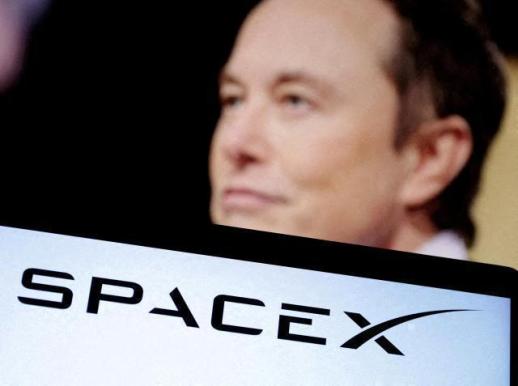 SpaceX Sees Record Demand Ahead of IPO with Orders Exceeding $250 Billion SpaceX has received over $250 billion in orders for its initial public offering (IPO), significantly surpassing its target of $75 billion by 3.5 to 4 times. According to Reuters on June 9, demand for SpaceX's IPO, led by Elon Musk, has exceeded $250 billion. Institutional investors, particularly those with a long-term holding strategy, are increasing their orders ahead of what is expected to be the largest IPO in history. SpaceX aims for a valuation of approximately $1.75 trillion in this IPO. The final offering price will be determined on June 11, with trading on the Nasdaq set to begin on June 12. CEO Elon Musk reportedly participated briefly in a video conference with some potential investors. Gwynne Shotwell, president of SpaceX, and Brett Johnson, chief financial officer, are scheduled to meet with around 300 institutional investors at an event at Morgan Stanley's headquarters in Manhattan on the same day. However, the current demand figures are not final subscription results. They represent the amount investors have expressed a willingness to invest. The actual allocation of shares will be determined after the offering price is set. Major institutional investors may place orders at the last minute or adjust existing orders, which could alter the final demand. SpaceX did not immediately respond to a request for comment from Reuters.* This article has been translated by AI. 2026-06-10 08:42:00
 -
 Samsung Electronics Becomes Largest Shareholder in Element Biosciences Samsung Electronics has secured its position as the largest shareholder in Element Biosciences, a U.S. genetic analysis equipment company. This move is part of the company's strategy to focus on artificial intelligence (AI) and digital health as key drivers for future growth in next-generation precision medicine technologies.On June 10, Samsung announced its participation in Element's Series E funding round, investing an additional $175 million. This investment, combined with last year's Series D funding, has made Samsung the largest shareholder in Element, although no changes in management control are expected.The investment primarily targets genomic analysis and multiomics technology. Multiomics integrates various biological data, including DNA, RNA, and proteins, to identify disease causes and aid in drug development, positioning it as a next-generation precision medicine technology.Founded in 2017 in San Diego, Element boasts DNA sequencing technology with an accuracy level of 99.99%. The company has emerged as a strong player in the next-generation sequencing market by reducing costs while enhancing accuracy.Element is developing multiomics technology that integrates various biological data into a single platform, moving beyond traditional methods that analyze DNA, RNA, and proteins separately. In 2022, Element launched its DNA sequencing device, AVITI, followed by AVITI24, which analyzes cellular changes over time. Future products include VITARI, which aims to significantly increase analysis capacity while reducing costs, and AVITI Dx, designed for clinical diagnostics.Samsung plans to combine its expertise in AI, medical devices, and digital health with Element's genomic analysis technology to target the next-generation genetic diagnostics and personalized healthcare markets. There is potential to expand into personalized healthcare services by integrating DNA sequencing data with health data collected from wearable devices.Molly He, CEO of Element, stated, "Samsung's increased investment in Element demonstrates deep trust in our vision, technology, and team. Through this investment, we will continue to promote scientific discovery and deliver innovative technologies that enhance human health."Lee Tae-moon, President of Samsung Electronics, emphasized, "The synergy created by combining Samsung's expertise in AI, medical devices, and digital health with Element's innovative genomic analysis technology will pave the way for the future of personalized medicine. Samsung will continue to invest across a wide range of areas, from precision medical devices to digital health, with the goal of improving people's health." 2026-06-10 08:39:00