

Journalist

RYU SO HYUN
-
 Taiwan Dominates AI Chip Ecosystem as South Korea Seeks Collaboration The competition between South Korea and Taiwan for dominance in the global artificial intelligence (AI) ecosystem is intensifying. Taiwan boasts a strong value chain in foundry, packaging, and fabless sectors, bolstered by its early partnership with NVIDIA. Meanwhile, South Korea aims to leverage its leading memory capabilities and top-tier physical AI expertise to emerge as a key player in the ecosystem. During the keynote address at the GTC 2026 event in Taipei on June 1, NVIDIA CEO Jensen Huang unveiled strategies for next-generation AI semiconductors and AI chips for PCs. Following this event, Computex 2026 will further establish Taiwan as a central hub for global AI business. Taiwan's competitive edge lies in its dense supply chain. NVIDIA's core AI accelerators are produced through TSMC's advanced processes and packaging. Companies like Foxconn provide AI servers and power infrastructure, while fabless firms such as MediaTek and Alchip handle custom semiconductor designs for major tech companies. NVIDIA's plans to build a large new headquarters and research center in Taiwan are aimed at maintaining this supply chain density in the long term. While Samsung Electronics and SK Hynix dominate the high-bandwidth memory (HBM) and next-generation DRAM markets, they appear more as key component suppliers compared to Taiwan's integrated value chain that encompasses chip design, manufacturing, packaging, server assembly, and power and cooling components. However, there are opportunities for South Korea. The next wave of AI competition is shifting towards the integration of semiconductors, robotics, automotive technology, factory automation, and data center infrastructure. Notably, the physical AI sector, emphasized by NVIDIA, is seeing renewed interest in the capabilities of South Korean manufacturing giants. If sectors like automotive, robotics, shipbuilding, batteries, and smart factories can integrate with NVIDIA's platform, South Korea could establish a distinct AI ecosystem compared to Taiwan. The challenge will be to expand collaboration beyond individual companies to a national strategy that integrates semiconductors, manufacturing, software, and infrastructure. After his visit to Taiwan, Jensen Huang is scheduled to travel to South Korea, where he will meet with prominent business leaders, including Naver founder Lee Hae-jin, LG Group Chairman Koo Kwang-mo, Hyundai Motor Group Chairman Chung Eui-sun, and Doosan Group Chairman Park Jung-won, starting June 5. There are also discussions about a potential visit to Naver's 1784 headquarters on June 8. There are calls for Huang's visit to go beyond ceremonial meetings. It is essential for South Korean conglomerates to find various opportunities to integrate into the global AI ecosystem led by NVIDIA. Kim Yong-seok, a distinguished professor at Gachon University’s Semiconductor College, stated, "Jensen Huang's visit aims to connect NVIDIA's chips and software solutions with South Korea's manufacturing sites and products. The key challenge will be to closely integrate South Korea's strengths in memory with NVIDIA's physical AI solutions."* This article has been translated by AI. 2026-06-01 18:03:00
 -
 Taipei Emerges as Global AI Industry Hub with Major Players Gathering Taipei has emerged as a gathering place for key players in the global artificial intelligence (AI) industry. Events such as 'GTC Taipei 2026' and 'Computex 2026' are drawing major figures from global AI companies, including NVIDIA, AMD, TSMC, Foxconn, Qualcomm, and Arm, to the city. On June 1, Jensen Huang, CEO of NVIDIA, delivered a keynote speech at GTC 2026. This event serves as a precursor to Computex, which opens on June 2 and reveals NVIDIA's technology strategy. Once primarily a PC and component exhibition, Computex has evolved into one of Asia's largest showcases for AI industry trends, coinciding with GTC Taipei, where NVIDIA's next-generation business vision will be unveiled. The significance of this event stems from the strong cohesion within Taiwan's semiconductor ecosystem. TSMC is a key production partner for NVIDIA's AI accelerators, while Foxconn is increasingly important in AI server manufacturing. Companies like MediaTek and Delta Electronics are also expanding their connections with NVIDIA's ecosystem in areas such as AI PCs, servers, power management, and custom semiconductors. Jensen Huang, who has Taiwanese roots, along with Lisa Su, CEO of AMD and a distant relative, are among the notable attendees expected during Computex. Other industry leaders, including Cristiano Amon, CEO of Qualcomm, Pat Gelsinger, CEO of Intel, Matt Murphy, CEO of Marvell, and Rene Haas, CEO of Arm, are also set to visit Taipei, marking a significant convergence of AI semiconductor, server, communication, and design asset companies. Locally, executives from TSMC and Foxconn are anticipated to meet with CEO Jensen Huang. While NVIDIA holds a strong position in AI chip design and software ecosystems, Taiwan possesses a critical foundation for production, packaging, and server manufacturing, aligning the interests of both parties. Korean companies are also making their presence felt at the event. Choi Tae-won, chairman of SK Group, is scheduled to hold a press conference on June 2, while Song Jae-hyuk, Chief Technology Officer and President of Samsung Electronics, Park Min-woo, President of Hyundai Motor Group, and Kim Yoo-won, CEO of Naver Cloud, are expected to showcase their companies' technological competitiveness.* This article has been translated by AI. 2026-06-01 18:03:00
 -
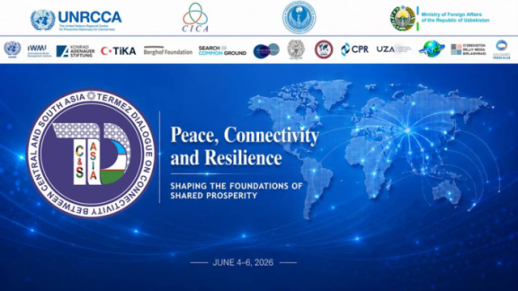 Uzbekistan formalizes Termez Dialogue to anchor South Asian trade integration SEOUL, June 01 (AJP) - Uzbekistan is establishing the Termez Dialogue as a permanent interregional forum to anchor its expanding economic integration with South Asian consumer markets. The institutionalization marks a structural shift in Eurasian supply chains, transforming neighboring Afghanistan from a source of geopolitical instability into a primary commercial transit bridge. The policy evolution moves the region away from isolated cross-border trade toward a comprehensive model of economic interdependence. This integration is backed by a rapid surge in bilateral commerce, infrastructure development, and targeted regulatory easing along the southern border. Overall trade turnover between Uzbekistan and South Asian nations expanded 3.2 times over a nine-year period from 2016 to 2025, reaching 3.5 billion dollars. According to data from Ziyoda Rizaeva at the Center for Economic Research and Reforms, Uzbek exports to the region tripled to two billion dollars, while imports grew 4.1 times to 1.5 billion dollars. Food products formed the largest component of Uzbek exports to the region, totaling 976.4 million dollars or 48.1 percent of the total. Mineral oils followed at 368 million dollars, transport services accounted for 277.8 million dollars, industrial goods reached 140.5 million dollars, and chemical products stood at 134.9 million dollars. Chemical products led the import categories from South Asian countries at 477.6 million dollars, representing 32.2 percent of inbound trade. The remaining imports consisted of 391.4 million dollars in food products, 309.1 million dollars in machinery and equipment, 99 million dollars in miscellaneous products, and 67 million dollars in finished goods. Afghanistan secured the largest share of this regional trade in 2025, with total turnover reaching 1.7 billion dollars, or 47.7 percent of the total. Uzbekistan maintained a highly favorable trade balance with Kabul, sending 712.7 million dollars in food exports, which accounted for 75.5 percent of all Uzbek food shipments to South Asia. India ranked as the second-largest trading partner with bilateral trade reaching 1.3 billion dollars in 2025, representing 37.5 percent of the regional market. Pakistan occupied the third position at 445.9 million dollars, with Uzbekistan exporting 260.2 million dollars in food products and importing 45.3 million dollars in chemical goods from Islamabad. Capital flows between the blocks have risen alongside physical trade, yielding 1.3 billion dollars in foreign direct investment and loans from South Asia over the nine-year period. Nearly 40 percent of that total arrived in 2025 alone, with India contributing 586.7 million dollars and Afghanistan providing 519.2 million dollars. The southern border city of Termez serves as the physical and logistical anchor for this entire integration strategy. The Termez Cargo Center international logistics hub has operated since 2016 at the intersection of Afghanistan, Tajikistan, and Turkmenistan, acting as a major corridor for United Nations humanitarian assistance. Commercial capacity scaled up significantly with the launch of the Airitom International Trade Center in 2024 near the Afghan border. The 36-hectare complex features a dedicated free trade zone with simplified business conditions, a visa-free entry regime, and permission for unrestricted transactions in foreign currencies. The Airitom facility currently hosts more than 3,000 individual retail outlets and provides approximately 5,500 local jobs. Since its opening, the trading center has attracted more than 440,000 visitors while generating 1.2 billion dollars in annual export volume. 2026-06-01 18:00:07
 -
 Tourism Elevated to National Strategic Industry Under Lee Jae-myung Administration As the Lee Jae-myung administration marks its first year, South Korea's tourism policy is undergoing a significant transformation. Once viewed as a sub-sector of the cultural industry or merely a leisure activity, tourism has been elevated to a key "national strategic industry" that is expected to drive domestic economic growth and regional development. The government is intensifying efforts to achieve its goal of attracting 30 million foreign tourists by 2030 through the establishment of the "5 Mega Tourism Zones and 3 Special Self-Governing Provinces" and the "Tourism Saemaul Movement." Current indicators for inbound tourism show a clear upward trend. According to the Ministry of Culture, Sports and Tourism, the number of visitors in the second half of 2025 is projected to increase by 17% compared to the second half of 2024, with a 22% rise in the first half of this year compared to the same period last year, setting new records for inbound tourism. In fact, the number of foreign visitors in the first quarter of this year surpassed 5 million, marking a 23% increase from the previous year. Additionally, arrivals at regional airports have surged by 50%, providing numerical evidence of revitalized local tourism. Foreign credit card spending in South Korea has also risen, injecting vitality into the domestic economy. Choi Hwi-young, Minister of Culture, Sports and Tourism, reaffirmed the commitment to achieving the 30 million foreign tourist target during a press conference on May 28, identifying "regional tourism" as a core challenge. Over 80% of inbound tourists are still concentrated in the capital region, leading to issues of high costs and inconvenience for travelers due to overwhelming demand in limited areas. Minister Choi emphasized, "While there is accommodation capacity in the provinces, there is insufficient product development and connectivity in transportation and content. Accelerating regional tourism and effectively linking content, transportation, and lodging is essential for establishing a stable upward trend." To address this, the Ministry is promoting the "5 Mega Tourism Zones and 3 Special Self-Governing Provinces" initiative, which aims to restructure the tourism landscape from a capital-centric model to five super-regional zones and three special autonomous provinces. This large-scale regional tourism redesign project focuses on breaking down administrative boundaries based on actual tourist journeys, moving away from the previous infrastructure development driven by local government leaders and standardized regional festivals. The initiative aims to package regional airports, accommodations, and transportation networks around each zone, while uncovering unique regional characteristics to encourage longer stays. Notably, President Lee has directed the Ministry of Land, Infrastructure and Transport to open international flight routes to foreign airlines, moving beyond the previous focus on protecting national carriers, which is expected to further boost the activation of regional airports. A comprehensive reform to address persistent issues in domestic tourism has also begun. On May 20, the Ministry held a meeting with the Korea Tourism Organization and 13 regional tourism organizations to discuss revitalizing local tourism. This initiative is part of the "Tourism Saemaul Movement," which President Lee emphasized during a cabinet meeting on April 14, calling for maximizing the impact of the tourism industry on local economic revitalization, similar to Japan's regional revitalization system. During that meeting, President Lee urged for an innovative movement involving both small business owners and administrative agencies to improve the quality of life and address major obstacles to domestic tourism, such as inflated prices, disrespect towards foreigners, and unfriendliness. In response, the Ministry and national tourism organizations are launching a campaign to create a joint slogan and expand cooperation from local governments to administrative units at the town and village levels. They also plan to establish a community-driven public-private partnership model through initiatives like tourism cooperatives and village enterprises, aiming to institutionalize this as a regular local innovation movement. Experts suggest that for the government's policy drive to yield tangible results, tourism must be viewed as a solid regional industry ecosystem. Yoon Hye-jin, a professor of tourism development management at Kyonggi University, stated in a recent interview, "Future regional tourism should evolve beyond merely attracting visitors for photos to creating a flow of capital that fosters a positive economic cycle. When local residents profit from the tourism industry, quality jobs are created, which can lead to an increase in the local commuting population. This is the most desirable positive cycle." She added, "To ensure tourism becomes a definitive growth engine for regions, we need to cultivate skilled professionals with planning capabilities in the tourism industry. Additionally, a clear career roadmap must be established to help these professionals settle in their regions. If we continue to rely solely on short-term project budgets or focus on seasonal businesses, we cannot break the cycle of talent draining to the capital region." Overcoming these structural limitations and sustaining large-scale policies like the 5 Mega Tourism Zones and the Tourism Saemaul Movement will ultimately require a robust administrative command and a supportive legal framework. The government elevated the "National Tourism Strategy Meeting," a control tower for tourism policy, to be chaired by the president in April to secure strong momentum for tourism initiatives that had previously been fragmented across various ministries. With the establishment of this presidential control tower, discussions on legislative reforms and regulatory innovations that had stalled due to inter-ministerial disagreements have gained momentum. The government and the National Assembly have begun discussions to comprehensively revise tourism-related laws, such as the Tourism Basic Act and the Tourism Promotion Act, which have not seen significant changes since their enactment in the 1970s. This effort aims to keep pace with rapidly changing global trends and digital environments while ensuring that domestic small and medium-sized tourism ventures have legal protections to compete effectively. Key policy initiatives include bold regulatory exceptions for small-scale and decentralized development and a fast track for new service regulations. In addition to macro-level improvements, addressing persistent local challenges is also a pressing task. Limitations in accommodation infrastructure and exploitative practices by some operators during large-scale mega-events have been identified as major factors undermining the credibility of this national strategic industry. Following controversies over accommodation issues during the BTS concert in Busan, Minister Choi acknowledged the fundamental problem of insufficient accommodation infrastructure to host foreign tourists, proposing a two-track strategy that includes long-term infrastructure expansion and utilizing temple stays and corporate training facilities as "buffer infrastructure" to manage short-term demand. The Ministry has also declared a zero-tolerance policy against unreasonable pricing practices, such as forced cancellations followed by price hikes, labeling them as "disregarding consumers." The Ministry, local governments, and tourism and accommodation associations will work closely to enforce this policy rigorously. 2026-06-01 18:00:00
 -
 Hanwha Aerospace CEO Apologizes After Explosion Kills Five Workers An explosion at Hanwha Aerospace's Daejeon facility on June 1 resulted in the deaths of five workers. CEO Son Jae-il expressed his condolences to the victims' families and the public during a press briefing, promising to investigate the cause of the accident and prevent future occurrences. During two joint briefings held that afternoon, Son stated, "We failed to protect the lives of our workers in a place that should be safe," and added, "As the representative, I feel a heavy sense of responsibility," bowing his head in remorse. The incident reportedly occurred in a cleaning area for rocket propellants at the Daejeon facility. Among the deceased, two were contract workers in their 20s, while the other three were full-time employees aged 30 and 50. It remains unclear if they were working in the same area at the time of the explosion. Gajae Woong, the head of the Daejeon facility, commented at the fire scene, "We believed the process was not highly dangerous, so we are surprised by this unexpected accident." He further explained, "Since water is used in the cleaning process, we are investigating the potential for a chemical reaction." The company stated it is fully committed to managing the aftermath of the incident and supporting the victims' families. Gajae Woong noted, "We are in continuous contact with the families to discuss support measures." The Hanwha Aerospace labor union has called for a thorough investigation into the incident. Heo Rok, the union's chairman, expressed his sorrow, stating, "Despite previous similar accidents in 2018 and 2019 that claimed many workers' lives, another tragedy has occurred before we could even forget the last one." He further asserted, "The recurrence of similar accidents in the same location is something that could have been foreseen. This incident is a result of neglecting and tolerating unsafe conditions." * This article has been translated by AI. 2026-06-01 17:57:00
 -
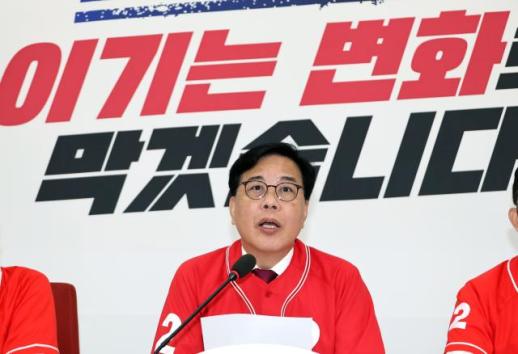 Song Eon-seok: President Lee Should Focus on Citizens' Lives, Not Stock Indices Song Eon-seok, the floor leader of the People Power Party, urged President Lee Jae-myung on June 1 to focus on the lives of citizens rather than engaging in social media disputes over stock market reports. In a post on Facebook, Song criticized President Lee for responding to media reports that highlighted concerns about the concentration of the semiconductor industry and the struggles of other sectors. Earlier, President Lee shared a report from a securities firm on X (formerly Twitter), stating that excluding semiconductor stocks, the KOSPI index is essentially at the 4,100 to 4,200 range. He argued, "No one says Son Heung-min is an ordinary person if you exclude his soccer skills," and questioned why the overall stock index should be calculated without considering semiconductors, a key industry. Song described the president's behavior as "truly leisurely" in light of recent incidents, including an explosion at a defense facility that resulted in casualties. He acknowledged that while semiconductors are crucial, the weakening competitiveness of other industries and market polarization are concerning issues. "Above all, the president should focus on the lives of the people, not the stock index numbers," Song said, emphasizing that citizens are currently suffering from high inflation, high exchange rates, and high interest rates. He criticized the government for ignoring the public's pain, referring to it as the "cost of success." He added that the anticipated tax increases, rising rents, and interest rates following the local elections are contributing to growing public anxiety. "People are more worried about next month’s tax bills, lease expirations, and loan repayments than stock market gains," he noted. Song expressed concern that the recent surge in credit loans, which increased by over 2.6 trillion won in just one month, and the largest rise in overdraft balances in five years indicate a troubling trend of increased borrowing to invest in the stock market. He warned that if stock prices fluctuate, it could pose significant economic risks to ordinary citizens and households. "President Lee should not boast about rising stock indices as a political achievement but should recognize the warning signs in the economy. Priorities should be on stabilizing prices, reducing tax burdens, alleviating rent pressures, stabilizing real estate, lowering interest burdens, and ensuring stable employment," he emphasized.* This article has been translated by AI. 2026-06-01 17:48:00
 -
 National cemeteries see surge of visitors as South Korea commemorates Korean War SEOUL, June 1 (AJP) - Visitors have been flocking to national cemeteries across the country to pay tribute to fallen soldiers and war heroes, as June is observed as the month commemorating the Korean War (1950~1953). Many visitors paid tribute with flowers and moments of silence at the Seoul National Cemetery in southern Seoul, where soldiers and others who died for the nation are laid to rest. The Ministry of Patriots and Veterans Affairs plans to hold various events, programs, and memorial services for veterans and their families across the country as part of efforts to raise awareness of the sacrifices and contributions of war veterans, independence fighters, and national merit recipients. 2026-06-01 17:43:44
 -
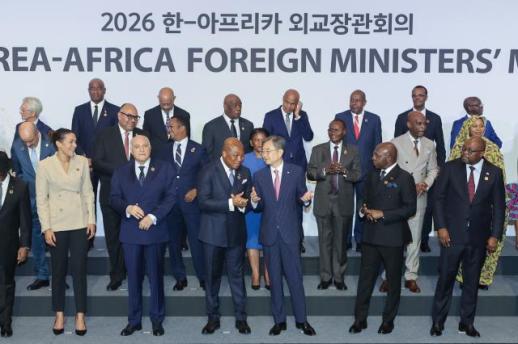 Korea and Africa Strengthen Ties at Foreign Ministers' Meeting "There is an East African proverb that says, 'When spider webs unite, they can tie up a lion.'" Foreign Minister Park Jin made this remark during his opening speech at the Korea-Africa Foreign Ministers' Meeting, which commenced on June 1 at the Lotte Hotel in Jung-gu, Seoul. He emphasized that by combining experiences and strengths, Korea and Africa can find better solutions to the challenges they face today and turn them into opportunities. Minister Park also announced that based on the outcomes of this meeting, discussions will begin for the 2029 Korea-Africa Summit. The inaugural Korea-Africa Summit was held two years ago in June 2024. The meeting was attended by representatives from 50 countries, including African foreign ministers, as well as heads of four regional international organizations: the African Union (AU), the African Development Bank (AfDB), the African Continental Free Trade Area (AfCFTA), and the Africa Centers for Disease Control and Prevention (CDC). This is the first time the South Korean government has invited all 54 African countries and four regional international organizations, with 50 countries and four organizations gathering in Seoul. Minister Park noted, "We have gathered at a crucial time when the global order is rapidly changing," adding that the world is facing complex challenges in various areas such as supply chains, energy, and food security, which continue to heighten uncertainty in the global economy. He continued, "In this transitional period, individual countries face limitations in their responses, and the impact of crises varies by country, but the ripple effects are deeply interconnected. In this context, close cooperation between Korea and Africa is more important than ever." He highlighted President Lee Jae-myung's sincere commitment to cooperation with Africa, referencing the president's first face-to-face meeting with South African President Cyril Ramaphosa at the G7 summit in Canada shortly after taking office last June, as well as his visits to Egypt and South Africa in his first year in office. On June 2, President Lee is scheduled to meet with about 20 ministerial-level officials from African countries and international organizations attending the Korea-Africa Foreign Ministers' Meeting. Minister Park co-chaired the meeting with Ghana's Foreign Minister Samuel Okudzeto Ablakwa, who, in his welcoming remarks, described the meeting as a reflection of the growing strength and strategic importance of the Africa-Korea relationship, as well as a demonstration of their shared commitment to building partnerships. The Foreign Ministers' Meeting was themed "Korea-Africa Partnership for Joint Response in a Global Transition Period." Following the opening ceremony, the meeting was divided into two sessions. The first session focused on "Strengthening Economic Cooperation: Promoting Shared Prosperity and Sustainable Growth," reviewing the current status of cooperation in trade, investment, infrastructure, science and technology, education, food security, and supply chains, and discussing ways to enhance economic cooperation between the two sides. The second session addressed "Joint Response to Global Challenges: Korea-Africa Solidarity," exploring ways to expand practical cooperation in areas such as development cooperation, climate change, health, peace and security, and human exchanges. Minister Park held individual bilateral meetings with all attending foreign ministers to discuss various issues, including the entry of Korean companies, responses to supply chain crises, and the protection of overseas citizens, while seeking ways to enhance bilateral relations. On June 2, a Korea-Africa Business Forum will be held at the Lotte Hotel in Seoul as a side event of the Foreign Ministers' Meeting, with over 300 participants, including business leaders, government officials, and diplomats from Korea and Africa. Following Minister Park's opening remarks, Sung Kim, President of Hyundai Motor's Strategy Planning Division, and Wamkele Mene, Secretary-General of AfCFTA, will each deliver keynote speeches. * This article has been translated by AI. 2026-06-01 17:42:00
 -
 Japanese Automakers Standardize Quality Criteria for Parts Amid Raw Material Shortages Japanese automakers, including Toyota, Honda, and Nissan, have agreed to standardize the criteria for determining defective automotive parts. Minor scratches or blemishes that do not affect functionality and are not easily noticeable when installed in vehicles will no longer be classified as defects, allowing for their actual use in production. This decision comes as the worsening situation in the Middle East has raised concerns over the procurement of naphtha, a key raw material for plastics and interior components, prompting a relaxation of Japan's traditionally strict quality standards to reduce material waste. The Nihon Keizai Shimbun reported on June 1 that eight Japanese passenger car manufacturers, along with parts suppliers, are working together to establish unified standards for defective parts. The Japan Automobile Manufacturers Association, which includes 14 major automakers, and the Japan Automobile Parts Industry Association, comprising around 450 parts suppliers, are collaborating on this initiative. Both parties plan to gradually implement the new standards for each part by the end of 2026. The core of the new standards is that minor defects that do not impact performance will not be excessively classified as defects. Previously, parts suppliers often discarded components with small black spots or scratches, even if they posed no functional issues. Under the new guidelines, as long as the parts meet national standards and do not have significant functional or aesthetic problems, automakers will accept them. This aims to reduce overly stringent defect classifications and increase the yield of parts. For instance, about 60% of defect classifications for plastic connectors used in automotive electronics are due to the presence of black dots. By standardizing the criteria to exclude these as defects, it is estimated that Japan could reduce waste by 10,000 discarded parts each month. This change is also expected to shorten inspection times. Similarly, headlight components with small bubbles will be deemed acceptable as long as they do not affect functionality or appearance. The adjustment of quality standards by the Japanese automotive industry is largely driven by concerns over raw material supply from the Middle East. As tensions in the region have made naphtha procurement more challenging, fears of rising prices and supply disruptions for raw materials used in automotive parts have increased. The industry is now under pressure to lower waste rates and enhance the efficiency of raw material usage to ensure stable production and procurement of parts. Labor shortages and rising raw material prices are also putting pressure on parts manufacturers. According to Japan's Ministry of Health, Labour and Welfare, the average monthly wage for regular workers in manufacturing has risen by about 20% over the past decade to 370,000 yen. Competition from emerging overseas companies is intensifying, with Chinese electric vehicle (EV) manufacturers leveraging rapid development and cost competitiveness. Chinese parts suppliers are securing raw materials domestically and hiring skilled technicians from overseas manufacturers to produce high-quality, cost-effective components. Japanese parts manufacturers must enhance production efficiency while also adapting to trends in sustainability and electrification. Toyota has established a dedicated organization to begin evaluating parts according to the unified standards in collaboration with parts suppliers. Regular joint evaluation meetings are being held with participating automakers, including Toyota, Honda, and Nissan. Hayashi Telenph, a supplier of interior components to the Toyota Group, has set up an exhibition space within its headquarters to showcase related activities and promote the new standards among its partner small and medium-sized enterprises. The Japan Automobile Manufacturers Association and the Parts Industry Association aim to extend these unified standards to small and micro parts manufacturers, thereby enhancing production efficiency and competitiveness across the entire Japanese automotive industry.* This article has been translated by AI. 2026-06-01 17:42:00
 -
 How shaved ice tells different stories across East Asia SEOUL, June 1 (AJP) - Shaved ice is a summer staple across Asia, but the same dessert has taken sharply different paths in South Korea, Japan and China. In South Korea, bingsu has become a luxury item, a social media prop and a marker of changing consumer habits. This summer, Four Seasons Hotel Seoul is selling its Jeju apple mango bingsu for 149,000 won, the highest price among major Seoul hotels. The Shilla Seoul charges 130,000 won for its signature apple mango bingsu at its lounge bar The Library, up 20,000 won from last year. At the other end of the market, budget cafe chain Ediya sells cup bingsu for around 4,500 won. The gap between the cheapest and most expensive shaved ice desserts in Seoul now stands at roughly 37 times. The price gap is a Korean story, but it also opens a wider question about how East Asia eats the same summer dessert in different ways. In Seoul, shaved ice can signal a hotel outing and a seasonal splurge. In Japan, kakigori still evokes summer festivals and childhood memory. In China, baobing and xuehuabing have become part of a fast-moving dessert culture shaped by street shops, toppings and social media. When the Shilla Seoul first introduced its apple mango bingsu in 2011, it cost 27,000 won. Fifteen years later, the price has increased nearly fivefold. Despite weak consumer sentiment and a shaky economy, demand for luxury hotel bingsu has remained strong, buoyed by the "small luxury" trend among consumers in their 20s and 30s. For Kim Hye-won, a 27-year-old marketing professional living in Seoul, the price hike makes sense — up to a point. She has tried The Shilla's apple mango bingsu before and plans to go back this year. "Bingsu used to be something you made at home — shaving ice, freezing milk and throwing in whatever you had in the fridge," she said. "Now it has become premium, with each place trying to differentiate itself. Even a dessert that once felt ordinary has turned into something quite luxurious." But she draws the line well below the market's ceiling. Splitting the bill with friends, she said, makes a 130,000-won bingsu at The Shilla easier to justify as a shared experience. "Going to a bar and ordering a few cocktails each can easily cost around 100,000 won," she said. "This feels more wholesome, tastier, and you get the feeling of being somewhere like The Shilla." Prices approaching 150,000 won, however, are another matter. "I haven't tried it, so I can't say for sure, but I find myself wondering whether it is really worth that much for a dessert made from milk and water," she said. Not everyone is willing to cross even that lower threshold. Choi Jin-hyeok, a 31-year-old private tutor in Seoul, said he is aware of the hotel bingsu trend — his social media feeds fill up with photos of elaborate bowls every summer — but has no intention of spending that much. "There is a certain price point that feels right to me," he said. "At Sulbing, around 10,000 won gets you something close to the bingsu we used to eat at home with our parents. You can get fruit toppings and all kinds of extras for 20,000 or 30,000 won. Paying five times that for something that is, at its core, a frozen dessert to cool you down — that is just not something I would do voluntarily." The contrast between the two consumers reflects a broader split in the South Korean market. Hotels have responded by competing on ingredients, presentation and scarcity. Four Seasons Seoul's flagship bingsu features more than two whole Jeju apple mangoes piled on shaved organic milk ice, topped with a hollow mango sphere that releases mango-elderflower sauce when broken open. According to industry sources, about 85 percent of hotel bingsu customers are not hotel guests but visitors who make reservations specifically for the dessert. In South Korea, bingsu has moved far beyond its older image as a simple summer snack. People are not only buying shaved ice, but also the hotel lounge, the photo, the shared outing and the sense of participating in a seasonal luxury trend. Japan's shaved ice culture follows a different logic. Kakigori dates back to the Heian period, when shaved ice was a luxury enjoyed by the aristocracy. Ice was a precious commodity, stored in insulated facilities and served with natural sweeteners. As ice production and distribution improved, the dessert gradually became more widely available, turning what had once been an elite indulgence into a popular summer treat. That history still shapes modern kakigori. While high-end kakigori shops have emerged in cities such as Tokyo, the dessert remains strongly associated with summer festivals, neighborhood stalls and seasonal rituals. At matsuri, kakigori is sold alongside yakitori, yakisoba and other street foods — typically inexpensive, colorful and tied to the atmosphere of the season. For many Japanese consumers, the value of kakigori lies less in luxury than in timing and memory: it is something eaten because summer has arrived. A dessert that began as an aristocratic luxury has, over centuries, become part of everyday seasonal culture. Korea's bingsu has spent the past decade moving in the opposite direction, with part of the market turning an everyday dessert into a premium experience. China's shaved ice culture connects older traditions with the speed and visual intensity of today's social media food culture. Baobing, literally "shaved ice" in Mandarin, has long referred to a simple dessert made by shaving ice and topping it with syrup, beans, fruit, jelly or condensed milk. Some food references trace Chinese shaved ice desserts back more than 1,000 years, though modern baobing is more commonly understood as an everyday summer refreshment than an elite delicacy. Its appeal has traditionally rested on practicality and abundance: ice as a cooling base, topped with whatever was local, seasonal or inexpensive. In recent years, traditional baobing has been joined by xuehuabing, or snow ice, in which frozen milk or fruit mixtures are shaved into thin, ribbon-like layers and finished with colorful toppings such as mango, taro balls, mochi and flavored sauces. Social media platforms, particularly Douyin and Xiaohongshu, have helped drive the trend, with visually striking bowls spreading quickly online and encouraging dessert shops to compete through color, texture and topping combinations. The differences are not just about toppings or texture. They reflect the kind of summer each market has learned to sell. South Korea has pushed shaved ice upward into the realm of premium experience. Japan has kept it anchored to seasonal ritual. China has turned it into an accessible visual dessert built for circulation. The same ice, in other words, has become a different kind of summer story in each country. 2026-06-01 17:39:13