
Journalist

Seán Canney
-
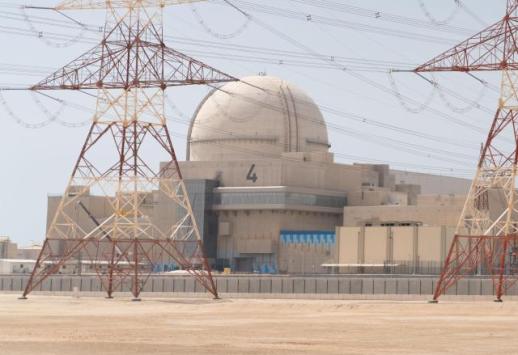 AI Fuels Nuclear Renaissance: Opportunities for K-Nuclear Exports As global electricity demand surges due to the rise of artificial intelligence (AI), nuclear energy is re-emerging as a key power source. With countries worldwide expanding their nuclear capabilities, South Korea, which has experience operating the UAE's Barakah Nuclear Power Plant and possesses APR1400 reactor technology, is seeing new export opportunities arise.According to the International Energy Agency (IEA), global electricity demand is projected to increase by about 40% by 2035 compared to 2024 levels. If the transition to carbon neutrality accelerates, this increase could exceed 50%. The demand surge is attributed to the expansion of AI, data centers, the semiconductor industry, and electric vehicles.Domestically, the situation mirrors this trend. The South Korean government's preliminary forecast for electricity demand in 2040 estimates consumption at 657.6 TWh under a baseline scenario and 694.1 TWh under an upper scenario. This represents an increase of up to 11.1% compared to the previous forecast of 624.5 TWh for 2038.The growth in electricity demand is steepening due to the expansion of AI data centers and advanced manufacturing. Under the upper scenario, maximum electricity demand in 2040 is expected to reach 138.2 GW, a potential increase of up to 37% compared to last year's supply capacity of 100.9 GW.The analysis indicates that electricity demand has surged significantly during the electrification of data centers and industrial sectors. Data center electricity demand is projected to rise to 42.1 TWh by 2040, nearly five times the 8.2 TWh expected in 2025 and significantly higher than the previous 2038 forecast of 30 TWh.Electricity demand from the industrial and transportation sectors is also expected to spike to a maximum of 119.4 TWh by 2040, driven by increased electric arc furnace production in the steel industry, the transition to hydrogen-based steelmaking, and the expansion of electric vehicle adoption.As electricity demand grows faster than anticipated due to the electrification of data centers and industries, securing stable power sources has become a common challenge worldwide.The IEA forecasts that the combined share of renewable energy and nuclear power in global electricity generation will exceed 50% for the first time in 2030. This indicates a shift in energy strategies among countries, balancing the expansion of renewable energy with the stability provided by nuclear power.In the United States, major tech companies are increasing investments in nuclear power to secure stable, carbon-free energy. Companies like Google, Amazon, and Microsoft are exploring investments in small modular reactors (SMRs) and power purchase agreements (PPAs) based on nuclear energy. The U.S. government is also accelerating support for the revitalization of its nuclear industry.In Europe, there is a noticeable return to nuclear energy. Even within the European Union, which has maintained an anti-nuclear stance, concerns about energy security and stable electricity supply are prompting a reevaluation of nuclear power. Poland's new nuclear project is seen as a benchmark for the future restoration of Europe's nuclear ecosystem.This renewed focus on the competitiveness of South Korea's nuclear technology is noteworthy. South Korea has established its competitiveness in large nuclear power projects based on its experience in constructing and operating the Barakah Nuclear Power Plant and its APR1400 technology. The recent success in securing a new nuclear project in the Czech Republic has further fueled expectations for additional overseas contracts.Industry insiders believe that the increasing electricity demand in the AI era could lead to a restructuring of the global nuclear market, opening new export opportunities for South Korea's nuclear industry.One industry representative stated, "As competition for electricity intensifies in the AI era, the importance of securing stable power sources is growing. A favorable market environment is being created for K-nuclear, which has the operational experience of the Barakah plant and the APR1400 technology."* This article has been translated by AI. 2026-05-14 16:40:58
 -
 Andy Weir's 'Project Hail Mary' Reclaims Top Spot on Bestseller List Andy Weir's science fiction novel Project Hail Mary continues to capture readers' attention, bolstered by its recent film adaptation. It has reclaimed the number one spot on the bestseller list at major bookstores like Kyobo Bookstore and Yes24. As of May 14, Yes24 reported that Project Hail Mary returned to the top during the second week of May, maintaining its long-term popularity. After five consecutive weeks at number one in April, it briefly dropped to second place due to Children's Day but has now risen back to the top. Kyobo Bookstore also confirmed that Project Hail Mary has regained the number one position, surpassing Common Siblings 22, which has a strong fan base among young readers. Both bookstores are seeing a strong performance in fiction. At Kyobo Bookstore, seven novels are listed in the top ten, including Hello, I Said and Grapefruit Apricot Club. Yang Gyu-ja's Contradiction, which had seen a slight decline, climbed four spots this week to reach number seven, showcasing its resilience. The market response to classic literature is also robust. Hermann Hesse's Siddhartha rose five places to number nine, likely due to increased sales ahead of Buddha's Birthday. Chekhov's Short Stories saw a staggering 13.8-fold increase in sales, debuting at number 19. Yes24 also reported strong sales in fiction. Hello, I Said, which ranked fourth, has consistently remained in the top tier since author Kim Ae-ran's appearance on a TV talk show in April. The Boy from the Sea, ranked eighth (third in fiction/poetry/drama), saw a 62.6% increase in sales compared to the previous week. It has gained international attention as a candidate for the 2026 Dublin Literary Award and is now making waves in the domestic bestseller list.* This article has been translated by AI. 2026-05-14 16:38:22
 -
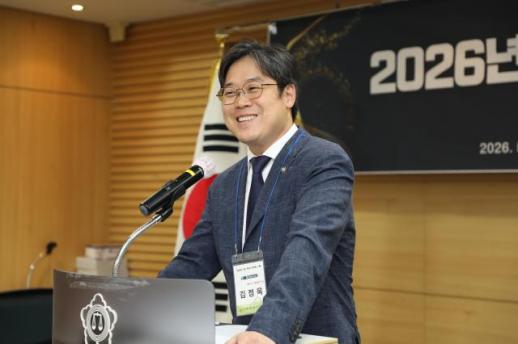 Korean Bar Association Hosts Mentoring Event for New Lawyers Senior lawyers stepped in as guides for new attorneys who recently passed the 15th Bar Exam and are beginning their legal careers. On May 13, the Korean Bar Association's Young Lawyers Committee successfully held the "2026 New Lawyer Mentoring" event at the seminar room of the Korean Bar Association headquarters in Seocho-dong, Seoul. The event was designed for 120 new lawyers to provide practical strategies for adapting to the rapidly changing legal environment and enhancing their professional skills. The atmosphere was serious yet vibrant, filled with the enthusiasm of new lawyers and heartfelt advice from their seniors. In his opening remarks, Kim Jung-wook, President of the Korean Bar Association, assessed the current legal market as challenging due to the surge in the number of lawyers and the rise of legal tech and AI. He encouraged the new lawyers to boldly challenge new areas of work based on their accumulated passion, stating, "If you do so, you will surely achieve meaningful success." He also expressed hope that the connections between seniors and juniors would provide significant support in their long journey ahead. Jo Soon-yeol, President of the Seoul Bar Association, also urged the new lawyers in his remarks to explore various paths in public service, corporate law, litigation, and international law, while emphasizing the importance of integrity and commitment to the right path. Kim Ji-soo, Chair of the Young Lawyers Committee, welcomed the attendees by acknowledging the mixed feelings of excitement and uncertainty that come with starting a new career, hoping that the event would help alleviate those feelings. The highlight of the event was a special lecture titled "Career Seminar for New Lawyers," conducted by Kim Seung-hyun, Vice President of the Korean Bar Association. He shared specific strategies for becoming a "chosen lawyer" in the job market. He emphasized that when writing a resume, it is crucial to connect work-related strengths with specific examples, rather than relying on common background stories, to create a "unique small difference." He also provided practical tips on interview attitudes, timing for job transitions, and preparation tailored to various institutions such as law firms, in-house counsel, and public agencies, which received a positive response. Following the lecture, 36 senior lawyers from diverse fields, including employment, private practice, courts, prosecution, startups, and in-house counsel, participated as mentors in group mentoring sessions. New lawyers openly shared their practical challenges and career concerns, while mentors responded with vivid experiences and insights from the field. One new lawyer expressed satisfaction, saying, "I had many concerns about my career after passing the exam, but hearing specific advice from current seniors has clarified my direction moving forward." A representative from the Korean Bar Association stated, "We plan to continue providing various support programs and networking opportunities to help new lawyers develop their expertise with pride." 2026-05-14 16:37:09
 -
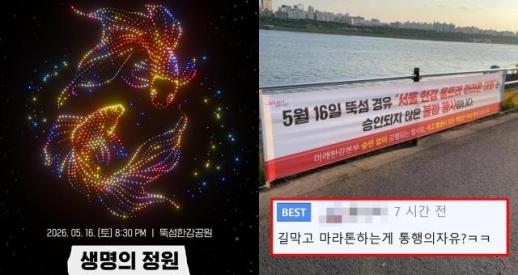 Seoul City and Ultra Marathon Organizers Clash Over Legality of Event The upcoming Seoul Han River Ultra Marathon is causing a significant clash between Seoul City and the event organizers, leading to confusion among participants. The city has even hung banners at the event site declaring it an "unauthorized illegal event" as tensions escalate. The controversy began when banners were installed around Ttukseom Han River Park, stating, "The Seoul Han River Ultra Marathon on May 16 is an unauthorized illegal event," and warning that "the organizers will bear all responsibility in case of accidents, as the event is being held without approval from the Han River Headquarters." In response, the organizing committee for the Seoul Han River Ultra Marathon quickly pushed back. They issued an official statement asserting that the event is a legitimate one conducted through proper procedures, claiming that Seoul City and certain related agencies are exerting excessive pressure under the pretext of citizen inconvenience and safety concerns. The committee emphasized that the organizers do not have the authority to forcibly control citizen traffic and that participants must adhere to the guidance of safety personnel on-site. They stressed that the Han River is a space for all citizens and that running is a freely chosen activity. However, the backdrop to this conflict includes a large-scale drone show scheduled for the same day in the Han River area. It is believed that the city may have deemed it challenging to manage safety effectively with both a massive influx of spectators for the drone show and the lengthy 100km ultra marathon occurring simultaneously. Indeed, ultra marathons are known for their extended operational hours and significant variations in participant stamina, making them more complex to manage safely. Concerns have been raised about the potential for accidents, especially in a space like Han River Park, which is popular for walking and cycling among citizens. Participants eagerly awaiting the marathon expressed their frustration, stating, "I have already paid for the entry fee, accommodation, and transportation, yet suddenly I am being treated as part of an illegal event," and questioned, "Why should participants feel anxious due to the conflict between Seoul City and the organizers?" Conversely, some participants have demanded refunds, citing the city's negative stance toward the event. Meanwhile, there are growing complaints among Seoul residents about the frequency of running events in the city center and around Han River Park. Online commenters have remarked, "Traffic jams and inconveniences occur every weekend," and "It's difficult to enjoy a walk along the Han River due to running events," with some noting, "With the drone show alone attracting crowds, the addition of a 100km marathon would have made congestion severe."* This article has been translated by AI. 2026-05-14 16:34:10
 -
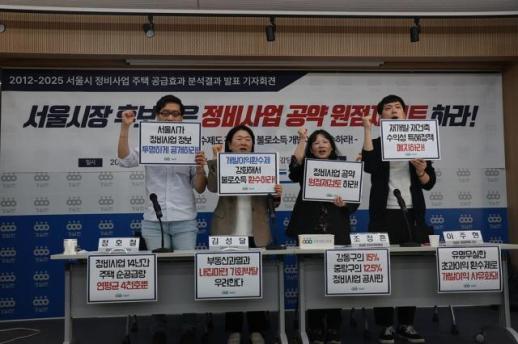 Civic Group Reports Average of 4,000 Housing Units Supplied Annually in Seoul Over 14 Years As candidates for the upcoming June 3 local elections propose promises to enhance housing supply through urban renewal projects, a recent investigation reveals that net supply has been minimal over the past decade. The analysis also confirms a significant increase in housing prices following these projects, prompting calls for a reevaluation of related campaign promises.The Citizens' Coalition for Economic Justice reported that from 2012 to 2025, during the terms of Mayors Park Won-soon and Oh Se-hoon, the net supply of housing units from urban renewal projects in Seoul totaled only 53,000, averaging just 4,000 units per year.During this period, an average of 20 project approvals and 21 management approvals were granted annually. While approximately 310,000 new housing units were constructed through urban renewal, the net supply, excluding demolished units, remained at 53,000 over 14 years, representing only 17% of the total units built.An analysis of major apartment sales revealed that properties with similar market values before reconstruction have seen significant price disparities based on whether they were redeveloped, exacerbating wealth inequality.For instance, the Sangye-jugong 8 Complex in Nowon District was redeveloped and completed as Foreena Nowon in 2020, while the nearby Sangye-jugong 9 Complex is currently undergoing planning. Previously, the price difference between these similarly sized properties was less than 100 million won, but it has now widened to approximately 300 million won. Similarly, the price gap for the Nokwon Hanshin Apartment and Dong-A Apartment in Seocho District has increased from 100-200 million won to around 2.2 billion won.The total area designated for urban renewal, including redevelopment, reconstruction, small-scale redevelopment, and self-managed housing projects, accounts for 6% of Seoul's total area (excluding green spaces). Among districts, Gangdong occupies the largest share at 14.7%, followed by Jungnang at 12.5% and Eunpyeong at 10%.In relation to urban renewal, Democratic Party candidate Jeong Won-o announced a real estate policy called 'Steady Development.' Meanwhile, People Power Party candidate Oh Se-hoon pledged to initiate construction on 310,000 units through urban renewal.In response, the Citizens' Coalition urged these candidates to reassess their urban renewal promises from scratch.The coalition stated, "Considering the negative impacts of urban renewal, if the city proceeds with initiatives like rapid integrated planning and steady development, it could adversely affect not only the lives of residents but also the real estate market on a macro level."They added, "In the current situation where the development profit recovery system is not functioning properly, the profits from urban renewal will be privatized, further deepening wealth inequality. Strengthening the recovery of excess profits from reconstruction and recovering 50% of unearned development profits are necessary measures for the development profit recovery system."* This article has been translated by AI. 2026-05-14 16:29:46
 -
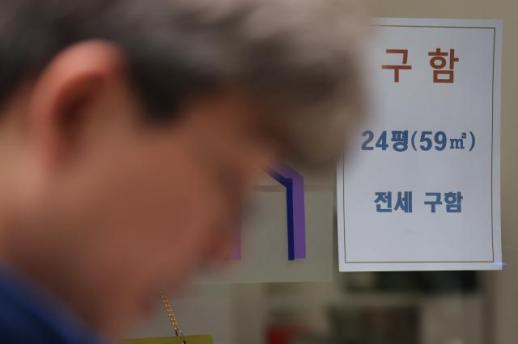 Korea's Housing Market Faces Dual Pricing After Lease Law Implementation Research from the Korea Research Institute for Human Settlements indicates that the introduction of the two lease laws has led to a rapid increase in new rental prices, creating a distinct "dual pricing" structure between new and renewal contracts. On May 14, the institute released its report titled "Analysis of Recent Changes in the Housing Rental Market Structure and Policy Implications," noting that "recently, new prices have exceeded renewal prices, indicating a shift toward a preference for renewal contracts." According to Park Jin-baek, a deputy research fellow at the institute, rental prices are rising again, particularly in the Seoul metropolitan area, while monthly rents are increasing across all regions. In Seoul, a reciprocal relationship has been observed in the short term, where prices and the usage rate of the contract renewal request (renewal rate) influence each other. In the long term, prices tend to move first, followed by changes in the renewal rate. As rental prices continue to rise in the Seoul metropolitan area, the usage rate of renewal requests has also increased. During periods of rising rental prices, tenants actively exercise their renewal rights to avoid further increases, while in declining price phases, the incentive to move through new contracts leads to a decrease in the renewal rate. The institute concluded that the high price volatility in Seoul's rental market is a key factor influencing tenants' decisions to exercise their renewal rights. An analysis of the impact of rental and sales prices in the national housing rental market from 1986 to 2025 confirmed a bidirectional interaction between rental and sales prices. While short-term fluctuations in sales prices affect rental prices, the reverse effect of rental price changes on sales prices occurs over a longer time lag. Recently, the price transfer effect from the overheated sales market around 2020 has intensified. The cumulative response of rental prices to a 1% increase in sales prices over 24 months peaked at 7.28% between 2010 and 2014 but has since weakened, remaining around 3% in recent times. The influence of rental prices on sales prices appears with a medium to long-term lag (3 to 9 months), with the magnitude of the shock response increasing over time. The cumulative response of sales prices to a 1% increase in rental prices has sharply expanded since the 2010s, peaking at 1.24% between 2015 and 2019, and has remained around 1% recently. The introduction of the land transaction permission system has not significantly affected rental listings but has noticeably reduced sales listings. The researchers recommend several measures to stabilize the housing rental market, including restructuring rental supply, enhancing the role of public rentals, and managing rental liquidity. They argue for a shift in the rental supply structure from individual landlords to corporate long-term rentals. They also emphasize the need to establish a stable rental supply foundation that meets public requirements for rental price stabilization and tenant housing security. To curb excessive liquidity inflow into the rental market, they suggest expanding the application of the total debt service ratio (DSR). Park Jin-baek stated, "We should expand the DSR application for rental loans to non-homeowners, excluding vulnerable groups, and reflect tenants' rental deposits in landlords' DSR calculations."* This article has been translated by AI. 2026-05-14 16:27:24
 -
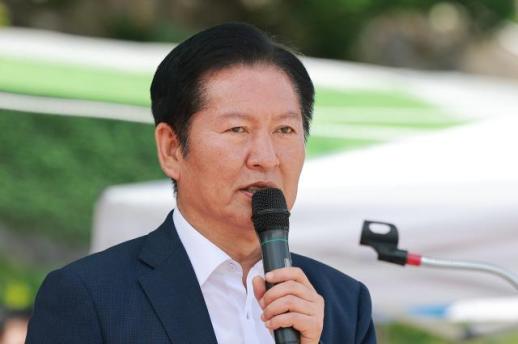 Jung Cheong-rae Visits Ulleung to Support Rural Basic Income Initiative On May 14, as candidates for the local elections officially began their activities, Jung Cheong-rae, chairman of the Democratic Party, visited the challenging terrain of Ulleungdo in Gyeongbuk to listen to residents' concerns and lay the groundwork for electoral success. Jung started his day at Dodong Park, followed by attending the Buk-myeon Sports Festival, visiting local shops in Jeodong and Dodong, and holding on-site discussions with community members. He was accompanied by senior party officials, including Park Gyu-hwan, a member of the Supreme Council from Gyeongbuk, Im Mi-ae, chair of the Gyeongbuk provincial party, and Jung Seong-hwan, the party's candidate for Ulleung-gun mayor. During the discussions with Ulleung residents, Jung promised to expedite the handling of their grievances. He emphasized the importance of implementing a rural basic income, stating, "It is essential, regardless of party affiliation. As party leader, I will do everything possible to ensure Ulleung is included in the rural basic income program." Jung also addressed concerns related to the island's unique climate, which restricts access. He noted, "The first thing I heard was that even if it hurts, we must come out on good weather days," and pledged to create measures that guarantee the constitutional right to freedom of residence and movement. He acknowledged the need for legislative procedures to address the issues raised by residents during the meeting. Jung suggested the possibility of establishing a special autonomous district law for Ulleung, similar to the Gangwon Special Self-Governing Province Act, to encompass all residents' concerns. He urged the community to gather their collective opinions first. Regarding the proposals for rural basic income and improvements to transportation conditions, Jung committed to working with relevant ministries to resolve these issues, stating, "I plan to meet with the ministers of the relevant departments soon." Additionally, Jung commented on recent polling indicating a narrowing gap between candidates from the ruling and opposition parties, despite his party's frequent visits to Yeongnam. He remarked, "It is difficult to feel that on the ground. The response rate for polls has dropped significantly, and sampling has become challenging. I will keep a close eye on it, but regardless, I will do my best."* This article has been translated by AI. 2026-05-14 16:25:18
 -
 'ARC Raiders,' 'MapleStory' drive Nexon to record quarter SEOUL, May 14 (AJP) - Nexon reported record quarterly earnings, with revenue, operating profit and net income all reaching all-time highs as the Tokyo-listed Korean-Japanese game publisher rode breakout demand for its 'ARC Raiders' extraction shooter and the enduring 'MapleStory' franchise. According to the firm on Thursday, first-quarter revenue rose 34 percent year-on-year to 152.2 billion yen ($963 million), while operating profit climbed 40 percent to 58.2 billion yen. Net income more than doubled, surging 118 percent to 57.2 billion yen. For the second quarter, Nexon projected revenue of between 107 billion and 119.7 billion yen, a range spanning a 10 percent decline to 1 percent growth from a year earlier. Operating profit is forecast at 16.1 billion to 25.3 billion yen, with net income seen between 16.1 billion and 23.2 billion yen. The game giant's 'MapleStory' franchise grew 42 percent from a year earlier, propelled by last year's global rollout of 'MapleStory: Idle RPG' and 'MapleStory Worlds'. The latter title jumped 79 percent on a Lunar New Year update in Taiwan, while the flagship 'MapleStory' rose 8 percent on Western momentum. 'ARC Raiders', launched in October by Nexon's Stockholm-based subsidiary Embark Studios, sold an additional 4.6 million copies in the quarter to cross 16 million in cumulative global sales just six months after release. More than half of active users have logged over 100 hours, the company said, and the title collected five major industry honors, including the multiplayer prize at the BAFTA Games Awards 2026. The combined pull of the two titles quadrupled Nexon's North American and European revenue and more than doubled sales in Southeast Asia and other markets, lifting total overseas revenue 59 percent for a quarterly record. Separately, the company renewed long-term publishing deals with Electronic Arts for 'EA Sports FC Online' in Korea and extended its agreement with Tencent for 'Dungeon & Fighter' PC in China by a decade. "The global success of the MapleStory franchise and 'ARC Raiders' allowed us to deliver outstanding first-quarter results," Lee Jung-hun, chief executive of Nexon's Japan unit, said. "We will secure mid- to long-term growth momentum through stronger strategic partnerships and a solid pipeline of new titles." 2026-05-14 16:23:32
 -
 New AIDC Law Raises Concerns Over Renewable Energy Viability The Special Act on the Promotion of the Artificial Intelligence Data Center (AIDC) industry passed the National Assembly on May 7, drawing attention to Article 20, which allows direct trading of renewable energy. This provision enables AIDC operators to enter power purchase agreements (PPAs) directly with renewable energy producers, bypassing Korea Electric Power Corporation (KEPCO). The government aims to address the chronic issue of power procurement for AIDCs through renewable energy. However, industry reactions have been lukewarm. On May 14, multiple sources from domestic AIDC operators and construction firms expressed skepticism, stating that "direct trading of renewable energy is a provision that institutionalizes losses under the current structure." They criticized the legislation for not considering the critical role of electricity procurement costs in the operational profitability of AIDC businesses. AIDCs are extremely power-intensive facilities, consuming dozens of times more electricity than typical office buildings. Hyper-scale data centers require over 100MW of continuous power supply around the clock. Electricity costs account for 40-50% of total operating expenses, with AIDCs facing even higher burdens due to their power density. Operators calculate their break-even points differently based on size, but on average, small AIDCs under 40MW find profitability at around 150 won per kWh, while hyper-scale AIDCs over 100MW reportedly face losses if costs exceed 220 won per kWh. The problem is that the current market price for renewable energy in South Korea far exceeds these break-even points. According to industry sources, the current direct trading price for renewable energy, including solar power, is around 250 won per kWh, with offshore wind exceeding 300 won. In direct trading, prices are negotiated between suppliers and consumers, leading to increases of over 100 won per kWh compared to generation costs. The Korea Energy Economics Institute estimates the levelized cost of electricity (LCOE) for solar power in South Korea at 122 won per kWh and offshore wind at 238 won as of 2024. The actual supply prices are higher than the LCOE due to additional costs such as renewable energy certificates (RECs), grid connection fees, and backup power costs to address intermittency. South Korea's solar LCOE is reported to be 2.1 to 2.5 times higher than the global average, while onshore wind is about three times higher, and offshore wind is 1.3 to 2.4 times higher than in major countries. An official from an AIDC construction firm stated, "The moment we sign a renewable energy PPA, we confirm operational losses due to electricity costs. Even if global tech giants like Google and Microsoft enter Korea, they cannot achieve profitability under the current renewable energy supply prices." In the current landscape, AIDC operators see nuclear power as a realistic alternative. The current cost of nuclear power is around 60 to 80 won per kWh, significantly lower than renewable energy prices, at about one-third to one-fourth of the cost. However, Article 20 of the AIDC law only specifies direct trading of renewable energy. There is no provision for AIDC operators to purchase nuclear power directly, nor is there any law facilitating the supply of nuclear electricity. Nuclear power can still only be obtained through KEPCO, which applies its industrial electricity pricing structure. According to the Korea Energy Economics Institute, it is estimated that renewable energy will not reach the AIDC break-even point until after 2050. An industry source remarked, "The most suitable power source for AIDCs is stable nuclear energy supplied 24/7, yet the law only opens the door for direct trading of renewable energy. This provision is disconnected from reality for both global tech giants needing to meet RE100 requirements and domestic AIDC operators." 2026-05-14 16:23:02
 -
 AIDC Law Passed, But Power Line Issues Persist in Seoul Area The National Assembly passed the "Special Act on the Promotion of the AI Data Center Industry" (AIDC Law) on May 7, but industry experts are calling it a "toothless special law." As of May 14, the IT sector reported that from August 2024 to June 2025, approximately 290 applications for power usage at data centers were submitted nationwide, with 195 applications (67%) concentrated in the metropolitan area. While there is a high volume of power usage applications for AIDC in the metropolitan area, all hyper-scale AIDCs under construction nearby have yet to receive permits for power line and tower installations. The Ministry of Climate and Energy and local governments are responsible for granting these permits, and industry insiders express skepticism that the passage of the AIDC Law will resolve the transmission and distribution issues. The most significant barrier to AIDC development is the power infrastructure. Hyper-scale AIDCs, which require continuous operation for large-scale computations, need a stable power supply ranging from tens to hundreds of megawatts (MW). This necessitates the installation of power lines and substations. According to the IT industry, several AIDC construction companies and operators have indicated that the current stance of relevant authorities is clear: "Permits will not be granted unless the project is outside the metropolitan area." The consensus in the industry is that the only regions where hyper-scale power permits are effectively granted are non-metropolitan areas, including underprivileged regions. The metropolitan area is nearing saturation in terms of system capacity, and available power is also concentrated in non-metropolitan areas. The situation for AIDCs in the metropolitan area is even more dire. Article 19 of the AIDC Law grants exemptions from power system impact assessments under the "Special Act on the Activation of Distributed Energy" only for non-metropolitan areas. This exemption does not apply in the metropolitan area, where operators must still undergo power system impact assessments that take over 150 days. Even after completing the assessment, unless the authorities change their permitting stance, there will be no practical benefits. Article 24, which designates special zones for AI data centers, is also limited to non-metropolitan areas. Being designated as a special zone provides various benefits, including reductions in alternative forest resource creation fees, agricultural land preservation fees, and traffic impact fees, as well as priority guarantees from the credit guarantee fund. However, metropolitan area operators are excluded from these benefits, creating a direct conflict with the reality that 67% of nationwide data center power usage applications are concentrated in the metropolitan area. Although Article 4 of the law states that it takes precedence over other laws and Article 20 allows for direct transactions of renewable energy, this does not replace the permitting process for installing power lines and towers. The actual authority regarding power delivery remains within the frameworks of the Electricity Business Act and the Act on the Promotion of Power Development. Even if the AIDC Law legalizes direct transaction routes for electricity, without permits for laying down the lines, such contracts become meaningless. The direct transaction of renewable energy is also expected to lead to operating losses due to supply prices exceeding 200 won per kWh. Another significant flaw in the legislation is that most of its core provisions are delegated to presidential decrees. The minimum size criteria for supported AIDCs, the upper limit for power capacity exempt from non-metropolitan power system assessments, and the criteria for special zone designation are all left to the implementation decree. This means that the actual scope of benefits will depend on how the decree is formulated. The law will take effect nine months after its promulgation, meaning its actual impact will not be felt until after the end of this year. Concerns have also been raised that if the criteria for supported sizes are set too high during the decree consultation process, small and medium-sized AIDCs may again fall into a gap. Industry experts agree that resolving the power issues for AIDCs in the metropolitan area requires solutions outside the AIDC Law. Proposed measures include simplifying the installation procedures for AIDC power facilities through amendments to the Act on the Promotion of Power Development, mandating KEPCO's system connections, and allowing direct transactions for nuclear power. Analysts suggest that the current legal framework, which distributes jurisdiction over the AIDC Law, the Act on the Promotion of Power Development, and the Electricity Business Act among the Ministry of Science and ICT, the Ministry of Climate and Energy, and the Ministry of Trade, Industry and Energy, creates structural bottlenecks for investments in AIDCs in the metropolitan area. A representative from a company involved in AIDC construction near the metropolitan area pointed out, "While we can obtain building and transmission permits, we cannot lay down the lines, rendering the AIDC Law effectively meaningless." 2026-05-14 16:19:42