
Journalist

Seo Hye Seung
-
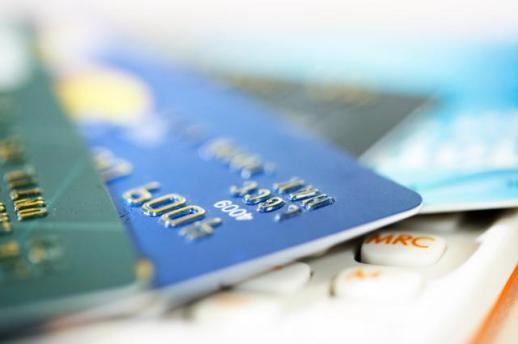 Korea’s Q1 Card Spending Rises 7.2% to 322.1 Trillion Won Despite concerns about weakening consumer sentiment, card approvals in the first quarter posted solid growth, supported by stronger income conditions tied to robust domestic corporate earnings. Inflation, continued expansion in online spending and a rebound in travel demand also contributed. According to the Credit Finance Association of Korea on Wednesday, total card approvals in the first quarter came to 322.1 trillion won, up 7.2% from a year earlier. The number of approved transactions rose 5.1% to 7.2 billion. The growth rate more than doubled from 3.3% in the first quarter of last year, and the transaction-count increase was up 3.9 percentage points from a year earlier. By card type, both personal and corporate cards increased. Personal card approvals totaled 264.4 trillion won, up 6.8%, while transactions rose 5.3% to 6.82 billion. Corporate card approvals increased 8.7% to 57.8 trillion won, and transactions rose 1.9% to 380 million. Strong growth in online commerce continued. Online shopping transactions in January and February rose 8.5% from a year earlier to 46.698 trillion won. Within online shopping, food delivery and travel and transportation services increased 11.0% and 12.8%, respectively. A recovery in travel and tourism demand also lifted card use. First-quarter air passenger traffic rose 12.6%, and spending by foreign tourists surged 37.1%. The association said higher oil prices in March likely also pushed up card-approved spending on vehicle fuel. The association said uncertainty has increased and consumer sentiment could weaken due to the Middle East war that broke out in late February. Still, it said improved income and asset conditions stemming from strong domestic corporate earnings, including from expanding global semiconductor demand, along with base effects, helped drive the rise in card approvals.* This article has been translated by AI. 2026-04-30 10:33:33
 -
 Democratic Party’s Cheon Jun-ho vows special counsel bill over alleged fabricated prosecutions Cheon Jun-ho, acting floor leader of the Democratic Party, said April 30 that he will move to introduce a special counsel bill into alleged “fabricated prosecutions,” vowing that those responsible “will pay the price.” Speaking at a party policy coordination meeting at the National Assembly, Cheon said a parliamentary special committee on a state investigation into the alleged fabricated prosecutions would adopt its final report later that day and wrap up its work. Cheon alleged that Yoon Suk Yeol “mobilized all power agencies” to pursue fabricated prosecutions, saying that when Yoon “picked a target,” what he called a political prosecution service and the Board of Audit and Inspection moved in tandem. He said the alleged conduct included tampering with recorded audio, creating false official documents and “human rights abuses,” calling it a state-violence crime that must be punished strictly. Cheon also criticized appellate sentences in cases involving Yoon and first lady Kim Keon Hee, saying it was hard to accept that the punishments, while higher than at trial, were still below what prosecutors had sought despite what he called a clear violation of the constitutional order. Yoon was sentenced Tuesday to seven years in prison on appeal on charges including obstructing an arrest, and Kim was sentenced April 28 to four years in prison on charges including stock manipulation. Prosecutors had asked the court to impose 10 years for Yoon and 15 years for Kim. In the first trial, Yoon and Kim were sentenced to five years and one year and eight months, respectively. “Only by engraving this in history will no one dare dream of doing such a thing,” Cheon said, adding that the Democratic Party would focus on restoring constitutional order and strengthening the rule of law.* This article has been translated by AI. 2026-04-30 10:32:24
 -
 KTX and SRT Begin Joint Test Runs Ahead of Planned September Integration South Korea’s KTX and SRT high-speed rail services began test runs on regular commercial routes starting on the 30th, as the operators prepare for integrated operations planned for September. The Ministry of Land, Infrastructure and Transport, Korail and SR said the tests will support a pilot coupled operation that links KTX and SRT trainsets to run as a single train. The test program will be conducted four times through May 14 to make final checks on safety and passenger convenience. Pilot coupled trains that passengers can ride are scheduled to begin service May 15. Test runs are planned as one round trip each on these routes: Gwangju Songjeong Station↔Suseo Station on the 30th; Seoul Station↔Busan Station on May 6; Seoul Station↔Gwangju Songjeong Station on May 12; and Gwangju Songjeong Station↔Seoul Station on May 14. Since the integrated high-speed rail roadmap was announced last December, Korail and SR have checked compatibility of trains, tracks and ticketing and other operating facilities. Since Feb. 25, they have also been running a pilot cross-service operation, with KTX trains serving Suseo Station and SRT trains serving Seoul Station. The coupled operation goes a step beyond cross-service by physically linking KTX and SRT into one train. The two operators have conducted coupling and driving tests at depots and completed software updates and verification reflecting the results, they said. During the test runs, staff from the ministry, Korail and SR will ride the trains to closely check whether key systems — including communications, braking and emergency controls — operate properly when integrated in real operating conditions. Based on the results, the operators plan to refine the integrated operating system, proceed with the pilot coupled operation and finalize an optimal integrated service plan by September before launching operations. Korail President Kim Tae-seung said the company is making thorough preparations for the pilot coupled operation so passengers can experience the safety and convenience of integrated high-speed rail service. He said the remaining steps will be carried out without setbacks to achieve a faster and safer integration.* This article has been translated by AI. 2026-04-30 10:31:03
 -
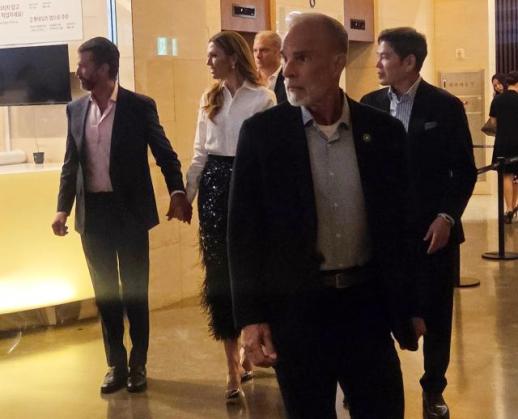 Shinsegae Chairman Chung Yong-jin’s Trump Ties Raise Opportunity, Risk Questions A striking scene unfolded at a concert hall in Seoul: Donald Trump Jr., the son of U.S. President Donald Trump, arrived and was greeted by Chung Yong-jin, chairman of South Korea’s Shinsegae Group. The two smiled and exchanged greetings, and red hats bearing the words “MAGA” appeared in the crowd. What looked like a simple night at a performance was widely read as something more — business. Corporate competition has changed. In the past, making a good product at the right price could be enough. Now, with tougher rivals and faster technological shifts, who a company knows can also become a competitive asset. Globally, companies have long used political connections to expand. The article cites Elon Musk as an example of benefiting from government support policies and regulatory easing in the electric-vehicle business, and Walmart as a company that worked with local politicians to broaden its market. But there is a key difference: those cases involved ties within a company’s own country. Shinsegae is a Korean company, yet it is seeking links to U.S. political networks. That could create opportunity, but it can also be unstable because another country’s political environment can shift quickly. Shinsegae’s business direction is also drawing attention. The group is best known for retail — department stores and big-box marts — but it has recently been linked to talk of advanced industries such as AI and data centers, prompting questions about why a retailer is moving in that direction. Retail, however, has changed. Success increasingly depends on collecting and using customer data — what people buy, when they buy it and which brands they prefer. AI can analyze that data to recommend products and help run logistics more efficiently. From that perspective, expanding from retail into AI can be a natural step. The issue is speed and method. A company can build capabilities gradually in-house, or enter quickly by leaning on outside networks. The article says Shinsegae’s approach appears closer to the latter, a faster strategy that also increases risk. The most controversial element of the concert scene was the “MAGA” hat. The article notes it is not just a fashion item but a strong symbol of a specific political camp in U.S. politics, something companies typically handle cautiously. Businesses often try to remain politically neutral to appeal to a broad customer base. In this case, the optics appeared to stray from that neutrality. Even if that was not the intent, the market may interpret it as a signal of alignment rather than mere personal familiarity. The article argues the approach is not automatically wrong. It can speed access to investment or partnership opportunities through key contacts and raise a company’s profile in global markets. But the risks are also significant. If political conditions change, the value of those ties can fade. A political image can trigger consumer backlash. And if a new venture is weakly connected to the core business, it can lose direction. What matters, the article says, is not simply using connections but designing a strategy: clearly link AI investment to stronger retail competitiveness; avoid relying on a single side by building diverse relationships; manage corporate image by separating political ties from the brand; and build a business structure that can withstand shifting conditions. Chung’s move, the article concludes, signals a push by Korean companies to seek opportunities through global networks rather than staying focused only on the domestic market. Connections may open doors, but lasting success still depends on performance. Whether this becomes a one-off event or a new growth strategy for Shinsegae remains unclear, and the outcome will depend on execution. In the end, the article says, a company may start with relationships, but it must prove itself with results — not just publicity, but what comes next. * This article has been translated by AI. 2026-04-30 10:26:19
 -
 South Korea to Offer Up to 58% Discounts on Processed Foods for Family Month The Ministry of Agriculture, Food and Rural Affairs said Wednesday it will offer discounts of up to 58% on processed foods in May, designated as Family Month, to help ease pressure on household grocery bills. The ministry said it will run the promotion with 16 major food companies, covering 4,373 processed-food items. The move comes as consumer sentiment has weakened and grocery costs have risen amid external uncertainty, including instability in the Middle East, the ministry said. It added that the discounts are intended to deliver price-stabilization effects consumers can feel, particularly in May when family spending typically increases. Discounts by category include Nongshim instant noodles at 6% to 36%, Paldo instant noodles at 6.4% to 33%, Samlip bread products at 8% to 37%, and CJ CheilJedang cooking oils and fats and dumplings at 33% to 50%. Jeong Gyeong-seok, director general for food industry policy, said the event reflects active cooperation between the government and the food industry to stabilize grocery prices despite difficult external conditions. He said the ministry will continue efforts to curb living costs by expanding cooperation with the industry. * This article has been translated by AI. 2026-04-30 10:24:53
 -
 South Korea to expand AI-related cooperation with Qatar, presidential aide says SEOUL, April 30 (AJP) - South Korea has agreed with Qatar to expand cooperation in advanced industries including artificial intelligence (AI), biotech, and semiconductors, according to presidential chief of staff Kang Hoon-sik. In a post on Facebook on Wednesday evening, Kang said he met with Qatar's Minister of State for Foreign Trade Ahmed bin Mohammed Al-Sayed to discuss ways to expand cooperation between the two countries. Their meeting came a few weeks after Kang visited Qatar on April 13 as a special envoy for strategic economic cooperation and met with Emir Tamim bin Hamad Al Thani, during which Kang called for expanding cooperation beyond energy into advanced industries such as AI, and the emir promised to send a delegation promptly. Kang said a large delegation from relevant sectors, led by Al Sayed, visited Seoul "just two weeks after" his trip to the Gulf state. He added that both sides agreed to move beyond their current focus on natural gas and energy trade, expanding ties into areas like AI, semiconductors, and biotechnology. Touting Al Sayed as an investment expert who previously served as CEO of Qatar's sovereign wealth fund, Kang said the minister is scheduled for a series of meetings with investors and tech companies during his visit, hinting at potential "win-win deals" for both countries. 2026-04-30 10:24:01
 -
 Virtual Idol Group B:DAWN Releases 'BEOM' MV Teaser Ahead of May 6 Debut Showcase Virtual idol group B:DAWN has begun its debut countdown. Agency Duri Entertainment said April 30 that it released a music video teaser for the group’s debut single, “BEOM,” on B:DAWN’s official social media channels. The short clip offers a first look at the title track’s main melody and concept, pairing a forceful sound with a heavy mood to build anticipation for the group’s debut. The teaser features backdrops associated with Korean imagery, including Namsan Tower and hanok-style traditional houses. Tiger visuals tied to the song title “BEOM” underscore a strong, fearless concept. An addictive beat, rapid cuts and scenes hinting at a powerful performance also stand out, blending Korean symbols with the distinctive look of virtual idols to signal B:DAWN’s own K-pop mood. The teaser follows previously released member images and a title poster as part of the group’s debut promotion. B:DAWN plans to highlight its presence as a next-generation virtual idol act through a concept combining bold visuals, musical identity and Korean symbolism. B:DAWN will hold its debut showcase May 6 for its first official meeting with fans. The event will be streamed exclusively live through Naver’s livestreaming platform, Chzzk. The program will include the debut-stage performance, member introductions, talk about the debut single and real-time interaction. The showcase will be held at the “Vision Stage” at Naver 1784 and will use Naver production technology, which the agency said is expected to present B:DAWN’s performance in a more three-dimensional way. A company official said the title track “BEOM” compresses “the bravery of a tiger and the members’ strong energy into music,” adding that the teaser is the first reveal of part of the music and world the group will present. The official asked for interest and support for the full music video and the May 6 debut showcase streamed exclusively on Chzzk.* This article has been translated by AI. 2026-04-30 10:21:14
 -
 Lotte Samdong Welfare Foundation Donates Gift Boxes to Ulsan Children, Funds Founder’s Schools The Lotte Samdong Welfare Foundation marked Family Month in May by providing support to vulnerable children in Ulsan, the hometown of the late Shin Kyuk-ho, honorary chairman of Lotte Group, and by donating to his alma maters. The foundation said April 30 it held a delivery ceremony April 29 at Dongcheon Gymnasium in Jung-gu, Ulsan, for the ‘2026 Ulsan first-half Shin Kyuk-ho Lotte Pleasure Box support program’ and provided gift sets worth 120 million won for children from disadvantaged households in the city. Working with the Ulsan Community Chest of Korea, the foundation selected 2,300 children registered at local children’s centers, orphanages and facilities for people with disabilities across Ulsan’s five districts and counties: Jung-gu, Nam-gu, Dong-gu, Buk-gu and Ulju County. The children will receive “Pleasure Box” packages that include Lotte snacks, character-themed school supplies and Bluetooth earphones. Chairwoman Jang Hye-seon said the boxes were prepared “with encouragement for children to smile more brightly, study harder and grow,” adding she hopes they will remain “a warm memory” that tells children, “Someone is cheering for me.” Also on April 29, the foundation visited Eonyang-eup in Ulju County and held a separate event for students at Shin’s alma mater. At the ‘Shin Kyuk-ho Lotte Alma Mater Love development fund’ ceremony at Eonyang Elementary School, the foundation donated 10 million won each to Eonyang Elementary and Samdong Elementary, for a total of 20 million won. The money will be used for student welfare and educational activities, the foundation said. Eonyang Elementary plans to use the funds to buy uniforms for school sports clubs, cover competition fees and support student council activities. Samdong Elementary said it plans to provide scholarships of 200,000 won per student for all 36 students, and help cover costs for school trips and experiential learning programs. At the ceremony, Jang said she believes people become “truly admirable adults” when they can share their success with others and take extra care of neighbors in need, as her maternal grandfather, the late Shin, did. She said she hopes Eonyang Elementary students will keep that meaning in mind and grow into adults who give to others. The foundation said it has provided a total of 1.54 billion won through the ‘Shin Kyuk-ho Lotte Pleasure Box’ program through this year, benefiting 62,477 people. Cumulative support under the ‘Shin Kyuk-ho Lotte Alma Mater Love’ program totals 540 million won.* This article has been translated by AI. 2026-04-30 10:19:58
 -
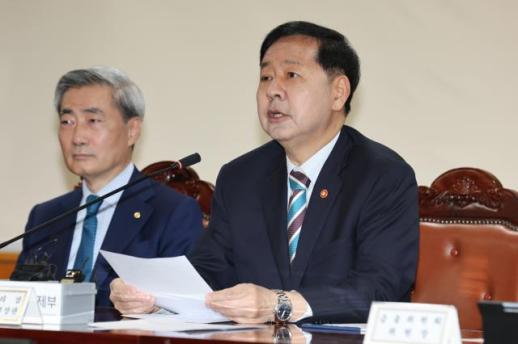 Finance Minister Koo Says Rate, FX Volatility Persists but Banks Have Ample Buffers Deputy Prime Minister and Minister of Economy and Finance Koo Yun-cheol said Wednesday that volatility in financial and foreign-exchange markets is persisting, but the financial sector has sufficient capacity to respond. Koo made the remarks at a joint “expanded macroeconomic and financial meeting” at the Korea Federation of Banks building in Seoul, where officials reviewed global market moves following the U.S. Federal Open Market Committee’s decision and assessed the impact of the Middle East war on financial and FX markets. Attendees included Bank of Korea Gov. Rhee Chang-yong, Financial Services Commission Chairman Lee Eok-won and Financial Supervisory Service Chairman Lee Chan-jin. “Our economy is seeing stronger growth in the first quarter even amid the fallout from the Middle East war, and the KOSPI is above its prewar level,” Koo said. “However, volatility in financial and FX markets, including government bond yields and the exchange rate, continues.” The three-year government bond yield rose to 3.627% at the end of March from 3.030% at the end of February, then moved to 3.525% the following month. The 10-year yield climbed to 3.882% from 3.447% before easing to 3.843%. Over the same period, the won-dollar exchange rate swung from 1,439.7 won to 1,530.1 won, then to 1,479.0 won. Koo said stress tests of financial institutions showed their buffers remained adequate even in crisis scenarios involving key variables such as oil prices and the exchange rate. Still, he warned that risks remain as uncertainty persists, including stalled ceasefire talks in the Middle East war. He cited downside risks to growth, rising inflation pressure and potential supply-chain disruptions, and said authorities will keep a 24-hour market monitoring system running and take stabilization steps in a timely manner in coordination with relevant agencies if needed. Koo also said the government will closely track profitability risks tied to raw-material supply instability in sectors sensitive to the war, including refining, petrochemicals and construction, and expand support through financial policy measures. He noted international oil prices are surging again, with Brent crude hitting a four-year high as concerns grow over prolonged supply disruptions. He said efforts to improve financial and FX markets will continue, including close cooperation with financial institutions to proceed smoothly with a 24-hour FX trading market and the creation of an offshore won settlement system. He also pledged to accelerate structural reforms such as internationalizing the won and revitalizing capital markets. Koo said preparations are underway to launch a public-participation National Growth Fund in May, including quickly completing revisions to an enforcement decree to provide tax support and broaden the base for productive finance. Participants congratulated Shin Hyun-song on his inauguration as governor and agreed to tighten policy coordination among the government, the central bank and financial regulators. They also decided to review ways to develop cooperation and communication channels for discussing macroprudential and financial issues. 2026-04-30 10:18:42
 -
 Hanwha to Pursue Joint Venture With Canada Auto Parts Group to Produce Military Vehicles Hanwha Aerospace is teaming up with Canada’s Automotive Parts Manufacturers’ Association to build a local production base for ground weapons systems, including military vehicles. Hanwha Aerospace said April 30 that it signed a memorandum of understanding on April 29 (local time) in Ontario with APMA and Hanwha Ocean to pursue a joint venture to produce military vehicles and special-purpose industrial vehicles. The companies said the partnership would move forward in earnest if Hanwha Ocean’s Jangbogo-III Batch-II submarine is selected for Canada’s Canadian Patrol Submarine Project, linking the submarine bid to a broader package that expands into ground systems. Attendees at the signing included Hanwha Aerospace CEO Son Jae-il; Jeong Seung-gyun, head of Hanwha Ocean’s overseas special ship business; Ontario Minister of Economic Development Victor Fedeli; APMA President Flavio Volpe; and Martinrea Chairman Robert Wildeboer. Hanwha said it has built a cooperation base in Canada by signing agreements with more than 30 local companies, and that the APMA partnership is intended to deepen its localization strategy. If the submarine is chosen for the CPSP, the joint venture would establish development and production systems for ground weapons the Canadian Army needs, the company said. The venture also plans to use Canadian-made materials such as steel and aluminum and hire local workers for production, aligning with the Canadian government’s emphasis on domestic manufacturing. Over time, the joint venture aims to expand into the design and production of special-purpose industrial vehicles, prioritizing Canadian military and public-sector demand and Arctic resource development needs while also exploring exports to allied countries. Hanwha cited an analysis by global accounting and consulting firm KPMG projecting that Hanwha’s investment in Canada would create an average of 22,500 jobs a year from this year through 2044 and generate a cumulative C$94.1 billion (about 102.4 trillion won) in GDP. “This MOU is a starting point for combining Canada’s manufacturing capabilities with Hanwha’s defense technology,” Son said. “Based on local production, we will expand into global markets and contribute to strengthening Canada’s defense capabilities.” * This article has been translated by AI. 2026-04-30 10:17:06