


Latest by
-
 Com2us Holdings Reports Increased Operating Loss of 5.3 Billion Won in Q2 Com2us Holdings reported a larger operating loss in the second quarter of this year due to a decline in revenue. However, effective cost management reduced the loss compared to the previous quarter, and profits from the sale of equity stakes in affiliated companies led to a net profit turnaround.On August 12, Com2us Holdings announced that its consolidated revenue for the second quarter was 15.6 billion won, with an operating loss of 5.3 billion won. This represents a 43.1% decrease in revenue compared to the same period last year, while the operating loss expanded by 139% year-on-year. Nonetheless, the operating loss decreased from the previous quarter.The net profit for the period was 7.7 billion won, marking a return to profitability, attributed to gains from the sale of equity stakes in affiliated companies.Looking ahead, Com2us Holdings plans to enhance its game business by launching a variety of new titles in the second half of the year. The strategy includes diversifying genres to expand profitability and user engagement, with plans for idle RPGs, action MMORPGs, collectible RPGs, and casual puzzle games.In the second half of the year, the company has already launched the collectible RPG 'Star Sailor' and the deduction puzzle game 'Color Sweeper.' The sci-fi action RPG 'Ares: The Iron Vanguard' is currently in early access in six countries, with a global launch planned for the third quarter.Additionally, the mobile RPG 'Zenonia 1: Thread of Memories' and the Metroidvania title 'Fatal Claw' are set to be released on the PC gaming platform Steam and console platforms. Com2us Holdings aims to introduce more than three additional new titles to drive growth in its gaming business.* This article has been translated by AI. 2026-08-12 18:20:00
 -
Com2us Reports 421% Increase in Q2 Operating Profit to 7.2 Billion Won Com2us improved its operating profit in the second quarter of this year, driven by the performance of its key titles, including 'Summoners War' and its baseball games. The company plans to maintain its growth momentum by launching the MMORPG 'Zeus: Wrath of the Gods' and expanding its lineup of new titles based on globally popular intellectual properties (IPs) in the second half of the year.On August 12, Com2us announced that it recorded consolidated sales of 157 billion won and an operating profit of 7.2 billion won for the second quarter of 2026. While sales decreased by 15% compared to the same period last year, operating profit surged by 421%. On a standalone basis, the company achieved sales of 134 billion won and an operating profit of 12.3 billion won during the same period.The improvement in operating profit is attributed to the success of key titles such as 'Summoners War: Sky Arena' and its baseball game lineup, which also saw a 149.5% increase on a standalone basis.Com2us stated, "We plan to expand our growth momentum in the second half of the year through continuous enhancement of the competitiveness of our existing key titles and the launch of anticipated new releases."The MMORPG 'Zeus: Wrath of the Gods' is set to launch in Korea on August 26, targeting the gaming market in the latter half of the year. The game features a world based on Greek mythology, high-quality graphics, diverse competition and growth structures, and a high level of convenience.Com2us aims to create a differentiated gaming experience for 'Zeus: Wrath of the Gods' by leveraging the MMORPG development capabilities of Everton, led by CEO Kim Dae-hwon, along with Com2us's excellent service know-how, positioning it as a major hit in the second half of the year.Additionally, the baseball game lineup will enhance its competitiveness by expanding updates and events aligned with major league schedules, as well as esports content in the latter half of the year. The baseball game 'Com2us Pro Baseball V26' continues to grow, achieving its highest quarterly sales and breaking daily active user (DAU) records.'Summoners War' maintains its popularity with updates and promotions celebrating its 12th anniversary. Recent collaborations, such as with 'The Requiem of the Fallen,' and the large-scale growth support season 'Sky Fever,' along with the 10th edition of the global esports tournament 'SWC2026,' aim to strengthen its global fanbase.Furthermore, Com2us plans to continue expanding its lineup of new titles based on globally popular IPs, including the dark fantasy turn-based RPG 'Dohwanamgwi: Crimson Inferno,' 'Gachiatakuta: The Game (tentative title),' and 'Omniscient Reader's Viewpoint,' thereby reinforcing its mid- to long-term growth foundation.* This article has been translated by AI. 2026-08-12 18:16:00
-
South Korea to Commercialize Light Water Small Modular Reactors by 2035 The South Korean government is set to commercialize light water small modular reactors (SMRs) by 2035. It plans to increase its stockpile of critical minerals to a maximum of one year’s supply and invest 10 trillion won in research and development (R&D) over the next five years. This initiative comes as officials recognize that relying solely on existing key industries will not guarantee future growth, prompting a focus on advanced technology development aimed at the next 10 to 20 years.On August 12, the Ministry of Trade, Industry and Energy held a joint meeting with relevant departments at the Blue House to announce plans for related projects during the 'Future Growth Engine 7 SEED Meeting.' SEED stands for 'strategic investments needed for disruptive innovation and future growth engines.'The government has identified seven key areas: SMRs, nuclear fusion, breakthrough renewable energy, quantum technology, space and aviation, advanced biotechnology, and critical minerals and materials. These areas are broadly categorized into future clean energy, next-generation frontiers, and advanced supply chains.Starting in 2027, the government aims to begin detailed design work for SMRs in collaboration with the private sector, targeting commercialization by 2035. For non-light water SMRs, a special purpose company (SPC) will be established for joint public-private investment, with construction planned for the 2030s. A technology-neutral and performance-based regulatory framework will be developed by 2030 to evaluate various SMR designs and purposes.In the nuclear fusion sector, the government plans to develop a virtual fusion reactor using artificial intelligence (AI) and establish a testing infrastructure for key components and equipment in Naju, Jeollanam-do. Through public-private collaboration, South Korea aims to build an innovative fusion reactor by 2035, with plans for power generation by the late 2030s and commercial power supply in the 2040s.In renewable energy, the focus will be on developing perovskite tandem cells with over 35% efficiency and ultra-large wind turbine technology exceeding 20 MW. The government also plans to demonstrate a 50-100 MW electrolysis system, localize gigawatt-level high-voltage direct current (HVDC) technology, and test superconducting transmission networks.In the quantum sector, the goal is to secure a 100-qubit quantum processor (QPU) capable of error correction by 2029. South Korean companies will lead the development of quantum computers equipped with quantum chips, control devices, and operating software, while establishing a public-private joint 'K-Quantum Foundry.' The government aims for South Korea to become the world leader in quantum chip manufacturing by 2035.In the space and aviation sector, plans include launching a lunar orbit communication satellite by 2029 and a privately-led 700 kg lunar lander in 2030. By 2032, an 1800 kg lunar lander will be launched, and a South Korean low-orbit satellite communication network is expected to be established by 2035.In advanced biotechnology, infrastructure such as AI models specialized in cancer, autonomous laboratories, and biofoundries will be built by 2030. Products that allow users to input text or operate machines using only their thoughts, known as brain-computer interface (BCI) products, are targeted for commercialization by 2035.In the supply chain sector, the government aims to increase the recycling rate of 10 key critical minerals to 20% by 2030. The number of items designated for stockpiling will increase from 24 to 29, with stockpiles expanded from a maximum of 180 days to 365 days. The Saemangeum stockpile base is expected to be operational by 2028.The government will invest 10 trillion won in R&D for key materials and components over the next five years. Of this, 5 trillion won will be allocated to the '15 Major Co-Growth Projects,' where anchor companies and partner firms will jointly develop technology and pursue testing and overseas expansion. A new fund to support securing critical minerals from abroad is also in the works.The government plans to establish a joint public-private 'Future Exploration Task Force' and will monitor the detailed roadmaps and progress of each project through meetings of science and technology ministers. However, specific investment amounts and funding methods for each project were not detailed in this announcement. The government intends to clarify these aspects in future roadmaps.* This article has been translated by AI. 2026-08-12 18:12:00
-
Emergency Measures in Miryang as Drought Intensifies Miryang City in South Gyeongsang Province announced on August 12 that it is deploying 40 fire trucks in collaboration with the National Fire Agency to urgently supply over 1,200 tons of agricultural water daily until August 13.The action comes as prolonged heat and insufficient rainfall have caused local reservoir levels to drop to one-third of the average, prompting a 'serious' drought alert.As of August 12, the average reservoir level in Miryang is at 24.7%, which is only 33.7% of the normal level of 73.2%. A level below 40% is classified as 'serious.'This support follows the issuance of a national fire mobilization order by the National Fire Agency. A city official stated, "This request was not made directly by the city to the Fire Agency; it reflects the drought level and reservoir situation."The 40 fire trucks, sourced from the Gyeonggi and Gangwon Fire Disaster Headquarters, are being deployed to areas such as Samrangjin-eup, Cheongdo-myeon, and Bukbu-myeon, which are struggling to secure agricultural water. The daily supply of 1,200 tons is calculated based on 40 fire trucks making an average of five round trips, sufficient to support approximately 40 hectares of farmland.Muan-myeon and Chodong-myeon are excluded from this fire truck deployment as the city has separately rented water trucks to focus on those areas. The city has been operating these water trucks since August 3 and plans to continue their use even after the fire truck support ends on August 14.The city is investing a total of 1.5 billion won in drought response efforts. Of this, 500 million won from special grants will be used for renting water trucks and pumping equipment, with 17 pumping units currently in operation.The remaining 1 billion won from the disaster management fund will be fully allocated to the development of new groundwater wells. A total of 14 sites are targeted, with contracts for six sites nearing completion and the remaining eight to be pursued sequentially.Regarding concerns about groundwater depletion due to expanded well development, the city maintains that it is not at that stage yet.A city official noted, "The water levels in the Nakdong River and Miryang River are secure, so we are responding to adjacent farmland with temporary pumping operations, and we are only developing wells in areas without alternative water sources."Mayor Ahn Byeong-gu expressed gratitude for the emergency water support from the Fire Agency amid growing concerns among farmers due to the ongoing heat and drought. He stated, "We will quickly allocate the secured resources and work closely with relevant agencies to ensure that agricultural water is supplied without disruption, focusing our administrative efforts on on-site responses and preventing crop damage."* This article has been translated by AI. 2026-08-12 18:12:00
-
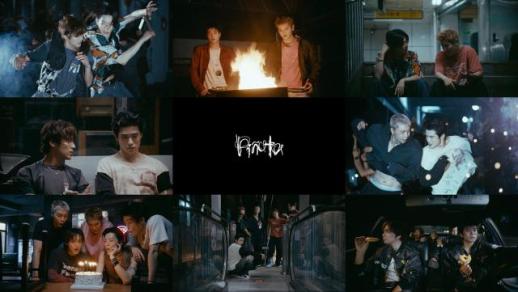 NCT 127 previews 'Piñata' with noir-style track video before KCON LA stage SEOUL, August 12 (AJP) - K-pop boy group NCT 127 gave fans an early listen to its upcoming seventh full-length album Tuesday, releasing a track video for "Piñata" ahead of the record's full release later this month, SM Entertainment said Wednesday. The video went up on NCT 127's official YouTube channel at 6 p.m. Tuesday. Rather than a straightforward performance clip, it casts the group as "fixers" in Seoul, following the members through a youth-noir story of misunderstanding, conflict and eventual reconciliation. The storyline extends the Seoul-rooted identity NCT 127 has leaned on for years, this time through a rougher narrative about friendship tested and rebuilt. Musically, "Piñata" moves between rock and hip-hop, anchored by electric guitar, funky bass and breakbeat drums that build toward a burst of guitar soloing and rap chants, matching the video's tense, high-energy mood. The title doubles as a statement of intent: like cracking open a piñata, the song treats the stage as something meant to burst into celebration. SM said the choreography leans old-school, built around individual moments for each member and a chant-heavy chorus designed for audience response. NCT 127 will debut "Piñata" live on Aug. 14 local time at KCON LA 2026 at Crypto.com Arena in Los Angeles. The group has performed at KCON LA in both 2024 and 2025, and this year's stage will serve as an early preview of its next album cycle. "BLINGY," the album carrying "Piñata," will be released on major streaming platforms at 6 p.m. (0900 GMT) on Aug. 24. The album includes nine tracks, led by the title song "Blingy." AJP Takeaway: NCT 127 released a track video for “Piñata,” a song from its seventh full-length album “BLINGY,” on Aug. 11. The video presents the members as Seoul “fixers” in a youth-noir story about conflict, friendship and solidarity. “Piñata” blends rock and hip-hop with electric guitar, funky bass, breakbeat drums, guitar solos and rap chants. 2026-08-12 18:04:51
 -
New Regulations on ETF and ETN Discrepancy Rates to Take Effect August 19 Starting August 19, the management standards for discrepancy rates of exchange-traded funds (ETFs) and exchange-traded notes (ETNs) will be strengthened. Individual investors looking to make new investments in single stock leverage and inverse products will be required to complete a minimum of five trading days and a total of over five hours of simulated trading, in addition to the basic deposit and prior education.According to the Financial Services Commission (FSC) on August 12, the commission held its first temporary regular meeting and approved amendments to the Korea Exchange's securities market regulations. This measure follows the supplementary measures for single stock leverage products announced by relevant agencies on June 16 and 29.First, the obligation for securities firms to manage discrepancy rates for all ETFs and ETNs will be strengthened. The management standard for discrepancy rates based on closing prices will be reduced from 3% to 2% for domestic products and from 6% to 5% for foreign products. The calculation criteria will also be clarified, applying the absolute value when the discrepancy rate is calculated as a negative percentage.Sanctions against liquidity providers (LPs) who repeatedly violate the discrepancy management obligations will also be strengthened. The Korea Exchange plans to limit new liquidity provision activities for securities firms that intentionally or grossly violate these obligations through amendments to its operational regulations.The procedure for designating investment caution items will be simplified from three stages to two. If the discrepancy exceeds twice the mandatory range of 2% for domestic and 5% for foreign products, a notice will be issued simultaneously with the designation, and if it exceeds twice the mandatory range again within ten trading days from the notice date, it will be designated as an investment caution item. If the criteria are exceeded for two consecutive trading days, designation can occur in as little as two trading days.Once designated as an investment caution item, single-price trading will be applied for three trading days. If the discrepancy falls within the mandatory range for three consecutive trading days, the designation will be lifted. If the discrepancy expands to more than three times the mandatory range on the last day of single-price trading, trading will be suspended for one day before resuming single-price trading.Simulated trading for single stock leverage and inverse products will also become mandatory. Starting August 19, the Korea Exchange will expand its simulated trading services, previously offered for futures, options, and short selling, to include domestic and foreign single stock leverage products.As a result, individual investors looking to make new investments in domestic and foreign single stock leverage products will need to complete simulated trading in addition to the existing basic deposit of 30 million won and prior education. The prior education consists of one hour of basic training and two hours of advanced training, totaling three hours. The advanced training has been extended from one hour to two hours since August 7.Simulated trading can be accessed for free on the Korea Exchange's website. Investors will use virtual funds provided by the system to trade in a manner similar to actual transactions based on the day's market prices.In particular, the requirements for simulated trading for single stock leverage products have been set more strictly than for general products to allow new investors to directly experience the negative compounding effects. New investors must complete more than five trading days of simulated trading, with at least one hour of trading each day. While it is not necessary to participate continuously every day, a total of over five hours must be completed.For new investments in foreign single stock leverage products, a separate system will not be established, and investors will be required to complete simulated trading services based on domestic data. The relevant regulations from the Korea Financial Investment Association are currently undergoing revision.The financial authorities have noted that while volatility in the stock market has somewhat eased, there are still factors contributing to market instability, and they plan to support the establishment of related systems. The FSC and the Korea Exchange, along with other relevant agencies, will closely monitor market conditions while implementing the supplementary measures for single stock leverage products announced last month.Meanwhile, following the strengthening of the basic deposit to 30 million won on July 31, trading volume for single stock leverage products has sharply decreased. According to the FSC, trading volume for single stock leverage products increased from 10.4 trillion won on May 27 to 12.4 trillion won on July 30, but fell to 700 billion won on August 11, representing only 5.6% of the volume on July 30. Between August 4 and 10, there was a redemption of 1.4 trillion won.* This article has been translated by AI. 2026-08-12 18:04:20
-
Samsung's AI Glasses Set for Release Amid Privacy Concerns Samsung Electronics is preparing to launch its artificial intelligence (AI) glasses in the second half of the year, focusing on safety measures to prevent privacy violations and misuse. As the latest AI glasses have advanced to the point where they are difficult to distinguish from regular eyewear, concerns about covert recording and cheating during exams have emerged, making safety a key priority.According to industry sources on August 12, about 10% of the patents Samsung has secured during the development of its AI glasses relate to privacy and misuse prevention technologies. The company is applying various technologies to the Android XR (extended reality) based AI glasses it is developing in collaboration with Google. These include a white LED feature that alerts others when recording is taking place, as well as a 'wear detection' function that determines whether the glasses are being worn properly.When the recording function is activated, an external LED lights up, allowing those nearby to be aware of the recording. The internal LED also enables the wearer to confirm the operational status. Notably, if the AI glasses are removed and placed on clothing or a table, the recording function is disabled to prevent unauthorized use.The design also accounts for attempts to intentionally disable safety features. If someone covers the LED with tape or their hand, the device can assess the level of obstruction and will stop functioning if it exceeds a certain threshold. The system is also designed to limit recording capabilities if the LED is damaged or if tampering is detected.Samsung operates a dedicated team focused on privacy and misuse prevention technologies. Engineers within the XR development team are researching potential misuse scenarios and developing strategies to mitigate them from the design phase.The emphasis on safety from the product development stage is crucial, as AI glasses pose a greater risk of privacy invasion compared to existing smart devices. With cameras, sensors, and microphones combined with generative AI, these glasses can naturally collect and analyze the scenes and information around the user. Unlike taking photos with a smartphone, it is difficult for others to immediately notice when recording is happening, raising significant concerns about third-party privacy as the technology becomes more widespread.In anticipation of the commercialization of AI glasses, the government is also taking steps to address these issues. The Personal Information Protection Commission recently met with Samsung representatives to discuss privacy protection measures for the AI glasses, emphasizing the need to implement 'Privacy by Design' principles from the development stage to minimize privacy invasion risks. They specifically called for the inclusion of notification devices, such as lights or sounds, to alert others when the wearer is capturing images or collecting information.There have been several instances of AI glasses being used for cheating in exams. In May, three candidates wearing AI glasses were caught during the Electrical Industry and Fire Safety Engineer exams, followed by two more during the TOEIC test. The Ministry of Education has advised local education offices to include AI glasses in the list of prohibited items in exam venues and to closely monitor candidates for any suspicious behavior.Regarding the misuse of AI glasses, Choi Jae-in, Vice President and head of the XR development team at Samsung Electronics, stated at the recent Galaxy Unpacked event, "Like a sword and shield, as the number of users increases, various issues may arise, so we must continue to work on solutions. We are constantly researching how to design features that can prevent misuse when certain conditions are met."* This article has been translated by AI. 2026-08-12 18:04:20
-
SK Hynix Becomes Largest Shareholder of Kioxia Amid Regulatory Challenges SK Hynix has become the largest shareholder of Kioxia, the third-largest global NAND flash producer, but the situation is complex. Despite investing trillions of won, concerns have been raised about the feasibility of exercising management rights and creating production and technology synergies between the two companies.According to industry sources on August 12, SK Hynix's special purpose company (SPC) BCPE Pangea Cayman 2 (SPC2) has acquired 14.19% of Kioxia's shares through the purchase of 77.4 million shares, surpassing Toshiba's stake, which has decreased to 14.12%.In 2018, SK Hynix invested a total of 395 billion yen (approximately 3.96 trillion won) in Kioxia through a Bain Capital consortium. This included an investment of 266 billion yen (about 2.64 trillion won) in an SPC (SPC1) to acquire Kioxia shares, along with a separate investment of 129 billion yen (around 1.28 trillion won) in convertible bonds (CB) through another entity (SPC2) to secure management rights. As of June, SK Hynix has sold all shares of SPC1 and currently holds only the CB from SPC2.Despite the apparent change in shareholding structure, industry experts believe there will be no substantial benefits. To convert the CB into actual voting shares, SK Hynix must pass merger reviews from regulatory authorities in South Korea, Japan, and China's State Administration for Market Regulation (SAMR). Under international law, if the combined companies exceed a certain revenue threshold in China, a review by Chinese authorities is mandatory.Amid the U.S.-China semiconductor rivalry, obtaining approval from Chinese authorities is expected to be challenging. If SK Hynix and Kioxia merge, their combined global NAND market share would exceed 30%. Given China's need to nurture its domestic NAND producer, YMTC, and lower product purchase prices, it is unlikely that Chinese authorities would allow an increase in SK Hynix's market dominance. In 2021, when SK Hynix sought to acquire Intel's NAND division, China imposed stringent conditions, including a six-year ban on price increases.Kim Yang-pyung, a senior researcher at the Korea Institute for Industrial Economics and Trade, stated, "As long as there are revenues in China, it will be difficult to bypass the SAMR antitrust review. From China's perspective, it would be burdensome to immediately accept an increase in market dominance by a South Korean company that needs to foster its semiconductor ecosystem."Contractual limitations also pose challenges. When investing in Kioxia, SK Hynix agreed to maintain its voting rights below 15% until 2028. Kioxia has also officially noted in its annual report that SK Hynix's share conversion rights present a 'potential conflict of interest risk.' The Japanese government is similarly cautious about allowing substantial management participation from South Korean capital due to concerns over semiconductor technology leaks.An industry insider remarked, "With the explosive demand for eSSD for AI servers, there is an urgent need for collaboration in supplying high-value products during the NAND supercycle. However, due to strict conditions, substantial cooperation is not expected in the immediate future. For now, SK Hynix will likely focus on holding the existing CB and enhancing the value of its investment assets as Kioxia improves its performance."* This article has been translated by AI. 2026-08-12 18:04:20
-
Canada to Open International Bidding for Naval Vessel MRO Canada is set to launch an international bidding process for the maintenance, repair, and overhaul (MRO) of its naval combat vessels. Although the scale of this project is smaller than the previous Canadian submarine project (CPSP), it is drawing significant interest from domestic shipbuilders as it could serve as a foothold for entering the North American naval MRO market.According to government and shipbuilding industry sources on August 12, the Canadian government is preparing for the international bidding for the combat vessel MRO project. While the timeline may vary due to internal circumstances, it is expected that the bidding announcement will occur no later than the fourth quarter.Companies considering participation include HD Hyundai Heavy Industries, Hanwha Ocean, HJ Shipbuilding, and SK Ocean Plant. The government views this project as an opportunity to expand defense cooperation between South Korea and Canada and has encouraged domestic shipbuilders to participate.This project is separate from the CPSP and focuses on selecting a contractor for the maintenance and repair of Canadian naval combat vessels. It is seen as a follow-up to discussions on expanding cooperation in military procurement and vessel maintenance that took place during the visit of the Canadian Defense Minister to South Korea last year.The project is reported to be worth several hundred million won. It will not involve complete overhauls of the vessels but will focus on voyage repairs to address defects that occur during navigation, meaning the contract size will not be large.However, industry insiders emphasize the importance of securing 'MRO performance records for North American naval vessels' over the contract amount itself. Establishing a reference for MRO with the Canadian Navy could pave the way for future projects and facilitate entry into the naval maintenance market in the U.S. and other North American countries.HJ Shipbuilding is reportedly the most proactive participant in this project. With experience in building naval vessels for the South Korean Navy, the company aims to develop its overseas naval MRO market as a future growth driver, making the acquisition of initial performance records crucial. Previously, HJ Shipbuilding became the third South Korean company to obtain qualification for the U.S. Navy's Maintenance Support and Repair Agreement (MSRA).An industry official stated, "While the project may seem small in terms of financial scale, securing initial performance records in naval MRO will significantly impact future market expansion. This is particularly true for mid-sized shipbuilders looking to expand into the overseas naval MRO market."Experts also assess that this project could serve as a stepping stone for entering the North American defense market. Choi Gi-il, a professor at Sangji University and director of the Korea Defense Industry Research Institute, emphasized, "Canada closely shares weapon systems and logistics with the U.S., so securing MRO performance with the Canadian Navy could become an important reference for gaining recognition of our technological capabilities and reliability in the North American market."He added, "South Korea has global shipbuilding competitiveness, but there have been few cases of exporting naval vessels to NATO member countries and other Western nations. If we achieve success in Canada, it could lead to further MRO and defense cooperation with North American and other allied nations."* This article has been translated by AI. 2026-08-12 18:04:10
-
Precision Nutrition: Different Responses to the Same Foods What foods should we eat for better health? The answer is simple: consume plenty of vegetables, choose whole grains over refined carbohydrates, and maintain a balanced diet with a variety of foods. While this may sound familiar, the fundamentals of a healthy diet are not overly complicated.But does following the same dietary principles lead to similar responses in everyone? Not necessarily. Some individuals experience a significant spike in blood sugar after eating the same amount of rice, while others see a more gradual increase. Even with identical meal plans, changes in weight and blood lipid levels can vary widely among individuals. Research has shown that blood sugar and triglyceride responses to the same foods can differ significantly from person to person. These differences cannot be attributed solely to the food consumed; they are influenced by genetic traits, health status, physical activity, and gut microbiome, among other factors.Precision nutrition begins with the concept of 'same food, different responses.' While traditional nutrition science has established general guidelines for healthy eating applicable to many, precision nutrition delves deeper into individual characteristics and responses. It moves beyond the question of 'What should I eat to be healthy?' to 'What should I eat to be healthy for me?'Countries around the world are also focusing on individual dietary responses. The National Institutes of Health (NIH) in the United States is conducting research through its 'Nutrition for Precision Health' initiative, which uses data on diet, genetic information, gut microbiota, and metabolic information to predict individual dietary responses using artificial intelligence (AI). The UK's PREDICT study and Israel's research on personalized post-meal blood sugar responses are notable examples demonstrating that metabolic responses to the same foods can vary among individuals. These studies aim to understand different dietary responses and provide a basis for tailored nutritional management.In the U.S., the 'Food Is Medicine' movement is gaining traction, actively utilizing food and nutrition for health promotion and disease management. This approach emphasizes not only the importance of healthy eating but also connects meal plans and food prescriptions tailored to specific health conditions with medical and community services. Various departments and agencies, led by the U.S. Department of Health and Human Services, are collaborating to advance related policies and initiatives.South Korea has also begun laying the groundwork for its own precision nutrition framework. The Ministry of Food and Drug Safety plans to conduct precision nutrition research over five years starting in 2025. This research will link and analyze genomic and clinical data produced by the National Integrated Bio Big Data project with newly collected precision nutrition data.To achieve this, dietary and dietary supplement intake, lifestyle logs, and lifestyle information will be collected from a total of 7,500 participants, with additional gut microbiome and metabolite information gathered from about 3,000 of them. Furthermore, intervention studies considering genomic and gut microbiome characteristics will accumulate evidence on individual dietary responses. The goal is to develop a Korean precision nutrition prediction model and create personalized nutritional management guidelines.The Korean dietary culture, which includes eating rice, soup, various side dishes, and enjoying fermented foods, differs from Western practices. Some genetic traits related to nutrient metabolism also vary among population groups. Therefore, it is essential to establish evidence that reflects the genetic characteristics, dietary habits, and living environments of Koreans rather than directly applying findings from foreign studies.Importantly, the work begins after the research. Simply accumulating data and creating predictive models will not integrate precision nutrition into the lives of citizens. For research findings to translate into chronic disease management, food and meal service sectors, and digital health services, a national policy and implementation system that connects these areas is necessary. This includes standardizing data, establishing a personal information protection system, and developing scientific bases and utilization standards for services.Precision nutrition does not replace existing healthy eating guidelines; rather, it adds a layer of 'individual differences' to them. For precision nutrition to take root in the lives of citizens, everyone must be able to trust and utilize dietary information tailored to their health status and lifestyle. We must now prepare to move beyond the age-old question of 'What should I eat to be healthy?' to answer 'What should I eat to be healthy for me?'* This article has been translated by AI. 2026-08-12 18:04:00