


Latest by
-
 BTS Achieves 1 Million Points on Oricon with 'Arirang,' First for Foreign Artists Group BTS has added another record in the Japanese music market as the first foreign artist to achieve this milestone.According to Oricon on August 12, BTS's fifth studio album 'Arirang' has reached a cumulative total of 1 million points in the 'combined album ranking' as of August 17, which includes physical album sales, digital downloads, and streaming.With this achievement, BTS now holds three albums that have surpassed 1 million points, following their best album 'BTS, THE BEST' and their fourth studio album 'MAP OF THE SOUL: 7 ~ THE JOURNEY ~.'Only two other artists, Japanese groups Snow Man and Mrs. GREEN APPLE, have more than three albums that have exceeded 1 million points in the Oricon 'combined album ranking,' making BTS the only foreign artist to do so.BTS also set a record on Billboard Japan. On August 12, Billboard Japan reported that BTS's 2020 digital single 'Dynamite' has surpassed 1 billion cumulative streams.This figure combines streaming counts from major Japanese music platforms such as Amazon Music, Spotify, and Line Music, along with YouTube Music views provided by Luminate. 'Dynamite' is the first foreign song to achieve 1 billion streams on Billboard Japan and has the highest streaming count among BTS's singles.'Dynamite' is BTS's first English-language song. It debuted at number one on the U.S. Billboard Hot 100 chart on September 5, 2020, making it the first K-pop group to achieve this feat. In Japan, it ranked second on the annual Billboard Japan Hot 100 chart in 2021.'Arirang' previously dominated the Oricon 'first half ranking 2026' in both the 'album ranking' and 'combined album ranking,' earning two awards.In the first half of the year, it recorded over 700,000 sales, a milestone not seen since the 2004 compilation album 'Jewels' by the British rock band Queen. In the first half 'combined album ranking,' it became the third overall and the first foreign artist to surpass 800,000 points, following Japanese groups King & Prince and Snow Man.* This article has been translated by AI. 2026-08-12 17:56:00
 -
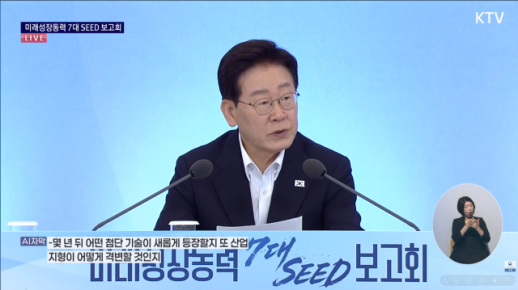 Lee calls for Korea to lead, not chase, with seven future-tech projects SEOUL, August 12 (AJP) - President Lee Jae Myung on Wednesday called for South Korea to move beyond catching up with global technology leaders and take the lead in emerging industries, as the government unveiled seven “SEED” projects. Lee said South Korea must use the opportunity created by its semiconductor industry to prepare for the technologies and industries that will follow the current artificial intelligence boom. “The seven advanced technologies and seven SEED projects we are discussing today will become the next-generation growth engines of our economy as well as core strategic assets of the country,” Lee said, adding that the projects could eventually grow into new national mega-projects. The seven areas are small modular reactors, nuclear fusion, renewable energy, quantum technology, space and aerospace, advanced biotechnology and advanced supply chains. Under the roadmap, South Korea aims to commercialize light-water small modular reactors (SMRs) by 2035 and begin construction of multipurpose non-light-water reactors in the 2030s. A Korean-designed fusion demonstration reactor is also targeted for completion by 2035, with electricity generation planned for the late 2030s. It will seek partnerships with countries including the United States to address uncertainties surrounding enriched uranium supplies while pursuing technologies related to spent nuclear fuel recycling. Beyond individual technologies, Wednesday's meeting highlighted a broader shift in how the government intends to finance high-risk research and development. Science Minister and Deputy Prime Minister Bae Kyung-hoon said the government plans to introduce an investment-based R&D model in which the public sector shares risks with private companies rather than relying only on traditional grants and loans. Supply-chain security was another major pillar of the strategy. Industry Minister Kim Jung-kwan warned that South Korea remains highly dependent on foreign suppliers for critical minerals, advanced materials, components and equipment despite its strength in manufacturing finished products such as semiconductors and batteries. More than 10 trillion won will be invested in critical materials, parts and equipment technologies over five years, while another 5 trillion won will be jointly invested with the private sector in projects linking major companies with domestic suppliers. The discussion also repeatedly returned to a less tangible challenge: people. Researchers and university leaders warned that ambitious targets in SMRs, fusion, quantum technology and biotechnology would be difficult to achieve without a larger and more stable pool of scientists and engineers. Participants called for stronger basic research funding, long-term career paths for researchers and greater support for science and engineering students. Closing the nearly two-hour discussion, Lee said South Korea's goal should be to become a technology leader rather than remain a fast follower. “Traditional manufacturing remains important, but on that foundation, we have to move ahead of other countries in future advanced industries,” Lee said. “We have to become a leader, not a follower.” He added that achieving that goal would require substantially greater national investment in education and R&D. “If those working in the field show us the way, the government will actively support you and work together with you,” Lee said. AJP Takeaways △ South Korea unveiled seven “SEED” future growth projects on Aug. 12, 2026. △ Key targets include SMRs, quantum computing, space, biotechnology and advanced supply chains. △ The government plans to expand public-private investment in high-risk technologies. 2026-08-12 17:49:09
 -
 Shares of chip parts maker jump on strong Q2 earnings SEOUL, August 12 (AJP) - Shares of semiconductor parts maker Wonik QnC rose on Wednesday after it posted a more than twofold increase in second-quarter operating profit from a year earlier. Its shares closed 5.31 percent higher at 31,750 won (US$22.44). The gain came as consolidated operating profit jumped 119.1 percent from a year earlier to 30.9 billion won ($21.8 million) for the period between April and June, according to its preliminary earnings report released the same day. Revenue also rose 16.7 percent year on year to 271.9 billion won, while net income swung to a profit of 26.7 billion won from a loss a year earlier. Wonik QnC makes quartz and ceramic components for chip manufacturing including tubes, boats, pedestals and rings. It also provides cleaning and coating services and supplies major chipmakers and equipment manufacturers, with production facilities in Germany and Taiwan. AJP Takeaways: - KOSDAQ-listed semiconductor parts maker Wonik QnC closed 5.31 percent higher at 31,750 won ($22.44) on Aug. 12, 2026, after reporting strong second-quarter earnings. - Wonik QnC's consolidated operating profit jumped 119.1 percent year on year to 30.9 billion won ($21.8 million) in the April-June 2026 period. - Wonik QnC's second-quarter revenue rose 16.7 percent to 271.9 billion won, while net income swung to a profit of 26.7 billion won from a year-earlier loss. - Wonik QnC makes quartz and ceramic components used in semiconductor manufacturing and also provides cleaning and coating services for semiconductor parts. 2026-08-12 17:48:40
 -
 AKMU's Lee Su-hyun to release rendition of Japanese classic next week SEOUL, August 12 (AJP) - Sibling duo AKMU's Lee Su-hyun is taking on Seiko Matsuda's 1980 J-pop classic "Blue Lagoon," the latest in a wave of Korean renditions of Japanese songs, production company SH Gold Networks said on Wednesday. Her version of the song is set to be released on major streaming platforms next week. "Blue Lagoon" made Matsuda a household name in Japan, with its bright melody and lyrics about the jitters of young love helping cement it as one of her signature songs. In South Korea, the song has an odd backstory of its own: long before Japanese pop was officially distributed here, it circulated through unofficial channels and became a kind of open secret among listeners who followed Japanese music on the sly. The song resurfaced in the spotlight in 2024, when NewJeans' Hanni sang it at an event for Japanese fans in Tokyo, drawing attention in both countries. SH Gold Networks described Lee's clear, warm vocals as adding a new texture to the song's breezy original feel, retaining its sense of anticipation while giving it her own emotional touch. The release slated for next Tuesday also marks a rare solo outing for Lee outside AKMU. More broadly, the project reflects how older Japanese pop songs are being reintroduced to South Korean audiences. AJP Takeaways: - AKMU's Lee Su-hyun will release a remake of Seiko Matsuda's 1980 J-pop classic "Blue Lagoon" on Aug. 18, according to SH Gold Networks. - "Blue Lagoon" became one of Matsuda's signature songs in Japan and also gained a following in South Korea before Japanese pop music was officially distributed there. - The song returned to wider attention in 2024 after NewJeans' Hanni performed it in Japan. 2026-08-12 17:43:15
 -
CMG Pharmaceutical to Address Management Risk with 10-for-1 Stock Consolidation CMG Pharmaceutical is moving forward with a 10-for-1 stock consolidation to alleviate concerns about being designated as a management risk.On August 12, CMG Pharmaceutical announced that it plans to hold an extraordinary general meeting on September 2 to vote on a proposal to consolidate ten common shares with a par value of 500 won into one common share with a par value of 5,000 won.If the stock consolidation is approved, trading will be suspended from October 1 to October 26, with the consolidated shares expected to be listed again on October 27.CMG Pharmaceutical has received a warning from the Korea Exchange regarding management risk after its stock price remained below 1,000 won for 25 consecutive trading days.According to current KOSDAQ regulations, a company is designated as a management risk if its common stock closes below 1,000 won for 30 consecutive trading days. As of August 5, CMG Pharmaceutical recorded 25 consecutive days below this threshold. If the stock price does not recover in the next five trading days, the company faces the risk of being designated as a management risk.In response, CMG Pharmaceutical aims to secure an appropriate number of outstanding shares and create a stable trading foundation through the stock consolidation. The total number of issued shares will decrease from 148,123,556 before the consolidation to 14,812,355 after, while the market capitalization and shareholder equity will remain unchanged.Alongside the stock consolidation, CMG Pharmaceutical plans to enhance its business competitiveness and increase corporate value through ongoing research and development (R&D), expansion of new products, and external business partnerships.In the field of new drugs, the company is accelerating the development of three small-molecule drugs: a next-generation lung cancer treatment, an osteoarthritis treatment, and a new mechanism hair loss treatment. In the formulation sector, it aims to strengthen product competitiveness focusing on combination drugs and improved new drugs.In the area of orally dissolving films (OSF), CMG Pharmaceutical is pursuing the commercialization of products utilizing its proprietary formulation technology both domestically and internationally, and plans to expand its prescription drug business.Lee Joo-hyung, CEO of CMG Pharmaceutical, stated, "This stock consolidation is a measure to secure an appropriate number of outstanding shares and create a stable trading foundation. We will strengthen our business competitiveness and profitability to achieve tangible management results."Meanwhile, CMG Pharmaceutical, along with several other KOSDAQ biotech companies such as Abion, Lab Genomics, Noeul, Chaperon, and Moa Life Plus, has received warnings about management risk after their common stock prices fell below 1,000 won for 25 consecutive trading days.Since the implementation of the 'penny stock exit system' promoted by financial authorities, there has been a surge in warnings about management risk, prompting pharmaceutical and biotech companies to take urgent measures to defend their stock prices and pursue stock consolidations.* This article has been translated by AI. 2026-08-12 17:40:00
-
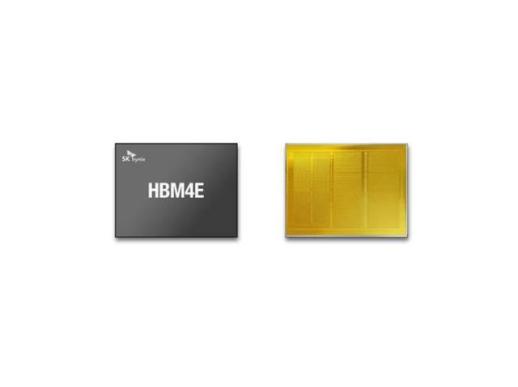 HBM isn't enough: Chipmakers race to break AI's memory wall SEOUL, August 12 (AJP) - The race to build faster artificial intelligence memory is beginning to move beyond simply stacking more DRAM, as chipmakers confront a more fundamental problem: even high-bandwidth memory may not be enough to keep increasingly powerful AI processors fed with data. For the past several years, competition among memory makers has centered on successive generations of HBM, from HBM3E to HBM4 and HBM4E. SK hynix, Samsung Electronics and Micron have raced to increase bandwidth and capacity while cutting power consumption as demand from AI chipmakers such as Nvidia has surged. That demand is still accelerating. Micron Technology estimates the global HBM market will grow from about $35 billion in 2025 to around $100 billion by 2028, representing compound annual growth of roughly 40 percent. The company now expects the market to reach the $100 billion milestone two years earlier than previously forecast. But as AI models grow larger and inference workloads become more demanding, the industry's focus is broadening from the performance of individual memory chips to how memory, processors, packaging and interconnects are designed together. At the heart of the shift is the so-called "memory wall" — the widening gap between the speed at which processors can perform calculations and the speed at which data can be supplied to them. HBM has substantially eased that bottleneck by placing stacks of DRAM close to processors and allowing far larger volumes of data to move in parallel. It has not eliminated it. Higher stacks and faster bandwidth bring their own constraints, including heat, power consumption, manufacturing complexity and cost. HBM also consumes a disproportionately large share of DRAM production capacity. TrendForce estimates HBM will account for about 22 percent of total DRAM wafer input among the world's three major memory suppliers by the end of 2026 while representing only about 9 percent of total DRAM bit supply. By the end of 2027, those shares are projected to rise to 30 percent and 13 percent, respectively, as larger die sizes and growing demand put greater pressure on production capacity. The numbers expose a central trade-off. HBM provides enormous bandwidth, but producing it consumes wafer capacity far faster than it expands the industry's overall supply of memory bits. That makes simply stacking more DRAM an increasingly expensive answer to AI's data problem. As workloads expand, the challenge is shifting toward how efficiently data can move across an entire computing system — from storage and memory to processors and accelerators — without power consumption, heat or latency overwhelming performance. Still, industry experts caution against reading the proliferation of new memory concepts as evidence that HBM is about to be displaced. "There are always many concepts for new forms of memory, but it is extremely difficult for them to go through verification and commercialization and ultimately reach mass production," said Lee Jong-hwan, a professor of system semiconductor engineering at Sangmyung University. "Only a very small number actually make it all the way to mass production." That is pushing semiconductor companies to explore architectures that extend beyond conventional HBM. Intel and SoftBank subsidiary SAIMEMORY, for example, are developing Z-Angle Memory, or ZAM, a next-generation stacked DRAM architecture aimed at delivering greater capacity and lower power consumption than current HBM designs. The project is part of a broader industry effort to rethink the physical relationship between processors and memory rather than relying solely on successive upgrades to existing HBM standards. Nvidia is also approaching memory increasingly as part of a broader computing architecture. Its latest Rubin GPU integrates up to 288 gigabytes of HBM4 and delivers up to 22 terabytes per second of memory bandwidth, about 2.8 times that of its Blackwell generation. But the architecture does not rely on HBM alone. Nvidia is combining faster memory with new memory controllers, tighter compute-memory integration and technologies designed to improve data movement across the system. The message is increasingly clear: raw bandwidth still matters, but so does everything between the memory cell and the processor. The shift is unfolding as AI reshapes the wider memory industry. Counterpoint Research expects server products to account for 56 percent of global memory revenue in 2026, up sharply from 37 percent in 2025, as spending on AI infrastructure shifts demand toward high-performance memory used in data centers. For Korean memory makers, however, the change does not mean HBM is approaching the end of its growth cycle. Demand remains strong as Nvidia, AMD and other chipmakers roll out more powerful AI accelerators, while HBM4 and its successors are expected to remain central to AI infrastructure for years. Rather, the shift suggests that leadership in the next phase of AI memory will require more than producing the fastest or highest-capacity DRAM stack. SK hynix, currently at the forefront of the HBM market, has already begun positioning itself for that transition. The company has outlined plans to become what it calls a "full-stack AI memory creator," expanding beyond HBM into AI-focused DRAM and NAND products while working more closely with customers on chip architecture, workloads, power requirements and thermal design. Its "Memory as a Service," or MaaS, strategy similarly seeks to tailor memory solutions to individual AI systems rather than treating memory as a standardized component supplied after processors have already been designed. Behind the corporate terminology is a deeper change in the industry's division of labor. Memory companies historically focused on developing chips to customer specifications and manufacturing them at scale. As the memory wall becomes a larger constraint on AI performance, accelerator designers increasingly need memory, packaging and interconnect technologies optimized alongside the processor itself. That is pulling memory companies earlier into the system-design process. Even SK hynix acknowledges that HBM alone is unlikely to be the industry's final answer. At the RAISE Summit in Paris last month, Kim Ho-sik, vice president responsible for memory system research at SK hynix, said HBM was currently the best available memory technology for alleviating the memory wall but was not the ultimate solution. His remarks followed criticism from former Intel CEO Pat Gelsinger, who pointed to HBM's thermal and efficiency limitations during a panel discussion and argued that the industry would eventually need a new memory architecture to unlock AI's full potential. Kim said SK hynix was also studying other approaches to address the bottleneck while stressing that HBM remains the best technology currently available. The exchange captured the industry's emerging consensus: HBM remains indispensable, but the search for what comes alongside — and eventually beyond — it has already begun. Lee said, however, that HBM's position is unlikely to be seriously challenged in the near term, pointing to long-term supply agreements between memory makers and their major customers as an important indicator of future demand. "HBM is likely to remain firmly in place for the time being," Lee said. "The fact that long-term contracts are already in place gives memory makers visibility into how much they will need to produce several years from now and allows them to plan their investments accordingly." For Samsung Electronics and SK hynix, that could widen the battlefield considerably. Their competitive advantage was built on the ability to manufacture increasingly dense and sophisticated memory at enormous scale. The AI era is pulling them further upstream, into decisions once dominated by processor and system designers: where memory sits, how it connects and how data flows through the machine. The next memory war may therefore be decided not by who can stack the most DRAM dies, but by who helps design the AI computer around them. 2026-08-12 17:35:23
 -
Disagreement Persists Between Ministries on 52-Hour Workweek Exception in Mega Special Zone Law The government has officially announced plans to enact the Mega Special Zone Special Law by the end of the year, but significant differences remain between the Ministry of Trade, Industry and Energy (MOTIE) and the Ministry of Employment and Labor regarding the 52-hour workweek exception. While MOTIE is actively considering flexible working hours, the Labor Ministry is taking a cautious stance on exceptions.Kim Jeong-kwan, the Minister of Trade, Industry and Energy, stated during a National Assembly meeting on August 12 that discussions are ongoing regarding work hour exceptions in the Mega Special Zone Special Law, including topics such as "white-collar exemptions (relaxation of work hour regulations for high-income professionals) and flexible working hours."In response to a question from Kim Won-ki, a member of the Democratic Party, about expanding the management units for extended work hours from weekly to monthly, quarterly, or biannually, and whether discussions are taking place regarding exceptions to the 52-hour workweek, Minister Kim replied, "MOTIE, labor representatives, and the government are closely collaborating on this matter."MOTIE believes that in advanced industries such as semiconductors, where the speed of research and development is directly linked to competitiveness, it is necessary to operate work hours flexibly during critical research periods.Minister Kim reaffirmed this existing position when asked by Seo Ji-young, a member of the People Power Party, about his stance on the principle that "the will of workers should not be suppressed by the system." He responded, "That is correct."On the other hand, Kim Young-hoon, the Minister of Employment and Labor, expressed during a National Assembly meeting on climate, energy, and labor that a cautious approach is necessary regarding exceptions to the 52-hour workweek for research and development personnel in the Mega Special Zone.Minister Kim stated, "There is no disagreement that the Mega Special Zone must succeed and that we need to enhance corporate productivity," but he added, "We will consider how to harmonize corporate productivity with labor rights." When asked whether the 52-hour workweek exception would be applied to research positions in the Mega Special Zone, he indicated that "no decisions have been made by the government yet."The Labor Ministry believes that since existing special extended work hour provisions can be utilized, caution is warranted regarding the introduction of separate exception systems. Minister Kim previously noted, "If a white-collar exemption is not introduced, it may hinder industrial development, and we need to examine what actual productivity improvements can be achieved based on reality."The 52-hour workweek exception has been discussed in meetings chaired by the President, but it appears that the differences between the ministries have not been reconciled. When asked if there had been discussions on this topic in a closed meeting chaired by the President, Minister Kim stated, "It is difficult to answer as it was a closed meeting, but the discussions were similar to what was publicly shared between the ministries."As President Yoon Suk Yeol has called for a "rapid advance" beyond just a "speed race" in promoting mega projects, inter-ministerial coordination is expected to be crucial for the enactment of the special law. The government plans to establish the Mega Special Zone Special Law within the year to support three major mega projects: semiconductors, physical AI, and AI data centers.During the National Assembly session, there were also calls for prompt coordination between the ministries. Baek Hye-ryun, a member of the Democratic Party, emphasized that the Mega Special Zone Law cannot be handled solely by MOTIE, as it involves collaboration with the Ministry of Land, Infrastructure and Transport and the Labor Ministry. In response, Minister Kim stated, "If we can just accelerate, we can do anything."* This article has been translated by AI. 2026-08-12 17:32:10
-
Dongwon Group Surpasses 5 Trillion Won in First Half Revenue Amid B2B Growth Dongwon Group has exceeded 5 trillion won in revenue for the first half of this year. While the consumer-facing (B2C) food business has slowed due to high exchange rates and a domestic recession, the business-to-business (B2B) sectors, including packaging, food distribution, and logistics, have driven overall growth. Operating profit also saw a double-digit increase.Dongwon Industries, the holding company of Dongwon Group, reported on August 12 that its consolidated operating profit for the first half reached 297.6 billion won, with revenue totaling 5.102 trillion won. This marks a 15.1% increase in operating profit and a 9.1% rise in revenue compared to the same period last year.For the second quarter, consolidated operating profit was 151.5 billion won, up 13.3% from the same period last year, while revenue increased by 9.0% to 2.572 trillion won.On a standalone basis, Dongwon Industries reported an operating profit of 122.6 billion won for the first half, a 2.7% increase, with revenue rising 9.1% to 632.2 billion won. The expansion of seafood distribution, including tuna and mackerel, contributed to this revenue growth.Performance varied between B2C and B2B sectors. The B2C food division faced declining profitability due to high exchange rates, rising costs, and a slowdown in domestic consumption. In contrast, the B2B sectors, including food distribution and packaging, experienced growth driven by new client acquisitions and increased exports.Dongwon F&B, the food subsidiary, saw a slight increase in revenue due to growth in online channels, but its operating profit fell by 7.2% compared to the previous year. This decline was attributed to accumulated cost pressures and intensified competition in offline distribution channels.Conversely, Dongwon Home Food, a food distribution company, showed balanced growth across its main businesses, including seasoning products, food distribution, meal services, and livestock distribution. The company expanded its client base in the food distribution and meal service sectors and increased its product offerings in the livestock business, boosting its performance.The packaging subsidiary, Dongwon Systems, also demonstrated significant growth. Its consolidated operating profit for the first half reached 44.4 billion won, a 15.5% increase from the previous year, with revenue rising 5.2% to 740 billion won. The export of high-value products, such as eco-friendly polyethylene-based packaging, contributed to this growth, along with improved performance from overseas subsidiaries.Dongwon Logistics also reported nearly a 10% increase in revenue, supported by new client acquisitions and enhanced transportation efficiency. Its operating profit also grew by double digits, contributing to the overall improvement in the group's performance.In line with its performance growth, Dongwon Group plans to increase shareholder returns. Dongwon Industries announced at a board meeting that it will raise its interim dividend from 550 won to 600 won per common share. Dongwon Systems also decided on an interim dividend of 300 won per common share.A Dongwon Group official stated, "Despite ongoing cost pressures in the food sector, the B2B divisions in packaging, food distribution, and logistics have shown solid growth, driving overall performance for the group. While the business environment remains challenging, we will strengthen our foundation for stable operations."* This article has been translated by AI. 2026-08-12 17:32:10
-
Korea's National Tax Service to Establish Team for Tracking High-Value Tax Delinquents Im Kwang-hyun, head of the National Tax Service, announced the establishment of a dedicated team to track high-value tax delinquents who hide assets through overseas affiliates or name trusts. A tax management team of 10,000 will be deployed to assess the status of accumulated delinquencies totaling 130 trillion won, and a tax service and tax evasion detection system utilizing artificial intelligence (AI) will also be developed. Im made the announcement during a nationwide tax office meeting held on August 12 at the Government Sejong 2nd Office, outlining the '2026 Second Half National Tax Administration Operation Plan.' The dedicated teams for tax delinquency tracking and tax investigations will be established at the Investigation Bureau 4 of the Seoul Regional Tax Office and Investigation Bureau 3 of the Central Regional Tax Office. They will conduct integrated investigations into asset tracking, evasion of tax collection, offshore tax evasion, and corporate fund outflows. Previously, the National Tax Service's collection office conducted surveillance, inquiries, and home searches targeting high-value and habitual delinquents. However, it was challenging to confirm the actual ownership of delinquents' assets when they were obscured through multiple layers of overseas affiliates or when shares of domestic corporations were registered under others' names. The newly established teams will utilize irregular tax investigation methods, including overseas information collection and analysis, to verify hidden assets and tax evasion suspicions. They will track transactions between business owners and domestic and foreign affiliates to identify corporations and assets that the delinquents effectively control. Park Sang-jun, head of the National Tax Service's Investigation Planning Division, explained in a related briefing, "The teams at the Seoul and Central offices are irregular dedicated investigation units, and we are prioritizing their establishment based on their capacity to focus on transactions between business owners and affiliates." In the second half of the year, a total of 10,000 personnel will operate the National Tax and Non-Tax Revenue Delinquency Management Team to assess the status of the accumulated 130 trillion won in delinquencies. Currently, 5,500 personnel are active, and about 18,800 people applied for the recruitment of an additional 4,000 personnel to be deployed in October, resulting in a competition ratio of 4.7 to 1. The delinquency management team will verify the payment capabilities of small-scale delinquents via phone and will investigate high-value delinquents and those avoiding visits in person. Based on the findings, delinquents will be classified into three categories: temporarily unable to pay, willfully avoiding payment, and those facing financial difficulties. For those temporarily unable to pay, installment payment options will be provided. In cases of willful concealment of assets, home searches, seizures, and lawsuits to cancel fraudulent transactions will be pursued, while those facing financial difficulties will be linked to welfare services and have their payment obligations extinguished. Starting in 2027, the authority to collect fines and penalties scattered across various government departments will be centralized under the National Tax Service. The agency plans to support the passage of the 'Law on the Collection and Management of Non-Tax Revenue Delinquencies' within the year and establish a database and integrated management system for each delinquent. The National Tax Service has begun verifying the status of 2.95 million individuals with unpaid fines totaling 1.1 trillion won from the National Police Agency, and starting in September, it will expand its scope to include wage claims from the Ministry of Employment and Labor, environmental improvement charges from the Ministry of Climate, Energy, and Environment, and fines from the Fair Trade Commission. Beginning this second half of the year, the National Tax Service will implement AI-based 'Home Tax AI Search' and 'AI Phone Consultation.' It is also in the process of designing an 'AI Tax Evasion Detection System' that combines past tax investigation cases, investigative know-how, and big data. During the meeting, Im stated, "We have successfully carried out the national tax administration innovation projects initiated from field voices over the past six months. In the second half, I urge all of you to work together to lead national financial innovation and practice fair taxation, enabling the National Tax Service to support the great leap of 'Irreplaceable Korea.'"* This article has been translated by AI. 2026-08-12 17:32:00
-
Will the Legacy of Korean Premier League Players End After 21 Years? The legacy of 'Korean Premier League players,' which began with Park Ji-sung in 2005, is at risk of ending after 21 years. With just ten days until the start of the English Premier League (EPL) season, no South Korean player has confirmed participation in the first team.The 2026-2027 EPL season will kick off on August 22 at 4 a.m. KST with a match between Arsenal and Coventry City.Over the past 21 years, Korean Premier League players have kept fans on the edge of their seats. Starting with Park Ji-sung's entry into Manchester United, a total of 15 players, including Lee Young-pyo, Seol Ki-hyeon, Lee Chung-yong, Ki Sung-yueng, Son Heung-min, and Hwang Hee-chan, have made significant contributions on the English stage.Notably, Son Heung-min has spent a decade at Tottenham Hotspur, becoming the first Asian player to win the EPL Golden Boot, elevating the status of Korean football.However, the departure of both Son and Hwang from the EPL has created a significant void. Son transferred to Major League Soccer's LAFC last year, while Hwang moved due to Wolverhampton Wanderers' relegation to the Championship.Yang Min-hyeok, a promising player from Tottenham, has also faced setbacks. After loan spells at Queens Park Rangers, Portsmouth, and Coventry City, he aimed to make an impact during preseason with Tottenham but has now been loaned to Belgian club Westerlo.Despite the challenges, there is still hope for South Korean players in the EPL. Newcastle United's 2007-born winger Park Seung-soo is seen as a potential candidate. He was recently highlighted by The Guardian as a key prospect for Newcastle.The arrival of 38-year-old head coach Matthias Jaissle has opened up new competition for starting positions. However, Park is expected to gain experience with the under-21 team this season, making immediate first-team action unlikely.Central defender Kim Ji-soo, who returned to Brentford after a loan at Kaiserslautern in Germany, is also vying for a first-team spot. He played a full match against Stade Rennais in a closed-door friendly on August 9. However, he faces tough competition from established defenders like Nathan Collins and Christopher Ajer, and the club is considering another loan for his long-term development.While the opportunities for South Korean players have diminished, the number of Japanese players in the EPL has noticeably increased. Last season, four Japanese players, including Kaoru Mitoma (Brighton & Hove Albion) and Wataru Endo (Liverpool), participated, and this season could see that number more than double.New additions include Daizen Maeda (Ipswich Town) and Hidemasa Morita (Hull City), along with Tatsuki Sakamoto, a key player in Coventry City's promotion. On August 8, Takehiro Tomiyasu joined Crystal Palace. Additionally, players like Kaishu Sano (Mainz) and Ayase Ueda (Feyenoord) are also being considered by multiple EPL clubs, raising the possibility of up to ten Japanese players competing in the Premier League.* This article has been translated by AI. 2026-08-12 17:28:10