


Latest by
-
 Korean Shipbuilders Compete for North American Naval Maintenance Hubs Korean shipbuilders are accelerating efforts to secure local bases for expanding their overseas naval maintenance, repair, and overhaul (MRO) businesses. As key allies like the U.S. and Canada emphasize domestic maintenance capabilities, these companies are moving beyond simple contracts to pursue acquisitions and strategic partnerships with local shipyards.According to industry sources, Hanwha recently made a non-binding conditional offer of $1.05 billion to $1.2 billion to acquire the U.S. division of Australian shipbuilding and defense firm Austal. This marks Hanwha's second expansion into the U.S. shipbuilding sector, following its acquisition of a shipyard in the Philippines in 2024. If successful, the acquisition will enhance Hanwha's local capabilities for both shipbuilding and MRO in the U.S.Industry analysts point to the importance of local production and maintenance bases in the naval sector as a key reason for Hanwha's aggressive pursuit of U.S. shipyards. While MRO can be performed at domestic shipyards, having a local base allows for quicker responses without the need to transport vessels over long distances. Additionally, securing a shipyard along with skilled labor and supply chains broadens the capacity to handle regular maintenance and urgent repair needs.HD Hyundai is also exploring options to establish a local presence to expand its naval business in the U.S. While it has not yet finalized any acquisitions, the company is keeping various avenues open and has been securing partnerships with local shipyards, equipment manufacturers, and investors to strengthen its U.S. operations.Notably, HD Hyundai has formed a $5 billion Korea-U.S. shipbuilding investment fund with American private equity firm Servarus. A company representative stated, "Key investment targets include acquiring and modernizing U.S. shipyards, investing in equipment and supply chain companies, and developing advanced shipbuilding technologies such as autonomous navigation and artificial intelligence."HD Hyundai is also expanding its collaboration with U.S. naval and defense firms. In April, it became the first South Korean company to secure a core research and development project from the U.S. Office of Naval Research (ONR) and is currently working with U.S. defense contractor Anduril on the development and market entry of unmanned surface vessels.Samsung Heavy Industries is focusing on building a local workforce and technological foundation rather than directly acquiring a shipyard. Following the opening of the Korea-U.S. Shipbuilding Cooperation Center in July, the company has signed agreements and joint research contracts with U.S. firms in shipyard operations and vessel construction technology.Additionally, Samsung Heavy Industries plans to establish a training center in the U.S. Northwest in partnership with its MRO partner, Vigor Marine Group. This center will serve as a facility to train welders and painters, essential for shipbuilding and repair. The advanced technologies and expertise in welding and painting that Samsung Heavy Industries possesses are expected to further solidify its presence in the U.S. market.The actions of these companies are seen as strategic moves to penetrate the North American naval MRO market. Particularly in Canada, where defense and security regulations may restrict direct entry by foreign firms, collaboration with local shipyards or manufacturing licensing is being considered a viable strategy for market entry.Lee Shin-hyung, head of the Department of Naval Architecture and Ocean Engineering at Seoul National University, stated, "The ability to quickly support vessels in need of maintenance is a core competitive advantage in naval MRO. The efforts of domestic shipbuilders to secure U.S. shipyards or build cooperative networks are ultimately strategies to establish a sustainable business foundation in the North American market." 2026-08-12 18:04:00
 -
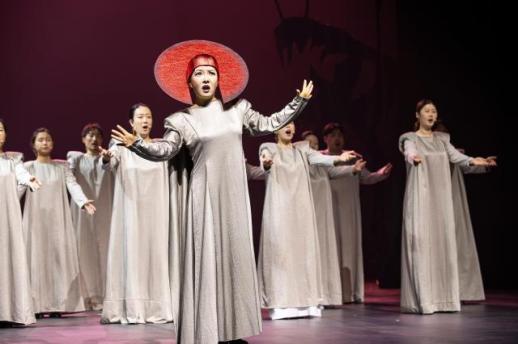 Seoul Performing Arts Festival to open with Han Kang adaptation, Avignon-linked works SEOUL, August 12 (AJP) - The Seoul Performing Arts Festival returns in October with a lineup led by a stage adaptation of Han Kang's "We Do Not Part," starring Isabelle Huppert and Lee Hye-young. Now in its 26th edition, SPAF runs Oct. 8-25 at venues across Seoul under the theme "Multiverse of Art." The festival is organized by the Korea Arts Management Service, with support from the Ministry of Culture, Sports and Tourism and the Arts Council Korea. This year's program includes 19 works: seven international productions, five premieres from SPAF's partner artists, five Korean works in the newly launched PAMS×SPAF Choice program and two staged readings from the festival's Asian playwriting lab — a lineup that reflects SPAF's shift from simply hosting visiting shows to following productions through development, presentation and eventual touring. The centerpiece is "The Bird," a staged reading of Han Kang's novel "We Do Not Part" directed by Julie Deliquet of Paris's La Colline National Theatre and starring Huppert and Lee. The work premiered at the Avignon Festival in July before making its way to Seoul. Avignon's imprint on the lineup goes beyond that one production. "Distance Between Us," a play by Avignon artistic director Tiago Rodrigues, follows a daughter who leaves for Mars and the father she leaves behind, while "Reminiscencia," a documentary theater piece by Malicho Vaca Valenzuela, draws on personal and urban memory. Rounding out the international slate are French choreographer Mathilde Monnier's "Soapéra, Installation" and "Blur: When the Boundary Blurs," an XR work pairing live performance with virtual reality that was invited to the Venice International Film Festival's immersive competition in 2025. Among the Korean premieres, the opera "The Third War" — written and directed by Park Bon — stands out as one of the festival's major co-productions. The work began in 2024 with the Asia Culture Center, was shown as a work-in-progress at SPAF last year, and premiered in Gwangju in May ahead of its Seoul run, featuring soprano Yeree Suh, actor Kang Ae-sim and Anupam Tripathi of "Squid Game." SPAF is also introducing PAMS×SPAF Choice this year, a new program run with the Performing Arts Market in Seoul that presents five full-length Korean works to both general audiences and industry professionals. On the writing side, the festival's creative lab will stage readings of two contemporary Asian plays: Hong Kong writer Pat To Yan's "Neometropolis" and Japanese writer Yudai Kamisato's "Descending the Long Slope of Valparaíso." Early-bird tickets go on sale Aug. 14 at 2 p.m. and run through Aug. 21, with a 40 percent discount on select performances and a four-ticket limit per person. National Theater of Korea shows are excluded from the discount, and tickets for "The Bird" and several premieres will be sold separately starting in early September. AJP Takeaway: The 26th Seoul Performing Arts Festival will run from Oct. 8 to 25 in Seoul under the theme “Multiverse of Art.” The lineup includes 19 works, ranging from seven international invited productions to Korean premieres, PAMS×SPAF Choice selections and Asian playwriting lab readings. The headline international work is “The Bird,” a staged reading based on Han Kang’s “We Do Not Part,” directed by Julie Deliquet and starring Isabelle Huppert and Lee Hye-young. 2026-08-12 18:03:25
 -
 Chinese snacks spread across Korean shelves, drawing curiosity and scrutiny SEOUL, August 12 (AJP) - Step into an unmanned snack shop in Seoul and the shelves resemble a miniature world market — with China taking an outsized share, from mala konjac and latiao to spicy seafood and candy. The novelty is drawing shoppers, but also closer scrutiny as Korean regulators flag bacterial contamination, high sodium and labeling problems in some imported products. The Chinese packaged fish snack, bought from an unmanned store in downtown Seoul, looked as forceful as its smell. Small anchovies were tangled under a thick, dark-red coating of seasoning and oil that streaked the plate as they were lifted from the bag. The first bite delivered salt, chili and seafood all at once. The fish were unusually firm and chewy, followed by a bitter finish that remained after the heat faded. The experience was sensory, not scientific. Nothing about the smell, appearance or taste showed that the product was unsafe. But the bag sits inside a much broader shift in Korean retail — and a growing food-safety question. Chinese snacks that were rarely seen in Korea a few years ago are now increasingly common in unmanned stores, where mala-soaked konjac strips, latiao, spicy dried seafood, tofu snacks and brightly colored jellies sit beside Korean chips and candy, often with no employee present to explain what they contain or check the shelves. Recent government testing has found that most products examined met key safety standards, but some showed problems ranging from bacterial growth and inaccurate nutrition labels to excessive sodium, sugar and potentially damaging hardness. The findings do not establish that Chinese-made snacks as a category are unsafe. They instead highlight the challenge of policing a fast-growing imported-food market as unfamiliar products spread through a retail format built around minimal staffing. On June 9, the Korea Consumer Agency released results from tests of 20 imported snacks sold around elementary schools. Before selecting the products, the agency surveyed 36 unmanned ice cream and stationery stores in the Chungcheong region between December 2025 and January 2026. It tested 10 mala-flavored snacks and 10 candies or drinks. One product produced a clear safety failure. A mala-flavored konjac snack called Hyangrawei Seol Gonyak showed bacterial growth despite being classified as a retort food, a category that must test negative for bacterial development under Korean food standards. The Consumer Agency recommended that importer Yoonjin Trading halt sales and provide refunds. The importer told the agency in April that no inventory from the affected batch remained in circulation and that buyers would be eligible for refunds. The broader results were less alarming. All 20 products met Korean standards for heavy metals and food additives. The agency nevertheless found problems with nutrition, labeling and the physical characteristics of some snacks. The 10 mala products contained between 120 and 674 milligrams of sodium per package. Two — Geumdaeju spicy enoki mushrooms at 674 mg and glutinous-rice latiao at 659 mg — contained enough that two packages would reach the recommended adequate daily sodium intake of 1,300 mg for children aged 9 to 11. Fat content ranged from 1 percent to 13 percent of total product weight, averaging about 6 percent, reflecting the use of soybean oil and flavored oils in many mala products. The Consumer Agency said that raised the need for closer monitoring of oxidation and rancidity during manufacturing and storage. Another product posed a more physical risk. An imported freeze-dried jelly sold as ASMR Crunchy Earth-Shaped Freeze-Dried Jelly reached a maximum hardness of 118 newtons in testing, compared with an average chewing force of 47.6 newtons for children aged 6 to 11 cited by the agency. The agency warned that biting products that hard could damage teeth or strain the jaw. The importer subsequently agreed to stop importing and selling the product. Sugar and calorie levels were another concern. A 180-gram package of blueberry-flavored chewy jelly contained 642 calories and 55 grams of sugar. The sugar alone exceeded the agency's 45-gram daily added-sugar guideline for children aged 9 to 11. Five of the 20 products also had measured nutrient levels outside permitted labeling tolerances, with some differing substantially from what was stated on the packaging. The Consumer Agency called for tighter quality control by importers and stronger monitoring by the Ministry of Food and Drug Safety for newer categories of imported snacks. "Consumers should be cautious of excessive sodium and sugar intake when eating imported snacks, and take care with hard freeze-dried jellies because of the risk of dental damage," a Consumer Agency official said. For consumers, however, the questions begin well before laboratory testing. A walk through unmanned snack stores in Seoul now reveals entire shelves of products whose names, ingredients and textures may be unfamiliar to many Korean shoppers. For some, that novelty is the attraction. "There are way too many options for me to choose from," said Saige Greenley, 31, an American tourist on her fourth trip to Korea who has been staying in the Euljiro neighborhood and exploring the city by subway. Greenley said she had noticed more international snack stores on this trip. Chinese snacks, however, were a harder sell. "My friend tried one a couple of days ago and she had a hard time dealing with the spice and the smell," Greenley said. She said the texture was unlike a conventional bag of chips and that she still preferred Korean snacks, which she described as "like American chips but in different, unique flavors." Some Korean consumers are more cautious. Kim Sun-young, a 28-year-old office worker in Seoul's Gangseo district, said she regularly eats mala hot pot but avoids packaged Chinese snacks. "The packaging alone makes me reluctant to pick it up," Kim said. "I also read a news article about Chinese snacks a while back, and that's made it even harder for me to eat them." Kim said tanghulu, the candied-fruit skewer, was about the only Chinese snack she still eats. She has never tried the packaged konjac products commonly displayed in unmanned stores. Several of her friends, however, like the snacks precisely because they are cheap and strongly flavored, she said. The consumer unease comes against a much larger flow of imported food. South Korea received more than 874,000 import declarations for food and food-related products in 2025, up 3.3 percent from a year earlier, according to the Ministry of Food and Drug Safety. Their total value reached $36.6 billion. Of those inspected, 1,420 cases were ruled noncompliant, equivalent to 0.16 percent. Confectionery was among the categories most frequently involved, alongside fruit and vegetable products and certain food-contact materials. Violations included failures to meet ingredient or manufacturing standards, excessive pesticide residues and microbiological problems. The low overall failure rate matters. Regulators do find imported foods that fail Korean standards, but those cases are not evidence that imported food — or Chinese food in particular — is broadly unsafe. The more immediate concern may be what happens after the products clear the border. Data provided by the Ministry of Food and Drug Safety to lawmaker Lee Ju-young showed 45 cases in which unmanned food stores were caught selling products past their consumption dates between 2022 and September 2025. Thirty-nine resulted in fines and six in business suspensions. The violations were not confined to Chinese imports. They instead exposed a broader weakness of unmanned retail: there is no clerk continuously checking consumption dates, refrigeration equipment or damaged packaging. That leaves more responsibility with consumers standing in front of shelves filled with products they may never have seen before. The Jinzai anchovies bought by AJP were not laboratory-tested and cannot be judged unsafe from taste, smell or appearance. But the bag helps explain why the category is drawing attention. Chinese snacks are becoming cheaper, more visible and easier to buy across Korea. As their presence grows, so does the need to distinguish between unfamiliarity and actual risk — and to make sure the system catching the latter keeps pace. 2026-08-12 18:03:15
 -
Hyundai Motor Group Aims to Be More Like an IT Company with AX Transformation "We will become a company that is more like an IT company than an IT company itself" (Chung Euisun, Chairman of Hyundai Motor Group) Hyundai Motor Group is accelerating its AI transformation (AX) as it transitions from an automotive manufacturer to a future mobility and physical AI company. The group is focusing on embedding an AI-driven culture deep within the organization, moving beyond merely implementing generative AI in its operations. It has already demonstrated its competitiveness by integrating AI across all areas, including development, manufacturing, and after-sales service. On August 12, Hyundai Motor Group held an 'AX Achievement Presentation' at its headquarters in Yangjae, Seoul. The event was organized to showcase the group's AX transformation efforts and key achievements since 2019. Jin Eunsook, President of ICT at Hyundai Motor and Kia, stated, "AI is an important technology, but ultimately it is a tool for businesses. The speed at which we understand and apply new technologies, including AI, is crucial for organizational competitiveness, and we will continue to expand AX initiatives." ◆ Chairman Chung Euisun Participates in Coding Training: "Top Leaders Must Embrace AI for Organizational Efficiency" To enhance work efficiency, the company has implemented platforms such as Jira, Doory, Confluence, and Microsoft 365 since 2022. Research teams in autonomous driving and hydrogen sectors, which previously could not use external collaboration tools due to security regulations, are now able to share and accumulate information across various departments using the same platforms. The in-house generative AI platform, 'H Chat Pro,' has become a primary tool for 30,000 employees. It allows staff to utilize various external generative AI models, such as ChatGPT, Gemini, and Claude, in a secure environment. Chairman Chung and other senior executives recently participated in 'Vibe Coding' training, a development method that uses generative AI to execute code and produce results. After the training, Chung reportedly said, "Management must understand AI well to clearly distinguish what it can and cannot solve, which is essential for making sound decisions." He also emphasized the importance of top-level leaders embracing technology to drive organizational competitiveness. ◆ 90% Reduction in Work Time, Annual Cost Savings of 5.2 Billion Won Hyundai explained that the AX transformation is leading to productivity improvements. For instance, after implementing the 'Collision Safety AI Assistant,' engineers have reduced their data collection time by over 90%. Developers are now able to redirect the time saved into high-value tasks such as interpreting experimental results and improving designs and strategies. In manufacturing, the 'AI Automation Recognition Service' is enhancing quality control and operational efficiency in production processes. Previously, workers manually checked vehicle information, but AI technology now enables early detection and response to errors. This service has been applied across all Hyundai and Kia factories and 70 global production sites, achieving annual cost savings of 5.24 billion won. Hyundai Motor Group is also actively supporting small and medium-sized enterprises in their AX initiatives, leveraging its experience and expertise. Jin, the ICT head, stated, "Our goal is not to be the company that uses AI the most, but to be the company that utilizes AI most effectively in the world. We will learn new technologies quickly and apply them in the field to create customer value and business results."* This article has been translated by AI. 2026-08-12 18:00:10
-
KB Kookmin Bank Reports $36 Million Financial Fraud Incident KB Kookmin Bank has reported a financial fraud incident totaling 3.5779 billion won (approximately $36 million).The bank disclosed on August 12 that the fraud, attributed to external parties, occurred between September 2023 and December 2024. The incident was identified during the loan approval process at the branch handling the loans, where unusual signs were detected. The estimated loss amount has not yet been finalized.A representative from KB Kookmin Bank stated, "This case involves collusion between real estate developers and fake investors to commit loan fraud against the financial institution," adding that law enforcement is currently investigating the individuals involved.* This article has been translated by AI. 2026-08-12 18:00:00
-
Neowiz Reports 57% Drop in Q2 Operating Profit Amid Declining PC and Console Sales Neowiz reported a 57% decrease in operating profit for the second quarter of this year, impacted by stabilizing sales of major PC and console games and a base effect from downloadable content (DLC) released last year.On August 12, Neowiz announced that its consolidated revenue for Q2 reached 102.1 billion won, with an operating profit of 7.9 billion won. Revenue decreased by 7.2% compared to the same period last year, while operating profit fell by 57.3%. Compared to the previous quarter, revenue increased by 1%, and operating profit rose by 14%.By business segment, sales from PC and console games totaled 37.3 billion won, down 35% year-on-year and 6% from the previous quarter. Major titles such as 'Lies of P' and 'Shape of Dreams' have entered a stabilization phase in sales since their release, and the base effect from the DLC 'Lies of P: Prelude,' launched in June of last year, also contributed to the decline.In contrast, mobile game sales increased to 53.2 billion won, marking a 21% rise year-on-year and a 4% increase from the previous quarter. The mobile segment helped offset some of the overall decline in game revenue.'Brown Dust 2' saw revenue growth due to a successful three-year anniversary campaign and content updates. 'Cat and Soup' experienced a rebound in user metrics thanks to collaboration with Sanrio IP, along with the initial success of 'Cat and Soup: Magical Recipe,' which was globally launched in April. Other revenue reached 11.6 billion won, a 37% increase compared to the same period last year.On the same day, Neowiz's board approved the appointment of Park Sung-jun, head of the new game development group, as co-CEO. This change transitions Neowiz to a co-CEO structure with existing CEO Bae Tae-keun.Park Sung-jun will oversee overall management related to new game development, drawing on his experience leading the development of 'Lies of P.' Bae Tae-keun will focus on managing technology-based new businesses and infrastructure operations. The company plans to concentrate its efforts on discovering new intellectual properties, global publishing, and live game operations through its new game development group, global business group, and live game business group. 2026-08-12 18:00:00
-
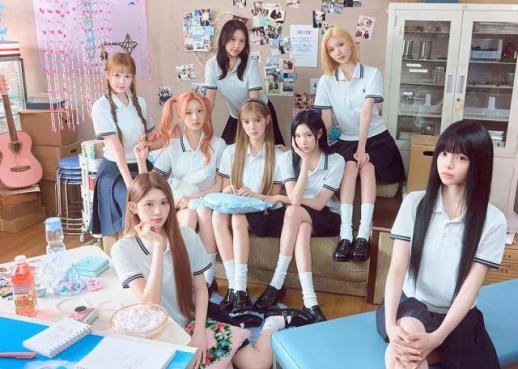 Rookie girl band Hearts2Hearts make Japanese debut with 1st single SEOUL, August 12 (AJP) - K-pop rookie girl group Hearts2Hearts made their Japanese debut on Wednesday with their first Japanese single, according to their agency, SM Entertainment. "ICONIC HEART," as SM Entertainment moves the rookie girl group further into one of K-pop's most closely watched overseas markets. The single, which was released in Japan the previous day, includes three songs: the title track "ICONIC HEART" and Japanese-language versions of the group's earlier releases "Lemon Tang" and "RUDE!" The single, released in Japan the previous day, contains three tracks including the title track "ICONIC HEART" and Japanese-language versions of the group's earlier releases "Lemon Tang" and "RUDE!" "ICONIC HEART" centers on the excitement of moving toward a bigger world together. The music video was also released at midnight Wednesday on SMTOWN's YouTube channel. Early chart results gave the debut a strong start. The single ranked No. 2 on Oricon's daily singles chart for MOnday. The rollout extends beyond the single itself. Hearts2Hearts held a live-and-talk event in Tokyo on Wednesday to mark the release and is scheduled to appear at Fuji TV's Mezamashi TV WANGAN Festival, Inazuma Rock Festival and Tokyo Girls Collection 2026 events in Matsuyama and Yokohama. The group will also perform at Tokyo Dome during a Nippon Professional Baseball game between the Saitama Seibu Lions and the Orix Buffaloes, giving the rookie act a high-visibility stage early in their promotional activities. The Japanese debut follows several earlier appearances here. Hearts2Hearts had already appeared on TV Asahi's "Music Station," the Niigata leg of Tokyo Girls Collection 2026 and YouTube music channel "The First Take" before the official single release. Less than two years since debuting, the girls are now testing whether the bright, high-energy pop that built their early footing at home can carry into Japan. Hearts2Hearts will also attend the 2026 TIMA or TMElive International Music Awards, in Hong Kong on Aug. 22. AJP Takeaways: - Hearts2Hearts officially debuted in Japan on Aug. 12 with their first Japanese single, “ICONIC HEART,” after releasing the tracks digitally on Aug. 10. - The single includes three songs: "ICONIC HEART," a Japanese version of "Lemon Tang" and a Japanese version of "RUDE!" - "ICONIC HEART" ranked No. 2 on Oricon's daily singles chart dated Aug. 10, giving the rookie SM Entertainment group early chart traction in Japan. 2026-08-12 17:59:16
 -
Lee Jae-myung Faces Defamation Complaint Over Satirical T-Shirt A representative of a custom t-shirt production company claimed to have been reported for defamation after creating a satirical t-shirt featuring President Lee Jae-myung.On August 11, the individual, referred to as A, posted on their social media account that they received a call from the police stating, "A complaint has been filed for defaming President Lee Jae-myung. It will be transferred to the police station in my area."The post included a photo of the custom t-shirt, which prominently featured the phrase 'WE ARE FAMILY' alongside an image of President Lee wearing a tight-fitting shirt and showing off a tattoo.A explained that they had created the t-shirt based on a request, indicating that they did not design it themselves but produced it as per the client's specifications.This incident sparked various reactions online, with comments such as, "It's really interesting. Why is it that only the left can get away with insulting the opposing side?" and "Be careful with the backlash," reflecting a sense of frustration over perceived double standards.Additionally, past remarks made by President Lee regarding derogatory expressions towards politicians were revisited. In a speech on March 30, 2024, while serving as the leader of the Democratic Party, he stated, "It is permissible to belittle the president, members of the National Assembly, district heads, and mayors because the president is not a king." He emphasized that politicians should be criticized as they are public servants working for the people.During the same period, he asserted, "Politicians are not our rulers; the sovereignty of South Korea belongs to the people."As these past statements gained traction online, users commented, "Didn’t he say it was okay to insult?" and "There seems to be a contradiction here," questioning the consistency of his stance.Some netizens remarked, "Honestly, he might find it a bit funny," and compared the situation to how leaders in China and North Korea, like Xi Jinping and Kim Jong-un, would react to mockery.However, there have been instances where President Lee took legal action against derogatory posts about him. According to Yonhap News, during his tenure as mayor of Seongnam in 2016, he filed complaints against 24 individuals for posting and disseminating messages suggesting he should be 'executed,' citing charges of defamation, threats, and violations of election laws.Recently, investigations related to defamation allegations against President Lee have continued. In July, the Cyber Investigation Unit of the Seoul Metropolitan Police Agency forwarded a case against Professor Moss Tan from Liberty University in the U.S. for defamation under the Information and Communications Network Act and criminal law.* This article has been translated by AI. 2026-08-12 17:56:10
-
Wemade Reports $210 Million Operating Loss in Q2, Aims for Recovery with New Releases Wemade announced on August 12 that it recorded consolidated revenue of 108.3 billion won (approximately $83 million) and an operating loss of about 21 billion won (approximately $16 million) for the second quarter of 2026, along with a net profit of 3.5 billion won (approximately $2.6 million).Revenue for the second quarter decreased by about 7% compared to the same period last year and fell approximately 29% from the previous quarter. Revenue from the gaming sector also saw an approximate 8% decline.The company stated, "The overall revenue decline was exacerbated by the exclusion of one-time licensing revenue related to the resolution of the 'Legend of Mir 2' intellectual property royalty dispute recognized in the previous quarter, leading to a shift to an operating loss compared to the prior quarter."The operating loss transitioned from a profit in the previous quarter. However, the loss amount was reduced from about 28.5 billion won in the second quarter of last year to approximately 21 billion won this year, attributed to cost-saving measures in labor and advertising expenses.For the first half of 2026, cumulative revenue reached 261.6 billion won, showing a slight increase from the previous year. The operating loss for the first half was about 12.5 billion won, down from approximately 39.9 billion won in the same period last year, reflecting ongoing cost efficiency efforts.Wemade plans to rebound with a diverse lineup of new games. The company has confirmed the title of its new game utilizing the 'Knight Crow' intellectual property as 'Knight Crow W' and is preparing for a global launch. In June, the original 'Knight Crow' received a foreign investment license for entry into the Chinese market.Wemade Max aims to maintain a stable business structure based on long-term successful IPs while accelerating the acquisition of next-generation growth drivers starting in the second half of the year. Mad Engine is preparing to unveil the global MMORPG 'Knight Crow W' in the latter half of this year. Additionally, development continues on the open-world action RPG 'Project TAL', the new subculture project 'Project MO', and 'Mir 5'. Wemade Connect is also preparing new titles based on the 'Hundred Note' IP and the collectible RPG 'Noah', promoting genre diversification and expansion into global markets.Son Myun-seok, CEO of Wemade Max, stated, "Long-term successful IPs are continuing to deliver stable results, solidifying the company's business foundation. We will enhance the competitiveness of our existing live services while securing new growth drivers through the new titles to be launched in the second half, aiming for meaningful achievements in the global market." 2026-08-12 17:56:00
-
Defense Minister Ahn Gyu-baek Open to Discussions on Military Academy Consolidation Defense Minister Ahn Gyu-baek expressed his willingness to listen to the demands of military academy alumni for the preservation of the Army, Navy, and Air Force academies, stating he would consider various opinions with an open mind. The alumni association reported that Ahn indicated the current system is also under review, raising interest in the future of the proposed integration plan for the Daejeon Army Base.According to the Ministry of Defense, Ahn met with Park Pan-jun, president of the Army Academy Alumni Association, Lee Beom-rim, president of the Navy Academy Alumni Association, and Hwang Seong-jin, president of the Air Force Academy Alumni Association, at the Joint Chiefs of Staff headquarters in Yongsan, Seoul, on August 12. This was the first official meeting between the Defense Minister and the leaders of the three military academy alumni associations since the basic plan for the establishment of the Korean Military Academy was announced last month.During the meeting, Ahn explained the background and plans for the establishment of the Korean Military Academy and requested cooperation in the restructuring of the military officer training system. The alumni leaders expressed concerns about the lack of public discourse during the integration process and requested that the military academies be maintained as they currently are.The alumni association also requested an opportunity to meet with President Lee Jae-myung to directly explain their reasons for opposing the integration and the anticipated issues.The integration of the military academies is a campaign promise of President Lee and one of the key national policy tasks. The Ministry of Defense announced on July 16 a basic plan to establish a four-year Korean Military Academy at the Daejeon Army Base, combining the Army, Navy, and Air Force academies. Cadets will receive common education in artificial intelligence (AI) and joint operations during their first two years, followed by specialized military training in their third and fourth years.The Ministry of Defense maintains that integration is necessary to respond to declining school-age populations and changes in future warfare environments, as well as to efficiently utilize educational resources and personnel currently dispersed across the military branches. However, the alumni association argues that integration could undermine the professionalism, history, and traditions of each branch, calling for a reevaluation of the plan.The Ministry of Defense plans to hold a public hearing on August 26 to gather additional opinions, with detailed plans for the establishment of the Korean Military Academy expected to be released in October.However, the Ministry has drawn a line regarding the possibility of policy changes. A ministry official stated, "The alumni association has requested to maintain the current system, and the minister has expressed his intention to listen to various opinions with an open mind."* This article has been translated by AI. 2026-08-12 17:56:00